Call or Text 727-513-9780
  • Shopping Cart Shopping Cart
    0Shopping Cart
Pure Tested Peptides | America's most trusted Peptides for sale online
  • Peptides for sale
    • Oral Peptides for sale
      • Peptide Capsules for sale
      • BPC 157 Capsules 1000mcg
      • SLU-PP-332 Capsules | 1000 mcg
      • 5-Amino-1MQ 50mg Capsules
      • Tesofensine 500mcg
    • All Peptides for sale
    • Peptide Sprays
      • BPC 157 Nasal Spray Kit
      • BPC-157 TB500 Nasal Spray Kit
      • Semax Nasal Spray 10mg
      • Selank – Nasal Spray Kit – 10mg
      • Epithalon 50MG Nasal Spray Kit
      • Ipamorelin 10mg Nasal Spray
      • Klow Nasal Spray (BPC-157 + TB-500 + GHK-Cu + KPV) | 80mg
      • Hulk Nasal Spray Tesa / Ipa Blend 6/3 MG
      • Klow Nasal Spray
      • NAD + 500 mg Nasal Spray
      • PT-141 Nasal Spray Kit
    • GHRH Peptides
      • Ipa Peptides
      • CJC-1295 Peptides
        • CJC-1295 with DAC 5 mg
        • CJC-1295 without DAC 5 mg
        • CJC-1295 Ipa 10mg
      • Tesa Peptides
        • Tesa Peptide
        • Tesa 20 mg
    • GHK-Cu Peptides
      • All GHK-Cu Peptides
      • GHK-Cu 100mg
      • KLOW Peptide Blend – Buy KLOW blend online
    • BPC Peptides
      • All BPC Peptides
      • BPC-157
      • BPC-157 TB-500
      • BPC 157 capsules 1000mcg
    • SLU-PP-332 Peptides
      • All SLU-PP-332 Peptides
      • SLU-PP-332 5mg
    • GLP3 Peptides
      • GLP3-R
      • GLP3-R CAG 10mg
      • GLP3-R 20mg
    • PT-141 Peptides
      • PT-141 Peptides for sale
      • PT-141 10mg
      • PT-141 Nasal Spray
    • CAG Peptides
      • Lipo-C Peptide Blend
      • CAG 5mg
      • CAG 10mg
    • MOTS-C Peptides
      • MOTS-C Peptides for sale
      • MOTS-c peptide
      • MOTS-c 10mg *6 pack*
    • 5 Amino 1MQ Peptides
      • 5 Amino 1MQ Peptides for sale
      • 5-Amino-1MQ 50mg Capsules
      • 5-Amino-1MQ 5mg
    • Epithalon Peptides
      • Epithalon Peptides for sale
      • Epithalon 10mg
      • Epithalon 50mg
  • Shop
    • GLPs
      • 5-Amino-1MQ 50mg Capsules
      • 5-Amino-1MQ 5mg
      • GLP3-Reta
      • L-Carnitine 500mg/ml
      • Tesofensine 500mcg
      • SLU-PP-332 5mg
      • MOTS-c 10mg *6 pack*
    • Epithalon & BPC Peptides
      • Epithalon 10mg
      • Epithalon 50mg
      • BPC-157
      • BPC 157 capsules 1000mcg
      • BPC-157 TB-500
      • BPC-157 TB500 Nasal Spray Kit
      • BPC 157 Nasal Spray Kit
    • BPC TB-500 & NAD+ Peptides
      • NAD+ 500 mg
      • KLOW Peptide Blend – Buy KLOW blend online
      • GLOW Peptide Blend
      • TB 500 5mg
      • BPC 157 capsules 1000mcg – Supplement
      • BPC 157 Nasal Spray Kit
      • BPC-157
      • BPC-157 TB500 Nasal Spray Kit
      • BPC-157 TB-500
      • BPC 157 capsules 1000mcg
    • LL-37 Peptide
      • LL-37 10 mg
    • MOTS-C & Selank
      • MOTS-c peptide
      • Selank 10mg
    • GHK Peptides
      • GHK-Cu 100mg
      • GLOW Peptide Blend
      • KLOW Peptide Blend – Buy KLOW blend online
  • COAs
  • Wholesale
    • Wholesale Peptides for sale
  • PTP FAQ
  • Affiliates
    • Selank Peptide: Advanced Pharmacological Mechanisms Underlying Its Anxiolytic and Nootropic Effects in Research
      • 5-Amino-1MQ Peptide: Detailed Mechanisms of NNMT Inhibition and Its Impact on Cellular Metabolism Research
        • MOTS-C Peptide: Unraveling Its Role in Mitochondrial Dynamics and Energy Metabolism Research
          • Epithalon Peptide and Telomerase Regulation: Investigating Its Impact on Cellular Senescence and Lifespan Research Models
            • GLP2-T vs GLP2 Tirz Peptide: Understanding the Naming, Mechanistic Nuances, and Research Implications for Gut Health
      • Peptides and Polypeptides in Modern Pharmacology: What Research on Metoprolol, Prednisone, and Amlodipine Reveals
        • Polypeptide Peptides vs NSAIDs: What Naproxen and Diclofenac Teach Tissue-Repair Researchers About BPC‑157 and TB‑500
          • Peptides and Polypeptides in Endocrine Pharmacology: How GLP-1, GLP-2, and GLP-3 Retatrutide Differ From Classic Drugs Like Prednisone and Amlodipine
          • 5‑Amino‑1MQ Peptide and NNMT Inhibition: How It Compares With Statins Like Atorvastatin in Adipose and Lipid Metabolism Research
      • Enclomiphene, Estrogen Receptor Signaling, and Luteinizing Phase Biology: What Hormone Researchers Should Measure
        • Mesenchymal Stem Cells, BPC‑157, and GHK‑Cu: How Tissue Repair Peptides Compare With Classic NSAIDs Like Naproxen in Injury Models
          • Peptide Calculator Use Cases Beyond Growth Hormone: Working Through GLP‑3 Retatrutide, MOTS‑c, and BPC‑157 Research Dosing
        • Polypeptide Peptides in Endocrine and Metabolic Pharmacology: Lessons From Amlodipine, Prednisone, and Metoprolol
        • Peptides Calculator for Advanced Blends: Worked Examples for Tesamorelin, CJC‑1295, and Ipamorelin Stacks
          • Peptides and Polypeptides in Human Physiology: How Molecular Size Shapes Research Applications
            • Selank Peptide: Advanced Pharmacological Mechanisms Underlying Its Anxiolytic and Nootropic Effects in Research
          • 5-Amino-1MQ Peptide: Detailed Mechanisms of NNMT Inhibition and Its Impact on Cellular Metabolism Research
            • MOTS-C Peptide: Unraveling Its Role in Mitochondrial Dynamics and Energy Metabolism Research
              • Epithalon Peptide and Telomerase Regulation: Investigating Its Impact on Cellular Senescence and Lifespan Research Models
                • GLP2-T vs GLP2 Tirz Peptide: Understanding the Naming, Mechanistic Nuances, and Research Implications for Gut Health
                  • Peptides and Polypeptides in Endocrine Pharmacology: How GLP-1, GLP-2, and GLP-3 Retatrutide Differ From Classic Drugs Like Prednisone and Amlodipine
                    • Polypeptide Peptides vs NSAIDs: What Naproxen and Diclofenac Teach Tissue-Repair Researchers About BPC‑157 and TB‑500
                      • Peptides and Polypeptides in Modern Pharmacology: What Research on Metoprolol, Prednisone, and Amlodipine Reveals
                        • 5‑Amino‑1MQ Peptide and NNMT Inhibition: How It Compares With Statins Like Atorvastatin in Adipose and Lipid Metabolism Research
                        • Enclomiphene, Estrogen Receptor Signaling, and Luteinizing Phase Biology: What Hormone Researchers Should Measure
                        • Mesenchymal Stem Cells, BPC‑157, and GHK‑Cu: How Tissue Repair Peptides Compare With Classic NSAIDs Like Naproxen in Injury Models
                        • Peptide Calculator Use Cases Beyond Growth Hormone: Working Through GLP‑3 Retatrutide, MOTS‑c, and BPC‑157 Research Dosing
                        • Polypeptide Peptides in Endocrine and Metabolic Pharmacology: Lessons From Amlodipine, Prednisone, and Metoprolol
                        • Peptides Calculator for Advanced Blends: Worked Examples for Tesamorelin, CJC‑1295, and Ipamorelin Stacks
                        • Peptides and Polypeptides in Human Physiology: How Molecular Size Shapes Research Applications
                        • Selank Peptide: Advanced Pharmacological Mechanisms Underlying Its Anxiolytic and Nootropic Effects in Research
                        • MOTS-C Peptide: Unraveling Its Role in Mitochondrial Dynamics and Energy Metabolism Research
                        • Peptides and Polypeptides in Modern Pharmacology: What Research on Metoprolol, Prednisone, and Amlodipine Reveals
                        • Peptides and Polypeptides in Endocrine Pharmacology: How GLP-1, GLP-2, and GLP-3 Retatrutide Differ From Classic Drugs Like Prednisone and Amlodipine
                        • 5-Amino-1MQ Peptide: Detailed Mechanisms of NNMT Inhibition and Its Impact on Cellular Metabolism Research
                        • Mesenchymal Stem Cells, BPC‑157, and GHK‑Cu: How Tissue Repair Peptides Compare With Classic NSAIDs Like Naproxen in Injury Models
                        • Peptide Calculator Use Cases Beyond Growth Hormone: Working Through GLP‑3 Retatrutide, MOTS‑c, and BPC‑157 Research Dosing
                        • GLP2-T vs GLP2 Tirz Peptide: Understanding the Naming, Mechanistic Nuances, and Research Implications for Gut Health
                        • Polypeptide Peptides in Endocrine and Metabolic Pharmacology: Lessons From Amlodipine, Prednisone, and Metoprolol
                        • Polypeptide Peptides vs NSAIDs: What Naproxen and Diclofenac Teach Tissue-Repair Researchers About BPC‑157 and TB‑500
                        • Peptides and Polypeptides in Human Physiology: How Molecular Size Shapes Research Applications
                        • Peptides Calculator for Advanced Blends: Worked Examples for Tesamorelin, CJC‑1295, and Ipamorelin Stacks
                        • 5‑Amino‑1MQ Peptide and NNMT Inhibition: How It Compares With Statins Like Atorvastatin in Adipose and Lipid Metabolism Research
                        • Enclomiphene, Estrogen Receptor Signaling, and Luteinizing Phase Biology: What Hormone Researchers Should Measure
                        • Epithalon Peptide and Telomerase Regulation: Investigating Its Impact on Cellular Senescence and Lifespan Research Models
                        • Best research protocol Klow blend
                        • best time to take BPC-157
                        • best time to take DSIP (Delta Sleep Inducing Peptide)
                        • best time to take CJC-1295
                        • best time to take AOD-9604
                        • best time to take Follistatin 344
                        • best time to take Ipamorelin
                        • best time to take MK-677 (Ibutamoren)
                        • best time to take Ligandrol (LGD-4033) — research compound
                        • best time to take Ostarine (MK-2866) — research compound
                        • best time to take GHK-CU
                        • best time to take TB-500
                        • best time to take MOTS-c
                        • best time to take Semax
                        • best time to take RAD-140 (Testolone) — research compound
                        • best time to take Thymosin Alpha-1
                        • best time to take PEG-MGF
                        • Biolife Plasma, Octapharma Plasma, and Research Peptides: How Plasma Donation Labs Differ From Peptide Suppliers
                        • best time to take YK-11 — research compound
                        • best time to take PT-141 (Bremelanotide)
                        • Best research protocol Klow blend
  • Contact
    • Contact Customer Service
    • Text Customer Support
  • About US
  • Shop all peptides
  • Affiliate Program
    • Affiliate Signup
  • Login / Register Login / Register Page Link Login / Register Page Link
  • Click to open the search input field Click to open the search input field Search
  • Menu Menu

Tag Archive for: cellular migration

BPC-157 and TB-500: Investigating Their Combined Effects on Angiogenesis and Cellular Migration in Tissue Repair Models

BPC-157 and TB-500: Investigating Their Combined Effects on Angiogenesis and Cellular Migration in Tissue Repair Models

July 21, 2026/0 Comments/in Uncategorized/by

New blood vessels do not grow on demand, yet in damaged tissue, that is precisely what recovery requires. Research into BPC-157 and TB-500: Investigating Their Combined Effects on Angiogenesis and Cellular Migration in Tissue Repair Models has become one of the more compelling areas of preclinical peptide science, precisely because these two compounds appear to address two of the most fundamental bottlenecks in wound healing: vascular regrowth and directed cell movement.

Key Takeaways

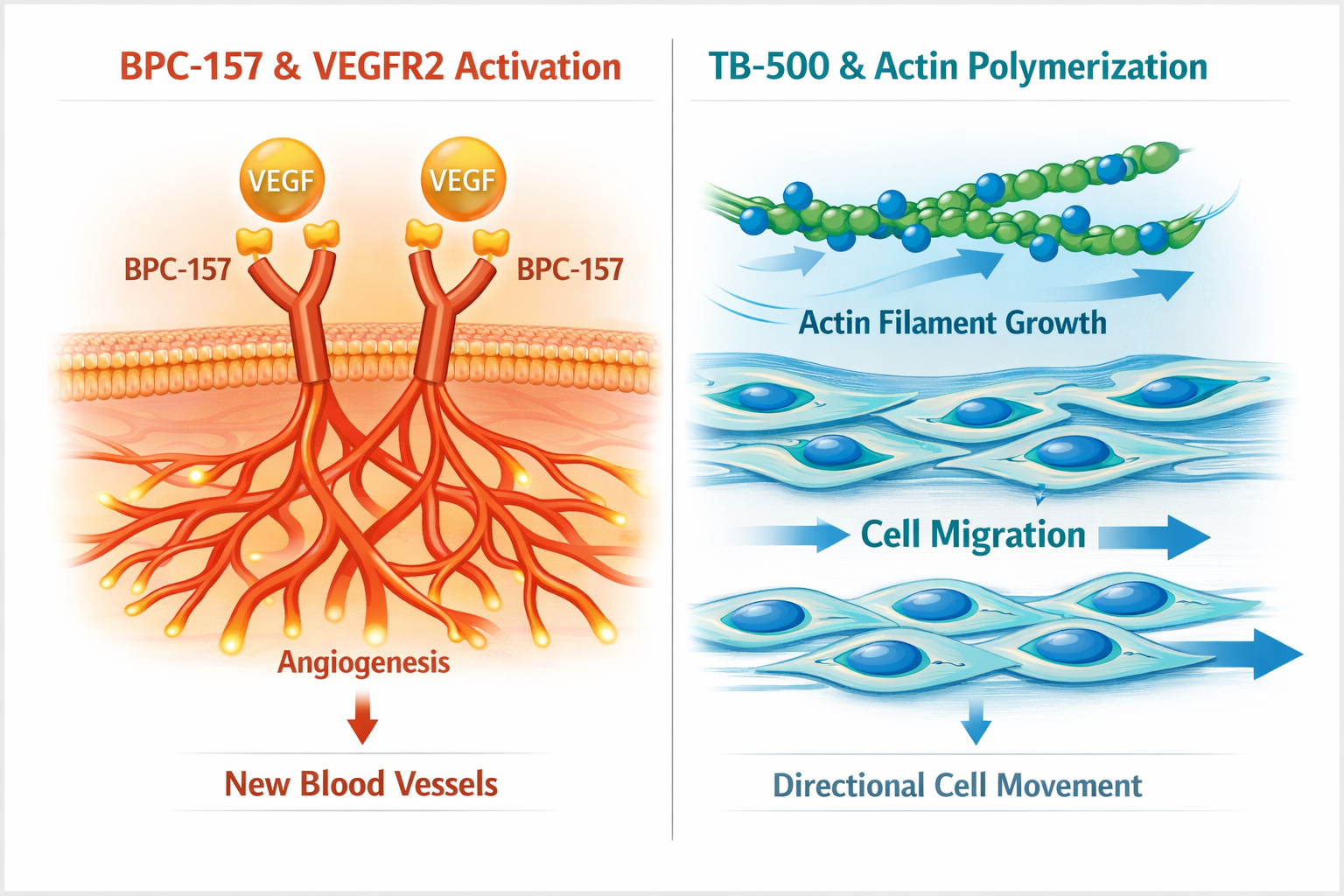
  • BPC-157 drives angiogenesis primarily through VEGFR2 activation and nitric oxide modulation, while TB-500 promotes cellular migration by regulating actin polymerization.
  • Their mechanisms are complementary rather than redundant, making combined use a logical focus for tissue repair research protocols.
  • As of 2026, both peptides remain classified under FDA Interim Category 2 and are not approved for human therapeutic use.
  • Human clinical data is limited; a Phase 2 trial for BPC-157 in hamstring injury is currently recruiting, with results expected in 2027-2028.
  • Both compounds appear on WADA's S0 Non-Approved Substances list, which has direct implications for athletic research contexts.
Key Takeaways

Distinct Mechanisms That Work Together

Understanding why researchers pair these peptides begins with their individual mechanisms of action.

BPC-157 is a synthetic pentadecapeptide derived from a protective gastric protein. Its primary contribution to tissue repair involves:

  • Activating VEGFR2 (vascular endothelial growth factor receptor 2), which triggers the formation of new capillaries
  • Modulating the nitric oxide system to support vascular tone and blood flow
  • Upregulating growth hormone receptors at injury sites
  • Engaging ERK1/2 signaling pathways to stimulate cell proliferation

TB-500, a synthetic analog of thymosin beta-4, operates through a different but equally important set of actions:

  • Sequestering G-actin to regulate actin polymerization, the structural process that drives cell movement
  • Enabling lamellipodia and filopodia formation, the cellular "arms" that propel migrating cells toward wounds
  • Activating integrin-linked kinase (ILK) to support cell survival and differentiation
  • Modulating the NF-kB pathway to influence inflammatory gene expression

"BPC-157 builds the road; TB-500 moves the traffic."

This distinction is critical. Angiogenesis without sufficient cellular migration leaves new vessels poorly populated. Cellular migration without adequate vascular support leaves migrating cells oxygen-deprived. The combined use of BPC-157 and TB-500 in tissue repair models attempts to address both deficits simultaneously.

For researchers exploring how peptide combinations can be designed for complementary effect, the synergy of LL-37 and SS-31 offers a useful parallel case study in mechanistic pairing.

Preclinical Evidence and Research Applications

The bulk of available data on BPC-157 and TB-500: Investigating Their Combined Effects on Angiogenesis and Cellular Migration in Tissue Repair Models comes from animal and in vitro studies. That context matters when interpreting the findings.

BPC-157 preclinical highlights:

Tissue Type Observed Effect
Tendon Accelerated collagen organization
Ligament Improved tensile strength recovery
Gastrointestinal Enhanced mucosal healing
Muscle Reduced ischemia-related damage

TB-500 preclinical highlights:

  • Demonstrated connective tissue migration in wound models
  • Showed promise in generalized soft-tissue recovery protocols
  • Exhibited anti-inflammatory effects via NF-kB modulation

When used together in research protocols, the pairing has shown additive effects in models of tendon and musculoskeletal injury. BPC-157's localized vascular action complements TB-500's systemic reach, experts note that BPC-157 tends to suit localized repair targets (tendons, ligaments, gut lining), while TB-500 is better suited to broader, systemic tissue support.

For context on how regenerative peptide research is structured, the dedicated TB-500 and BPC-157 regeneration research overview provides additional background. Researchers interested in delivery method considerations may also find the BPC-157 nasal spray and capsules evidence review useful for understanding administration variables.

Preclinical Evidence and Research Applications

Regulatory Status, Human Data, and Research Limitations

Any serious investigation of BPC-157 and TB-500: Investigating Their Combined Effects on Angiogenesis and Cellular Migration in Tissue Repair Models must address the regulatory and evidentiary gaps that remain as of 2026.

Current regulatory status:

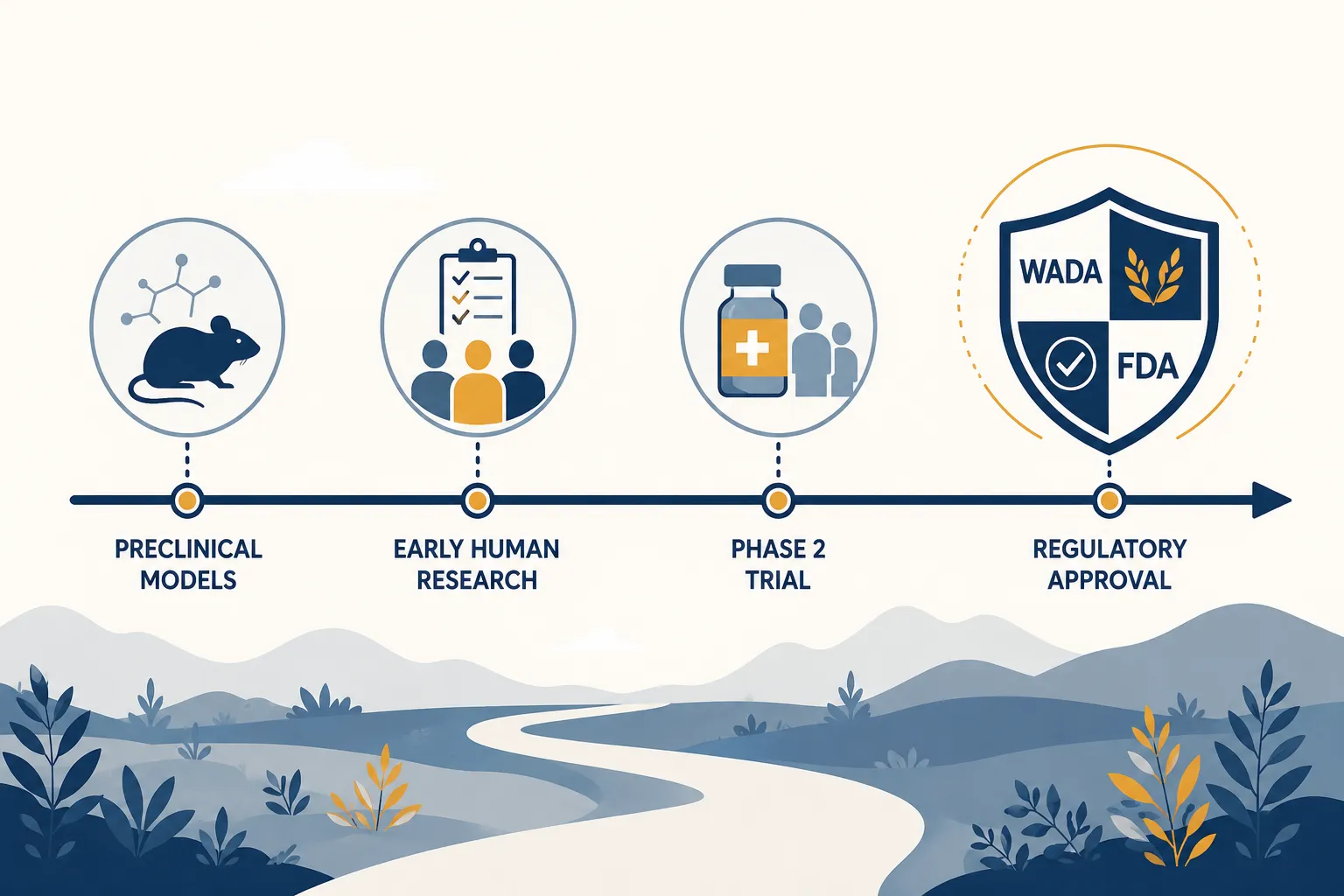
  • Both peptides are classified under FDA Interim Category 2, meaning they are not approved for human therapeutic use.
  • Both appear on the World Anti-Doping Agency (WADA) S0 Non-Approved Substances list, with direct implications for sports science research.

Human clinical data remains sparse:

  • BPC-157 has one safety pilot study completed (2025, intravenous administration).
  • TB-500 has one cardiac trial involving STEMI patients (2025).
  • A Phase 2 randomized controlled trial (NCT07437547) is currently recruiting 120 participants to evaluate BPC-157 for acute hamstring injury. This is the first registered controlled human study of BPC-157, with results expected between 2027 and 2028.

These limitations do not invalidate preclinical findings, but they do require that researchers interpret results with appropriate caution. The gap between animal models and human physiology remains the central challenge for this class of compounds.

Researchers sourcing peptides for controlled study protocols should prioritize verified supply chains. Resources such as the peptide purity testing guide and the peptide supplier comparison analysis offer practical guidance on quality assurance. For those exploring the broader landscape of repair-focused compounds, the longevity peptide research overview and innovative peptide delivery systems provide relevant context.
Regulatory Status, Human Data, and Research Limitations

Conclusion

The scientific rationale for studying BPC-157 and TB-500 together in tissue repair models is well-grounded. Their mechanisms, angiogenesis promotion via VEGFR2 activation and cellular migration via actin regulation, address complementary phases of the healing process rather than duplicating each other's function. Preclinical data across tendon, ligament, and soft-tissue models supports continued investigation.

Actionable next steps for researchers in 2026:

  1. Monitor the Phase 2 BPC-157 hamstring trial (NCT07437547) for the first controlled human efficacy data, expected 2027-2028.
  2. Design combination protocols that account for the localized action of BPC-157 versus the systemic reach of TB-500.
  3. Source only from suppliers with documented purity testing and verifiable certificates of analysis.
  4. Track WADA and FDA regulatory updates, as the classification of both peptides remains subject to change.
  5. Treat all current findings as hypothesis-generating rather than clinically conclusive until robust human trial data is available.

The field is moving. The evidence base, while still preclinical in large part, is building toward the kind of controlled human data that could meaningfully reframe how tissue repair research is conducted.

https://www.puretestedpeptides.com/wp-content/uploads/2026/07/bpc-157-and-tb-500-investigating-their-combined-effects-on-angiogenesis-and-cell.webp 1024 1536 https://www.puretestedpeptides.com/wp-content/uploads/2026/01/buy-peptides-online.jpg 2026-07-21 13:40:122026-07-21 13:40:14BPC-157 and TB-500: Investigating Their Combined Effects on Angiogenesis and Cellular Migration in Tissue Repair Models
×

Helpful Links

  • My account
  • Cart
  • Checkout
  • Refund and Returns Policy
  • Privacy Policy
  • SMS Privacy Policy
  • Login
  • My Account
  • Logout

USA Made Lab Tested Peptides

All products are sold for research, laboratory, or analytical purposes only, and are not for human consumption


Pure Tested Peptides is a chemical supplier. Pure Tested Peptides is not a compounding / chemical compounding facility as defined under 503A of the Federal Food, Drug, and Cosmetic act. Pure Tested Peptides is not an outsourcing facility as defined under 503B of the Federal Food, Drug, and Cosmetic act.

The statements made within this website have not been evaluated by the US Food and Drug Administration. The products we offer are not intended to diagnose, treat, cure or prevent any disease.

Human/Animal Consumption Prohibited. Laboratory/In-Vitro Experimental Use Only

Scroll to top Scroll to top Scroll to top