Call or Text 727-513-9780
  • Shopping Cart Shopping Cart
    0Shopping Cart
Pure Tested Peptides | America's most trusted Peptides for sale online
  • Peptides for sale
    • Oral Peptides for sale
      • Peptide Capsules for sale
      • BPC 157 Capsules 1000mcg
      • SLU-PP-332 Capsules | 1000 mcg
      • 5-Amino-1MQ 50mg Capsules
      • Tesofensine 500mcg
    • All Peptides for sale
    • Peptide Sprays
      • BPC 157 Nasal Spray Kit
      • BPC-157 TB500 Nasal Spray Kit
      • Semax Nasal Spray 10mg
      • Selank – Nasal Spray Kit – 10mg
      • Epithalon 50MG Nasal Spray Kit
      • Ipamorelin 10mg Nasal Spray
      • Klow Nasal Spray (BPC-157 + TB-500 + GHK-Cu + KPV) | 80mg
      • Hulk Nasal Spray Tesa / Ipa Blend 6/3 MG
      • Klow Nasal Spray
      • NAD + 500 mg Nasal Spray
      • PT-141 Nasal Spray Kit
    • GHRH Peptides
      • Ipa Peptides
      • CJC-1295 Peptides
        • CJC-1295 with DAC 5 mg
        • CJC-1295 without DAC 5 mg
        • CJC-1295 Ipa 10mg
      • Tesa Peptides
        • Tesa Peptide
        • Tesa 20 mg
    • GHK-Cu Peptides
      • All GHK-Cu Peptides
      • GHK-Cu 100mg
      • KLOW Peptide Blend – Buy KLOW blend online
    • BPC Peptides
      • All BPC Peptides
      • BPC-157
      • BPC-157 TB-500
      • BPC 157 capsules 1000mcg
    • SLU-PP-332 Peptides
      • All SLU-PP-332 Peptides
      • SLU-PP-332 5mg
    • GLP3 Peptides
    • PT-141 Peptides
      • PT-141 Peptides for sale
      • PT-141 10mg
      • PT-141 Nasal Spray
    • CAG Peptides
      • Lipo-C Peptide Blend
      • CAG 5mg
      • CAG 10mg
    • MOTS-C Peptides
      • MOTS-C Peptides for sale
      • MOTS-c peptide
      • MOTS-c 10mg *6 pack*
    • 5 Amino 1MQ Peptides
      • 5 Amino 1MQ Peptides for sale
      • 5-Amino-1MQ 50mg Capsules
      • 5-Amino-1MQ 5mg
    • Epithalon Peptides
      • Epithalon Peptides for sale
      • Epithalon 10mg
      • Epithalon 50mg
  • Shop
    • GLPs
      • 5-Amino-1MQ 50mg Capsules
      • 5-Amino-1MQ 5mg
      • L-Carnitine 500mg/ml
      • Tesofensine 500mcg
      • SLU-PP-332 5mg
      • MOTS-c 10mg *6 pack*
    • Epithalon & BPC Peptides
      • Epithalon 10mg
      • Epithalon 50mg
      • BPC-157
      • BPC 157 capsules 1000mcg
      • BPC-157 TB-500
      • BPC-157 TB500 Nasal Spray Kit
      • BPC 157 Nasal Spray Kit
    • BPC TB-500 & NAD+ Peptides
      • NAD+ 500 mg
      • KLOW Peptide Blend – Buy KLOW blend online
      • GLOW Peptide Blend
      • TB 500 5mg
      • BPC 157 capsules 1000mcg – Supplement
      • BPC 157 Nasal Spray Kit
      • BPC-157
      • BPC-157 TB500 Nasal Spray Kit
      • BPC-157 TB-500
      • BPC 157 capsules 1000mcg
    • LL-37 Peptide
      • LL-37 10 mg
    • MOTS-C & Selank
      • MOTS-c peptide
      • Selank 10mg
    • GHK Peptides
      • GHK-Cu 100mg
      • GLOW Peptide Blend
      • KLOW Peptide Blend – Buy KLOW blend online
  • COAs
  • Wholesale
    • Wholesale Peptides for sale
  • PTP FAQ
  • Affiliates
    • Selank Peptide: Advanced Pharmacological Mechanisms Underlying Its Anxiolytic and Nootropic Effects in Research
      • 5-Amino-1MQ Peptide: Detailed Mechanisms of NNMT Inhibition and Its Impact on Cellular Metabolism Research
        • MOTS-C Peptide: Unraveling Its Role in Mitochondrial Dynamics and Energy Metabolism Research
          • Epithalon Peptide and Telomerase Regulation: Investigating Its Impact on Cellular Senescence and Lifespan Research Models
            • GLP2-T vs GLP2 Tirz Peptide: Understanding the Naming, Mechanistic Nuances, and Research Implications for Gut Health
      • Peptides and Polypeptides in Modern Pharmacology: What Research on Metoprolol, Prednisone, and Amlodipine Reveals
        • Polypeptide Peptides vs NSAIDs: What Naproxen and Diclofenac Teach Tissue-Repair Researchers About BPC‑157 and TB‑500
          • Peptides and Polypeptides in Endocrine Pharmacology: How GLP-1, GLP-2, and GLP-3 Retatrutide Differ From Classic Drugs Like Prednisone and Amlodipine
          • 5‑Amino‑1MQ Peptide and NNMT Inhibition: How It Compares With Statins Like Atorvastatin in Adipose and Lipid Metabolism Research
      • Enclomiphene, Estrogen Receptor Signaling, and Luteinizing Phase Biology: What Hormone Researchers Should Measure
        • Mesenchymal Stem Cells, BPC‑157, and GHK‑Cu: How Tissue Repair Peptides Compare With Classic NSAIDs Like Naproxen in Injury Models
          • Peptide Calculator Use Cases Beyond Growth Hormone: Working Through GLP‑3 Retatrutide, MOTS‑c, and BPC‑157 Research Dosing
        • Polypeptide Peptides in Endocrine and Metabolic Pharmacology: Lessons From Amlodipine, Prednisone, and Metoprolol
        • Peptides Calculator for Advanced Blends: Worked Examples for Tesamorelin, CJC‑1295, and Ipamorelin Stacks
          • Peptides and Polypeptides in Human Physiology: How Molecular Size Shapes Research Applications
            • Selank Peptide: Advanced Pharmacological Mechanisms Underlying Its Anxiolytic and Nootropic Effects in Research
          • 5-Amino-1MQ Peptide: Detailed Mechanisms of NNMT Inhibition and Its Impact on Cellular Metabolism Research
            • MOTS-C Peptide: Unraveling Its Role in Mitochondrial Dynamics and Energy Metabolism Research
              • Epithalon Peptide and Telomerase Regulation: Investigating Its Impact on Cellular Senescence and Lifespan Research Models
                • GLP2-T vs GLP2 Tirz Peptide: Understanding the Naming, Mechanistic Nuances, and Research Implications for Gut Health
                  • Peptides and Polypeptides in Endocrine Pharmacology: How GLP-1, GLP-2, and GLP-3 Retatrutide Differ From Classic Drugs Like Prednisone and Amlodipine
                    • Polypeptide Peptides vs NSAIDs: What Naproxen and Diclofenac Teach Tissue-Repair Researchers About BPC‑157 and TB‑500
                      • Peptides and Polypeptides in Modern Pharmacology: What Research on Metoprolol, Prednisone, and Amlodipine Reveals
                        • 5‑Amino‑1MQ Peptide and NNMT Inhibition: How It Compares With Statins Like Atorvastatin in Adipose and Lipid Metabolism Research
                        • Enclomiphene, Estrogen Receptor Signaling, and Luteinizing Phase Biology: What Hormone Researchers Should Measure
                        • Mesenchymal Stem Cells, BPC‑157, and GHK‑Cu: How Tissue Repair Peptides Compare With Classic NSAIDs Like Naproxen in Injury Models
                        • Peptide Calculator Use Cases Beyond Growth Hormone: Working Through GLP‑3 Retatrutide, MOTS‑c, and BPC‑157 Research Dosing
                        • Polypeptide Peptides in Endocrine and Metabolic Pharmacology: Lessons From Amlodipine, Prednisone, and Metoprolol
                        • Peptides Calculator for Advanced Blends: Worked Examples for Tesamorelin, CJC‑1295, and Ipamorelin Stacks
                        • Peptides and Polypeptides in Human Physiology: How Molecular Size Shapes Research Applications
                        • Selank Peptide: Advanced Pharmacological Mechanisms Underlying Its Anxiolytic and Nootropic Effects in Research
                        • MOTS-C Peptide: Unraveling Its Role in Mitochondrial Dynamics and Energy Metabolism Research
                        • Peptides and Polypeptides in Modern Pharmacology: What Research on Metoprolol, Prednisone, and Amlodipine Reveals
                        • Peptides and Polypeptides in Endocrine Pharmacology: How GLP-1, GLP-2, and GLP-3 Retatrutide Differ From Classic Drugs Like Prednisone and Amlodipine
                        • 5-Amino-1MQ Peptide: Detailed Mechanisms of NNMT Inhibition and Its Impact on Cellular Metabolism Research
                        • Mesenchymal Stem Cells, BPC‑157, and GHK‑Cu: How Tissue Repair Peptides Compare With Classic NSAIDs Like Naproxen in Injury Models
                        • Peptide Calculator Use Cases Beyond Growth Hormone: Working Through GLP‑3 Retatrutide, MOTS‑c, and BPC‑157 Research Dosing
                        • GLP2-T vs GLP2 Tirz Peptide: Understanding the Naming, Mechanistic Nuances, and Research Implications for Gut Health
                        • Polypeptide Peptides in Endocrine and Metabolic Pharmacology: Lessons From Amlodipine, Prednisone, and Metoprolol
                        • Polypeptide Peptides vs NSAIDs: What Naproxen and Diclofenac Teach Tissue-Repair Researchers About BPC‑157 and TB‑500
                        • Peptides and Polypeptides in Human Physiology: How Molecular Size Shapes Research Applications
                        • Peptides Calculator for Advanced Blends: Worked Examples for Tesamorelin, CJC‑1295, and Ipamorelin Stacks
                        • 5‑Amino‑1MQ Peptide and NNMT Inhibition: How It Compares With Statins Like Atorvastatin in Adipose and Lipid Metabolism Research
                        • Enclomiphene, Estrogen Receptor Signaling, and Luteinizing Phase Biology: What Hormone Researchers Should Measure
                        • Epithalon Peptide and Telomerase Regulation: Investigating Its Impact on Cellular Senescence and Lifespan Research Models
                        • Best research protocol Klow blend
                        • best time to take BPC-157
                        • best time to take DSIP (Delta Sleep Inducing Peptide)
                        • best time to take CJC-1295
                        • best time to take AOD-9604
                        • best time to take Follistatin 344
                        • best time to take Ipamorelin
                        • best time to take MK-677 (Ibutamoren)
                        • best time to take Ligandrol (LGD-4033) — research compound
                        • best time to take Ostarine (MK-2866) — research compound
                        • best time to take GHK-CU
                        • best time to take TB-500
                        • best time to take MOTS-c
                        • best time to take Semax
                        • best time to take RAD-140 (Testolone) — research compound
                        • best time to take Thymosin Alpha-1
                        • best time to take PEG-MGF
                        • Biolife Plasma, Octapharma Plasma, and Research Peptides: How Plasma Donation Labs Differ From Peptide Suppliers
                        • best time to take YK-11 — research compound
                        • best time to take PT-141 (Bremelanotide)
                        • Best research protocol Klow blend
                        • 5-Amino-1MQ and MOTS-C Synergy: Metabolic Signaling, Mitochondria, and Research Design
                        • BPC-157 and TB-500: Investigating Their Combined Effects on Angiogenesis and Cellular Migration in Tissue Repair Models
                        • BPC-157 Peptide: Gut Barrier Function, Inflammation, and Tissue-Recovery Research
                        • 5‑Amino‑1MQ and MOTS‑c Synergy in Metabolic Research: Designing NNMT and Mitochondrial Biogenesis Stacks
                        • CJC-1295 with DAC vs. Without DAC: Half-Life, Release Kinetics, and Research Implications
                        • CJC‑1295 with DAC vs. Without DAC: Expanding on Half‑Life Differences Using Tesamorelin and Ipamorelin Blend Case Studies
                        • Collagen Biology and Copper‑Binding Peptides: How GHK‑Cu, Glow Blend, and Klow Blend Interact with Skin and Connective Tissue
                        • Collagen Biology and Regenerative Peptides: How GHK‑Cu, Glow Blend, and Klow Blend Affect Extracellular Matrix Research
                    • DNA, Telomeres, and Longevity Peptides: Positioning Epithalon and MOTS‑c in Genetic Aging Research
                      • Enclomiphene Citrate: serm Mechanism, Testosterone Research, and Stack Compatibility
                        • Enclomiphene vs Enclomiphene Citrate: Formulation, Bioavailability, and Research Distinctions
                        • Epithalon Peptide Research: Telomerase Activation, Aging, and Pineal Gland Function
                        • Estrogen Receptor Signaling and Enclomiphene: How Selective Modulators Compare with Classic Polypeptide Hormones
                        • GHK-Cu Peptide: Advanced Mechanisms in Extracellular Matrix Remodeling and Wound Healing Research
                        • GHK-Cu Peptide: Collagen Synthesis, Wound Repair, and Skin-Barrier Research Models
                        • GLP-1 vs GLP-3 vs GLP-2: Peptide Classification and Research Applications
                        • GLP-2 Peptide Research Guide: Gut Barrier Function, Nutrient Absorption, and Intestinal Recovery Models
                        • GLP-3 Retatrutide vs. GLP-1 Drugs: What Triple-Agonist Biology Changes in Research Models
                        • Ipamorelin and Tesamorelin Combination: Synergistic GH Secretagogue Research and Dosing Protocols
                        • GLP2 Tirz Peptide: What It Is, Why the Name Exists, and How Researchers Should Interpret It
                        • Klow Blend Peptide Nasal Spray: What the Formulation Is Trying to Do in Cognitive Research
                        • Mitochondria, NNMT Inhibition, and Peptide Modulators: Where MOTS‑c and 5‑Amino‑1MQ Fit in Cellular Energy Research
                        • MOTS-c Peptide: Mitochondrial Function, Energy Metabolism, and What Researchers Measure
                        • MOTS-c vs. 5-Amino-1MQ: Which Metabolic Research Questions Each Compound Actually Answers
                        • Nasal Spray Peptides: Bioavailability, Administration, and Semax/Selank Research Applications
                        • PT-141 Peptide Research: Mechanism of Action and Melanocortin Receptor Signaling
                        • Retatrutide for Research: Mechanism, Structure, and GLP-1/GLP-3 Dual Action
                        • Retatrutide for Obesity and Type 2 Diabetes: What the Latest Trial Data Suggest
                        • Tesofensine Peptide Research: Mechanism, Appetite Suppression, and Neuropeptide Y Pathways
  • Contact
    • Contact Customer Service
    • Text Customer Support
  • About US
  • Shop all peptides
  • Affiliate Program
    • Affiliate Signup
  • Login / Register Login / Register Page Link Login / Register Page Link
  • Click to open the search input field Click to open the search input field Search
  • Menu Menu

Tag Archive for: dpp-4 resistant peptide

GLP-2-T Peptide: Exploring Its Unique Role in Intestinal Barrier Function and Nutrient Absorption Research

GLP-2-T Peptide: Exploring Its Unique Role in Intestinal Barrier Function and Nutrient Absorption Research

July 5, 2026/0 Comments/by Pure Tested

The intestinal barrier covers roughly 400 square meters of surface area, yet a single disruption in its tight junction proteins can cascade into systemic inflammation, malabsorption, and chronic disease. Researchers studying gut-derived peptides have increasingly turned their attention to GLP-2-T peptide, a modified analog within the glucagon-like peptide-2 family, as a potential tool for understanding how the gut wall maintains its integrity and how nutrient uptake can be optimized at a cellular level.

GLP-2-T Peptide: Exploring Its Unique Role in Intestinal Barrier Function and Nutrient Absorption Research sits at the intersection of peptide biochemistry and gastrointestinal physiology, making it one of the more compelling subjects in preclinical research in 2026.

Key Takeaways

  • GLP-2-T peptide is a modified analog of native GLP-2, engineered for greater resistance to enzymatic degradation by DPP-4.
  • Its primary research focus centers on reinforcing tight junction proteins that form the intestinal barrier.
  • Preclinical data suggest GLP-2-T may support mucosal growth and enhance the absorption of glucose, amino acids, and fatty acids.
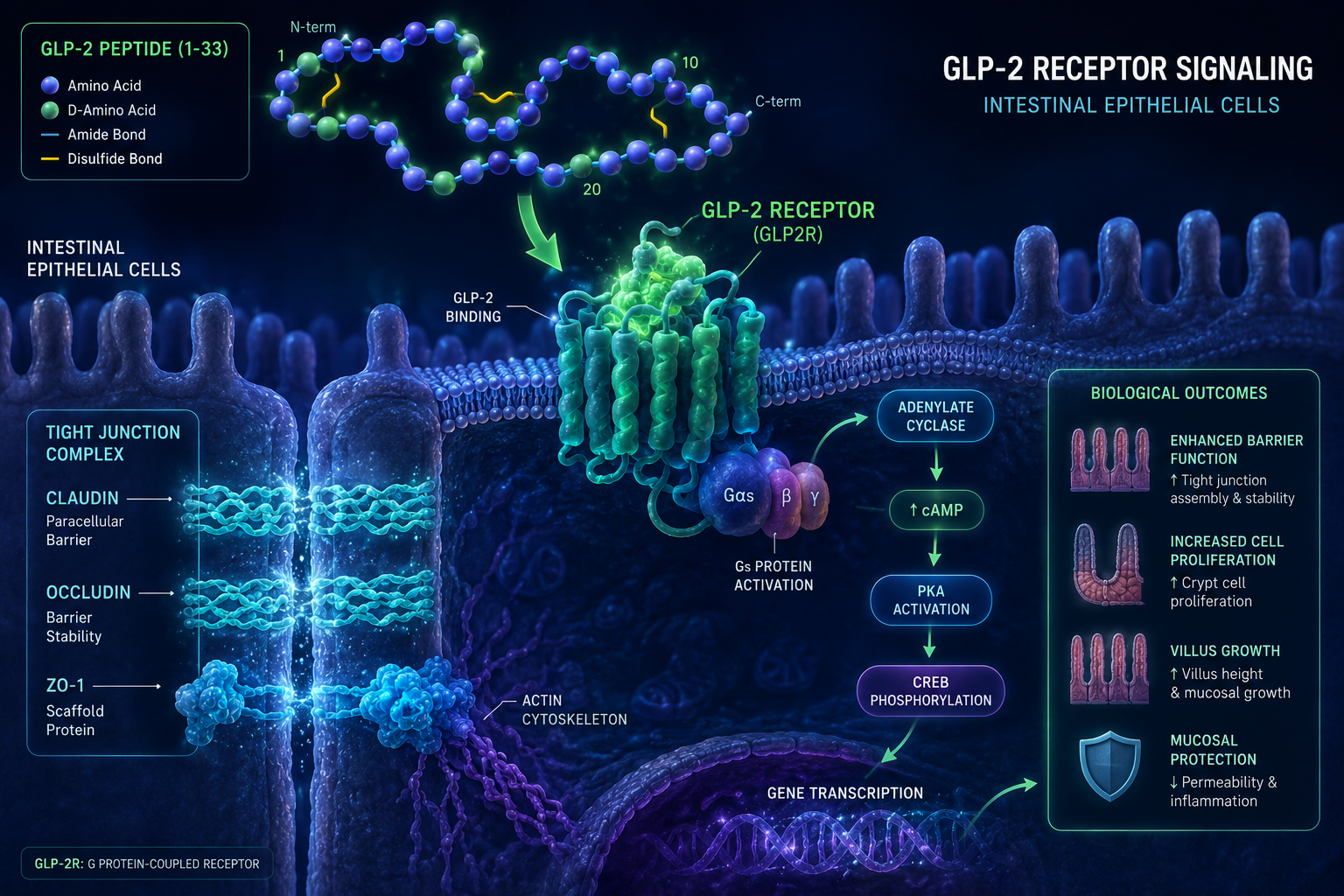
  • The peptide activates the GLP-2 receptor (GLP-2R) on enteric neurons and intestinal epithelial cells, triggering downstream signaling cascades.
  • Research-grade purity and proper sourcing are essential for generating reliable experimental data.
Key Takeaways

What Is GLP-2-T Peptide and How Does It Work

Native GLP-2 is a 33-amino acid peptide secreted by L-cells in the distal small intestine and colon in response to nutrient intake. Its biological half-life is short, approximately 7 minutes, because the enzyme dipeptidyl peptidase-4 (DPP-4) rapidly cleaves it at the N-terminal alanine residue.

GLP-2-T refers to a modified version of this peptide in which the alanine at position 2 is substituted with another amino acid (commonly glycine or threonine), rendering it resistant to DPP-4 cleavage. This structural change dramatically extends its active half-life, making it a more practical tool for sustained receptor activation in research settings.

Mechanism of action at a glance:

Feature Native GLP-2 GLP-2-T Analog
Half-life ~7 minutes Significantly extended
DPP-4 resistance Low High
Receptor binding GLP-2R GLP-2R
Research utility Limited duration Sustained activation

Once GLP-2-T binds to the GLP-2 receptor, expressed on enteric neurons, subepithelial myofibroblasts, and epithelial cells, it triggers cAMP-mediated signaling that promotes crypt cell proliferation, reduces enterocyte apoptosis, and stimulates mucosal growth.

Researchers exploring the broader landscape of gut-active peptides will find useful context in this GLP-1 generations overview, which outlines how incretin family peptides have evolved across research generations.

What Is GLP-2-T Peptide and How Does It Work

GLP-2-T Peptide: Exploring Its Unique Role in Intestinal Barrier Function

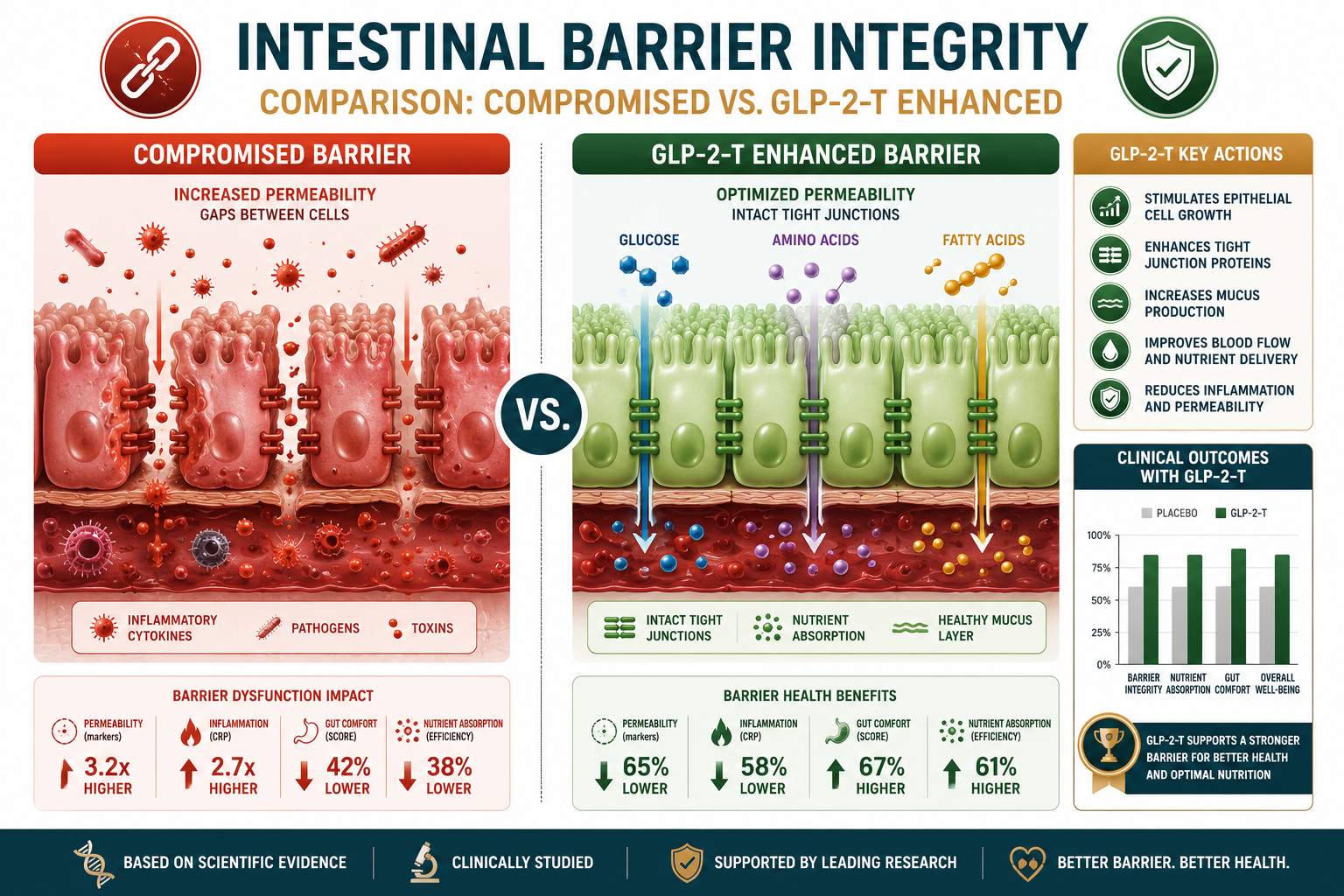
The intestinal barrier is maintained by a network of tight junction proteins, including claudin, occludin, and ZO-1, that seal the spaces between epithelial cells. When these proteins are disrupted, the result is increased intestinal permeability, often called "leaky gut," which allows bacterial endotoxins and undigested antigens to enter systemic circulation.

Preclinical research on GLP-2-T and related DPP-4-resistant analogs suggests several barrier-protective mechanisms:

  • Upregulation of tight junction proteins: GLP-2R activation has been linked to increased expression of claudin-3 and occludin, physically reinforcing the epithelial seal.
  • Reduction of apoptosis: The peptide appears to suppress programmed cell death in intestinal epithelial cells, preserving barrier continuity.
  • Mucosal hypertrophy: Crypt cell proliferation increases villus height, expanding the functional surface area of the gut lining.
  • Anti-inflammatory signaling: Downstream effects include reduced pro-inflammatory cytokine expression in the intestinal mucosa.

"The structural integrity of the intestinal epithelium is not passive, it is actively maintained by signaling peptides that respond to nutritional and inflammatory cues."

For researchers comparing gut-protective peptides, BPC-157 research themes offer a complementary perspective on angiogenesis and mucosal repair pathways.

GLP-2-T Peptide: Exploring Its Unique Role in Intestinal Barrier Function

GLP-2-T Peptide: Exploring Its Unique Role in Nutrient Absorption Research

Beyond barrier protection, GLP-2-T peptide research has focused on its capacity to enhance nutrient absorption, a function directly tied to villus morphology and transporter expression.

Key findings from preclinical models include:

  • Glucose transport: GLP-2R activation has been associated with upregulation of SGLT-1 (sodium-glucose cotransporter 1) and GLUT2 in the brush border membrane, increasing glucose uptake efficiency.
  • Amino acid absorption: Enhanced villus surface area and transporter density may improve uptake of essential amino acids, relevant in short bowel syndrome models.
  • Lipid processing: Increased expression of fatty acid binding proteins in enterocytes supports improved lipid absorption.

These findings make GLP-2-T particularly relevant to research on intestinal failure and conditions involving compromised absorptive capacity. Researchers interested in metabolic peptide interactions may also find value in reviewing NAD research and GLP-3 peptide sourcing for a broader metabolic context.

For those investigating multi-target approaches to gut health, the GLP-1-T dual receptor agonism research breakdown provides relevant comparative data on incretin-based peptide strategies.


Research Considerations and Sourcing Standards

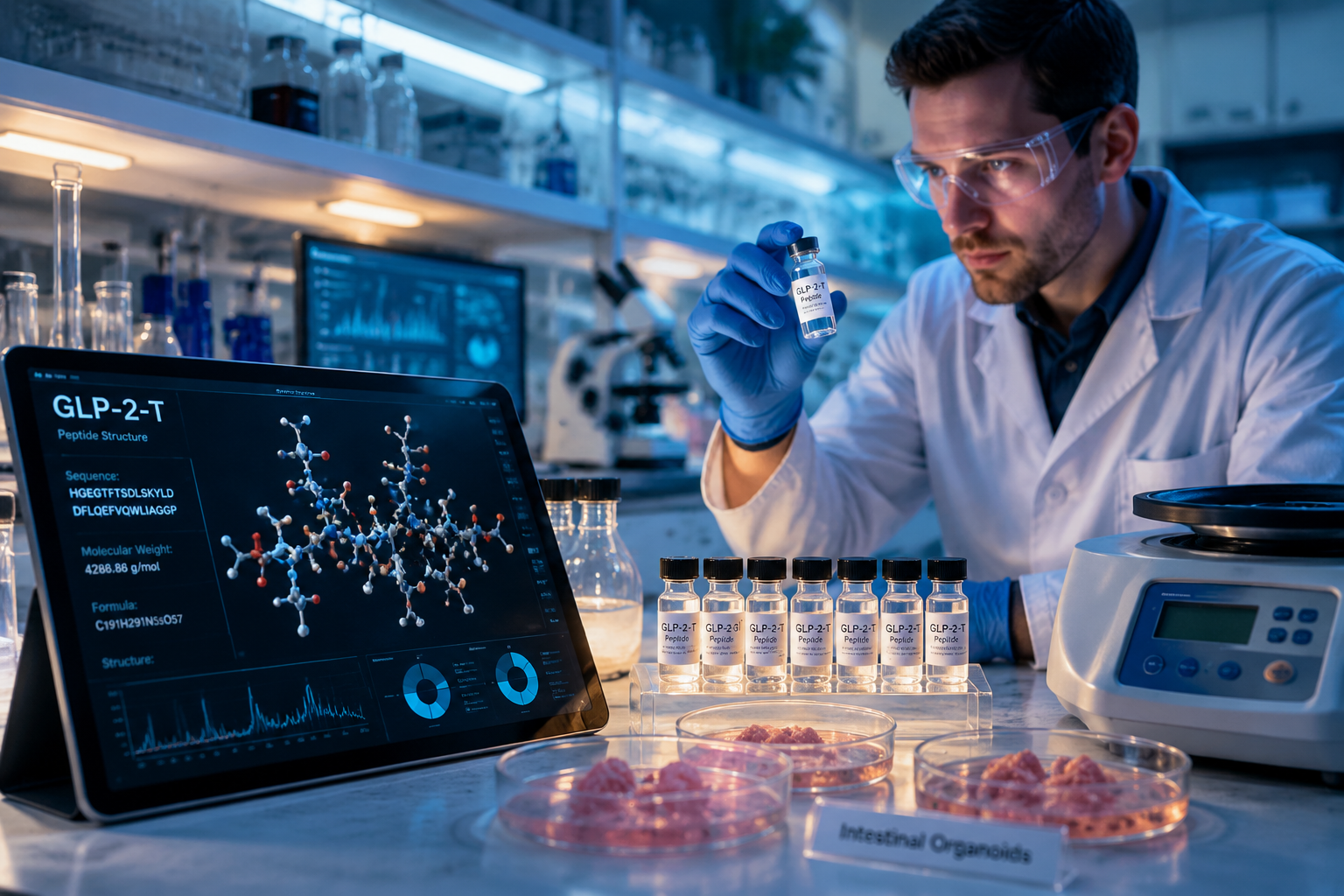
Reliable experimental outcomes with GLP-2-T peptide depend heavily on compound purity. Contaminants or degraded peptide fractions can produce inconsistent receptor activation and confound results. Researchers should prioritize vendors that provide third-party verified purity data.

For guidance on evaluating peptide quality standards, peptide purity testing made simple outlines the key benchmarks researchers should apply when sourcing compounds for gastrointestinal studies.

Those building broader research protocols may also benefit from reviewing what is new in peptide research to understand how GLP-2-T fits within the evolving landscape of gut-targeted peptide science.


Conclusion

GLP-2-T peptide represents a focused and mechanistically rich area of gastrointestinal research. Its DPP-4-resistant structure enables sustained GLP-2 receptor activation, supporting tight junction reinforcement, mucosal growth, and enhanced transporter-mediated nutrient uptake. For researchers investigating intestinal barrier dysfunction, malabsorption syndromes, or gut epithelial signaling, GLP-2-T offers a well-defined pharmacological tool with a growing preclinical evidence base.

Actionable next steps for researchers:

  1. Review current preclinical models using DPP-4-resistant GLP-2 analogs to establish baseline comparisons.
  2. Source research-grade GLP-2-T from vendors with documented purity testing and certificates of analysis.
  3. Design in vitro tight junction assays (TEER measurements) alongside in vivo mucosal morphometry studies.
  4. Consider combination protocols that pair GLP-2-T with complementary gut-protective peptides to evaluate synergistic barrier effects.
https://www.puretestedpeptides.com/wp-content/uploads/2026/07/GLP-2-T-Peptide-Exploring-Its-Unique-Role-in-Intestinal-Barrier-Function-and-Nutrient-Absorption-Research.png 1024 1536 Pure Tested https://www.puretestedpeptides.com/wp-content/uploads/2026/01/buy-peptides-online.jpg Pure Tested2026-07-05 13:08:142026-07-20 15:00:55GLP-2-T Peptide: Exploring Its Unique Role in Intestinal Barrier Function and Nutrient Absorption Research
×

Helpful Links

  • My account
  • Cart
  • Checkout
  • Refund and Returns Policy
  • Privacy Policy
  • SMS Privacy Policy
  • Login
  • My Account
  • Logout
  • About
  • Contact
  • COA / Lab Testing
  • Shipping Policy
  • Terms and Conditions
  • Research Use Disclaimer

USA Made Lab Tested Peptides

All products are sold for research, laboratory, or analytical purposes only, and are not for human consumption


Pure Tested Peptides is a chemical supplier. Pure Tested Peptides is not a compounding / chemical compounding facility as defined under 503A of the Federal Food, Drug, and Cosmetic act. Pure Tested Peptides is not an outsourcing facility as defined under 503B of the Federal Food, Drug, and Cosmetic act.

The statements made within this website have not been evaluated by the US Food and Drug Administration. The products we offer are not intended to diagnose, treat, cure or prevent any disease.

Human/Animal Consumption Prohibited. Laboratory/In-Vitro Experimental Use Only

Scroll to top Scroll to top Scroll to top