Call or Text 727-513-9780
  • Shopping Cart Shopping Cart
    0Shopping Cart
Pure Tested Peptides | America's most trusted Peptides for sale online
  • Peptides for sale
    • Oral Peptides for sale
      • Peptide Capsules for sale
      • BPC 157 Capsules 1000mcg
      • SLU-PP-332 Capsules | 1000 mcg
      • 5-Amino-1MQ 50mg Capsules
      • Tesofensine 500mcg
    • All Peptides for sale
    • Peptide Sprays
      • BPC 157 Nasal Spray Kit
      • BPC-157 TB500 Nasal Spray Kit
      • Semax Nasal Spray 10mg
      • Selank – Nasal Spray Kit – 10mg
      • Epithalon 50MG Nasal Spray Kit
      • Ipamorelin 10mg Nasal Spray
      • Klow Nasal Spray (BPC-157 + TB-500 + GHK-Cu + KPV) | 80mg
      • Hulk Nasal Spray Tesa / Ipa Blend 6/3 MG
      • Klow Nasal Spray
      • NAD + 500 mg Nasal Spray
      • PT-141 Nasal Spray Kit
    • GHRH Peptides
      • Ipa Peptides
      • CJC-1295 Peptides
        • CJC-1295 with DAC 5 mg
        • CJC-1295 without DAC 5 mg
        • CJC-1295 Ipa 10mg
      • Tesa Peptides
        • Tesa Peptide
        • Tesa 20 mg
    • GHK-Cu Peptides
      • All GHK-Cu Peptides
      • GHK-Cu 100mg
      • KLOW Peptide Blend – Buy KLOW blend online
    • BPC Peptides
      • All BPC Peptides
      • BPC-157
      • BPC-157 TB-500
      • BPC 157 capsules 1000mcg
    • SLU-PP-332 Peptides
      • All SLU-PP-332 Peptides
      • SLU-PP-332 5mg
    • GLP3 Peptides
    • PT-141 Peptides
      • PT-141 Peptides for sale
      • PT-141 10mg
      • PT-141 Nasal Spray
    • CAG Peptides
      • Lipo-C Peptide Blend
      • CAG 5mg
      • CAG 10mg
    • MOTS-C Peptides
      • MOTS-C Peptides for sale
      • MOTS-c peptide
      • MOTS-c 10mg *6 pack*
    • 5 Amino 1MQ Peptides
      • 5 Amino 1MQ Peptides for sale
      • 5-Amino-1MQ 50mg Capsules
      • 5-Amino-1MQ 5mg
    • Epithalon Peptides
      • Epithalon Peptides for sale
      • Epithalon 10mg
      • Epithalon 50mg
  • Shop
    • GLPs
      • 5-Amino-1MQ 50mg Capsules
      • 5-Amino-1MQ 5mg
      • L-Carnitine 500mg/ml
      • Tesofensine 500mcg
      • SLU-PP-332 5mg
      • MOTS-c 10mg *6 pack*
    • Epithalon & BPC Peptides
      • Epithalon 10mg
      • Epithalon 50mg
      • BPC-157
      • BPC 157 capsules 1000mcg
      • BPC-157 TB-500
      • BPC-157 TB500 Nasal Spray Kit
      • BPC 157 Nasal Spray Kit
    • BPC TB-500 & NAD+ Peptides
      • NAD+ 500 mg
      • KLOW Peptide Blend – Buy KLOW blend online
      • GLOW Peptide Blend
      • TB 500 5mg
      • BPC 157 capsules 1000mcg – Supplement
      • BPC 157 Nasal Spray Kit
      • BPC-157
      • BPC-157 TB500 Nasal Spray Kit
      • BPC-157 TB-500
      • BPC 157 capsules 1000mcg
    • LL-37 Peptide
      • LL-37 10 mg
    • MOTS-C & Selank
      • MOTS-c peptide
      • Selank 10mg
    • GHK Peptides
      • GHK-Cu 100mg
      • GLOW Peptide Blend
      • KLOW Peptide Blend – Buy KLOW blend online
  • COAs
  • Wholesale
    • Wholesale Peptides for sale
  • PTP FAQ
  • Affiliates
    • Selank Peptide: Advanced Pharmacological Mechanisms Underlying Its Anxiolytic and Nootropic Effects in Research
      • 5-Amino-1MQ Peptide: Detailed Mechanisms of NNMT Inhibition and Its Impact on Cellular Metabolism Research
        • MOTS-C Peptide: Unraveling Its Role in Mitochondrial Dynamics and Energy Metabolism Research
          • Epithalon Peptide and Telomerase Regulation: Investigating Its Impact on Cellular Senescence and Lifespan Research Models
            • GLP2-T vs GLP2 Tirz Peptide: Understanding the Naming, Mechanistic Nuances, and Research Implications for Gut Health
      • Peptides and Polypeptides in Modern Pharmacology: What Research on Metoprolol, Prednisone, and Amlodipine Reveals
        • Polypeptide Peptides vs NSAIDs: What Naproxen and Diclofenac Teach Tissue-Repair Researchers About BPC‑157 and TB‑500
          • Peptides and Polypeptides in Endocrine Pharmacology: How GLP-1, GLP-2, and GLP-3 Retatrutide Differ From Classic Drugs Like Prednisone and Amlodipine
          • 5‑Amino‑1MQ Peptide and NNMT Inhibition: How It Compares With Statins Like Atorvastatin in Adipose and Lipid Metabolism Research
      • Enclomiphene, Estrogen Receptor Signaling, and Luteinizing Phase Biology: What Hormone Researchers Should Measure
        • Mesenchymal Stem Cells, BPC‑157, and GHK‑Cu: How Tissue Repair Peptides Compare With Classic NSAIDs Like Naproxen in Injury Models
          • Peptide Calculator Use Cases Beyond Growth Hormone: Working Through GLP‑3 Retatrutide, MOTS‑c, and BPC‑157 Research Dosing
        • Polypeptide Peptides in Endocrine and Metabolic Pharmacology: Lessons From Amlodipine, Prednisone, and Metoprolol
        • Peptides Calculator for Advanced Blends: Worked Examples for Tesamorelin, CJC‑1295, and Ipamorelin Stacks
          • Peptides and Polypeptides in Human Physiology: How Molecular Size Shapes Research Applications
            • Selank Peptide: Advanced Pharmacological Mechanisms Underlying Its Anxiolytic and Nootropic Effects in Research
          • 5-Amino-1MQ Peptide: Detailed Mechanisms of NNMT Inhibition and Its Impact on Cellular Metabolism Research
            • MOTS-C Peptide: Unraveling Its Role in Mitochondrial Dynamics and Energy Metabolism Research
              • Epithalon Peptide and Telomerase Regulation: Investigating Its Impact on Cellular Senescence and Lifespan Research Models
                • GLP2-T vs GLP2 Tirz Peptide: Understanding the Naming, Mechanistic Nuances, and Research Implications for Gut Health
                  • Peptides and Polypeptides in Endocrine Pharmacology: How GLP-1, GLP-2, and GLP-3 Retatrutide Differ From Classic Drugs Like Prednisone and Amlodipine
                    • Polypeptide Peptides vs NSAIDs: What Naproxen and Diclofenac Teach Tissue-Repair Researchers About BPC‑157 and TB‑500
                      • Peptides and Polypeptides in Modern Pharmacology: What Research on Metoprolol, Prednisone, and Amlodipine Reveals
                        • 5‑Amino‑1MQ Peptide and NNMT Inhibition: How It Compares With Statins Like Atorvastatin in Adipose and Lipid Metabolism Research
                        • Enclomiphene, Estrogen Receptor Signaling, and Luteinizing Phase Biology: What Hormone Researchers Should Measure
                        • Mesenchymal Stem Cells, BPC‑157, and GHK‑Cu: How Tissue Repair Peptides Compare With Classic NSAIDs Like Naproxen in Injury Models
                        • Peptide Calculator Use Cases Beyond Growth Hormone: Working Through GLP‑3 Retatrutide, MOTS‑c, and BPC‑157 Research Dosing
                        • Polypeptide Peptides in Endocrine and Metabolic Pharmacology: Lessons From Amlodipine, Prednisone, and Metoprolol
                        • Peptides Calculator for Advanced Blends: Worked Examples for Tesamorelin, CJC‑1295, and Ipamorelin Stacks
                        • Peptides and Polypeptides in Human Physiology: How Molecular Size Shapes Research Applications
                        • Selank Peptide: Advanced Pharmacological Mechanisms Underlying Its Anxiolytic and Nootropic Effects in Research
                        • MOTS-C Peptide: Unraveling Its Role in Mitochondrial Dynamics and Energy Metabolism Research
                        • Peptides and Polypeptides in Modern Pharmacology: What Research on Metoprolol, Prednisone, and Amlodipine Reveals
                        • Peptides and Polypeptides in Endocrine Pharmacology: How GLP-1, GLP-2, and GLP-3 Retatrutide Differ From Classic Drugs Like Prednisone and Amlodipine
                        • 5-Amino-1MQ Peptide: Detailed Mechanisms of NNMT Inhibition and Its Impact on Cellular Metabolism Research
                        • Mesenchymal Stem Cells, BPC‑157, and GHK‑Cu: How Tissue Repair Peptides Compare With Classic NSAIDs Like Naproxen in Injury Models
                        • Peptide Calculator Use Cases Beyond Growth Hormone: Working Through GLP‑3 Retatrutide, MOTS‑c, and BPC‑157 Research Dosing
                        • GLP2-T vs GLP2 Tirz Peptide: Understanding the Naming, Mechanistic Nuances, and Research Implications for Gut Health
                        • Polypeptide Peptides in Endocrine and Metabolic Pharmacology: Lessons From Amlodipine, Prednisone, and Metoprolol
                        • Polypeptide Peptides vs NSAIDs: What Naproxen and Diclofenac Teach Tissue-Repair Researchers About BPC‑157 and TB‑500
                        • Peptides and Polypeptides in Human Physiology: How Molecular Size Shapes Research Applications
                        • Peptides Calculator for Advanced Blends: Worked Examples for Tesamorelin, CJC‑1295, and Ipamorelin Stacks
                        • 5‑Amino‑1MQ Peptide and NNMT Inhibition: How It Compares With Statins Like Atorvastatin in Adipose and Lipid Metabolism Research
                        • Enclomiphene, Estrogen Receptor Signaling, and Luteinizing Phase Biology: What Hormone Researchers Should Measure
                        • Epithalon Peptide and Telomerase Regulation: Investigating Its Impact on Cellular Senescence and Lifespan Research Models
                        • Best research protocol Klow blend
                        • best time to take BPC-157
                        • best time to take DSIP (Delta Sleep Inducing Peptide)
                        • best time to take CJC-1295
                        • best time to take AOD-9604
                        • best time to take Follistatin 344
                        • best time to take Ipamorelin
                        • best time to take MK-677 (Ibutamoren)
                        • best time to take Ligandrol (LGD-4033) — research compound
                        • best time to take Ostarine (MK-2866) — research compound
                        • best time to take GHK-CU
                        • best time to take TB-500
                        • best time to take MOTS-c
                        • best time to take Semax
                        • best time to take RAD-140 (Testolone) — research compound
                        • best time to take Thymosin Alpha-1
                        • best time to take PEG-MGF
                        • Biolife Plasma, Octapharma Plasma, and Research Peptides: How Plasma Donation Labs Differ From Peptide Suppliers
                        • best time to take YK-11 — research compound
                        • best time to take PT-141 (Bremelanotide)
                        • Best research protocol Klow blend
                        • 5-Amino-1MQ and MOTS-C Synergy: Metabolic Signaling, Mitochondria, and Research Design
                        • BPC-157 and TB-500: Investigating Their Combined Effects on Angiogenesis and Cellular Migration in Tissue Repair Models
                        • BPC-157 Peptide: Gut Barrier Function, Inflammation, and Tissue-Recovery Research
                        • 5‑Amino‑1MQ and MOTS‑c Synergy in Metabolic Research: Designing NNMT and Mitochondrial Biogenesis Stacks
                        • CJC-1295 with DAC vs. Without DAC: Half-Life, Release Kinetics, and Research Implications
                        • CJC‑1295 with DAC vs. Without DAC: Expanding on Half‑Life Differences Using Tesamorelin and Ipamorelin Blend Case Studies
                        • Collagen Biology and Copper‑Binding Peptides: How GHK‑Cu, Glow Blend, and Klow Blend Interact with Skin and Connective Tissue
                        • Collagen Biology and Regenerative Peptides: How GHK‑Cu, Glow Blend, and Klow Blend Affect Extracellular Matrix Research
                    • DNA, Telomeres, and Longevity Peptides: Positioning Epithalon and MOTS‑c in Genetic Aging Research
                      • Enclomiphene Citrate: serm Mechanism, Testosterone Research, and Stack Compatibility
                        • Enclomiphene vs Enclomiphene Citrate: Formulation, Bioavailability, and Research Distinctions
                        • Epithalon Peptide Research: Telomerase Activation, Aging, and Pineal Gland Function
                        • Estrogen Receptor Signaling and Enclomiphene: How Selective Modulators Compare with Classic Polypeptide Hormones
                        • GHK-Cu Peptide: Advanced Mechanisms in Extracellular Matrix Remodeling and Wound Healing Research
                        • GHK-Cu Peptide: Collagen Synthesis, Wound Repair, and Skin-Barrier Research Models
                        • GLP-1 vs GLP-3 vs GLP-2: Peptide Classification and Research Applications
                        • GLP-2 Peptide Research Guide: Gut Barrier Function, Nutrient Absorption, and Intestinal Recovery Models
                        • GLP-3 Retatrutide vs. GLP-1 Drugs: What Triple-Agonist Biology Changes in Research Models
                        • Ipamorelin and Tesamorelin Combination: Synergistic GH Secretagogue Research and Dosing Protocols
                        • GLP2 Tirz Peptide: What It Is, Why the Name Exists, and How Researchers Should Interpret It
                        • Klow Blend Peptide Nasal Spray: What the Formulation Is Trying to Do in Cognitive Research
                        • Mitochondria, NNMT Inhibition, and Peptide Modulators: Where MOTS‑c and 5‑Amino‑1MQ Fit in Cellular Energy Research
                        • MOTS-c Peptide: Mitochondrial Function, Energy Metabolism, and What Researchers Measure
                        • MOTS-c vs. 5-Amino-1MQ: Which Metabolic Research Questions Each Compound Actually Answers
                        • Nasal Spray Peptides: Bioavailability, Administration, and Semax/Selank Research Applications
                        • PT-141 Peptide Research: Mechanism of Action and Melanocortin Receptor Signaling
                        • Retatrutide for Research: Mechanism, Structure, and GLP-1/GLP-3 Dual Action
                        • Retatrutide for Obesity and Type 2 Diabetes: What the Latest Trial Data Suggest
                        • Tesofensine Peptide Research: Mechanism, Appetite Suppression, and Neuropeptide Y Pathways
  • Contact
    • Contact Customer Service
    • Text Customer Support
  • About US
  • Shop all peptides
  • Affiliate Program
    • Affiliate Signup
  • Login / Register Login / Register Page Link Login / Register Page Link
  • Click to open the search input field Click to open the search input field Search
  • Menu Menu

Tag Archive for: enclomiphene vs clomiphene

Enclomiphene and Estrogen Receptor Signaling in Research: How It Compares With serm-Based Hormone Studies

Enclomiphene and Estrogen Receptor Signaling in Research: How It Compares With serm-Based Hormone Studies

July 14, 2026/0 Comments/by Pure Tested

Fewer than 5% of selective estrogen receptor modulators studied in preclinical settings reach meaningful clinical endpoints, yet enclomiphene has consistently stood apart from that trend. Research into enclomiphene and estrogen receptor signaling in research: how it compares with serm-based hormone studies reveals a compound with a precise mechanistic profile that challenges older, less selective approaches to hormone axis modulation.

Key Takeaways

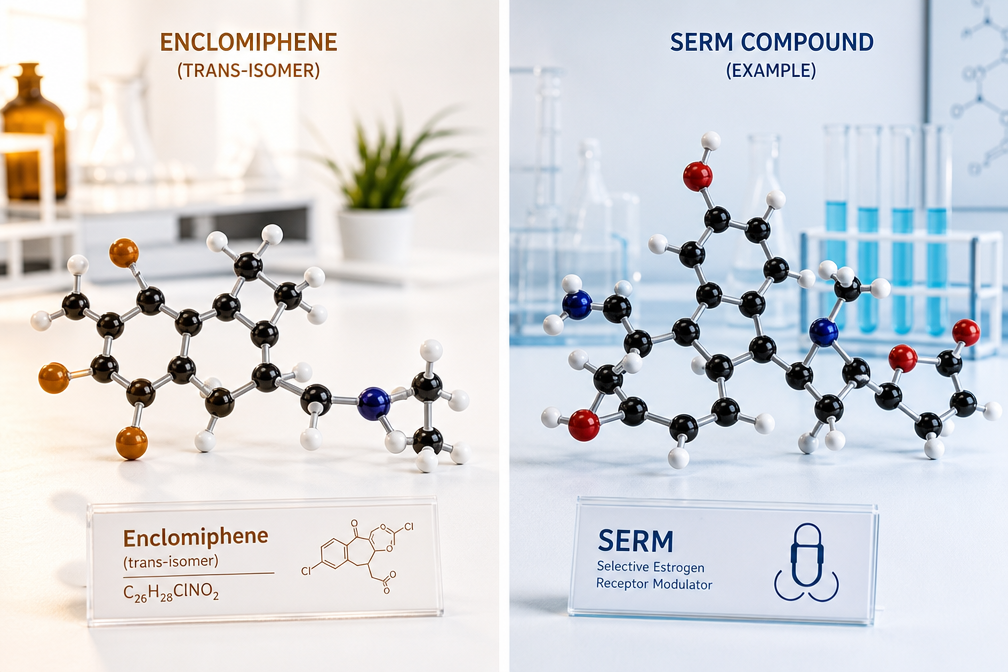
  • Enclomiphene is the trans-isomer of clomiphene citrate and functions as a pure estrogen receptor antagonist at the hypothalamic level
  • By blocking estrogen receptors in the hypothalamus, it drives LH and FSH secretion, which in turn stimulates endogenous testosterone production
  • Unlike mixed clomiphene, enclomiphene eliminates the weak estrogenic activity of the zuclomiphene isomer, producing a cleaner receptor signal
  • Compared to classical serms, enclomiphene preserves spermatogenesis, making it distinct in fertility-relevant research contexts
  • Its short half-life of approximately 10 to 15 hours supports daily oral dosing protocols in research models

Mechanistic Foundations: How Enclomiphene Engages Estrogen Receptors
Mechanistic Foundations: How Enclomiphene Engages Estrogen Receptors

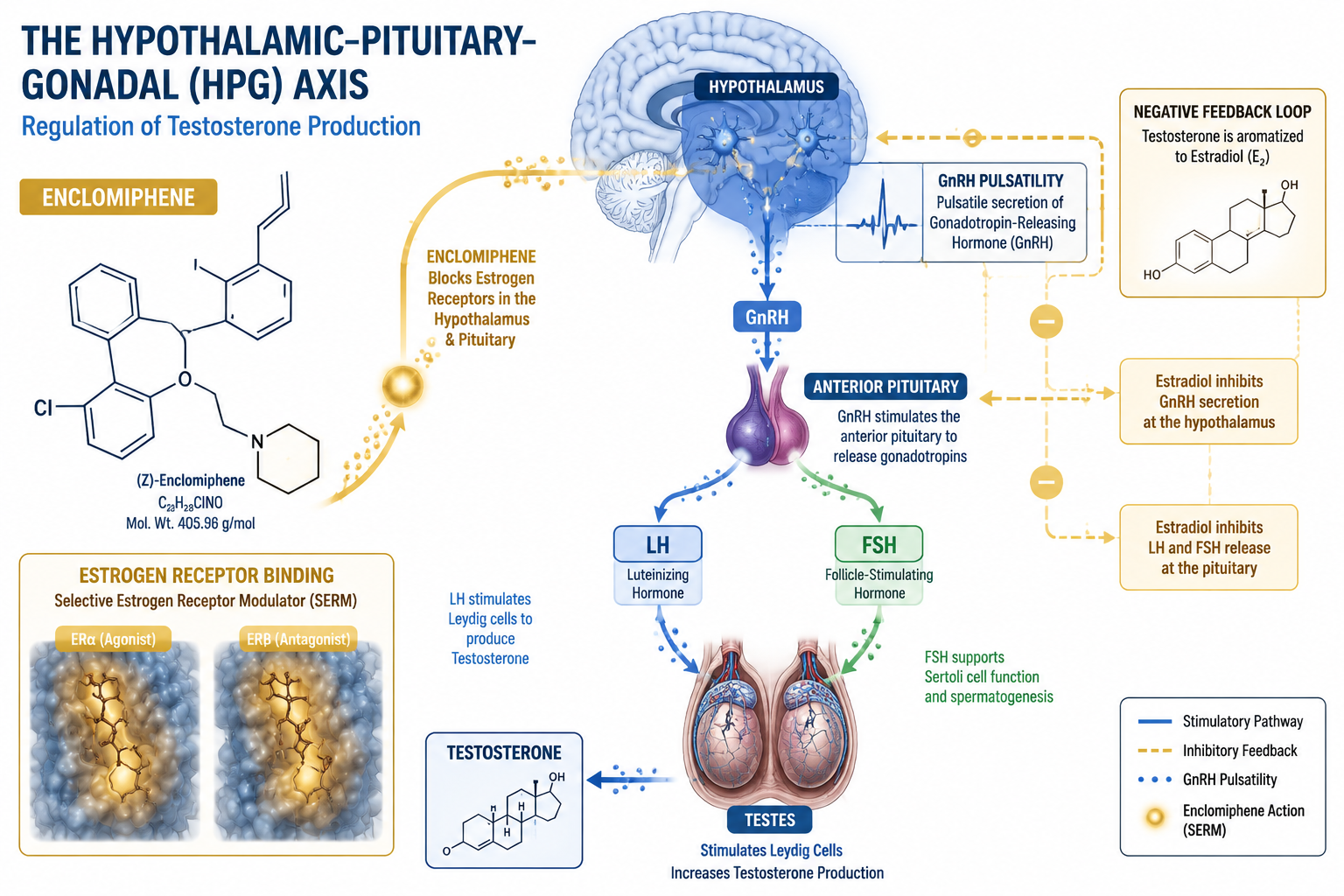
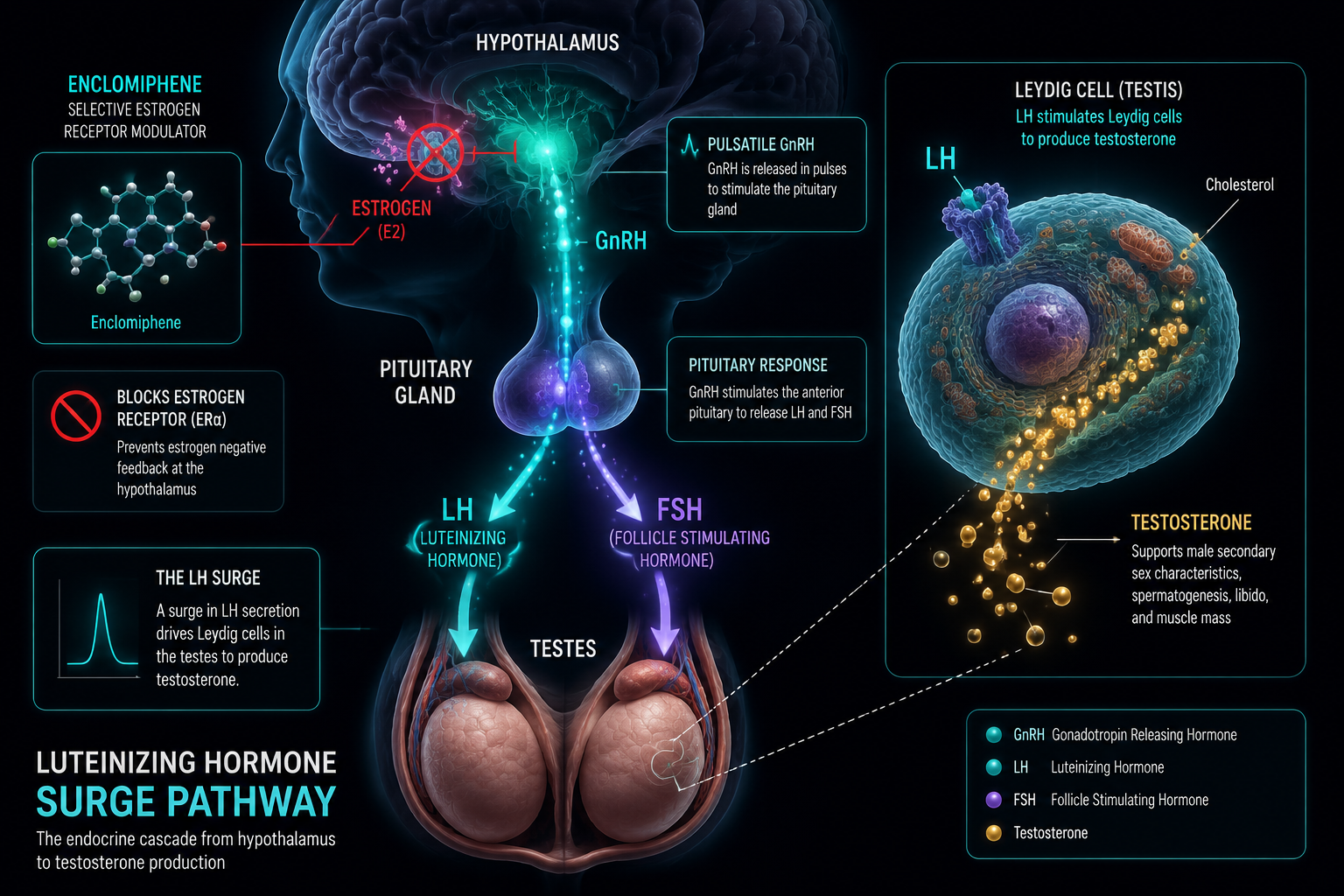
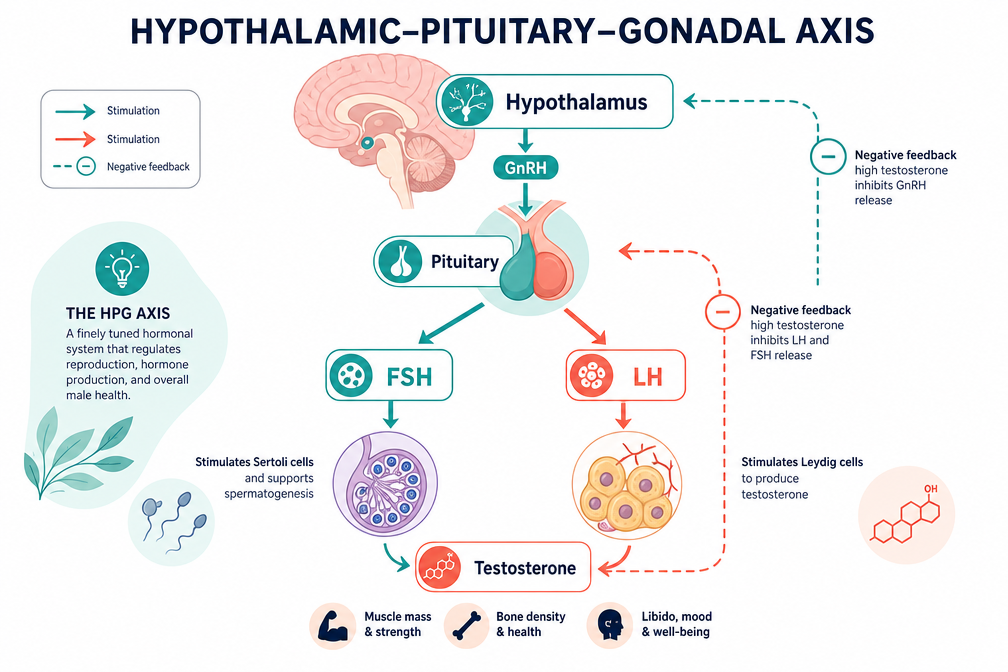
Enclomiphene acts as a competitive antagonist at estrogen receptors in the hypothalamus. When estrogen receptors in this region are blocked, the hypothalamus interprets the signal as low circulating estrogen. It responds by releasing more gonadotropin-releasing hormone (GnRH), which then stimulates the pituitary gland to secrete luteinizing hormone (LH) and follicle-stimulating hormone (FSH).

This upstream effect is what separates enclomiphene from direct androgen therapies. Rather than supplying testosterone externally, it restores the signaling chain that produces testosterone endogenously. For researchers studying the hypothalamic-pituitary-gonadal (HPG) axis, this makes enclomiphene a valuable tool for observing how estrogen receptor blockade translates into downstream hormonal change.

Key receptor-level distinctions:

  • Enclomiphene binds estrogen receptor alpha (ERa) with high affinity in hypothalamic tissue
  • It does not carry the residual estrogenic agonist activity seen in its sister isomer, zuclomiphene
  • A 2022 computational study using fragment molecular orbital calculations confirmed that ligand-receptor complementarity at ERa is highly sensitive to isomeric configuration, a finding directly relevant to enclomiphene's clean antagonist profile

For researchers exploring related receptor modulation pathways, serm-based research compounds offer a useful comparative reference point.


Enclomiphene and Estrogen Receptor Signaling in Research: How It Compares With serm-Based Hormone Studies
Enclomiphene and Estrogen Receptor Signaling in Research: How It Compares With serm-Based Hormone Studies

The broader serm category includes compounds like tamoxifen, raloxifene, and toremifene, each with different tissue selectivity profiles. What makes enclomiphene stand out in this landscape is its isomeric purity and its specific action on the HPG axis rather than peripheral estrogen-sensitive tissues.

Comparison Across Key Research Parameters

Parameter Enclomiphene Mixed Clomiphene Tamoxifen
Receptor action Pure antagonist (hypothalamus) Mixed agonist/antagonist Tissue-selective mixed
HPG axis activation Strong LH/FSH increase Moderate Minimal
Estrogenic side effects Low Moderate Variable
Spermatogenesis impact Preserved Partially preserved Not studied for this
Half-life 10-15 hours 5-7 days (zuclomiphene) 5-7 days

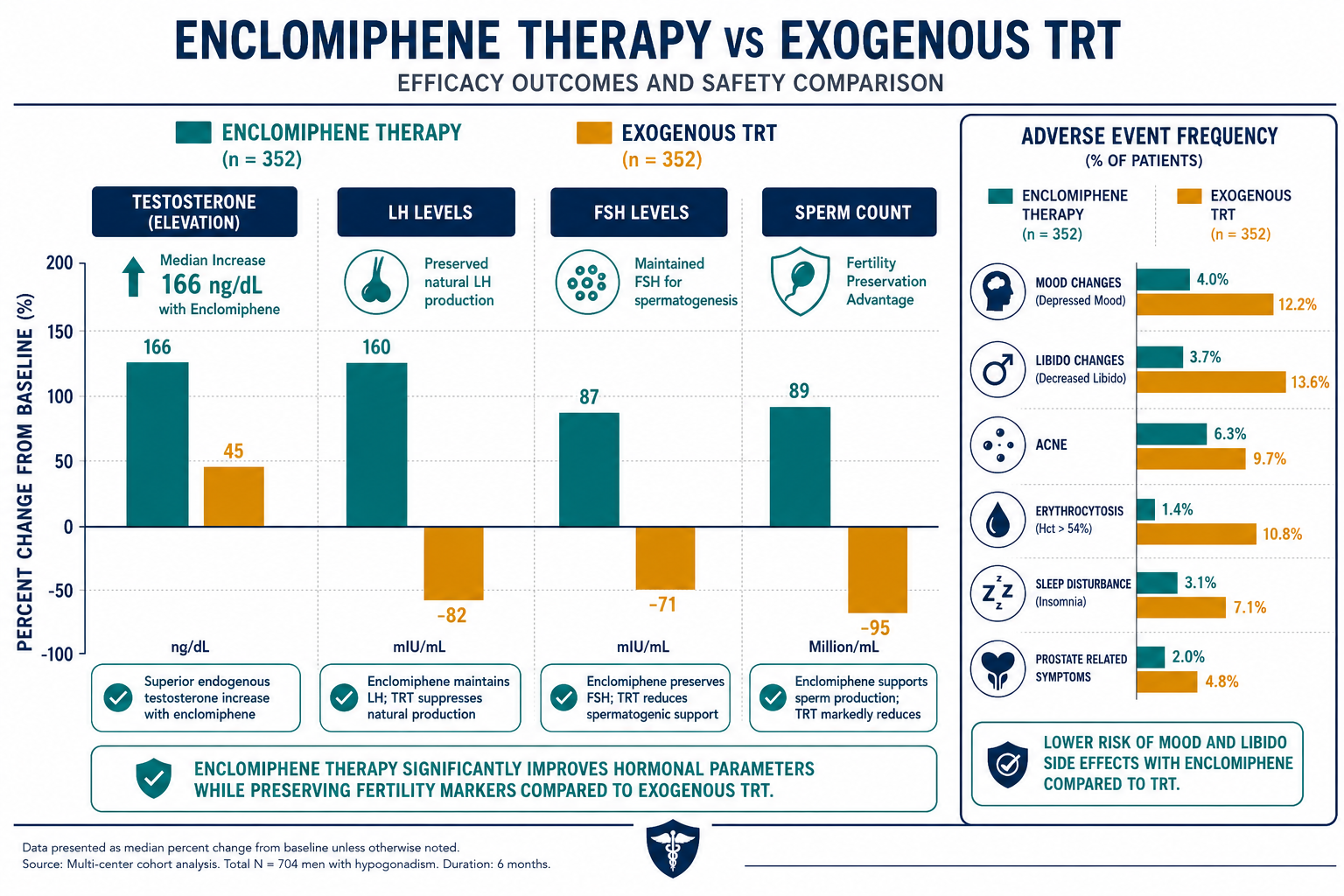
In a 2016 clinical study, enclomiphene citrate raised serum testosterone in men with secondary hypogonadism while keeping sperm concentrations within normal ranges. This contrasts sharply with topical testosterone replacement, which suppresses spermatogenesis by shutting down the HPG axis feedback loop entirely.

From a pure research standpoint, this distinction matters. Enclomiphene allows investigators to model testosterone elevation without disrupting the gonadotropin signal, something no exogenous androgen can replicate.

"Enclomiphene's value in receptor research lies not in what it adds to the system, but in what it allows the system to do on its own."

Researchers interested in multi-pathway hormonal signaling may also find value in reviewing longevity peptide research themes and IPA as a GHRH secretagogue, which explore adjacent endocrine signaling mechanisms.


Regulatory Context and the Ongoing Research Landscape in 2026

Regulatory Context and the Ongoing Research Landscape in 2026

Enclomiphene completed Phase III clinical trials and demonstrated strong efficacy data, yet it has not received FDA approval as a standalone therapeutic. As of 2026, it remains an active subject in research settings focused on male hypogonadism, fertility preservation, and serm receptor pharmacology.

Early antitumor research from the 1980s first identified enclomiphene's estrogen receptor affinity, noting its potential in vitro against certain estrogen-dependent cell lines. That foundational work laid the groundwork for the more targeted HPG axis studies that followed decades later.

What current research continues to examine:

  • Dose-response relationships between enclomiphene and LH/FSH output
  • Long-term receptor desensitization at hypothalamic ERa sites
  • Comparative receptor occupancy versus newer generation serms
  • Interaction effects when combined with metabolic or peptide-based research compounds

For researchers working across broader hormonal and metabolic frameworks, related reading on GIP receptor importance, GLP-1 peptide generational research, and NAD+ energetics and longevity provides useful context on how endocrine signaling intersects with metabolic research themes.

Additionally, researchers studying tissue repair and systemic signaling may find BPC-157 research themes and PT-141 neural metabolic research relevant when designing multi-system research protocols.


Conclusion

The study of enclomiphene and estrogen receptor signaling in research: how it compares with serm-based hormone studies highlights a compound that earns its place in receptor pharmacology through precision rather than broad activity. Its isomeric purity, short half-life, and clean hypothalamic antagonism make it a more tractable research tool than mixed clomiphene or classical serms when the goal is to isolate HPG axis dynamics.

Actionable next steps for researchers:

  1. Review published LH/FSH dose-response data before designing enclomiphene-based protocols
  2. Compare receptor binding affinity data across ERa ligands using computational models as a pre-screening step
  3. Consider enclomiphene as a positive control in serm comparison studies focused on hypothalamic signaling
  4. Evaluate its spermatogenesis-preserving profile against exogenous androgen models when fertility endpoints are relevant
  5. Cross-reference findings with adjacent endocrine and metabolic research to build a more complete picture of HPG axis behavior
https://www.puretestedpeptides.com/wp-content/uploads/2026/07/enclomiphene-and-estrogen-receptor-signaling-in-research-how-it-compares-with-se-1.png 1024 1536 Pure Tested https://www.puretestedpeptides.com/wp-content/uploads/2026/01/buy-peptides-online.jpg Pure Tested2026-07-14 13:07:012026-07-20 15:00:10Enclomiphene and Estrogen Receptor Signaling in Research: How It Compares With serm-Based Hormone Studies
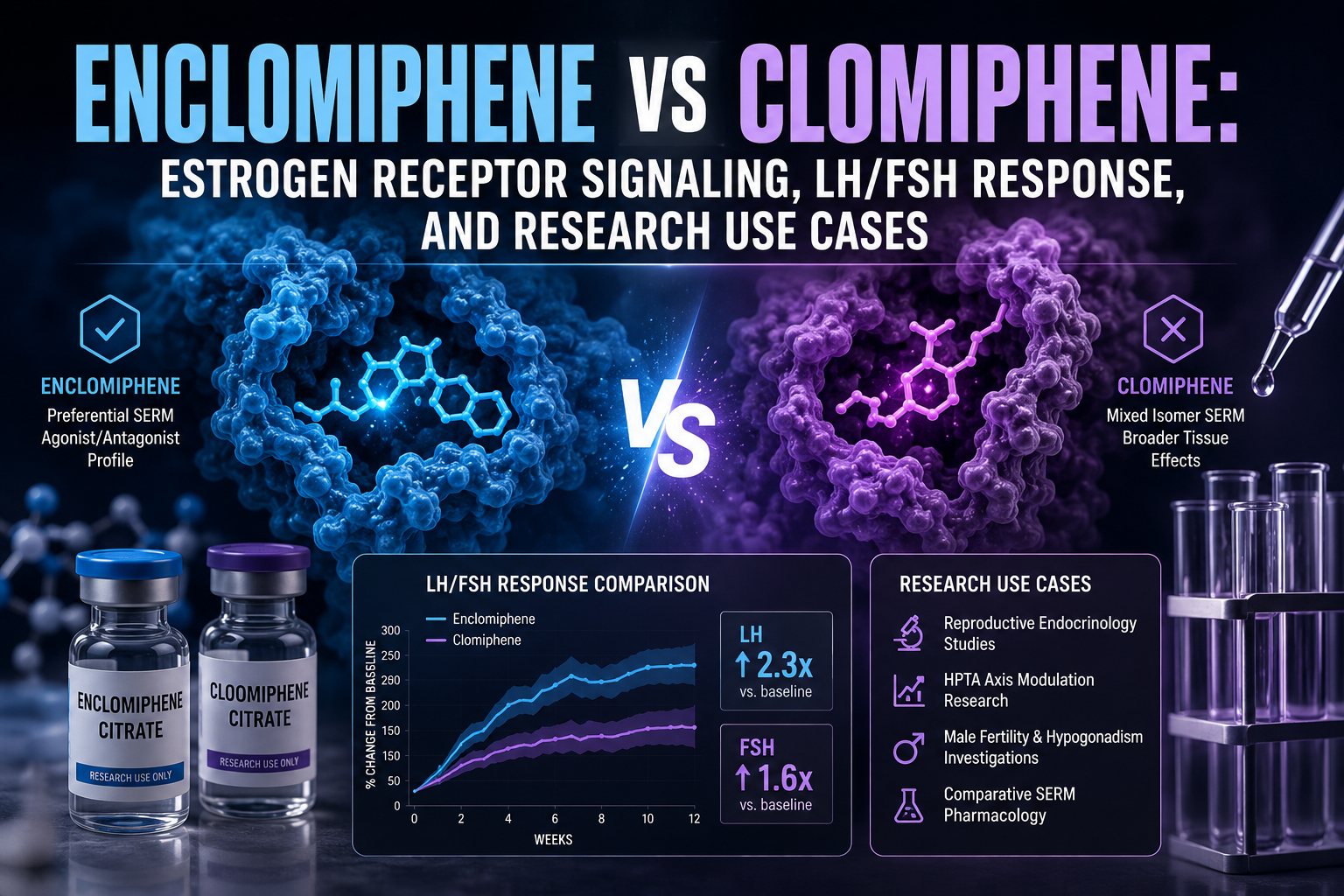
Enclomiphene vs Clomiphene: Estrogen Receptor Signaling, LH/FSH Response, and Research Use Cases

Enclomiphene vs Clomiphene: Estrogen Receptor Signaling, LH/FSH Response, and Research Use Cases

June 17, 2026/0 Comments/by Pure Tested

{"cover":"Professional landscape format (1536×1024) hero image with bold text overlay: 'Enclomiphene vs Clomiphene' in extra large 72pt white sans-serif font with dark semi-transparent overlay box, centered upper third. Background shows a split-panel scientific illustration: left side depicts molecular estrogen receptor binding diagram in deep teal, right side shows a stylized pituitary-hypothalamus axis with LH/FSH hormone cascade arrows in amber. Color scheme: deep navy, clinical white, amber accents. Magazine cover aesthetic, editorial quality, high contrast.","content":["Detailed landscape format (1536×1024) scientific infographic showing a side-by-side molecular comparison of enclomiphene trans-isomer and zuclomiphene cis-isomer chemical structures rendered in 3D ball-and-stick models against a dark navy background. Arrows indicate estrogen receptor binding sites on hypothalamic tissue cross-section. Color-coded labels highlight serm activity zones. Clean clinical aesthetic with white annotation text, teal and amber color accents, editorial research illustration style.","Landscape format (1536×1024) data visualization showing dual bar charts comparing LH and FSH hormone response levels between enclomiphene and clomiphene treatment groups. Chart includes testosterone ng/dL increase annotations (166 vs 98 ng/dL), estradiol pg/mL delta markers, and a timeline axis showing 2-4 week onset. Background is a soft gradient from white to light blue suggesting a clinical research environment. Bold sans-serif axis labels, color-coded bars in teal versus amber, clean medical data aesthetic.","Landscape format (1536×1024) editorial research scene showing a laboratory bench with open scientific journals, molecular model kits, and a digital tablet displaying a fertility preservation diagram with sperm viability graphs. A gloved researcher hand points to a hypothalamic-pituitary-gonadal axis flowchart pinned to a corkboard. Warm lab lighting, shallow depth of field, teal and amber accent colors, professional research environment aesthetic with subtle text overlay reading 'Research Use Cases: Secondary Hypogonadism'."]

Professional landscape hero image () with : "Enclomiphene vs Clomiphene: Estrogen Receptor Signaling, LH/FSH Response, and

Only 38% of clomiphene citrate is the isomer actually responsible for driving testosterone production. That single pharmacological fact is at the center of the growing scientific conversation around enclomiphene vs clomiphene: estrogen receptor signaling, LH/FSH response, and research use cases — and it explains why researchers and clinicians are increasingly treating these two compounds as distinct tools rather than interchangeable options.

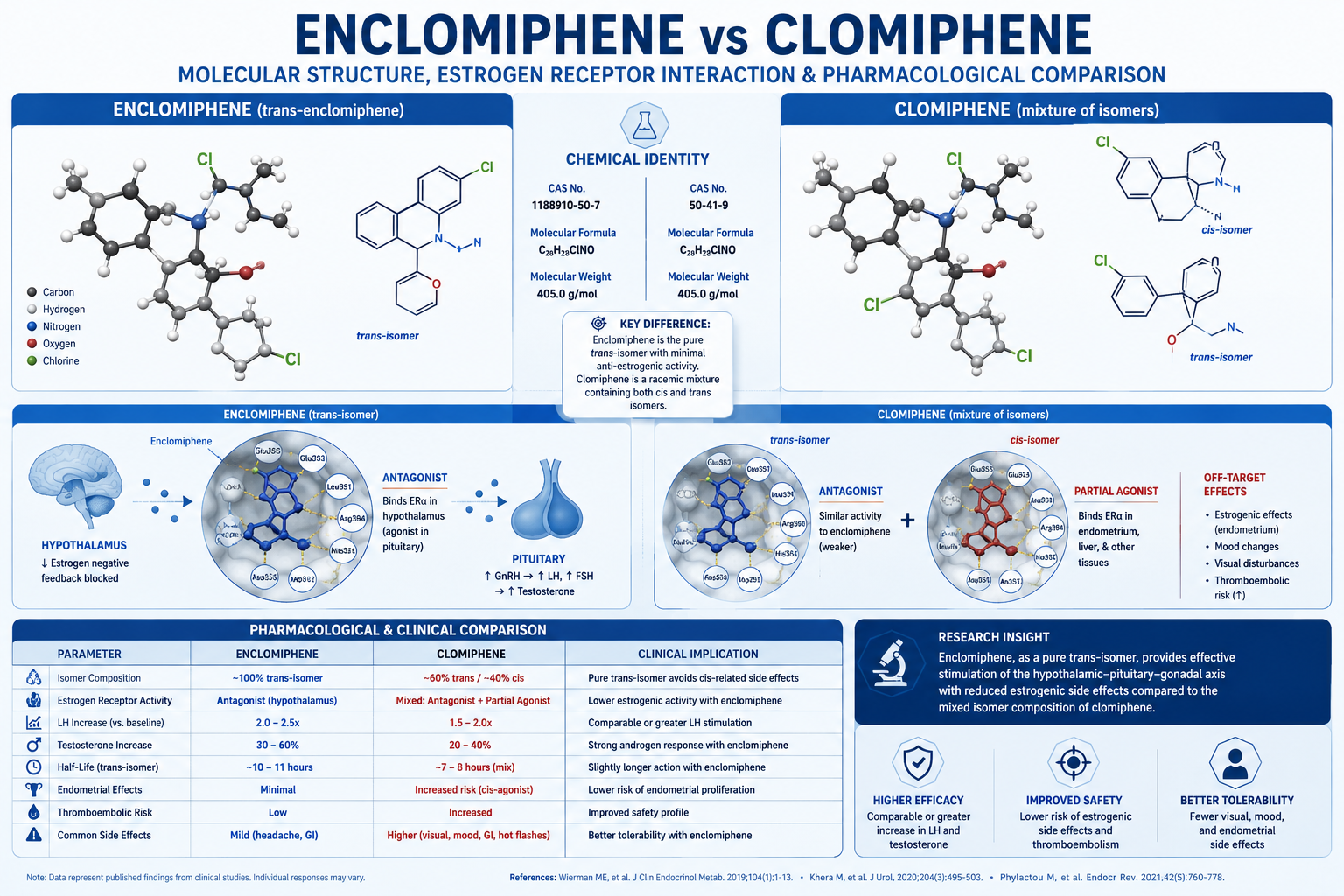
Scientific infographic visualizing key differences between Enclomiphene and Clomiphene, featuring side-by-side molecular

Key Takeaways

  • Clomiphene is a mixture of two isomers; enclomiphene is the isolated trans-isomer responsible for anti-estrogenic, testosterone-stimulating activity.
  • Both compounds block estrogen receptors in the hypothalamus, triggering GnRH release and downstream LH/FSH stimulation.
  • Enclomiphene produces a greater median testosterone increase (166 ng/dL vs. 98 ng/dL) with a more favorable side effect profile.
  • Unlike exogenous testosterone therapy, both compounds preserve the hypothalamic-pituitary-gonadal (HPG) axis and support fertility.
  • Enclomiphene is not FDA-approved as a standalone agent but is available through compounding pharmacies and is actively studied for secondary hypogonadism.

How Estrogen Receptor Signaling Differs Between the Two Compounds

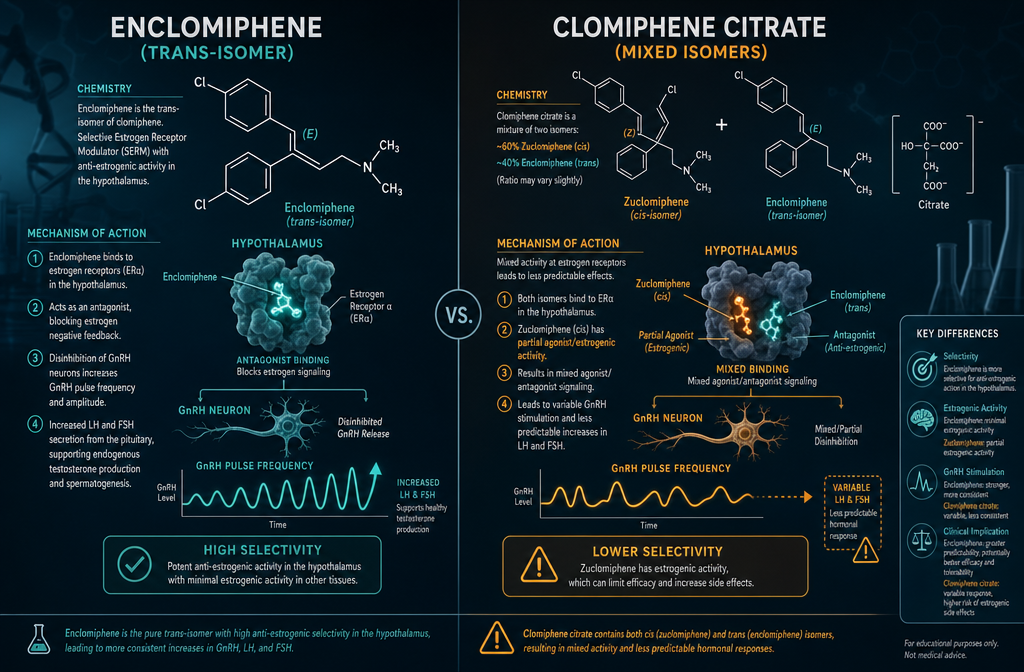
Clomiphene citrate is not a single molecule. It is a racemic mixture composed of approximately 62% zuclomiphene (the cis-isomer) and 38% enclomiphene (the trans-isomer). These two isomers behave very differently at the estrogen receptor level.

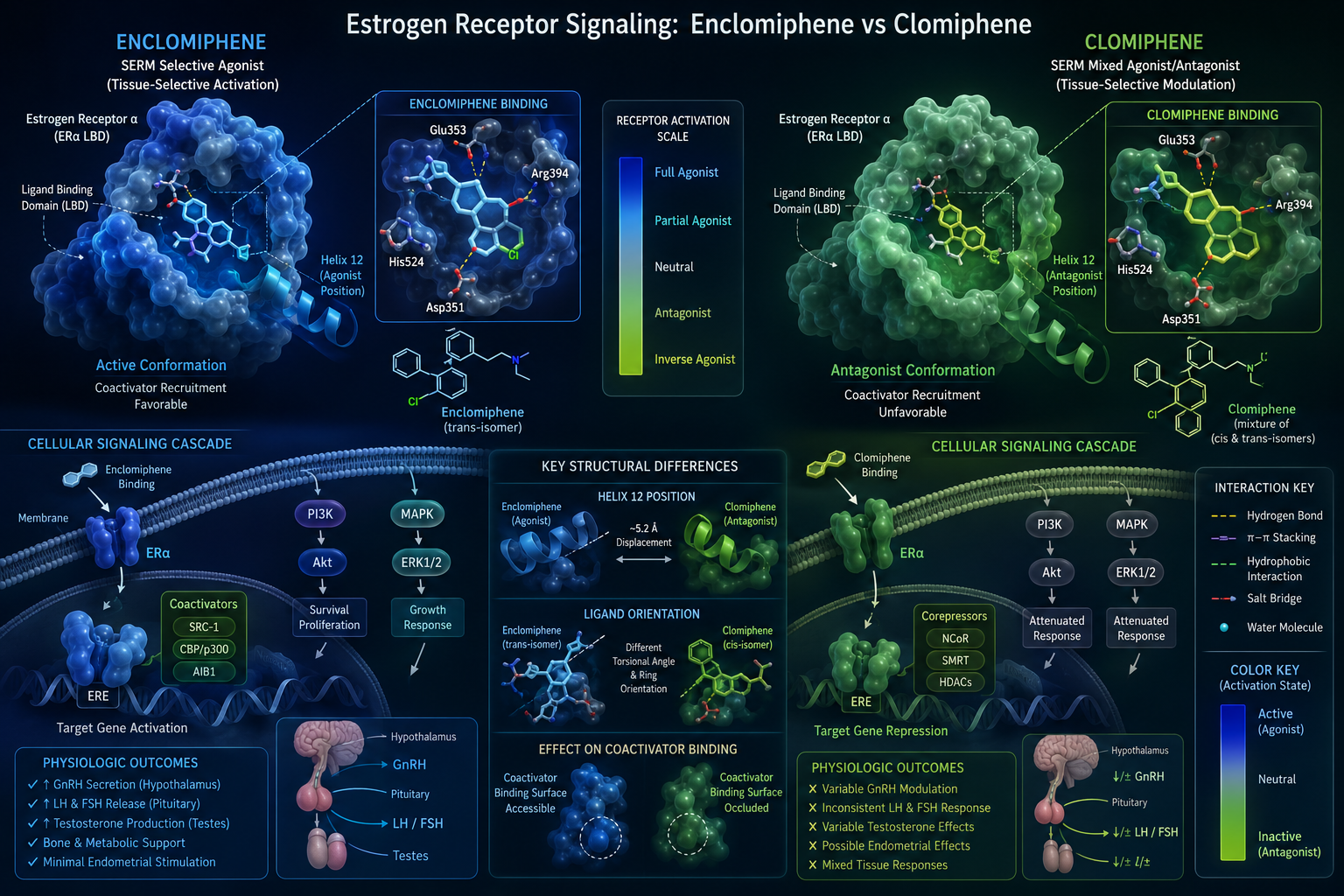
Enclomiphene acts as a pure estrogen receptor antagonist in the hypothalamus. By occupying estrogen receptors without activating them, it removes the negative feedback signal that estrogen normally sends to the brain. The hypothalamus responds by increasing gonadotropin-releasing hormone (GnRH) pulse frequency.

Zuclomiphene, in contrast, carries weak estrogenic activity and has a significantly longer half-life. It can linger in circulation for weeks, contributing to the mood changes, visual disturbances, and libido complaints that some users associate with clomiphene therapy.

"Isolating the active isomer removes the pharmacological noise introduced by zuclomiphene, giving researchers a cleaner signal at the receptor level."

This distinction is central to understanding the enclomiphene vs clomiphene estrogen receptor signaling debate. When the two isomers are separated, the mechanism becomes more predictable and the side effect profile narrows considerably.


LH/FSH Response and Hormonal Outcomes: What the Data Show

LH/FSH Response and Hormonal Outcomes: What the Data Show

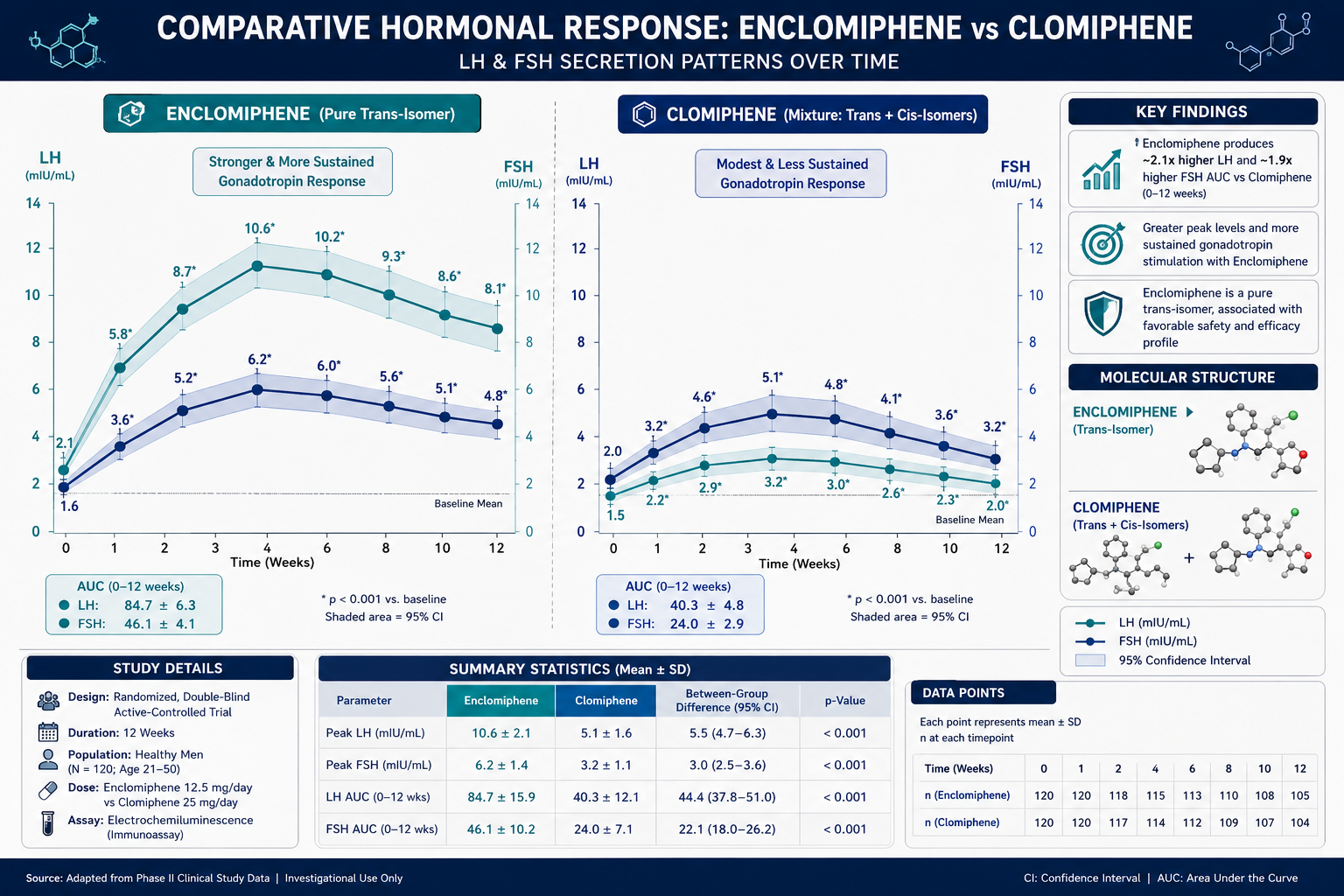
Both compounds stimulate the pituitary gland through the same upstream pathway: hypothalamic GnRH release drives luteinizing hormone (LH) and follicle-stimulating hormone (FSH) secretion, which in turn signals the testes to produce testosterone. The difference lies in the magnitude and cleanliness of that signal.

A retrospective study comparing 66 patients found that enclomiphene produced a median testosterone increase of 166 ng/dL, compared to 98 ng/dL with clomiphene. Enclomiphene also resulted in a statistically lower rise in estradiol and fewer adverse effects including reduced libido, low energy, and mood disturbances.

A separate analysis of 72 patients on enclomiphene and 861 on clomiphene over 12 months found both groups achieved significant increases in testosterone, estradiol, FSH, and LH — with no statistically significant difference between the two therapies at the population level. This suggests enclomiphene is a clinically viable alternative, not merely a theoretical upgrade.

Enclomiphene vs Clomiphene: Key Hormonal Comparison

Parameter Clomiphene Enclomiphene
Median testosterone increase ~98 ng/dL ~166 ng/dL
Estradiol increase Higher Lower
LH/FSH stimulation Yes Yes
Visual disturbance risk Present (zuclomiphene) Minimal
Oral bioavailability Yes Yes
Half-life concern Zuclomiphene accumulates Short, clean clearance

Phase III clinical trials for enclomiphene (marketed as Androxal) showed a mean testosterone increase from 232 to 525 ng/dL at a 12.5 mg/day dosage, supporting its potency as a standalone HPG axis stimulator.

For researchers exploring the GH axis alongside gonadotropin signaling, resources like the CJC-IPA GH axis research overview provide useful context on how different endocrine axes interact in research models.


Research Use Cases: Secondary Hypogonadism, Fertility, and Beyond

Research Use Cases: Secondary Hypogonadism, Fertility, and Beyond

The primary research application for both compounds centers on secondary hypogonadism — a condition where the testes are functional but the HPG axis fails to send adequate stimulation. Unlike primary hypogonadism, this form responds well to upstream signaling interventions.

Fertility Preservation

Exogenous testosterone therapy suppresses spermatogenesis by shutting down endogenous LH and FSH. Both enclomiphene and clomiphene avoid this problem by stimulating natural production rather than replacing it. Enclomiphene is increasingly studied as a preferred option for men with secondary hypogonadism who wish to preserve sperm production.

Comparison with hCG in Research Protocols

Human chorionic gonadotropin (hCG) is another compound used to support fertility during testosterone replacement. The key differences in research context:

  • Enclomiphene acts at the pituitary level, stimulates both LH and FSH, is taken orally, and has minimal estradiol impact.
  • hCG acts directly on testicular Leydig cells, requires injection, and can elevate estradiol.

This distinction matters when designing protocols that target specific nodes of the HPG axis.

Metabolic and Body Composition Research Intersections

Testosterone levels intersect with body composition, metabolic rate, and mitochondrial function. Researchers studying these connections may find value in reviewing related work on MOTS-c and mitochondrial longevity research or TESA body composition research themes, which explore adjacent endocrine and metabolic pathways.

For those examining peptide-based approaches to recovery and tissue biology, the recovery and tissue biology overview provides relevant mechanistic context. Similarly, researchers interested in multi-pathway signaling models may find the KLOW blend multipathway research a useful reference point for understanding how compounds interact across systems.

Enclomiphene vs clomiphene: estrogen receptor signaling, LH/FSH response, and research use cases is a topic that also connects to broader questions about how serms interact with metabolic peptides — a growing area of interest in 2026 research literature. Those exploring peptide synergies in endocrine research can also reference the SLU-PP-332 metabolic research overview for complementary data on receptor-level signaling.


Conclusion

The comparison between enclomiphene and clomiphene is fundamentally a story about pharmacological precision. Clomiphene delivers its effects through a mixture of isomers with competing receptor activities. Enclomiphene isolates the trans-isomer responsible for clean hypothalamic estrogen receptor blockade, producing stronger LH/FSH stimulation, a larger testosterone increase, and a narrower side effect profile.

Actionable next steps for researchers and clinicians:

  • When reviewing HPG axis studies, distinguish whether the protocol used racemic clomiphene or isolated enclomiphene — the distinction changes interpretation of receptor-level data.
  • For fertility-preserving protocols, enclomiphene's dual LH/FSH stimulation makes it a mechanistically superior candidate compared to hCG in oral-administration models.
  • Cross-reference enclomiphene data with adjacent endocrine research, including metabolic peptide work, to build a more complete picture of hormonal axis interactions.
  • Consult compounding pharmacy resources and current regulatory guidance, as enclomiphene's legal status as a non-FDA-approved standalone agent affects study design and sourcing decisions.

The science is clear: understanding the isomer distinction is not a minor detail — it is the foundation of accurate hormone-axis research language.

https://www.puretestedpeptides.com/wp-content/uploads/2026/06/Enclomiphene-vs-Clomiphene-Estrogen-Receptor-Signaling-LHFSH-Response-and-Research-Use-Cases.png 1024 1536 Pure Tested https://www.puretestedpeptides.com/wp-content/uploads/2026/01/buy-peptides-online.jpg Pure Tested2026-06-17 13:04:312026-07-20 15:02:55Enclomiphene vs Clomiphene: Estrogen Receptor Signaling, LH/FSH Response, and Research Use Cases
Enclomiphene for Research: Understanding its Mechanism in Hormone Regulation Studies

Enclomiphene for Research: Understanding its Mechanism in Hormone Regulation Studies

June 13, 2026/0 Comments/by Pure Tested

Fewer than 15% of men diagnosed with secondary hypogonadism have access to treatments that raise testosterone without shutting down sperm production — a gap that makes enclomiphene for research: understanding its mechanism in hormone regulation studies one of the most actively pursued topics in endocrinology today. As a selective estrogen receptor modulator (serm) with a uniquely targeted action on the hypothalamic-pituitary-gonadal (HPG) axis, enclomiphene has drawn significant scientific attention for its ability to restore hormonal balance through the body's own signaling pathways.

Key Takeaways

  • Enclomiphene blocks hypothalamic estrogen receptors, triggering a natural cascade of LH, FSH, and testosterone production.
  • Unlike testosterone replacement therapy (TRT), enclomiphene preserves spermatogenesis, making it valuable in fertility-focused research.
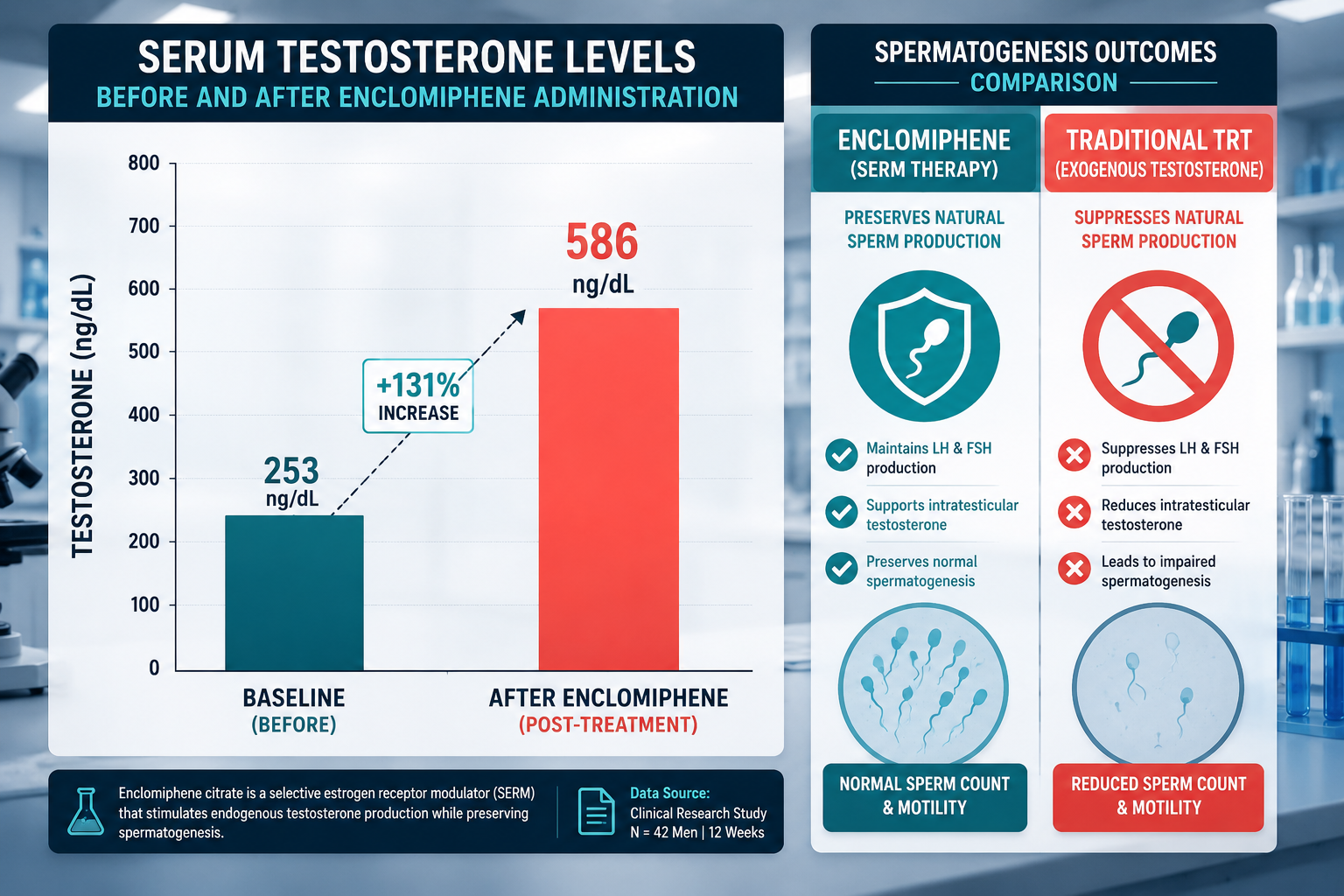
  • Clinical data show testosterone levels rising from roughly 253 ng/dL to 586 ng/dL after six weeks at higher doses.
  • Enclomiphene is the isolated trans-isomer of clomiphene, offering a cleaner serm profile with fewer estrogenic side effects.
  • As of 2026, enclomiphene has not received FDA approval, and long-term safety data remain limited.

Key Takeaways

How Enclomiphene Works: The HPG Axis Mechanism

At the core of enclomiphene for research: understanding its mechanism in hormone regulation studies is its precise action on the HPG axis. Enclomiphene functions as a serm by competitively binding to estrogen receptors in the hypothalamus. Under normal conditions, circulating estradiol binds to these receptors and signals the hypothalamus to reduce gonadotropin-releasing hormone (GnRH) secretion — a classic negative feedback loop.

By blocking this feedback, enclomiphene removes the "brake" on GnRH pulsatility. The result is a downstream surge in both luteinizing hormone (LH) and follicle-stimulating hormone (FSH) from the anterior pituitary, which in turn stimulates Leydig cells in the testes to produce endogenous testosterone.

"Enclomiphene essentially resets the hormonal thermostat by working upstream rather than adding exogenous hormone."

This mechanism stands in sharp contrast to traditional TRT, which suppresses the HPG axis entirely. Researchers studying gonadorelin and GnRH pulsatility will find enclomiphene's upstream action particularly relevant, as both compounds engage the same signaling architecture.

Key receptor interactions in enclomiphene's mechanism:

Site Action Downstream Effect
Hypothalamus Blocks estrogen receptor Increases GnRH pulsatility
Anterior pituitary Elevated GnRH input Raises LH and FSH output
Testes (Leydig cells) LH stimulation Boosts endogenous testosterone
Testes (Sertoli cells) FSH stimulation Preserves spermatogenesis

How Enclomiphene Works: The HPG Axis Mechanism

Clinical Research Findings and Fertility Preservation

The practical value of enclomiphene for research: understanding its mechanism in hormone regulation studies becomes clearest when examining clinical trial data. In one well-cited trial, men with secondary hypogonadism who had baseline testosterone levels averaging 253 ng/dL reached an average of 586 ng/dL after six weeks on the highest tested dose. This restoration to normal physiological range without exogenous hormone administration is a significant research milestone.

What makes this especially notable for researchers:

  • Sperm counts remained stable or improved, unlike outcomes seen with TRT
  • LH and FSH levels rose proportionally, confirming HPG axis engagement
  • Some participants showed improvements in fasting plasma glucose, suggesting potential metabolic benefits worth investigating further

This fertility-preserving profile makes enclomiphene a subject of interest in studies that also examine IPA serm stack research, where multiple compounds are evaluated for their combined effects on the endocrine system.

Enclomiphene vs. Clomiphene: A Cleaner Research Tool

Enclomiphene is the trans-isomer of clomiphene citrate. Standard clomiphene contains both the enclomiphene (trans) and zuclomiphene (cis) isomers. The zuclomiphene isomer carries weak estrogenic activity that can contribute to unwanted side effects. By isolating enclomiphene, researchers work with a compound that delivers a more targeted serm effect, reducing confounding variables in hormone regulation studies.

For labs exploring broader endocrine research, this specificity pairs well with investigations into longevity peptide research and metabolic hormone modulation.


Enclomiphene vs. Clomiphene: A Cleaner Research Tool

Research Applications, Dosing Context, and Regulatory Landscape

Standard dosing protocols in research settings typically range from 12.5 mg to 25 mg orally once daily, with adjustments guided by serum testosterone and gonadotropin measurements. Short-term safety data have been satisfactory and broadly comparable to testosterone gels and placebo in controlled settings. However, long-term safety data remain limited — a critical gap that researchers are actively working to address.

As of 2026, enclomiphene has not received FDA approval. Regulatory reviewers have indicated that raising testosterone levels alone may not constitute sufficient clinical benefit without demonstrated symptomatic improvement. This regulatory context shapes how enclomiphene is sourced and studied; it is currently available through compounding pharmacies, which means quality and dosing consistency can vary.

Researchers investigating related hormonal compounds may find useful context in NAD research and metabolic regulation and thymosin alpha-1 mechanism studies, both of which intersect with endocrine health pathways. For those reviewing the latest developments across the field, the peptide research blog provides ongoing updates relevant to serm and hormone regulation research.

Expert consensus points toward placebo-controlled, randomized trials as the next necessary step — particularly for populations with obesity, metabolic syndrome, and infertility-related hypogonadism.


Conclusion

Enclomiphene occupies a distinctive position in hormone regulation research because it works with the body's own feedback architecture rather than bypassing it. Its ability to elevate endogenous testosterone while preserving spermatogenesis addresses a genuine gap in the endocrinology research toolkit. For investigators studying the HPG axis, serm pharmacology, or fertility-adjacent hormone therapies, the compound offers a well-characterized mechanism and a growing clinical evidence base.

Actionable next steps for researchers:

  1. Review existing clinical trial data on HPG axis modulation to establish baseline comparisons.
  2. Prioritize sourcing from suppliers with verified testing protocols to ensure compound purity.
  3. Design studies that measure symptomatic outcomes alongside biomarker changes to address the FDA's stated evidentiary concerns.
  4. Consider pairing enclomiphene studies with metabolic markers, given preliminary data on fasting glucose improvements.
  5. Monitor regulatory developments in 2026, as the approval landscape for serms in hypogonadism continues to evolve.
https://www.puretestedpeptides.com/wp-content/uploads/2026/06/Enclomiphene-for-Research-Understanding-its-Mechanism-in-Hormone-Regulation-Studies.png 1024 1536 Pure Tested https://www.puretestedpeptides.com/wp-content/uploads/2026/01/buy-peptides-online.jpg Pure Tested2026-06-13 13:04:362026-07-20 15:03:17Enclomiphene for Research: Understanding its Mechanism in Hormone Regulation Studies
Enclomiphene in Male Endocrine Research: Mechanism vs Clomiphene and Overlaps With Luteinizing Phase Physiology

Enclomiphene in Male Endocrine Research: Mechanism vs Clomiphene and Overlaps With Luteinizing Phase Physiology

June 9, 2026/0 Comments/by Pure Tested

Only one isomer inside a decades-old fertility drug is responsible for raising testosterone in men — and isolating it may change how researchers approach male hypogonadism entirely. That single compound is enclomiphene, and its growing presence in male endocrine research is reshaping how scientists think about the hypothalamic-pituitary-gonadal (HPG) axis.

Research into enclomiphene in male endocrine research: mechanism vs clomiphene and overlaps with luteinizing phase physiology has accelerated in 2026, driven by demand for testosterone-raising strategies that do not suppress fertility. Understanding why enclomiphene works — and how it differs from its parent compound — requires a close look at receptor pharmacology and the fundamental biology of luteinizing hormone (LH) signaling.

Key Takeaways

  • Enclomiphene is the trans-isomer of clomiphene citrate and is solely responsible for its anti-estrogenic, testosterone-stimulating effects in men.
  • It blocks hypothalamic estrogen receptors, increasing GnRH pulsatility and driving LH and FSH release — mirroring the natural luteinizing phase feedback loop.
  • Unlike exogenous testosterone replacement therapy (TRT), enclomiphene preserves sperm production and endogenous hormone signaling.
  • Zuclomiphene, the other isomer in clomiphene, carries weak estrogenic activity and a longer half-life, contributing to mood and visual side effects.
  • Clinical data show enclomiphene produces meaningful testosterone increases with a lower adverse-event profile than mixed clomiphene.

Key Takeaways

How Enclomiphene Works: Selective Estrogen Receptor Modulation

Enclomiphene is classified as a selective estrogen receptor modulator (serm). Its primary action occurs at estrogen receptors in the hypothalamus and pituitary gland. Under normal physiology, circulating estradiol binds to these receptors and signals the hypothalamus to reduce gonadotropin-releasing hormone (GnRH) output — a classic negative feedback loop.

Enclomiphene competitively blocks those receptors. With estradiol unable to deliver its suppressive signal, GnRH pulsatility increases. The pituitary responds by secreting more LH and FSH. Elevated LH then stimulates Leydig cells in the testes to synthesize testosterone, while FSH supports spermatogenesis.

Key pharmacokinetic facts:

Parameter Value
Half-life ~10 hours
Time to peak serum concentration 2-3 hours post-ingestion
Steady-state dose 25 mg/day

This rapid clearance is clinically significant. Because enclomiphene leaves the body quickly, its receptor blockade is time-limited and controllable — a meaningful advantage in research settings.


Enclomiphene in Male Endocrine Research: Mechanism vs Clomiphene and Overlaps With Luteinizing Phase Physiology

Enclomiphene in Male Endocrine Research: Mechanism vs Clomiphene and Overlaps With Luteinizing Phase Physiology

The Isomer Problem With Clomiphene Citrate

Clomiphene citrate is not a single compound. It is a 50:50 mixture of two geometric isomers:

  • Enclomiphene (trans-isomer): Blocks estrogen receptors, drives GnRH and LH release, raises testosterone.
  • Zuclomiphene (cis-isomer): Carries weak estrogenic activity, has a much longer half-life, and accumulates in tissue over time.

Zuclomiphene's estrogenic activity and slow elimination are linked to side effects reported with clomiphene use, including mood disturbances, reduced libido, and visual changes. By isolating enclomiphene, researchers remove this confounding variable entirely.

Connection to Luteinizing Phase Physiology

The luteinizing phase in reproductive biology refers to the period surrounding the LH surge — a sharp spike in LH that triggers ovulation in females and, in males, governs tonic testosterone production. In men, LH is released in pulses from the pituitary throughout the day, each pulse prompting Leydig cell testosterone output.

Enclomiphene essentially amplifies this pulsatile system. By lifting estradiol's brake on the hypothalamus, it restores or enhances the natural LH-driven testosterone cascade. This overlap with luteinizing phase physiology is why enclomiphene is particularly relevant for men with secondary hypogonadism — a condition where the testes are functional but the upstream HPG signaling is insufficient.

Researchers studying neuroendocrine and innate immunity interactions will recognize this HPG axis modulation as part of a broader hormonal communication network that extends well beyond reproductive function.


Clinical Evidence and Safety Profile

Clinical Evidence and Safety Profile

A retrospective study of 66 patients found that enclomiphene produced a median testosterone increase of 166 ng/dL with a statistically lower rise in estradiol compared to clomiphene. Adverse effects — including decreased libido, reduced energy, and mood changes — were significantly less frequent with enclomiphene.

Unlike exogenous TRT, which suppresses LH, FSH, and sperm production through negative feedback, enclomiphene maintains or improves sperm counts. This makes it a distinct research focus for hypogonadal men who may wish to preserve fertility.

Researchers exploring metabolic modulation research lines may find enclomiphene's downstream effects on body composition and energy metabolism worth examining alongside testosterone normalization data.

Compounds that modulate the HPG axis often intersect with broader metabolic pathways. For context on related peptide-based research tools, MOTS-c and metabolic flexibility research offers a parallel lens on mitochondrial and hormonal crosstalk.

Enclomiphene vs Clomiphene: Quick Comparison

Feature Enclomiphene Clomiphene Citrate
Isomer composition Trans only Trans + cis (50:50)
Estrogenic activity None Mild (via zuclomiphene)
Half-life ~10 hours Longer (zuclomiphene accumulates)
LH/FSH stimulation Strong Moderate
Fertility preservation Yes Partial
Mood/visual side effects Lower frequency Higher frequency

Researchers also studying neural and arousal pathways may find relevant context in PT-141 neural and metabolic research themes, as central neuroendocrine signaling connects testosterone regulation with broader behavioral physiology.

For those examining body composition outcomes alongside hormonal normalization, TESA body composition research themes and IPA muscle and fat research themes provide complementary data on how hormonal environments shape tissue-level outcomes.


Conclusion

The study of enclomiphene in male endocrine research: mechanism vs clomiphene and overlaps with luteinizing phase physiology clarifies a critical point: not all serms are equal, and isomer composition matters enormously. Enclomiphene's clean receptor blockade at the hypothalamus restores the natural LH-driven testosterone pathway without the estrogenic noise introduced by zuclomiphene.

Actionable next steps for researchers in 2026:

  • Prioritize enclomiphene over mixed clomiphene in male HPG axis models to reduce confounding estrogenic variables.
  • Examine LH pulsatility data alongside testosterone outcomes to map the full luteinizing phase overlap.
  • Investigate enclomiphene's role in secondary hypogonadism models where upstream signaling — not testicular function — is the limiting factor.
  • Cross-reference testosterone normalization data with metabolic and body composition endpoints for a more complete hormonal profile.

As regulatory and clinical interest in enclomiphene grows, its mechanistic clarity makes it a valuable tool for researchers who need precise, reproducible HPG axis modulation without the side-effect profile of its predecessor.

https://www.puretestedpeptides.com/wp-content/uploads/2026/06/Enclomiphene-in-Male-Endocrine-Research-Mechanism-vs-Clomiphene-and-Overlaps-With-Luteinizing-Phase-Physiology.png 672 1024 Pure Tested https://www.puretestedpeptides.com/wp-content/uploads/2026/01/buy-peptides-online.jpg Pure Tested2026-06-09 13:07:172026-07-20 15:03:34Enclomiphene in Male Endocrine Research: Mechanism vs Clomiphene and Overlaps With Luteinizing Phase Physiology
×

Helpful Links

  • My account
  • Cart
  • Checkout
  • Refund and Returns Policy
  • Privacy Policy
  • SMS Privacy Policy
  • Login
  • My Account
  • Logout

USA Made Lab Tested Peptides

All products are sold for research, laboratory, or analytical purposes only, and are not for human consumption


Pure Tested Peptides is a chemical supplier. Pure Tested Peptides is not a compounding / chemical compounding facility as defined under 503A of the Federal Food, Drug, and Cosmetic act. Pure Tested Peptides is not an outsourcing facility as defined under 503B of the Federal Food, Drug, and Cosmetic act.

The statements made within this website have not been evaluated by the US Food and Drug Administration. The products we offer are not intended to diagnose, treat, cure or prevent any disease.

Human/Animal Consumption Prohibited. Laboratory/In-Vitro Experimental Use Only

Scroll to top Scroll to top Scroll to top