

What Is GLP2-T Peptide? Research Use, Gut Barrier Biology, and Experimental Applications
Gut barrier failure is now linked to dozens of systemic conditions, from inflammatory bowel disease to metabolic dysfunction — and researchers are increasingly focused on peptide-based tools that can probe and potentially restore intestinal integrity. Among those tools, GLP2-T peptide has earned serious attention. Understanding what is GLP2-T peptide, its research use, gut barrier biology, and experimental applications is essential for any researcher working at the intersection of incretin biology and mucosal physiology in 2026.
Key Takeaways
- GLP2-T is a research-grade analog of glucagon-like peptide-2 (GLP-2), a 33-amino acid hormone secreted by intestinal L-cells
- Its primary research interest centers on gut mucosal growth, tight junction regulation, and intestinal barrier integrity
- GLP-2 receptor signaling operates through indirect pathways involving IGF-1, IGF-2, and ErbB ligands
- Experimental models include Caco-2 cell cultures, aged animal models, and chemotherapy-induced mucositis studies
- GLP2-T is intended strictly for laboratory research and is not approved for human therapeutic use
GLP-2 Biology: The Foundation Behind GLP2-T
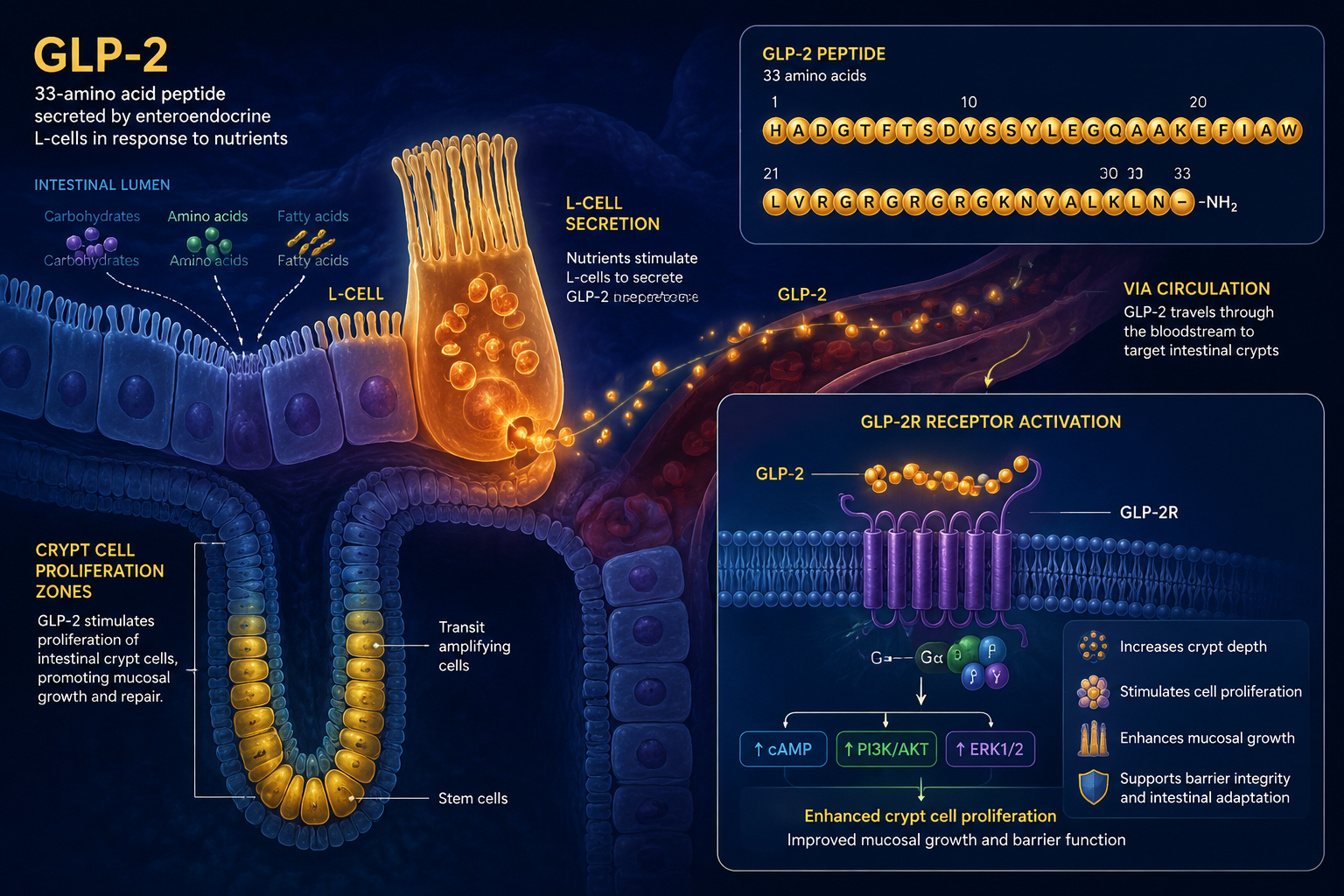
GLP-2 is a 33-amino acid peptide produced and released by enteroendocrine L-cells located in the distal small intestine and colon. Nutrient intake — particularly fat and carbohydrates — triggers its secretion. Once released, GLP-2 acts primarily on the gastrointestinal tract, where it drives two major effects: stimulation of intestinal crypt cell proliferation and inhibition of epithelial apoptosis. The combined result is a measurable increase in mucosal surface area.
GLP2-T refers to a stabilized or modified analog of native GLP-2 designed for research use. The "T" designation typically signals a structural modification that extends the peptide's half-life or improves receptor binding stability, making it more practical for controlled experimental settings.
For researchers already familiar with incretin biology, the GLP-1 peptide research landscape provides useful context — GLP-1 and GLP-2 are co-secreted from the same L-cells but act on entirely different receptor systems and tissue targets.
Gut Barrier Biology: How GLP2-T Research Targets Tight Junctions
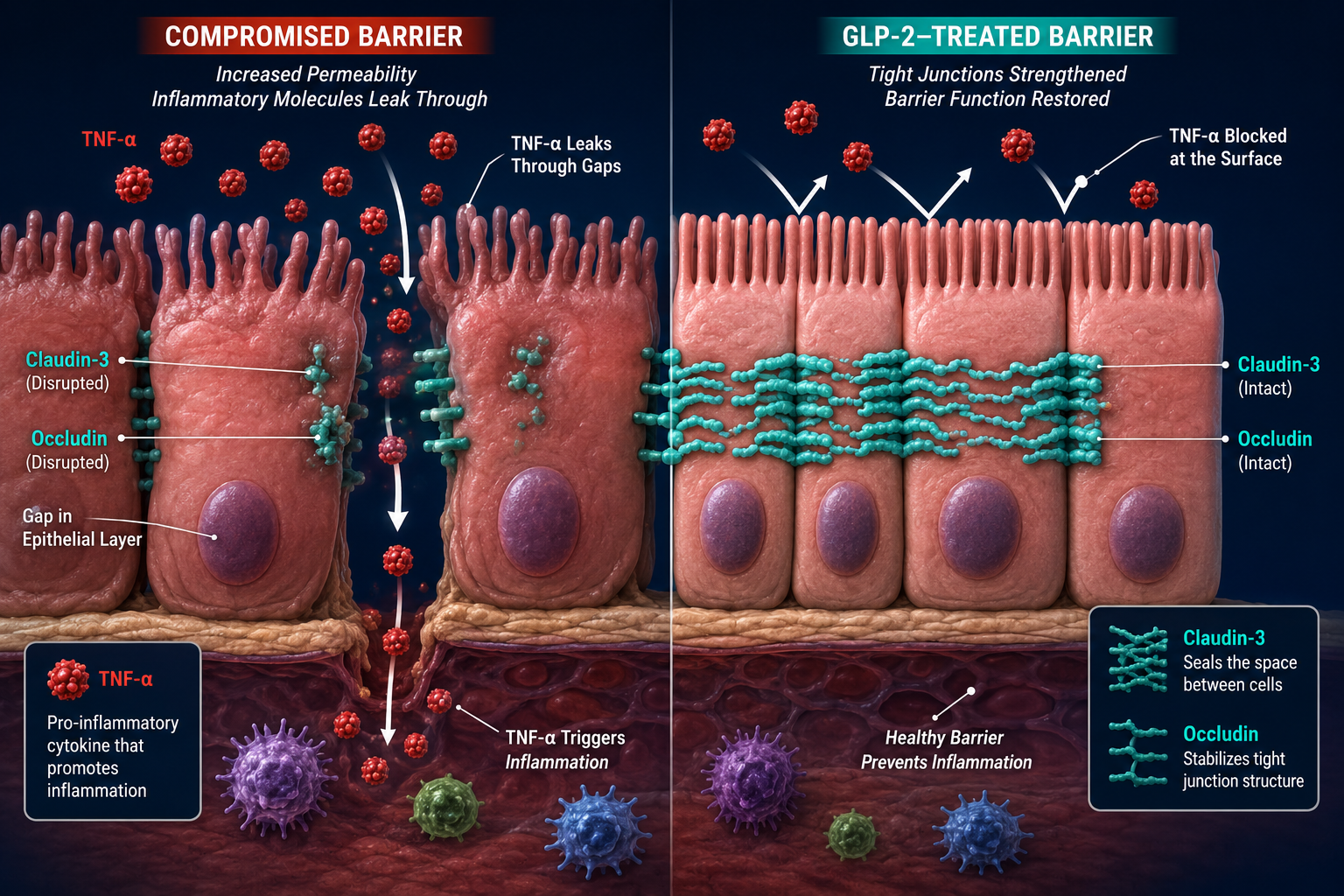
The gut epithelial barrier is not simply a physical wall. It is a dynamic, protein-regulated interface that controls what passes from the intestinal lumen into systemic circulation. Tight junction proteins — particularly claudin-3 and occludin — are the molecular gatekeepers of this barrier.
Research demonstrates that GLP-2 modulates the expression and organization of these tight junction proteins, reducing intestinal permeability. In vitro studies using Caco-2 cell models have shown that GLP-2 enhances barrier formation and protects against TNF-alpha-induced disruptions, a key finding for inflammatory disease research.
The receptor mechanism adds an important layer of complexity. The GLP-2 receptor (GLP-2R) is not expressed directly on proliferating crypt cells. Instead, GLP-2 acts through indirect pathways, signaling via:
| Mediator | Role in GLP-2 Signaling |
|---|---|
| IGF-1 and IGF-2 | Drive crypt cell proliferation downstream |
| ErbB ligands | Support epithelial repair and growth signaling |
| Enteric neurons | Relay signals to mucosal tissue |
| Subepithelial myofibroblasts | Coordinate structural barrier responses |
This indirect signaling architecture makes GLP2-T particularly interesting for researchers studying paracrine gut biology. It also connects naturally to broader peptide research themes in gut and tissue repair.
Experimental Applications of GLP2-T in Research Models
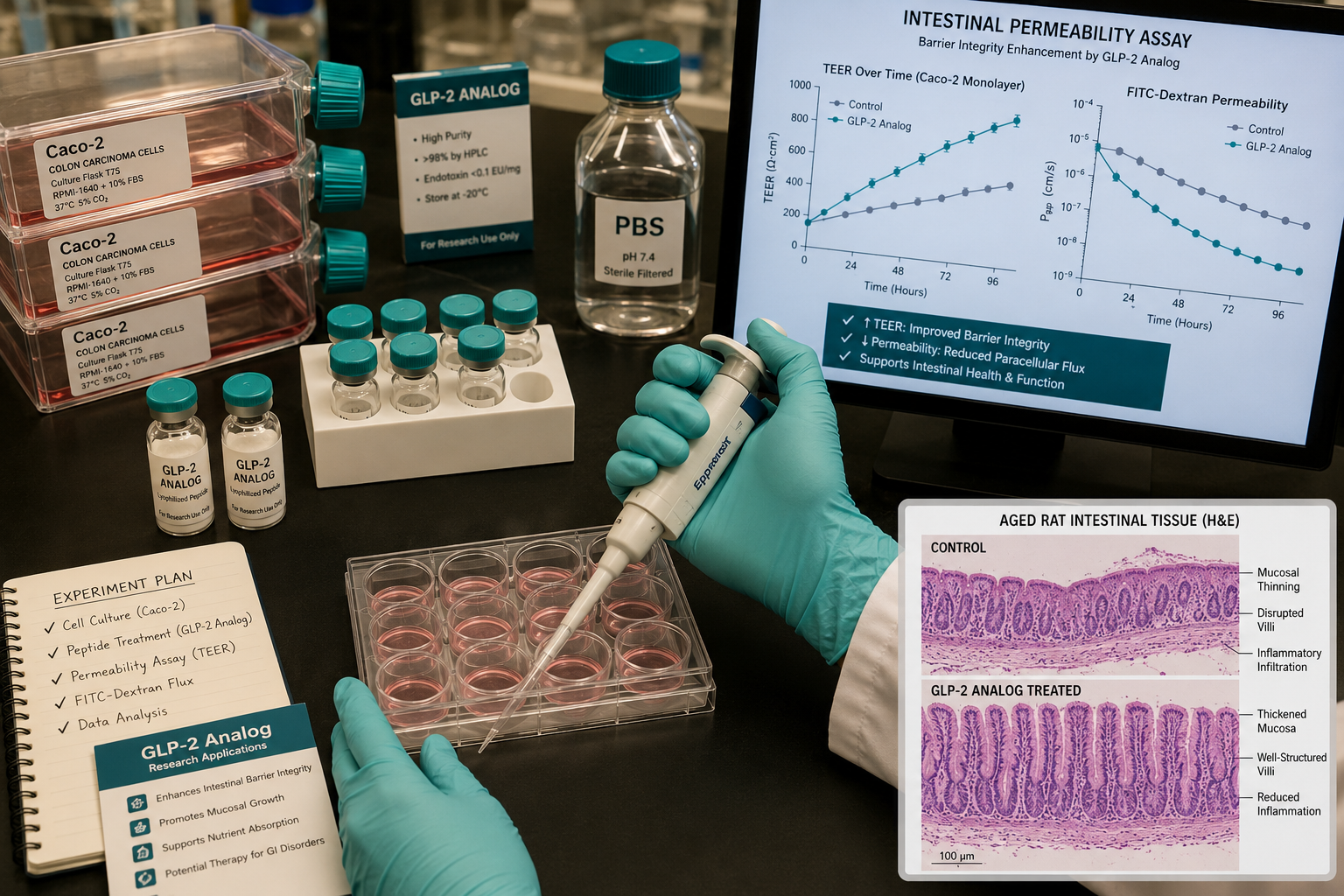
Understanding what is GLP2-T peptide's research use, gut barrier biology, and experimental applications requires looking at the model systems where it has shown the most consistent activity.
Aged Animal Models
Studies in aged rats show that GLP-2 administration improves intestinal mucosal barrier function, suggesting potential relevance for age-related intestinal decline. This positions GLP2-T alongside other longevity-oriented research compounds.
Chemotherapy-Induced Mucositis
GLP-2 has been associated with reduced severity of chemotherapy-induced mucositis in experimental settings, pointing to a supportive role in oncology-adjacent research.
Inflammatory Bowel Disease Models
GLP-2 reduces mucosal permeability, enhances nutrient absorption, and promotes intestinal healing in models of short bowel syndrome and IBD. Researchers exploring GLP-3 and incretin research themes will find GLP2-T a logical parallel compound to study.
Blood Flow Regulation
GLP-2 also modulates intestinal blood flow, adding a vascular dimension to its gut-protective profile.
For researchers exploring dual receptor agonism in the GLP family, GLP2-T offers a clean, single-receptor reference point that clarifies which effects are GLP-2R-specific.
Those sourcing research-grade materials should review options from a verified peptide manufacturer to ensure purity standards appropriate for barrier biology assays.
Conclusion
GLP2-T peptide is a research-grade tool with a well-defined biological target: the intestinal epithelial barrier. Its ability to modulate tight junction proteins, drive mucosal growth through indirect receptor pathways, and protect against inflammatory insults makes it a high-value compound for gut biology research in 2026.
Actionable next steps for researchers:
- Review Caco-2 permeability assay protocols before designing GLP2-T barrier studies
- Compare GLP2-T activity against GLP-1 analogs to isolate receptor-specific effects
- Explore aged-model or mucositis study designs where GLP-2 effects are most documented
- Source only from suppliers with verified purity documentation; browse all available peptides for research use to build a complete experimental panel
- Stay current with new developments in peptide research as GLP-2 analog science continues to evolve
GLP2-T is not a therapeutic product — it is a precision research instrument. Used correctly within controlled laboratory settings, it opens a clear window into some of the most clinically relevant questions in gastrointestinal biology today.