Call or Text 727-513-9780
  • Shopping Cart Shopping Cart
    0Shopping Cart
Pure Tested Peptides | America's most trusted Peptides for sale online
  • Peptides for sale
    • Oral Peptides for sale
      • Peptide Capsules for sale
      • BPC 157 Capsules 1000mcg
      • SLU-PP-332 Capsules | 1000 mcg
      • 5-Amino-1MQ 50mg Capsules
      • Tesofensine 500mcg
    • All Peptides for sale
    • Peptide Sprays
      • BPC 157 Nasal Spray Kit
      • BPC-157 TB500 Nasal Spray Kit
      • Semax Nasal Spray 10mg
      • Selank – Nasal Spray Kit – 10mg
      • Epithalon 50MG Nasal Spray Kit
      • Ipamorelin 10mg Nasal Spray
      • Klow Nasal Spray (BPC-157 + TB-500 + GHK-Cu + KPV) | 80mg
      • Hulk Nasal Spray Tesa / Ipa Blend 6/3 MG
      • Klow Nasal Spray
      • NAD + 500 mg Nasal Spray
      • PT-141 Nasal Spray Kit
    • GHRH Peptides
      • Ipa Peptides
      • CJC-1295 Peptides
        • CJC-1295 with DAC 5 mg
        • CJC-1295 without DAC 5 mg
        • CJC-1295 Ipa 10mg
      • Tesa Peptides
        • Tesa Peptide
        • Tesa 20 mg
    • GHK-Cu Peptides
      • All GHK-Cu Peptides
      • GHK-Cu 100mg
      • KLOW Peptide Blend – Buy KLOW blend online
    • BPC Peptides
      • All BPC Peptides
      • BPC-157
      • BPC-157 TB-500
      • BPC 157 capsules 1000mcg
    • SLU-PP-332 Peptides
      • All SLU-PP-332 Peptides
      • SLU-PP-332 5mg
    • GLP3 Peptides
    • PT-141 Peptides
      • PT-141 Peptides for sale
      • PT-141 10mg
      • PT-141 Nasal Spray
    • CAG Peptides
      • Lipo-C Peptide Blend
      • CAG 5mg
      • CAG 10mg
    • MOTS-C Peptides
      • MOTS-C Peptides for sale
      • MOTS-c peptide
      • MOTS-c 10mg *6 pack*
    • 5 Amino 1MQ Peptides
      • 5 Amino 1MQ Peptides for sale
      • 5-Amino-1MQ 50mg Capsules
      • 5-Amino-1MQ 5mg
    • Epithalon Peptides
      • Epithalon Peptides for sale
      • Epithalon 10mg
      • Epithalon 50mg
  • Shop
    • GLPs
      • 5-Amino-1MQ 50mg Capsules
      • 5-Amino-1MQ 5mg
      • L-Carnitine 500mg/ml
      • Tesofensine 500mcg
      • SLU-PP-332 5mg
      • MOTS-c 10mg *6 pack*
    • Epithalon & BPC Peptides
      • Epithalon 10mg
      • Epithalon 50mg
      • BPC-157
      • BPC 157 capsules 1000mcg
      • BPC-157 TB-500
      • BPC-157 TB500 Nasal Spray Kit
      • BPC 157 Nasal Spray Kit
    • BPC TB-500 & NAD+ Peptides
      • NAD+ 500 mg
      • KLOW Peptide Blend – Buy KLOW blend online
      • GLOW Peptide Blend
      • TB 500 5mg
      • BPC 157 capsules 1000mcg – Supplement
      • BPC 157 Nasal Spray Kit
      • BPC-157
      • BPC-157 TB500 Nasal Spray Kit
      • BPC-157 TB-500
      • BPC 157 capsules 1000mcg
    • LL-37 Peptide
      • LL-37 10 mg
    • MOTS-C & Selank
      • MOTS-c peptide
      • Selank 10mg
    • GHK Peptides
      • GHK-Cu 100mg
      • GLOW Peptide Blend
      • KLOW Peptide Blend – Buy KLOW blend online
  • COAs
  • Wholesale
    • Wholesale Peptides for sale
  • PTP FAQ
  • Affiliates
    • Selank Peptide: Advanced Pharmacological Mechanisms Underlying Its Anxiolytic and Nootropic Effects in Research
      • 5-Amino-1MQ Peptide: Detailed Mechanisms of NNMT Inhibition and Its Impact on Cellular Metabolism Research
        • MOTS-C Peptide: Unraveling Its Role in Mitochondrial Dynamics and Energy Metabolism Research
          • Epithalon Peptide and Telomerase Regulation: Investigating Its Impact on Cellular Senescence and Lifespan Research Models
            • GLP2-T vs GLP2 Tirz Peptide: Understanding the Naming, Mechanistic Nuances, and Research Implications for Gut Health
      • Peptides and Polypeptides in Modern Pharmacology: What Research on Metoprolol, Prednisone, and Amlodipine Reveals
        • Polypeptide Peptides vs NSAIDs: What Naproxen and Diclofenac Teach Tissue-Repair Researchers About BPC‑157 and TB‑500
          • Peptides and Polypeptides in Endocrine Pharmacology: How GLP-1, GLP-2, and GLP-3 Retatrutide Differ From Classic Drugs Like Prednisone and Amlodipine
          • 5‑Amino‑1MQ Peptide and NNMT Inhibition: How It Compares With Statins Like Atorvastatin in Adipose and Lipid Metabolism Research
      • Enclomiphene, Estrogen Receptor Signaling, and Luteinizing Phase Biology: What Hormone Researchers Should Measure
        • Mesenchymal Stem Cells, BPC‑157, and GHK‑Cu: How Tissue Repair Peptides Compare With Classic NSAIDs Like Naproxen in Injury Models
          • Peptide Calculator Use Cases Beyond Growth Hormone: Working Through GLP‑3 Retatrutide, MOTS‑c, and BPC‑157 Research Dosing
        • Polypeptide Peptides in Endocrine and Metabolic Pharmacology: Lessons From Amlodipine, Prednisone, and Metoprolol
        • Peptides Calculator for Advanced Blends: Worked Examples for Tesamorelin, CJC‑1295, and Ipamorelin Stacks
          • Peptides and Polypeptides in Human Physiology: How Molecular Size Shapes Research Applications
            • Selank Peptide: Advanced Pharmacological Mechanisms Underlying Its Anxiolytic and Nootropic Effects in Research
          • 5-Amino-1MQ Peptide: Detailed Mechanisms of NNMT Inhibition and Its Impact on Cellular Metabolism Research
            • MOTS-C Peptide: Unraveling Its Role in Mitochondrial Dynamics and Energy Metabolism Research
              • Epithalon Peptide and Telomerase Regulation: Investigating Its Impact on Cellular Senescence and Lifespan Research Models
                • GLP2-T vs GLP2 Tirz Peptide: Understanding the Naming, Mechanistic Nuances, and Research Implications for Gut Health
                  • Peptides and Polypeptides in Endocrine Pharmacology: How GLP-1, GLP-2, and GLP-3 Retatrutide Differ From Classic Drugs Like Prednisone and Amlodipine
                    • Polypeptide Peptides vs NSAIDs: What Naproxen and Diclofenac Teach Tissue-Repair Researchers About BPC‑157 and TB‑500
                      • Peptides and Polypeptides in Modern Pharmacology: What Research on Metoprolol, Prednisone, and Amlodipine Reveals
                        • 5‑Amino‑1MQ Peptide and NNMT Inhibition: How It Compares With Statins Like Atorvastatin in Adipose and Lipid Metabolism Research
                        • Enclomiphene, Estrogen Receptor Signaling, and Luteinizing Phase Biology: What Hormone Researchers Should Measure
                        • Mesenchymal Stem Cells, BPC‑157, and GHK‑Cu: How Tissue Repair Peptides Compare With Classic NSAIDs Like Naproxen in Injury Models
                        • Peptide Calculator Use Cases Beyond Growth Hormone: Working Through GLP‑3 Retatrutide, MOTS‑c, and BPC‑157 Research Dosing
                        • Polypeptide Peptides in Endocrine and Metabolic Pharmacology: Lessons From Amlodipine, Prednisone, and Metoprolol
                        • Peptides Calculator for Advanced Blends: Worked Examples for Tesamorelin, CJC‑1295, and Ipamorelin Stacks
                        • Peptides and Polypeptides in Human Physiology: How Molecular Size Shapes Research Applications
                        • Selank Peptide: Advanced Pharmacological Mechanisms Underlying Its Anxiolytic and Nootropic Effects in Research
                        • MOTS-C Peptide: Unraveling Its Role in Mitochondrial Dynamics and Energy Metabolism Research
                        • Peptides and Polypeptides in Modern Pharmacology: What Research on Metoprolol, Prednisone, and Amlodipine Reveals
                        • Peptides and Polypeptides in Endocrine Pharmacology: How GLP-1, GLP-2, and GLP-3 Retatrutide Differ From Classic Drugs Like Prednisone and Amlodipine
                        • 5-Amino-1MQ Peptide: Detailed Mechanisms of NNMT Inhibition and Its Impact on Cellular Metabolism Research
                        • Mesenchymal Stem Cells, BPC‑157, and GHK‑Cu: How Tissue Repair Peptides Compare With Classic NSAIDs Like Naproxen in Injury Models
                        • Peptide Calculator Use Cases Beyond Growth Hormone: Working Through GLP‑3 Retatrutide, MOTS‑c, and BPC‑157 Research Dosing
                        • GLP2-T vs GLP2 Tirz Peptide: Understanding the Naming, Mechanistic Nuances, and Research Implications for Gut Health
                        • Polypeptide Peptides in Endocrine and Metabolic Pharmacology: Lessons From Amlodipine, Prednisone, and Metoprolol
                        • Polypeptide Peptides vs NSAIDs: What Naproxen and Diclofenac Teach Tissue-Repair Researchers About BPC‑157 and TB‑500
                        • Peptides and Polypeptides in Human Physiology: How Molecular Size Shapes Research Applications
                        • Peptides Calculator for Advanced Blends: Worked Examples for Tesamorelin, CJC‑1295, and Ipamorelin Stacks
                        • 5‑Amino‑1MQ Peptide and NNMT Inhibition: How It Compares With Statins Like Atorvastatin in Adipose and Lipid Metabolism Research
                        • Enclomiphene, Estrogen Receptor Signaling, and Luteinizing Phase Biology: What Hormone Researchers Should Measure
                        • Epithalon Peptide and Telomerase Regulation: Investigating Its Impact on Cellular Senescence and Lifespan Research Models
                        • Best research protocol Klow blend
                        • best time to take BPC-157
                        • best time to take DSIP (Delta Sleep Inducing Peptide)
                        • best time to take CJC-1295
                        • best time to take AOD-9604
                        • best time to take Follistatin 344
                        • best time to take Ipamorelin
                        • best time to take MK-677 (Ibutamoren)
                        • best time to take Ligandrol (LGD-4033) — research compound
                        • best time to take Ostarine (MK-2866) — research compound
                        • best time to take GHK-CU
                        • best time to take TB-500
                        • best time to take MOTS-c
                        • best time to take Semax
                        • best time to take RAD-140 (Testolone) — research compound
                        • best time to take Thymosin Alpha-1
                        • best time to take PEG-MGF
                        • Biolife Plasma, Octapharma Plasma, and Research Peptides: How Plasma Donation Labs Differ From Peptide Suppliers
                        • best time to take YK-11 — research compound
                        • best time to take PT-141 (Bremelanotide)
                        • Best research protocol Klow blend
                        • 5-Amino-1MQ and MOTS-C Synergy: Metabolic Signaling, Mitochondria, and Research Design
                        • BPC-157 and TB-500: Investigating Their Combined Effects on Angiogenesis and Cellular Migration in Tissue Repair Models
                        • BPC-157 Peptide: Gut Barrier Function, Inflammation, and Tissue-Recovery Research
                        • 5‑Amino‑1MQ and MOTS‑c Synergy in Metabolic Research: Designing NNMT and Mitochondrial Biogenesis Stacks
                        • CJC-1295 with DAC vs. Without DAC: Half-Life, Release Kinetics, and Research Implications
                        • CJC‑1295 with DAC vs. Without DAC: Expanding on Half‑Life Differences Using Tesamorelin and Ipamorelin Blend Case Studies
                        • Collagen Biology and Copper‑Binding Peptides: How GHK‑Cu, Glow Blend, and Klow Blend Interact with Skin and Connective Tissue
                        • Collagen Biology and Regenerative Peptides: How GHK‑Cu, Glow Blend, and Klow Blend Affect Extracellular Matrix Research
                    • DNA, Telomeres, and Longevity Peptides: Positioning Epithalon and MOTS‑c in Genetic Aging Research
                      • Enclomiphene Citrate: serm Mechanism, Testosterone Research, and Stack Compatibility
                        • Enclomiphene vs Enclomiphene Citrate: Formulation, Bioavailability, and Research Distinctions
                        • Epithalon Peptide Research: Telomerase Activation, Aging, and Pineal Gland Function
                        • Estrogen Receptor Signaling and Enclomiphene: How Selective Modulators Compare with Classic Polypeptide Hormones
                        • GHK-Cu Peptide: Advanced Mechanisms in Extracellular Matrix Remodeling and Wound Healing Research
                        • GHK-Cu Peptide: Collagen Synthesis, Wound Repair, and Skin-Barrier Research Models
                        • GLP-1 vs GLP-3 vs GLP-2: Peptide Classification and Research Applications
                        • GLP-2 Peptide Research Guide: Gut Barrier Function, Nutrient Absorption, and Intestinal Recovery Models
                        • GLP-3 Retatrutide vs. GLP-1 Drugs: What Triple-Agonist Biology Changes in Research Models
                        • Ipamorelin and Tesamorelin Combination: Synergistic GH Secretagogue Research and Dosing Protocols
                        • GLP2 Tirz Peptide: What It Is, Why the Name Exists, and How Researchers Should Interpret It
                        • Klow Blend Peptide Nasal Spray: What the Formulation Is Trying to Do in Cognitive Research
                        • Mitochondria, NNMT Inhibition, and Peptide Modulators: Where MOTS‑c and 5‑Amino‑1MQ Fit in Cellular Energy Research
                        • MOTS-c Peptide: Mitochondrial Function, Energy Metabolism, and What Researchers Measure
                        • MOTS-c vs. 5-Amino-1MQ: Which Metabolic Research Questions Each Compound Actually Answers
                        • Nasal Spray Peptides: Bioavailability, Administration, and Semax/Selank Research Applications
                        • PT-141 Peptide Research: Mechanism of Action and Melanocortin Receptor Signaling
                        • Retatrutide for Research: Mechanism, Structure, and GLP-1/GLP-3 Dual Action
                        • Retatrutide for Obesity and Type 2 Diabetes: What the Latest Trial Data Suggest
                        • Tesofensine Peptide Research: Mechanism, Appetite Suppression, and Neuropeptide Y Pathways
  • Contact
    • Contact Customer Service
    • Text Customer Support
  • About US
  • Shop all peptides
  • Affiliate Program
    • Affiliate Signup
  • Login / Register Login / Register Page Link Login / Register Page Link
  • Click to open the search input field Click to open the search input field Search
  • Menu Menu

Tag Archive for: gut mucosal integrity

GLP-2-T and GLP-2 Tirz Peptides: Gut Mucosal Integrity, Nutrient Absorption, and Experimental IBD Models

GLP-2-T and GLP-2 Tirz Peptides: Gut Mucosal Integrity, Nutrient Absorption, and Experimental IBD Models

June 10, 2026/0 Comments/by Pure Tested

Roughly 1.6 million Americans live with inflammatory bowel disease, yet the intestinal epithelium — the single-cell-thick barrier separating the gut lumen from the bloodstream — remains one of the most underexplored therapeutic targets in modern peptide research. GLP-2-T and GLP-2 Tirz Peptides: Gut Mucosal Integrity, Nutrient Absorption, and Experimental IBD Models represent a rapidly advancing frontier in preclinical science, offering researchers new tools to probe how next-generation glucagon-like peptide-2 analogs regulate villus growth, barrier function, and inflammatory signaling in the gut.

Key Takeaways

  • GLP-2 is a 33-amino acid peptide secreted by intestinal L-cells that drives mucosal growth and reduces gut permeability.
  • GLP-2-T and GLP-2 Tirz are next-generation analogs engineered for enhanced receptor potency and extended half-life compared to native GLP-2.
  • Both analogs stimulate crypt cell proliferation, expand villus surface area, and tighten epithelial junctions in preclinical models.
  • Experimental IBD models show measurable reductions in inflammatory cytokines and mucosal damage scores following analog treatment.
  • These peptides are research-stage compounds used to understand gut biology, not approved clinical therapies.
Key Takeaways

GLP-2 Receptor Biology: The Foundation for GLP-2-T and GLP-2 Tirz Research

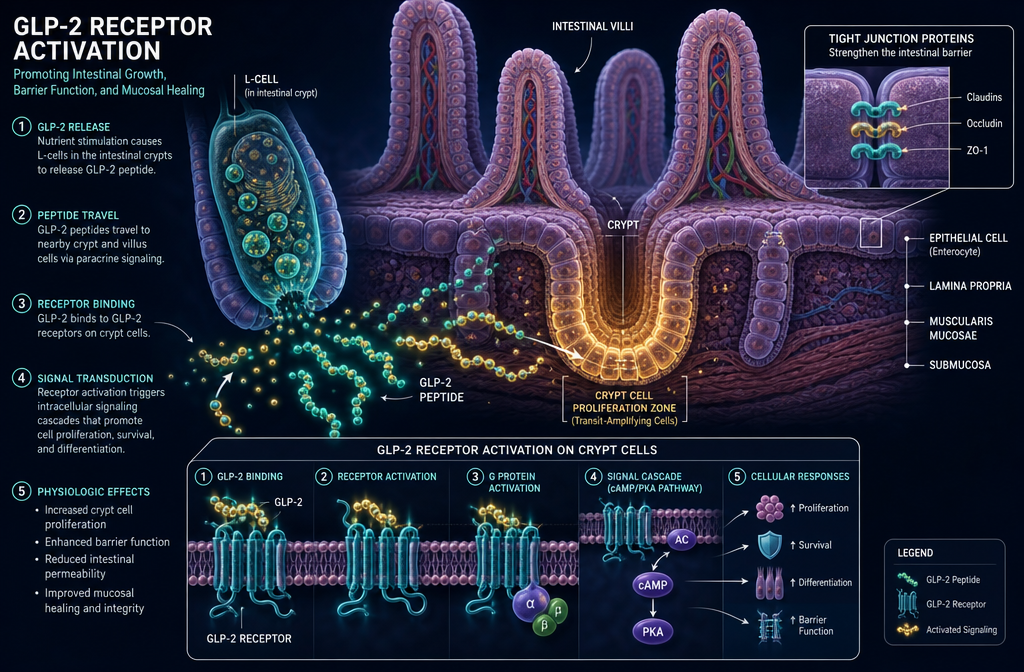
GLP-2 is produced through proglucagon processing in enteroendocrine L-cells lining the small and large intestine. When nutrients — particularly fats and fermentable carbohydrates — reach the distal gut, L-cells release GLP-2 into the portal circulation. The peptide then binds to the GLP-2 receptor (GLP-2R), a G-protein-coupled receptor expressed on enteric neurons, subepithelial myofibroblasts, and select immune cells within the lamina propria.

Critically, GLP-2R activation does not act directly on enterocytes. Instead, it triggers a paracrine signaling cascade involving insulin-like growth factor-1 (IGF-1), keratinocyte growth factor (KGF), and epidermal growth factor (EGF). These secondary messengers drive crypt cell proliferation, suppress enterocyte apoptosis, and ultimately expand the mucosal surface area available for nutrient absorption.

Native GLP-2 has a short half-life — roughly 7 minutes — due to rapid degradation by the enzyme dipeptidyl peptidase-4 (DPP-4). This limitation spurred the development of DPP-4-resistant analogs. Teduglutide (Gattex) was the first approved analog, used clinically for short bowel syndrome. GLP-2-T and GLP-2 Tirz represent a newer generation engineered for even greater receptor affinity and metabolic stability, making them valuable tools in preclinical gut biology research.

For researchers exploring multi-target peptide interactions, understanding how GLP-3 and related incretin analogs compare in receptor selectivity provides useful context for designing experimental protocols.

GLP-2 Receptor Biology: The Foundation for GLP-2-T and GLP-2 Tirz Research

Gut Mucosal Integrity and Nutrient Absorption: How GLP-2-T and GLP-2 Tirz Peptides Differ

Both GLP-2-T and GLP-2 Tirz share the core mechanism of native GLP-2 but diverge in structural modifications that affect their pharmacokinetic profiles.

Feature Native GLP-2 GLP-2-T GLP-2 Tirz
Half-life ~7 minutes Extended Extended + dual action
DPP-4 resistance Low High High
Receptor target GLP-2R only GLP-2R GLP-2R + secondary target
Villus growth effect Moderate Strong Strong
Barrier tightening Moderate Strong Strong

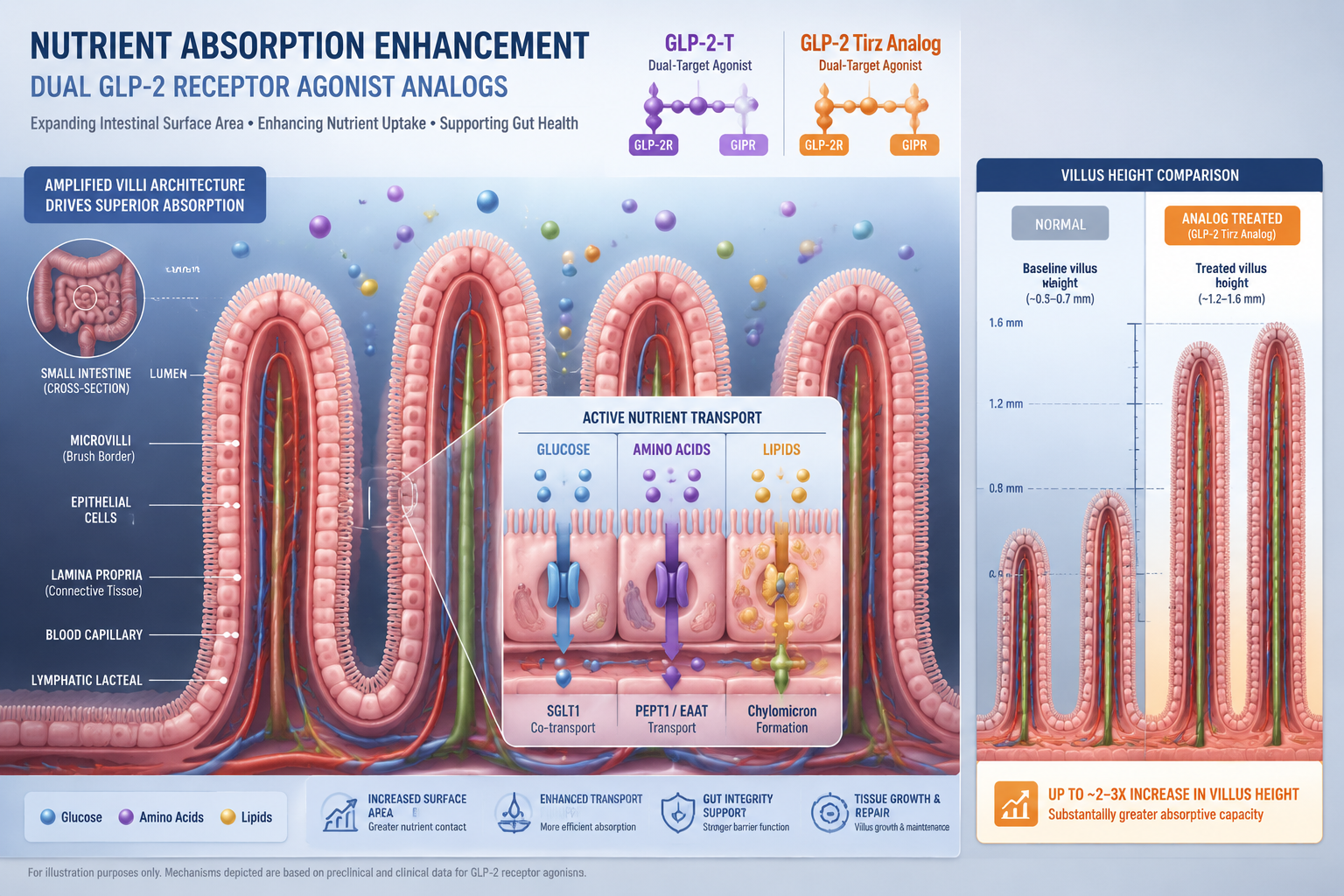
GLP-2 Tirz is particularly notable because its structural design borrows from the tirzepatide framework — a dual or multi-receptor approach — which may allow simultaneous modulation of gut motility and mucosal repair pathways. In preclinical rodent models, GLP-2 Tirz treatment has been associated with:

  • Measurable increases in villus height-to-crypt depth ratios
  • Upregulation of tight junction proteins (claudin-3, occludin, ZO-1)
  • Reduced intestinal permeability as measured by FITC-dextran assays
  • Enhanced absorption of glucose, amino acids, and long-chain fatty acids

These findings align with broader research on tissue repair peptides. Researchers interested in how structural peptides support epithelial integrity may also find value in reviewing BPC-157 and TB-500 regeneration research, which addresses overlapping pathways in mucosal healing.

Additionally, the role of GHK-Cu peptides in tissue homeostasis offers a complementary perspective on how copper-binding peptides influence extracellular matrix remodeling in gut tissue.

Gut Mucosal Integrity and Nutrient Absorption: How GLP-2-T and GLP-2 Tirz Peptides Differ

Experimental IBD Models: Applying GLP-2-T and GLP-2 Tirz Peptides to Inflammatory Disease Research

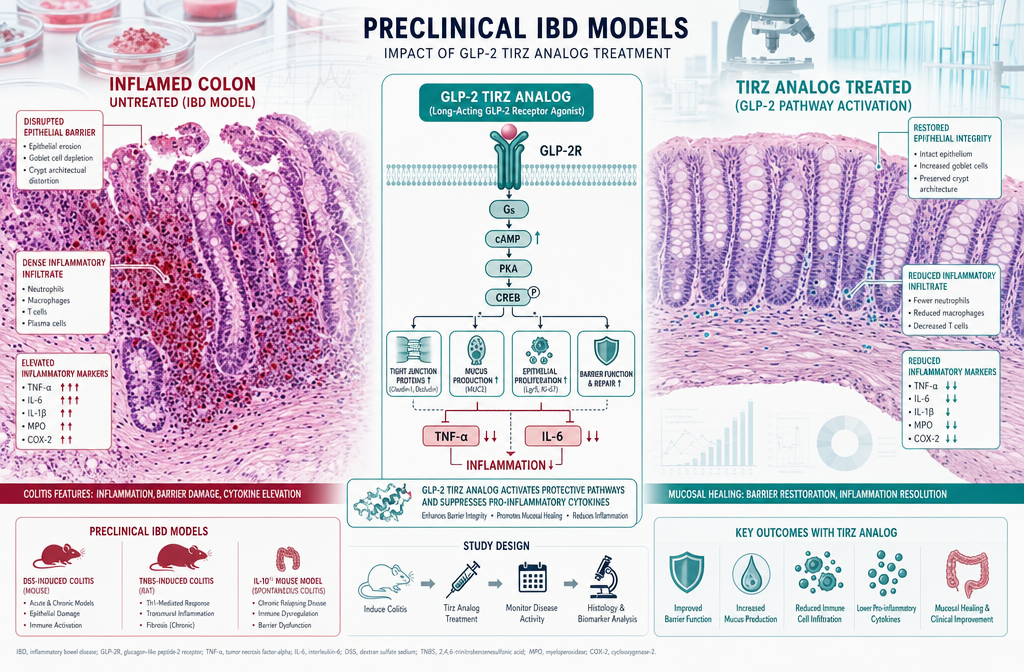
The application of GLP-2-T and GLP-2 Tirz Peptides: Gut Mucosal Integrity, Nutrient Absorption, and Experimental IBD Models research has accelerated in preclinical settings using established colitis induction protocols, including dextran sodium sulfate (DSS) and 2,4,6-trinitrobenzenesulfonic acid (TNBS) models.

In DSS-induced colitis models, animals treated with GLP-2 analogs consistently show:

  • Lower disease activity index (DAI) scores, reflecting reduced weight loss, stool consistency changes, and rectal bleeding
  • Decreased colonic shortening, a hallmark of chronic inflammation
  • Reduced myeloperoxidase (MPO) activity, indicating lower neutrophil infiltration
  • Suppressed pro-inflammatory cytokines including TNF-alpha, IL-6, and IL-1beta

GLP-2 Tirz's potential dual-receptor engagement may offer additional anti-inflammatory benefits beyond mucosal repair alone. Researchers hypothesize that modulating enteric nervous system signaling through GLP-2R could dampen the neurogenic component of intestinal inflammation.

For broader context on how peptides interact with innate immune pathways relevant to gut inflammation, the LL-37 innate immunity research overview and neuroendocrine innate immunity research provide useful comparative frameworks.

Researchers sourcing compounds for gut biology studies can also explore the full peptide catalog organized by research theme to identify complementary tools for multi-pathway experimental designs.


Conclusion

The preclinical science surrounding GLP-2-T and GLP-2 Tirz Peptides: Gut Mucosal Integrity, Nutrient Absorption, and Experimental IBD Models points toward a compelling set of research opportunities. These analogs offer improved pharmacokinetic stability over native GLP-2, demonstrable effects on villus architecture and tight junction integrity, and measurable anti-inflammatory activity in established colitis models.

Actionable next steps for researchers:

  • Design dose-response studies using GLP-2-T and GLP-2 Tirz in DSS or TNBS colitis models to establish effective preclinical ranges.
  • Pair mucosal permeability assays (FITC-dextran) with cytokine panels to capture both structural and immunological endpoints.
  • Consider multi-peptide experimental designs that incorporate complementary gut-repair compounds to map synergistic pathways.
  • Review the generations of GLP-1 analog development to contextualize GLP-2 Tirz within the broader incretin analog landscape.

As preclinical data continues to accumulate in 2026, GLP-2-T and GLP-2 Tirz remain among the most mechanistically rich peptide tools available for studying intestinal barrier biology and inflammatory gut disease.

https://www.puretestedpeptides.com/wp-content/uploads/2026/06/GLP-2-T-and-GLP-2-Tirz-Peptides-Gut-Mucosal-Integrity-Nutrient-Absorption-and-Experimental-IBD-Models.png 672 1024 Pure Tested https://www.puretestedpeptides.com/wp-content/uploads/2026/01/buy-peptides-online.jpg Pure Tested2026-06-10 13:06:362026-07-20 15:03:32GLP-2-T and GLP-2 Tirz Peptides: Gut Mucosal Integrity, Nutrient Absorption, and Experimental IBD Models
×

Helpful Links

  • My account
  • Cart
  • Checkout
  • Refund and Returns Policy
  • Privacy Policy
  • SMS Privacy Policy
  • Login
  • My Account
  • Logout

USA Made Lab Tested Peptides

All products are sold for research, laboratory, or analytical purposes only, and are not for human consumption


Pure Tested Peptides is a chemical supplier. Pure Tested Peptides is not a compounding / chemical compounding facility as defined under 503A of the Federal Food, Drug, and Cosmetic act. Pure Tested Peptides is not an outsourcing facility as defined under 503B of the Federal Food, Drug, and Cosmetic act.

The statements made within this website have not been evaluated by the US Food and Drug Administration. The products we offer are not intended to diagnose, treat, cure or prevent any disease.

Human/Animal Consumption Prohibited. Laboratory/In-Vitro Experimental Use Only

Scroll to top Scroll to top Scroll to top