Call or Text 727-513-9780
  • Shopping Cart Shopping Cart
    0Shopping Cart
Pure Tested Peptides | America's most trusted Peptides for sale online
  • Peptides for sale
    • Oral Peptides for sale
      • Peptide Capsules for sale
      • BPC 157 Capsules 1000mcg
      • SLU-PP-332 Capsules | 1000 mcg
      • 5-Amino-1MQ 50mg Capsules
      • Tesofensine 500mcg
    • All Peptides for sale
    • Peptide Sprays
      • BPC 157 Nasal Spray Kit
      • BPC-157 TB500 Nasal Spray Kit
      • Semax Nasal Spray 10mg
      • Selank – Nasal Spray Kit – 10mg
      • Epithalon 50MG Nasal Spray Kit
      • Ipamorelin 10mg Nasal Spray
      • Klow Nasal Spray (BPC-157 + TB-500 + GHK-Cu + KPV) | 80mg
      • Hulk Nasal Spray Tesa / Ipa Blend 6/3 MG
      • Klow Nasal Spray
      • NAD + 500 mg Nasal Spray
      • PT-141 Nasal Spray Kit
    • GHRH Peptides
      • Ipa Peptides
      • CJC-1295 Peptides
        • CJC-1295 with DAC 5 mg
        • CJC-1295 without DAC 5 mg
        • CJC-1295 Ipa 10mg
      • Tesa Peptides
        • Tesa Peptide
        • Tesa 20 mg
    • GHK-Cu Peptides
      • All GHK-Cu Peptides
      • GHK-Cu 100mg
      • KLOW Peptide Blend – Buy KLOW blend online
    • BPC Peptides
      • All BPC Peptides
      • BPC-157
      • BPC-157 TB-500
      • BPC 157 capsules 1000mcg
    • SLU-PP-332 Peptides
      • All SLU-PP-332 Peptides
      • SLU-PP-332 5mg
    • GLP3 Peptides
      • GLP3-R
      • GLP3-R CAG 10mg
      • GLP3-R 20mg
    • PT-141 Peptides
      • PT-141 Peptides for sale
      • PT-141 10mg
      • PT-141 Nasal Spray
    • CAG Peptides
      • Lipo-C Peptide Blend
      • CAG 5mg
      • CAG 10mg
    • MOTS-C Peptides
      • MOTS-C Peptides for sale
      • MOTS-c peptide
      • MOTS-c 10mg *6 pack*
    • 5 Amino 1MQ Peptides
      • 5 Amino 1MQ Peptides for sale
      • 5-Amino-1MQ 50mg Capsules
      • 5-Amino-1MQ 5mg
    • Epithalon Peptides
      • Epithalon Peptides for sale
      • Epithalon 10mg
      • Epithalon 50mg
  • Shop
    • GLPs
      • 5-Amino-1MQ 50mg Capsules
      • 5-Amino-1MQ 5mg
      • GLP3-Reta
      • L-Carnitine 500mg/ml
      • Tesofensine 500mcg
      • SLU-PP-332 5mg
      • MOTS-c 10mg *6 pack*
    • Epithalon & BPC Peptides
      • Epithalon 10mg
      • Epithalon 50mg
      • BPC-157
      • BPC 157 capsules 1000mcg
      • BPC-157 TB-500
      • BPC-157 TB500 Nasal Spray Kit
      • BPC 157 Nasal Spray Kit
    • BPC TB-500 & NAD+ Peptides
      • NAD+ 500 mg
      • KLOW Peptide Blend – Buy KLOW blend online
      • GLOW Peptide Blend
      • TB 500 5mg
      • BPC 157 capsules 1000mcg – Supplement
      • BPC 157 Nasal Spray Kit
      • BPC-157
      • BPC-157 TB500 Nasal Spray Kit
      • BPC-157 TB-500
      • BPC 157 capsules 1000mcg
    • LL-37 Peptide
      • LL-37 10 mg
    • MOTS-C & Selank
      • MOTS-c peptide
      • Selank 10mg
    • GHK Peptides
      • GHK-Cu 100mg
      • GLOW Peptide Blend
      • KLOW Peptide Blend – Buy KLOW blend online
  • COAs
  • Wholesale
    • Wholesale Peptides for sale
  • PTP FAQ
  • Affiliates
    • Selank Peptide: Advanced Pharmacological Mechanisms Underlying Its Anxiolytic and Nootropic Effects in Research
      • 5-Amino-1MQ Peptide: Detailed Mechanisms of NNMT Inhibition and Its Impact on Cellular Metabolism Research
        • MOTS-C Peptide: Unraveling Its Role in Mitochondrial Dynamics and Energy Metabolism Research
          • Epithalon Peptide and Telomerase Regulation: Investigating Its Impact on Cellular Senescence and Lifespan Research Models
            • GLP2-T vs GLP2 Tirz Peptide: Understanding the Naming, Mechanistic Nuances, and Research Implications for Gut Health
      • Peptides and Polypeptides in Modern Pharmacology: What Research on Metoprolol, Prednisone, and Amlodipine Reveals
        • Polypeptide Peptides vs NSAIDs: What Naproxen and Diclofenac Teach Tissue-Repair Researchers About BPC‑157 and TB‑500
          • Peptides and Polypeptides in Endocrine Pharmacology: How GLP-1, GLP-2, and GLP-3 Retatrutide Differ From Classic Drugs Like Prednisone and Amlodipine
          • 5‑Amino‑1MQ Peptide and NNMT Inhibition: How It Compares With Statins Like Atorvastatin in Adipose and Lipid Metabolism Research
      • Enclomiphene, Estrogen Receptor Signaling, and Luteinizing Phase Biology: What Hormone Researchers Should Measure
        • Mesenchymal Stem Cells, BPC‑157, and GHK‑Cu: How Tissue Repair Peptides Compare With Classic NSAIDs Like Naproxen in Injury Models
          • Peptide Calculator Use Cases Beyond Growth Hormone: Working Through GLP‑3 Retatrutide, MOTS‑c, and BPC‑157 Research Dosing
        • Polypeptide Peptides in Endocrine and Metabolic Pharmacology: Lessons From Amlodipine, Prednisone, and Metoprolol
        • Peptides Calculator for Advanced Blends: Worked Examples for Tesamorelin, CJC‑1295, and Ipamorelin Stacks
          • Peptides and Polypeptides in Human Physiology: How Molecular Size Shapes Research Applications
            • Selank Peptide: Advanced Pharmacological Mechanisms Underlying Its Anxiolytic and Nootropic Effects in Research
          • 5-Amino-1MQ Peptide: Detailed Mechanisms of NNMT Inhibition and Its Impact on Cellular Metabolism Research
            • MOTS-C Peptide: Unraveling Its Role in Mitochondrial Dynamics and Energy Metabolism Research
              • Epithalon Peptide and Telomerase Regulation: Investigating Its Impact on Cellular Senescence and Lifespan Research Models
                • GLP2-T vs GLP2 Tirz Peptide: Understanding the Naming, Mechanistic Nuances, and Research Implications for Gut Health
                  • Peptides and Polypeptides in Endocrine Pharmacology: How GLP-1, GLP-2, and GLP-3 Retatrutide Differ From Classic Drugs Like Prednisone and Amlodipine
                    • Polypeptide Peptides vs NSAIDs: What Naproxen and Diclofenac Teach Tissue-Repair Researchers About BPC‑157 and TB‑500
                      • Peptides and Polypeptides in Modern Pharmacology: What Research on Metoprolol, Prednisone, and Amlodipine Reveals
                        • 5‑Amino‑1MQ Peptide and NNMT Inhibition: How It Compares With Statins Like Atorvastatin in Adipose and Lipid Metabolism Research
                        • Enclomiphene, Estrogen Receptor Signaling, and Luteinizing Phase Biology: What Hormone Researchers Should Measure
                        • Mesenchymal Stem Cells, BPC‑157, and GHK‑Cu: How Tissue Repair Peptides Compare With Classic NSAIDs Like Naproxen in Injury Models
                        • Peptide Calculator Use Cases Beyond Growth Hormone: Working Through GLP‑3 Retatrutide, MOTS‑c, and BPC‑157 Research Dosing
                        • Polypeptide Peptides in Endocrine and Metabolic Pharmacology: Lessons From Amlodipine, Prednisone, and Metoprolol
                        • Peptides Calculator for Advanced Blends: Worked Examples for Tesamorelin, CJC‑1295, and Ipamorelin Stacks
                        • Peptides and Polypeptides in Human Physiology: How Molecular Size Shapes Research Applications
                        • Selank Peptide: Advanced Pharmacological Mechanisms Underlying Its Anxiolytic and Nootropic Effects in Research
                        • MOTS-C Peptide: Unraveling Its Role in Mitochondrial Dynamics and Energy Metabolism Research
                        • Peptides and Polypeptides in Modern Pharmacology: What Research on Metoprolol, Prednisone, and Amlodipine Reveals
                        • Peptides and Polypeptides in Endocrine Pharmacology: How GLP-1, GLP-2, and GLP-3 Retatrutide Differ From Classic Drugs Like Prednisone and Amlodipine
                        • 5-Amino-1MQ Peptide: Detailed Mechanisms of NNMT Inhibition and Its Impact on Cellular Metabolism Research
                        • Mesenchymal Stem Cells, BPC‑157, and GHK‑Cu: How Tissue Repair Peptides Compare With Classic NSAIDs Like Naproxen in Injury Models
                        • Peptide Calculator Use Cases Beyond Growth Hormone: Working Through GLP‑3 Retatrutide, MOTS‑c, and BPC‑157 Research Dosing
                        • GLP2-T vs GLP2 Tirz Peptide: Understanding the Naming, Mechanistic Nuances, and Research Implications for Gut Health
                        • Polypeptide Peptides in Endocrine and Metabolic Pharmacology: Lessons From Amlodipine, Prednisone, and Metoprolol
                        • Polypeptide Peptides vs NSAIDs: What Naproxen and Diclofenac Teach Tissue-Repair Researchers About BPC‑157 and TB‑500
                        • Peptides and Polypeptides in Human Physiology: How Molecular Size Shapes Research Applications
                        • Peptides Calculator for Advanced Blends: Worked Examples for Tesamorelin, CJC‑1295, and Ipamorelin Stacks
                        • 5‑Amino‑1MQ Peptide and NNMT Inhibition: How It Compares With Statins Like Atorvastatin in Adipose and Lipid Metabolism Research
                        • Enclomiphene, Estrogen Receptor Signaling, and Luteinizing Phase Biology: What Hormone Researchers Should Measure
                        • Epithalon Peptide and Telomerase Regulation: Investigating Its Impact on Cellular Senescence and Lifespan Research Models
                        • Best research protocol Klow blend
                        • best time to take BPC-157
                        • best time to take DSIP (Delta Sleep Inducing Peptide)
                        • best time to take CJC-1295
                        • best time to take AOD-9604
                        • best time to take Follistatin 344
                        • best time to take Ipamorelin
                        • best time to take MK-677 (Ibutamoren)
                        • best time to take Ligandrol (LGD-4033) — research compound
                        • best time to take Ostarine (MK-2866) — research compound
                        • best time to take GHK-CU
                        • best time to take TB-500
                        • best time to take MOTS-c
                        • best time to take Semax
                        • best time to take RAD-140 (Testolone) — research compound
                        • best time to take Thymosin Alpha-1
                        • best time to take PEG-MGF
                        • Biolife Plasma, Octapharma Plasma, and Research Peptides: How Plasma Donation Labs Differ From Peptide Suppliers
                        • best time to take YK-11 — research compound
                        • best time to take PT-141 (Bremelanotide)
                        • Best research protocol Klow blend
  • Contact
    • Contact Customer Service
    • Text Customer Support
  • About US
  • Shop all peptides
  • Affiliate Program
    • Affiliate Signup
  • Login / Register Login / Register Page Link Login / Register Page Link
  • Click to open the search input field Click to open the search input field Search
  • Menu Menu

Tag Archive for: mitochondria research

Mitochondria and Experimental Peptides: How MOTS‑c, 5‑Amino‑1MQ, and SLUPP332 Are Used in Metabolic Research Models

Mitochondria and Experimental Peptides: How MOTS‑c, 5‑Amino‑1MQ, and SLUPP332 Are Used in Metabolic Research Models

June 5, 2026/0 Comments/by Pure Tested

Roughly 90% of cellular ATP is produced inside mitochondria — yet these organelles are also command centers for hormone signaling, fat oxidation, and stress response. That dual role makes them a prime target in modern metabolic research, and it explains why scientists are mapping how experimental compounds like MOTS‑c, 5‑Amino‑1MQ, and SLU‑PP‑332 interact with mitochondrial biology. Understanding Mitochondria and Experimental Peptides: How MOTS‑c, 5‑Amino‑1MQ, and SLUPP332 Are Used in Metabolic Research Models is now a central theme for researchers studying energy balance, obesity, and age-related metabolic decline.
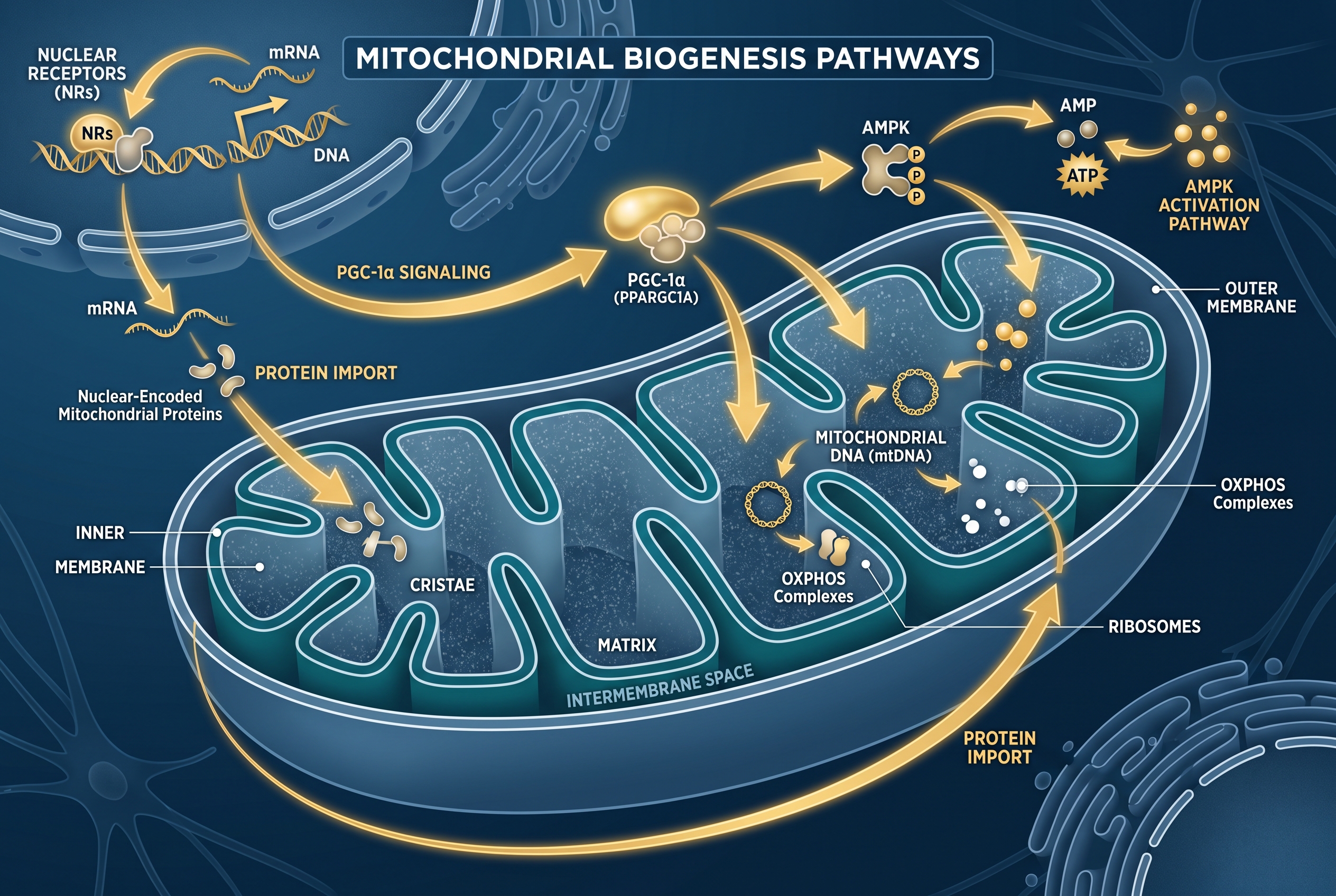
Detailed () scientific illustration showing a cross-section of a mitochondrion with labeled inner membrane, cristae, and

Key Takeaways

  • Mitochondria are not just energy factories — they encode peptides like MOTS‑c that act as hormones in skeletal muscle and fat tissue.
  • MOTS‑c activates AMPK through the folate-methionine cycle, improving glucose homeostasis in preclinical models.
  • 5‑Amino‑1MQ inhibits NNMT, an enzyme linked to fat accumulation and impaired NAD+ metabolism.
  • SLU‑PP‑332 targets ERR‑alpha receptors to mimic exercise-like signals in muscle and cardiac tissue.
  • All three compounds remain strictly research-stage tools with no established clinical dosing protocols as of 2026.

Mitochondria as Metabolic Regulators — Not Just Power Plants

For decades, biology textbooks described mitochondria as passive energy converters. More recent research has overturned that view. Mitochondria actively secrete signaling molecules called mitokines, communicate with the nucleus, and respond dynamically to nutrient status and physical stress.

This reframing is central to understanding Mitochondria and Experimental Peptides: How MOTS‑c, 5‑Amino‑1MQ, and SLUPP332 Are Used in Metabolic Research Models. Each compound in this research cluster targets a different node in mitochondrial or mitochondria-adjacent signaling:

Compound Primary Target Research Focus
MOTS‑c AMPK / folate cycle Glucose metabolism, muscle homeostasis
5‑Amino‑1MQ NNMT enzyme Fat loss, NAD+ regulation
SLU‑PP‑332 ERR‑alpha receptor Exercise mimicry, energy expenditure

Researchers exploring mitochondrial longevity pathways often use these compounds in combination to probe how different arms of mitochondrial biology interact.


MOTS‑c: A Peptide Encoded Inside the Mitochondrial Genome

MOTS‑c is a 16‑amino‑acid peptide encoded not by nuclear DNA, but by mitochondrial DNA — a distinction that makes it biologically unusual. It circulates in the bloodstream and primarily targets skeletal muscle and adipose tissue, qualifying it as a true mitochondrial hormone.

How MOTS‑c Works in Research Models

MOTS‑c disrupts the folate-methionine cycle, which leads to accumulation of AICAR — a naturally occurring AMPK activator. AMPK activation then drives downstream effects including improved insulin sensitivity, enhanced fatty acid oxidation, and upregulation of PGC‑1alpha, a master regulator of mitochondrial biogenesis.

A March 2026 study confirmed that MOTS‑c administration in animal models improved muscle mitochondrial bioenergetic performance while reducing reactive oxygen species emission and stress-related protein damage. Separate research showed that exercise itself stimulates MOTS‑c expression in humans, suggesting the peptide may partially mediate the metabolic benefits of physical activity.

Researchers can explore MOTS‑c metabolic flexibility research themes for a deeper look at how these pathways are being studied. For those comparing compound profiles, the MOTS‑c and Elamipretide research overview provides useful context on stacking strategies in preclinical settings.

"MOTS‑c may represent the first mitochondria-derived peptide hormone with systemic metabolic effects — a finding that reshapes how researchers think about organelle-to-organ communication."

Important caveat: As of 2026, no peer-reviewed human clinical trials on MOTS‑c have been published. Optimal dosing and long-term safety remain uncharacterized outside animal models.


5‑Amino‑1MQ and SLU‑PP‑332: Complementary Tools in Metabolic Research Models
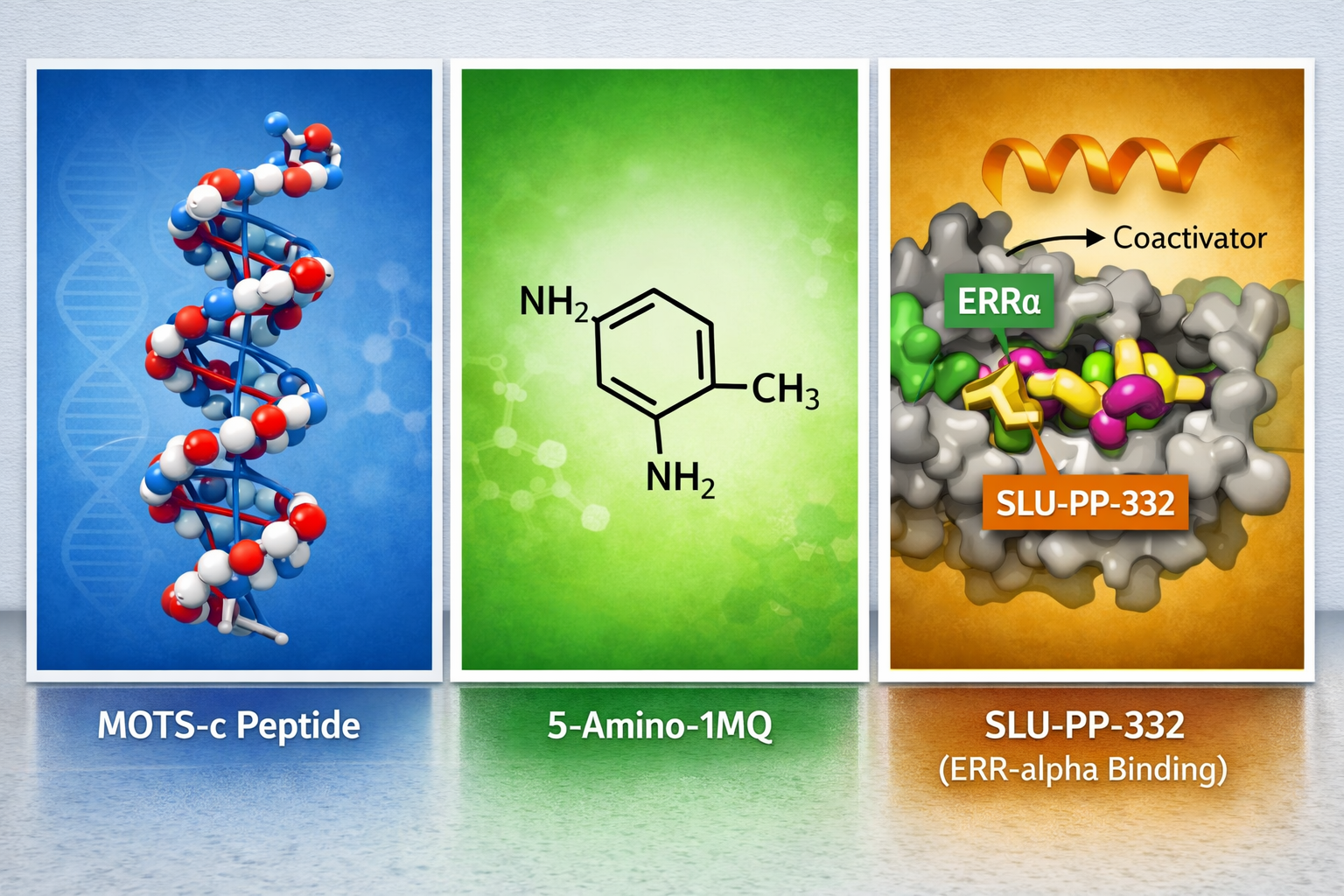
5‑Amino‑1MQ and SLU‑PP‑332: Complementary Tools in Metabolic Research Models

While MOTS‑c works from inside the mitochondrial genome outward, 5‑Amino‑1MQ and SLU‑PP‑332 approach mitochondrial metabolism from different angles.

5‑Amino‑1MQ: NNMT Inhibition and NAD+ Metabolism

5‑Amino‑1MQ is a small-molecule inhibitor of nicotinamide N-methyltransferase (NNMT), an enzyme highly expressed in fat tissue. NNMT consumes methyl groups and depletes SAM (S-adenosylmethionine), indirectly reducing NAD+ availability. By blocking NNMT, 5‑Amino‑1MQ preserves NAD+ pools and appears to shift fat cells toward a leaner metabolic phenotype.

In obese rodent models, 5‑Amino‑1MQ has shown associations with reduced fat mass and improved muscle stem-cell function without significant changes to food intake — a profile that distinguishes it from appetite-suppressing compounds. Researchers interested in NAD+ and metabolic pathway research will find this mechanism particularly relevant.

SLU‑PP‑332: ERR‑Alpha Agonism as Exercise Mimicry

SLU‑PP‑332 is an agonist of estrogen-related receptor alpha (ERR‑alpha), a nuclear receptor that regulates mitochondrial biogenesis and oxidative metabolism in muscle and cardiac tissue. By activating ERR‑alpha, SLU‑PP‑332 appears to trigger gene expression patterns that overlap with those induced by aerobic exercise — without the physical activity itself.

Preclinical data on SLU‑PP‑332 metabolic modulation shows improved endurance markers and increased mitochondrial density in muscle tissue of sedentary animal models. Detailed SLU‑PP‑332 oral and subcutaneous evidence further outlines route-of-administration differences being studied.

Like MOTS‑c, both compounds remain strictly research tools with no established human dosing protocols.


Applying These Compounds Together in Metabolic Research
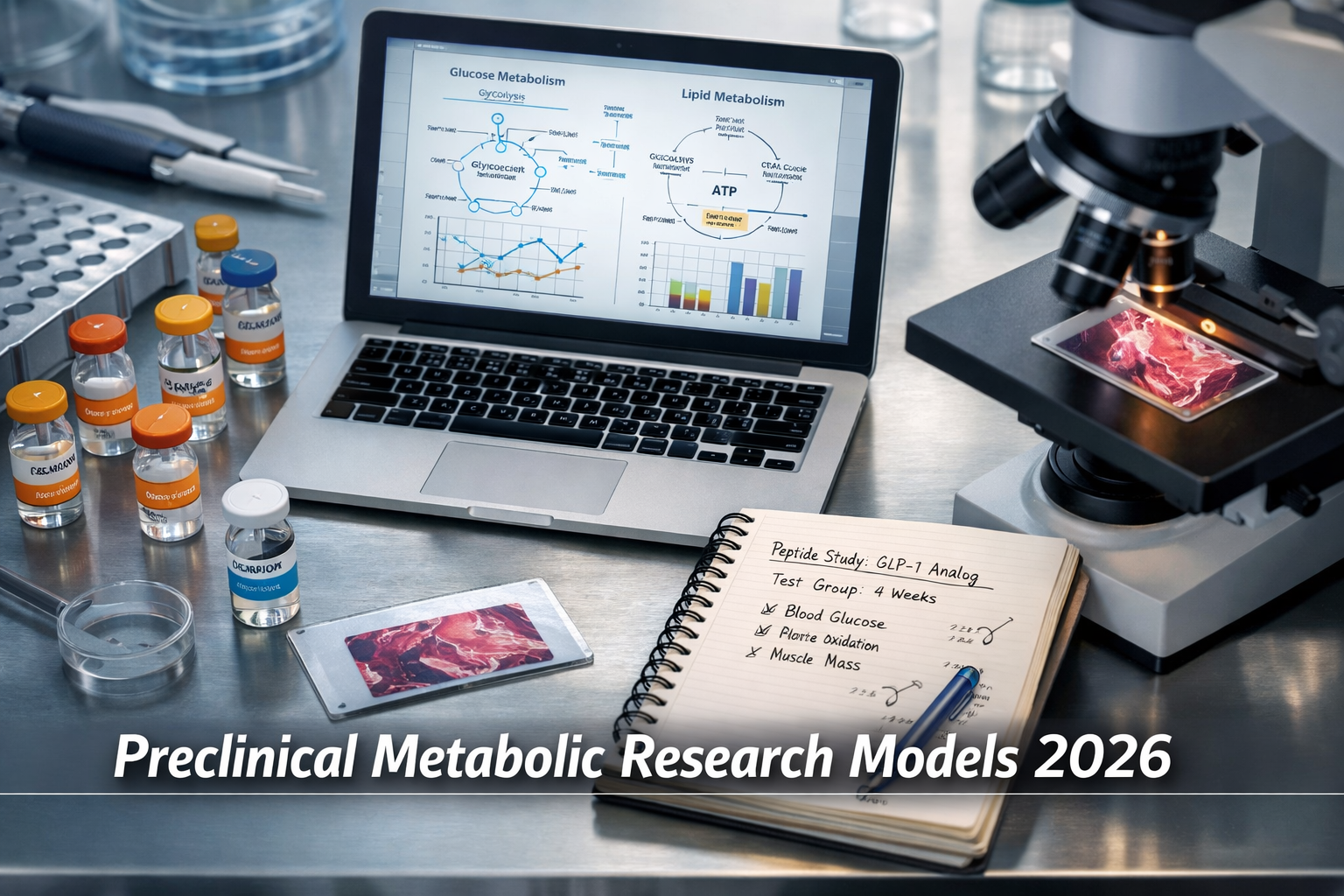
Applying These Compounds Together in Metabolic Research

The growing interest in combining these compounds reflects a systems-biology approach to mitochondrial research. Rather than targeting a single pathway, researchers are using MOTS‑c, 5‑Amino‑1MQ, and SLU‑PP‑332 together to simultaneously probe AMPK signaling, NAD+ metabolism, and ERR‑alpha-driven biogenesis.

Blends incorporating NAD+ alongside MOTS‑c and 5‑Amino‑1MQ are being explored specifically for their potential in mitochondrial longevity research, targeting multiple metabolic checkpoints at once. This multi-pathway approach is also reflected in broader metabolic modulation research lines that map how different peptide classes interact.

Researchers comparing compound profiles should also review SS‑31 (Elamipretide) research, another mitochondria-targeted peptide that works through cardiolipin stabilization on the inner mitochondrial membrane — a distinct but complementary mechanism.

Key research considerations when using these compounds:

  • All three are preclinical tools only — not approved for human use
  • Animal model results may not translate directly to human physiology
  • Purity and quality verification are essential for reproducible results
  • Multi-compound protocols require careful controls to isolate individual effects

Conclusion

Mitochondria and Experimental Peptides: How MOTS‑c, 5‑Amino‑1MQ, and SLUPP332 Are Used in Metabolic Research Models represents one of the most active frontiers in preclinical metabolic science in 2026. Each compound offers a distinct lens into mitochondrial function: MOTS‑c as a mitochondria-encoded hormone activating AMPK, 5‑Amino‑1MQ as an NNMT inhibitor preserving NAD+ pools, and SLU‑PP‑332 as an ERR‑alpha agonist mimicking exercise-induced biogenesis.

Actionable next steps for researchers:

  1. Review the primary literature on MOTS‑c AMPK activation before designing animal model protocols.
  2. Establish baseline NAD+ and NNMT activity measurements when incorporating 5‑Amino‑1MQ.
  3. Use SLU‑PP‑332 alongside sedentary control groups to isolate ERR‑alpha-specific effects.
  4. Source compounds only from suppliers with verified purity testing to ensure data integrity.
  5. Treat all findings as hypothesis-generating until human trial data becomes available.

The mitochondrion is no longer just a power plant. It is a signaling hub — and these experimental peptides are the tools researchers are using to map exactly how that hub works.

https://www.puretestedpeptides.com/wp-content/uploads/2026/06/Mitochondria-and-Experimental-Peptides-How-MOTS‑c-5‑Amino‑1MQ-and-SLUPP332-Are-Used-in-Metabolic-Research-Models.png 1024 1536 Pure Tested https://www.puretestedpeptides.com/wp-content/uploads/2026/01/buy-peptides-online.jpg Pure Tested2026-06-05 13:36:412026-07-20 15:03:53Mitochondria and Experimental Peptides: How MOTS‑c, 5‑Amino‑1MQ, and SLUPP332 Are Used in Metabolic Research Models
×

Helpful Links

  • My account
  • Cart
  • Checkout
  • Refund and Returns Policy
  • Privacy Policy
  • SMS Privacy Policy
  • Login
  • My Account
  • Logout

USA Made Lab Tested Peptides

All products are sold for research, laboratory, or analytical purposes only, and are not for human consumption


Pure Tested Peptides is a chemical supplier. Pure Tested Peptides is not a compounding / chemical compounding facility as defined under 503A of the Federal Food, Drug, and Cosmetic act. Pure Tested Peptides is not an outsourcing facility as defined under 503B of the Federal Food, Drug, and Cosmetic act.

The statements made within this website have not been evaluated by the US Food and Drug Administration. The products we offer are not intended to diagnose, treat, cure or prevent any disease.

Human/Animal Consumption Prohibited. Laboratory/In-Vitro Experimental Use Only

Scroll to top Scroll to top Scroll to top