Call or Text 727-513-9780
  • Shopping Cart Shopping Cart
    0Shopping Cart
Pure Tested Peptides | America's most trusted Peptides for sale online
  • Peptides for sale
    • Oral Peptides for sale
      • Peptide Capsules for sale
      • BPC 157 Capsules 1000mcg
      • SLU-PP-332 Capsules | 1000 mcg
      • 5-Amino-1MQ 50mg Capsules
      • Tesofensine 500mcg
    • All Peptides for sale
    • Peptide Sprays
      • BPC 157 Nasal Spray Kit
      • BPC-157 TB500 Nasal Spray Kit
      • Semax Nasal Spray 10mg
      • Selank – Nasal Spray Kit – 10mg
      • Epithalon 50MG Nasal Spray Kit
      • Ipamorelin 10mg Nasal Spray
      • Klow Nasal Spray (BPC-157 + TB-500 + GHK-Cu + KPV) | 80mg
      • Hulk Nasal Spray Tesa / Ipa Blend 6/3 MG
      • Klow Nasal Spray
      • NAD + 500 mg Nasal Spray
      • PT-141 Nasal Spray Kit
    • GHRH Peptides
      • Ipa Peptides
      • CJC-1295 Peptides
        • CJC-1295 with DAC 5 mg
        • CJC-1295 without DAC 5 mg
        • CJC-1295 Ipa 10mg
      • Tesa Peptides
        • Tesa Peptide
        • Tesa 20 mg
    • GHK-Cu Peptides
      • All GHK-Cu Peptides
      • GHK-Cu 100mg
      • KLOW Peptide Blend – Buy KLOW blend online
    • BPC Peptides
      • All BPC Peptides
      • BPC-157
      • BPC-157 TB-500
      • BPC 157 capsules 1000mcg
    • SLU-PP-332 Peptides
      • All SLU-PP-332 Peptides
      • SLU-PP-332 5mg
    • GLP3 Peptides
      • GLP3-R
      • GLP3-R CAG 10mg
      • GLP3-R 20mg
    • PT-141 Peptides
      • PT-141 Peptides for sale
      • PT-141 10mg
      • PT-141 Nasal Spray
    • CAG Peptides
      • Lipo-C Peptide Blend
      • CAG 5mg
      • CAG 10mg
    • MOTS-C Peptides
      • MOTS-C Peptides for sale
      • MOTS-c peptide
      • MOTS-c 10mg *6 pack*
    • 5 Amino 1MQ Peptides
      • 5 Amino 1MQ Peptides for sale
      • 5-Amino-1MQ 50mg Capsules
      • 5-Amino-1MQ 5mg
    • Epithalon Peptides
      • Epithalon Peptides for sale
      • Epithalon 10mg
      • Epithalon 50mg
  • Shop
    • GLPs
      • 5-Amino-1MQ 50mg Capsules
      • 5-Amino-1MQ 5mg
      • GLP3-Reta
      • L-Carnitine 500mg/ml
      • Tesofensine 500mcg
      • SLU-PP-332 5mg
      • MOTS-c 10mg *6 pack*
    • Epithalon & BPC Peptides
      • Epithalon 10mg
      • Epithalon 50mg
      • BPC-157
      • BPC 157 capsules 1000mcg
      • BPC-157 TB-500
      • BPC-157 TB500 Nasal Spray Kit
      • BPC 157 Nasal Spray Kit
    • BPC TB-500 & NAD+ Peptides
      • NAD+ 500 mg
      • KLOW Peptide Blend – Buy KLOW blend online
      • GLOW Peptide Blend
      • TB 500 5mg
      • BPC 157 capsules 1000mcg – Supplement
      • BPC 157 Nasal Spray Kit
      • BPC-157
      • BPC-157 TB500 Nasal Spray Kit
      • BPC-157 TB-500
      • BPC 157 capsules 1000mcg
    • LL-37 Peptide
      • LL-37 10 mg
    • MOTS-C & Selank
      • MOTS-c peptide
      • Selank 10mg
    • GHK Peptides
      • GHK-Cu 100mg
      • GLOW Peptide Blend
      • KLOW Peptide Blend – Buy KLOW blend online
  • COAs
  • Wholesale
    • Wholesale Peptides for sale
  • PTP FAQ
  • Affiliates
    • Selank Peptide: Advanced Pharmacological Mechanisms Underlying Its Anxiolytic and Nootropic Effects in Research
      • 5-Amino-1MQ Peptide: Detailed Mechanisms of NNMT Inhibition and Its Impact on Cellular Metabolism Research
        • MOTS-C Peptide: Unraveling Its Role in Mitochondrial Dynamics and Energy Metabolism Research
          • Epithalon Peptide and Telomerase Regulation: Investigating Its Impact on Cellular Senescence and Lifespan Research Models
            • GLP2-T vs GLP2 Tirz Peptide: Understanding the Naming, Mechanistic Nuances, and Research Implications for Gut Health
      • Peptides and Polypeptides in Modern Pharmacology: What Research on Metoprolol, Prednisone, and Amlodipine Reveals
        • Polypeptide Peptides vs NSAIDs: What Naproxen and Diclofenac Teach Tissue-Repair Researchers About BPC‑157 and TB‑500
          • Peptides and Polypeptides in Endocrine Pharmacology: How GLP-1, GLP-2, and GLP-3 Retatrutide Differ From Classic Drugs Like Prednisone and Amlodipine
          • 5‑Amino‑1MQ Peptide and NNMT Inhibition: How It Compares With Statins Like Atorvastatin in Adipose and Lipid Metabolism Research
      • Enclomiphene, Estrogen Receptor Signaling, and Luteinizing Phase Biology: What Hormone Researchers Should Measure
        • Mesenchymal Stem Cells, BPC‑157, and GHK‑Cu: How Tissue Repair Peptides Compare With Classic NSAIDs Like Naproxen in Injury Models
          • Peptide Calculator Use Cases Beyond Growth Hormone: Working Through GLP‑3 Retatrutide, MOTS‑c, and BPC‑157 Research Dosing
        • Polypeptide Peptides in Endocrine and Metabolic Pharmacology: Lessons From Amlodipine, Prednisone, and Metoprolol
        • Peptides Calculator for Advanced Blends: Worked Examples for Tesamorelin, CJC‑1295, and Ipamorelin Stacks
          • Peptides and Polypeptides in Human Physiology: How Molecular Size Shapes Research Applications
            • Selank Peptide: Advanced Pharmacological Mechanisms Underlying Its Anxiolytic and Nootropic Effects in Research
          • 5-Amino-1MQ Peptide: Detailed Mechanisms of NNMT Inhibition and Its Impact on Cellular Metabolism Research
            • MOTS-C Peptide: Unraveling Its Role in Mitochondrial Dynamics and Energy Metabolism Research
              • Epithalon Peptide and Telomerase Regulation: Investigating Its Impact on Cellular Senescence and Lifespan Research Models
                • GLP2-T vs GLP2 Tirz Peptide: Understanding the Naming, Mechanistic Nuances, and Research Implications for Gut Health
                  • Peptides and Polypeptides in Endocrine Pharmacology: How GLP-1, GLP-2, and GLP-3 Retatrutide Differ From Classic Drugs Like Prednisone and Amlodipine
                    • Polypeptide Peptides vs NSAIDs: What Naproxen and Diclofenac Teach Tissue-Repair Researchers About BPC‑157 and TB‑500
                      • Peptides and Polypeptides in Modern Pharmacology: What Research on Metoprolol, Prednisone, and Amlodipine Reveals
                        • 5‑Amino‑1MQ Peptide and NNMT Inhibition: How It Compares With Statins Like Atorvastatin in Adipose and Lipid Metabolism Research
                        • Enclomiphene, Estrogen Receptor Signaling, and Luteinizing Phase Biology: What Hormone Researchers Should Measure
                        • Mesenchymal Stem Cells, BPC‑157, and GHK‑Cu: How Tissue Repair Peptides Compare With Classic NSAIDs Like Naproxen in Injury Models
                        • Peptide Calculator Use Cases Beyond Growth Hormone: Working Through GLP‑3 Retatrutide, MOTS‑c, and BPC‑157 Research Dosing
                        • Polypeptide Peptides in Endocrine and Metabolic Pharmacology: Lessons From Amlodipine, Prednisone, and Metoprolol
                        • Peptides Calculator for Advanced Blends: Worked Examples for Tesamorelin, CJC‑1295, and Ipamorelin Stacks
                        • Peptides and Polypeptides in Human Physiology: How Molecular Size Shapes Research Applications
                        • Selank Peptide: Advanced Pharmacological Mechanisms Underlying Its Anxiolytic and Nootropic Effects in Research
                        • MOTS-C Peptide: Unraveling Its Role in Mitochondrial Dynamics and Energy Metabolism Research
                        • Peptides and Polypeptides in Modern Pharmacology: What Research on Metoprolol, Prednisone, and Amlodipine Reveals
                        • Peptides and Polypeptides in Endocrine Pharmacology: How GLP-1, GLP-2, and GLP-3 Retatrutide Differ From Classic Drugs Like Prednisone and Amlodipine
                        • 5-Amino-1MQ Peptide: Detailed Mechanisms of NNMT Inhibition and Its Impact on Cellular Metabolism Research
                        • Mesenchymal Stem Cells, BPC‑157, and GHK‑Cu: How Tissue Repair Peptides Compare With Classic NSAIDs Like Naproxen in Injury Models
                        • Peptide Calculator Use Cases Beyond Growth Hormone: Working Through GLP‑3 Retatrutide, MOTS‑c, and BPC‑157 Research Dosing
                        • GLP2-T vs GLP2 Tirz Peptide: Understanding the Naming, Mechanistic Nuances, and Research Implications for Gut Health
                        • Polypeptide Peptides in Endocrine and Metabolic Pharmacology: Lessons From Amlodipine, Prednisone, and Metoprolol
                        • Polypeptide Peptides vs NSAIDs: What Naproxen and Diclofenac Teach Tissue-Repair Researchers About BPC‑157 and TB‑500
                        • Peptides and Polypeptides in Human Physiology: How Molecular Size Shapes Research Applications
                        • Peptides Calculator for Advanced Blends: Worked Examples for Tesamorelin, CJC‑1295, and Ipamorelin Stacks
                        • 5‑Amino‑1MQ Peptide and NNMT Inhibition: How It Compares With Statins Like Atorvastatin in Adipose and Lipid Metabolism Research
                        • Enclomiphene, Estrogen Receptor Signaling, and Luteinizing Phase Biology: What Hormone Researchers Should Measure
                        • Epithalon Peptide and Telomerase Regulation: Investigating Its Impact on Cellular Senescence and Lifespan Research Models
                        • Best research protocol Klow blend
                        • best time to take BPC-157
                        • best time to take DSIP (Delta Sleep Inducing Peptide)
                        • best time to take CJC-1295
                        • best time to take AOD-9604
                        • best time to take Follistatin 344
                        • best time to take Ipamorelin
                        • best time to take MK-677 (Ibutamoren)
                        • best time to take Ligandrol (LGD-4033) — research compound
                        • best time to take Ostarine (MK-2866) — research compound
                        • best time to take GHK-CU
                        • best time to take TB-500
                        • best time to take MOTS-c
                        • best time to take Semax
                        • best time to take RAD-140 (Testolone) — research compound
                        • best time to take Thymosin Alpha-1
                        • best time to take PEG-MGF
                        • Biolife Plasma, Octapharma Plasma, and Research Peptides: How Plasma Donation Labs Differ From Peptide Suppliers
                        • best time to take YK-11 — research compound
                        • best time to take PT-141 (Bremelanotide)
                        • Best research protocol Klow blend
  • Contact
    • Contact Customer Service
    • Text Customer Support
  • About US
  • Shop all peptides
  • Affiliate Program
    • Affiliate Signup
  • Login / Register Login / Register Page Link Login / Register Page Link
  • Click to open the search input field Click to open the search input field Search
  • Menu Menu

Tag Archive for: pineal gland function

Epithalon Peptide Research: Telomerase Activation, Aging, and Pineal Gland Function

Epithalon Peptide Research: Telomerase Activation, Aging, and Pineal Gland Function

July 24, 2026/0 Comments/in Uncategorized/by

A tetrapeptide consisting of just four amino acids, Ala-Glu-Asp-Gly, has generated decades of scientific interest for its apparent ability to slow cellular aging at the chromosomal level. Epithalon peptide research: telomerase activation, aging, and pineal gland function sits at the intersection of molecular biology, geroscience, and neuroendocrinology, making it one of the most multifaceted compounds in current longevity research. Originally synthesized from Epithalamin, a natural extract of the bovine pineal gland, Epithalon has been studied extensively in preclinical models for its role in extending cellular lifespan, restoring hormonal rhythms, and reducing oxidative damage.
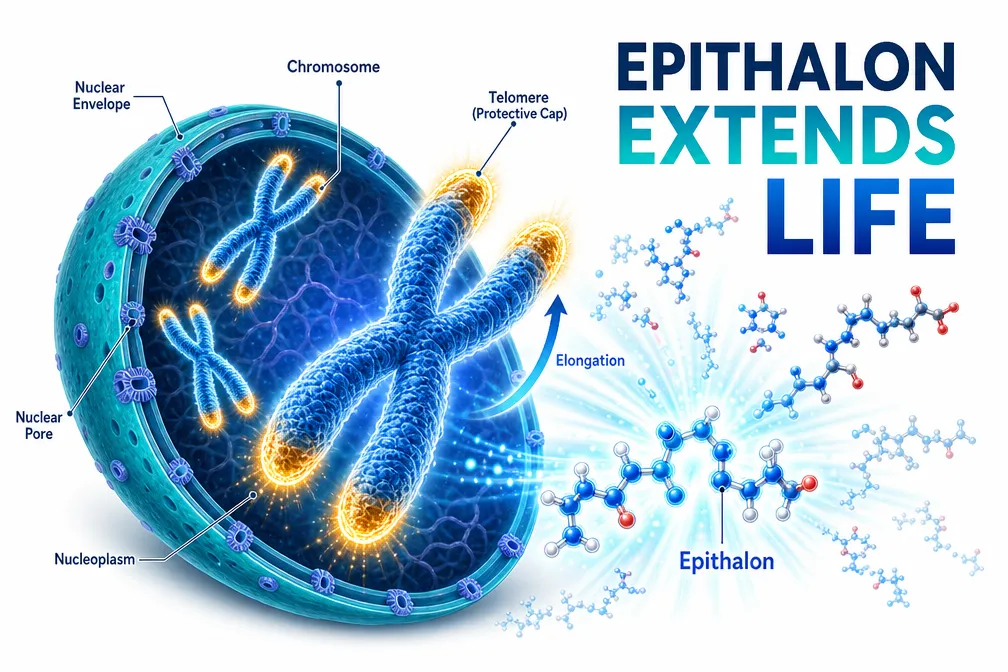
Bright editorial infographic-style landscape (): isometric illustration of a human cell nucleus with glowing telomere caps

Key Takeaways

  • Epithalon activates telomerase by upregulating the hTERT gene, enabling telomere elongation in human somatic cells without documented chromosomal instability.
  • The peptide stimulates the pineal gland to restore melatonin production, supporting circadian rhythm regulation and immune function.
  • Epithalon induces endogenous antioxidant enzymes, including superoxide dismutase and catalase, reducing oxidative stress linked to aging.
  • Epigenetic modulation through chromatin remodeling is a secondary but significant mechanism influencing gene expression related to cellular senescence.
  • Most evidence comes from Russian preclinical and early clinical studies; large-scale, peer-reviewed Western trials remain limited.

How Epithalon Activates Telomerase and Extends Cellular Lifespan

The most studied mechanism in Epithalon peptide research involves its interaction with the enzyme telomerase. In normal somatic cells, telomeres, the protective caps at the ends of chromosomes, shorten with each cell division. Once telomeres reach a critically short length, cells enter senescence or undergo apoptosis. This process defines what researchers call the Hayflick limit.

Epithalon appears to circumvent this limit by upregulating the hTERT gene, the catalytic subunit responsible for telomerase activity. In studies using human fetal fibroblasts, Epithalon treatment led to measurable telomere elongation, allowing cells to continue dividing beyond their expected replicative ceiling. Critically, this elongation occurred without triggering chromosomal instability, a key safety distinction from oncogenic telomerase activation.

Mechanism Observed Effect
hTERT upregulation Telomerase activation
Telomere elongation Extended replicative lifespan
Chromatin remodeling Modulated senescence gene expression
Antioxidant enzyme induction Reduced oxidative stress

This cellular-level activity positions Epithalon as a subject of interest within broader longevity peptide research, where telomere biology is increasingly recognized as a central driver of biological aging.

Epigenetic effects add another layer to this picture. Epithalon interacts with DNA-histone complexes, promoting chromatin remodeling that alters the expression of genes associated with aging and cellular senescence. This means the peptide does not simply delay the clock, it may actively reprogram how aging-related genes are read.

"Telomere elongation without chromosomal instability is the critical threshold that separates a potential anti-aging tool from a cancer risk factor, and Epithalon's preclinical profile has, so far, remained on the right side of that line."

Pineal Gland Function, Melatonin Restoration, and Circadian Rhythm Research
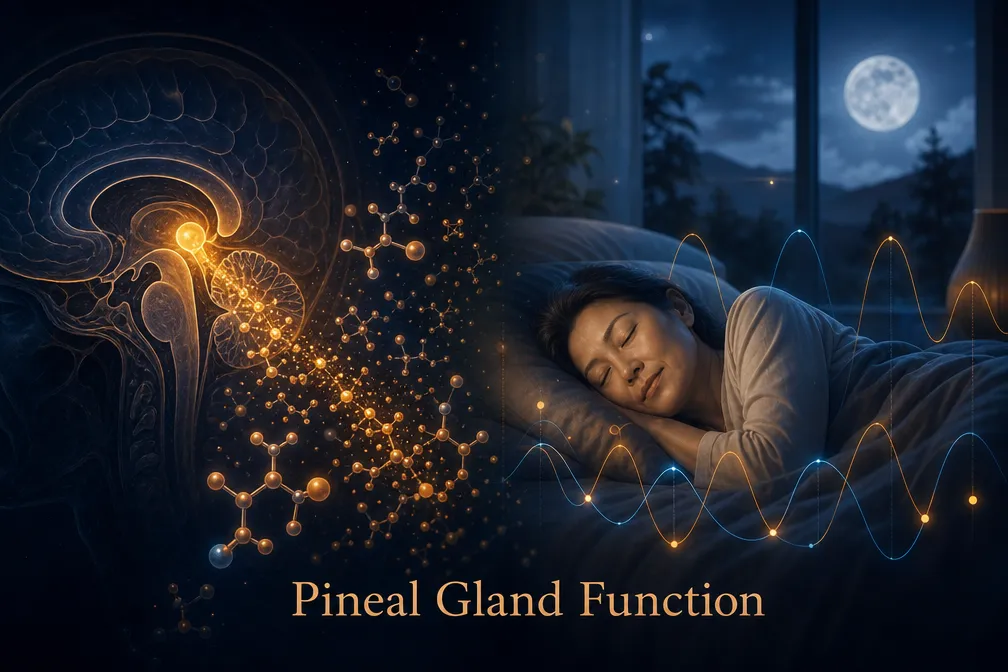
Pineal Gland Function, Melatonin Restoration, and Circadian Rhythm Research

The pineal gland produces melatonin, the hormone that governs the body's circadian clock. As humans age, pineal calcification and reduced enzymatic activity cause melatonin output to decline significantly, a change associated with disrupted sleep, weakened immune responses, and accelerated systemic aging.

Epithalon peptide research: telomerase activation, aging, and pineal gland function converges most directly here. Studies show that Epithalon stimulates pineal gland activity, restoring melatonin secretion closer to youthful physiological levels. The downstream effects include:

  • Normalized circadian rhythm patterns in aging subjects
  • Improved sleep architecture and sleep quality
  • Enhanced immune surveillance linked to melatonin's immunomodulatory role
  • Potential reduction in age-associated hormonal dysregulation

This neuroendocrine restoration is not merely a comfort benefit. Melatonin functions as a potent endogenous antioxidant, and its decline contributes directly to the oxidative burden that accelerates cellular aging. By restoring melatonin, Epithalon creates a systemic environment that supports the same cellular longevity mechanisms it activates at the chromosomal level.

Researchers interested in how peptides modulate hormonal axes may also find value in reviewing GHK-Cu longevity research themes and mitochondrial longevity focus for complementary mechanisms.

Antioxidant Defense, Neuroprotection, and Research Limitations

Oxidative stress is a primary driver of biological aging. Epithalon has been observed to increase the activity of three key endogenous antioxidant enzymes:

  1. Superoxide dismutase (SOD), neutralizes superoxide radicals
  2. Catalase, breaks down hydrogen peroxide
  3. Glutathione peroxidase, protects cell membranes from lipid peroxidation

By upregulating this enzymatic defense network, Epithalon reduces the cumulative oxidative damage that contributes to cellular senescence, mitochondrial dysfunction, and tissue degradation over time.

Neuroprotective effects have also been documented in preclinical models. Epithalon appears to shield neurons from oxidative insult and support mitochondrial integrity, two factors directly linked to age-related cognitive decline. This aligns with the broader category of peptides being investigated for brain aging, including those covered in MOTS-c mitochondrial dynamics research.

Antioxidant Defense, Neuroprotection, and Research Limitations

Research Limitations and Safety Considerations

Despite a promising preclinical profile, Epithalon peptide research: telomerase activation, aging, and pineal gland function faces a significant evidentiary gap. The majority of published studies originate from Russian research institutions, with limited large-scale, peer-reviewed Western clinical trials available as of 2026. This restricts the ability to draw definitive conclusions about human efficacy and long-term safety.

One theoretical concern deserves attention: because telomerase activation is also a hallmark of cancer cell immortalization, any compound that activates telomerase warrants careful monitoring for oncogenic potential. Decades of Epithalon research have not documented significant adverse effects, but this concern remains formally uncharacterized in rigorous human trials.

Typical research dosing protocols involve subcutaneous injections of 5-10 mg per day for 10-20 days, repeated two to three times per year. Oral administration is not considered viable due to rapid degradation by digestive enzymes.

Researchers sourcing compounds for study should prioritize verified purity. Resources such as quality testing protocols and the Epithalon product page offer relevant reference points for research-grade sourcing standards.

Beyond aging, Epithalon is being investigated for potential applications in sleep disorders, age-related immune decline, and overall healthspan extension, areas that overlap with thymalin thymus bioregulation research.

Conclusion

Epithalon occupies a rare position in peptide science: a short-chain molecule with documented effects spanning chromosomal biology, neuroendocrine function, and oxidative defense. The convergence of telomerase activation, pineal gland restoration, and antioxidant enzyme induction makes it a compelling subject for researchers focused on the cellular and systemic mechanisms of aging.

Actionable next steps for researchers in 2026:

  • Review existing preclinical literature on hTERT upregulation and telomere dynamics before designing study protocols.
  • Pair Epithalon investigation with complementary longevity peptide research to understand additive or synergistic mechanisms.
  • Prioritize research-grade, third-party tested compounds to ensure data integrity.
  • Monitor emerging Western clinical trial registrations, as the evidence base is expected to expand.
  • Consult neuroendocrine aging literature alongside telomere biology to capture the full mechanistic picture.

The field of cellular senescence research continues to accelerate. Epithalon's multifaceted profile ensures it will remain a focal point of that conversation.

https://www.puretestedpeptides.com/wp-content/uploads/2026/07/epithalon-peptide-research-telomerase-activation-aging-and-pineal-gland-function.webp 1024 1536 https://www.puretestedpeptides.com/wp-content/uploads/2026/01/buy-peptides-online.jpg 2026-07-24 13:10:372026-07-24 13:10:37Epithalon Peptide Research: Telomerase Activation, Aging, and Pineal Gland Function
×

Helpful Links

  • My account
  • Cart
  • Checkout
  • Refund and Returns Policy
  • Privacy Policy
  • SMS Privacy Policy
  • Login
  • My Account
  • Logout

USA Made Lab Tested Peptides

All products are sold for research, laboratory, or analytical purposes only, and are not for human consumption


Pure Tested Peptides is a chemical supplier. Pure Tested Peptides is not a compounding / chemical compounding facility as defined under 503A of the Federal Food, Drug, and Cosmetic act. Pure Tested Peptides is not an outsourcing facility as defined under 503B of the Federal Food, Drug, and Cosmetic act.

The statements made within this website have not been evaluated by the US Food and Drug Administration. The products we offer are not intended to diagnose, treat, cure or prevent any disease.

Human/Animal Consumption Prohibited. Laboratory/In-Vitro Experimental Use Only

Scroll to top Scroll to top Scroll to top