Call or Text 727-513-9780
  • Shopping Cart Shopping Cart
    0Shopping Cart
Pure Tested Peptides | America's most trusted Peptides for sale online
  • Peptides for sale
    • Oral Peptides for sale
      • Peptide Capsules for sale
      • BPC 157 Capsules 1000mcg
      • SLU-PP-332 Capsules | 1000 mcg
      • 5-Amino-1MQ 50mg Capsules
      • Tesofensine 500mcg
    • All Peptides for sale
    • Peptide Sprays
      • BPC 157 Nasal Spray Kit
      • BPC-157 TB500 Nasal Spray Kit
      • Semax Nasal Spray 10mg
      • Selank – Nasal Spray Kit – 10mg
      • Epithalon 50MG Nasal Spray Kit
      • Ipamorelin 10mg Nasal Spray
      • Klow Nasal Spray (BPC-157 + TB-500 + GHK-Cu + KPV) | 80mg
      • Hulk Nasal Spray Tesa / Ipa Blend 6/3 MG
      • Klow Nasal Spray
      • NAD + 500 mg Nasal Spray
      • PT-141 Nasal Spray Kit
    • GHRH Peptides
      • Ipa Peptides
      • CJC-1295 Peptides
        • CJC-1295 with DAC 5 mg
        • CJC-1295 without DAC 5 mg
        • CJC-1295 Ipa 10mg
      • Tesa Peptides
        • Tesa Peptide
        • Tesa 20 mg
    • GHK-Cu Peptides
      • All GHK-Cu Peptides
      • GHK-Cu 100mg
      • KLOW Peptide Blend – Buy KLOW blend online
    • BPC Peptides
      • All BPC Peptides
      • BPC-157
      • BPC-157 TB-500
      • BPC 157 capsules 1000mcg
    • SLU-PP-332 Peptides
      • All SLU-PP-332 Peptides
      • SLU-PP-332 5mg
    • GLP3 Peptides
      • GLP3-R
      • GLP3-R CAG 10mg
      • GLP3-R 20mg
    • PT-141 Peptides
      • PT-141 Peptides for sale
      • PT-141 10mg
      • PT-141 Nasal Spray
    • CAG Peptides
      • Lipo-C Peptide Blend
      • CAG 5mg
      • CAG 10mg
    • MOTS-C Peptides
      • MOTS-C Peptides for sale
      • MOTS-c peptide
      • MOTS-c 10mg *6 pack*
    • 5 Amino 1MQ Peptides
      • 5 Amino 1MQ Peptides for sale
      • 5-Amino-1MQ 50mg Capsules
      • 5-Amino-1MQ 5mg
    • Epithalon Peptides
      • Epithalon Peptides for sale
      • Epithalon 10mg
      • Epithalon 50mg
  • Shop
    • GLPs
      • 5-Amino-1MQ 50mg Capsules
      • 5-Amino-1MQ 5mg
      • GLP3-Reta
      • L-Carnitine 500mg/ml
      • Tesofensine 500mcg
      • SLU-PP-332 5mg
      • MOTS-c 10mg *6 pack*
    • Epithalon & BPC Peptides
      • Epithalon 10mg
      • Epithalon 50mg
      • BPC-157
      • BPC 157 capsules 1000mcg
      • BPC-157 TB-500
      • BPC-157 TB500 Nasal Spray Kit
      • BPC 157 Nasal Spray Kit
    • BPC TB-500 & NAD+ Peptides
      • NAD+ 500 mg
      • KLOW Peptide Blend – Buy KLOW blend online
      • GLOW Peptide Blend
      • TB 500 5mg
      • BPC 157 capsules 1000mcg – Supplement
      • BPC 157 Nasal Spray Kit
      • BPC-157
      • BPC-157 TB500 Nasal Spray Kit
      • BPC-157 TB-500
      • BPC 157 capsules 1000mcg
    • LL-37 Peptide
      • LL-37 10 mg
    • MOTS-C & Selank
      • MOTS-c peptide
      • Selank 10mg
    • GHK Peptides
      • GHK-Cu 100mg
      • GLOW Peptide Blend
      • KLOW Peptide Blend – Buy KLOW blend online
  • COAs
  • Wholesale
    • Wholesale Peptides for sale
  • PTP FAQ
  • Affiliates
    • Selank Peptide: Advanced Pharmacological Mechanisms Underlying Its Anxiolytic and Nootropic Effects in Research
      • 5-Amino-1MQ Peptide: Detailed Mechanisms of NNMT Inhibition and Its Impact on Cellular Metabolism Research
        • MOTS-C Peptide: Unraveling Its Role in Mitochondrial Dynamics and Energy Metabolism Research
          • Epithalon Peptide and Telomerase Regulation: Investigating Its Impact on Cellular Senescence and Lifespan Research Models
            • GLP2-T vs GLP2 Tirz Peptide: Understanding the Naming, Mechanistic Nuances, and Research Implications for Gut Health
      • Peptides and Polypeptides in Modern Pharmacology: What Research on Metoprolol, Prednisone, and Amlodipine Reveals
        • Polypeptide Peptides vs NSAIDs: What Naproxen and Diclofenac Teach Tissue-Repair Researchers About BPC‑157 and TB‑500
          • Peptides and Polypeptides in Endocrine Pharmacology: How GLP-1, GLP-2, and GLP-3 Retatrutide Differ From Classic Drugs Like Prednisone and Amlodipine
          • 5‑Amino‑1MQ Peptide and NNMT Inhibition: How It Compares With Statins Like Atorvastatin in Adipose and Lipid Metabolism Research
      • Enclomiphene, Estrogen Receptor Signaling, and Luteinizing Phase Biology: What Hormone Researchers Should Measure
        • Mesenchymal Stem Cells, BPC‑157, and GHK‑Cu: How Tissue Repair Peptides Compare With Classic NSAIDs Like Naproxen in Injury Models
          • Peptide Calculator Use Cases Beyond Growth Hormone: Working Through GLP‑3 Retatrutide, MOTS‑c, and BPC‑157 Research Dosing
        • Polypeptide Peptides in Endocrine and Metabolic Pharmacology: Lessons From Amlodipine, Prednisone, and Metoprolol
        • Peptides Calculator for Advanced Blends: Worked Examples for Tesamorelin, CJC‑1295, and Ipamorelin Stacks
          • Peptides and Polypeptides in Human Physiology: How Molecular Size Shapes Research Applications
            • Selank Peptide: Advanced Pharmacological Mechanisms Underlying Its Anxiolytic and Nootropic Effects in Research
          • 5-Amino-1MQ Peptide: Detailed Mechanisms of NNMT Inhibition and Its Impact on Cellular Metabolism Research
            • MOTS-C Peptide: Unraveling Its Role in Mitochondrial Dynamics and Energy Metabolism Research
              • Epithalon Peptide and Telomerase Regulation: Investigating Its Impact on Cellular Senescence and Lifespan Research Models
                • GLP2-T vs GLP2 Tirz Peptide: Understanding the Naming, Mechanistic Nuances, and Research Implications for Gut Health
                  • Peptides and Polypeptides in Endocrine Pharmacology: How GLP-1, GLP-2, and GLP-3 Retatrutide Differ From Classic Drugs Like Prednisone and Amlodipine
                    • Polypeptide Peptides vs NSAIDs: What Naproxen and Diclofenac Teach Tissue-Repair Researchers About BPC‑157 and TB‑500
                      • Peptides and Polypeptides in Modern Pharmacology: What Research on Metoprolol, Prednisone, and Amlodipine Reveals
                        • 5‑Amino‑1MQ Peptide and NNMT Inhibition: How It Compares With Statins Like Atorvastatin in Adipose and Lipid Metabolism Research
                        • Enclomiphene, Estrogen Receptor Signaling, and Luteinizing Phase Biology: What Hormone Researchers Should Measure
                        • Mesenchymal Stem Cells, BPC‑157, and GHK‑Cu: How Tissue Repair Peptides Compare With Classic NSAIDs Like Naproxen in Injury Models
                        • Peptide Calculator Use Cases Beyond Growth Hormone: Working Through GLP‑3 Retatrutide, MOTS‑c, and BPC‑157 Research Dosing
                        • Polypeptide Peptides in Endocrine and Metabolic Pharmacology: Lessons From Amlodipine, Prednisone, and Metoprolol
                        • Peptides Calculator for Advanced Blends: Worked Examples for Tesamorelin, CJC‑1295, and Ipamorelin Stacks
                        • Peptides and Polypeptides in Human Physiology: How Molecular Size Shapes Research Applications
                        • Selank Peptide: Advanced Pharmacological Mechanisms Underlying Its Anxiolytic and Nootropic Effects in Research
                        • MOTS-C Peptide: Unraveling Its Role in Mitochondrial Dynamics and Energy Metabolism Research
                        • Peptides and Polypeptides in Modern Pharmacology: What Research on Metoprolol, Prednisone, and Amlodipine Reveals
                        • Peptides and Polypeptides in Endocrine Pharmacology: How GLP-1, GLP-2, and GLP-3 Retatrutide Differ From Classic Drugs Like Prednisone and Amlodipine
                        • 5-Amino-1MQ Peptide: Detailed Mechanisms of NNMT Inhibition and Its Impact on Cellular Metabolism Research
                        • Mesenchymal Stem Cells, BPC‑157, and GHK‑Cu: How Tissue Repair Peptides Compare With Classic NSAIDs Like Naproxen in Injury Models
                        • Peptide Calculator Use Cases Beyond Growth Hormone: Working Through GLP‑3 Retatrutide, MOTS‑c, and BPC‑157 Research Dosing
                        • GLP2-T vs GLP2 Tirz Peptide: Understanding the Naming, Mechanistic Nuances, and Research Implications for Gut Health
                        • Polypeptide Peptides in Endocrine and Metabolic Pharmacology: Lessons From Amlodipine, Prednisone, and Metoprolol
                        • Polypeptide Peptides vs NSAIDs: What Naproxen and Diclofenac Teach Tissue-Repair Researchers About BPC‑157 and TB‑500
                        • Peptides and Polypeptides in Human Physiology: How Molecular Size Shapes Research Applications
                        • Peptides Calculator for Advanced Blends: Worked Examples for Tesamorelin, CJC‑1295, and Ipamorelin Stacks
                        • 5‑Amino‑1MQ Peptide and NNMT Inhibition: How It Compares With Statins Like Atorvastatin in Adipose and Lipid Metabolism Research
                        • Enclomiphene, Estrogen Receptor Signaling, and Luteinizing Phase Biology: What Hormone Researchers Should Measure
                        • Epithalon Peptide and Telomerase Regulation: Investigating Its Impact on Cellular Senescence and Lifespan Research Models
                        • Best research protocol Klow blend
                        • best time to take BPC-157
                        • best time to take DSIP (Delta Sleep Inducing Peptide)
                        • best time to take CJC-1295
                        • best time to take AOD-9604
                        • best time to take Follistatin 344
                        • best time to take Ipamorelin
                        • best time to take MK-677 (Ibutamoren)
                        • best time to take Ligandrol (LGD-4033) — research compound
                        • best time to take Ostarine (MK-2866) — research compound
                        • best time to take GHK-CU
                        • best time to take TB-500
                        • best time to take MOTS-c
                        • best time to take Semax
                        • best time to take RAD-140 (Testolone) — research compound
                        • best time to take Thymosin Alpha-1
                        • best time to take PEG-MGF
                        • Biolife Plasma, Octapharma Plasma, and Research Peptides: How Plasma Donation Labs Differ From Peptide Suppliers
                        • best time to take YK-11 — research compound
                        • best time to take PT-141 (Bremelanotide)
                        • Best research protocol Klow blend
  • Contact
    • Contact Customer Service
    • Text Customer Support
  • About US
  • Shop all peptides
  • Affiliate Program
    • Affiliate Signup
  • Login / Register Login / Register Page Link Login / Register Page Link
  • Click to open the search input field Click to open the search input field Search
  • Menu Menu

Tag Archive for: release kinetics

CJC-1295 with DAC vs. Without DAC: Half-Life, Release Kinetics, and Research Implications

CJC-1295 with DAC vs. Without DAC: Half-Life, Release Kinetics, and Research Implications

July 26, 2026/0 Comments/in Uncategorized/by

A single amino acid modification can extend a peptide's half-life from roughly 30 minutes to more than eight days. That structural difference is at the heart of the debate around CJC-1295 with DAC vs. Without DAC: Half-Life, Release Kinetics, and Research Implications, and it shapes every decision a researcher makes when designing a growth hormone (GH) secretagogue experiment.

Key Takeaways

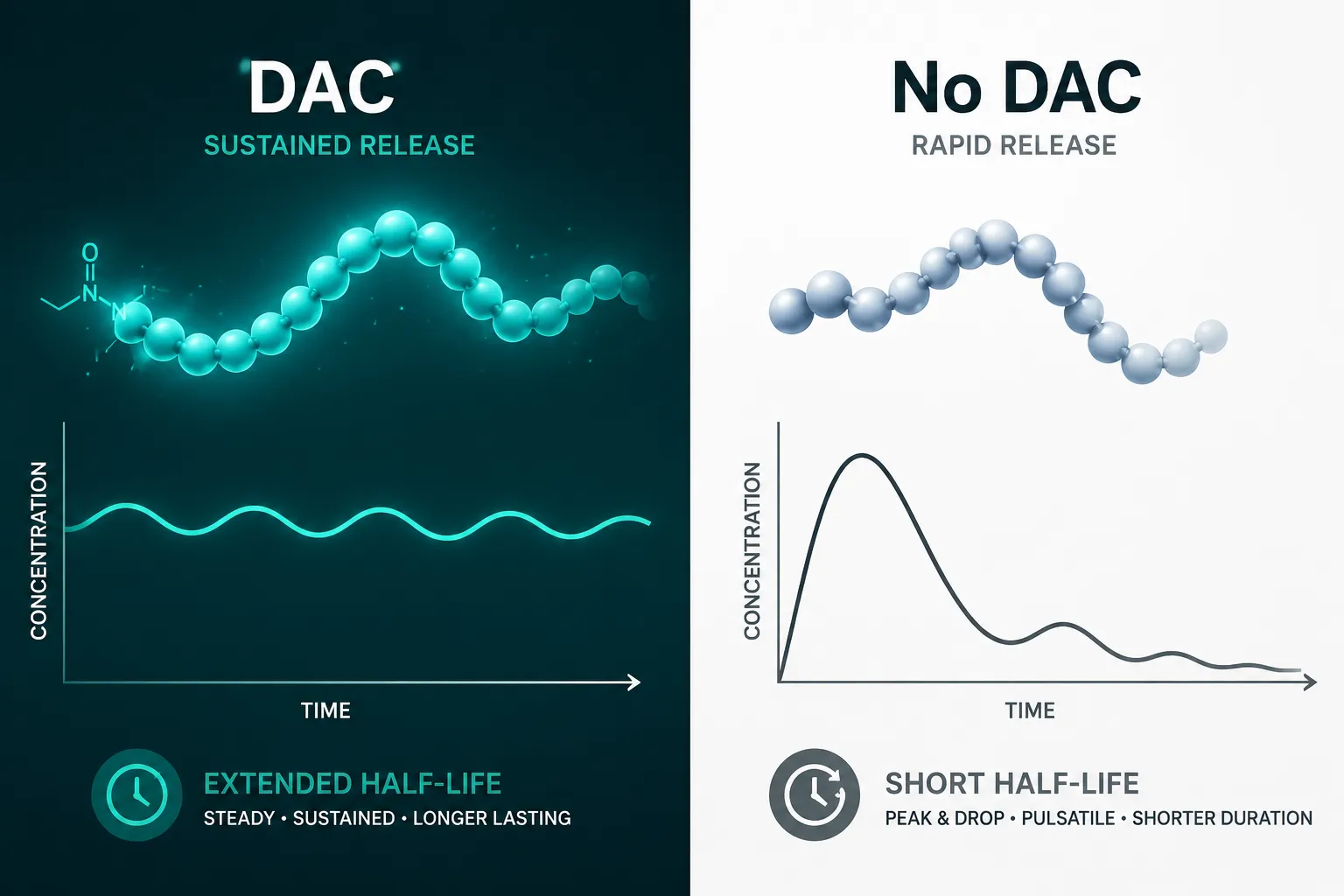
  • CJC-1295 without DAC (also called Mod GRF 1-29) has a half-life of approximately 30 minutes, producing sharp, pulsatile GH release.
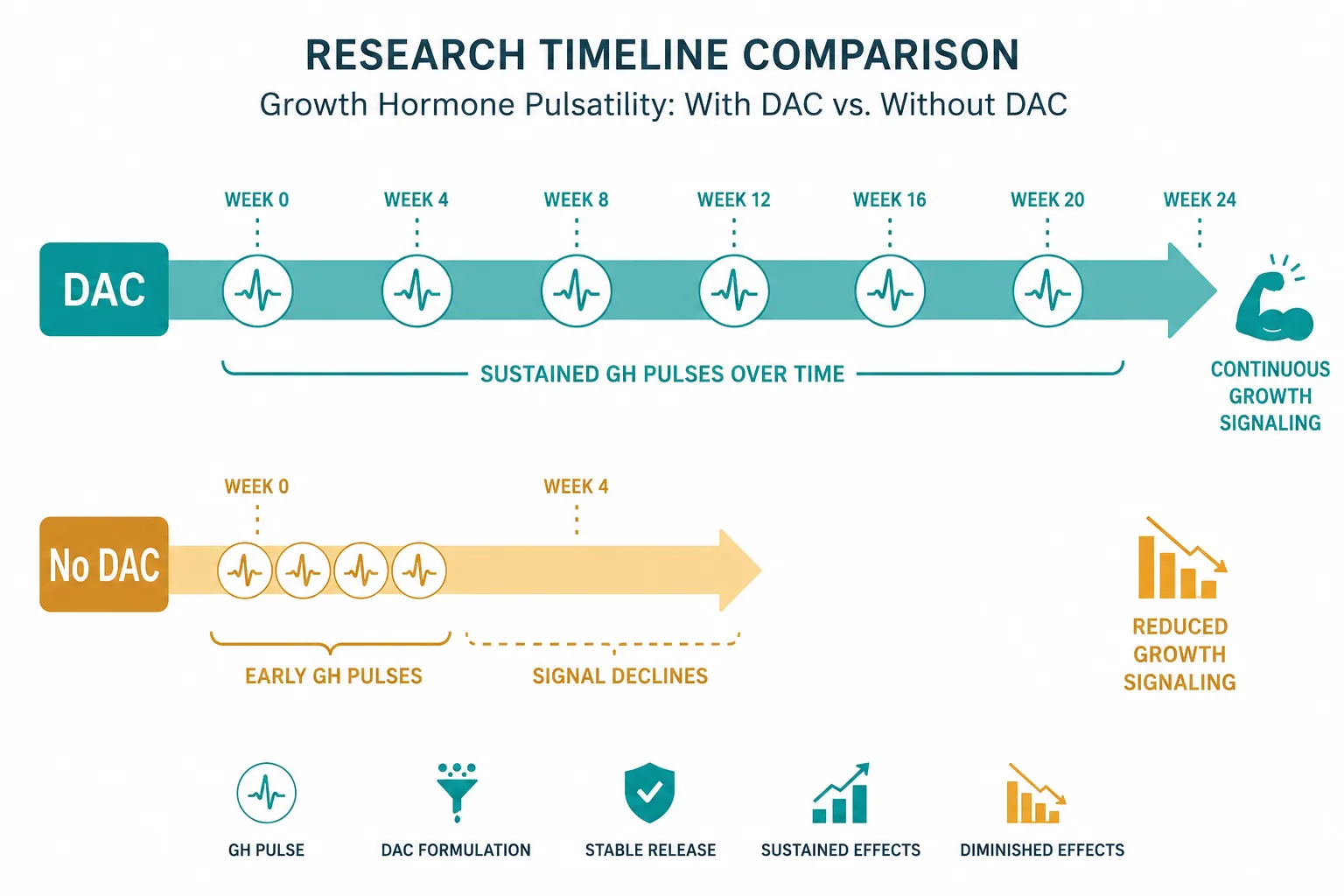
  • CJC-1295 with DAC binds covalently to albumin, extending its half-life to 6-8 days and producing sustained, blunted GH elevation.
  • The choice between formulations directly affects experimental endpoints: acute pulse studies favor the DAC-free form; chronic baseline elevation studies favor the DAC form.
  • Pairing either formulation with a GHRP such as ipamorelin amplifies GH output through complementary receptor pathways.
  • Purity and peptide quality are critical variables that can confound pharmacokinetic data if not controlled.
Key Takeaways

Understanding the Core Structural Difference

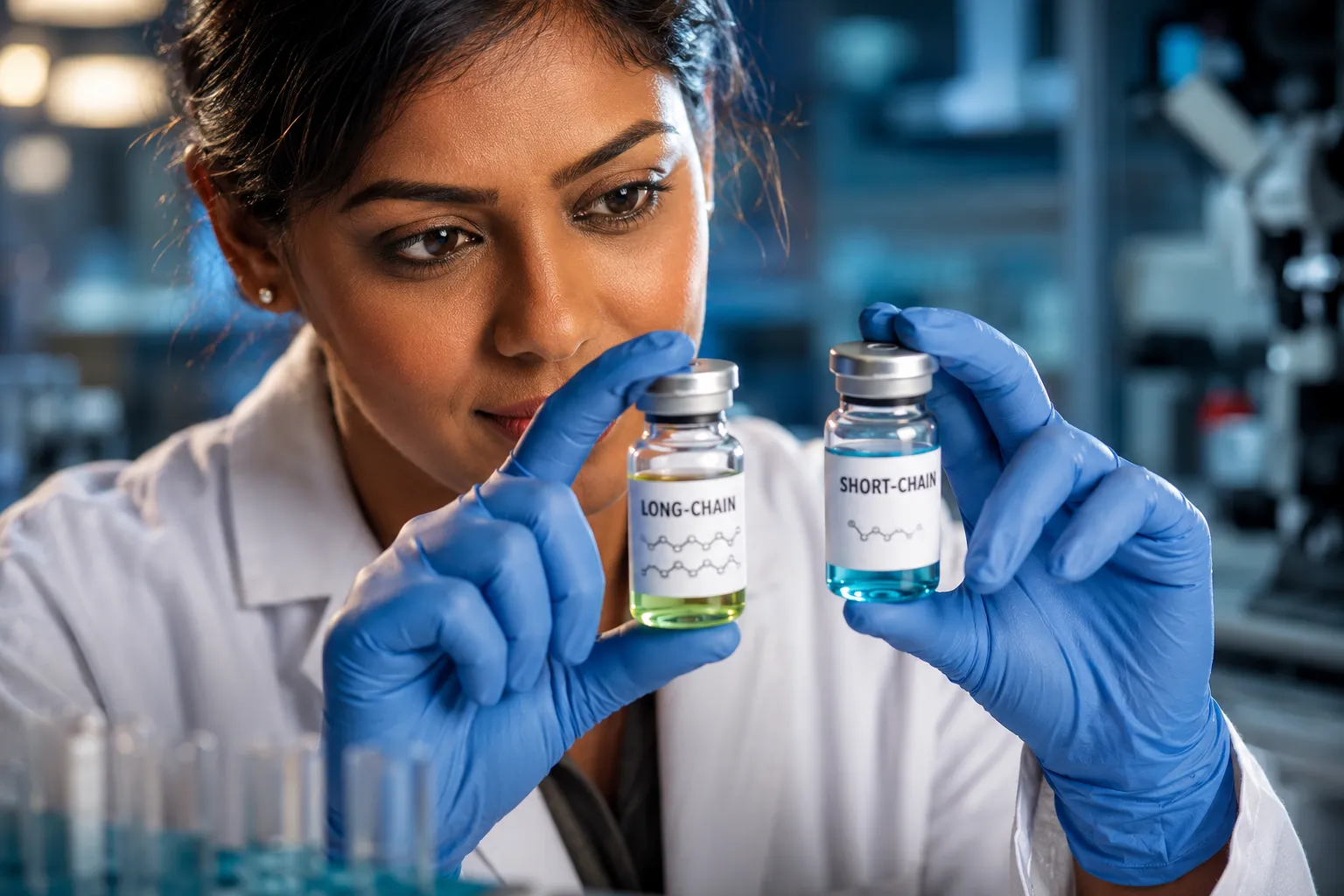
The two formulations share the same 29-amino-acid backbone derived from growth hormone-releasing hormone (GHRH). The key divergence is the addition of the Drug Affinity Complex (DAC), a lysine-maleimide linker that forms a stable covalent bond with circulating serum albumin.

Without DAC, the peptide (Mod GRF 1-29) is rapidly cleared by dipeptidyl peptidase-IV (DPP-IV) enzymes and renal filtration. Its plasma half-life is approximately 20-30 minutes, which closely mirrors the natural pulsatile pattern of endogenous GHRH.

With DAC, albumin binding acts as a biological depot. The peptide is shielded from enzymatic degradation and renal clearance, extending its half-life to 6-8 days. This transforms the molecule from a pulse-mimicking agent into a sustained-release platform.

Property CJC-1295 Without DAC CJC-1295 With DAC
Half-life ~20-30 min ~6-8 days
GH release pattern Pulsatile, sharp peak Sustained, blunted elevation
Dosing frequency (research) Multiple daily administrations Once or twice weekly
Albumin binding No Yes (covalent)
Primary research use Pulse kinetics, acute GH studies Chronic GH elevation studies

Release Kinetics and Growth Hormone Signaling

The pharmacokinetic profile of each formulation produces fundamentally different GH signaling patterns, and this distinction carries major implications for research design.

Pulsatile Signaling: CJC-1295 Without DAC

The DAC-free form stimulates a rapid, high-amplitude GH pulse within 15-30 minutes of administration. This mirrors the physiological GH secretion pattern, where discrete pulses drive downstream IGF-1 production and anabolic signaling. Researchers studying acute GH pulse dynamics, receptor desensitization, or the interaction between GHRH and ghrelin receptor pathways benefit from this short-acting kinetic profile.

When combined with a growth hormone-releasing peptide (GHRP) such as ipamorelin, the synergy between GHRH-receptor and ghrelin-receptor activation produces a significantly amplified GH pulse. For researchers exploring these combination protocols, resources covering CJC-1295 and ipamorelin stacking and sermorelin, ipamorelin, and CJC-1295 dosage frameworks provide useful comparative context.

Sustained Elevation: CJC-1295 With DAC

The DAC formulation produces a gradual rise in GH levels that plateaus over several days and declines slowly. Rather than discrete pulses, this creates a tonic GH environment. Researchers examining chronic GH exposure effects, such as changes in body composition, IGF-1 trajectory, or metabolic markers over weeks, find this profile more practical for long-duration protocols.

"The DAC modification essentially converts a short-acting signaling molecule into a depot formulation, fundamentally changing the biological question a researcher can ask."

It is worth noting that sustained GH elevation differs from pulsatile GH in its downstream effects. Chronic tonic GH exposure may produce different receptor regulation patterns than episodic stimulation, a variable that must be accounted for in experimental design.
Sustained Elevation: CJC-1295 With DAC

Research Implications of CJC-1295 with DAC vs. Without DAC

Choosing the correct formulation is not simply a matter of convenience, it determines the biological validity of the experimental model.

Matching Formulation to Research Objective

  • Acute GH pulse studies: Use CJC-1295 without DAC. The short half-life allows precise timing of GH measurement windows and avoids residual compound interference between sessions.
  • Chronic GH elevation studies: Use CJC-1295 with DAC. Fewer administrations reduce handling variables and maintain stable plasma concentrations.
  • Combination peptide research: Both formulations can be paired with GHRPs. Researchers exploring multi-peptide stacks, such as tesa, CJC-1295, and ipamorelin blend protocols, should account for the half-life mismatch when timing co-administration.
  • Comparative GH secretagogue studies: Researchers benchmarking CJC-1295 against other secretagogues like sermorelin will find that ipamorelin vs. sermorelin vs. hexarelin comparisons offer useful pharmacokinetic context.

Confounding Variables to Control

Several variables can distort pharmacokinetic data regardless of which formulation is used:

  • Peptide purity: Impurities alter bioavailability and can introduce unexpected biological effects. Sourcing from suppliers with verified quality peptide standards and third-party testing is non-negotiable for reproducible results.
  • Reconstitution and storage: Improper handling degrades both formulations. Protocols for peptide blend reconstitution should be followed precisely.
  • Species and model differences: Albumin binding affinity and DPP-IV activity vary across species, affecting how closely animal model data translates to other systems.
  • Baseline GH status: Endogenous GH pulsatility introduces noise in short-half-life studies; the DAC form's sustained profile partially smooths this variable.
Confounding Variables to Control

Practical Considerations for Research Protocol Design

When structuring a CJC-1295 experiment, the following framework helps align formulation choice with endpoint:

  1. Define the GH exposure pattern needed, pulsatile or tonic.
  2. Set the measurement window, acute (hours) or chronic (days to weeks).
  3. Select the formulation based on steps 1 and 2.
  4. Determine co-administration needs, single agent or combination with a GHRP.
  5. Establish purity benchmarks before procurement to ensure data integrity.

Researchers working with broader peptide panels may also find value in reviewing aging support peptide categories to understand how CJC-1295 fits within the wider GH-axis research landscape.

Conclusion

The comparison of CJC-1295 with DAC vs. Without DAC: Half-Life, Release Kinetics, and Research Implications ultimately comes down to one question: what GH exposure pattern does the research design require? The DAC-free formulation is the correct tool for studying acute, physiologically patterned GH pulses. The DAC formulation is the correct tool for sustained GH elevation over extended study periods.

Actionable next steps for researchers:

  • Map the desired GH release pattern to the appropriate formulation before procurement.
  • Verify peptide purity through third-party certificates of analysis.
  • Control for DPP-IV activity and albumin binding variables in the experimental model.
  • Document reconstitution and storage conditions as part of the study protocol.
  • Review combination peptide literature, particularly GHRP co-administration data, to contextualize results within the broader GH-axis signaling framework.

Rigorous formulation selection, combined with strict quality controls, is the foundation of reproducible CJC-1295 research in 2026 and beyond.

https://www.puretestedpeptides.com/wp-content/uploads/2026/07/cjc-1295-with-dac-vs-without-dac-half-life-release-kinetics-and-research-implica.webp 1024 1536 https://www.puretestedpeptides.com/wp-content/uploads/2026/01/buy-peptides-online.jpg 2026-07-26 13:05:122026-07-26 13:05:12CJC-1295 with DAC vs. Without DAC: Half-Life, Release Kinetics, and Research Implications
×

Helpful Links

  • My account
  • Cart
  • Checkout
  • Refund and Returns Policy
  • Privacy Policy
  • SMS Privacy Policy
  • Login
  • My Account
  • Logout

USA Made Lab Tested Peptides

All products are sold for research, laboratory, or analytical purposes only, and are not for human consumption


Pure Tested Peptides is a chemical supplier. Pure Tested Peptides is not a compounding / chemical compounding facility as defined under 503A of the Federal Food, Drug, and Cosmetic act. Pure Tested Peptides is not an outsourcing facility as defined under 503B of the Federal Food, Drug, and Cosmetic act.

The statements made within this website have not been evaluated by the US Food and Drug Administration. The products we offer are not intended to diagnose, treat, cure or prevent any disease.

Human/Animal Consumption Prohibited. Laboratory/In-Vitro Experimental Use Only

Scroll to top Scroll to top Scroll to top