Call or Text 727-513-9780
  • Shopping Cart Shopping Cart
    0Shopping Cart
Pure Tested Peptides | America's most trusted Peptides for sale online
  • Peptides for sale
    • Oral Peptides for sale
      • Peptide Capsules for sale
      • BPC 157 Capsules 1000mcg
      • SLU-PP-332 Capsules | 1000 mcg
      • 5-Amino-1MQ 50mg Capsules
      • Tesofensine 500mcg
    • All Peptides for sale
    • Peptide Sprays
      • BPC 157 Nasal Spray Kit
      • BPC-157 TB500 Nasal Spray Kit
      • Semax Nasal Spray 10mg
      • Selank – Nasal Spray Kit – 10mg
      • Epithalon 50MG Nasal Spray Kit
      • Ipamorelin 10mg Nasal Spray
      • Klow Nasal Spray (BPC-157 + TB-500 + GHK-Cu + KPV) | 80mg
      • Hulk Nasal Spray Tesa / Ipa Blend 6/3 MG
      • Klow Nasal Spray
      • NAD + 500 mg Nasal Spray
      • PT-141 Nasal Spray Kit
    • GHRH Peptides
      • Ipa Peptides
      • CJC-1295 Peptides
        • CJC-1295 with DAC 5 mg
        • CJC-1295 without DAC 5 mg
        • CJC-1295 Ipa 10mg
      • Tesa Peptides
        • Tesa Peptide
        • Tesa 20 mg
    • GHK-Cu Peptides
      • All GHK-Cu Peptides
      • GHK-Cu 100mg
      • KLOW Peptide Blend – Buy KLOW blend online
    • BPC Peptides
      • All BPC Peptides
      • BPC-157
      • BPC-157 TB-500
      • BPC 157 capsules 1000mcg
    • SLU-PP-332 Peptides
      • All SLU-PP-332 Peptides
      • SLU-PP-332 5mg
    • GLP3 Peptides
    • PT-141 Peptides
      • PT-141 Peptides for sale
      • PT-141 10mg
      • PT-141 Nasal Spray
    • CAG Peptides
      • Lipo-C Peptide Blend
      • CAG 5mg
      • CAG 10mg
    • MOTS-C Peptides
      • MOTS-C Peptides for sale
      • MOTS-c peptide
      • MOTS-c 10mg *6 pack*
    • 5 Amino 1MQ Peptides
      • 5 Amino 1MQ Peptides for sale
      • 5-Amino-1MQ 50mg Capsules
      • 5-Amino-1MQ 5mg
    • Epithalon Peptides
      • Epithalon Peptides for sale
      • Epithalon 10mg
      • Epithalon 50mg
  • Shop
    • GLPs
      • 5-Amino-1MQ 50mg Capsules
      • 5-Amino-1MQ 5mg
      • L-Carnitine 500mg/ml
      • Tesofensine 500mcg
      • SLU-PP-332 5mg
      • MOTS-c 10mg *6 pack*
    • Epithalon & BPC Peptides
      • Epithalon 10mg
      • Epithalon 50mg
      • BPC-157
      • BPC 157 capsules 1000mcg
      • BPC-157 TB-500
      • BPC-157 TB500 Nasal Spray Kit
      • BPC 157 Nasal Spray Kit
    • BPC TB-500 & NAD+ Peptides
      • NAD+ 500 mg
      • KLOW Peptide Blend – Buy KLOW blend online
      • GLOW Peptide Blend
      • TB 500 5mg
      • BPC 157 capsules 1000mcg – Supplement
      • BPC 157 Nasal Spray Kit
      • BPC-157
      • BPC-157 TB500 Nasal Spray Kit
      • BPC-157 TB-500
      • BPC 157 capsules 1000mcg
    • LL-37 Peptide
      • LL-37 10 mg
    • MOTS-C & Selank
      • MOTS-c peptide
      • Selank 10mg
    • GHK Peptides
      • GHK-Cu 100mg
      • GLOW Peptide Blend
      • KLOW Peptide Blend – Buy KLOW blend online
  • COAs
  • Wholesale
    • Wholesale Peptides for sale
  • PTP FAQ
  • Affiliates
    • Selank Peptide: Advanced Pharmacological Mechanisms Underlying Its Anxiolytic and Nootropic Effects in Research
      • 5-Amino-1MQ Peptide: Detailed Mechanisms of NNMT Inhibition and Its Impact on Cellular Metabolism Research
        • MOTS-C Peptide: Unraveling Its Role in Mitochondrial Dynamics and Energy Metabolism Research
          • Epithalon Peptide and Telomerase Regulation: Investigating Its Impact on Cellular Senescence and Lifespan Research Models
            • GLP2-T vs GLP2 Tirz Peptide: Understanding the Naming, Mechanistic Nuances, and Research Implications for Gut Health
      • Peptides and Polypeptides in Modern Pharmacology: What Research on Metoprolol, Prednisone, and Amlodipine Reveals
        • Polypeptide Peptides vs NSAIDs: What Naproxen and Diclofenac Teach Tissue-Repair Researchers About BPC‑157 and TB‑500
          • Peptides and Polypeptides in Endocrine Pharmacology: How GLP-1, GLP-2, and GLP-3 Retatrutide Differ From Classic Drugs Like Prednisone and Amlodipine
          • 5‑Amino‑1MQ Peptide and NNMT Inhibition: How It Compares With Statins Like Atorvastatin in Adipose and Lipid Metabolism Research
      • Enclomiphene, Estrogen Receptor Signaling, and Luteinizing Phase Biology: What Hormone Researchers Should Measure
        • Mesenchymal Stem Cells, BPC‑157, and GHK‑Cu: How Tissue Repair Peptides Compare With Classic NSAIDs Like Naproxen in Injury Models
          • Peptide Calculator Use Cases Beyond Growth Hormone: Working Through GLP‑3 Retatrutide, MOTS‑c, and BPC‑157 Research Dosing
        • Polypeptide Peptides in Endocrine and Metabolic Pharmacology: Lessons From Amlodipine, Prednisone, and Metoprolol
        • Peptides Calculator for Advanced Blends: Worked Examples for Tesamorelin, CJC‑1295, and Ipamorelin Stacks
          • Peptides and Polypeptides in Human Physiology: How Molecular Size Shapes Research Applications
            • Selank Peptide: Advanced Pharmacological Mechanisms Underlying Its Anxiolytic and Nootropic Effects in Research
          • 5-Amino-1MQ Peptide: Detailed Mechanisms of NNMT Inhibition and Its Impact on Cellular Metabolism Research
            • MOTS-C Peptide: Unraveling Its Role in Mitochondrial Dynamics and Energy Metabolism Research
              • Epithalon Peptide and Telomerase Regulation: Investigating Its Impact on Cellular Senescence and Lifespan Research Models
                • GLP2-T vs GLP2 Tirz Peptide: Understanding the Naming, Mechanistic Nuances, and Research Implications for Gut Health
                  • Peptides and Polypeptides in Endocrine Pharmacology: How GLP-1, GLP-2, and GLP-3 Retatrutide Differ From Classic Drugs Like Prednisone and Amlodipine
                    • Polypeptide Peptides vs NSAIDs: What Naproxen and Diclofenac Teach Tissue-Repair Researchers About BPC‑157 and TB‑500
                      • Peptides and Polypeptides in Modern Pharmacology: What Research on Metoprolol, Prednisone, and Amlodipine Reveals
                        • 5‑Amino‑1MQ Peptide and NNMT Inhibition: How It Compares With Statins Like Atorvastatin in Adipose and Lipid Metabolism Research
                        • Enclomiphene, Estrogen Receptor Signaling, and Luteinizing Phase Biology: What Hormone Researchers Should Measure
                        • Mesenchymal Stem Cells, BPC‑157, and GHK‑Cu: How Tissue Repair Peptides Compare With Classic NSAIDs Like Naproxen in Injury Models
                        • Peptide Calculator Use Cases Beyond Growth Hormone: Working Through GLP‑3 Retatrutide, MOTS‑c, and BPC‑157 Research Dosing
                        • Polypeptide Peptides in Endocrine and Metabolic Pharmacology: Lessons From Amlodipine, Prednisone, and Metoprolol
                        • Peptides Calculator for Advanced Blends: Worked Examples for Tesamorelin, CJC‑1295, and Ipamorelin Stacks
                        • Peptides and Polypeptides in Human Physiology: How Molecular Size Shapes Research Applications
                        • Selank Peptide: Advanced Pharmacological Mechanisms Underlying Its Anxiolytic and Nootropic Effects in Research
                        • MOTS-C Peptide: Unraveling Its Role in Mitochondrial Dynamics and Energy Metabolism Research
                        • Peptides and Polypeptides in Modern Pharmacology: What Research on Metoprolol, Prednisone, and Amlodipine Reveals
                        • Peptides and Polypeptides in Endocrine Pharmacology: How GLP-1, GLP-2, and GLP-3 Retatrutide Differ From Classic Drugs Like Prednisone and Amlodipine
                        • 5-Amino-1MQ Peptide: Detailed Mechanisms of NNMT Inhibition and Its Impact on Cellular Metabolism Research
                        • Mesenchymal Stem Cells, BPC‑157, and GHK‑Cu: How Tissue Repair Peptides Compare With Classic NSAIDs Like Naproxen in Injury Models
                        • Peptide Calculator Use Cases Beyond Growth Hormone: Working Through GLP‑3 Retatrutide, MOTS‑c, and BPC‑157 Research Dosing
                        • GLP2-T vs GLP2 Tirz Peptide: Understanding the Naming, Mechanistic Nuances, and Research Implications for Gut Health
                        • Polypeptide Peptides in Endocrine and Metabolic Pharmacology: Lessons From Amlodipine, Prednisone, and Metoprolol
                        • Polypeptide Peptides vs NSAIDs: What Naproxen and Diclofenac Teach Tissue-Repair Researchers About BPC‑157 and TB‑500
                        • Peptides and Polypeptides in Human Physiology: How Molecular Size Shapes Research Applications
                        • Peptides Calculator for Advanced Blends: Worked Examples for Tesamorelin, CJC‑1295, and Ipamorelin Stacks
                        • 5‑Amino‑1MQ Peptide and NNMT Inhibition: How It Compares With Statins Like Atorvastatin in Adipose and Lipid Metabolism Research
                        • Enclomiphene, Estrogen Receptor Signaling, and Luteinizing Phase Biology: What Hormone Researchers Should Measure
                        • Epithalon Peptide and Telomerase Regulation: Investigating Its Impact on Cellular Senescence and Lifespan Research Models
                        • Best research protocol Klow blend
                        • best time to take BPC-157
                        • best time to take DSIP (Delta Sleep Inducing Peptide)
                        • best time to take CJC-1295
                        • best time to take AOD-9604
                        • best time to take Follistatin 344
                        • best time to take Ipamorelin
                        • best time to take MK-677 (Ibutamoren)
                        • best time to take Ligandrol (LGD-4033) — research compound
                        • best time to take Ostarine (MK-2866) — research compound
                        • best time to take GHK-CU
                        • best time to take TB-500
                        • best time to take MOTS-c
                        • best time to take Semax
                        • best time to take RAD-140 (Testolone) — research compound
                        • best time to take Thymosin Alpha-1
                        • best time to take PEG-MGF
                        • Biolife Plasma, Octapharma Plasma, and Research Peptides: How Plasma Donation Labs Differ From Peptide Suppliers
                        • best time to take YK-11 — research compound
                        • best time to take PT-141 (Bremelanotide)
                        • Best research protocol Klow blend
                        • 5-Amino-1MQ and MOTS-C Synergy: Metabolic Signaling, Mitochondria, and Research Design
                        • BPC-157 and TB-500: Investigating Their Combined Effects on Angiogenesis and Cellular Migration in Tissue Repair Models
                        • BPC-157 Peptide: Gut Barrier Function, Inflammation, and Tissue-Recovery Research
                        • 5‑Amino‑1MQ and MOTS‑c Synergy in Metabolic Research: Designing NNMT and Mitochondrial Biogenesis Stacks
                        • CJC-1295 with DAC vs. Without DAC: Half-Life, Release Kinetics, and Research Implications
                        • CJC‑1295 with DAC vs. Without DAC: Expanding on Half‑Life Differences Using Tesamorelin and Ipamorelin Blend Case Studies
                        • Collagen Biology and Copper‑Binding Peptides: How GHK‑Cu, Glow Blend, and Klow Blend Interact with Skin and Connective Tissue
                        • Collagen Biology and Regenerative Peptides: How GHK‑Cu, Glow Blend, and Klow Blend Affect Extracellular Matrix Research
                    • DNA, Telomeres, and Longevity Peptides: Positioning Epithalon and MOTS‑c in Genetic Aging Research
                      • Enclomiphene Citrate: serm Mechanism, Testosterone Research, and Stack Compatibility
                        • Enclomiphene vs Enclomiphene Citrate: Formulation, Bioavailability, and Research Distinctions
                        • Epithalon Peptide Research: Telomerase Activation, Aging, and Pineal Gland Function
                        • Estrogen Receptor Signaling and Enclomiphene: How Selective Modulators Compare with Classic Polypeptide Hormones
                        • GHK-Cu Peptide: Advanced Mechanisms in Extracellular Matrix Remodeling and Wound Healing Research
                        • GHK-Cu Peptide: Collagen Synthesis, Wound Repair, and Skin-Barrier Research Models
                        • GLP-1 vs GLP-3 vs GLP-2: Peptide Classification and Research Applications
                        • GLP-2 Peptide Research Guide: Gut Barrier Function, Nutrient Absorption, and Intestinal Recovery Models
                        • GLP-3 Retatrutide vs. GLP-1 Drugs: What Triple-Agonist Biology Changes in Research Models
                        • Ipamorelin and Tesamorelin Combination: Synergistic GH Secretagogue Research and Dosing Protocols
                        • GLP2 Tirz Peptide: What It Is, Why the Name Exists, and How Researchers Should Interpret It
                        • Klow Blend Peptide Nasal Spray: What the Formulation Is Trying to Do in Cognitive Research
                        • Mitochondria, NNMT Inhibition, and Peptide Modulators: Where MOTS‑c and 5‑Amino‑1MQ Fit in Cellular Energy Research
                        • MOTS-c Peptide: Mitochondrial Function, Energy Metabolism, and What Researchers Measure
                        • MOTS-c vs. 5-Amino-1MQ: Which Metabolic Research Questions Each Compound Actually Answers
                        • Nasal Spray Peptides: Bioavailability, Administration, and Semax/Selank Research Applications
                        • PT-141 Peptide Research: Mechanism of Action and Melanocortin Receptor Signaling
                        • Retatrutide for Research: Mechanism, Structure, and GLP-1/GLP-3 Dual Action
                        • Retatrutide for Obesity and Type 2 Diabetes: What the Latest Trial Data Suggest
                        • Tesofensine Peptide Research: Mechanism, Appetite Suppression, and Neuropeptide Y Pathways
  • Contact
    • Contact Customer Service
    • Text Customer Support
  • About US
  • Shop all peptides
  • Affiliate Program
    • Affiliate Signup
  • Login / Register Login / Register Page Link Login / Register Page Link
  • Click to open the search input field Click to open the search input field Search
  • Menu Menu

Tag Archive for: serm mechanism

Enclomiphene Citrate: serm Mechanism, Testosterone Research, and Stack Compatibility

Enclomiphene Citrate: serm Mechanism, Testosterone Research, and Stack Compatibility

July 26, 2026/0 Comments/by Pure Tested

Low testosterone affects an estimated 2.1% of men under 40 and rises sharply with age, yet the clinical tools for restoring endogenous hormone production without suppressing fertility remain limited. Enclomiphene citrate has emerged as a focused research candidate in this gap. As a selective estrogen receptor modulator (serm), enclomiphene citrate offers a mechanistically distinct approach to endocrine support, and understanding its serm mechanism, testosterone research profile, and stack compatibility is essential for any researcher designing rigorous experimental protocols in 2026.

Key Takeaways

  • Enclomiphene citrate is the trans-isomer of clomiphene and acts as an estrogen receptor antagonist at the hypothalamic-pituitary axis.
  • By blocking negative estrogen feedback, it stimulates LH and FSH release, which drives endogenous testosterone production.
  • Clinical trials show meaningful testosterone elevation without the suppressive effects associated with exogenous androgen replacement.
  • Researchers frequently examine enclomiphene alongside peptide-based compounds to build multi-target experimental stacks.
  • Purity verification and sourcing documentation are critical before any laboratory use.

How Enclomiphene Citrate Works as a serm

The Hypothalamic-Pituitary-Gonadal Axis

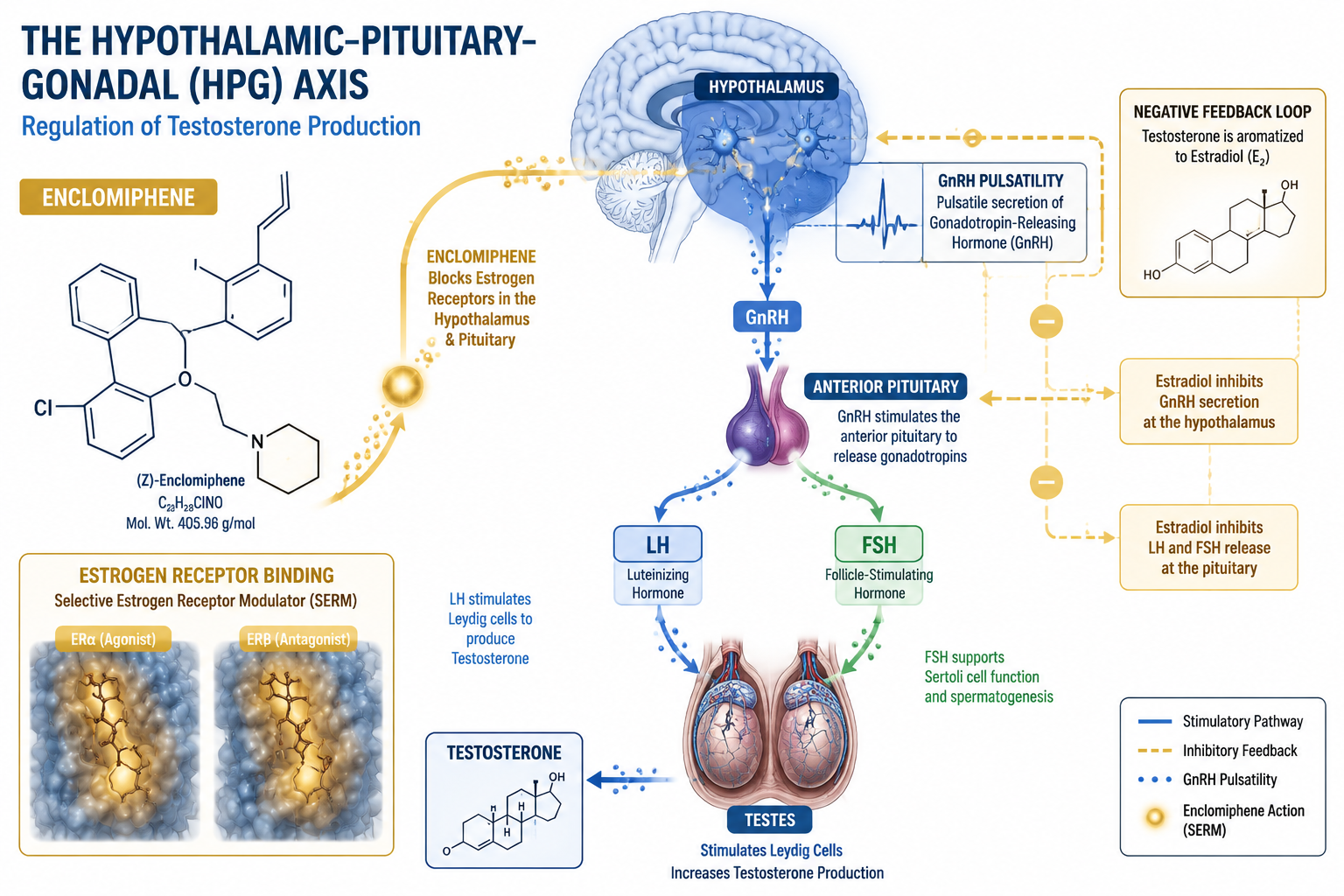
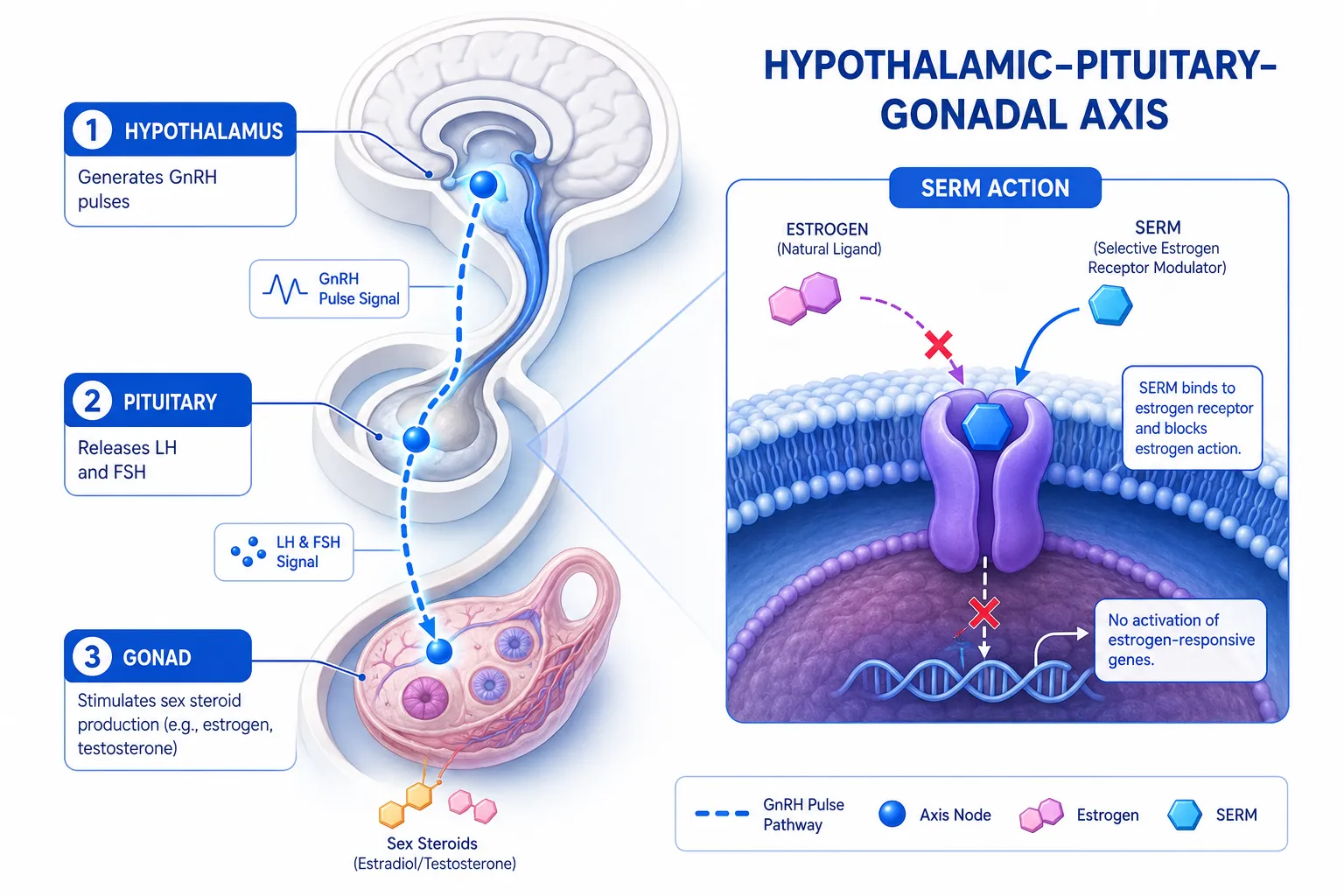
To understand enclomiphene citrate's serm mechanism, one must first understand the feedback loop it targets. The hypothalamic-pituitary-gonadal (HPG) axis regulates testosterone through a tightly controlled signaling chain:

  1. The hypothalamus releases gonadotropin-releasing hormone (GnRH).
  2. GnRH prompts the pituitary to secrete luteinizing hormone (LH) and follicle-stimulating hormone (FSH).
  3. LH signals the Leydig cells in the testes to produce testosterone.
  4. Rising testosterone and estradiol feed back to the hypothalamus and pituitary, suppressing further GnRH and LH release.

Enclomiphene citrate blocks estrogen receptors at the hypothalamus and pituitary. This prevents estradiol from delivering its suppressive feedback signal. The result is sustained or elevated GnRH pulsatility, higher LH output, and increased endogenous testosterone synthesis.
The Hypothalamic-Pituitary-Gonadal Axis

Enclomiphene vs. Zuclomiphene: Why Isomer Separation Matters

Clomiphene citrate is a 50/50 mixture of two geometric isomers: enclomiphene (trans) and zuclomiphene (cis). Research has clarified that these isomers behave very differently:

Property Enclomiphene (trans) Zuclomiphene (cis)
Receptor activity Antagonist Partial agonist
Half-life Short (~10 hours) Long (~30 days)
HPG stimulation Strong Weak or counterproductive
Accumulation risk Low High

Zuclomiphene's long half-life allows it to accumulate and act as a partial estrogen agonist, potentially blunting the very HPG stimulation researchers seek. Isolating the enclomiphene isomer removes this confounding variable and produces cleaner experimental data. For researchers exploring biochemistry-focused endocrine protocols, this mechanistic clarity is a significant advantage.

Testosterone Research: What the Evidence Shows

Clinical Trial Findings

Several Phase II and Phase III trials have examined enclomiphene citrate in men with secondary hypogonadism. Key findings include:

  • Testosterone normalization: Enclomiphene consistently raised serum total testosterone into the normal adult male range (400-700 ng/dL) in men who began with deficient levels.
  • LH and FSH preservation: Unlike exogenous testosterone, enclomiphene maintained or elevated gonadotropin levels, preserving testicular function and sperm parameters.
  • Estradiol management: Because enclomiphene blocks estrogen receptors rather than suppressing aromatase, estradiol levels in trials remained within acceptable ranges for most subjects, though individual variation was noted.

"Enclomiphene citrate restored testosterone without the gonadotropin suppression that defines conventional androgen replacement, a mechanistically important distinction for fertility-conscious research models."

Research Gaps and Limitations

Despite promising data, several areas remain under-studied:

  • Long-term safety data beyond 12 months is sparse.
  • Effects in women and in non-reproductive endocrine contexts are not well characterized.
  • Interactions with aromatase inhibitors and other endocrine-active compounds require further controlled investigation.

Researchers should treat available findings as hypothesis-generating rather than definitive. Protocols should include appropriate controls and validated assay methods.
Research Gaps and Limitations

Stack Compatibility: Enclomiphene Citrate in Multi-Compound Research Protocols

Why Researchers Combine Enclomiphene with Peptides

Research interest in enclomiphene citrate has grown alongside broader multi-target experimental design. Because enclomiphene acts upstream at the HPG axis rather than directly on androgen receptors, it is mechanistically compatible with several peptide classes that operate through entirely different pathways.

Common research combinations include:

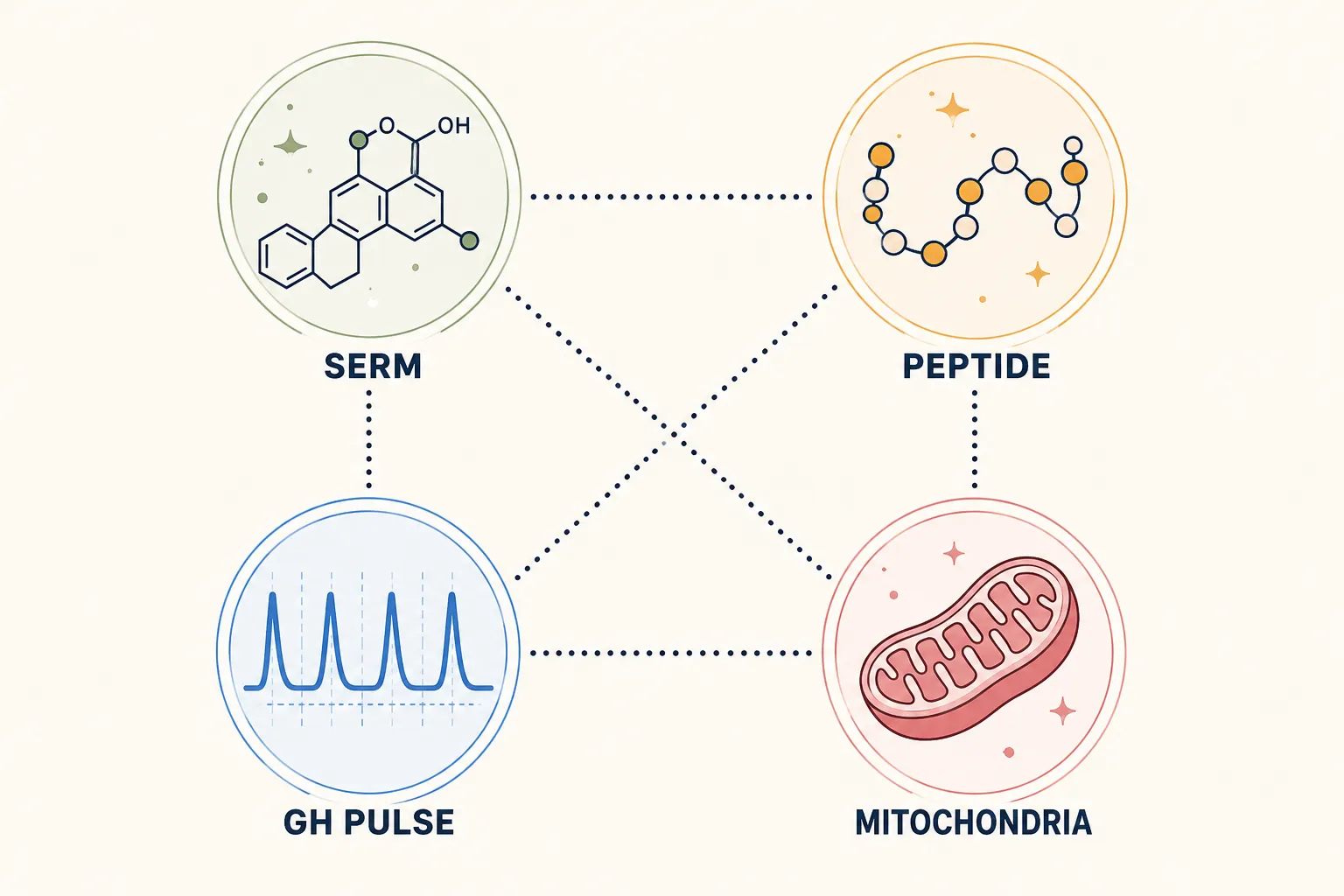
  • Growth hormone secretagogues: Compounds like those in serm and Ipamorelin/CJC-1295 research blends are studied alongside serms to evaluate whether GH axis support and HPG axis normalization produce additive or independent effects on body composition and metabolic markers.
  • Tissue repair peptides: Researchers examining recovery contexts may pair enclomiphene with compounds like BPC-157 to study whether hormonal normalization affects tissue repair endpoints.
  • Metabolic peptides: Some protocols incorporate AOD-9604 alongside serms when the research question involves fat metabolism and hormonal context simultaneously.

Designing a Rigorous Stack Protocol

Before combining enclomiphene with any additional compound, researchers should address the following:

  1. Define independent variables clearly. Each compound should have a documented rationale tied to a specific mechanistic pathway.
  2. Establish washout periods. Enclomiphene's short half-life simplifies washout design compared to zuclomiphene, but co-administered peptides may have different clearance timelines.
  3. Use validated biomarkers. LH, FSH, total testosterone, free testosterone, estradiol, and SHBG are the minimum assay panel for HPG-focused research. Peptide-specific markers should be added based on the secondary compound.
  4. Source verified materials. Purity documentation is non-negotiable. Researchers sourcing lab-tested peptides for combination studies should require certificates of analysis for every compound in the stack.

For researchers exploring growth hormone axis interactions specifically, reviewing Sermorelin and Ipamorelin/CJC-1295 combination research provides useful context on how multi-peptide stacks are structured and documented.
Designing a Rigorous Stack Protocol

Conclusion

Enclomiphene citrate represents one of the more mechanistically coherent tools available for HPG axis research in 2026. Its selective estrogen receptor antagonism at the hypothalamic-pituitary level drives endogenous LH and FSH output, producing testosterone elevation without the suppressive profile of exogenous androgen therapy. The isomeric separation from zuclomiphene removes a significant confounding variable that has historically complicated clomiphene-based research.

Actionable next steps for researchers:

  • Review published Phase II/III trial data to establish baseline expectations for LH, FSH, and testosterone response curves.
  • Design stack protocols with clear mechanistic rationale for each co-administered compound, using enclomiphene's short half-life as a timing anchor.
  • Source enclomiphene and any co-administered peptides from suppliers providing full purity documentation and third-party testing.
  • Consult the serm 10mg research product documentation for sourcing and traceability standards applicable to experimental use.

Rigorous experimental design, verified sourcing, and mechanistic clarity remain the foundation of credible enclomiphene citrate research.

References

  • Kim ED, Crosnoe L, Bar-Chama N, Khera M, Lipshultz LI. The treatment of hypogonadism in men of reproductive age. Fertility and Sterility. 2013;99(3):718-724.
  • Wiehle R, Cunningham GR, Pitteloud N, et al. Testosterone Restoration by Enclomiphene Citrate in Men with Secondary Hypogonadism. BJU International. 2013;112(8):1188-1200.
  • Krzastek SC, Smith RP. Non-testosterone management of male hypogonadism: an examination of the existing literature. Translational Andrology and Urology. 2020;9(Suppl 2):S160-S170.
  • Shabsigh R, Katz M, Yan G, Makhsida N. Cardiovascular issues in hypogonadism and testosterone therapy. The American Journal of Cardiology. 2005;96(12B):67M-72M.
  • Helo S, Ellen J, Mechlin C, et al. A randomized prospective double-blind comparison trial of clomiphene citrate and anastrozole in raising testosterone in hypogonadal infertile men. Journal of Sexual Medicine. 2015;12(8):1761-1769.
https://www.puretestedpeptides.com/wp-content/uploads/2026/07/enclomiphene-citrate-serm-mechanism-testosterone-research-and-stack-compatibilit.webp 1024 1536 Pure Tested https://www.puretestedpeptides.com/wp-content/uploads/2026/01/buy-peptides-online.jpg Pure Tested2026-07-26 13:05:192026-07-27 13:32:04Enclomiphene Citrate: serm Mechanism, Testosterone Research, and Stack Compatibility
Estrogen Receptor Signaling and Enclomiphene: How Selective Modulators Compare with Classic Polypeptide Hormones

Estrogen Receptor Signaling and Enclomiphene: How Selective Modulators Compare with Classic Polypeptide Hormones

July 24, 2026/0 Comments/by Pure Tested

}

Professional () hero image with (≤42 chars): 'Estrogen Receptor Signaling' in crisp white on a deep navy semi-transparent

Fewer than 15% of men diagnosed with secondary hypogonadism are offered a fertility-preserving treatment option, yet a class of small molecules called selective estrogen receptor modulators (serms) has been reshaping that conversation for over a decade. Understanding estrogen receptor signaling and enclomiphene, and how selective modulators compare with classic polypeptide hormones, is essential for anyone researching the endocrine axis in depth.

Key Takeaways

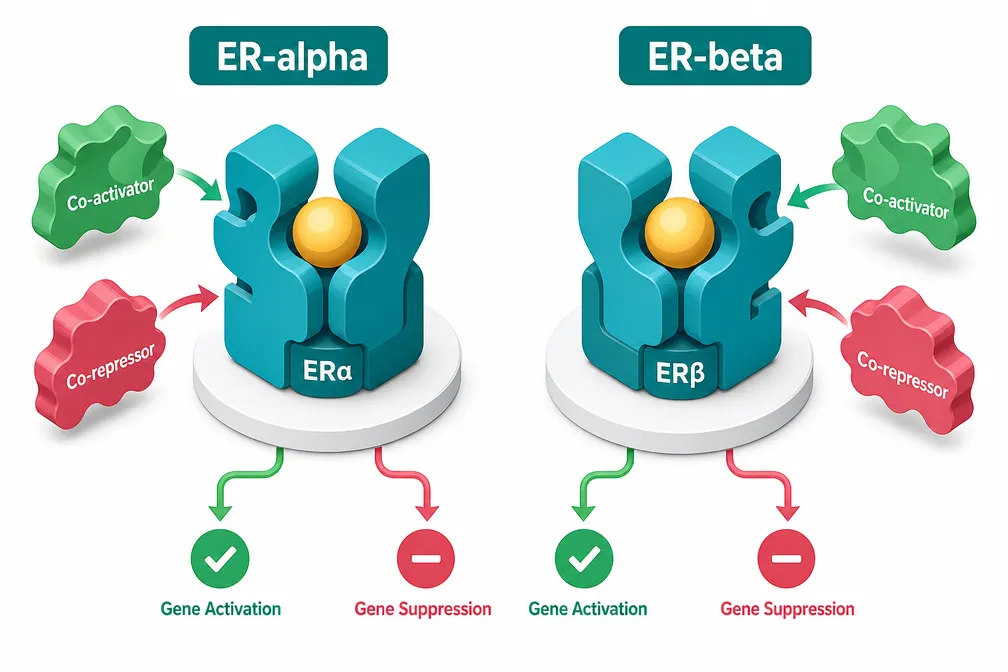
  • Estrogen receptors (ER-alpha and ER-beta) are nuclear transcription factors whose activity depends on ligand type, tissue context, and co-regulator proteins.
  • Enclomiphene is the trans-isomer of clomiphene and acts as a non-steroidal serm, blocking estrogen receptors in the hypothalamus and pituitary to raise GnRH, LH, FSH, and endogenous testosterone.
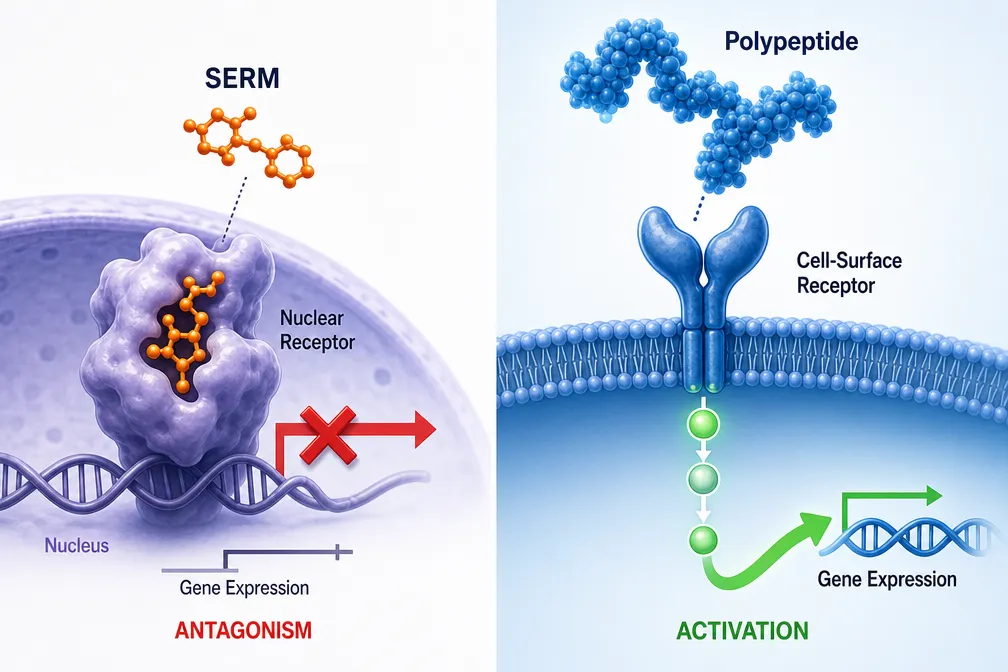
  • Unlike polypeptide hormones, which bind cell-surface receptors and trigger rapid second-messenger cascades, serms enter the nucleus and directly modulate gene transcription.
  • A 2025 systematic review confirmed that serms effectively raise testosterone and preserve spermatogenesis, distinguishing them from exogenous testosterone therapy.
  • Enclomiphene has no FDA approval as of 2026; all clinical use remains off-label, and long-term outcome data are still limited.

Key Takeaways

Estrogen Receptor Biology: Subtypes, Co-Regulators, and Tissue Specificity

To understand estrogen receptor signaling and enclomiphene's place within it, the receptor architecture must come first.

Two primary estrogen receptor subtypes govern most estrogenic signaling:

Receptor Gene Primary Tissues Dominant Role
ER-alpha (ERalpha) ESR1 Uterus, breast, hypothalamus, pituitary Reproductive and metabolic regulation
ER-beta (ERbeta) ESR2 Ovary, prostate, lung, brain Modulation, often opposing ERalpha

Both receptors are ligand-activated transcription factors housed in the nucleus. When estradiol binds, the receptor undergoes a conformational change, dimerizes, and recruits co-regulator proteins, either co-activators or co-repressors, before binding estrogen response elements (EREs) on target gene promoters.

This co-regulator recruitment is the critical variable. The same receptor, in two different tissues, can produce opposite outcomes depending on which co-regulators are present. This tissue selectivity is precisely what serms exploit.

Genomic vs. non-genomic signaling also matters. The classical genomic pathway takes hours; non-genomic estrogen signaling through membrane-associated receptors can activate kinase cascades within minutes. Enclomiphene operates primarily through the genomic pathway at hypothalamic and pituitary ERalpha sites.

How Enclomiphene Modulates the Hypothalamic-Pituitary-Gonadal Axis

Enclomiphene is the trans-isomer of clomiphene citrate. Its mechanism centers on competitive antagonism at ERalpha in the hypothalamus and anterior pituitary.

Under normal physiology, circulating estradiol (converted from testosterone via aromatase) exerts negative feedback on GnRH neurons and gonadotroph cells, suppressing LH and FSH secretion. Enclomiphene blocks this feedback loop:

  1. Enclomiphene occupies ERalpha in the hypothalamus.
  2. GnRH pulse frequency increases.
  3. The pituitary releases more LH and FSH.
  4. The testes respond with increased testosterone synthesis and maintained spermatogenesis.

This is the core distinction in estrogen receptor signaling and enclomiphene research: the drug does not supply testosterone, it restores the body's own signaling cascade. A 2025 systematic review published in Archives of Endocrinology and Metabolism confirmed that serms raise total testosterone, LH, and FSH while preserving sperm parameters, an outcome exogenous testosterone therapy cannot match because it suppresses LH and FSH directly.

Enclomiphene's advantage over its sister isomer (zuclomiphene) lies in binding affinity and clearance. Zuclomiphene has weak estrogenic activity and a longer half-life; enclomiphene is a cleaner antagonist with faster elimination, which some 2026 practice reviews suggest may reduce estrogen-related side effects such as gynecomastia.

For researchers exploring growth hormone secretagogue pathways as a parallel endocrine axis, the IPA GHRH and GRF research overview provides useful mechanistic context on upstream peptide signaling.

Selective Modulators vs. Classic Polypeptide Hormones: A Mechanistic Comparison

This is where estrogen receptor signaling and enclomiphene diverge most sharply from polypeptide hormone biology.

Classic polypeptide hormones, including LH, FSH, GnRH, and growth hormone-releasing peptides, are chains of amino acids that cannot cross the cell membrane. They bind G-protein-coupled receptors or receptor tyrosine kinases on the cell surface, triggering second-messenger cascades (cAMP, IP3, MAPK) that produce effects within seconds to minutes.

serms like enclomiphene, by contrast, are small lipophilic molecules that diffuse across the plasma membrane and directly engage nuclear receptors. Their timeline is hours, not seconds.

Feature Polypeptide Hormones serms (e.g., Enclomiphene)
Receptor location Cell surface Nucleus
Signaling speed Seconds to minutes Hours
Mechanism Second-messenger cascades Direct gene transcription
Tissue selectivity Receptor expression-dependent Co-regulator-dependent
Structural class Amino acid chains Non-steroidal small molecules

Researchers studying peptide-based endocrine tools such as tesa and its growth hormone axis effects or ipamorelin as a GHRH secretagogue are working within the polypeptide paradigm, cell-surface binding, rapid downstream signaling, and short biological half-lives. Enclomiphene operates in an entirely different molecular register.

"The tissue selectivity of a serm is not encoded in the molecule itself, it emerges from the co-regulator landscape of each target cell."

This distinction matters for research design. Polypeptide hormone studies typically measure acute hormonal pulses; serm studies must account for transcriptional latency and tissue-specific gene expression profiles.

For researchers interested in mitochondrial and metabolic peptide pathways that intersect with hormonal regulation, MOTS-c and mitochondrial dynamics represents a complementary area of inquiry. Similarly, 5-amino-1MQ's role in metabolic signaling illustrates how small molecules can modulate endocrine-adjacent pathways without acting through classical receptor mechanisms.

Selective Modulators vs. Classic Polypeptide Hormones: A Mechanistic Comparison

Regulatory Status and Research Considerations in 2026

Enclomiphene (branded as Androxal) advanced to Phase 3 clinical trials for secondary hypogonadism but received an FDA Complete Response Letter in 2015. As of 2026, there is no FDA-approved indication, and formal pharmaceutical development has been discontinued. Military and sports regulatory bodies list it as a prohibited substance, and it does not qualify as a dietary supplement under any regulatory framework.

Off-label use in men with secondary hypogonadism who wish to preserve fertility remains the primary clinical context. Practitioners and researchers in 2026 consistently frame enclomiphene as a fertility-preserving alternative to testosterone replacement therapy, not a substitute for it.

Gaps that remain as of 2026:

  • No large randomized trials measuring live birth rates with enclomiphene alone
  • Limited long-term cardiovascular safety data
  • No head-to-head trials comparing enclomiphene with newer serm formulations

For researchers sourcing research-grade peptides and small molecules, reviewing quality testing protocols is an important step before designing any receptor-signaling study.

Regulatory Status and Research Considerations in 2026

Conclusion

Estrogen receptor signaling and enclomiphene's role as a selective modulator represent a mechanistically distinct pathway from the polypeptide hormone systems that dominate much of endocrine research. The receptor subtype biology, co-regulator dependency, and nuclear transcription mechanism set serms apart from peptide-based tools in both their timeline of action and their tissue-specific outcomes.

Actionable next steps for researchers and clinicians:

  • Map co-regulator expression profiles in target tissues before predicting serm outcomes in novel models.
  • Distinguish clearly between serm-mediated transcriptional effects and polypeptide hormone second-messenger effects when designing multi-pathway studies.
  • Monitor the 2026 literature for emerging randomized trial data on enclomiphene's long-term safety endpoints.
  • Consult current regulatory guidance before including enclomiphene in any human-subjects protocol, given its unapproved status.
  • Pair serm research with complementary polypeptide axis studies, such as GH secretagogue or metabolic peptide research, to build a fuller picture of endocrine cross-talk.

The intersection of nuclear receptor pharmacology and classical peptide endocrinology is one of the most productive areas in translational biology today. Grounding that work in precise mechanistic understanding is the starting point for any high-quality research program.

https://www.puretestedpeptides.com/wp-content/uploads/2026/07/estrogen-receptor-signaling-and-enclomiphene-how-selective-modulators-compare-wi.webp 1024 1536 Pure Tested https://www.puretestedpeptides.com/wp-content/uploads/2026/01/buy-peptides-online.jpg Pure Tested2026-07-24 13:04:272026-07-27 13:32:07Estrogen Receptor Signaling and Enclomiphene: How Selective Modulators Compare with Classic Polypeptide Hormones
Enclomiphene for Research: Understanding its Mechanism in Hormone Regulation Studies

Enclomiphene for Research: Understanding its Mechanism in Hormone Regulation Studies

June 13, 2026/0 Comments/by Pure Tested

Fewer than 15% of men diagnosed with secondary hypogonadism have access to treatments that raise testosterone without shutting down sperm production — a gap that makes enclomiphene for research: understanding its mechanism in hormone regulation studies one of the most actively pursued topics in endocrinology today. As a selective estrogen receptor modulator (serm) with a uniquely targeted action on the hypothalamic-pituitary-gonadal (HPG) axis, enclomiphene has drawn significant scientific attention for its ability to restore hormonal balance through the body's own signaling pathways.

Key Takeaways

  • Enclomiphene blocks hypothalamic estrogen receptors, triggering a natural cascade of LH, FSH, and testosterone production.
  • Unlike testosterone replacement therapy (TRT), enclomiphene preserves spermatogenesis, making it valuable in fertility-focused research.
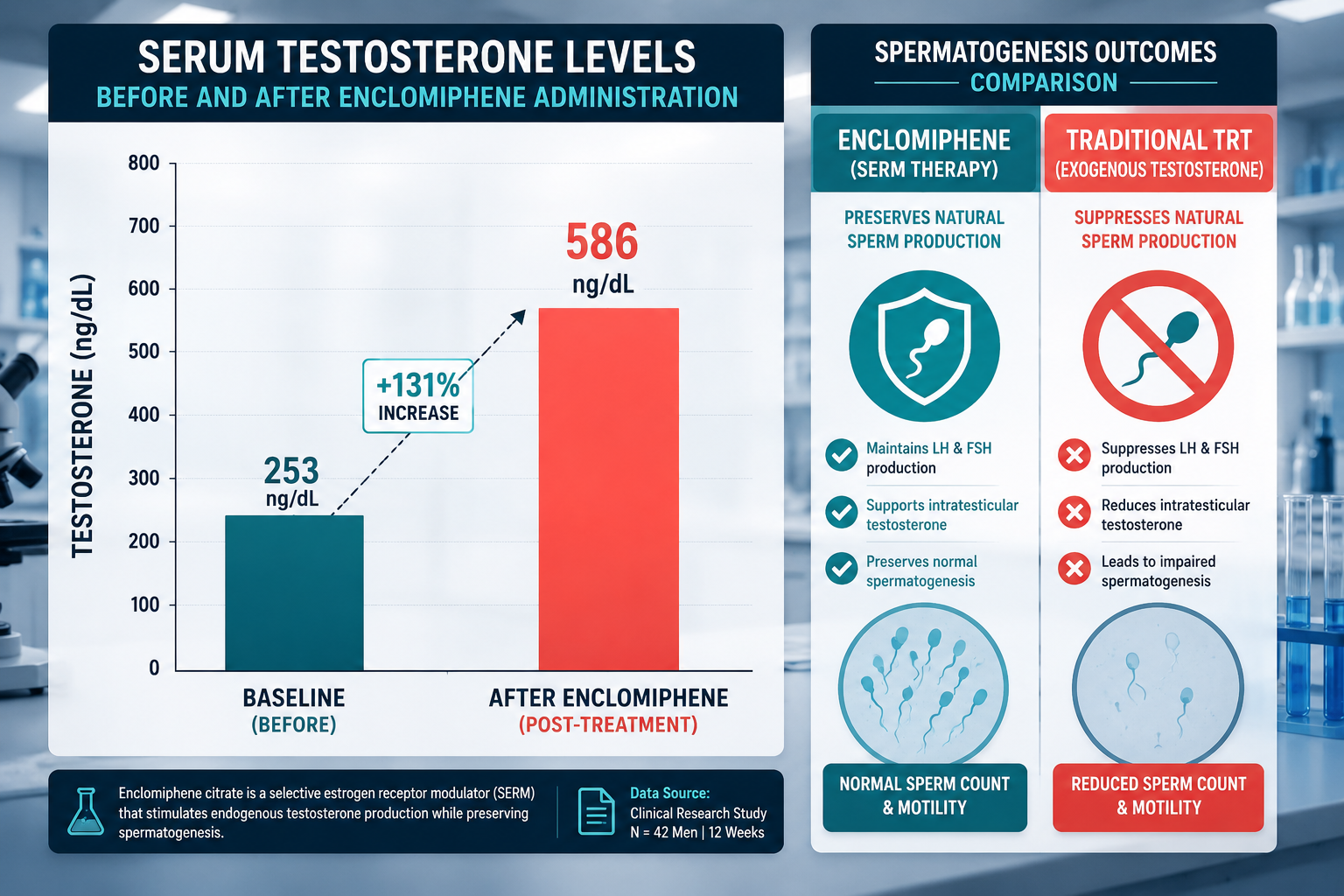
  • Clinical data show testosterone levels rising from roughly 253 ng/dL to 586 ng/dL after six weeks at higher doses.
  • Enclomiphene is the isolated trans-isomer of clomiphene, offering a cleaner serm profile with fewer estrogenic side effects.
  • As of 2026, enclomiphene has not received FDA approval, and long-term safety data remain limited.

Key Takeaways

How Enclomiphene Works: The HPG Axis Mechanism

At the core of enclomiphene for research: understanding its mechanism in hormone regulation studies is its precise action on the HPG axis. Enclomiphene functions as a serm by competitively binding to estrogen receptors in the hypothalamus. Under normal conditions, circulating estradiol binds to these receptors and signals the hypothalamus to reduce gonadotropin-releasing hormone (GnRH) secretion — a classic negative feedback loop.

By blocking this feedback, enclomiphene removes the "brake" on GnRH pulsatility. The result is a downstream surge in both luteinizing hormone (LH) and follicle-stimulating hormone (FSH) from the anterior pituitary, which in turn stimulates Leydig cells in the testes to produce endogenous testosterone.

"Enclomiphene essentially resets the hormonal thermostat by working upstream rather than adding exogenous hormone."

This mechanism stands in sharp contrast to traditional TRT, which suppresses the HPG axis entirely. Researchers studying gonadorelin and GnRH pulsatility will find enclomiphene's upstream action particularly relevant, as both compounds engage the same signaling architecture.

Key receptor interactions in enclomiphene's mechanism:

Site Action Downstream Effect
Hypothalamus Blocks estrogen receptor Increases GnRH pulsatility
Anterior pituitary Elevated GnRH input Raises LH and FSH output
Testes (Leydig cells) LH stimulation Boosts endogenous testosterone
Testes (Sertoli cells) FSH stimulation Preserves spermatogenesis

How Enclomiphene Works: The HPG Axis Mechanism

Clinical Research Findings and Fertility Preservation

The practical value of enclomiphene for research: understanding its mechanism in hormone regulation studies becomes clearest when examining clinical trial data. In one well-cited trial, men with secondary hypogonadism who had baseline testosterone levels averaging 253 ng/dL reached an average of 586 ng/dL after six weeks on the highest tested dose. This restoration to normal physiological range without exogenous hormone administration is a significant research milestone.

What makes this especially notable for researchers:

  • Sperm counts remained stable or improved, unlike outcomes seen with TRT
  • LH and FSH levels rose proportionally, confirming HPG axis engagement
  • Some participants showed improvements in fasting plasma glucose, suggesting potential metabolic benefits worth investigating further

This fertility-preserving profile makes enclomiphene a subject of interest in studies that also examine IPA serm stack research, where multiple compounds are evaluated for their combined effects on the endocrine system.

Enclomiphene vs. Clomiphene: A Cleaner Research Tool

Enclomiphene is the trans-isomer of clomiphene citrate. Standard clomiphene contains both the enclomiphene (trans) and zuclomiphene (cis) isomers. The zuclomiphene isomer carries weak estrogenic activity that can contribute to unwanted side effects. By isolating enclomiphene, researchers work with a compound that delivers a more targeted serm effect, reducing confounding variables in hormone regulation studies.

For labs exploring broader endocrine research, this specificity pairs well with investigations into longevity peptide research and metabolic hormone modulation.


Enclomiphene vs. Clomiphene: A Cleaner Research Tool

Research Applications, Dosing Context, and Regulatory Landscape

Standard dosing protocols in research settings typically range from 12.5 mg to 25 mg orally once daily, with adjustments guided by serum testosterone and gonadotropin measurements. Short-term safety data have been satisfactory and broadly comparable to testosterone gels and placebo in controlled settings. However, long-term safety data remain limited — a critical gap that researchers are actively working to address.

As of 2026, enclomiphene has not received FDA approval. Regulatory reviewers have indicated that raising testosterone levels alone may not constitute sufficient clinical benefit without demonstrated symptomatic improvement. This regulatory context shapes how enclomiphene is sourced and studied; it is currently available through compounding pharmacies, which means quality and dosing consistency can vary.

Researchers investigating related hormonal compounds may find useful context in NAD research and metabolic regulation and thymosin alpha-1 mechanism studies, both of which intersect with endocrine health pathways. For those reviewing the latest developments across the field, the peptide research blog provides ongoing updates relevant to serm and hormone regulation research.

Expert consensus points toward placebo-controlled, randomized trials as the next necessary step — particularly for populations with obesity, metabolic syndrome, and infertility-related hypogonadism.


Conclusion

Enclomiphene occupies a distinctive position in hormone regulation research because it works with the body's own feedback architecture rather than bypassing it. Its ability to elevate endogenous testosterone while preserving spermatogenesis addresses a genuine gap in the endocrinology research toolkit. For investigators studying the HPG axis, serm pharmacology, or fertility-adjacent hormone therapies, the compound offers a well-characterized mechanism and a growing clinical evidence base.

Actionable next steps for researchers:

  1. Review existing clinical trial data on HPG axis modulation to establish baseline comparisons.
  2. Prioritize sourcing from suppliers with verified testing protocols to ensure compound purity.
  3. Design studies that measure symptomatic outcomes alongside biomarker changes to address the FDA's stated evidentiary concerns.
  4. Consider pairing enclomiphene studies with metabolic markers, given preliminary data on fasting glucose improvements.
  5. Monitor regulatory developments in 2026, as the approval landscape for serms in hypogonadism continues to evolve.
https://www.puretestedpeptides.com/wp-content/uploads/2026/06/Enclomiphene-for-Research-Understanding-its-Mechanism-in-Hormone-Regulation-Studies.png 1024 1536 Pure Tested https://www.puretestedpeptides.com/wp-content/uploads/2026/01/buy-peptides-online.jpg Pure Tested2026-06-13 13:04:362026-07-20 15:03:17Enclomiphene for Research: Understanding its Mechanism in Hormone Regulation Studies
×

Helpful Links

  • My account
  • Cart
  • Checkout
  • Refund and Returns Policy
  • Privacy Policy
  • SMS Privacy Policy
  • Login
  • My Account
  • Logout

USA Made Lab Tested Peptides

All products are sold for research, laboratory, or analytical purposes only, and are not for human consumption


Pure Tested Peptides is a chemical supplier. Pure Tested Peptides is not a compounding / chemical compounding facility as defined under 503A of the Federal Food, Drug, and Cosmetic act. Pure Tested Peptides is not an outsourcing facility as defined under 503B of the Federal Food, Drug, and Cosmetic act.

The statements made within this website have not been evaluated by the US Food and Drug Administration. The products we offer are not intended to diagnose, treat, cure or prevent any disease.

Human/Animal Consumption Prohibited. Laboratory/In-Vitro Experimental Use Only

Scroll to top Scroll to top Scroll to top