
PT-141 Peptide: Melanocortin Receptor Agonism and Its Role in Sexual Function Research
Roughly 40% of women and 30% of men report some form of sexual dysfunction during their lifetimes, yet for decades, pharmacological research focused almost exclusively on vascular mechanisms. PT-141 Peptide: Melanocortin Receptor Agonism and Its Role in Sexual Function Research represents a fundamentally different approach — one that targets desire and motivation at the level of the brain rather than blood flow.
Key Takeaways
- PT-141 (bremelanotide) acts as an agonist at melanocortin receptor subtypes MC3R and MC4R in the central nervous system, not through vascular pathways.
- The FDA approved bremelanotide under the brand name Vyleesi in June 2019 for hypoactive sexual desire disorder (HSDD) in premenopausal women.
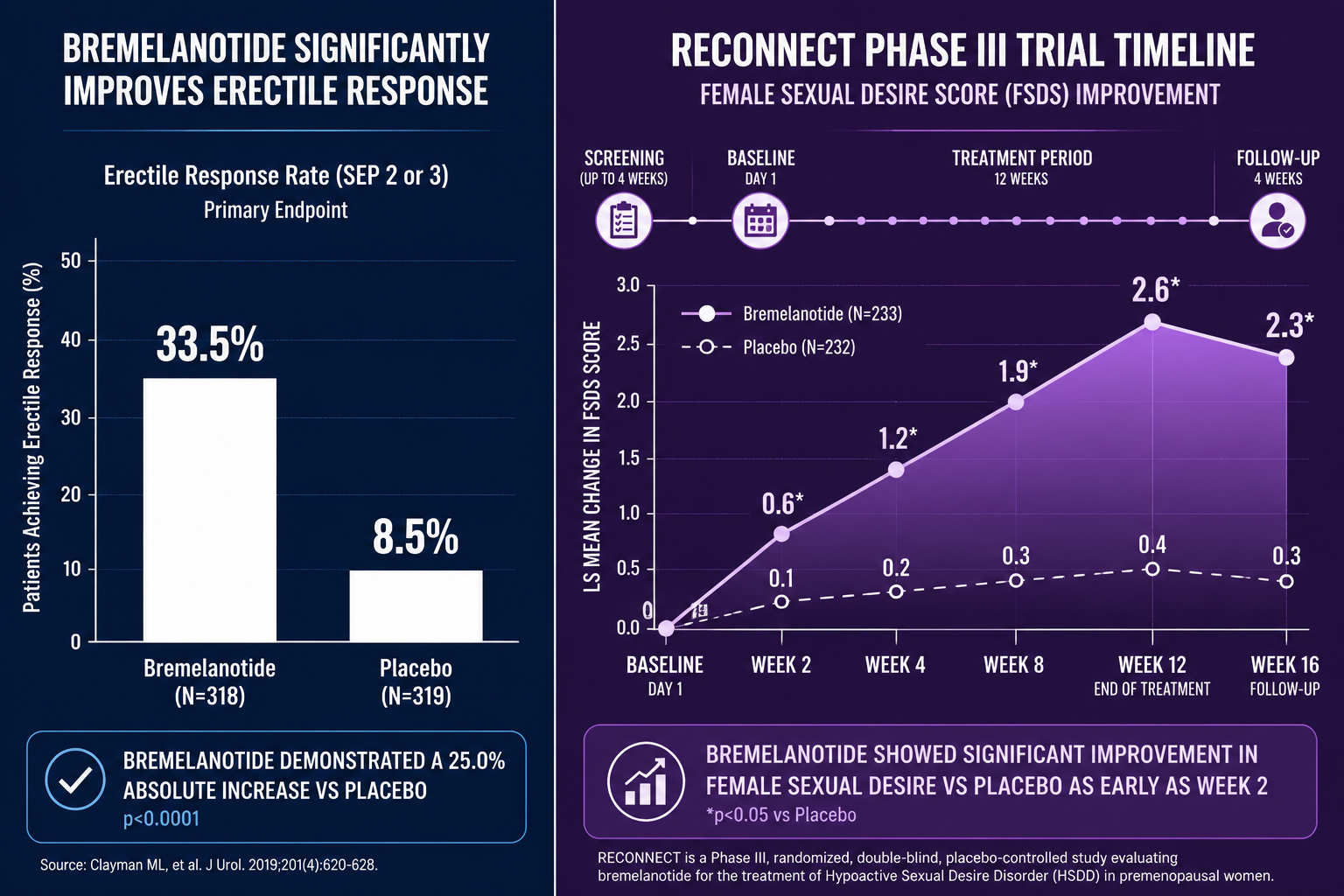
- Phase IIB trials showed a 33.5% positive erectile response rate in men treated with bremelanotide, versus 8.5% in the placebo group.
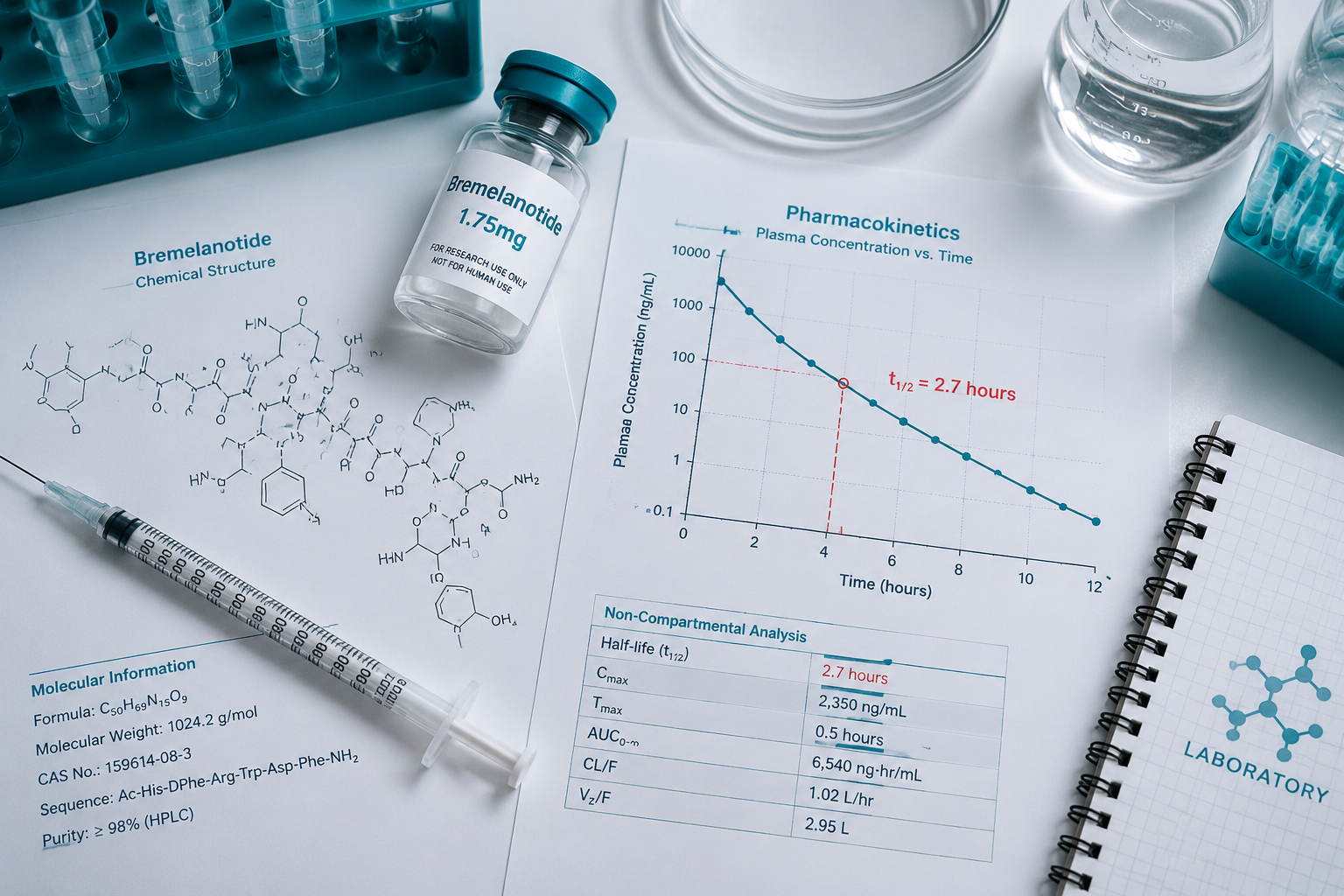
- Its cyclic lactam structure resists enzymatic breakdown, giving it biological effects that outlast its 2.7-hour plasma half-life.
- Research continues to explore its applications in both male and female sexual dysfunction, including cases where PDE5 inhibitors have failed.
Melanocortin Receptor Subtypes and the Central Mechanism of PT-141
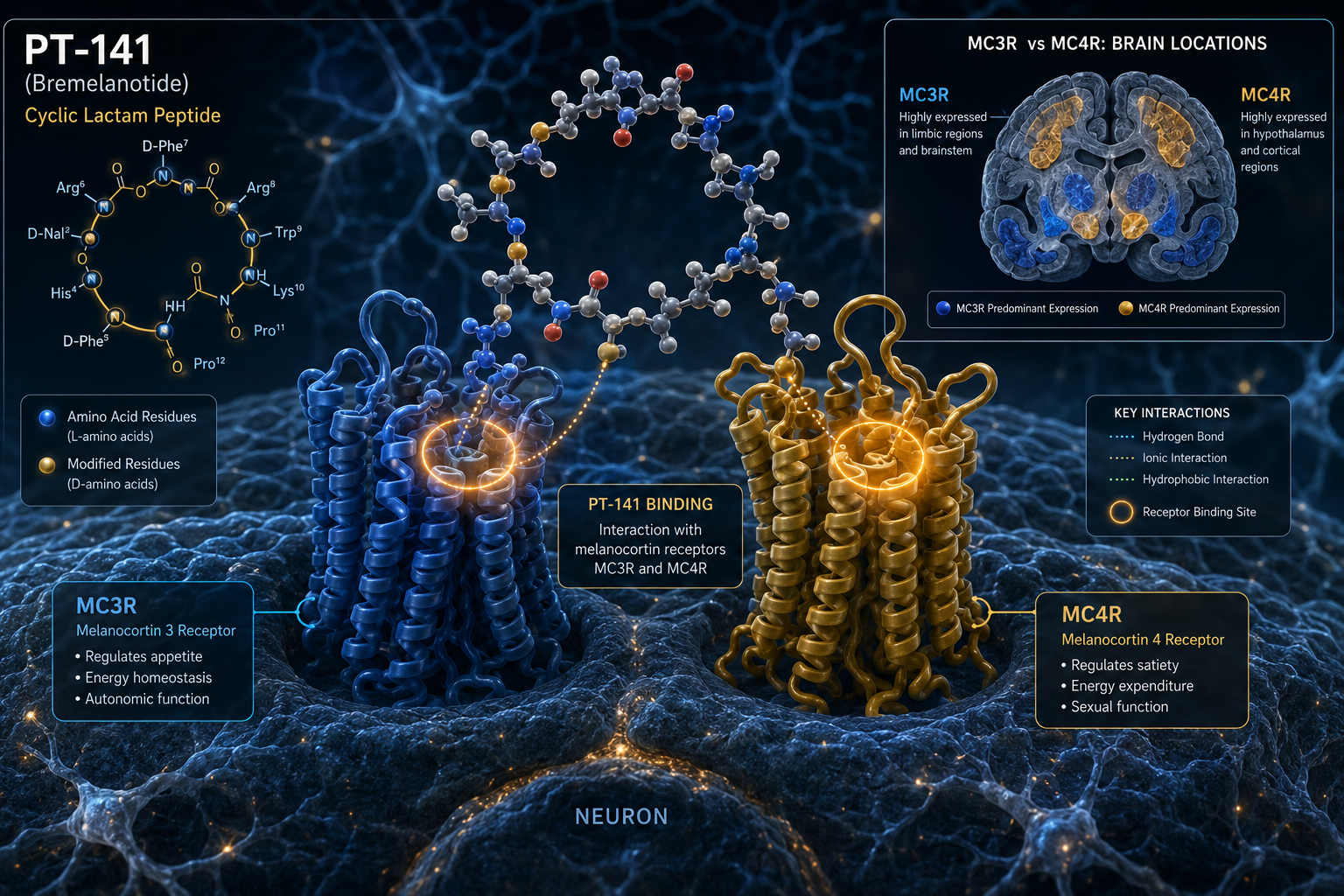
Understanding PT-141 Peptide: Melanocortin Receptor Agonism and Its Role in Sexual Function Research begins with the melanocortin system itself. The melanocortin receptor family includes five G-protein-coupled receptor subtypes (MC1R through MC5R), each distributed across different tissues with distinct physiological roles.
PT-141 selectively targets MC3R and MC4R, both of which are expressed in regions of the central nervous system associated with motivation, reward, and autonomic regulation. MC4R, in particular, is densely expressed in the hypothalamus — a brain region central to sexual behavior and hormonal signaling.
This central mechanism sets PT-141 apart from phosphodiesterase type 5 (PDE5) inhibitors such as sildenafil. PDE5 inhibitors work peripherally by enhancing blood flow in genital tissue, and they require sexual stimulation to be effective. PT-141, by contrast, modulates desire and motivation upstream — in the brain — before any peripheral response occurs.
"PT-141 acts on the neural circuits that generate sexual interest, not merely the vascular response that follows it."
This distinction is clinically significant. Conditions like HSDD are characterized by a deficiency of desire, not a failure of vascular response. A vascular drug cannot address a motivational deficit. Melanocortin receptor agonism can.
For researchers exploring broader neuroendocrine signaling, the central arousal research context for PT-141 provides additional mechanistic background worth reviewing alongside this work.
Clinical Research Findings: Efficacy Across Male and Female Populations
Evidence in Women
The RECONNECT Phase III clinical trials provided the pivotal data that led to FDA approval of bremelanotide (Vyleesi) in June 2019. These trials enrolled premenopausal women diagnosed with HSDD and demonstrated statistically significant improvements in:
- Sexual desire scores on validated patient-reported outcome measures
- Distress levels associated with low sexual desire
- Overall satisfaction with sexual experiences
The approved dosing protocol calls for 1.75 mg administered subcutaneously at least 45 minutes before anticipated sexual activity. This on-demand dosing model differs from daily hormonal therapies, offering flexibility that many patients prefer.
Research has also examined bremelanotide in women with female sexual arousal disorder (FSAD), finding positive effects on subjective sexual response — suggesting the compound's utility may extend beyond HSDD alone.
Evidence in Men
Although Vyleesi is FDA-approved only for premenopausal women with HSDD, Phase IIB trials in men produced compelling data. 33.5% of bremelanotide-treated men experienced positive erectile responses compared to 8.5% in the placebo group — a four-fold difference.
Perhaps more notable is the compound's performance in men who did not respond to sildenafil. Bremelanotide demonstrated a capacity to rescue erectile function in this treatment-resistant subgroup, pointing to its value in cases where vascular-focused therapies fall short.
Off-label use data in men has also reported improvements in:
| Outcome | Responder Rate |
|---|---|
| Erectile function | 52% |
| Sexual desire | 39% |
| Performance anxiety reduction | 39% |
| Orgasm quality | 17% |
Researchers interested in peptide combinations addressing multiple physiological pathways may find value in reviewing peptide blend research for comparative context.
Pharmacokinetics, Safety Profile, and Research Considerations
Structural Stability and Half-Life
PT-141's cyclic lactam structure is a key pharmacological feature. This configuration provides resistance to enzymatic degradation, which explains why biological effects persist beyond the compound's plasma elimination half-life of approximately 2.7 hours. Researchers studying peptide stability will recognize this as a meaningful advantage over linear peptide analogs.
Early intranasal administration studies demonstrated significant erectile responses at doses above 7 mg, with onset approximately 30 minutes post-administration — suggesting the compound's mechanism is rapid once absorption occurs.
Adverse Effect Profile
Common adverse effects reported in clinical trials include:
- Flushing (the most frequently reported event)
- Headache
- Injection-site reactions
- Nausea
A less common but notable finding is focal hyperpigmentation, observed in individuals using the medication more than eight times per month. This effect is linked to MC1R activity in skin melanocytes, a reminder that melanocortin receptor agonism is not tissue-specific in its entirety.
For researchers sourcing research-grade material, the PT-141 research context, Q&A, and controls page outlines purity standards and experimental controls relevant to in vitro and in vivo study design.
Those examining neuroendocrine peptide interactions more broadly may also find the neuroendocrine and innate immunity research overview useful for situating melanocortin signaling within wider physiological networks.
Researchers exploring innovative delivery systems for peptides like PT-141 should consult the innovative peptide delivery systems research overview for emerging administration strategies. Additionally, those comparing receptor-level agonism across compound classes may benefit from the GLP-1 dual receptor agonism breakdown as a structural parallel in receptor-targeted peptide pharmacology.
Conclusion
PT-141 Peptide: Melanocortin Receptor Agonism and Its Role in Sexual Function Research occupies a unique and well-supported position in the landscape of sexual health pharmacology. By targeting MC3R and MC4R in the central nervous system, bremelanotide addresses the neurological roots of sexual desire — a mechanism that neither hormonal therapies nor vascular drugs can replicate.
Actionable next steps for researchers and clinicians:
- Review the RECONNECT trial data in full to understand validated outcome measures used in HSDD research.
- Examine the off-label male data critically, noting the distinction between Phase IIB findings and anecdotal reports.
- Assess the cyclic lactam structural features of PT-141 when designing stability comparisons with other research peptides.
- Consider the focal hyperpigmentation risk as a dose-frequency variable in any long-term study protocol.
- Cross-reference melanocortin receptor distribution maps when hypothesizing secondary physiological effects beyond sexual function.
The central nervous system pathway that PT-141 activates remains one of the most promising and underexplored frontiers in sexual medicine research as of 2026.