Call or Text 727-513-9780
  • Shopping Cart Shopping Cart
    0Shopping Cart
Pure Tested Peptides | America's most trusted Peptides for sale online
  • Peptides for sale
    • Oral Peptides for sale
      • Peptide Capsules for sale
      • BPC 157 Capsules 1000mcg
      • SLU-PP-332 Capsules | 1000 mcg
      • 5-Amino-1MQ 50mg Capsules
      • Tesofensine 500mcg
    • All Peptides for sale
    • Peptide Sprays
      • BPC 157 Nasal Spray Kit
      • BPC-157 TB500 Nasal Spray Kit
      • Semax Nasal Spray 10mg
      • Selank – Nasal Spray Kit – 10mg
      • Epithalon 50MG Nasal Spray Kit
      • Ipamorelin 10mg Nasal Spray
      • Klow Nasal Spray (BPC-157 + TB-500 + GHK-Cu + KPV) | 80mg
      • Hulk Nasal Spray Tesa / Ipa Blend 6/3 MG
      • Klow Nasal Spray
      • NAD + 500 mg Nasal Spray
      • PT-141 Nasal Spray Kit
    • GHRH Peptides
      • Ipa Peptides
      • CJC-1295 Peptides
        • CJC-1295 with DAC 5 mg
        • CJC-1295 without DAC 5 mg
        • CJC-1295 Ipa 10mg
      • Tesa Peptides
        • Tesa Peptide
        • Tesa 20 mg
    • GHK-Cu Peptides
      • All GHK-Cu Peptides
      • GHK-Cu 100mg
      • KLOW Peptide Blend – Buy KLOW blend online
    • BPC Peptides
      • All BPC Peptides
      • BPC-157
      • BPC-157 TB-500
      • BPC 157 capsules 1000mcg
    • SLU-PP-332 Peptides
      • All SLU-PP-332 Peptides
      • SLU-PP-332 5mg
    • GLP3 Peptides
      • GLP3-R
      • GLP3-R CAG 10mg
      • GLP3-R 20mg
    • PT-141 Peptides
      • PT-141 Peptides for sale
      • PT-141 10mg
      • PT-141 Nasal Spray
    • CAG Peptides
      • Lipo-C Peptide Blend
      • CAG 5mg
      • CAG 10mg
    • MOTS-C Peptides
      • MOTS-C Peptides for sale
      • MOTS-c peptide
      • MOTS-c 10mg *6 pack*
    • 5 Amino 1MQ Peptides
      • 5 Amino 1MQ Peptides for sale
      • 5-Amino-1MQ 50mg Capsules
      • 5-Amino-1MQ 5mg
    • Epithalon Peptides
      • Epithalon Peptides for sale
      • Epithalon 10mg
      • Epithalon 50mg
  • Shop
    • GLPs
      • 5-Amino-1MQ 50mg Capsules
      • 5-Amino-1MQ 5mg
      • GLP3-Reta
      • L-Carnitine 500mg/ml
      • Tesofensine 500mcg
      • SLU-PP-332 5mg
      • MOTS-c 10mg *6 pack*
    • Epithalon & BPC Peptides
      • Epithalon 10mg
      • Epithalon 50mg
      • BPC-157
      • BPC 157 capsules 1000mcg
      • BPC-157 TB-500
      • BPC-157 TB500 Nasal Spray Kit
      • BPC 157 Nasal Spray Kit
    • BPC TB-500 & NAD+ Peptides
      • NAD+ 500 mg
      • KLOW Peptide Blend – Buy KLOW blend online
      • GLOW Peptide Blend
      • TB 500 5mg
      • BPC 157 capsules 1000mcg – Supplement
      • BPC 157 Nasal Spray Kit
      • BPC-157
      • BPC-157 TB500 Nasal Spray Kit
      • BPC-157 TB-500
      • BPC 157 capsules 1000mcg
    • LL-37 Peptide
      • LL-37 10 mg
    • MOTS-C & Selank
      • MOTS-c peptide
      • Selank 10mg
    • GHK Peptides
      • GHK-Cu 100mg
      • GLOW Peptide Blend
      • KLOW Peptide Blend – Buy KLOW blend online
  • COAs
  • Wholesale
    • Wholesale Peptides for sale
  • PTP FAQ
  • Affiliates
    • Selank Peptide: Advanced Pharmacological Mechanisms Underlying Its Anxiolytic and Nootropic Effects in Research
      • 5-Amino-1MQ Peptide: Detailed Mechanisms of NNMT Inhibition and Its Impact on Cellular Metabolism Research
        • MOTS-C Peptide: Unraveling Its Role in Mitochondrial Dynamics and Energy Metabolism Research
          • Epithalon Peptide and Telomerase Regulation: Investigating Its Impact on Cellular Senescence and Lifespan Research Models
            • GLP2-T vs GLP2 Tirz Peptide: Understanding the Naming, Mechanistic Nuances, and Research Implications for Gut Health
      • Peptides and Polypeptides in Modern Pharmacology: What Research on Metoprolol, Prednisone, and Amlodipine Reveals
        • Polypeptide Peptides vs NSAIDs: What Naproxen and Diclofenac Teach Tissue-Repair Researchers About BPC‑157 and TB‑500
          • Peptides and Polypeptides in Endocrine Pharmacology: How GLP-1, GLP-2, and GLP-3 Retatrutide Differ From Classic Drugs Like Prednisone and Amlodipine
          • 5‑Amino‑1MQ Peptide and NNMT Inhibition: How It Compares With Statins Like Atorvastatin in Adipose and Lipid Metabolism Research
      • Enclomiphene, Estrogen Receptor Signaling, and Luteinizing Phase Biology: What Hormone Researchers Should Measure
        • Mesenchymal Stem Cells, BPC‑157, and GHK‑Cu: How Tissue Repair Peptides Compare With Classic NSAIDs Like Naproxen in Injury Models
          • Peptide Calculator Use Cases Beyond Growth Hormone: Working Through GLP‑3 Retatrutide, MOTS‑c, and BPC‑157 Research Dosing
        • Polypeptide Peptides in Endocrine and Metabolic Pharmacology: Lessons From Amlodipine, Prednisone, and Metoprolol
        • Peptides Calculator for Advanced Blends: Worked Examples for Tesamorelin, CJC‑1295, and Ipamorelin Stacks
          • Peptides and Polypeptides in Human Physiology: How Molecular Size Shapes Research Applications
            • Selank Peptide: Advanced Pharmacological Mechanisms Underlying Its Anxiolytic and Nootropic Effects in Research
          • 5-Amino-1MQ Peptide: Detailed Mechanisms of NNMT Inhibition and Its Impact on Cellular Metabolism Research
            • MOTS-C Peptide: Unraveling Its Role in Mitochondrial Dynamics and Energy Metabolism Research
              • Epithalon Peptide and Telomerase Regulation: Investigating Its Impact on Cellular Senescence and Lifespan Research Models
                • GLP2-T vs GLP2 Tirz Peptide: Understanding the Naming, Mechanistic Nuances, and Research Implications for Gut Health
                  • Peptides and Polypeptides in Endocrine Pharmacology: How GLP-1, GLP-2, and GLP-3 Retatrutide Differ From Classic Drugs Like Prednisone and Amlodipine
                    • Polypeptide Peptides vs NSAIDs: What Naproxen and Diclofenac Teach Tissue-Repair Researchers About BPC‑157 and TB‑500
                      • Peptides and Polypeptides in Modern Pharmacology: What Research on Metoprolol, Prednisone, and Amlodipine Reveals
                        • 5‑Amino‑1MQ Peptide and NNMT Inhibition: How It Compares With Statins Like Atorvastatin in Adipose and Lipid Metabolism Research
                        • Enclomiphene, Estrogen Receptor Signaling, and Luteinizing Phase Biology: What Hormone Researchers Should Measure
                        • Mesenchymal Stem Cells, BPC‑157, and GHK‑Cu: How Tissue Repair Peptides Compare With Classic NSAIDs Like Naproxen in Injury Models
                        • Peptide Calculator Use Cases Beyond Growth Hormone: Working Through GLP‑3 Retatrutide, MOTS‑c, and BPC‑157 Research Dosing
                        • Polypeptide Peptides in Endocrine and Metabolic Pharmacology: Lessons From Amlodipine, Prednisone, and Metoprolol
                        • Peptides Calculator for Advanced Blends: Worked Examples for Tesamorelin, CJC‑1295, and Ipamorelin Stacks
                        • Peptides and Polypeptides in Human Physiology: How Molecular Size Shapes Research Applications
                        • Selank Peptide: Advanced Pharmacological Mechanisms Underlying Its Anxiolytic and Nootropic Effects in Research
                        • MOTS-C Peptide: Unraveling Its Role in Mitochondrial Dynamics and Energy Metabolism Research
                        • Peptides and Polypeptides in Modern Pharmacology: What Research on Metoprolol, Prednisone, and Amlodipine Reveals
                        • Peptides and Polypeptides in Endocrine Pharmacology: How GLP-1, GLP-2, and GLP-3 Retatrutide Differ From Classic Drugs Like Prednisone and Amlodipine
                        • 5-Amino-1MQ Peptide: Detailed Mechanisms of NNMT Inhibition and Its Impact on Cellular Metabolism Research
                        • Mesenchymal Stem Cells, BPC‑157, and GHK‑Cu: How Tissue Repair Peptides Compare With Classic NSAIDs Like Naproxen in Injury Models
                        • Peptide Calculator Use Cases Beyond Growth Hormone: Working Through GLP‑3 Retatrutide, MOTS‑c, and BPC‑157 Research Dosing
                        • GLP2-T vs GLP2 Tirz Peptide: Understanding the Naming, Mechanistic Nuances, and Research Implications for Gut Health
                        • Polypeptide Peptides in Endocrine and Metabolic Pharmacology: Lessons From Amlodipine, Prednisone, and Metoprolol
                        • Polypeptide Peptides vs NSAIDs: What Naproxen and Diclofenac Teach Tissue-Repair Researchers About BPC‑157 and TB‑500
                        • Peptides and Polypeptides in Human Physiology: How Molecular Size Shapes Research Applications
                        • Peptides Calculator for Advanced Blends: Worked Examples for Tesamorelin, CJC‑1295, and Ipamorelin Stacks
                        • 5‑Amino‑1MQ Peptide and NNMT Inhibition: How It Compares With Statins Like Atorvastatin in Adipose and Lipid Metabolism Research
                        • Enclomiphene, Estrogen Receptor Signaling, and Luteinizing Phase Biology: What Hormone Researchers Should Measure
                        • Epithalon Peptide and Telomerase Regulation: Investigating Its Impact on Cellular Senescence and Lifespan Research Models
                        • Best research protocol Klow blend
                        • best time to take BPC-157
                        • best time to take DSIP (Delta Sleep Inducing Peptide)
                        • best time to take CJC-1295
                        • best time to take AOD-9604
                        • best time to take Follistatin 344
                        • best time to take Ipamorelin
                        • best time to take MK-677 (Ibutamoren)
                        • best time to take Ligandrol (LGD-4033) — research compound
                        • best time to take Ostarine (MK-2866) — research compound
                        • best time to take GHK-CU
                        • best time to take TB-500
                        • best time to take MOTS-c
                        • best time to take Semax
                        • best time to take RAD-140 (Testolone) — research compound
                        • best time to take Thymosin Alpha-1
                        • best time to take PEG-MGF
                        • Biolife Plasma, Octapharma Plasma, and Research Peptides: How Plasma Donation Labs Differ From Peptide Suppliers
                        • best time to take YK-11 — research compound
                        • best time to take PT-141 (Bremelanotide)
                        • Best research protocol Klow blend
  • Contact
    • Contact Customer Service
    • Text Customer Support
  • About US
  • Shop all peptides
  • Affiliate Program
    • Affiliate Signup
  • Login / Register Login / Register Page Link Login / Register Page Link
  • Click to open the search input field Click to open the search input field Search
  • Menu Menu

Tag Archive for: wada prohibited peptides

BPC-157 vs BPC-157 and TB-500: How to Interpret Single-Peptide and Stack Research Results

BPC-157 vs BPC-157 and TB-500: How to Interpret Single-Peptide and Stack Research Results

June 13, 2026/0 Comments/by Pure Tested

Fewer than 5% of peptide combinations studied in preclinical research have been directly compared against their single-compound counterparts in controlled trials. That gap matters enormously when researchers try to determine whether a stack offers genuine additive benefit or simply introduces more variables. Understanding BPC-157 vs BPC-157 and TB-500: How to Interpret Single-Peptide and Stack Research Results requires a structured framework — one that accounts for mechanism overlap, study design limitations, and the practical challenge of isolating each peptide's contribution.

Key Takeaways

  • BPC-157 and TB-500 operate through distinct but complementary mechanisms, making direct comparison with stack data genuinely complex.
  • Most available evidence comes from animal models; human clinical data remains limited as of 2026.
  • Interpreting stack research requires identifying whether outcomes exceed what either peptide achieves alone.
  • Regulatory status for both peptides is actively shifting, affecting their availability for research purposes.
  • A decision-making framework focused on mechanism overlap helps researchers avoid over-interpreting combination results.
Key Takeaways

Understanding the Mechanisms Before Comparing Research Results

Any meaningful comparison of BPC-157 vs BPC-157 and TB-500 stack research must begin with mechanism. Without this foundation, researchers risk conflating correlation with synergy.

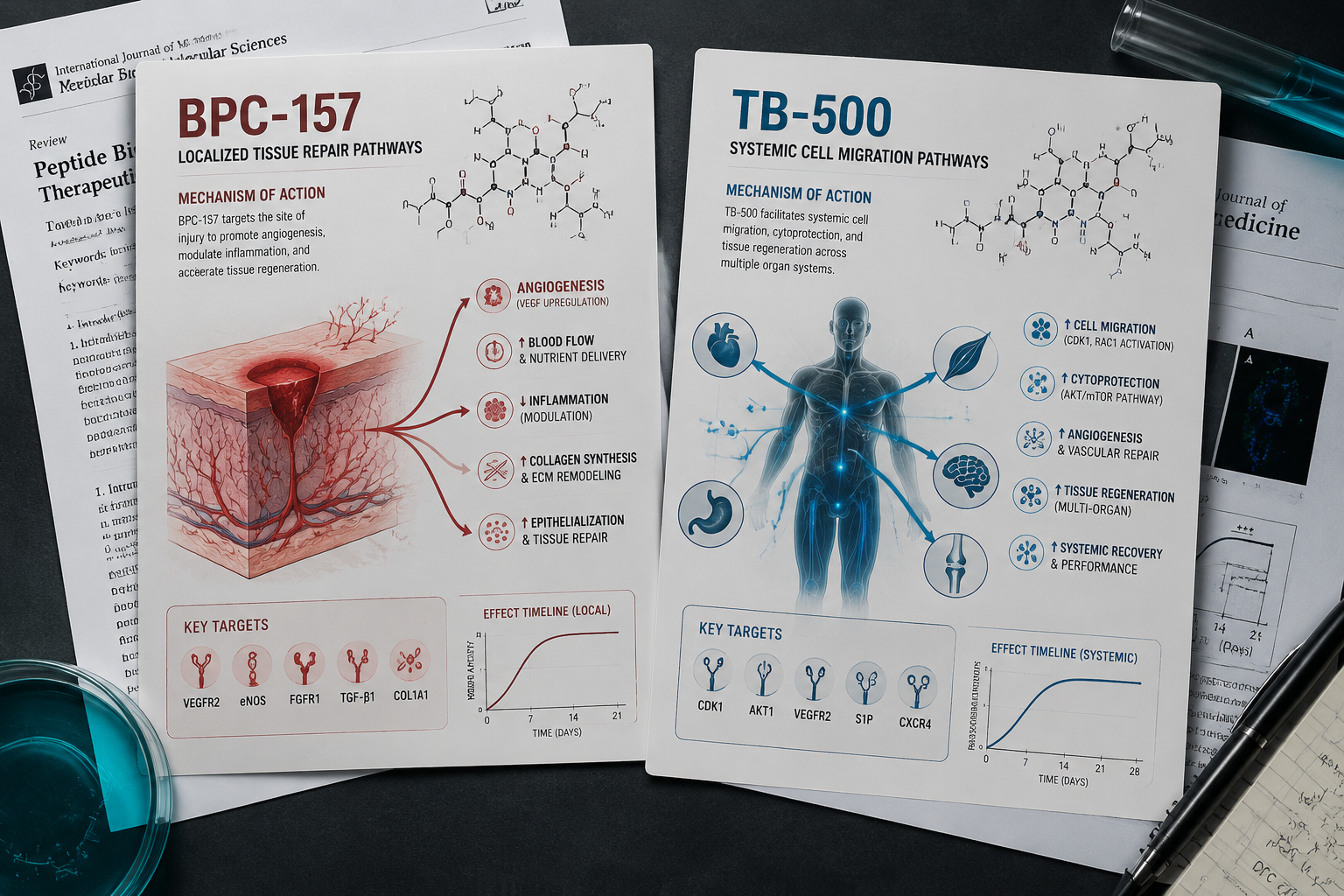
BPC-157 is a synthetic pentadecapeptide derived from a gastric protein. Its primary actions include:

  • Promoting angiogenesis (new blood vessel formation)
  • Activating nitric oxide pathways to support tissue perfusion
  • Accelerating localized tendon, ligament, and muscle repair

Research on BPC-157's role in angiogenesis and tendon healing highlights how its effects are largely site-specific, working at the injury location rather than systemically.

TB-500 (Thymosin Beta-4) takes a different route. It enhances cell migration by regulating actin — a structural protein critical to cellular movement. This promotes systemic healing responses rather than localized repair alone.

"The distinction between local and systemic action is the single most important variable when interpreting stack versus single-peptide data."

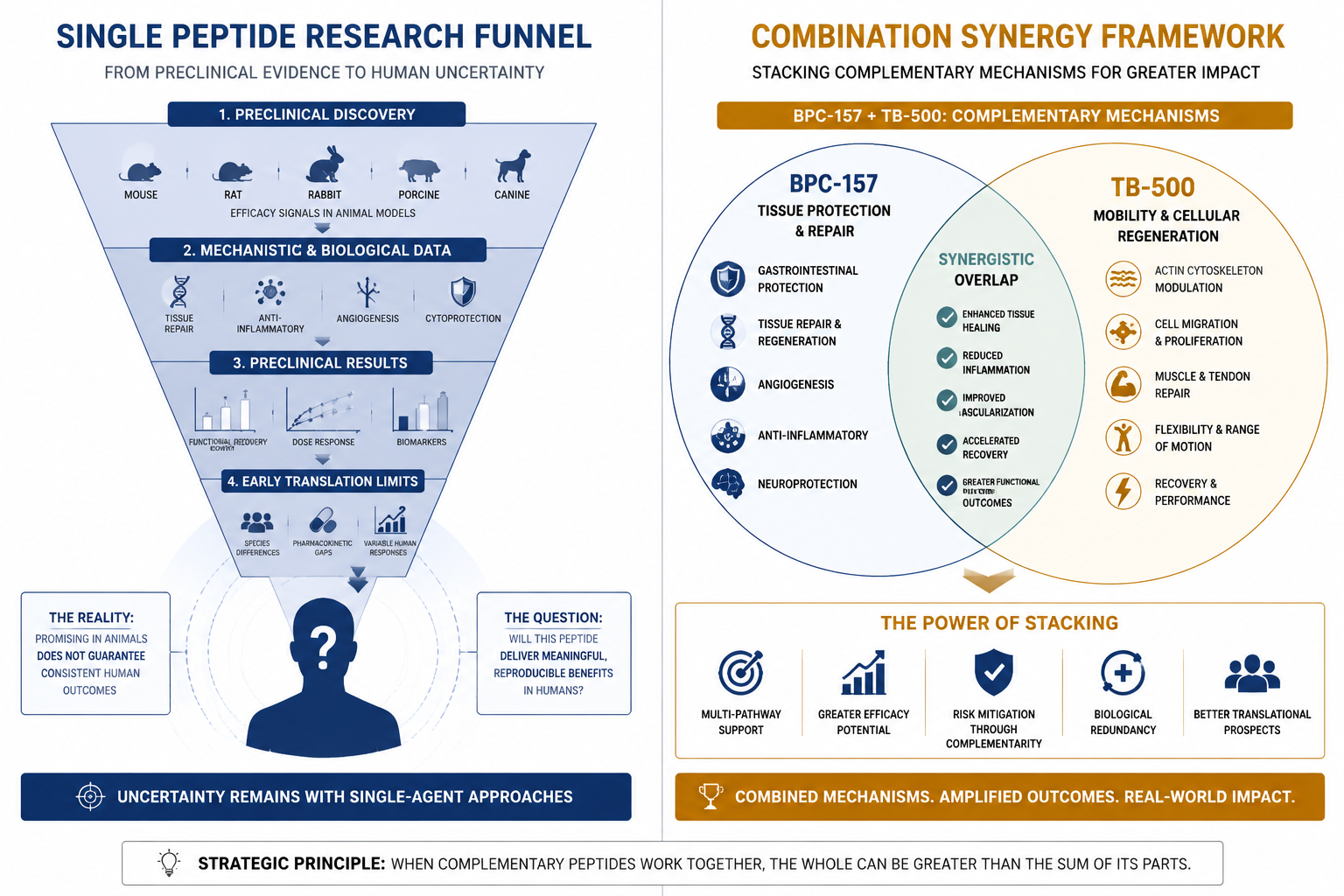
Because these two peptides target different biological pathways, their combination is theoretically additive rather than redundant. However, theory and measured outcomes are not the same thing.


A Decision-Making Framework for Interpreting Single-Peptide vs Stack Research
A Decision-Making Framework for Interpreting Single-Peptide vs Stack Research

When evaluating BPC-157 vs BPC-157 and TB-500: How to Interpret Single-Peptide and Stack Research Results, apply the following framework to any study or dataset encountered.

Step 1: Identify the Study Design

Ask whether the research used:

Design Type What It Tells You Limitation
Single-peptide only Isolated mechanism data Cannot confirm synergy
Stack without controls Combined outcome only Cannot isolate contribution
Three-arm (A, B, A+B) True additive effect Rare in peptide literature

Most published research falls into the first two categories. Three-arm designs that directly test BPC-157 alone, TB-500 alone, and the combination together are uncommon, which makes definitive synergy claims premature.

Step 2: Check the Evidence Base

The vast majority of BPC-157 and TB-500 research involves animal models. Extrapolating rodent data to human physiology introduces meaningful uncertainty. Researchers should weight animal studies as hypothesis-generating rather than conclusive.

This same caution applies when reviewing combination stack outcomes. If a stack study shows accelerated recovery in rats, that finding does not confirm the stack outperforms BPC-157 alone in humans.

Step 3: Assess Mechanism Overlap

If two peptides share a downstream pathway, their combination may produce diminishing returns rather than additive benefit. BPC-157 and TB-500 have low mechanism overlap — one targets angiogenesis locally, the other targets actin-mediated cell migration systemically. This reduces the risk of redundancy and supports the biological rationale for stacking.

For comparison, researchers evaluating peptide combinations with higher pathway overlap — such as those explored in IPA and sermorelin stack research — face a more complex interpretation challenge.

Step 4: Evaluate Dosing Context

Research protocols typically use BPC-157 at 250–500 mcg per day subcutaneously and TB-500 at 2–2.5 mg twice weekly during a loading phase, followed by 2 mg weekly for maintenance. Stack studies that deviate significantly from these ranges may not be directly comparable to single-peptide trials using standard doses.


Regulatory and Safety Considerations That Affect Research Interpretation
Regulatory and Safety Considerations That Affect Research Interpretation

Interpreting BPC-157 vs BPC-157 and TB-500: How to Interpret Single-Peptide and Stack Research Results also means understanding the regulatory environment shaping what research is possible.

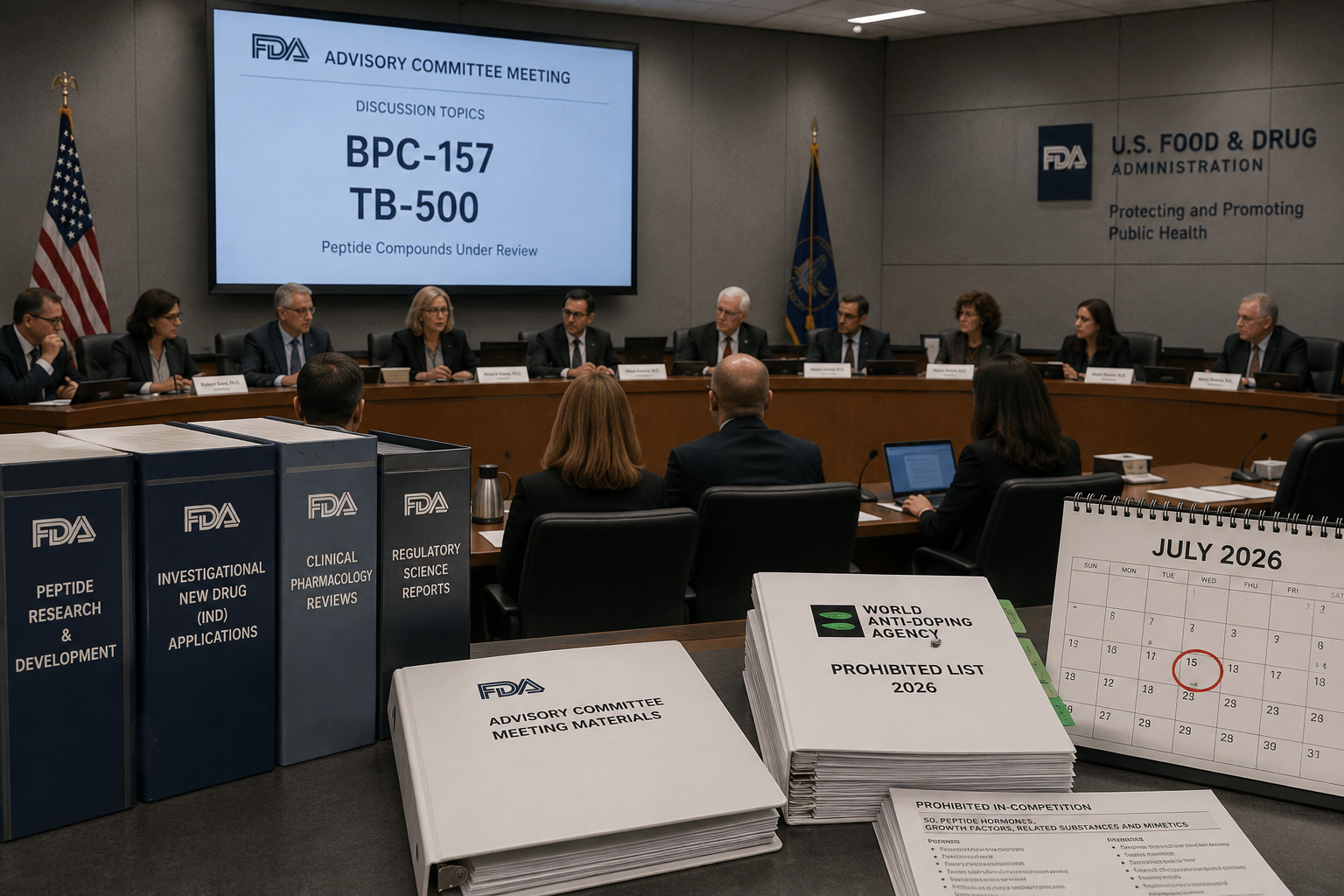
As of May 2026, both BPC-157 and TB-500 were removed from the FDA's 503A Category 2 bulk drug substances list, with a Pharmacy Compounding Advisory Committee review scheduled for July 2026. This regulatory shift may affect the availability of these compounds for research purposes going forward.

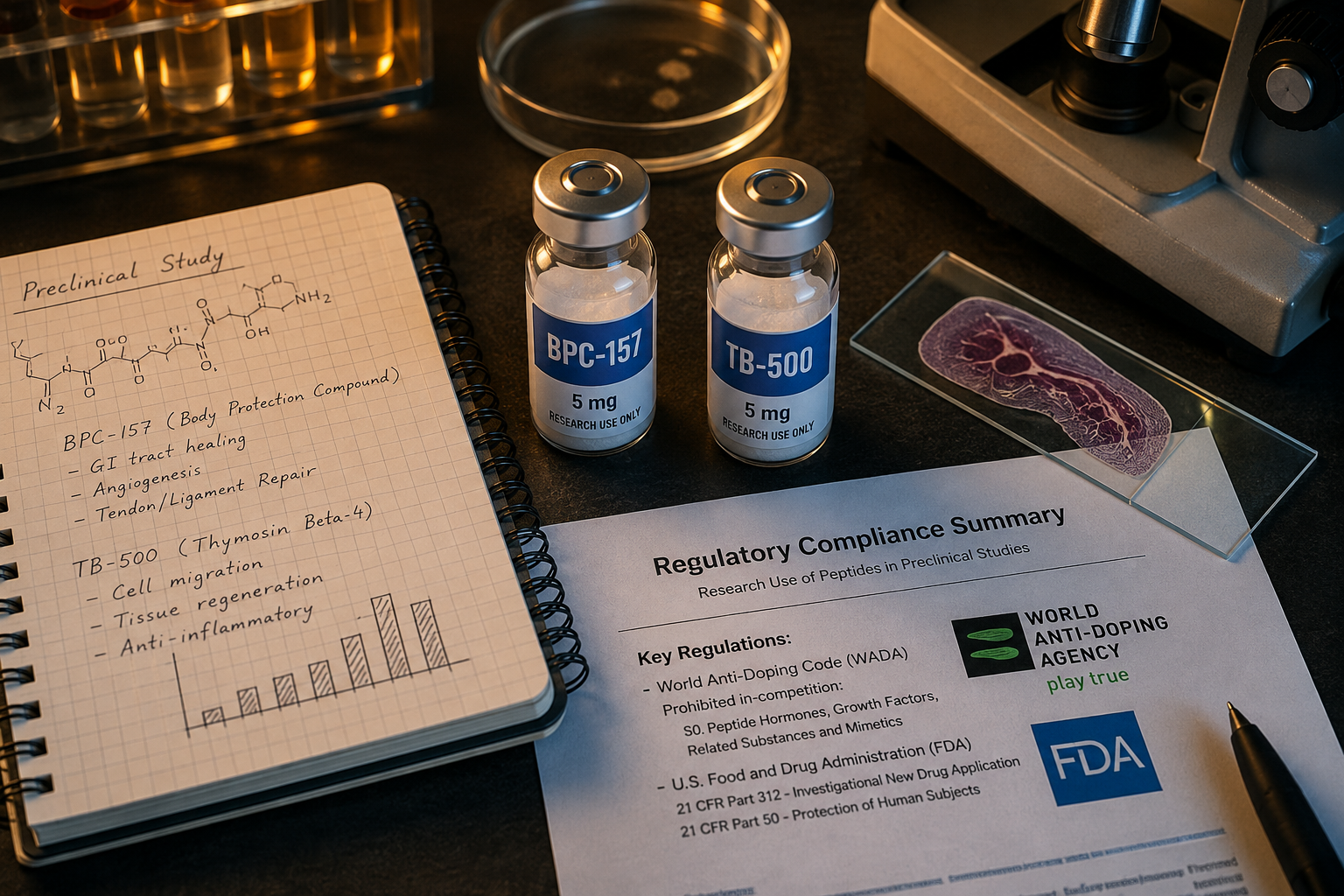
Additionally, both peptides are classified under WADA's S0 category as non-approved substances, prohibiting their use in competitive sports contexts.

Reported side effects in preclinical research have been minimal, but comprehensive human safety data does not yet exist. Researchers sourcing compounds should prioritize verified, lab-tested peptides to ensure purity and accurate dosing in any research context.

For researchers interested in other peptide combinations with emerging evidence bases, resources on SS-31 mitochondrial research themes and Selank peptide benefits offer useful methodological parallels for interpreting single-compound versus combination data.


Conclusion

Comparing BPC-157 alone against a BPC-157 and TB-500 stack is not simply a question of "which works better." It is a question of study design, mechanism mapping, and evidence quality. The practical framework outlined here — identifying study design, checking the evidence base, assessing mechanism overlap, and evaluating dosing context — gives researchers a repeatable method for drawing sound conclusions from incomplete data.

Actionable next steps for researchers:

  1. Before reviewing any stack study, locate single-peptide data for each compound separately.
  2. Prioritize three-arm study designs when available; treat two-arm stack studies as preliminary.
  3. Monitor the July 2026 FDA PCAC review for regulatory updates that may affect compound access.
  4. Source only verified, purity-tested compounds to ensure research integrity.

The evidence base for both peptides continues to grow. Applying a disciplined interpretation framework now ensures that conclusions drawn today remain defensible as human clinical data eventually emerges.

https://www.puretestedpeptides.com/wp-content/uploads/2026/06/BPC-157-vs-BPC-157-and-TB-500-How-to-Interpret-Single-Peptide-and-Stack-Research-Results.png 1024 1536 Pure Tested https://www.puretestedpeptides.com/wp-content/uploads/2026/01/buy-peptides-online.jpg Pure Tested2026-06-13 13:03:222026-07-20 15:03:18BPC-157 vs BPC-157 and TB-500: How to Interpret Single-Peptide and Stack Research Results
BPC-157 and TB-500 in Experimental Tissue-Repair Models: Synergy, Overlaps, and Key Differences

BPC-157 and TB-500 in Experimental Tissue-Repair Models: Synergy, Overlaps, and Key Differences

June 6, 2026/0 Comments/by Pure Tested

Over 100 preclinical studies have examined BPC-157 alone — yet researchers increasingly argue the more interesting story begins when this peptide is paired with TB-500. The study of BPC-157 and TB-500 in experimental tissue-repair models: synergy, overlaps, and key differences has become one of the more active corners of peptide research in 2026, driven by animal and cell-based data suggesting these two compounds may address healing from complementary angles.

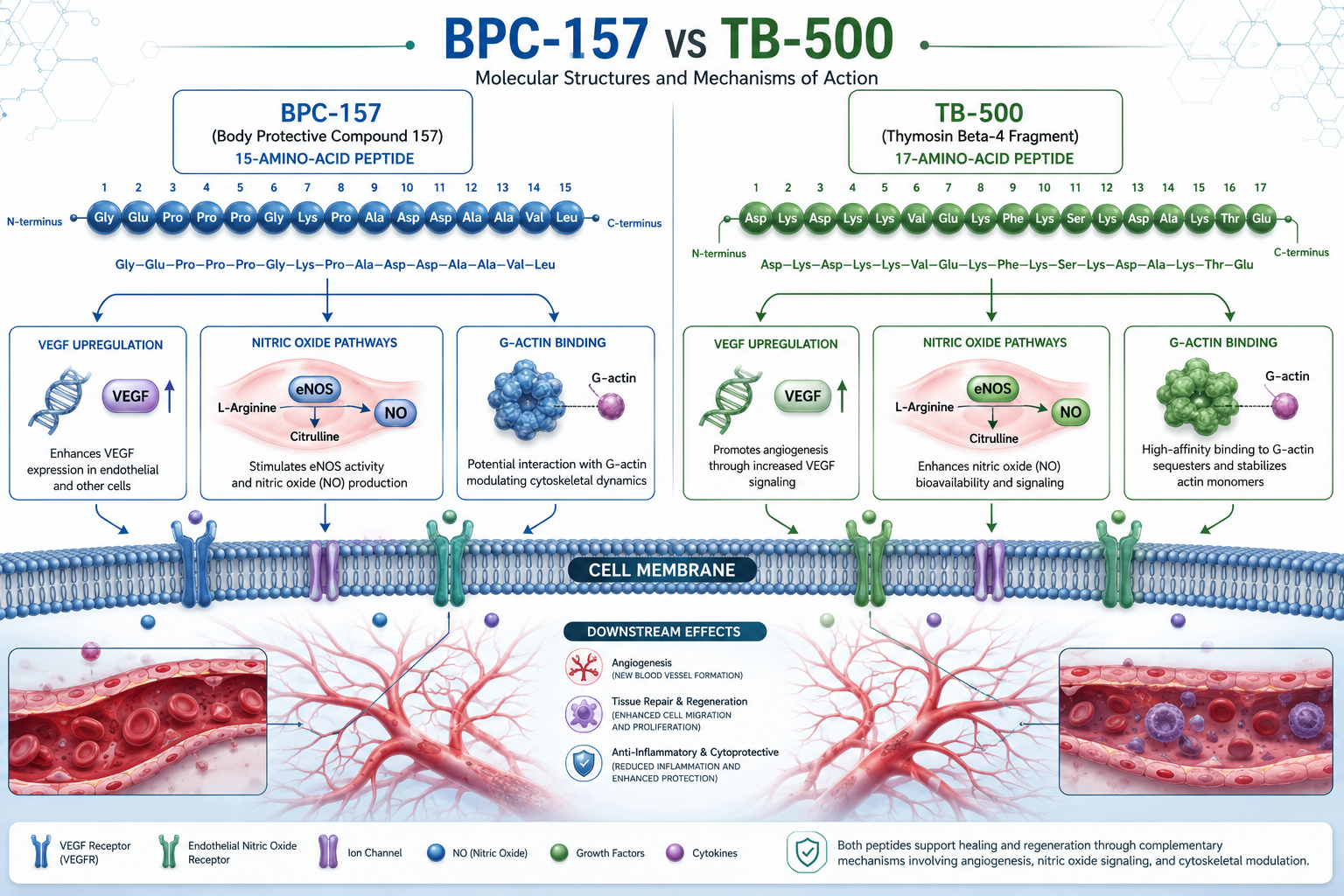
Detailed () scientific illustration showing side-by-side molecular diagrams of BPC-157 (15-amino-acid chain highlighted in

Key Takeaways

  • BPC-157 drives localized repair through angiogenesis and nitric oxide modulation; TB-500 promotes systemic healing via G-actin binding and cell migration.
  • In animal models, combining both peptides — sometimes called the "Wolverine Stack" — may accelerate recovery faster than either compound alone.
  • BPC-157 shows stronger preclinical evidence for tendon, ligament, and gastrointestinal repair; TB-500 is better studied for muscle and post-surgical recovery.
  • Neither peptide holds FDA approval for human use, and both are banned by WADA under the S0 category.
  • All findings discussed here come from preclinical and experimental models; human clinical evidence remains limited.

Distinct Mechanisms: How Each Peptide Acts on Tissue

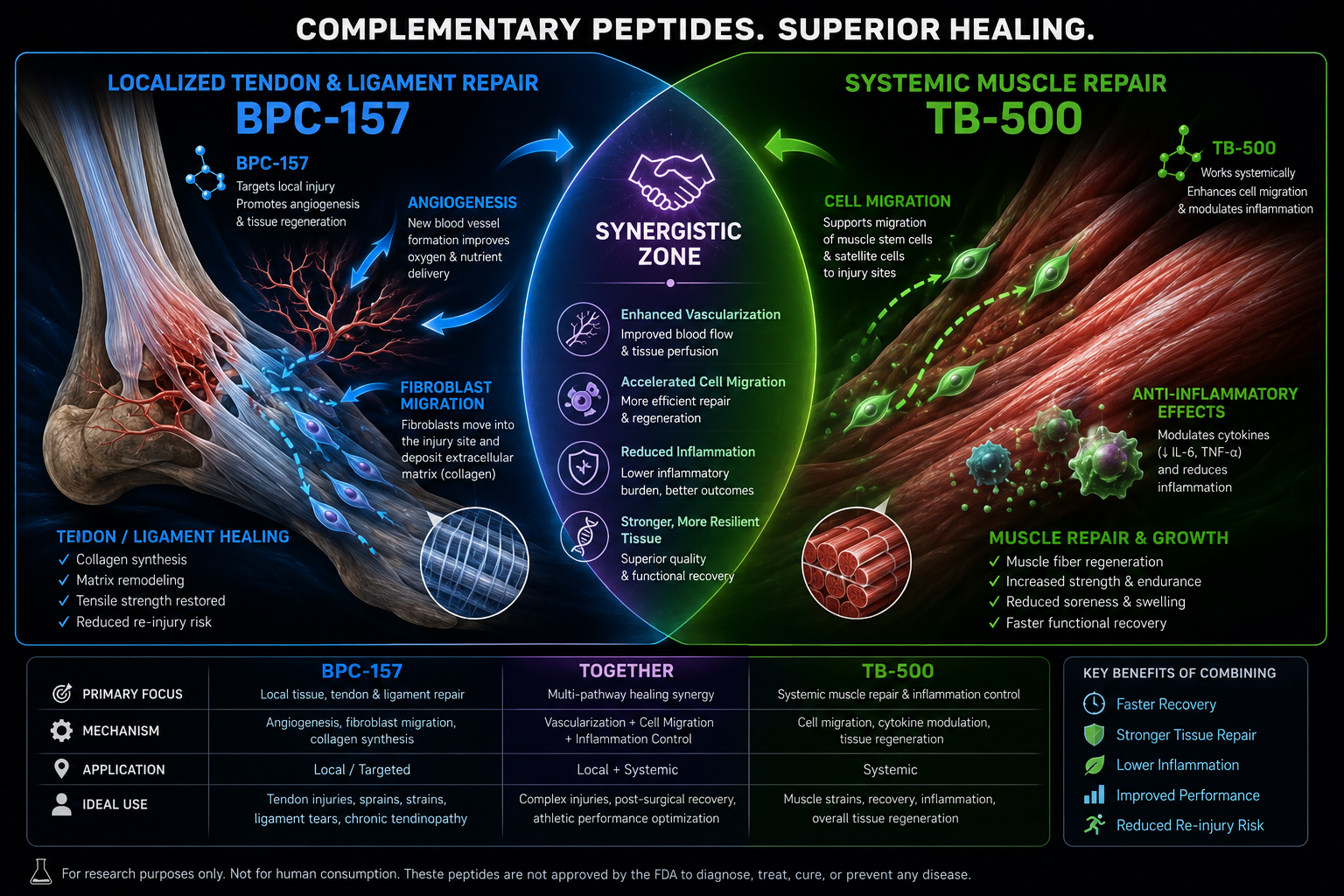
BPC-157 is a 15-amino-acid peptide derived from human gastric juice. In cell-based and animal studies, it promotes localized tissue repair primarily through two pathways: upregulation of vascular endothelial growth factor (VEGF) and modulation of nitric oxide signaling. The result, as seen in rodent tendon and ligament models, is faster formation of new blood vessels at the injury site — a process called angiogenesis. This vascular scaffolding appears to support downstream fibroblast activity and collagen deposition.

You can explore a deeper breakdown of BPC-157's documented research profile in this BPC-157 core peptides documentation and research guide.

TB-500, a synthetic fragment of thymosin beta-4, works differently. Rather than anchoring to a specific injury site, it binds to G-actin — a protein involved in cytoskeletal structure — and facilitates cell migration throughout the body. In preclinical inflammation models, TB-500 also demonstrates measurable reductions in pro-inflammatory cytokines, suggesting a systemic anti-inflammatory role that complements localized repair.

Feature BPC-157 TB-500
Source Gastric juice-derived Thymosin beta-4 fragment
Primary action Angiogenesis, NO modulation G-actin binding, cell migration
Repair focus Localized (tendon, GI, ligament) Systemic (muscle, post-surgical)
Typical dose range 250-500 mcg/day 2-2.5 mg twice weekly (loading)
Administration route Subcutaneous or oral Subcutaneous, any site

Overlaps and Synergy in Experimental Tissue-Repair Models

Overlaps and Synergy in Experimental Tissue-Repair Models

The question researchers ask most often is whether BPC-157 and TB-500 in experimental tissue-repair models produce additive or truly synergistic effects. The distinction matters: additive effects simply stack two separate benefits, while synergy means the combined outcome exceeds what either compound achieves independently.

Animal studies on musculoskeletal injuries suggest the combination — informally called the "Wolverine Stack" — may lean toward synergy. BPC-157 builds the vascular infrastructure at the wound site, while TB-500 mobilizes repair cells from distant tissue depots and dampens the inflammatory environment systemically. These roles do not overlap significantly, which is precisely why researchers find the pairing compelling.

"The two peptides appear to operate on different rungs of the healing ladder — one building the road, the other sending the workers."

Both compounds share some overlap in fibroblast stimulation and anti-inflammatory activity, but the mechanisms differ enough that co-administration in rodent models has not shown obvious redundancy. For researchers interested in how peptide combinations can be designed around complementary pathways, the synergy of LL-37 and SS-31 offers a useful parallel framework.

Those looking to review available research-grade formulations can browse the BPC-157 and TB-500 combined product page for sourcing context.


Regulatory Status, Safety Signals, and Research Limitations

Regulatory Status, Safety Signals, and Research Limitations

Understanding BPC-157 and TB-500 in experimental tissue-repair models: synergy, overlaps, and key differences requires an honest look at what the data cannot yet confirm. As of 2026, neither peptide holds FDA approval for human therapeutic use. Both are listed under WADA's S0 category — non-approved substances — making them prohibited in competitive sports regardless of context.

TB-500's parent compound, thymosin beta-4, has progressed through Phase 2 and Phase 3 clinical trials in certain formulations, providing a broader human safety dataset than BPC-157, which has only three small pilot studies in humans alongside its extensive animal literature.

Potential side effects for both remain under active investigation. Reported concerns in preclinical settings include injection-site reactions and, at high doses, possible effects on cell proliferation pathways. Researchers working with these compounds should consult current literature and institutional review protocols before designing any study.

For researchers interested in other peptides with documented aging and tissue-support profiles, the GHK-Cu research overview and epithalon research page provide useful comparative context. Those exploring oral delivery formats may also find the oral BPC-157 research themes relevant to bioavailability questions.


Conclusion

The preclinical case for studying BPC-157 and TB-500 together is built on a logical foundation: two peptides with non-overlapping primary mechanisms, each addressing a different phase or dimension of tissue repair. BPC-157 anchors vascular and fibroblast activity locally; TB-500 coordinates systemic cell migration and inflammation control. Where they overlap — in fibroblast support and anti-inflammatory signaling — the redundancy appears minimal rather than wasteful.

Actionable next steps for researchers:

  • Review the full preclinical literature for each compound separately before designing combination protocols.
  • Note dosing asymmetry: BPC-157 requires daily administration while TB-500 follows a loading-then-maintenance schedule.
  • Prioritize models that measure both local and systemic healing markers to capture the full potential of the combination.
  • Stay current on regulatory updates, as the status of unapproved peptides can shift rapidly.
  • Ensure all research use complies with institutional ethics guidelines and applicable jurisdiction rules.

The data available in 2026 is promising but not conclusive for human application. Rigorous, well-controlled clinical trials remain the necessary next step before any therapeutic claims can be made with confidence.

https://www.puretestedpeptides.com/wp-content/uploads/2026/06/BPC-157-and-TB-500-in-Experimental-Tissue-Repair-Models-Synergy-Overlaps-and-Key-Differences.png 1024 1536 Pure Tested https://www.puretestedpeptides.com/wp-content/uploads/2026/01/buy-peptides-online.jpg Pure Tested2026-06-06 13:03:512026-07-20 15:03:52BPC-157 and TB-500 in Experimental Tissue-Repair Models: Synergy, Overlaps, and Key Differences
×

Helpful Links

  • My account
  • Cart
  • Checkout
  • Refund and Returns Policy
  • Privacy Policy
  • SMS Privacy Policy
  • Login
  • My Account
  • Logout

USA Made Lab Tested Peptides

All products are sold for research, laboratory, or analytical purposes only, and are not for human consumption


Pure Tested Peptides is a chemical supplier. Pure Tested Peptides is not a compounding / chemical compounding facility as defined under 503A of the Federal Food, Drug, and Cosmetic act. Pure Tested Peptides is not an outsourcing facility as defined under 503B of the Federal Food, Drug, and Cosmetic act.

The statements made within this website have not been evaluated by the US Food and Drug Administration. The products we offer are not intended to diagnose, treat, cure or prevent any disease.

Human/Animal Consumption Prohibited. Laboratory/In-Vitro Experimental Use Only

Scroll to top Scroll to top Scroll to top