

What Does Epithalon Peptide Do: Complete Guide to Its Mechanisms and Research Applications
In the rapidly evolving world of longevity research, few compounds have captured the attention of scientists and researchers quite like epithalon peptide. This remarkable tetrapeptide, consisting of just four amino acids (Alanine-Glutamic acid-Asparagine-Glycine), has emerged as a focal point for understanding cellular aging and potential interventions. But what does epithalon peptide do exactly, and why has it become such a significant subject of scientific investigation in 2026?
What does epithalon peptide do encompasses a fascinating array of cellular mechanisms that researchers are still uncovering. From its ability to activate telomerase enzymes to its neuroprotective properties, epithalon represents a unique approach to studying cellular aging processes. This comprehensive guide explores the current research findings, mechanisms of action, and potential applications that make epithalon one of the most studied peptides in modern longevity research.
Key Takeaways
• Telomere Extension: Epithalon demonstrates dose-dependent telomere elongation from 2.4 kb to 4 kb in human cell lines, potentially addressing cellular aging mechanisms
• Selective Telomerase Activation: The peptide increases telomerase activity in normal cells while showing differential effects in cancer cells, suggesting targeted cellular benefits
• Neuroprotective Properties: Research shows epithalon enhances neuronal protection through increased soluble amyloid precursor protein secretion and cholinergic enzyme activity
• Epigenetic Modulation: The peptide influences gene expression through chromatin remodeling and histone binding without altering DNA structure
• Research Status: While promising in preclinical studies, epithalon remains experimental without large-scale clinical trials or established safety profiles
Understanding What Does Epithalon Peptide Do: Core Mechanisms
Telomerase Activation and Cellular Aging
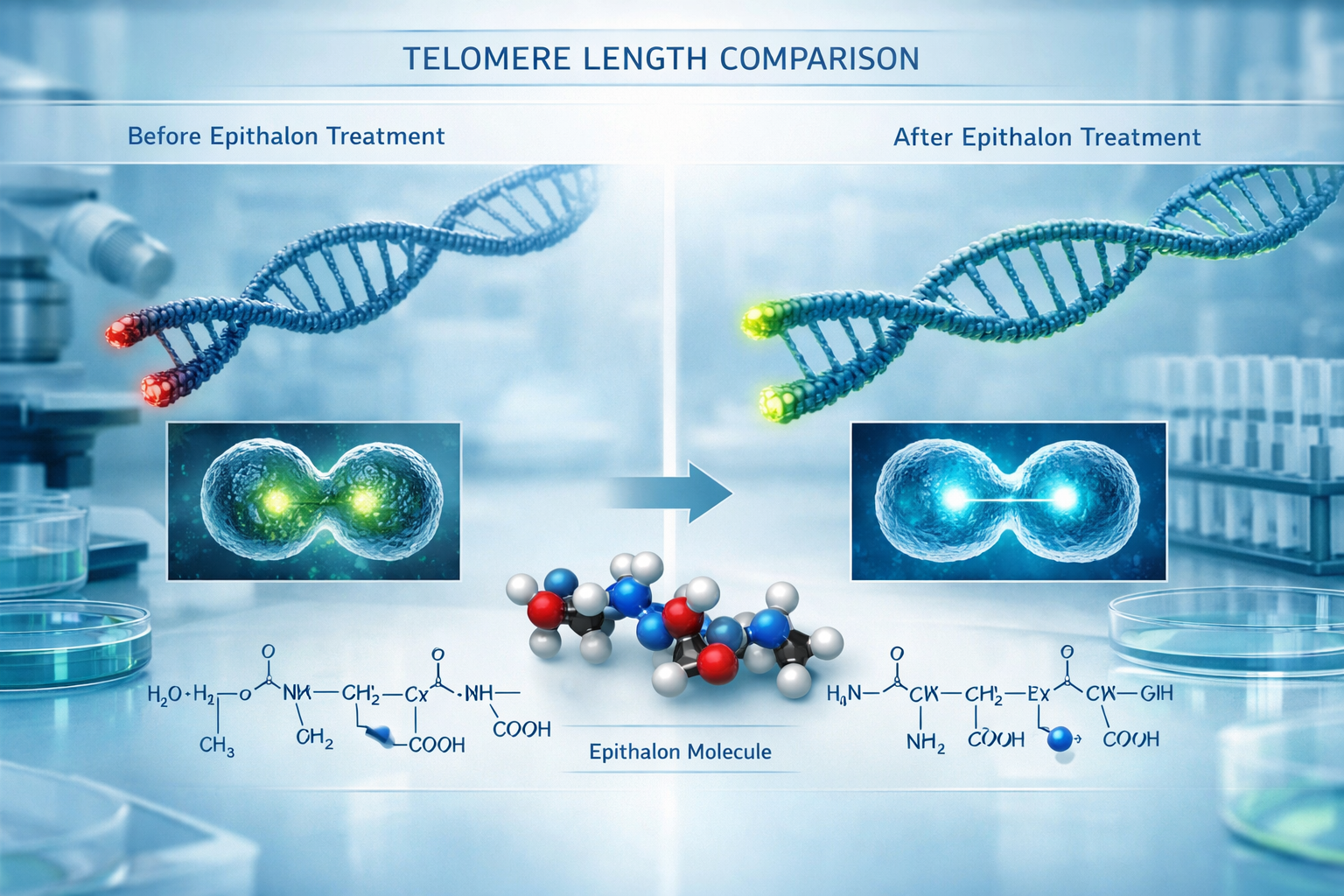
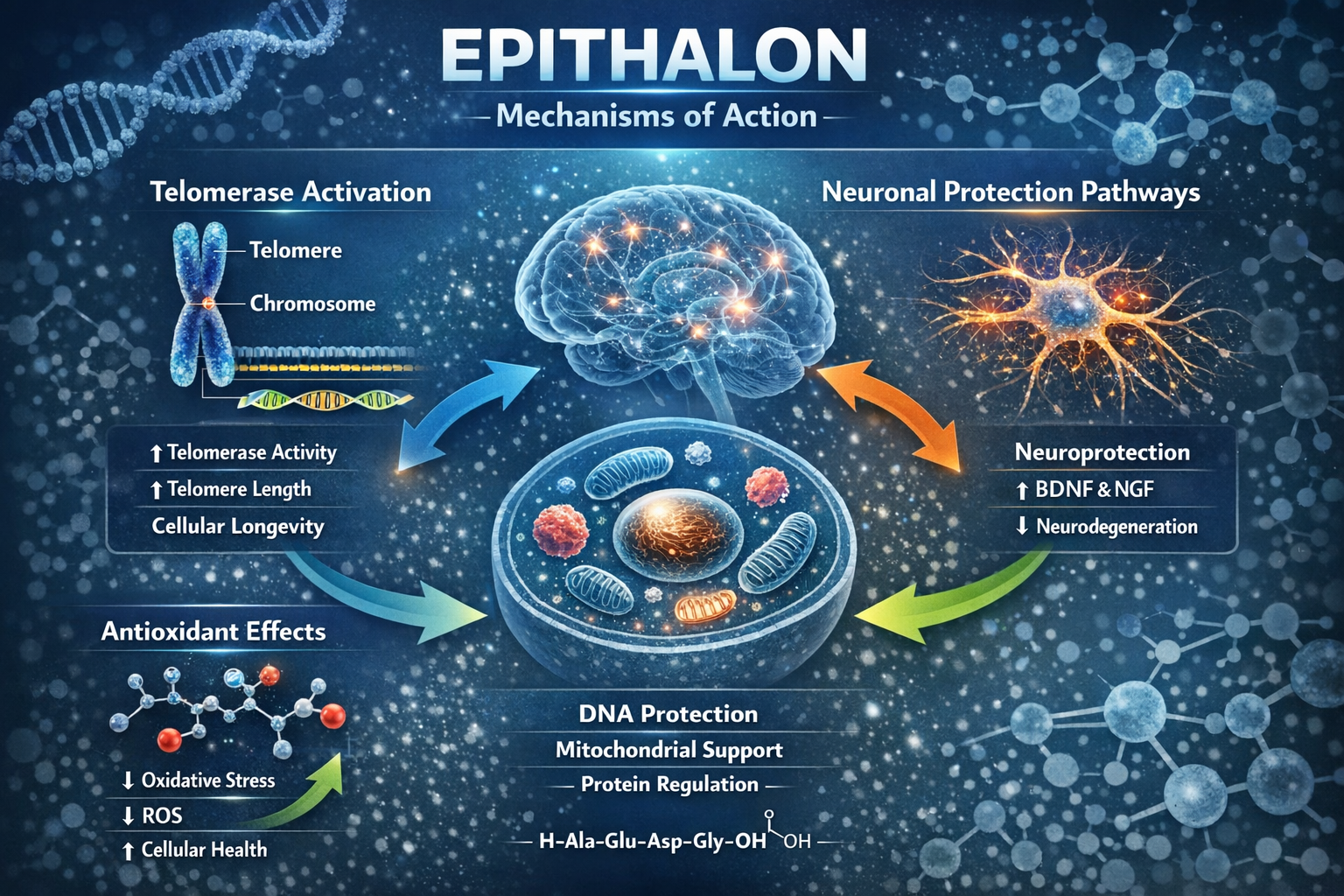
The primary mechanism behind what does epithalon peptide do centers on its remarkable ability to activate telomerase, the enzyme responsible for maintaining telomere length. Research has demonstrated that epithalon treatment for just four days produces significant telomere extension in human cell lines, with concentrations of 0.5–1 μg/ml showing dose-dependent effects [3].
Key findings include:
- Telomere length increased from 2.4 kb to 4 kb in 21NT cells
- Enhanced expression of hTERT mRNA across multiple cell types
- Specific binding to DNA sequences (ATTTC and CAG repeats) in telomerase gene promoters
This telomerase activation represents a fundamental aspect of peptide therapy benefits, as telomere shortening is widely recognized as a hallmark of cellular aging. The peptide’s ability to epigenetically modulate transcriptional activity without altering DNA itself makes it particularly intriguing for researchers studying aging interventions.
Differential Effects in Normal vs. Cancer Cells
One of the most significant discoveries regarding what does epithalon peptide do involves its selective action on different cell types. While epithalon increases telomerase activity in normal cells (IBR3, HMEC), it notably does not produce the same effect in cancer cells (BT474, 21NT), despite elevated hTERT expression in both cell types [3].
This differential effect suggests that epithalon may offer protective benefits without promoting uncontrolled cellular proliferation, addressing a key concern in longevity research. For researchers interested in quality peptides for research, this selectivity represents a crucial safety consideration.
Neuroprotective Properties: What Does Epithalon Peptide Do for Brain Health
Amyloid Precursor Protein Modulation
Research into what does epithalon peptide do for neurological health has revealed promising neuroprotective mechanisms. In human SH-SY5Y neuroblastoma cells, epithalon increased soluble amyloid precursor protein (sAPP) secretion by approximately 20% [2]. This is particularly significant because sAPP represents a neuroprotective form that contrasts sharply with pathogenic amyloid-beta plaques associated with neurodegenerative conditions.
The implications of this finding extend beyond basic research, as it suggests epithalon may influence protein processing pathways crucial for maintaining neuronal health. This mechanism aligns with broader peptide research developments focused on neuroprotection.
Cholinergic System Enhancement
Another crucial aspect of what does epithalon peptide do involves its effects on the cholinergic system. Research has shown that epithalon increases the activity of both acetylcholinesterase (AChE) and butyrylcholinesterase (BuChE), key enzymes that modulate acetylcholine levels important for learning and memory processes [2].
Neurogenic differentiation markers also respond positively to epithalon treatment:
- Nestin: Increased by 1.6-fold
- GAP43: Enhanced by 1.7-fold
- β-Tubulin III: Upregulated by 1.8-fold
- Doublecortin: Improved by 1.6-fold
These findings suggest that epithalon may support neurogenesis and cognitive function, making it a compound of interest for researchers studying brain health and aging. The peptide’s ability to upregulate these neurogenic markers in gingival mesenchymal stem cells indicates potential applications in regenerative neuroscience [1].
Epigenetic and Antioxidant Effects: Advanced Mechanisms
Chromatin Remodeling and Histone Interactions
Understanding what does epithalon peptide do at the epigenetic level reveals sophisticated cellular mechanisms. Molecular modeling studies indicate that epithalon preferentially binds to linker histones H1/6 and H1/3, particularly at DNA-interaction regions [1]. This binding facilitates chromatin deconstruction and may enhance neuronal gene transcription.
The peptide’s ability to decondense heterochromatin structures near centromeres in aged lymphocytes represents a novel approach to addressing age-related changes in gene expression. For researchers working with longevity peptides, these epigenetic effects offer insights into how peptides might influence cellular aging processes.
Antioxidant Gene Expression
Research has demonstrated that what does epithalon peptide do includes significant antioxidant effects. The peptide reduces oxidative signaling while restoring the expression of crucial antioxidant genes:
- SOD2 (Superoxide dismutase 2)
- CAT (Catalase)
- HMOX1 (Heme oxygenase 1)
These effects are particularly pronounced under hyperglycemic conditions, where epithalon also helps preserve DNA methylation patterns [1]. This dual action of reducing oxidative stress while maintaining epigenetic stability represents a comprehensive approach to cellular protection.
Circadian Rhythm and Hormonal Balance
Another dimension of what does epithalon peptide do involves its effects on circadian rhythms and hormonal balance. Research suggests that epithalon stimulates melatonin synthesis and may restore circadian and hormonal rhythms disrupted by aging, though data in this area remain inconsistent and require further investigation [2].
For researchers interested in comprehensive peptide therapy approaches, these potential effects on circadian biology add another layer of complexity to epithalon’s mechanisms of action.
Research Applications and Safety Considerations
Current Research Status
As of 2026, what does epithalon peptide do continues to be primarily a research question rather than a clinical application. While preclinical and early human data are compelling, epithalon remains experimental without large-scale clinical trials, validated delivery methods, or comprehensive long-term safety data [2].
Current research limitations include:
- Limited human clinical trial data
- Lack of standardized dosing protocols
- Insufficient long-term safety studies
- Variable delivery method efficacy
Researchers working with epithalon should prioritize quality testing protocols and ensure proper handling and storage of peptide samples.
Laboratory Research Considerations
For researchers investigating what does epithalon peptide do, several practical considerations are essential:
Sample Handling:
- Proper storage at appropriate temperatures
- Use of sterile techniques during preparation
- Documentation of batch numbers and purity levels
- Regular quality control testing
Research Design:
- Appropriate control groups
- Standardized treatment protocols
- Comprehensive endpoint measurements
- Ethical oversight and approval
The importance of working with lab-tested peptides cannot be overstated, as peptide purity and stability directly impact research outcomes and reproducibility.
Future Research Directions
Understanding what does epithalon peptide do will likely expand significantly as research methodologies improve and larger studies are conducted. Areas of particular interest for future investigation include:
- Delivery System Optimization: Development of more effective peptide delivery systems to improve bioavailability
- Combination Therapies: Research into synergistic effects with other longevity compounds
- Biomarker Development: Identification of reliable markers for monitoring epithalon effects
- Safety Profiling: Comprehensive long-term safety studies across diverse populations
Comparison with Other Research Peptides
Epithalon vs. Other Longevity Compounds
When examining what does epithalon peptide do in comparison to other research peptides, several distinctions emerge. Unlike growth hormone-releasing peptides or metabolic modulators, epithalon’s primary focus on telomerase activation and epigenetic modulation sets it apart in the longevity research landscape.
Comparative advantages:
- Specific telomerase targeting mechanism
- Differential effects on normal vs. cancer cells
- Multiple pathways of action (neurological, antioxidant, epigenetic)
- Relatively simple tetrapeptide structure
Researchers often combine epithalon studies with investigations of other compounds like SS-31 peptide to understand complementary mechanisms in cellular protection and longevity.
Research Methodology Considerations
Understanding what does epithalon peptide do requires sophisticated research methodologies that can capture its multiple mechanisms of action. Researchers typically employ:
- Telomere length assays to measure direct effects on cellular aging markers
- Gene expression analysis to assess hTERT and other relevant transcripts
- Protein activity assays for telomerase and cholinergic enzymes
- Oxidative stress markers to evaluate antioxidant effects
- Cellular viability studies to assess safety profiles
For comprehensive research programs, access to high-quality research peptides with proper documentation and testing is essential for generating reliable, reproducible results.
Practical Research Implementation

Laboratory Protocol Development
Researchers investigating what does epithalon peptide do must develop robust protocols that account for the peptide’s multiple mechanisms of action. Key protocol elements include:
Preparation Standards:
- Sterile reconstitution procedures
- Appropriate buffer selection
- pH optimization for stability
- Storage condition validation
Experimental Design:
- Multiple concentration testing (0.5-1 μg/ml range based on published research)
- Time-course studies (4-day minimum based on telomere research)
- Appropriate cell line selection
- Comprehensive endpoint analysis
The complexity of epithalon’s mechanisms requires researchers to consider multiple readouts simultaneously, from molecular markers to cellular function assessments.
Quality Control and Documentation
Given the research nature of epithalon studies, maintaining rigorous quality control is essential for understanding what does epithalon peptide do accurately. This includes:
- Batch testing for each peptide lot
- Purity verification through appropriate analytical methods
- Storage monitoring to ensure peptide stability
- Chain of custody documentation for research integrity
Researchers should work with suppliers who provide comprehensive peptide testing documentation and maintain proper storage and handling protocols throughout the research process.
Conclusion
The question of what does epithalon peptide do encompasses a remarkable array of cellular mechanisms that position this tetrapeptide as one of the most intriguing compounds in current longevity research. From its demonstrated ability to extend telomeres and activate telomerase in normal cells to its neuroprotective properties and epigenetic effects, epithalon represents a multi-faceted approach to understanding and potentially addressing cellular aging processes.
The research findings highlighted throughout this comprehensive analysis demonstrate that epithalon’s effects extend far beyond simple telomere maintenance. Its selective action on normal versus cancer cells, neuroprotective mechanisms through amyloid precursor protein modulation, and ability to enhance antioxidant gene expression create a compelling profile for continued scientific investigation.
However, it’s crucial to emphasize that as of 2026, epithalon remains firmly in the research phase. While preclinical data are promising, the absence of large-scale clinical trials and long-term safety data means that what does epithalon peptide do in human applications requires extensive further study. Researchers interested in epithalon should prioritize working with high-quality, properly tested materials and maintain rigorous experimental protocols.
Next Steps for Researchers:
- Review Current Literature: Stay updated with the latest publications on epithalon mechanisms and research findings
- Develop Comprehensive Protocols: Design experiments that capture epithalon’s multiple mechanisms of action
- Ensure Quality Materials: Work with reputable suppliers who provide proper testing documentation and quality assurance
- Consider Collaborative Approaches: Engage with other researchers to develop standardized methodologies and share findings
- Plan Long-term Studies: Design research programs that can assess both efficacy and safety over extended periods
The future of epithalon research holds significant promise for advancing our understanding of cellular aging and potential interventions. As research methodologies continue to improve and larger studies are conducted, the scientific community will undoubtedly gain deeper insights into what epithalon peptide does and how it might contribute to longevity research and healthy aging strategies.
For researchers ready to begin or expand their epithalon investigations, accessing high-quality research materials with proper documentation and support is the essential first step in contributing to this exciting and rapidly evolving field of study.