
Where to Buy GLP-3: Your Complete 2026 Guide to Sourcing Research-Grade Peptides
The peptide research landscape has transformed dramatically in recent years, and where to buy GLP-3 has become one of the most frequently asked questions among researchers, fitness professionals, and medispa owners seeking high-quality compounds for laboratory investigation. As a triple-receptor agonist targeting GLP-1, GIP, and glucagon pathways, GLP-3 (also known as Retatrutide or LY3437943) represents a significant advancement in metabolic research applications. However, navigating the complex marketplace of peptide suppliers requires careful consideration of purity standards, third-party testing protocols, regulatory compliance, and supplier reputation. This comprehensive guide examines the critical factors that determine where researchers should source their GLP-3 peptides, providing actionable insights for making informed procurement decisions in 2026.
Key Takeaways
- GLP-3 is available from multiple specialized peptide suppliers with prices ranging from $71 to $349 depending on dosage strength and supplier quality standards
- Third-party testing verification and certificates of analysis (COAs) are essential quality indicators when selecting where to buy GLP-3 for research purposes
- Reputable suppliers offer GLP-3 in lyophilized powder form with purity levels of 98-99.5% verified through HPLC testing methodologies
- All legitimate GLP-3 products are marketed exclusively for laboratory research use, not for human consumption or veterinary applications
- Vial sizes typically range from 5mg to 30mg, allowing researchers to select appropriate quantities based on their experimental protocols
Understanding GLP-3: What Researchers Need to Know
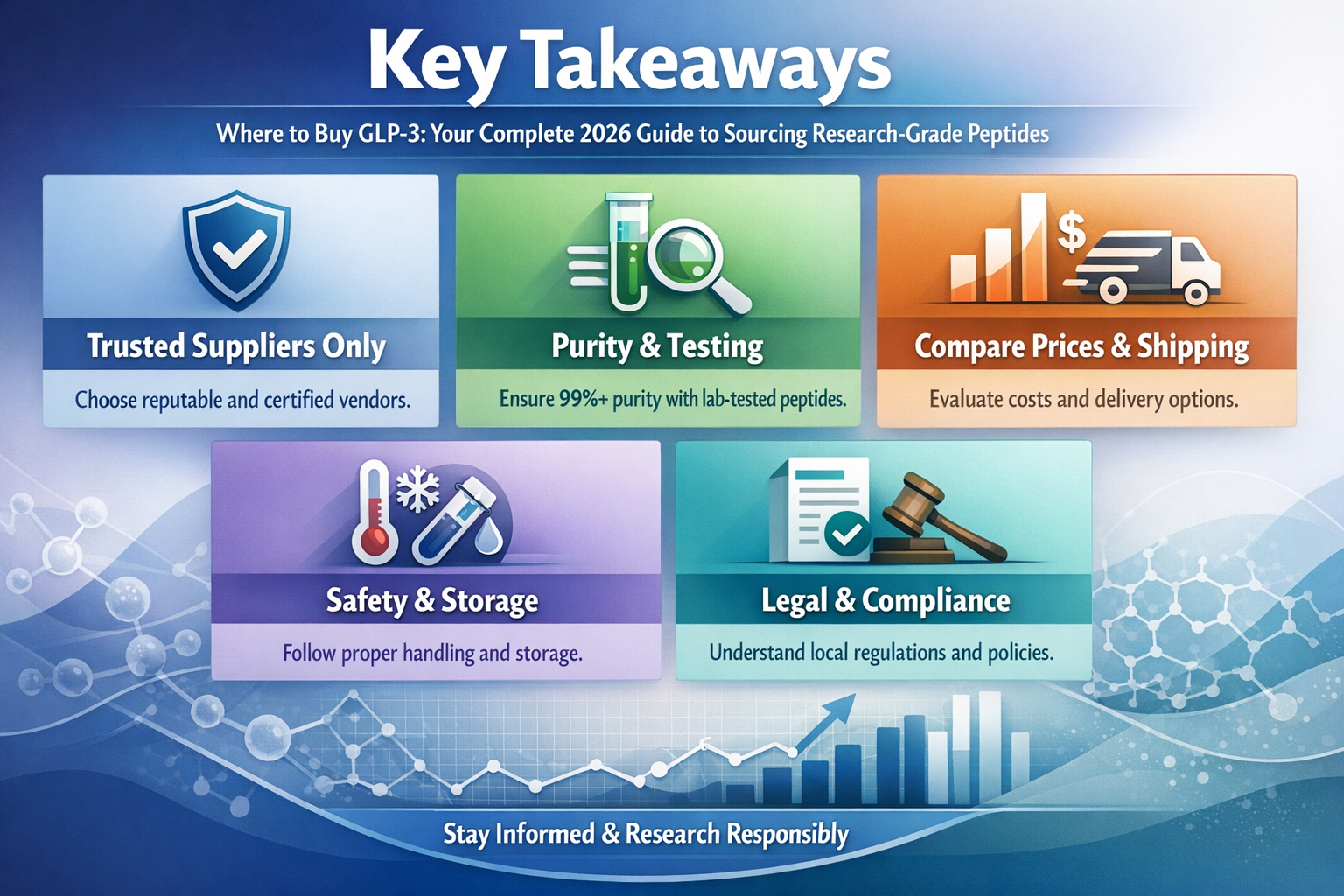
Before exploring where to buy GLP-3, understanding the compound’s characteristics proves essential for informed procurement decisions. GLP-3, scientifically designated as Retatrutide with CAS Number 2381089-83-2, functions as a triple-receptor agonist that simultaneously targets GLP-1 (glucagon-like peptide-1), GIP (glucose-dependent insulinotropic polypeptide), and glucagon receptors. This multi-pathway activation mechanism distinguishes it from single-agonist compounds and has generated substantial research interest in metabolic pathway investigations.
Molecular Characteristics and Composition
The molecular structure of GLP-3 consists of approximately 39 amino acids conjugated to a C20 fatty diacid moiety, resulting in a molecular weight ranging from 4731.33 to approximately 5000 g/mol depending on the specific formulation. This fatty acid conjugation serves a critical function in extending the compound’s half-life through albumin binding, making it particularly valuable for research protocols examining sustained metabolic effects.
When considering where to buy peptides for research applications, understanding these molecular specifications helps researchers verify product authenticity and quality. The specific molecular weight and amino acid sequence should be confirmed through supplier documentation and third-party testing certificates.
Research Applications and Laboratory Use
GLP-3 peptide research focuses primarily on metabolic pathway investigations, including studies examining:
- 🔬 Multi-receptor agonism mechanisms and cellular signaling cascades
- 📊 Comparative analyses with single-agonist peptide compounds
- 🧪 Dose-response relationships in controlled laboratory settings
- 📈 Molecular interactions with target receptor populations
- ⚗️ Pharmacokinetic profiling and compound stability assessments
Researchers investigating peptide supplier US options should prioritize suppliers who provide comprehensive product documentation supporting these research applications. Quality suppliers understand the scientific context in which their products will be utilized and provide appropriate technical support.
Where to Buy GLP-3: Evaluating Reputable Suppliers
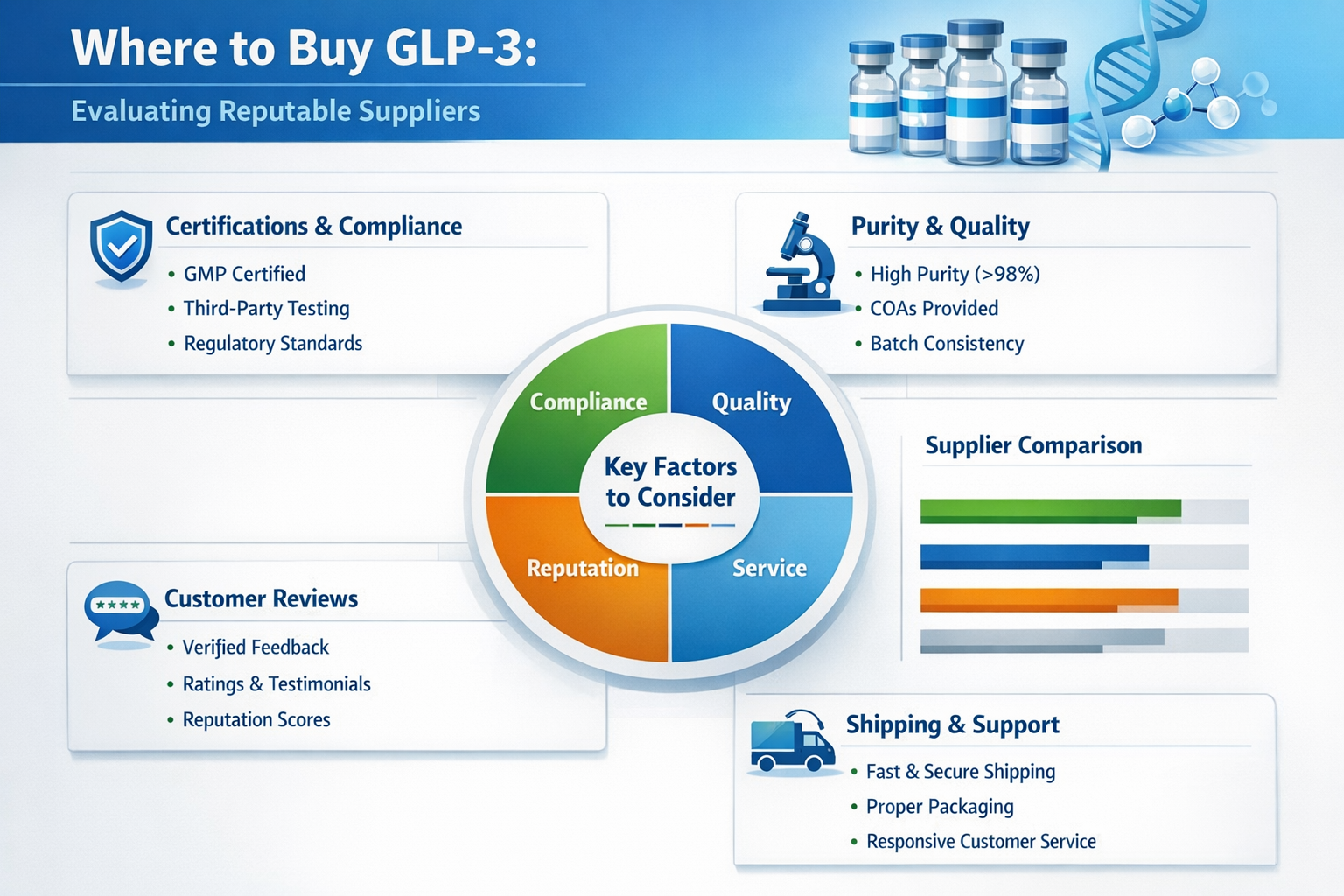
Identifying where to buy GLP-3 requires systematic evaluation of supplier credentials, quality assurance protocols, and regulatory compliance standards. The peptide research market includes numerous vendors, but only a subset maintains the rigorous quality standards necessary for legitimate scientific investigation.
Leading GLP-3 Suppliers in 2026
Several established suppliers have emerged as reliable sources for research-grade GLP-3 peptides:
| Supplier | Product Name | Purity Level | Price Range | Vial Sizes Available |
|---|---|---|---|---|
| IRON Peptides | RETA GLP-3 | ≥98% | $139.99-$349.99 | Multiple options |
| Treasure Coast Solutions | GLP-3 (LY3437943) | ≥98% | $71.00-$138.99 | Standard sizes |
| Elevate Peptide Lab | GLP-3 Peptide | ≥98% | Varies | 5mg, 10mg, 20mg |
| BioFusion Peptides | GLP-3 Research Peptide | ≥98% HPLC | Competitive | Multiple formats |
| Peptora Labs | GLP-3 Retatrutide | 99% | $100.00 | Standard unit |
| PekCura Labs | GMP GLP-3-R | 99% | $319.99 | 30mg |
| Honest Peptide | GLP-3 R | >99.5% | $78.00 | 10mg |
When evaluating best peptide retail US options, researchers should consider that price variations often reflect differences in purity levels, testing protocols, batch sizes, and customer support services rather than arbitrary pricing strategies.
Quality Assurance and Testing Standards
The most critical factor determining where to buy GLP-3 involves third-party testing verification. Reputable suppliers provide:
- ✅ Certificates of Analysis (COAs) with batch-specific purity data
- ✅ HPLC (High-Performance Liquid Chromatography) verification results
- ✅ Mass spectrometry confirmation of molecular identity
- ✅ Endotoxin testing showing ultra-low contamination levels
- ✅ Heavy metals screening confirming zero detectable contamination
- ✅ QR-coded verification systems for authenticity confirmation
Suppliers like Honest Peptide explicitly advertise >99.5% purity with zero heavy metals and ultra-low endotoxin levels (<0.25 EU), representing the gold standard in peptide quality. When researching where to buy peptides, demanding access to these verification documents separates legitimate research suppliers from questionable vendors.
Regulatory Compliance and Legal Considerations
All legitimate suppliers emphasize that GLP-3 products are intended exclusively for laboratory research use. This designation carries significant legal and practical implications:
“These products are not intended for human consumption, veterinary use, or medical applications. Buyers must confirm they are qualified professionals conducting lawful scientific research.”
Several suppliers, including Mile High Compounds, require purchasers to confirm their status as qualified professionals. Pure Health Peptides mandates that buyers be 21 years or older, implementing age verification protocols consistent with research chemical regulations.
Understanding these compliance requirements helps researchers identify where to buy GLP-3 from suppliers who prioritize legal and ethical distribution practices. When exploring buy peptides options, confirming supplier adherence to these standards protects both the researcher and the institution.
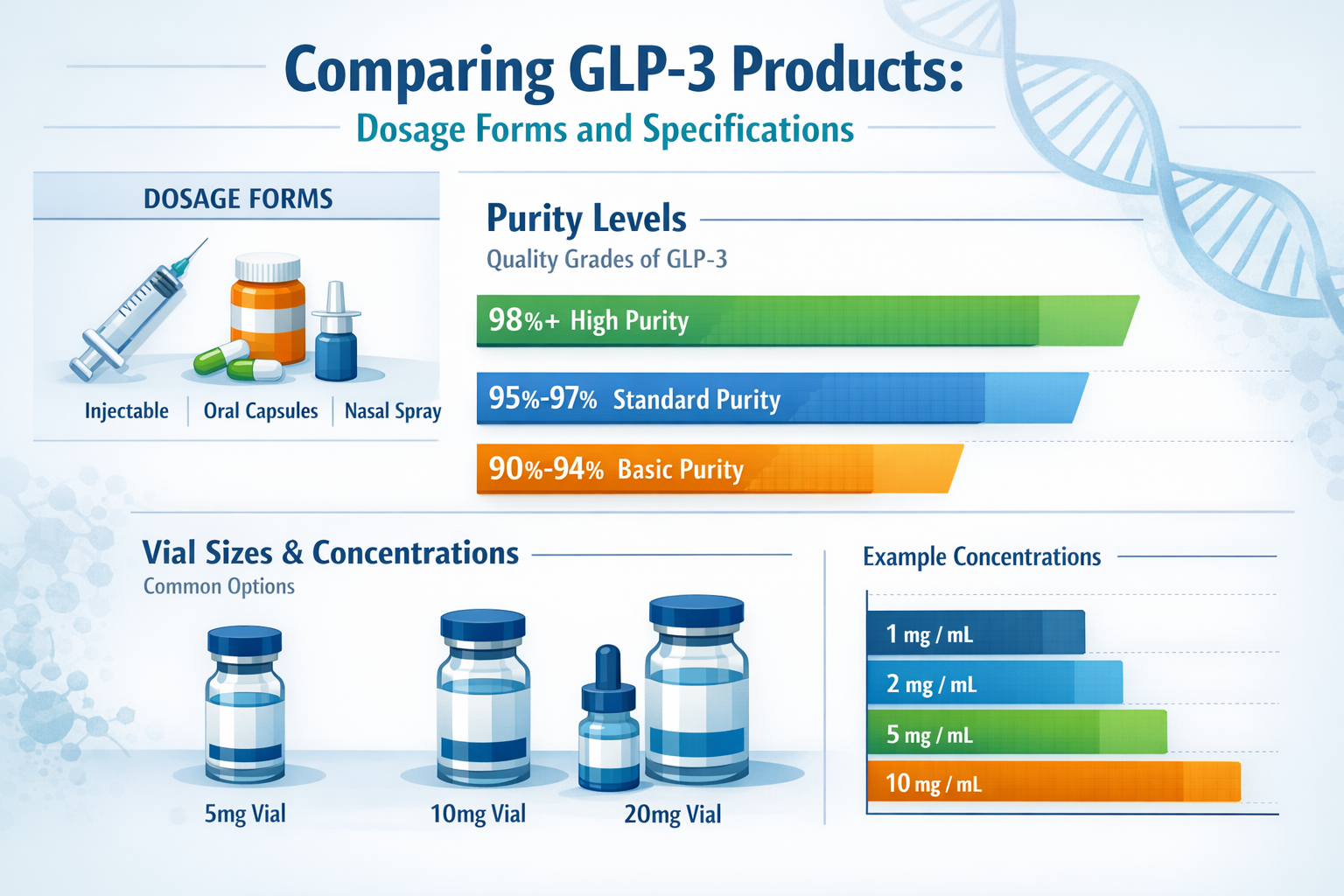
Comparing GLP-3 Products: Dosage Forms and Specifications
Beyond identifying where to buy GLP-3, researchers must evaluate specific product formulations to ensure compatibility with their experimental protocols. The peptide research market offers various dosage strengths and packaging configurations.
Standard Vial Sizes and Concentrations
GLP-3 peptides are typically available in lyophilized (freeze-dried) powder form in the following standard vial sizes:
- 5mg vials: Suitable for preliminary research protocols and small-scale investigations
- 10mg vials: The most common configuration, balancing cost-effectiveness with research flexibility
- 20mg vials: Appropriate for extended research protocols requiring larger quantities
- 30mg vials: Premium options for comprehensive research programs with multiple experimental phases
The lyophilized format provides superior stability during storage and shipping compared to liquid formulations. Researchers investigating where to buy GLP-1t or related compounds will find similar packaging standards across the peptide research industry.
Reconstitution and Storage Requirements
Proper handling protocols significantly impact research outcomes. Quality suppliers provide detailed guidance on:
- Reconstitution procedures: Typically involving bacteriostatic water or sterile saline solutions
- Storage temperatures: Lyophilized powder generally stable at -20°C to -80°C
- Reconstituted solution stability: Time-limited viability requiring refrigeration
- Light protection: Amber vials or opaque packaging to prevent photodegradation
- Contamination prevention: Sterile technique requirements for maintaining compound integrity
When determining where to buy GLP-3, prioritize suppliers who provide comprehensive handling documentation. This technical support distinguishes professional research suppliers from vendors who simply distribute products without understanding their scientific applications.
Purity Specifications and Analytical Data
The purity level directly impacts research validity and reproducibility. HPLC-verified purity represents the industry standard for peptide quality assessment:
- ≥98% purity: Minimum acceptable standard for most research applications
- ≥99% purity: Premium grade suitable for sensitive analytical protocols
- >99.5% purity: Ultra-high grade for applications requiring maximum compound integrity
BioFusion Peptides advertises ≥98% purity with molecular weight verification of approximately 4800-5000 g/mol, while Honest Peptide claims >99.5% purity with comprehensive contamination screening. These specifications should be verified through batch-specific COAs rather than general marketing claims.
Researchers exploring buy Reta-Cagrilintide blend or combination formulations should apply the same rigorous purity standards to each component within blended products.
Pricing Analysis: Understanding GLP-3 Cost Factors
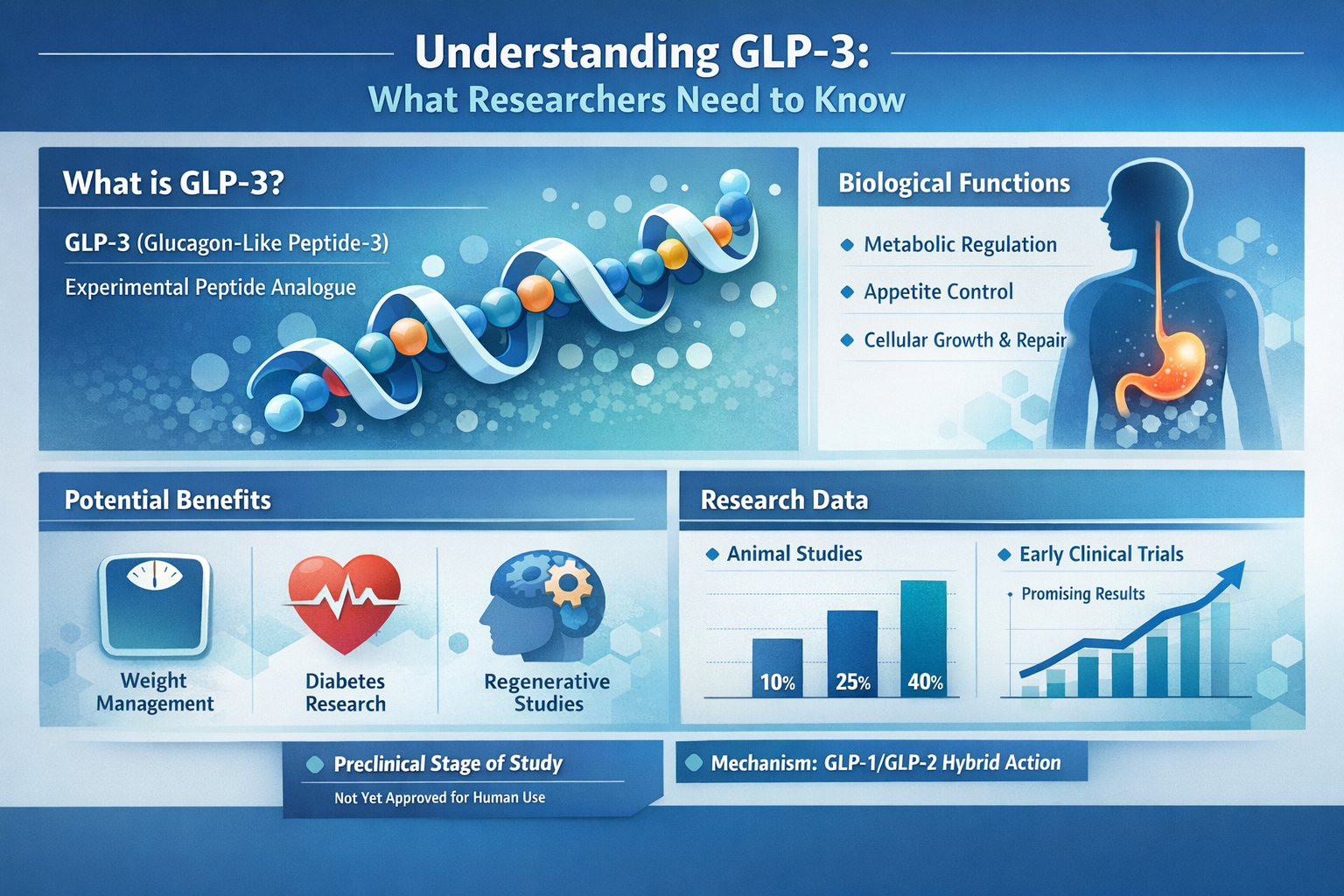
Cost considerations significantly influence where to buy GLP-3, but price should never supersede quality verification in research procurement decisions. Understanding the factors that drive pricing variations helps researchers identify legitimate value versus questionable discounting.
Factors Influencing Peptide Pricing
Several legitimate factors justify price variations when evaluating where to buy GLP-3:
Manufacturing Quality
- GMP (Good Manufacturing Practice) certification adds production costs but ensures consistency
- Pharmaceutical-grade synthesis facilities require substantial capital investment
- Quality control protocols including multiple testing stages increase per-unit costs
Testing and Verification
- Third-party laboratory analysis represents significant expense per batch
- Comprehensive testing panels (HPLC, mass spec, endotoxin, heavy metals) cost more than basic verification
- Batch-specific COAs require individual documentation and quality assurance resources
Customer Support and Services
- 24/7 customer support (offered by Elevate Peptide Lab) requires staffing investment
- Technical consultation services for research protocol development
- Expedited shipping options and specialized packaging materials
When comparing peptide supplier US options, extremely low pricing should raise quality concerns rather than represent automatic value. Legitimate research-grade peptides cannot be produced and verified at rock-bottom prices while maintaining quality standards.
Cost-Effectiveness Strategies
Researchers can optimize procurement budgets without compromising quality:
- Bulk purchasing: Many suppliers offer volume discounts for larger orders
- Institutional accounts: Establishing ongoing relationships may provide preferential pricing
- Seasonal promotions: Legitimate suppliers occasionally offer promotional pricing
- Vial size optimization: Selecting appropriate quantities reduces waste and per-experiment costs
- Supplier comparison: Systematic evaluation across multiple verified vendors
When investigating where to buy epithalon or other research peptides alongside GLP-3, coordinating purchases from single suppliers may provide shipping efficiencies and relationship-building opportunities.
Third-Party Testing Verification
The most reliable suppliers utilize independent third-party laboratories for quality verification rather than relying solely on in-house testing. This separation of manufacturing and testing functions eliminates conflicts of interest and provides objective quality assessment.
Pure Health Peptides emphasizes USA-based third-party testing with publicly available certificates of analysis, representing best practices in transparency and accountability. When evaluating where to buy serm or related compounds, prioritize suppliers who clearly identify their third-party testing laboratories.
Red Flags and Warning Signs
Researchers should exercise caution when encountering:
- ❌ Suppliers refusing to provide batch-specific COAs
- ❌ Generic or templated certificates lacking specific batch data
- ❌ Prices significantly below market averages without explanation
- ❌ Claims of human-grade or therapeutic-use products
- ❌ Absence of regulatory compliance statements
- ❌ Lack of professional customer support or technical resources
- ❌ Websites with poor security protocols (no SSL certification)
- ❌ Suppliers unable to verify business registration or physical location
These warning signs should immediately disqualify suppliers from consideration regardless of attractive pricing or marketing claims. When researching where to buy ipamorelin/tesa or any research peptide, maintaining rigorous supplier standards protects research integrity and institutional reputation.
Customer Support and Technical Resources
Superior suppliers provide value beyond product delivery:
Pre-Purchase Support
- Technical consultation on product selection for specific research applications
- Protocol development assistance
- Dosage calculation support
- Storage and handling guidance
- Compatibility information for multi-compound research
Post-Purchase Support
- Reconstitution instructions and troubleshooting
- Stability and storage questions
- Analytical data interpretation
- Research protocol optimization
- Problem resolution and quality concerns
Educational Resources
- Research literature compilations
- Technical bulletins and white papers
- Video tutorials for proper handling techniques
- Webinars on emerging research applications
- Community forums for researcher interaction
Shipping and Logistics Considerations
Proper handling during shipping critically impacts peptide integrity:
🚚 Packaging Standards
- Temperature-controlled packaging for stability maintenance
- Insulated containers with gel packs or dry ice
- Protective cushioning to prevent physical damage
- Discrete packaging respecting research confidentiality
- Proper hazardous materials labeling when required
🚚 Shipping Speed and Reliability
- Expedited shipping options for time-sensitive research
- Tracking systems for shipment monitoring
- Insurance coverage for high-value orders
- Replacement policies for shipping-related damage
- International shipping capabilities (where applicable)
🚚 Delivery Verification
- Signature requirements for controlled substances
- Temperature monitoring indicators
- Photographic documentation of packaging condition
- Immediate notification of delivery issues
- Responsive customer service for shipping problems
When determining where to buy GLP-3, shipping reliability often proves as important as product quality, particularly for temperature-sensitive compounds requiring specific storage conditions.
Specialized Formulations and Combination Products
Beyond standard GLP-3 peptides, researchers may encounter specialized formulations and combination products designed for specific research applications. Understanding these variations helps researchers identify optimal products for their experimental protocols.
GLP-3 Variants and Related Compounds
The peptide research market includes several GLP-3-related products:
Standard GLP-3 (Retatrutide)
- Pure triple-agonist formulation
- Standard molecular weight ~4731-5000 g/mol
- Most common research configuration
GMP-Grade GLP-3
- Manufactured under Good Manufacturing Practice standards
- Higher quality control standards
- Premium pricing reflecting enhanced quality assurance
- PekCura Labs’ GMP GLP-3-R represents this category
High-Purity GLP-3
-
99.5% purity grades for sensitive applications
- Enhanced analytical verification
- Reduced impurity profiles
- Honest Peptide’s offering exemplifies this category
When exploring buy wolverine stack peptide or other combination products, understanding individual component quality helps researchers evaluate overall formulation integrity.
Combination Formulations and Blends
Some suppliers offer pre-mixed formulations combining GLP-3 with complementary compounds:
Metabolic Research Blends
- GLP-3 combined with other metabolic pathway modulators
- Designed for comprehensive metabolic research protocols
- Requires verification of each component’s purity and concentration
- May offer convenience but reduces experimental control
Customized Research Formulations
- Tailored combinations based on specific research requirements
- Higher costs reflecting custom manufacturing
- Enhanced relevance to specialized research applications
- Requires detailed supplier consultation
Researchers investigating where to buy Cagrilintide or related compounds may find combination products appealing, but should carefully evaluate whether pre-mixed formulations align with experimental design requirements or if separate compounds provide greater research flexibility.
Delivery Format Considerations
While lyophilized powder represents the standard format, researchers may encounter alternatives:
Lyophilized Powder (Standard)
- ✅ Maximum stability during storage
- ✅ Extended shelf life
- ✅ Researcher control over reconstitution
- ✅ Industry standard format
Pre-Reconstituted Solutions
- ⚠️ Convenience but reduced stability
- ⚠️ Shorter usable timeframe
- ⚠️ Less common in research market
- ⚠️ May contain preservatives affecting research
Nasal Spray Formulations
- 🔬 Specialized delivery research applications
- 🔬 Requires specific formulation expertise
- 🔬 Limited availability for GLP-3
- 🔬 More common for other peptides like selank nasal spray
The overwhelming majority of GLP-3 products utilize lyophilized powder format, reflecting its superior stability characteristics and research application flexibility.
Future Trends in Peptide Research Sourcing
The peptide research supply landscape continues evolving, with several trends shaping where to buy GLP-3 and related compounds in 2026 and beyond.
Quality Enhancement Technologies
Emerging technologies improve peptide quality verification:
Advanced Analytical Methods
- Enhanced mass spectrometry techniques providing greater molecular detail
- Real-time purity monitoring during synthesis
- Automated quality control reducing human error
- Blockchain-based authentication systems (like PekCura’s QR codes)
- Artificial intelligence-assisted quality prediction
Manufacturing Innovations
- Continuous flow synthesis improving consistency
- Automated peptide synthesizers reducing contamination
- Enhanced purification technologies increasing yield
- Green chemistry approaches reducing environmental impact
- Scalable production methods improving cost-efficiency
Supply Chain Transparency
- End-to-end tracking from synthesis to delivery
- Temperature monitoring throughout shipping
- Digital documentation reducing paperwork
- Customer portals for real-time order tracking
- Predictive analytics for inventory management
These technological advances help researchers identify where to buy GLP-3 from suppliers employing cutting-edge quality assurance systems.
Market Consolidation and Specialization
The peptide supplier landscape shows dual trends:
Consolidation Trends
- Larger suppliers acquiring smaller competitors
- Vertical integration of synthesis and testing
- Economies of scale improving pricing
- Standardization of quality protocols
- Enhanced customer service capabilities
Specialization Trends
- Niche suppliers focusing on specific peptide categories
- Custom synthesis services for unique compounds
- Application-specific formulation development
- Specialized technical support for complex research
- Boutique suppliers serving specialized research communities
Researchers benefit from both trends, with consolidated suppliers offering reliability and specialized vendors providing unique capabilities. When investigating buy mots c peptide or emerging compounds, both supplier categories serve important roles.