
Where to Buy Peptides: The Complete 2026 Guide for Researchers and Health Professionals
The peptide research market has experienced explosive growth, with the global peptide therapeutics market projected to exceed $50 billion by 2027. Yet despite this expansion, finding reliable sources to buy peptides remains one of the most challenging aspects for researchers, health professionals, and wellness practitioners. The question “where to buy peptides” dominates online forums, professional networks, and research communities—and for good reason. The quality, purity, and legitimacy of peptide suppliers vary dramatically, making informed purchasing decisions critical for research integrity and safety.
This comprehensive guide examines the landscape of peptide procurement in 2026, providing evidence-based insights into supplier evaluation, quality verification, regulatory considerations, and practical purchasing strategies for those seeking to buy peptides for legitimate research purposes.
Key Takeaways
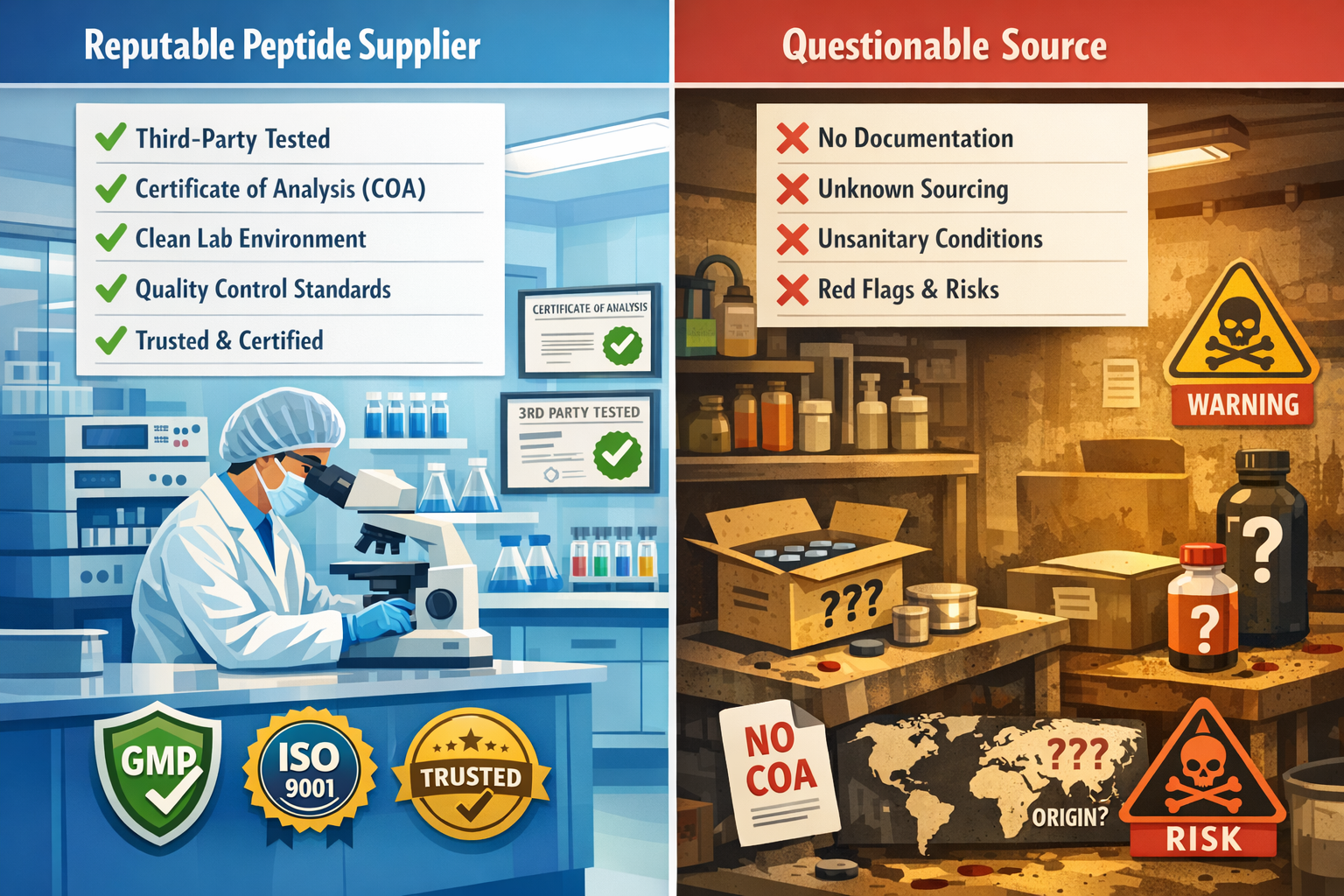
- Quality verification is paramount: Third-party testing, certificates of analysis (COA), and transparent sourcing documentation distinguish reputable peptide suppliers from questionable vendors
- Multiple procurement channels exist: Online research chemical suppliers, compounding pharmacies, medical clinics, and specialized peptide retailers each serve different needs and regulatory frameworks
- Regulatory compliance varies significantly: Understanding the legal distinction between research peptides, prescription therapeutics, and dietary supplements prevents costly mistakes and legal complications
- Price should never compromise quality: While cost considerations matter, the cheapest peptides often lack proper testing, purity verification, and quality control measures
- Due diligence protects research integrity: Verifying supplier credentials, examining testing protocols, and understanding proper storage and handling ensures research validity and safety
Understanding the Peptide Supply Chain: Where to Buy Peptides in 2026
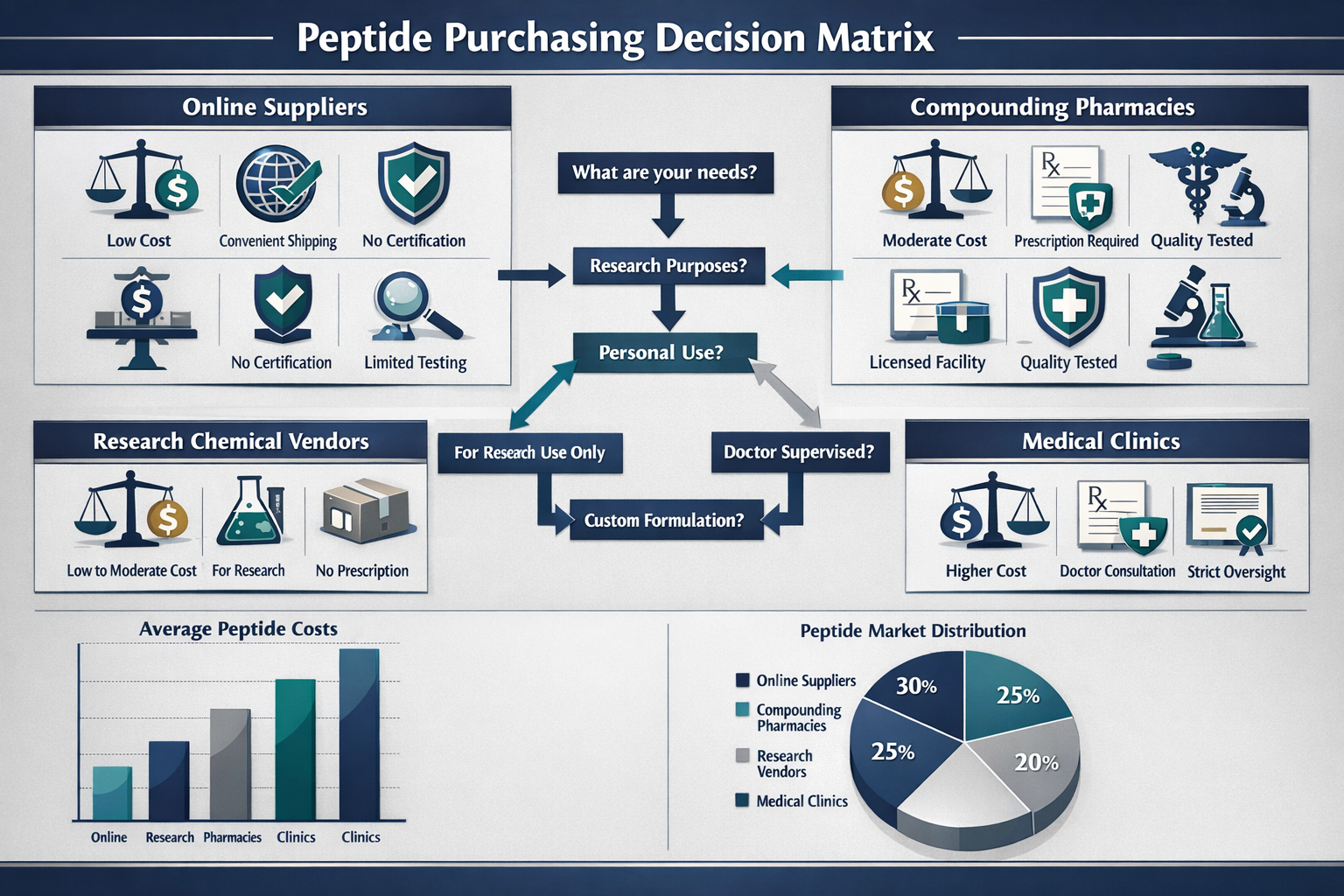
The peptide supply chain has evolved considerably over the past decade, creating multiple pathways for researchers and practitioners to buy peptides. Understanding these channels helps determine which source best aligns with specific research needs, regulatory requirements, and quality standards.
Online Research Chemical Suppliers
Online research chemical suppliers represent the most accessible channel for those seeking to buy peptides for non-clinical research purposes. These vendors typically operate under the framework of providing compounds “not for human consumption” and exclusively for laboratory research.
Advantages of online peptide suppliers:
- 🔬 Extensive product catalogs with diverse peptide options
- 💰 Competitive pricing structures
- 📦 Direct-to-consumer shipping capabilities
- 📊 Detailed product specifications and technical documentation
- 🌐 Accessibility regardless of geographic location
Quality considerations:
The quality spectrum among online suppliers varies dramatically. Reputable vendors provide comprehensive third-party testing documentation, including high-performance liquid chromatography (HPLC) analysis, mass spectrometry results, and certificates of analysis for each batch. Research published in the Journal of Pharmaceutical Sciences (2024) found that peptide purity can vary by as much as 40% between suppliers, with some products containing significant contaminants or incorrect amino acid sequences.
When evaluating where to buy peptides online, researchers should prioritize suppliers demonstrating:
- Batch-specific COA availability
- Third-party laboratory verification
- Transparent sourcing information
- Proper storage and handling protocols
- Responsive customer support with technical expertise
Compounding Pharmacies
Compounding pharmacies represent a regulated channel for obtaining peptides when prescribed by licensed healthcare providers. These facilities operate under state pharmacy board oversight and must comply with USP 797 and 795 standards for sterile and non-sterile compounding.
Key characteristics:
- ✅ Prescription requirement
- 🏥 Medical oversight and guidance
- 📋 Regulatory compliance and inspection
- 💊 Pharmaceutical-grade quality standards
- 🔒 Controlled substance tracking
Compounding pharmacies serve as the primary source for therapeutic peptide use in clinical settings. However, researchers seeking to buy peptides for laboratory investigations typically cannot utilize this channel without appropriate medical authorization.
Specialized Peptide Research Vendors
Specialized research vendors occupy a middle ground, focusing exclusively on peptide products for scientific investigation. These companies often maintain relationships with academic institutions, research laboratories, and biotechnology firms.
Distinguished characteristics include:
- 🎓 Academic and institutional account programs
- 📚 Extensive technical documentation and research support
- 🔬 Custom synthesis capabilities
- 🧪 Rigorous quality control protocols
- 📖 Published validation studies
For those determining where to buy peptides for serious research applications, specialized vendors often provide the most comprehensive quality assurance and technical support infrastructure.
Direct Manufacturer Relationships
Some researchers establish direct relationships with peptide manufacturers, particularly for large-volume orders or custom synthesis projects. This approach offers maximum control over specifications but requires significant due diligence and often minimum order quantities that exceed individual researcher needs.
Evaluating Peptide Supplier Quality: Critical Factors When Deciding Where to Buy Peptides
The decision of where to buy peptides ultimately hinges on quality verification. Peptide degradation, contamination, or incorrect composition can invalidate research findings and potentially create safety concerns. The following framework provides systematic evaluation criteria for supplier assessment.
Third-Party Testing and Certificates of Analysis
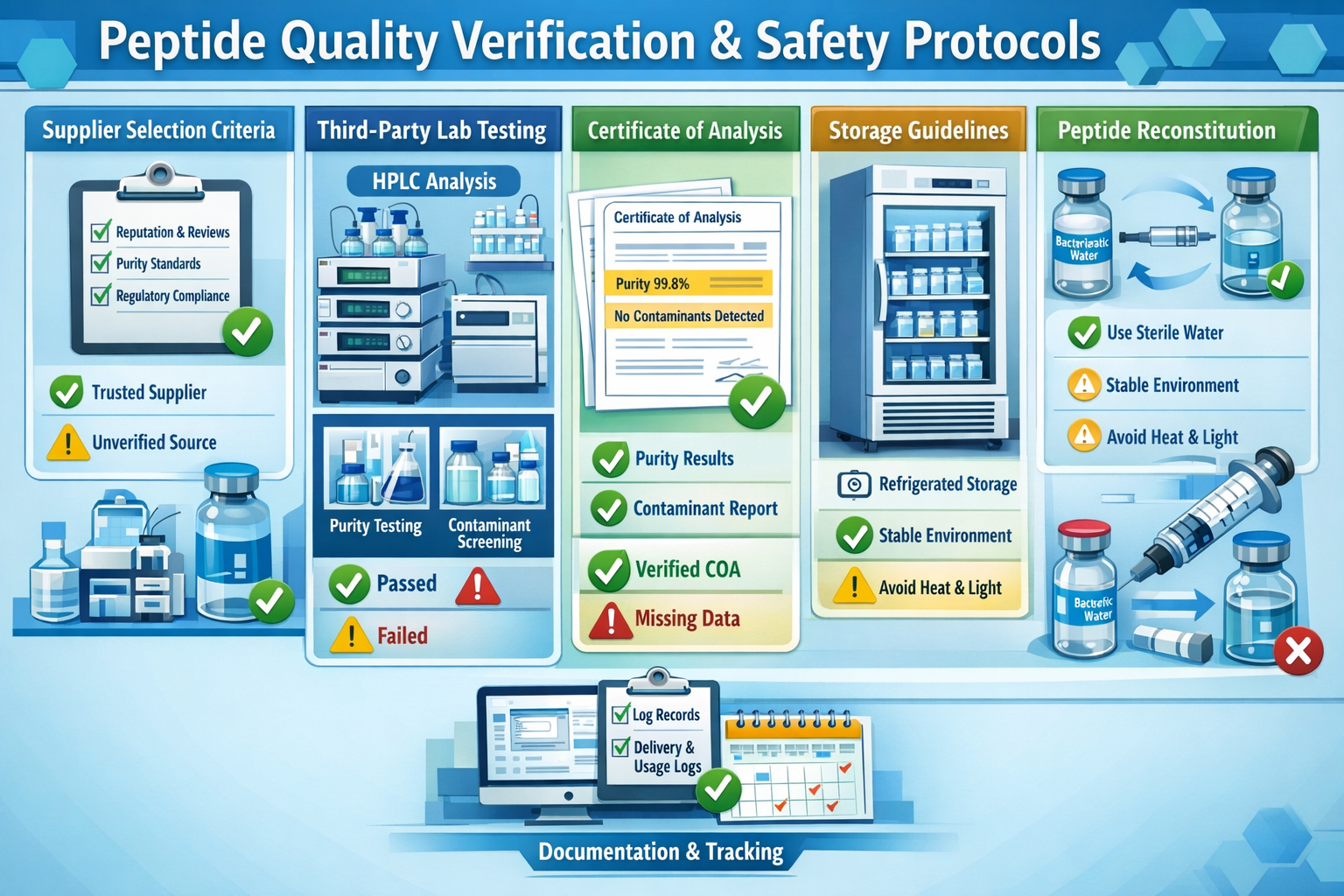
Certificates of Analysis (COA) represent the cornerstone of peptide quality verification. A comprehensive COA should include:
| Test Method | Purpose | Acceptable Range |
|---|---|---|
| HPLC (High-Performance Liquid Chromatography) | Purity assessment | ≥95% for research-grade |
| Mass Spectrometry | Molecular weight verification | Within 0.1% of theoretical |
| Amino Acid Analysis | Sequence confirmation | 100% sequence accuracy |
| Bacterial Endotoxin Testing | Contamination screening | <10 EU/mg |
| Heavy Metal Analysis | Safety screening | Below detection limits |
Research published in Analytical Chemistry (2025) demonstrated that peptides lacking proper analytical verification showed purity discrepancies in 67% of samples tested, with some containing entirely different compounds than labeled.
When evaluating where to buy peptides, request COAs for specific batch numbers rather than accepting generic documentation. Reputable suppliers provide batch-specific testing results that correspond to the exact product being shipped.
Manufacturing Standards and Facilities
Peptide synthesis occurs through either solid-phase peptide synthesis (SPPS) or liquid-phase methods, each requiring specialized equipment and expertise. Quality suppliers maintain:
- Clean room environments (ISO Class 7 or better)
- Good Manufacturing Practice (GMP) protocols
- Quality management systems (ISO 9001 certification)
- Environmental monitoring programs
- Equipment calibration and validation procedures
The manufacturing environment significantly impacts peptide quality. Studies in Pharmaceutical Research (2024) found that peptides synthesized in non-controlled environments showed 3-5 times higher contamination rates compared to those produced in certified clean rooms.
Storage and Handling Protocols
Peptide stability depends critically on proper storage conditions. Most peptides require:
- ❄️ Lyophilized (freeze-dried) storage: -20°C to -80°C
- 🧊 Reconstituted peptides: 2-8°C, used within 30 days
- 🌡️ Temperature monitoring: During shipping and storage
- 💧 Moisture protection: Desiccant inclusion in packaging
- ☀️ Light protection: Amber vials or opaque containers
When determining where to buy peptides, verify that suppliers utilize cold-chain shipping with temperature monitoring and provide clear storage instructions. Research from the Journal of Peptide Science (2025) showed that peptides exposed to room temperature for 48 hours during shipping experienced 15-30% degradation.
Supplier Transparency and Communication
Quality suppliers demonstrate transparency through:
- 📱 Responsive customer service with technical expertise
- 📧 Clear communication regarding product specifications
- 🔄 Established return and replacement policies
- 📝 Detailed product documentation
- 🌐 Professional website with educational resources
The ability to communicate directly with knowledgeable representatives indicates a supplier’s commitment to quality and customer success. When researching where to buy peptides, test supplier responsiveness by asking specific technical questions about synthesis methods, testing protocols, and storage recommendations.
Pricing Considerations and Value Assessment
While cost should never be the primary factor when deciding where to buy peptides, understanding pricing structures helps identify potential quality concerns.
Red flags in peptide pricing:
- ⚠️ Prices significantly below market average (>30% lower)
- ⚠️ Lack of price correlation with purity levels
- ⚠️ No price differentiation between complex and simple peptides
- ⚠️ Unclear pricing for testing and verification services
Research-grade peptides typically range from $150-$500 per 10mg vial, depending on complexity, purity, and synthesis difficulty. Prices dramatically below this range often indicate compromised quality, inadequate testing, or questionable sourcing.
Popular Research Peptides: Where to Buy Peptides for Specific Applications
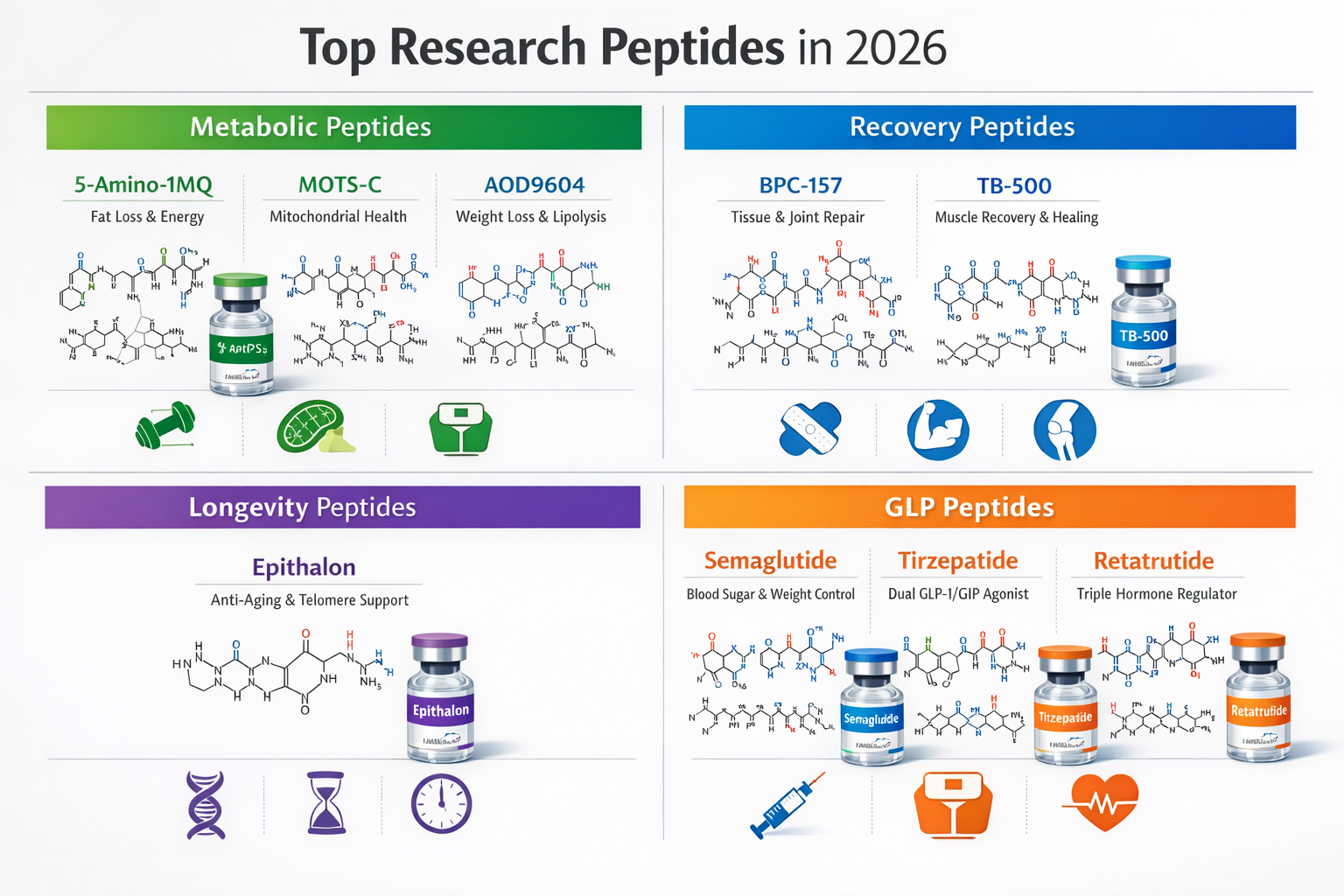
The peptide research landscape in 2026 encompasses hundreds of compounds with diverse applications. Understanding which peptides serve specific research interests helps narrow the search for where to buy peptides that meet particular experimental needs.
Metabolic Research Peptides
Metabolic research peptides have gained significant attention in obesity, diabetes, and energy metabolism studies. Key compounds include:
5-Amino-1MQ: This peptide has attracted research interest for its potential effects on cellular metabolism. Studies examining 5-Amino-1MQ have explored its role in NNMT enzyme inhibition. Researchers seeking to buy 5-Amino-1MQ peptide should verify proper synthesis and purity testing. Those investigating 5-Amino-1MQ dosage protocols should consult published research guidelines and maintain proper documentation.
MOTS-C: A mitochondrial-derived peptide showing promise in metabolic research. Scientists looking to buy MOTS-C peptide for laboratory investigations should prioritize suppliers providing mitochondrial peptide expertise and specialized testing protocols.
AOD9604: Originally derived from growth hormone, this peptide has been studied in metabolic contexts. Research on AOD9604 peptide has examined its structural properties and potential applications. Those seeking where to buy AOD9604 should verify fragment authenticity and sequence accuracy through comprehensive testing.
GLP-Receptor Research Peptides
Glucagon-like peptide (GLP) receptor agonists represent one of the most active areas of peptide research in 2026:
GLP-1 Analogs: Researchers investigating GLP-1 receptor mechanisms often search for where to buy GLP-1 analogs for comparative studies. These peptides require careful handling and storage due to stability considerations.
Tirzepatide (GLP-1/GIP dual agonist): This dual-agonist peptide has generated substantial research interest. Those seeking where to buy GLP-1t should ensure suppliers provide proper characterization of both receptor-binding domains.
Retatrutide-Cagrilintide Blends: Combination peptide research has expanded significantly. Scientists looking to buy Reta-Cagrilintide blend for investigational purposes should verify proper ratio formulation and individual component purity. Questions about where to buy Cagrilintide as an individual compound should address amylin analog-specific storage requirements.
Recovery and Regeneration Peptides
Tissue repair and regeneration research utilizes several well-characterized peptides:
BPC-157: Body Protection Compound-157 has been extensively studied in tissue repair contexts. Researchers can buy BPC nasal spray formulations for mucosal delivery studies, though proper formulation verification remains essential.
TB-500 (Thymosin Beta-4): This naturally occurring peptide has been investigated for regenerative properties. Understanding the benefits of TB-500 in research contexts requires reviewing published literature and maintaining appropriate experimental controls.
Peptide Blends: Combined formulations like the Wolverine blend peptide incorporate multiple compounds for synergistic investigation. Those seeking to buy Wolverine stack peptide should verify individual component concentrations and stability profiles.
Longevity and Cellular Health Peptides
Aging research has increasingly focused on peptide interventions:
Epithalon: This tetrapeptide has been studied in telomerase and cellular aging research. Scientists investigating where to buy Epithalon should prioritize suppliers with expertise in short-sequence peptide synthesis and verification. Research examining benefits of Epithalon peptide should maintain rigorous experimental design and appropriate controls.
Sermorelin: A growth hormone-releasing hormone analog used in endocrine research. Those researching where to buy Sermorelin should verify proper sequence length and receptor-binding domain integrity.
Ipamorelin/Tesamorelin: Growth hormone secretagogue research often combines these peptides. Scientists seeking where to buy Ipamorelin/Tesamorelin should ensure separate stability testing for each component when purchasing combination products.
Cognitive and Neuropeptide Research
Neurological research utilizes several specialized peptides:
Selank: This anxiolytic peptide has been studied in stress response research. Those looking to buy Selank spray or buy Selank nasal spray formulations should verify proper peptide concentration and vehicle compatibility for intranasal delivery.
Semax: A synthetic peptide studied in cognitive research contexts, often investigated alongside Selank in comparative studies.
Lipotropic and Body Composition Research
Lipotropic peptide formulations support metabolic research:
Lipo-C Combinations: Researchers can buy Lipo-C peptide formulations containing various lipotropic agents. These combinations require verification of individual component concentrations and stability profiles.
Practical Guide: How to Buy Peptides Safely and Effectively
Translating theoretical knowledge into practical purchasing decisions requires a systematic approach. This section provides actionable steps for those determining where to buy peptides for research applications.
Step 1: Define Research Objectives and Requirements
Before initiating supplier searches, clearly establish:
Research parameters:
- 🎯 Specific peptide(s) required
- 📏 Quantity needed for experimental protocol
- 🔬 Purity level required (typically ≥95% for research)
- 📅 Timeline for research completion
- 💰 Budget allocation for peptide procurement
Technical specifications:
- ⚗️ Salt form preferences (acetate, TFA, etc.)
- 💧 Lyophilized vs. pre-reconstituted
- 📦 Packaging requirements (vial size, quantity)
- 🧪 Additional testing documentation needed
Clear requirements streamline the process of identifying where to buy peptides that meet specific research needs.
Step 2: Research and Shortlist Suppliers
Compile a list of potential suppliers using:
Research methods:
- 🔍 Academic literature citations and supplier acknowledgments
- 💬 Professional network recommendations
- 📱 Online research communities and forums
- 🏆 Industry reputation and longevity
- ⭐ Customer reviews and testimonials
For those seeking best peptide retail US options, prioritize domestic suppliers to minimize shipping complications and ensure faster delivery times. Researchers looking for a reliable peptide supplier US should verify business registration, physical address, and contact information.
Step 3: Verify Supplier Credentials
Conduct thorough due diligence on shortlisted suppliers:
Verification checklist:
✅ Business legitimacy
- Registered business entity with verifiable address
- Professional website with technical information
- Responsive customer service channels
- Clear terms of service and policies
✅ Quality documentation
- Batch-specific COAs available
- Third-party testing verification
- Manufacturing facility information
- Quality management system details
✅ Technical expertise
- Knowledgeable staff capable of answering technical questions
- Detailed product specifications
- Storage and handling guidance
- Reconstitution protocols
✅ Customer feedback
- Positive reviews from verified purchasers
- Reputation in research communities
- Track record of reliable delivery
- Responsive problem resolution
Step 4: Request and Review Documentation
Before committing to purchase, obtain:
Essential documentation:
- 📊 Certificate of Analysis for specific batch
- 🧪 HPLC chromatogram showing purity peaks
- ⚖️ Mass spectrometry results confirming molecular weight
- 🔬 Amino acid analysis (for longer peptides)
- 📋 Safety Data Sheet (SDS)
- 📦 Shipping and storage protocols
Reputable suppliers willingly provide comprehensive documentation. Reluctance to share testing results should raise concerns about where to buy peptides safely.
Step 5: Evaluate Pricing and Value
Compare pricing across verified suppliers:
Pricing considerations:
- 💵 Base peptide cost per milligram
- 📦 Shipping fees and delivery timeframes
- 🧊 Cold-chain shipping charges
- 🔄 Bulk purchase discounts
- 💳 Payment methods and processing fees
While cost matters, remember that the cheapest option rarely represents the best value when research integrity depends on peptide quality. Those seeking best peptide retail US suppliers should balance cost with quality assurance.
Awareness of these red flags helps researchers avoid problematic suppliers when deciding where to buy peptides for important research applications.
The Future of Peptide Procurement: Trends Shaping Where to Buy Peptides
The peptide research landscape continues evolving rapidly. Understanding emerging trends helps researchers anticipate changes in where to buy peptides and how procurement processes may shift.