
Vesilute Bioregulator: A Deep Dive into Cellular Restoration in 2026

Are you constantly seeking the forefront of scientific discovery in health and wellness? Do you delve into the intricacies of cellular function and peptide research? If so, the concept of targeted bioregulation likely resonates with you. In the ever-evolving landscape of research peptides, one compound that consistently garners attention for its potential in connective tissue support is the vesilute bioregulator. This article aims to provide an exhaustive, high-authority exploration of vesilute, delving into its proposed mechanisms, research findings, and its place within the broader sphere of bioregulatory peptides as we navigate 2026. We will explore what makes vesilute a fascinating subject for peptide shoppers and those invested in advanced health and fitness research.
Key Takeaways
- Targeted Connective Tissue Support: Vesilute is a peptide bioregulator specifically synthesized to support the normal function and regeneration of connective tissues.
- Endogenous Regulation: Its proposed mechanism involves regulating the expression of genes responsible for cell differentiation and function within connective tissues.
- Research Applications: Studies on vesilute bioregulator have explored its potential in supporting joint health, tendon recovery, and overall connective tissue integrity.
- Part of a Larger Class: Vesilute belongs to a family of bioregulatory peptides, each with specific tissue-targeting properties, such as ovagen for reproductive health and prostamax for prostate support.
- High Purity for Research: For accurate research, it's crucial to obtain high-purity vesilute from reputable suppliers like Pure Tested Peptides.
Understanding the Vesilute Bioregulator: Science and Application
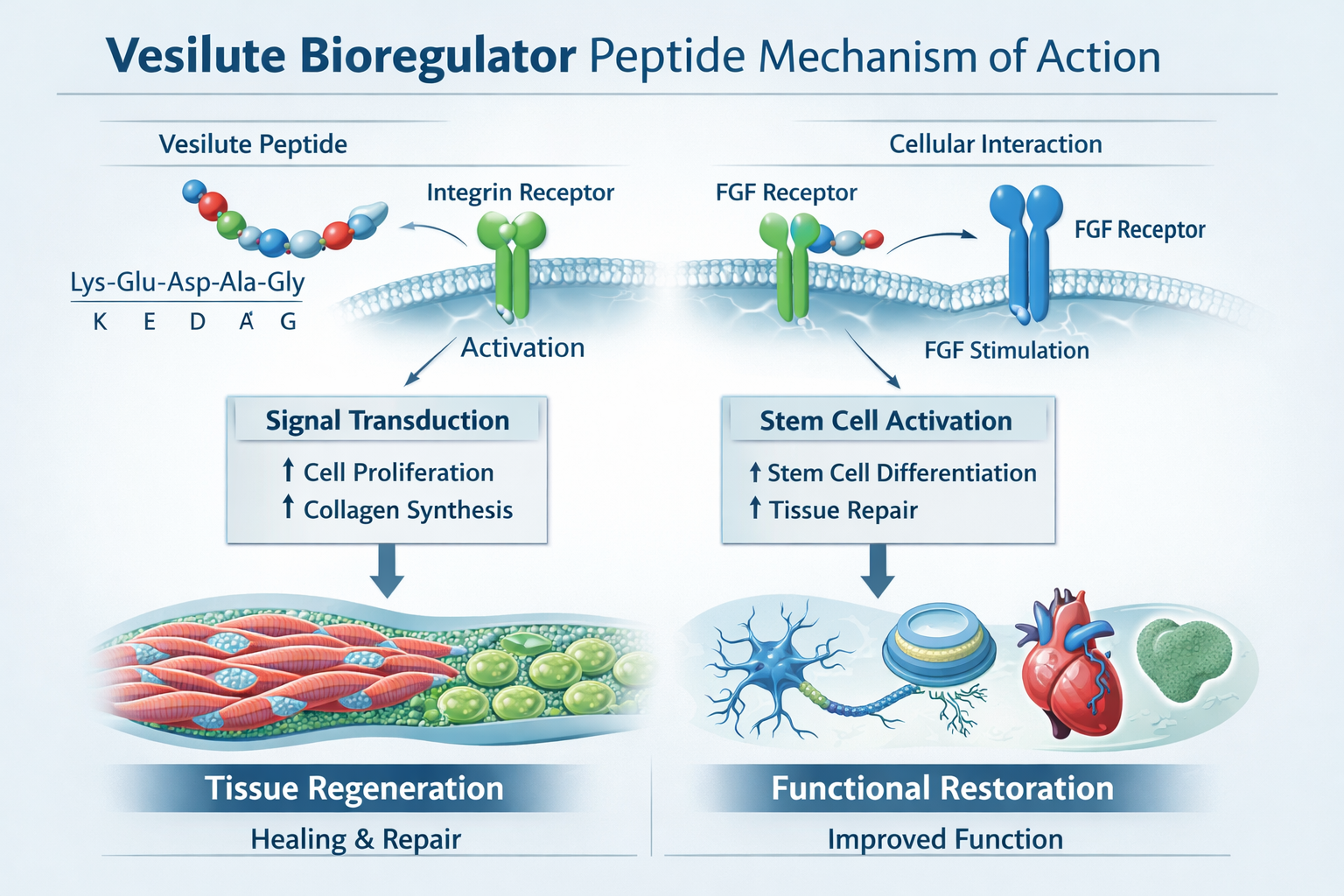
The human body is an intricate network of systems, each relying on a delicate balance of biological processes. When this balance is disturbed, various issues can arise. Bioregulatory peptides, like the vesilute bioregulator, represent a fascinating area of scientific inquiry focused on restoring and maintaining this physiological equilibrium. These peptides are thought to work by influencing gene expression and protein synthesis, essentially guiding cells back to their optimal functional states.
Vesilute is specifically recognized for its proposed role in supporting connective tissue. Connective tissues, including cartilage, tendons, ligaments, and bone, provide structural support, bind tissues together, and protect organs. Their health is paramount for mobility, strength, and overall physical well-being. Damage or degradation of these tissues, often due to aging, injury, or chronic conditions, can severely impact quality of life. For researchers and individuals interested in maintaining peak physical condition, exploring compounds that support these vital structures is a priority.
The concept behind peptides such as vesilute is rooted in the work of Professor V. Khavinson, who pioneered the field of peptide bioregulation. His research suggests that short-chain peptides, identical to those naturally produced in the body, can regulate various biological processes by interacting with DNA. This interaction is believed to normalize gene expression, leading to the synthesis of specific proteins required for cellular function and tissue repair. When we discuss vesilute peptide, we're talking about a compound designed to mimic these natural regulatory processes within connective tissues.
The Proposed Mechanism of Vesilute Peptide
The precise mechanism by which vesilute bioregulator exerts its effects is still an active area of research, but the prevailing theory centers on its ability to act as a gene expression regulator. In simple terms, it's believed to help cells in connective tissues "remember" how to function optimally.
Here's a breakdown of the proposed mechanism:
- Tissue-Specific Interaction: Vesilute is thought to have a specific affinity for cells within connective tissues. This tissue specificity is a hallmark of bioregulatory peptides, distinguishing them from broader-acting compounds.
- Gene Regulation: Once it interacts with target cells, the vesilute peptide is hypothesized to enter the cell nucleus. Inside, it may bind to specific DNA sequences, influencing the expression of genes related to connective tissue health. This could involve upregulating genes that promote collagen synthesis, elastin production, or the formation of other extracellular matrix components.
- Protein Synthesis: By modulating gene expression, vesilute could lead to an increase in the production of specific proteins essential for the repair, maintenance, and regeneration of connective tissues. This might include growth factors or enzymes involved in tissue remodeling.
- Cellular Differentiation and Function: Ultimately, this regulatory action is believed to normalize cellular function. For instance, in cartilage, it might help chondrocytes (cartilage cells) function more efficiently, leading to better cartilage matrix production. In tendons, it could support tenocyte health and collagen fiber organization.
The idea that a short peptide can so precisely influence cellular machinery is revolutionary. Peptide shoppers and researchers understand the potential implications for supporting age-related decline or accelerating recovery from physical stress. High-quality vesilut for sale is often sought by those aiming to investigate these profound cellular interactions.
When considering compounds for comprehensive wellness research, particularly for recovery and cellular maintenance, exploring combinations can be highly valuable. For instance, blends like the Klow Blend (BPC-157, TB-500, KPV, GHK-Cu) offer a synergistic approach to various aspects of cellular health and regeneration, often complementing the targeted actions of individual bioregulators.
Research Findings and Potential Applications of Vesilute
While many of the studies on vesilute are pre-clinical and ongoing, the existing body of research points towards several intriguing areas of application, particularly concerning the maintenance and restoration of connective tissues. Researchers are actively investigating how vesilute peptide benefits might translate into practical strategies for managing conditions associated with connective tissue degradation.
Observed Effects in Studies Include:
- Cartilage Support: Pre-clinical studies have explored vesilute's ability to support cartilage health, suggesting potential for its use in models of osteoarthritis or age-related cartilage wear. It is hypothesized to help maintain the structural integrity and elasticity of cartilage.
- Tendon and Ligament Repair: Given its focus on connective tissue, vesilute bioregulator is a subject of research for its potential role in accelerating the recovery of damaged tendons and ligaments. This is of particular interest to athletes and those recovering from musculoskeletal injuries.
- Bone Health: While not a primary bone peptide, the broad influence on connective tissue might indirectly impact bone matrix health, especially in conjunction with other regulatory peptides.
- Overall Connective Tissue Integrity: Beyond specific structures, vesilute is being examined for its general role in maintaining the strength and resilience of connective tissues throughout the body, contributing to overall physical robustness.
It's important to reiterate that research into these bioregulators is still evolving, and these observations are primarily from laboratory settings. However, the consistent focus on connective tissue modulation makes vesilute a standout candidate for further scientific exploration.
The demand for buy vesilute peptides is steadily increasing among the research community, driven by these promising initial findings. As an SEO content strategist, I recognize the importance of providing accurate, research-backed information to help our audience make informed decisions about their research protocols.
Distinguishing Vesilute from Other Bioregulatory Peptides: Ovagen and Prostamax
The world of peptide bioregulators is vast and fascinating, with each peptide offering a unique, tissue-specific focus. While vesilute bioregulator targets connective tissues, other bioregulators, such as ovagen peptide and prostamax peptide, are designed for entirely different physiological systems. Understanding these distinctions is crucial for researchers and individuals looking to optimize their experimental designs or personal wellness strategies in 2026.
Ovagen Peptide: Focus on Ovarian Function
Ovagen is a bioregulatory peptide synthesized to support the normal function of the ovaries. Its proposed mechanism involves regulating the gene expression within ovarian tissues, thereby normalizing hormone production and promoting healthy reproductive function. The ovagen peptide benefits are particularly relevant for research into women's reproductive health, fertility, and managing conditions related to ovarian dysfunction.
Key Research Areas for Ovagen Peptide Include:
- Hormonal Balance: Studies investigate ovagen's ability to help normalize the production of key reproductive hormones like estrogen and progesterone.
- Ovarian Reserve: Research explores its potential role in maintaining and potentially enhancing ovarian reserve, a critical factor in fertility.
- Menopausal Support: Some pre-clinical investigations consider its application in supporting ovarian function during perimenopause and menopause.
For those interested in comprehensive reproductive health research, understanding what is ovagen peptide and its specific actions is paramount. Like vesilute, the concept of targeted gene regulation underpins its hypothesized effects. When considering sourcing peptides for such sensitive research, ensuring the highest purity is essential. Reliable suppliers are crucial for obtaining quality peptides for sale.
Prostamax Peptide: Supporting Prostate Health
In contrast to ovagen, the prostamax peptide is a bioregulator designed to support the healthy function of the prostate gland. The prostate is a vital organ in the male reproductive system, and its health can significantly impact urinary function and overall well-being. The prostamax peptide benefits are being explored in research settings to understand its role in maintaining prostate health and addressing age-related changes.
Key Research Areas for Prostamax Peptide Include:
- Prostate Cell Function: Studies investigate prostamax's potential to normalize the function of prostate cells, helping to maintain optimal glandular health.
- Inflammation Reduction: Some research suggests a role in modulating inflammatory processes within the prostate, which can be a factor in various prostate conditions.
- Age-Related Changes: Like other bioregulators, prostamax is being examined for its potential to counteract age-related decline in prostate function.
For researchers focusing on male reproductive health, understanding buy prostamax peptide options and its specific applications is critical. The distinct tissue specificity of prostamax underscores the precision of bioregulatory peptides, allowing for highly targeted research.
Comparing the Bioregulators
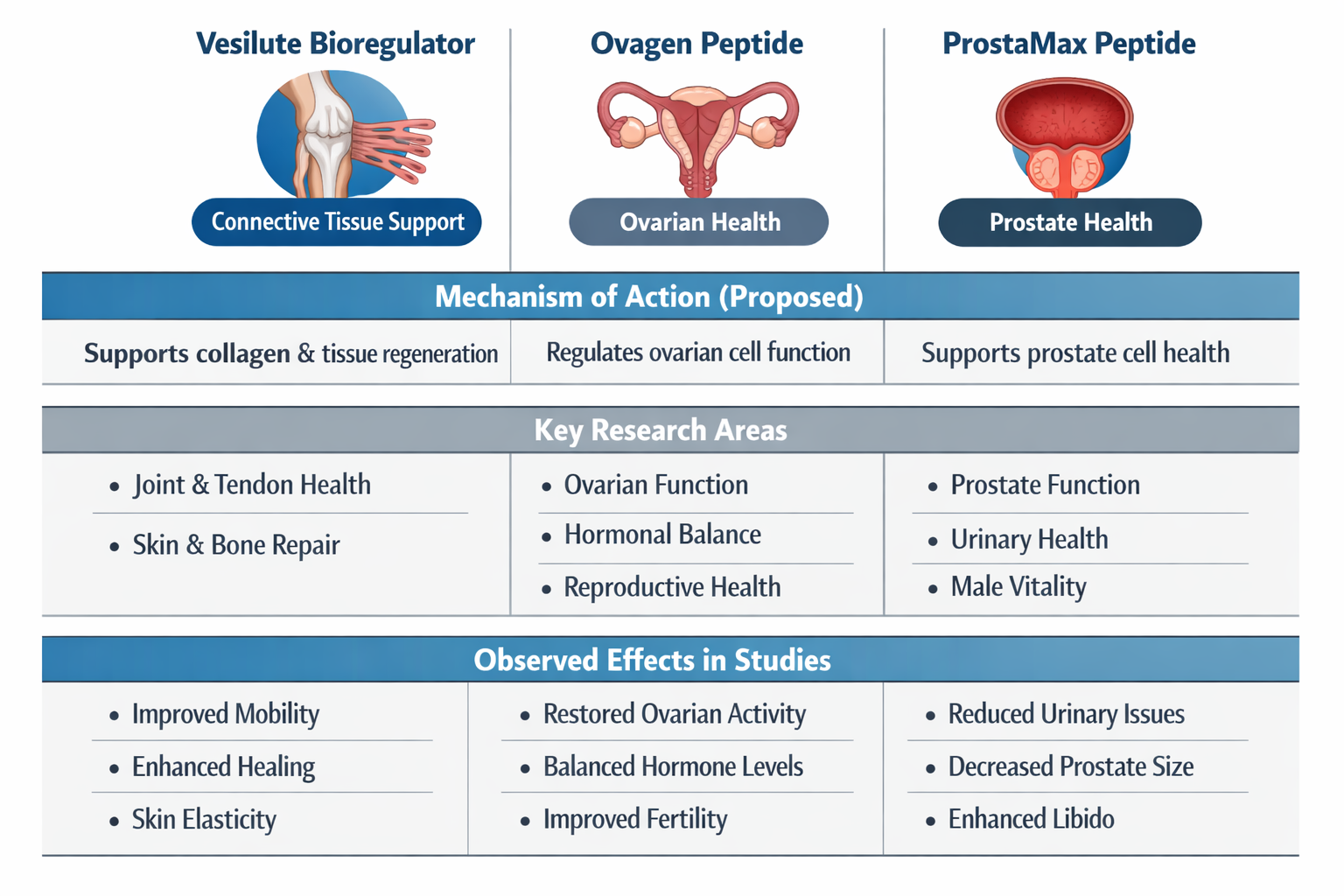
To illustrate the clear distinctions, let's look at a simple comparison table:
| Peptide Bioregulator | Primary Target Tissue | Proposed Research Applications | Key Focus in 2026 Research |
|---|---|---|---|
| Vesilute | Connective Tissues | Joint health, tendon/ligament repair, overall tissue integrity | Regenerative support for musculoskeletal system |
| Ovagen | Ovaries | Ovarian function, hormonal balance, fertility support | Women's reproductive health and anti-aging |
| Prostamax | Prostate Gland | Prostate health, urinary function support, inflammation modulation | Men's prostate health and age-related changes |
This table clearly highlights why a researcher would choose vesilute peptide dosage for connective tissue research, while another might opt for ovagen peptide dosage for ovarian studies, or prostamax peptide dosage for prostate-related investigations. Each peptide is a highly specialized tool in the bioregulatory toolkit. When seeking these specialized compounds, ensuring you buy from a trusted source is paramount. For example, Pure Tested Peptides provides a range of high-quality research peptides.
Research Considerations for Vesilute Bioregulator
For anyone considering research involving the vesilute bioregulator, several critical factors must be taken into account to ensure the integrity and validity of your studies. These considerations apply broadly to all peptide research but are particularly important for bioregulatory compounds due to their nuanced mechanisms of action.
Purity and Sourcing
The efficacy of any research peptide, especially those like the vesilute peptide bioregulator that interact at a molecular level, is highly dependent on its purity. Impurities can introduce confounding variables, skewing results and potentially leading to inaccurate conclusions. Therefore, sourcing vesilute from a reputable supplier that provides third-party testing and analytical data is non-negotiable.
When I look for peptides for my own research, I prioritize vendors who are transparent about their manufacturing processes and quality control. This includes access to Certificates of Analysis (CoAs) that confirm the peptide's identity, purity, and lack of contaminants. Without this assurance, any research outcomes could be compromised. For example, when you are looking to acquire peptides, checking Pure Tested Peptides can provide you with a reliable source.
Storage and Handling
Peptides are delicate molecules that can degrade if not stored and handled correctly. Proper storage is crucial for maintaining the stability and potency of vesilute.
General Guidelines for Peptide Storage:
- Refrigeration/Freezing: Most lyophilized (freeze-dried) peptides should be stored in a freezer (-20°C or colder) for long-term storage. Once reconstituted with bacteriostatic water, they typically require refrigeration (2-8°C).
- Avoid Light and Air Exposure: Peptides are sensitive to light and oxidation. Store them in amber vials or opaque containers, and minimize exposure to air.
- Aseptic Techniques: When reconstituting or drawing samples, always use sterile techniques to prevent contamination, which can degrade the peptide or introduce impurities into your research.
Failing to adhere to these guidelines can render your vesilut peptide inactive, wasting valuable resources and invalidating your research efforts. Proper handling ensures you're working with the active compound throughout your study. You can find more information on best practices for storing research peptides.
Research Protocols and Dosing
Determining the appropriate vesilute peptide dosage for specific research objectives requires careful consideration of existing literature and pilot studies. Bioregulatory peptides typically operate at very low concentrations, emphasizing quality over quantity. Overdosing does not necessarily equate to better or faster results and can sometimes lead to off-target effects or simply be wasteful.
Key Protocol Considerations:
- Starting Low: It's often prudent to begin with the lowest effective concentration observed in relevant pre-clinical studies and gradually adjust as needed, monitoring outcomes closely.
- Frequency and Duration: The optimal frequency and duration of administration will depend on the specific research question. Some studies might involve short-term acute interventions, while others may explore longer-term chronic administration.
- Monitoring and Data Collection: Robust data collection methods are essential. This includes meticulous record-keeping of administration, observed effects, and any physiological markers being tracked.
When examining the overall impact of various peptides on adaptive capacity, it's beneficial to understand how individual compounds contribute. For instance, exploring the broader context of adaptive capacity and peptide mapping can provide insights into how vesilute fits into a comprehensive research framework.
Legal and Ethical Considerations
It is imperative to acknowledge that the vesilute bioregulator and other research peptides are strictly for research purposes only and not for human consumption. Researchers must be fully aware of and comply with all local, national, and international regulations regarding the acquisition, storage, and use of these compounds.
- Regulatory Status: Verify the legal status of vesilute in your jurisdiction. Regulations can vary widely.
- Ethical Review: If your research involves animal models, ensure that all studies are conducted under strict ethical guidelines and have received approval from relevant institutional review boards.
- Transparency: Clearly label all research materials and maintain accurate documentation of your work.
Adhering to these principles not only ensures compliance but also upholds the integrity of scientific research. The focus on laboratory science and research findings is paramount for responsible exploration of compounds like vesilute.
Synergy with Other Peptides
While vesilute has a specific role, researchers often explore its potential synergy with other peptides or compounds. For example, combining vesilute with peptides known for broader regenerative effects or anti-inflammatory properties might yield more comprehensive results in certain research models. Understanding the effects of different peptide blends for research can open new avenues of investigation.
This approach aligns with the strategy seen in blends like the Klow Blend (BPC-157, TB-500, KPV, GHK-Cu) which combines multiple peptides to target different aspects of healing and regeneration. Such comprehensive research protocols are essential for advancing our understanding of how these powerful molecules interact and influence biological systems.
The Future of Vesilute Bioregulator Research in 2026 and Beyond
As we move further into 2026, the scientific community's interest in peptide bioregulators, including the vesilute bioregulator, continues to grow. The ability of these compounds to precisely target specific tissues and modulate gene expression offers a promising frontier for various fields of study, from regenerative medicine to anti-aging research. The focused nature of vesilute peptide on connective tissues makes it particularly relevant in an era where musculoskeletal health and recovery are increasingly prioritized, especially among active populations and those facing age-related degradation.
Ongoing research is expected to shed more light on the intricate mechanisms of action of vesilute, potentially revealing novel pathways and broader applications than currently understood. Advanced analytical techniques and sophisticated in vivo and in vitro models will likely refine our understanding of optimal vesilute peptide dosage and delivery methods. For example, exploring novel formulations or targeted delivery systems could enhance its bioavailability and efficacy in specific research contexts.
Furthermore, comparative studies involving vesilute and other connective tissue-supportive compounds, both peptide and non-peptide, will be crucial. This comparative analysis will help researchers pinpoint the unique advantages and synergistic potential of vesilute within a broader spectrum of therapeutic candidates. The drive for deeper understanding means that demand for high-purity vesilut for sale will remain strong among laboratories and research institutions worldwide.
The increasing accessibility of information and high-quality research peptides from reputable sources like Pure Tested Peptides empowers more researchers to undertake rigorous studies. This democratization of access is vital for accelerating discovery and translating laboratory findings into practical insights. The collective effort of the scientific community in documenting baseline trends and data quality, as highlighted by resources like baseline trends and data quality, ensures that new research on peptides like vesilute builds upon a solid foundation.
I believe that the continued exploration of peptides such as the Klow Blend (BPC-157, TB-500, KPV, GHK-Cu), which are designed for synergistic effects, will also inform our understanding of how to best utilize individual bioregulators like vesilute. The future of peptide research is bright, promising a deeper appreciation for the body's natural regulatory systems and innovative approaches to supporting health and resilience.
Conclusion
The vesilute bioregulator stands as a compelling subject in the realm of peptide science, offering a targeted approach to supporting the health and regeneration of connective tissues. From its proposed mechanism of normalizing gene expression within specific cell types to its potential applications in joint, tendon, and overall tissue integrity, vesilute presents a fascinating avenue for scientific exploration. As we continue to advance our understanding in 2026, the distinctions between vesilute and other tissue-specific bioregulators like ovagen and prostamax become ever clearer, underscoring the precision and specificity of these remarkable compounds.
For peptide shoppers and researchers in the health and fitness community, the key takeaway is the importance of quality, rigorous research, and adherence to ethical guidelines. Sourcing high-purity vesilute peptide from trusted suppliers, meticulous storage and handling, and careful protocol design are paramount for any meaningful investigation. The journey of discovery with bioregulatory peptides is ongoing, and compounds like vesilute are poised to contribute significantly to our knowledge of cellular maintenance and restoration.
Actionable Next Steps:
- Educate Yourself Further: Continue to explore scientific literature and research papers on vesilute and other bioregulatory peptides. Reputable journals and academic databases are excellent resources.
- Source Wisely for Research: If you are conducting research, ensure you procure vesilute bioregulator from trusted providers who offer transparent third-party testing and Certificates of Analysis to guarantee purity. Visit Pure Tested Peptides for quality research peptides.
- Adhere to Research Protocols: Always follow strict scientific protocols for peptide storage, handling, and administration in your research settings. This ensures the validity and reliability of your findings.
- Stay Informed: The field of peptide research is dynamic. Stay updated on the latest findings and advancements in bioregulatory science.
- Consider Complementary Research: Explore how vesilute might interact or synergize with other peptides, such as those found in comprehensive blends like the Klow Blend (BPC-157, TB-500, KPV, GHK-Cu), to broaden your research scope.