
Unlocking Cellular Potential: Exploring NMN + 5-Amino-1MQ in Research 🧪
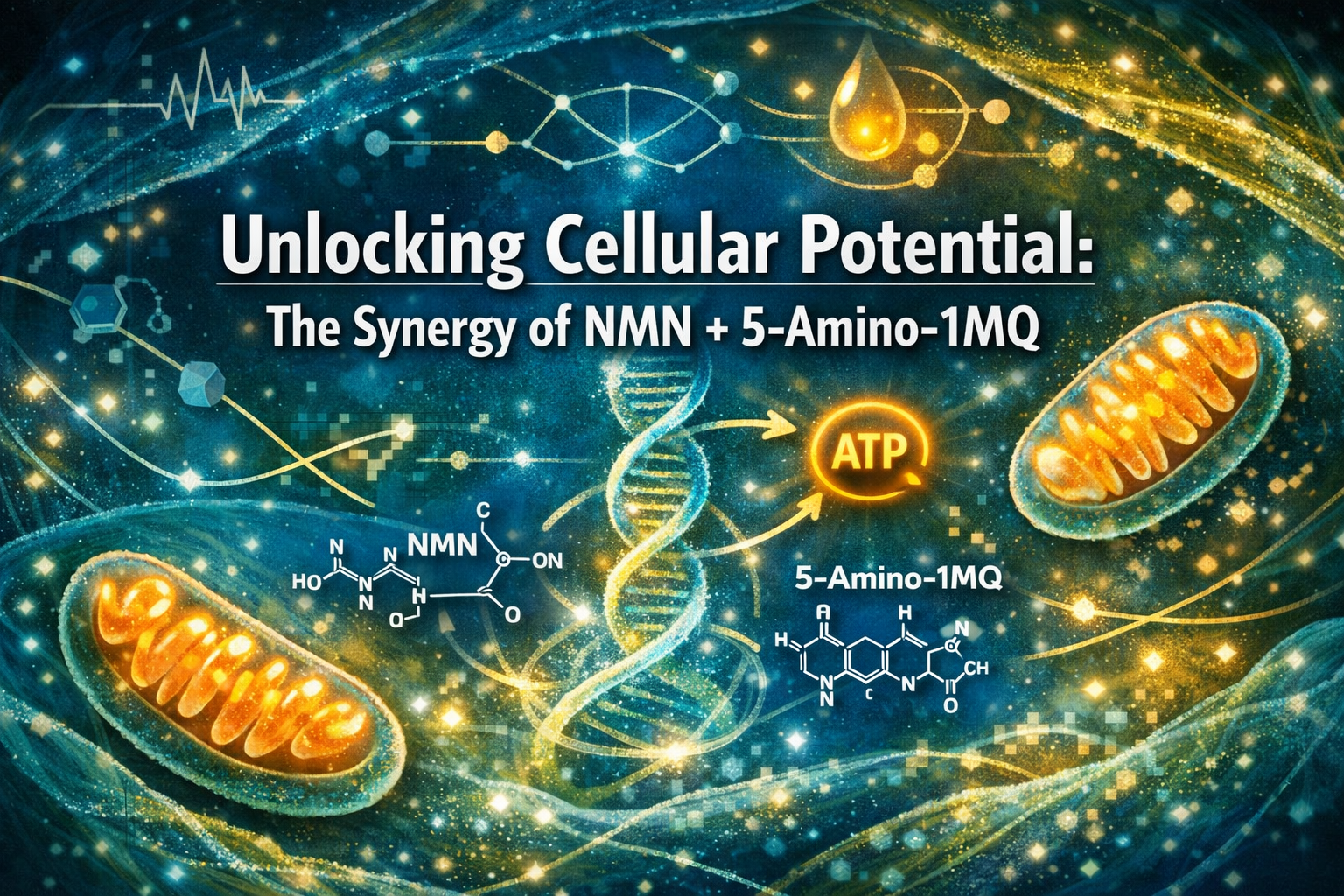
The pursuit of understanding cellular vitality and metabolic optimization continues to drive cutting-edge scientific inquiry. Among the most exciting recent areas of research is the investigation into the combined effects of nmn + 5 amino 1-mq. These two compounds, each with distinct mechanisms of action, are being studied for their potential synergistic roles in enhancing cellular energy, supporting metabolic health, and influencing longevity pathways. This comprehensive article delves into the science behind Nicotinamide Mononucleotide (NMN) and 5-Amino-1MQ, exploring their individual functions and the theoretical basis for their combined application in research settings.
Key Takeaways
- NMN (Nicotinamide Mononucleotide) is a crucial precursor to NAD+, a coenzyme vital for cellular energy, DNA repair, and activating sirtuins, which are proteins linked to longevity.
- 5-Amino-1MQ is a small molecule designed to inhibit NNMT (Nicotinamide N-methyltransferase), an enzyme that can reduce the availability of NAD+ precursors, thereby impacting metabolic health.
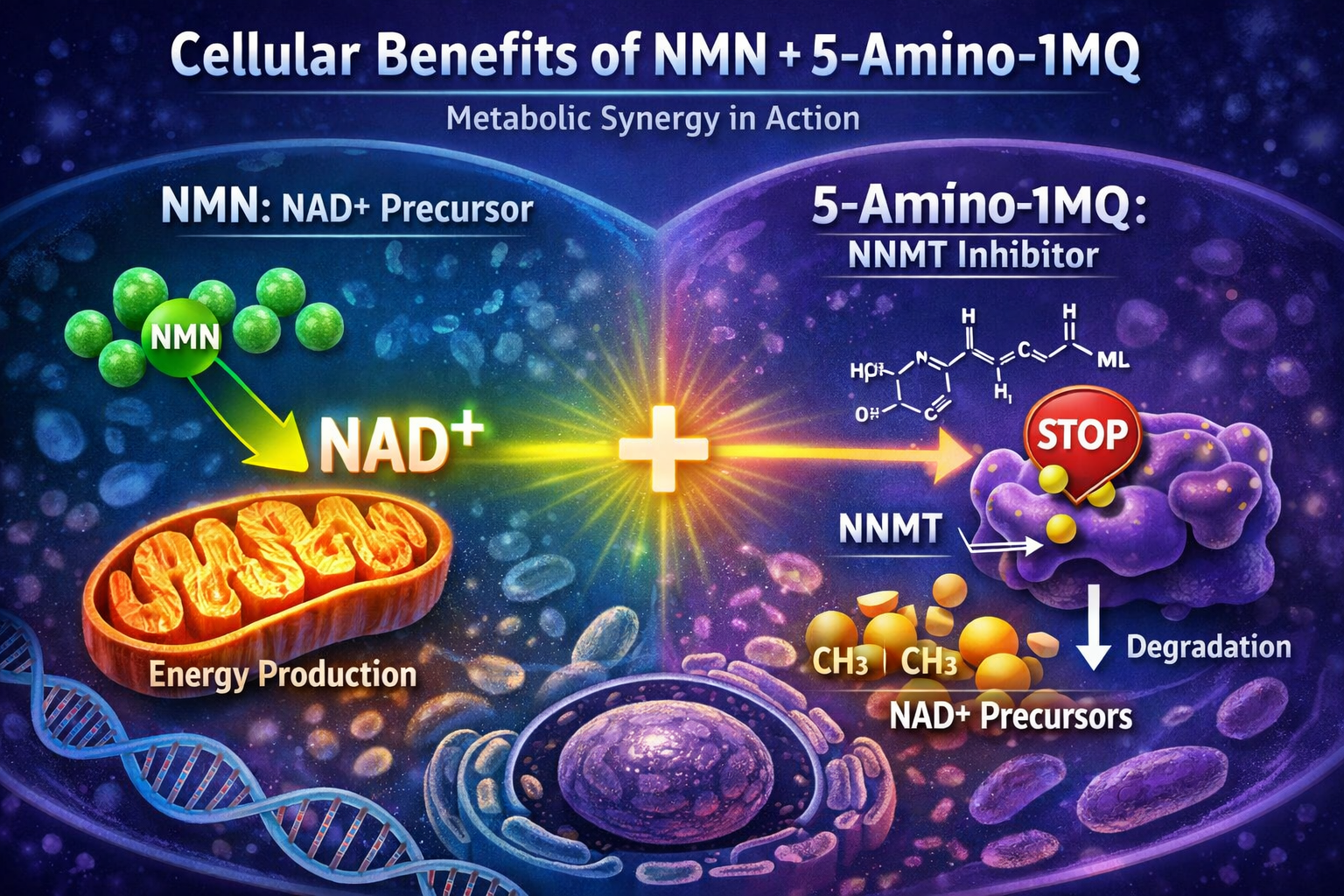
- The theoretical synergy of nmn + 5 amino 1-mq lies in NMN boosting NAD+ production, while 5-Amino-1MQ simultaneously prevents its breakdown, potentially maximizing cellular NAD+ levels.
- Research on NMN has shown benefits in areas like insulin sensitivity, aerobic capacity, and muscle strength in human trials, with positive safety profiles observed up to 1000mg daily.
- While 5-Amino-1MQ has demonstrated promising metabolic effects, such as increased energy expenditure and reduced fat mass in animal models, human clinical data remains limited as of 2026, and it is primarily available as a research chemical.
The Foundation: Understanding NMN and Its Role
Nicotinamide Mononucleotide, or NMN, stands at the forefront of cellular research due to its pivotal role as a direct precursor to Nicotinamide Adenine Dinucleotide (NAD+). NAD+ is not merely a molecule; it is a fundamental coenzyme essential for life itself. It acts as a crucial cofactor in hundreds of enzymatic reactions within every cell, playing indispensable roles in cellular energy metabolism, DNA repair processes, and the activation of sirtuins—a class of proteins often referred to as "longevity genes" due to their involvement in regulating cellular health and stress resistance.
The importance of NAD+ becomes particularly apparent when considering its decline with age. As organisms age, NAD+ levels naturally decrease, a phenomenon that research suggests contributes to various age-related metabolic dysfunctions and a general decline in cellular resilience. By providing NMN, scientists aim to bypass the rate-limiting steps in NAD+ synthesis, thereby directly boosting intracellular NAD+ concentrations.
Numerous studies, including human clinical trials conducted through 2024, have investigated the effects of NMN supplementation. These studies have consistently shown that NMN can significantly increase NAD+ levels in the body, with some research indicating a rise of 25-40% in human subjects. These increases have been associated with several observed benefits. For instance, research has demonstrated improvements in insulin sensitivity, a key marker for metabolic health, as well as enhancements in aerobic capacity and muscle strength. The doses typically explored in these studies have ranged from 250mg to 1000mg daily, with a generally favorable safety profile reported. The bioavailability of oral NMN has also been confirmed, with research indicating rapid absorption and conversion to NAD+ in various tissues, notably the liver and muscles, within 15-30 minutes of administration. This rapid action underscores its potential as an effective tool in metabolic research.
The activation of longevity pathways, including sirtuins and AMPK (AMP-activated protein kinase), is another significant area where NMN demonstrates potential. These pathways are critical regulators of mitochondrial function, which is the powerhouse of the cell, and are involved in cellular stress responses. Enhancing these pathways through NMN supplementation could offer benefits for combating age-related metabolic decline and supporting cardiovascular health. Researchers interested in exploring high-quality peptides for their studies, including NMN, often turn to reliable sources to ensure purity and efficacy. Find out more about high-quality research materials at Pure Tested Peptides.
The Inhibitor: Decoding 5-Amino-1MQ
While NMN focuses on boosting the supply of NAD+ precursors, 5-Amino-1MQ approaches metabolic regulation from a different angle: by preventing the degradation of these vital components. 5-Amino-1MQ is a small molecule that acts as a potent inhibitor of the enzyme Nicotinamide N-methyltransferase (NNMT). Understanding NNMT is crucial to appreciating the role of 5-Amino-1MQ.
NNMT is an enzyme found in various tissues, particularly in adipose (fat) tissue and the liver. Its primary function is to methylate nicotinamide, which is a form of vitamin B3 and a precursor to NAD+. This methylation process deactivates nicotinamide, essentially removing it from the metabolic pool that could otherwise be used to synthesize NAD+. In essence, NNMT acts like a "drain" on the cellular NAD+ precursor pool. Research has indicated that NNMT expression tends to increase with age and in conditions of obesity. Elevated NNMT levels have been associated with decreased NAD+ availability, particularly in adipose tissue, suggesting its involvement in age-related metabolic dysfunction and conditions like insulin resistance.
By inhibiting NNMT, 5-amino-1mq aims to prevent this methylation and deactivation of nicotinamide. The theoretical outcome is an increase in the free nicotinamide available for conversion into NAD+, thereby indirectly boosting cellular NAD+ pools. This mechanism is particularly intriguing for its potential implications in metabolic health and fat reduction. Research on 5-Amino-1MQ has primarily been conducted in animal models, where it has shown promising results. Studies in mice, for example, demonstrated increased energy expenditure and a notable reduction in fat mass, ranging from 25-30% over 10-week periods. These findings suggest that inhibiting NNMT could enhance metabolic flexibility by re-directing nicotinamide towards NAD+ synthesis and subsequently activating sirtuins, which are known to be involved in metabolic regulation and cellular stress resistance. Researchers delving into these pathways often seek detailed information on specific compounds like 5-Amino-1MQ.
It's important to note the current research landscape for 5-amino-1mq. While preclinical data is encouraging, human clinical trial data remains limited as of 2026. Most of the available information comes from animal studies and anecdotal reports within the research peptide community. Due to this, 5-Amino-1MQ is predominantly available as a research chemical and is not approved for human consumption. This distinction is critical for researchers to understand when designing studies involving this compound. For those exploring the potential of 5-Amino-1MQ, detailed research and sourcing from reputable suppliers are paramount. You can find more information about 5-Amino-1MQ peptides for sale through specialized research chemical providers.
The Synergy: Why Combine NMN + 5-Amino-1MQ?
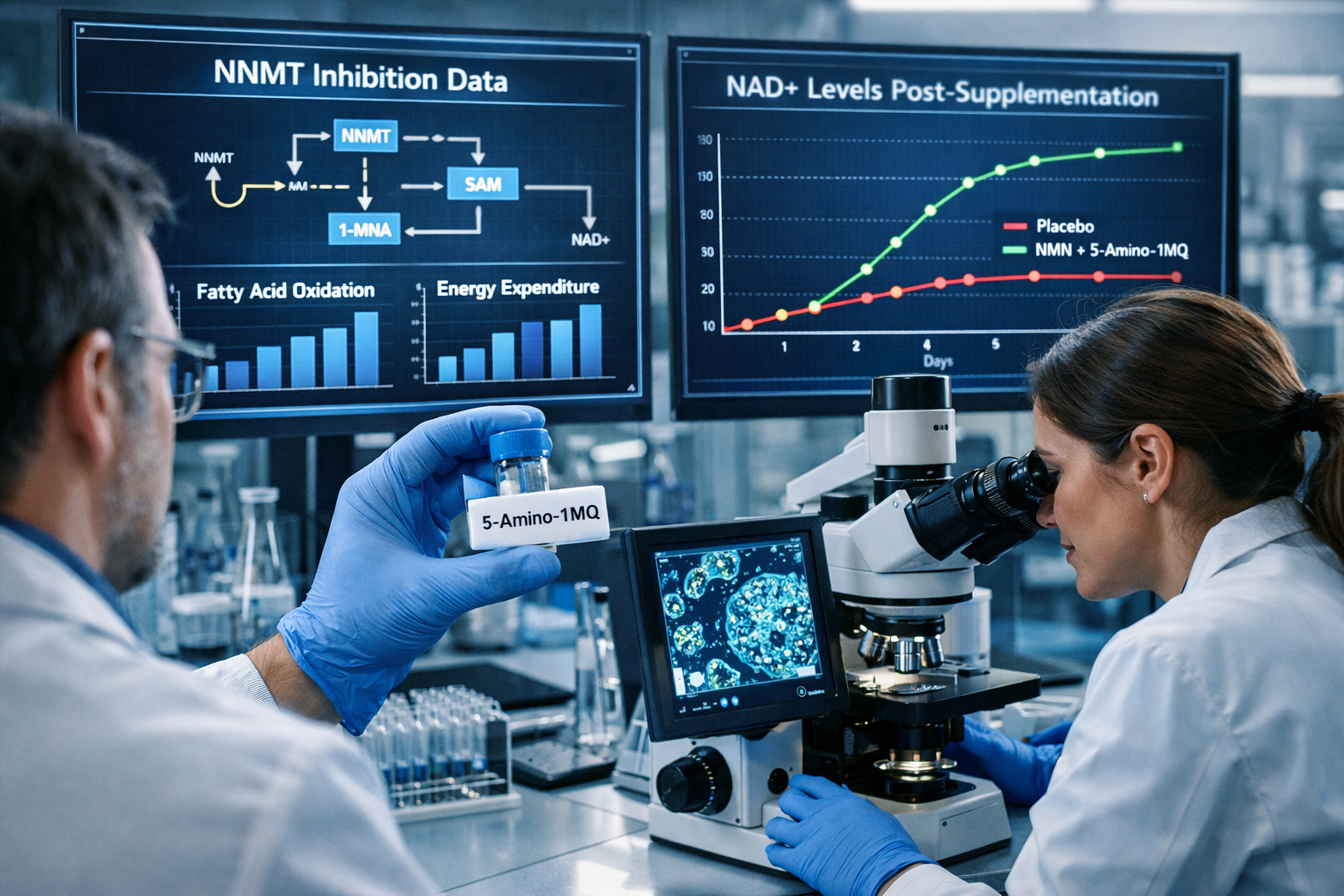
The concept behind combining nmn + 5 amino 1-mq is rooted in a compelling theoretical synergy: attacking the problem of declining cellular NAD+ levels from two complementary angles. Imagine a bathtub where the water level (representing NAD+) is falling. NMN acts like turning up the faucet, directly increasing the influx of NAD+ precursors. Simultaneously, 5-Amino-1MQ acts like plugging a small leak in the tub, preventing the valuable NAD+ precursors from draining away through the action of the NNMT enzyme.
This dual approach is hypothesized to be more effective than either compound alone. NMN directly enhances NAD+ production, providing the raw materials needed for synthesis. However, if NNMT activity is high, some of these precious NAD+ precursors might still be shunted away and deactivated. This is where 5-amino-1mq steps in. By inhibiting NNMT, it ensures that more of the nicotinamide—a key product downstream of NMN conversion—remains available to be utilized for NAD+ synthesis, rather than being methylated and rendered inactive.
“The theoretical synergy of NMN + 5-Amino-1MQ proposes a comprehensive strategy for NAD+ optimization: increasing supply while simultaneously reducing degradation, thus maximizing cellular NAD+ availability and potentially amplifying downstream metabolic benefits.”
The scientific rationale for this combination is robust on paper. Increasing cellular NAD+ pools through this combined mechanism could potentially lead to a more profound activation of key metabolic regulators, such as sirtuins and AMPK. These proteins are crucial for maintaining mitochondrial function, regulating energy homeostasis, and enhancing cellular stress resistance. By maximizing NAD+ availability, researchers hypothesize that the cellular machinery responsible for repair, energy production, and metabolic flexibility could operate more efficiently.
While the individual compounds have been subjects of significant research—NMN in human trials and 5-Amino-1MQ predominantly in animal models—comprehensive human studies specifically examining the combination of nmn + 5 amino 1-mq are not yet widely published in major scientific journals as of early 2026. This represents an emerging and highly active area of metabolic research. Scientists are keen to explore whether the in vivo effects of this combination truly yield a greater benefit than individual supplementation. The potential for enhanced metabolic flexibility, improved energy expenditure, and more robust activation of longevity pathways makes the nmn + 5 amino 1-mq combination a fascinating subject for ongoing and future investigations. Researchers exploring novel peptide stacks might also consider how this combination interacts with other compounds, such as those in a MOTS-c stack, to understand broader metabolic impacts.
Deeper Dive into Mechanisms: NNMT Inhibition and Metabolic Flexibility
The inhibition of NNMT by compounds like 5-amino-1mq is more than just about preserving NAD+ precursors; it's about unlocking metabolic flexibility. Metabolic flexibility refers to the body's ability to switch efficiently between different fuel sources (like glucose and fat) to meet its energy demands. A decline in this flexibility is often associated with metabolic disorders.
NNMT inhibition, by increasing cellular NAD+ pools, is thought to promote several beneficial metabolic adaptations:
- Enhanced Mitochondrial Function: Higher NAD+ levels can boost the activity of sirtuins (SIRT1, SIRT3), which are critical for mitochondrial biogenesis and function. Healthier mitochondria mean more efficient energy production.
- Improved Fat Metabolism: By preserving nicotinamide, 5-amino-1mq can encourage the body to utilize fat for energy more effectively. This was a key finding in animal studies, where a reduction in fat mass was observed.
- Insulin Sensitivity: Improved NAD+ levels and mitochondrial function can lead to better glucose uptake and utilization, potentially enhancing insulin sensitivity and reducing the risk of insulin resistance.
- AMPK Activation: NAD+ is a known activator of AMPK, a master regulator of cellular energy. When AMPK is active, it promotes catabolic processes that generate ATP (like fatty acid oxidation) and inhibits anabolic processes that consume ATP (like fat synthesis), further contributing to metabolic flexibility.
These mechanisms highlight why 5-amino-1mq is a compelling target for researchers investigating metabolic health, especially in the context of age-related decline or obesity, where NNMT levels are often elevated. The interplay of NMN boosting NAD+ supply and 5-Amino-1MQ preventing its wasteful degradation offers a sophisticated approach to modulating cellular metabolism. For researchers requiring detailed product specifications and quality assurance, exploring options such as 5-Amino-1MQ buy 5amino1mq online research and data can be highly beneficial.
Dosage Considerations and Research Protocols for NMN + 5-Amino-1MQ
When conducting research involving compounds like nmn + 5 amino 1-mq, careful consideration of dosage and protocol is paramount to ensure the validity and reproducibility of results. It is crucial to remember that both compounds, especially 5-Amino-1MQ, are primarily available for research purposes only and not for human consumption.
For NMN, human clinical research conducted through 2024 has explored daily doses ranging from 250mg to 1000mg. These studies have generally reported NMN to be well-tolerated within this range, with observed increases in NAD+ levels and associated metabolic benefits. Researchers typically administer NMN orally, given its confirmed bioavailability and rapid absorption. Protocols often involve daily administration over several weeks or months, depending on the specific endpoints being investigated, such as changes in insulin sensitivity, aerobic capacity, or markers of cellular aging.
The situation with 5-amino-1mq dosing is different. As most data comes from preclinical animal models, direct human dosage guidelines from comprehensive clinical trials are scarce. In mouse studies, effective doses have been translated to human equivalents through allometric scaling, but these are theoretical and require rigorous validation in human-specific research. Researchers in animal models typically administer 5-Amino-1MQ via injection or oral gavage. Given its status as a research chemical, any exploration of 5 amino 1 mq dosage in a laboratory setting must be approached with extreme caution, adhering strictly to established research protocols and ethical guidelines. Researchers looking to acquire 5-Amino-1MQ for their studies can find it at reputable suppliers, for example, on the 5-Amino-1MQ product page.
When considering the combined use of nmn + 5 amino 1-mq, research protocols would need to carefully titrate the doses of each compound, potentially starting with established NMN dosages and carefully introducing 5-Amino-1MQ at concentrations informed by in vitro and animal data, always with an eye on the safety profile and potential interactions. The timing of administration and the duration of the research period would also be critical experimental variables. Due to the limited human data on the combination, designing a research protocol requires a deep understanding of each compound's pharmacology and a conservative approach to dosage escalation. The goal is to maximize the theoretical synergy while ensuring the integrity and safety of the research. Understanding how to correctly store and handle these sensitive compounds is also crucial; best practices for storing research peptides are often outlined by reputable suppliers.
Researchers often discuss potential regimens and findings in various forums. A search for 5 amino 1 mq reddit might yield anecdotal reports from individuals experimenting with research chemicals, but these should always be viewed with skepticism and not mistaken for scientific evidence. Peer-reviewed literature and well-designed clinical trials are the only reliable sources of information for therapeutic claims or safety profiles. For those engaged in serious scientific inquiry, platforms like Pure Tested Peptides provide a valuable resource for obtaining high-quality research materials and supporting rigorous study.
Regulatory Landscape and Research Considerations for NMN + 5-Amino-1MQ
The regulatory status of both NMN and 5-Amino-1MQ is a crucial aspect for any researcher or entity involved in their study or procurement. Navigating this landscape ensures compliance and underscores the critical distinction between research chemicals and approved therapeutic agents.
NMN Regulatory Status
NMN's regulatory journey has been somewhat complex. In many countries, it has historically been sold as a dietary supplement. This classification allowed it to be widely available to consumers. However, in the United States, the Food and Drug Administration (FDA) initiated scrutiny in 2022, signaling a potential reclassification of NMN. This scrutiny centered on whether NMN, having been investigated as a drug, should therefore be excluded from the definition of a dietary supplement. This ongoing discussion means that while NMN remains accessible in many markets, its long-term status as a dietary supplement is subject to change. For researchers, this impacts the availability and broader public perception of NMN, but its role as a research compound remains strong due to the extensive scientific interest.
5-Amino-1MQ Regulatory Status
The regulatory situation for 5-amino-1-mq is much clearer and more restrictive. It is primarily and almost exclusively available as a research chemical. This designation means that it is intended solely for laboratory research use and is not approved for human consumption, nor is it marketed as a dietary supplement or drug. The limited human clinical trial data, combined with the novelty of the compound, places it firmly in the research category. This status necessitates that any entity handling 5 amino 1 mq capsules or solutions does so strictly within the confines of a research laboratory, adhering to all applicable regulations for handling research-grade chemicals. The distinction is not merely semantic; it carries significant legal and ethical implications for manufacturers, distributors, and researchers.
Implications for Researchers
For researchers interested in nmn + 5 amino 1-mq, these regulatory distinctions are paramount:
- Strict Adherence to Research Use: When acquiring and using 5-Amino-1MQ, researchers must always operate under the understanding that it is a research chemical. This includes proper labeling, storage, and disposal protocols. It cannot be legally sold or marketed for human use.
- Informed Consent: If any research involving these compounds, particularly 5-Amino-1MQ, were ever to progress to human trials, incredibly stringent ethical review and informed consent processes would be required, given the limited safety data.
- Source Reliability: Due to the regulatory environment, sourcing 5 amino 1 mq peptide from reputable suppliers is non-negotiable. These suppliers must provide certificates of analysis (COAs) demonstrating purity and identity, ensuring that researchers are working with a high-quality, unadulterated product. Reliable suppliers are essential for building reproducible wellness studies, as emphasized by Pure Tested Peptides.
- Ongoing Monitoring: Researchers should remain vigilant regarding any changes in the regulatory status of NMN and 5-Amino-1MQ. Regulatory bodies continuously review emerging scientific evidence and may update their classifications.
The ongoing research into nmn + 5 amino 1-mq is vital for understanding their full potential and safety profiles. However, this scientific exploration must always be conducted within the established legal and ethical frameworks that govern research chemicals and dietary supplements. The current regulatory environment reinforces that while the promise of these compounds in metabolic research is high, their application is strictly defined.
Expanding Research Avenues: Stacking and Synergies
Beyond the direct combination of NMN and 5-Amino-1MQ, researchers are increasingly exploring the potential for stacking these compounds with other research peptides to achieve broader or more targeted physiological effects. The concept of a "stack" involves combining multiple research compounds, each with distinct mechanisms, to theoretically amplify or complement their individual benefits.
For instance, within the realm of metabolic health and energy expenditure, the integration of nmn + 5 amino 1-mq into a mots c stack is a fascinating area. MOTS-c (Mitochondrial-derived peptide of 16 amino acids) is a mitochondrial peptide that has been shown to influence metabolic homeostasis, insulin sensitivity, and exercise capacity. When considering a mots-c stack, researchers might investigate how the NAD+-boosting effects of NMN and NNMT-inhibiting actions of 5-Amino-1MQ could synergize with MOTS-c's role in mitochondrial regulation. Theoretically, optimizing NAD+ levels could enhance the cellular environment in which MOTS-c operates, leading to more pronounced metabolic benefits.
Further, the discussions around compounds like Retatrutide, a triple-agonist, and its potential combination with other peptides bring forward questions like "can you stack mots c with retatrutide" or specifically, a "retatrutide mots c stack". While this area is highly experimental, the principle remains: each compound targets different pathways, and their combined effect could be greater than the sum of their parts. In this context, adding nmn + 5 amino 1-mq could be seen as optimizing the foundational cellular energy and NAD+ levels, creating a more robust physiological state for other metabolic modulators, such as MOTS-c or Retatrutide, to exert their effects. The precise nature of these interactions, including optimal dosages and potential side effects, would require extensive and rigorous preclinical and clinical research.
The idea of a "mots c peptide stack" implies a strategic combination aimed at comprehensive metabolic support. This could involve not only NMN and 5-Amino-1MQ but also other peptides known for their roles in energy metabolism, inflammation reduction, or cellular repair. For example, researchers might explore how a combination of AOD9604 and MOTS-c interacts with the NAD+ pathway enhanced by nmn + 5 amino 1-mq. The complexity of these interactions necessitates a methodical approach to research, carefully isolating variables and meticulously documenting outcomes. As with all research chemicals, it is paramount to source these compounds from suppliers who provide detailed quality control information and adhere to strict laboratory-grade purity standards.
Conclusion and Future Directions in Research
The exploration of nmn + 5 amino 1-mq represents a significant frontier in metabolic and longevity research. Individually, Nicotinamide Mononucleotide (NMN) and 5-Amino-1MQ offer compelling mechanisms for enhancing cellular health: NMN by directly elevating NAD+ levels, a crucial coenzyme for energy and repair, and 5-Amino-1MQ by inhibiting the NNMT enzyme, thereby preventing the degradation of NAD+ precursors. The theoretical synergy of this combination—boosting NAD+ supply while simultaneously preventing its loss—suggests a powerful strategy for optimizing cellular NAD+ availability, which is vital for metabolic flexibility, mitochondrial function, and the activation of longevity pathways.
While human clinical trials have established the safety and efficacy of NMN in improving parameters like insulin sensitivity and muscle strength, research on 5-Amino-1MQ has primarily been confined to animal models, showing promising results in fat reduction and energy expenditure. Comprehensive human studies specifically on the combined effects of nmn + 5 amino 1-mq are still emerging, highlighting this as an active and exciting area for future scientific inquiry in 2026.
Researchers delving into this field must always adhere to rigorous scientific protocols, prioritize the purity and quality of research chemicals, and operate within the strict regulatory frameworks that govern these compounds. The distinction between research-grade materials and products approved for human consumption is critical. As science advances, the combined strategy of NMN and 5-Amino-1MQ holds the potential to unlock deeper insights into cellular metabolism and to pave the way for novel approaches to support healthy aging and combat metabolic dysfunction. The ongoing research will undoubtedly clarify the precise benefits, optimal research protocols, and long-term implications of this fascinating combination.
Actionable Next Steps for Researchers:
- Review Existing Literature: Thoroughly examine all available peer-reviewed studies on NMN, 5-Amino-1MQ, and NAD+ metabolism to build a strong theoretical foundation.
- Source High-Quality Materials: Partner with reputable suppliers like Pure Tested Peptides to ensure the purity and authenticity of NMN and 5-Amino-1MQ for research purposes.
- Design Robust Protocols: Develop well-controlled experimental designs, whether in vitro or in vivo, to accurately assess the individual and combined effects of these compounds, carefully considering 5 amino 1 mq dosage and NMN concentrations.
- Adhere to Regulatory Guidelines: Strictly observe all local and national regulations concerning the use of research chemicals, ensuring ethical and legal compliance in all research endeavors.
- Collaborate and Share Findings: Engage with the broader scientific community to share data and insights, accelerating the understanding of these powerful metabolic modulators.
Meta Title: NMN + 5-Amino-1MQ: Unlocking Metabolic Potential in 2026
Meta Description: Explore the synergistic research on nmn + 5 amino 1-mq for cellular energy, metabolism, and longevity. Discover their roles in NAD+ optimization and NNMT inhibition.