
Unveiling the Science of 5-Amino-1MQ: A Deep Dive into Metabolic Research in 2026
In the vast and ever-evolving landscape of biochemical research, certain compounds emerge that capture significant scientific interest due to their potential to influence fundamental biological processes. Among these, 5-amino-1MQ has garnered considerable attention, particularly within the fields of cellular metabolism, energy regulation, and longevity research. As we navigate 2026, understanding the intricate mechanisms and observed effects of this small molecule inhibitor is paramount for researchers seeking to advance knowledge in metabolic health. This comprehensive article delves into the scientific underpinnings, preclinical findings, and ongoing discussions surrounding 5-amino-1-methylquinolinium, commonly referred to as 5-amino-1MQ, providing an authoritative resource for those exploring its potential.
Key Takeaways
- 5-Amino-1MQ is a selective inhibitor of Nicotinamide N-methyltransferase (NNMT), an enzyme crucial for cellular metabolism.
- By inhibiting NNMT, 5-amino-1MQ increases intracellular NAD+ levels, which is vital for energy production and various metabolic pathways.
- Preclinical studies have shown that NNMT inhibition with compounds like 5-amino-1MQ can lead to increased energy expenditure, reduced fat accumulation, and improved insulin sensitivity.
- The compound is primarily available as a research chemical and is not FDA-approved for human use, highlighting the need for continued, rigorous scientific investigation.
- Researchers are exploring its implications for metabolic health, longevity, and its potential synergy with other metabolic compounds like NMN and Mots-C.
Understanding 5-Amino-1MQ: Mechanism and Cellular Impact
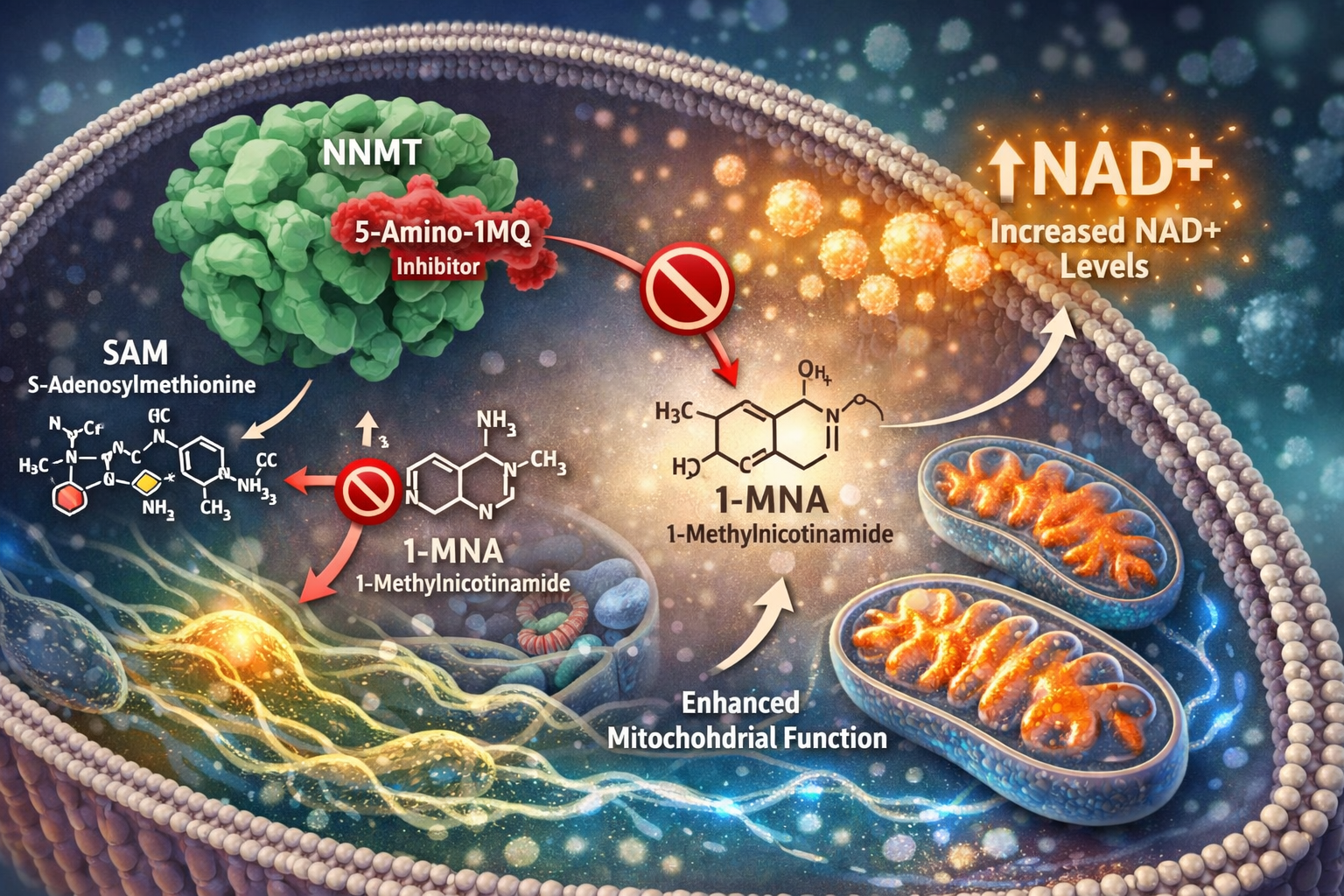
The scientific community’s fascination with 5-amino-1MQ stems from its targeted action on a specific enzyme: Nicotinamide N-methyltransferase, or NNMT. This enzyme plays a pivotal role in cellular metabolism by catalyzing the methylation of nicotinamide (a form of vitamin B3). In this biochemical reaction, NNMT utilizes S-adenosylmethionine (SAM) as a methyl donor, converting nicotinamide into 1-methylnicotinamide (1-MNA) and S-adenosylhomocysteine (SAH). While this process is a natural part of cellular function, research has increasingly linked overexpression of NNMT to various metabolic challenges, including obesity and metabolic disorders.
The core function of 5-amino-1MQ is to act as a potent and selective inhibitor of NNMT. By blocking the activity of this enzyme, 5-amino-1MQ theoretically prevents the conversion of nicotinamide into 1-MNA. This inhibition leads to a crucial metabolic cascade: an increase in the availability of intracellular nicotinamide, which subsequently boosts the levels of Nicotinamide Adenine Dinucleotide (NAD+) within cells. NAD+ is an indispensable coenzyme involved in hundreds of metabolic processes, including glycolysis, the Krebs cycle, and oxidative phosphorylation, all of which are essential for cellular energy production.
The Role of NAD+ and Sirtuins
Increased NAD+ levels are particularly significant because NAD+ is a critical substrate for a family of enzymes known as sirtuins. Sirtuins are NAD+-dependent deacetylases that play vital roles in regulating gene expression, DNA repair, mitochondrial biogenesis, and overall cellular stress responses. By enhancing NAD+ availability, 5-amino-1MQ is hypothesized to activate sirtuin pathways, thereby potentially bolstering cellular energy metabolism and optimizing mitochondrial function. This connection to NAD+ metabolism is why 5-amino-1MQ is often discussed in conjunction with other NAD+ precursors like NMN (nicotinamide mononucleotide). The combination of NMN + 5 amino 1-mq is an area of particular interest for researchers investigating synergistic effects on cellular health and longevity pathways. For researchers looking to acquire high-quality compounds, information on where to buy 5-amino-1MQ can be found through specialized suppliers.
The implications of NNMT inhibition extend beyond simply increasing NAD+. The enzyme's activity also affects the cellular pool of SAM, a universal methyl donor involved in a vast array of biochemical reactions, including epigenetic modifications. By influencing SAM availability, NNMT inhibition may indirectly impact epigenetic regulation, potentially altering gene expression patterns related to metabolism and aging. This intricate interplay underscores the complex yet targeted action of 5-amino-1MQ within the cellular machinery. Researchers continue to explore these multifaceted effects in various tissue types, given that NNMT expression levels differ significantly, with the highest concentrations typically found in adipose (fat) tissue and the liver, making these primary targets for 5-amino-1MQ's metabolic influence. Further insights into peptide research and their applications can be found at Pure Tested Peptides.
Preclinical Research and Observed Metabolic Effects of 5-Amino-1MQ
The scientific exploration of 5-amino-1MQ has largely been conducted in preclinical settings, primarily involving in vitro (cell culture) and in vivo (animal model) studies. These investigations have provided foundational insights into the compound's potential physiological effects, particularly concerning metabolic health.
Evidence from Animal Models
A significant body of research points to promising outcomes when NNMT activity is inhibited in animal models. Studies involving obese mice, for instance, have demonstrated that treatment with NNMT inhibitors like 5-amino-1MQ led to several noteworthy metabolic improvements. These include:
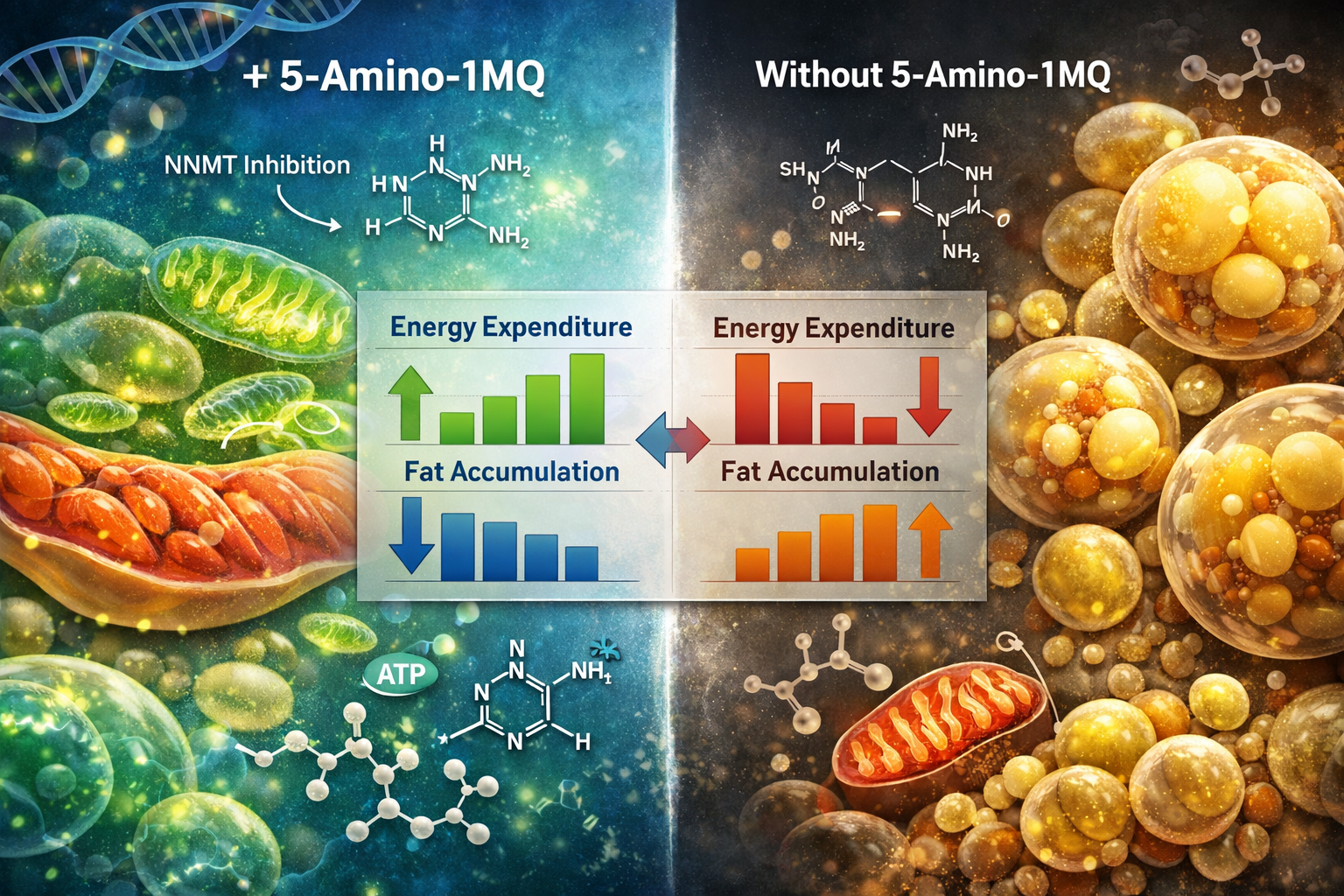
- Increased Energy Expenditure: Animals showed an observable increase in their metabolic rate, suggesting that their bodies were burning more calories. This effect is crucial for addressing obesity and managing body weight.
- Reduced Fat Accumulation: The inhibition of NNMT was associated with a decrease in the storage of fat, particularly in adipose tissue. This indicates a potential role for 5-amino-1MQ in mitigating adipogenesis (the formation of fat cells) and promoting lipolysis (the breakdown of fats).
- Improved Insulin Sensitivity: A hallmark of metabolic disorders is insulin resistance. Preclinical data indicates that NNMT inhibition can enhance the body's response to insulin, thereby improving glucose metabolism and reducing the risk factors associated with type 2 diabetes.
These findings suggest that 5-amino-1MQ could represent a novel approach to tackling metabolic dysfunction by targeting a specific enzyme pathway. The observed effects on energy expenditure and fat metabolism are particularly compelling, as they address core components of metabolic syndrome. Detailed data and research findings are often compiled, and summaries like those found on 5-Amino-1MQ Research Data offer valuable insights for researchers.
Exploring the Potential for Weight Management and Longevity
Given the preclinical evidence, 5-amino-1MQ has naturally attracted significant attention from communities focused on longevity and biohacking. The prospect of a compound that can enhance cellular energy metabolism and potentially contribute to weight loss is highly appealing. However, it is critical to emphasize that as of 2026, 5-amino-1MQ is not FDA-approved for human use as a therapeutic agent for weight loss or any other metabolic enhancement. Its current status is that of a research chemical, primarily available from specialized suppliers for laboratory study purposes.
The popularity surge of 5-amino-1MQ in peptide therapy and wellness circles since 2023-2024, despite the lack of regulatory approval and extensive human clinical trials, has raised valid concerns among medical professionals. They stress the importance of understanding that data derived from preclinical studies cannot be directly extrapolated to human efficacy and safety without robust clinical validation.
Research Considerations: Dosing and Administration
For researchers exploring 5-amino-1MQ in experimental settings, understanding typical administration methods and dosages is crucial. In research contexts, the compound is often administered via subcutaneous injection or oral capsules. While dosages in experimental animal models are carefully controlled, anecdotal reports from individuals using the compound experimentally sometimes mention ranges from 50-100mg daily. However, it is paramount to reiterate that optimal human dosing has not been established through rigorous, published clinical trials. This lack of standardized 5 amino 1 mq dosing underscores the importance of proceeding with caution and within the confines of a controlled research environment. Further exploration into a wide range of research peptides can be found at All Peptides for Sale. Researchers interested in acquiring this compound can explore options such as 5 amino 1 mq capsules for their studies.
The scientific literature continues to evolve, and while the preclinical data for 5-amino-1MQ is intriguing, a clear understanding of its long-term safety profiles and potential side effects in humans remains largely unknown. Most safety data available comes from short-term animal studies and the limited anecdotal reports circulating in experimental user forums (such as discussions about 5 amino 1 mq reddit, though these are not peer-reviewed scientific sources). Researchers must always prioritize ethical considerations and scientific rigor when working with such compounds.
Stacking Considerations: 5-Amino-1MQ with Other Research Peptides
In the realm of research chemicals, there's often discussion about combining various compounds to explore potential synergistic effects. For 5-amino-1MQ, given its role in metabolism, researchers sometimes consider its interaction with other well-known metabolic peptides. One notable area of interest is the potential combination with MOTS-c (Mitochondrial-derived peptide), a compound that also influences mitochondrial function and insulin sensitivity. Researchers might explore if a mots c stack could be enhanced or complemented by the metabolic actions of 5-amino-1MQ.
Similarly, the emerging peptide Retatrutide, which targets multiple metabolic pathways, has led to discussions around a retatrutide mots c stack. The question of "can you stack mots c with retatrutide" or even a broader "mots c and retatrutide stack" often arises in research forums. When considering these combinations, researchers postulate that 5-amino-1MQ, by enhancing NAD+ levels and energy metabolism, might provide a foundational metabolic boost that could synergize with the actions of peptides like MOTS-c. A mots c peptide stack, perhaps including 5-amino-1MQ, could theoretically offer a more comprehensive approach to studying metabolic enhancement. For researchers interested in the detailed properties of 5-amino-1MQ, specific product information is available such as the 5 amino 1 mq 5mg vial.
It's crucial to reiterate that these are speculative research avenues, and the scientific literature on the safety and efficacy of such stacks, particularly those involving 5-amino-1MQ, is limited. Any research involving combination therapies must be meticulously designed and executed, with careful consideration of the individual mechanisms of action and potential interactions. For instance, investigating a mots c retatrutide stack with the addition of 5-amino-1MQ would require a deep understanding of each compound's specific impact on cellular pathways to ensure meaningful and interpretable results. Researchers can explore various peptides, including MOTS-c, for their studies at Pure Tested Peptides.
Regulatory Status, Safety, and Future Research Directions
The landscape surrounding research chemicals like 5-amino-1MQ is often complex, marked by a distinction between compounds available for scientific investigation and those approved for clinical use. As of 2026, 5-amino-1MQ remains firmly in the category of a research chemical. This status implies several important considerations for both the scientific community and the general public.
Regulatory Landscape and Approvals
One of the most critical points to understand about 5-amino-1MQ is its regulatory status. It is not approved by the U.S. Food and Drug Administration (FDA) or similar regulatory bodies globally for use in humans. This means that its safety, efficacy, and appropriate 5 amino 1 mq dosage have not been rigorously evaluated through the extensive clinical trial process required for pharmaceutical drugs. The compound's availability through research chemical suppliers is strictly for in vitro and in vivo scientific study, not for human consumption.
The absence of completed large-scale human clinical trials published in peer-reviewed journals specifically examining the safety and efficacy of 5-amino-1MQ for weight loss or metabolic enhancement in humans is a significant gap in the current scientific understanding. While preclinical data is encouraging, it serves as a preliminary step, indicating potential avenues for further investigation rather than definitive proof of human benefit.
Knowns and Unknowns Regarding Safety
Due to the limited human studies, the full spectrum of potential side effects and long-term safety profiles of 5-amino-1MQ remains largely unknown. Most safety data comes from short-term animal research, which, while valuable, may not fully translate to human physiology. Anecdotal reports from individuals using the compound experimentally exist (often found in discussions like 5 amino 1 mq reddit threads), but these are not scientifically validated and cannot be considered reliable sources for safety information. Researchers engaged in studies involving this compound should be acutely aware of these limitations and implement robust safety protocols.
Potential areas of concern that require extensive investigation include:
- Hepatic (Liver) and Renal (Kidney) Impact: How does prolonged NNMT inhibition affect the function of these vital organs?
- Cardiovascular Effects: Are there any impacts on heart rate, blood pressure, or overall cardiovascular health?
- Hormonal Balance: Does altering NAD+ metabolism and epigenetic pathways indirectly influence hormonal regulation?
- Drug Interactions: How might 5-amino-1MQ interact with other medications or supplements?
- Long-term NAD+ Perturbation: What are the consequences of sustained elevation of NAD+ levels through NNMT inhibition over many years?
These questions highlight the need for extensive, well-designed human clinical trials before 5-amino-1MQ could ever be considered for therapeutic application. Exploring the broader field of applied wellness research with various peptides can provide context for these considerations, as discussed on Applied Wellness Research with Peptides.
Future Research Directions for 5-Amino-1MQ
Despite the current limitations, the scientific potential of 5-amino-1MQ is undeniable. Future research will likely focus on several key areas:
- Elucidating Full Mechanism of Action: While the inhibition of NNMT and the subsequent increase in NAD+ are well-established, a deeper understanding of all downstream cellular and molecular effects is necessary. This includes further exploration into its impact on epigenetics and specific metabolic pathways in different tissues.
- Targeted Delivery Systems: Investigating methods to deliver 5-amino-1MQ more efficiently and selectively to tissues where NNMT expression is highest (like adipose tissue and liver) could enhance its therapeutic potential and minimize off-target effects.
- Human Pharmacokinetics and Pharmacodynamics: Studies are needed to understand how the compound is absorbed, distributed, metabolized, and excreted in humans, as well as its precise effects on human biological systems at different 5 amino 1 mq dosage levels.
- Clinical Trials: Rigorous, placebo-controlled human clinical trials are the ultimate step to determine the safety and efficacy of 5-amino-1MQ for specific conditions, such as metabolic syndrome, obesity, or age-related metabolic decline. These trials would also establish appropriate 5 amino 1 mq dosing guidelines.
- Synergistic Combinations: Further preclinical and eventually clinical research into the effects of combining 5-amino-1MQ with other metabolic enhancers, such as NMN or peptides like MOTS-c, could reveal novel therapeutic strategies. For example, understanding the optimal synergy of NMN + 5 amino 1-mq or developing effective mots c stack protocols will be crucial. Resources like 5-Amino-1MQ Overview provide a good starting point for researchers.
The journey from a promising research chemical to a clinically approved therapeutic is long and arduous, requiring substantial investment in research and development. The scientific community remains cautiously optimistic about the potential of 5-amino-1MQ but emphasizes the need for continued, ethical, and thorough research. For researchers actively involved in this field, Pure Tested Peptides offers a range of high-quality research chemicals, including 5-amino-1MQ.
Conclusion
The exploration of 5-amino-1MQ represents an exciting frontier in metabolic research for 2026 and beyond. As a selective inhibitor of the NNMT enzyme, it holds considerable promise for influencing cellular energy metabolism, NAD+ levels, and potentially addressing challenges associated with metabolic disorders such as obesity and insulin resistance. Preclinical studies have painted an intriguing picture, demonstrating increased energy expenditure, reduced fat accumulation, and improved insulin sensitivity in animal models, positioning 5-amino-1MQ as a compound of high scientific interest.
However, it is paramount to reiterate that despite its growing popularity in certain non-clinical communities, 5-amino-1MQ remains a research chemical. As of 2026, it is not approved by regulatory bodies like the FDA for human therapeutic use, and comprehensive human clinical trials are yet to be completed and published in peer-reviewed journals. This distinction is critical, emphasizing that the positive findings from preclinical research serve as a foundation for further scientific inquiry, not as a green light for human application outside of controlled research environments.
Researchers are actively investigating its detailed mechanisms, optimal 5 amino 1 mq dosage, long-term safety profiles, and potential synergistic effects with other compounds like NMN (nmn + 5 amino 1-mq) and various peptides that constitute a mots c stack. The scientific rigor applied to these ongoing investigations will be crucial in determining the true therapeutic potential and safety of 5-amino-1MQ.
Actionable Next Steps for Researchers:
- Consult Peer-Reviewed Literature: Prioritize information from established scientific journals for the most accurate and up-to-date research on 5-amino-1MQ.
- Ensure Research Grade Purity: When sourcing 5-amino-1MQ (e.g., 5 amino 1 mq capsules, 5 amino 1 mq dosage, or 5 amino 1 mq peptide), ensure it is obtained from reputable suppliers specializing in research chemicals to guarantee purity and quality for your experiments. For reliable sources, consider Pure Tested Peptides.
- Adhere to Ethical Guidelines: All research involving 5-amino-1MQ must strictly follow institutional and national ethical guidelines for the use of research chemicals, particularly in animal models.
- Support Clinical Research: The ultimate understanding of 5-amino-1MQ's role in human health will come from well-designed and executed human clinical trials. Supporting and advocating for such research is vital.
- Stay Informed: The field of metabolic research is dynamic. Continuously monitor new publications and scientific developments regarding NNMT inhibitors and related compounds.
By adhering to these principles, the scientific community can responsibly explore the promising avenues offered by 5-amino-1MQ, moving closer to a comprehensive understanding of its potential benefits and risks in the pursuit of enhanced metabolic health.
Meta Title: 5 Amino 1MQ: Research, Metabolism & 2026 Insights
Meta Description: Explore 5 amino 1 mq's role as an NNMT inhibitor, its metabolic effects, and current research in 2026. Understand its science, dosing, and future.