
Can You Stack MOTS-c with Retatrutide? Exploring the Research Landscape in 2026

The realm of metabolic research is constantly evolving, with novel peptides offering exciting avenues for understanding and potentially addressing complex health challenges. Among these, MOTS-c and Retatrutide have garnered significant attention, each for their unique mechanisms and potential benefits. As researchers delve deeper into their individual properties, a pressing question arises: can you stack MOTS-c with Retatrutide? This article aims to provide a comprehensive, research-backed exploration into this query, examining the current scientific understanding of both compounds and the theoretical implications of combining them, particularly in 2026.
Researchers and scientists are continuously seeking synergistic approaches to complex biological systems. While the individual actions of MOTS-c, a mitochondrial-derived peptide, and Retatrutide, a triple agonist, present compelling cases for metabolic improvement, the concept of a mots c stack or a retatrutide mots c stack requires careful scientific scrutiny. It's crucial to approach such combinations with an understanding of their distinct pathways and the current limitations of published data.
Key Takeaways
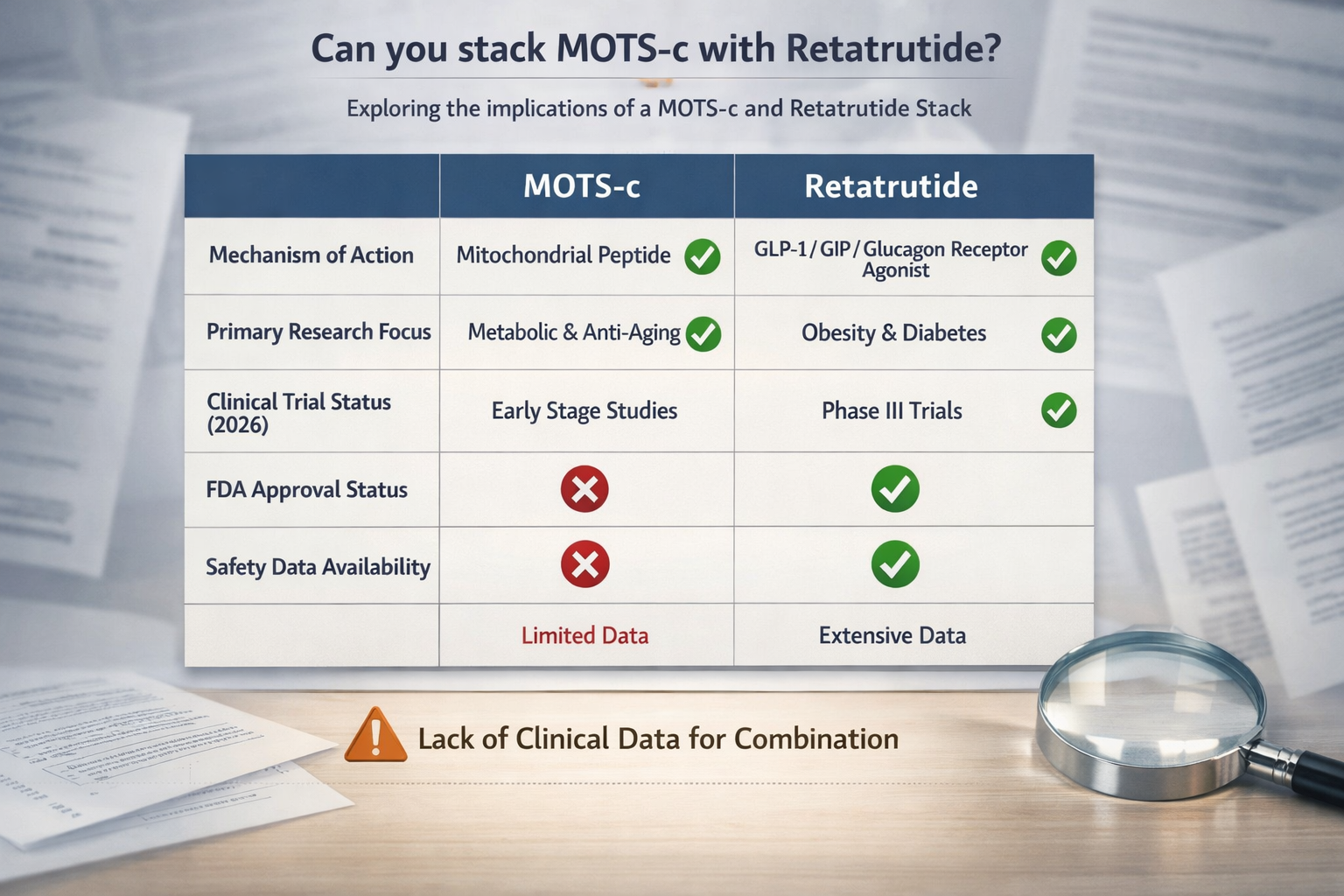
- No Clinical Data Exists (as of 2026): There are currently no published clinical studies or peer-reviewed research specifically examining the safety or efficacy of combining MOTS-c with Retatrutide in human subjects.
- Distinct Mechanisms of Action: MOTS-c primarily influences metabolic health through mitochondrial function and AMPK pathway activation, while Retatrutide acts as a triple agonist for GIP, GLP-1, and glucagon receptors to regulate appetite and glucose.
- Investigational Status: Both MOTS-c and Retatrutide are investigational compounds. Retatrutide is in clinical trials by Eli Lilly, while MOTS-c is largely available through research channels.
- Theoretical Synergy is Speculative: While a theoretical rationale for combining these agents might involve targeting different metabolic pathways, this remains entirely speculative without robust clinical evidence.
- Caution Advised: Medical and research experts generally advise against combining investigational peptides without clinical supervision due to the lack of safety data, potential for unknown interactions, and unpredictable metabolic responses.
Understanding MOTS-c: A Mitochondrial Maestro
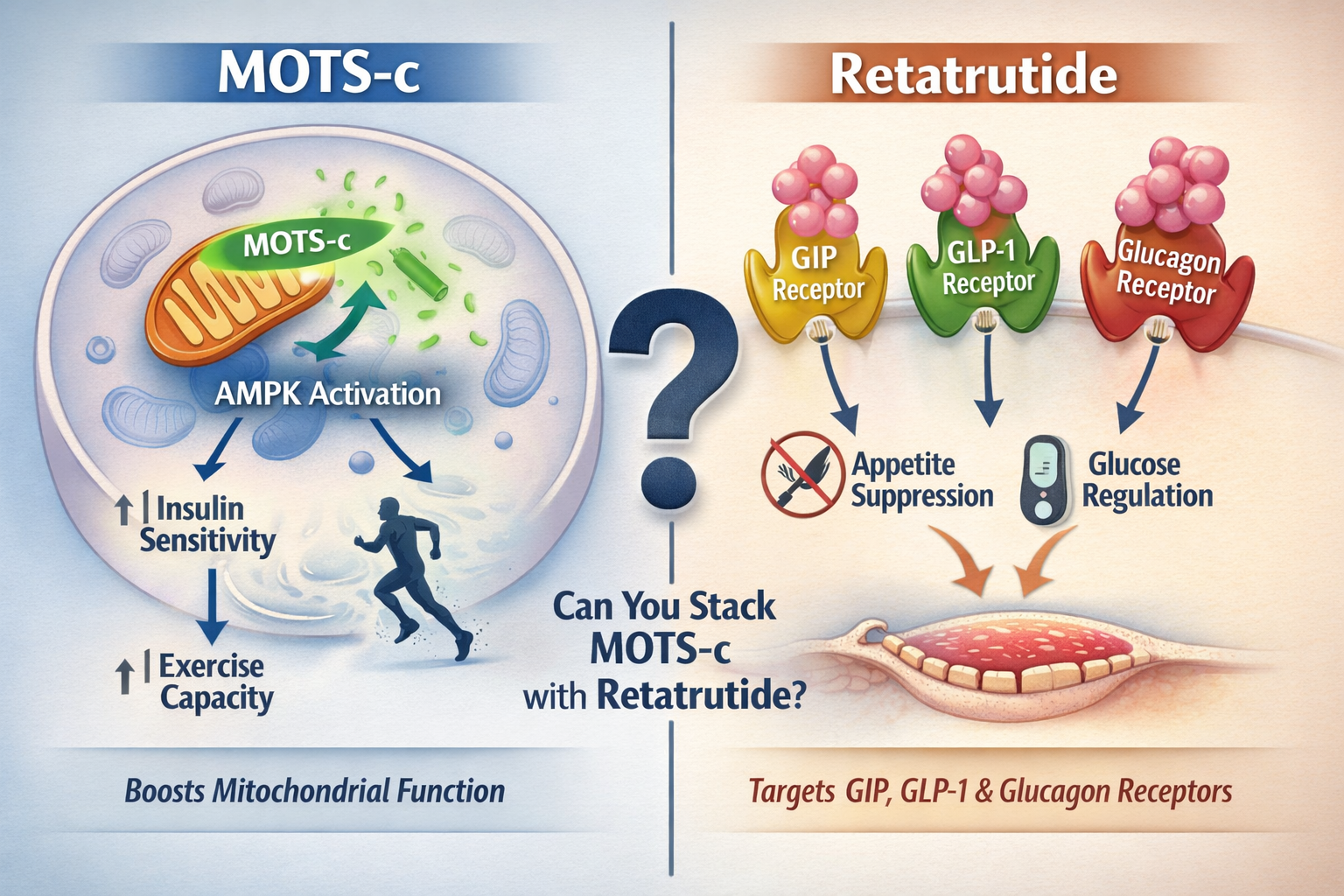
MOTS-c, or Mitochondrial Open Reading Frame of the 12S rRNA-c, is a fascinating mitochondrial-derived peptide composed of 16 amino acids. Its discovery has opened new doors in understanding how cellular metabolism is regulated, particularly through the powerhouse of the cell: the mitochondria.
The Role of Mitochondria in Metabolic Health
Mitochondria are often referred to as the "power plants" of our cells, responsible for generating adenosine triphosphate (ATP), the primary energy currency. Beyond energy production, they play critical roles in various cellular processes, including signaling, differentiation, and apoptosis (programmed cell death). Dysfunction in mitochondrial activity is implicated in a wide range of metabolic disorders, including type 2 diabetes, obesity, and age-related decline.
How MOTS-c Exerts Its Effects
MOTS-c works primarily through the activation of the AMP-activated protein kinase (AMPK) pathway. AMPK is a master regulator of energy homeostasis, often described as the "fuel gauge" of the cell. When activated, AMPK promotes catabolic processes that generate ATP (like fatty acid oxidation and glucose uptake) and inhibits anabolic processes that consume ATP (like protein synthesis and lipid synthesis).
Key actions of MOTS-c in preclinical studies include:
- Improved Insulin Sensitivity: By enhancing glucose uptake in skeletal muscle and liver cells, MOTS-c has shown promise in preclinical models for mitigating insulin resistance. This is a critical factor in managing or preventing type 2 diabetes.
- Enhanced Exercise Capacity: Studies have indicated that MOTS-c may improve physical performance and endurance, potentially by optimizing mitochondrial function and energy utilization during physical activity.
- Metabolic Homeostasis: It is believed to help maintain overall metabolic balance, influencing lipid metabolism and reducing fat accumulation in various tissues.
The research surrounding MOTS-c suggests its potential as a metabolic regulator, making it an interesting subject for those studying metabolic health and the mechanisms behind conditions like obesity and insulin resistance. For researchers interested in exploring related metabolic agents, 5-Amino-1MQ is another compound that has garnered attention for its potential role in inhibiting NNMT and influencing metabolic pathways. The understanding of peptides like MOTS-c and 5 amino 1 mq is crucial for advancing the field.
Current Status of MOTS-c Research (2026)
As of 2026, MOTS-c remains an investigational compound. While preclinical studies, primarily in animal models, have yielded promising results, human clinical trial data is still limited when compared to FDA-approved therapies. It is available mainly through research channels, and its use is strictly for laboratory and scientific investigation, not for human consumption. Researchers seeking to understand the broad spectrum of peptides available for study might find our detailed catalog helpful at Pure Tested Peptides. Understanding the proper dosage for research, like 5 amino 1 mq dosing, is paramount for accurate study outcomes.
Decoding Retatrutide: A Triple Agonist Powerhouse
Retatrutide represents a new frontier in the treatment of obesity and type 2 diabetes. Developed by Eli Lilly and Company, it is a triple agonist peptide, meaning it simultaneously activates three crucial hormone receptors involved in metabolic regulation.
The Power of Triple Agonism
Retatrutide's unique strength lies in its ability to engage three distinct but interconnected metabolic pathways:
- GIP (Glucose-dependent insulinotropic polypeptide) Receptor: GIP is an incretin hormone that stimulates insulin secretion in a glucose-dependent manner and plays a role in fat metabolism.
- GLP-1 (Glucagon-like peptide-1) Receptor: GLP-1 is another incretin hormone known for stimulating insulin release, suppressing glucagon secretion, slowing gastric emptying, and promoting satiety. These actions collectively lead to improved glycemic control and weight loss.
- Glucagon Receptor: While glucagon traditionally raises blood glucose, its activation in this context is complex. In combination with GIP and GLP-1 agonism, activating the glucagon receptor can lead to increased energy expenditure and potentially further weight loss benefits.
By targeting these three receptors simultaneously, Retatrutide aims to achieve a more comprehensive and potent metabolic effect compared to single or dual agonist therapies. The intricate dance of these receptors under the influence of Retatrutide contributes to its significant impact on metabolism. For researchers studying metabolic regulation, exploring other synergistic peptide blends, such as those found on peptide blends research, can provide valuable insights.
Retatrutide's Impact on Weight Loss and Glucose Control
Phase 2 clinical trials for Retatrutide have demonstrated remarkably significant results, particularly concerning weight loss. Data presented in 2023 indicated that participants receiving the highest dose (12 mg) achieved an average body weight reduction of up to 24% over 48 weeks. This level of weight loss is unprecedented for pharmacological interventions currently available or in advanced stages of development, positioning Retatrutide as a potential game-changer. The peptide's effects also extend to improved glycemic control in individuals with type 2 diabetes.
Common Side Effects of Retatrutide
As with other GLP-1 receptor agonists, Retatrutide's common side effects primarily involve the gastrointestinal system. These include:
- Nausea
- Diarrhea
- Vomiting
- Constipation
These side effects are generally dose-dependent and tend to decrease over time as the body adjusts to the medication. However, their presence highlights the importance of careful monitoring in any clinical or research setting.
Current Status of Retatrutide Research (2026)
As of 2026, Retatrutide is still in clinical trial phases. While the Phase 2 data is highly encouraging, it has not yet received FDA approval for commercial use. Its availability is limited to ongoing clinical trials, and it is not available for general use or purchase. The excitement surrounding this compound underscores the rapid advancements in peptide research for metabolic conditions.
Can You Stack MOTS-c with Retatrutide? The Current Scientific Stance
Given the compelling individual profiles of MOTS-c and Retatrutide, the question of whether one can stack MOTS-c with Retatrutide is a natural one for researchers. The theoretical appeal might lie in combining distinct metabolic pathways to achieve enhanced effects. However, the current scientific stance is clear and unequivocal: there is no published clinical research or peer-reviewed studies specifically examining the safety or efficacy of such a combination in human subjects.
Absence of Clinical Evidence
The most critical factor preventing any recommendation or even informed speculation about combining these two compounds is the complete lack of dedicated research. As of 2026, scientific literature does not contain studies investigating:
- Drug-drug interactions: How MOTS-c might interact with Retatrutide at a pharmacokinetic (how the body processes them) or pharmacodynamic (how they affect the body) level.
- Additive or Synergistic Side Effects: Whether combining them could lead to an exacerbation of known side effects, or introduce new, unexpected adverse reactions.
- Combined Efficacy: If the theoretical benefits of targeting mitochondrial function alongside incretin agonism would indeed translate into superior metabolic outcomes compared to using either compound alone.
- Optimal Dosing for Combination: Even if a theoretical benefit existed, determining safe and effective dosages for a combined protocol would require extensive study.
Without this fundamental research, any attempt to create a mots c and retatrutide stack moves into uncharted and potentially risky territory. The scientific community relies on rigorous, controlled studies to establish safety and efficacy, a standard that is currently unmet for this particular combination.
Distinct Mechanisms, Unknown Interactions
While both peptides influence metabolic health, their primary mechanisms of action are distinct:
| Feature | MOTS-c | Retatrutide |
|---|---|---|
| Primary Mechanism | AMPK activation, mitochondrial function | GIP, GLP-1, Glucagon receptor triple agonism |
| Key Targets | Skeletal muscle, liver, metabolic pathways | Pancreas, brain, gut, adipose tissue |
| Focus | Insulin sensitivity, exercise capacity, mitochondrial health | Appetite regulation, glucose homeostasis, energy expenditure, weight loss |
The theoretical rationale for a mots c peptide stack involving Retatrutide would be to leverage these different pathways. For example, one might speculate that improving mitochondrial health with MOTS-c could enhance cellular responsiveness, potentially amplifying the effects of Retatrutide on glucose uptake or energy expenditure. Conversely, Retatrutide's significant impact on appetite and overall metabolism might create an environment where MOTS-c's more subtle effects on cellular energy are optimized. However, these are merely hypotheses. The body's metabolic system is incredibly complex, and interactions between pathways are not always straightforward or predictable. Introducing two powerful metabolic regulators could lead to unforeseen compensations or dysregulations.
Expert Recommendations and Safety Concerns
Medical experts and regulatory bodies generally advise extreme caution when considering the combination of investigational or off-label peptides without robust clinical supervision and data. The lack of safety data for a mots c retatrutide stack poses several significant risks:
- Unpredictable Metabolic Effects: The interaction between two potent metabolic modulators could lead to unintended consequences, such as severe hypoglycemia, electrolyte imbalances, or alterations in hormone levels that are not yet understood.
- Exacerbation of Side Effects: Retatrutide already has known gastrointestinal side effects. It is unknown if MOTS-c could amplify these or introduce new ones.
- Organ Stress: Any compound that significantly alters metabolic function can place stress on organs like the liver, kidneys, and pancreas. Combining agents without understanding their cumulative impact could increase this risk.
- Lack of Regulatory Oversight: Since neither compound is FDA-approved for commercial use, especially not in combination, there is no regulatory framework to ensure the safety, purity, or consistent dosing for such a stack if sourced outside of controlled clinical trials.
For researchers interested in sourcing high-quality peptides for independent study, it is paramount to use reputable suppliers. Organizations like Pure Tested Peptides provide research-grade peptides, emphasizing the importance of quality control for accurate research outcomes. Understanding the best practices for storing research peptides is also vital for maintaining their integrity, a topic further elaborated in best practices for storing research peptides.
Broader Context of Peptide Stacking in Research
The concept of "stacking" peptides is common in research, especially when investigating potential synergies between compounds that target different biological pathways. For instance, researchers might explore combinations of compounds like AOD9604 and MOTS-c to investigate their combined effects on metabolism and fat breakdown. Similarly, the synergy of peptides like LL37 and MOTS-c is also an area of scientific interest, focusing on different aspects such as immune modulation and metabolic health.
However, each potential stack requires dedicated scientific inquiry. The mere theoretical possibility of synergy does not equate to proven safety or efficacy. Researchers exploring the broader landscape of peptide research can find valuable resources on topics like building a diverse peptide library with Pure Tested Peptides, which emphasizes the need for quality and variety in investigational compounds.
When considering research with peptides, whether individually or in combinations, several key principles apply:
- Gradual Introduction: Introduce one compound at a time to monitor individual responses before considering combinations.
- Start Low, Go Slow: Begin with the lowest effective research dosage and gradually increase, observing effects carefully.
- Rigorous Data Collection: Maintain meticulous records of administration, observed effects, and any adverse reactions.
- Source Purity: Always obtain research peptides from trusted sources that provide verified purity and concentration, like Pure Tested Peptides. This is crucial for the integrity of any study.
- Ethical Considerations: Ensure all research adheres to ethical guidelines, prioritizing safety and responsible scientific practice.
The exploration of 5-amino-1 mq peptides for sale is another example of a growing area of interest for researchers looking into compounds that may impact metabolic health. Whether it's 5 amino 1 mq, MOTS-c, or Retatrutide, understanding each compound's unique properties and potential interactions is vital.
The Future of Metabolic Peptide Research
The landscape of metabolic peptide research is dynamic and promising. Compounds like MOTS-c and Retatrutide represent significant advancements in our understanding of how to influence complex biological systems to improve health outcomes. As of 2026, Retatrutide continues its journey through clinical trials, with a strong potential to become a revolutionary treatment for obesity and type 2 diabetes. MOTS-c, while earlier in its research trajectory for human application, continues to be a subject of intense preclinical investigation, deepening our knowledge of mitochondrial biology and its therapeutic potential.
For those conducting research, the availability of high-quality investigational compounds is paramount. Reputable suppliers like Pure Tested Peptides play a crucial role in providing the necessary tools for scientists to carry out their studies. Researchers interested in specific metabolic peptides will find extensive information and products, including 5-amino-1mq, which is another promising area of metabolic study. Many researchers also discuss their findings and experiences with compounds like 5 amino 1 mq reddit threads, highlighting the collaborative nature of the research community. The ongoing investigation into compounds like nmn + 5 amino 1-mq also illustrates the drive to understand synergistic effects on cellular energy and metabolism. Further research into peptide interactions will undoubtedly lead to new discoveries, but these must be grounded in robust scientific methodology.
Conclusion
The question, can you stack MOTS-c with Retatrutide, is a reflection of the exciting possibilities within metabolic peptide research. Both MOTS-c and Retatrutide are powerful compounds, each demonstrating significant potential to impact metabolic health through distinct mechanisms. MOTS-c influences mitochondrial function and the AMPK pathway, while Retatrutide acts as a triple agonist on GIP, GLP-1, and glucagon receptors.
However, as of 2026, there is no scientific evidence, specifically no published clinical trials, that supports the safety or efficacy of combining these two investigational peptides. The theoretical rationale for combining them, while intriguing, remains purely speculative without rigorous scientific investigation. Expert consensus strongly advises against using such combinations outside of controlled research settings, primarily due to the unknown potential for adverse interactions, additive side effects, and unpredictable metabolic responses.
For researchers, the path forward involves continued, independent study of each compound. Understanding the intricate workings of MOTS-c and the impressive efficacy of Retatrutide on their own is the foundational step. Only after comprehensive individual safety and efficacy profiles are established, and specific mechanisms of action are fully elucidated, can well-designed studies begin to explore potential synergistic combinations. Until then, caution, adherence to ethical research practices, and reliance on peer-reviewed data must guide all scientific inquiry into a mots c stack or a retatrutide mots c stack.
Actionable Next Steps for Researchers:
- Prioritize Individual Research: Focus on thoroughly understanding each peptide (MOTS-c and Retatrutide) independently before considering combinations.
- Consult Scientific Literature: Regularly review new publications for any emerging data on these compounds or similar peptide combinations.
- Source High-Quality Peptides: Always obtain research-grade peptides from reputable suppliers like Pure Tested Peptides to ensure purity and consistency in your studies.
- Adhere to Research Protocols: Design and execute studies with strict adherence to scientific methodology and ethical guidelines.
- Monitor for New Clinical Trials: Stay updated on the progress of Retatrutide's clinical trials and any future trials involving MOTS-c. The development of compounds like 5 amino 1 mq peptide also merits close attention for related research.
Meta Title: Can You Stack MOTS-c with Retatrutide? Research Insights 2026
Meta Description: Explore if you can stack MOTS-c with Retatrutide. Understand the science, mechanisms, and lack of clinical data for this peptide combination in 2026.