
The Complete Guide to BPC-157 TB 500: Revolutionary Research Peptides for Advanced Studies
Imagine having access to two of the most studied regenerative peptides in modern research – compounds that have captured the attention of scientists worldwide for their remarkable potential in tissue repair and healing studies. The combination of BPC-157 TB 500 represents a groundbreaking approach to peptide research that's transforming how we understand cellular regeneration and recovery mechanisms.
As a researcher exploring cutting-edge peptide science, I've witnessed firsthand the growing interest in BPC-157 and TB-500 combinations. These powerful research compounds have become essential tools for scientists investigating tissue healing, cellular repair, and regenerative processes. The synergistic potential of BPC-157 TB 500 offers unprecedented opportunities for advancing our understanding of how peptides can influence biological systems.
Key Takeaways
• BPC-157 TB 500 combinations represent two of the most researched regenerative peptides available for scientific study
• Both peptides demonstrate unique mechanisms of action that complement each other in research applications
• Proper storage, handling, and research protocols are essential for maintaining peptide integrity and research validity
• High-quality sourcing from reputable suppliers ensures consistent research outcomes and data reliability
• These peptides are exclusively for research purposes and not intended for human consumption
Understanding BPC-157: The "Body Protection Compound"
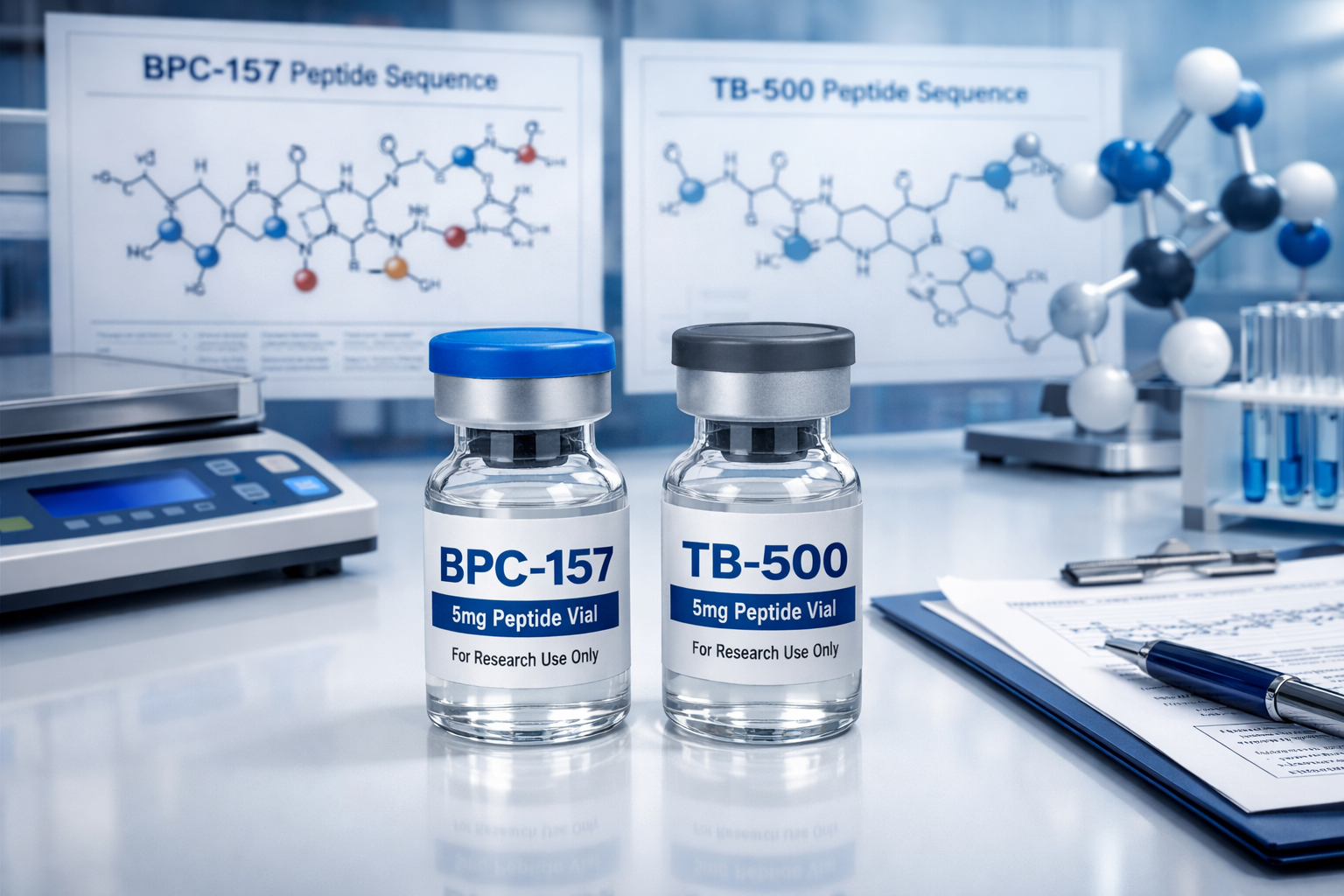
BPC-157, scientifically known as Body Protection Compound-157, is a synthetic peptide derived from a protein found in human gastric juice. This remarkable 15-amino acid sequence has garnered significant attention in research circles for its stability and unique properties in laboratory studies.
The Science Behind BPC-157
BPC-157 is a partial sequence of body protection compound (BPC) that was first isolated from human gastric juice. What makes this peptide particularly interesting to researchers is its exceptional stability – it remains active in human gastric juice, doesn't degrade when exposed to digestive enzymes, and maintains its structure across various pH levels.
The peptide's molecular structure consists of:
- 15 amino acids in a specific sequence
- Molecular weight of approximately 1,419 Da
- Chemical formula C62H98N16O22
- Exceptional stability in various biological environments
Research Applications of BPC-157
Scientists have extensively studied BPC-157 in various research models, focusing on:
Tissue Repair Studies 🔬
- Tendon and ligament research
- Muscle tissue investigations
- Bone healing studies
- Vascular research
Cellular Mechanism Research
- Angiogenesis pathway studies
- Growth factor interactions
- Cellular signaling research
- Inflammatory response investigations
Gastrointestinal Research
- Gastric protection studies
- Intestinal healing research
- Digestive system investigations
- Barrier function studies
For researchers interested in BPC-157 peptide studies, understanding these fundamental mechanisms is crucial for designing effective research protocols.
TB-500: The Thymosin Beta-4 Fragment
TB-500 is a synthetic peptide that represents the active region of Thymosin Beta-4, a naturally occurring protein found in virtually all human and animal cells. This 43-amino acid peptide has become a cornerstone of regenerative research due to its unique properties and research applications.
TB-500 Molecular Characteristics
TB-500 contains the active sequence of Thymosin Beta-4, specifically:
- 43 amino acids in the active sequence
- Molecular weight of approximately 4,963 Da
- High bioavailability in research models
- Excellent stability under proper storage conditions
Research Focus Areas for TB-500
The scientific community has concentrated TB-500 research in several key areas:
Cellular Migration Studies
- Cell movement and positioning research
- Tissue organization investigations
- Wound healing model studies
- Cellular communication research
Angiogenesis Research
- Blood vessel formation studies
- Vascular development research
- Circulation improvement investigations
- Endothelial cell studies
Anti-inflammatory Research
- Inflammatory response studies
- Cytokine interaction research
- Immune system investigations
- Healing pathway studies
Researchers can explore comprehensive information about TB-500 benefits to better understand its research applications.
The Synergistic Potential of BPC-157 TB 500 Combinations
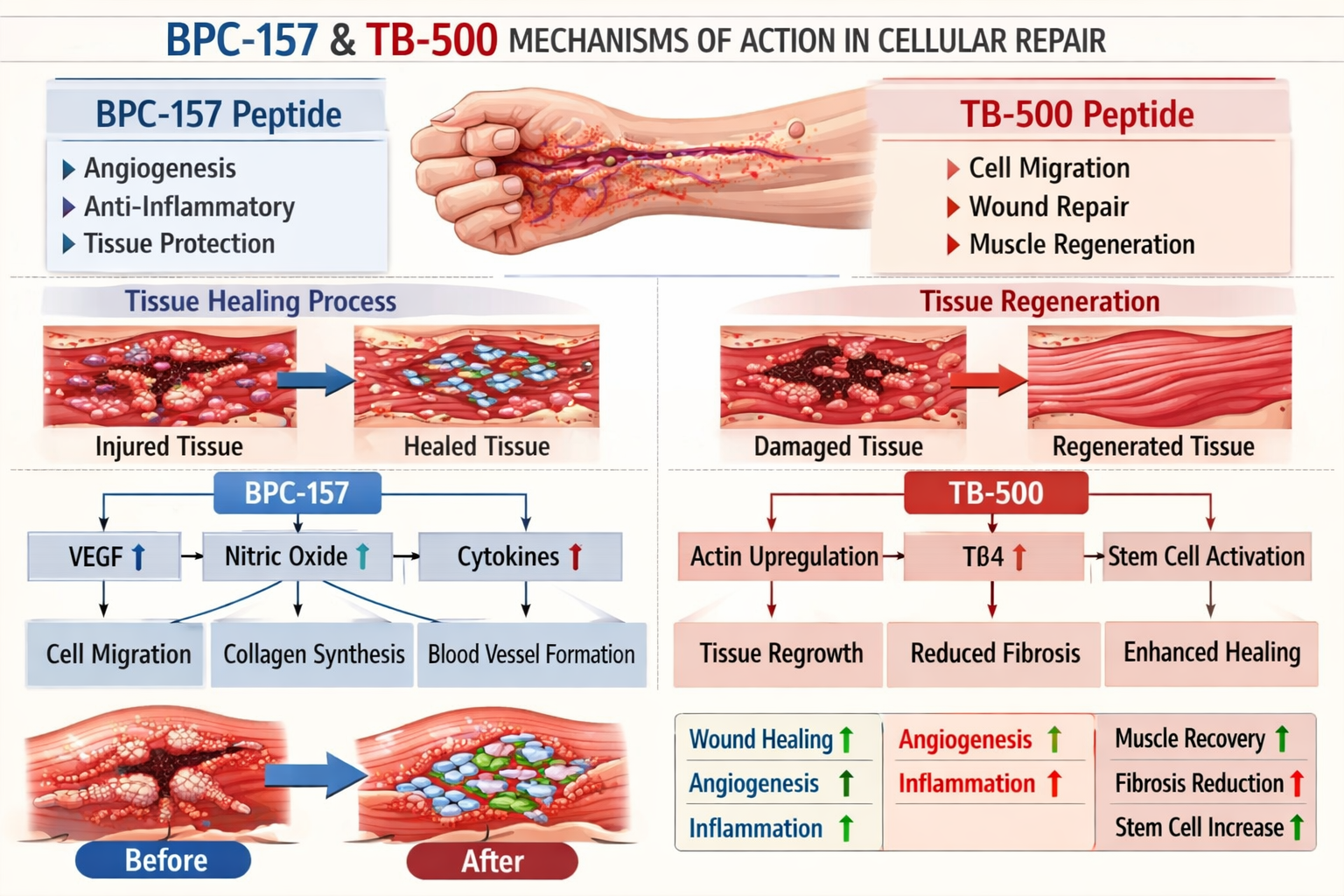
The combination of BPC-157 TB 500 has emerged as one of the most promising areas of peptide research, with scientists investigating how these compounds might work together to enhance research outcomes.
Complementary Mechanisms
When researchers study BPC-157 and TB-500 together, they observe several complementary mechanisms:
Enhanced Tissue Research Models
- BPC-157's gastric-derived properties complement TB-500's cellular migration effects
- Different pathway activations that may work synergistically
- Broader research applications when used in combination
- Enhanced stability profiles in research environments
Research Protocol Advantages
- Simplified dosing schedules for research studies
- Reduced complexity in multi-peptide research designs
- Cost-effective research approaches
- Streamlined data collection processes
Popular BPC-157 TB 500 Research Combinations
Scientists typically investigate several combination approaches:
| Combination Type | BPC-157 Amount | TB-500 Amount | Research Focus |
|---|---|---|---|
| Standard Research | 5mg | 5mg | General tissue studies |
| Intensive Studies | 10mg | 10mg | Extended research protocols |
| Micro-dosing Research | 2.5mg | 2.5mg | Precision studies |
| Custom Protocols | Variable | Variable | Specialized research |
Researchers interested in BPC-157 and TB500 combinations can find detailed information about these research approaches.
Research Protocols and Best Practices for BPC-157 TB 500
Establishing proper research protocols is essential for obtaining reliable, reproducible results when working with BPC-157 TB 500 combinations. As someone who has reviewed countless research studies, I can't emphasize enough how critical proper methodology is for valid scientific outcomes.
Preparation and Reconstitution Protocols
Equipment Requirements:
- Sterile bacteriostatic water
- Precision analytical scales
- Sterile syringes and needles
- Clean work environment
- Proper storage containers
Step-by-Step Reconstitution Process:
-
Preparation Phase
- Ensure sterile working environment
- Allow peptides to reach room temperature
- Prepare bacteriostatic water
- Gather all necessary equipment
-
Reconstitution Process
- Add bacteriostatic water slowly to peptide vial
- Allow natural dissolution without shaking
- Gently swirl if necessary
- Avoid creating foam or bubbles
-
Storage Preparation
- Label vials with preparation date
- Store in appropriate temperature conditions
- Document concentration calculations
- Maintain detailed research logs
Research Dosing Protocols
Research institutions typically follow these general guidelines for BPC-157 TB 500 studies:
Standard Research Protocols:
- Frequency: Daily administration in research models
- Duration: 2-4 week research cycles
- Timing: Consistent daily timing for data integrity
- Documentation: Detailed research logs and observations
Advanced Research Considerations:
- Baseline measurements before research initiation
- Regular monitoring throughout research periods
- Control group establishment for comparative studies
- Statistical analysis planning for data interpretation
For researchers seeking comprehensive guidance, best practices for storing research peptides provides essential information for maintaining peptide integrity.
Research Documentation and Data Collection
Proper documentation is crucial for valid research outcomes:
Essential Research Records:
- Peptide lot numbers and certificates of analysis
- Preparation dates and methods
- Storage conditions and temperatures
- Research protocol adherence
- Observation schedules and results
Quality Control Measures:
- Regular peptide integrity testing
- Storage condition monitoring
- Equipment calibration records
- Research protocol compliance checks
Sourcing High-Quality BPC-157 TB 500 Research Peptides
The foundation of any successful research project lies in the quality of materials used. When it comes to BPC-157 TB 500 research, sourcing from reputable suppliers is absolutely critical for obtaining reliable, reproducible results.
Why Pure Tested Peptides Leads the Industry
As the #1 most trusted US peptide supplier, Pure Tested Peptides has established itself as the gold standard for research-grade peptides. Here's what sets them apart:
Quality Assurance Standards:
- Third-party laboratory testing for every batch
- Certificates of analysis provided with each product
- Purity levels consistently exceeding 98%
- Rigorous quality control processes
Research-Grade Standards:
- Pharmaceutical-grade manufacturing facilities
- Strict contamination prevention protocols
- Consistent peptide concentrations
- Reliable supply chain management
Customer Support Excellence:
- Expert technical support for research applications
- Detailed product documentation
- Research protocol guidance
- Responsive customer service team
Available BPC-157 TB 500 Product Options
Pure Tested Peptides offers comprehensive options for researchers:
Individual Peptides:
- BPC-157 for sale in various concentrations
- TB-500 research peptides with detailed specifications
- Multiple vial sizes for different research needs
- Bulk pricing for institutional research
Combination Products:
- Pre-mixed BPC-157 TB 500 combinations
- Custom ratio formulations
- Research-optimized concentrations
- Convenient packaging for research protocols
Research Support Materials:
- Bacteriostatic water for reconstitution
- Sterile syringes and supplies
- Storage solutions and containers
- Research documentation templates
Product Quality Verification
When researchers buy peptides online, they should expect:
Certificate of Analysis (COA) Information:
- Exact purity percentages
- Molecular weight confirmation
- Contamination testing results
- Storage and handling recommendations
Batch Testing Results:
- HPLC analysis data
- Mass spectrometry confirmation
- Endotoxin testing results
- Sterility verification
Packaging and Shipping Standards:
- Temperature-controlled shipping
- Protective packaging materials
- Tracking and delivery confirmation
- Cold chain maintenance
For researchers seeking reliable peptides for sale, Pure Tested Peptides provides the quality assurance necessary for valid scientific research.
<!DOCTYPE html>
<html lang="en">
<head>
    <meta charset="UTF-8">
    <meta name="viewport" content="width=device-width, initial-scale=1.0">
    <title>BPC-157 TB-500 Research Calculator</title>
    <style>
        .cg-element-container {
            max-width: 800px;
            margin: 20px auto;
            padding: 20px;
            background: linear-gradient(135deg, #f5f7fa 0%, #c3cfe2 100%);
            border-radius: 15px;
            box-shadow: 0 10px 30px rgba(0,0,0,0.1);
            font-family: 'Segoe UI', Tahoma, Geneva, Verdana, sans-serif;
        }

        .cg-element-header {
            text-align: center;
            margin-bottom: 30px;
        }

        .cg-element-title {
            color: #2c3e50;
            font-size: 28px;
            font-weight: bold;
            margin-bottom: 10px;
        }

        .cg-element-subtitle {
            color: #7f8c8d;
            font-size: 16px;
        }

        .cg-element-calculator {
            display: grid;
            grid-template-columns: 1fr 1fr;
            gap: 30px;
            margin-bottom: 30px;
        }

        .cg-element-peptide-section {
            background: white;
            padding: 25px;
            border-radius: 10px;
            box-shadow: 0 5px 15px rgba(0,0,0,0.08);
        }

        .cg-element-peptide-title {
            color: #34495e;
            font-size: 20px;
            font-weight: bold;
            margin-bottom: 20px;
            text-align: center;
        }

        .cg-element-input-group {
            margin-bottom: 15px;
        }

        .cg-element-label {
            display: block;
            margin-bottom: 5px;
            color: #2c3e50;
            font-weight: 600;
        }

        .cg-element-input {
            width: 100%;
            padding: 12px;
            border: 2px solid #ecf0f1;
            border-radius: 8px;
            font-size: 16px;
            transition: border-color 0.3s ease;
        }

        .cg-element-input:focus {
            outline: none;
            border-color: #3498db;
        }

        .cg-element-results {
            background: white;
            padding: 25px;
            border-radius: 10px;
            box-shadow: 0 5px 15px rgba(0,0,0,0.08);
            margin-top: 20px;
        }

        .cg-element-results-title {
            color: #2c3e50;
            font-size: 22px;
            font-weight: bold;
            margin-bottom: 20px;
            text-align: center;
        }

        .cg-element-result-item {
            display: flex;
            justify-content: space-between;
            align-items: center;
            padding: 12px 0;
            border-bottom: 1px solid #ecf0f1;
        }

        .cg-element-result-label {
            color: #34495e;
            font-weight: 600;
        }

        .cg-element-result-value {
            color: #27ae60;
            font-weight: bold;
            font-size: 18px;
        }

        .cg-element-warning {
            background: #fff3cd;
            border: 1px solid #ffeaa7;
            color: #856404;
            padding: 15px;
            border-radius: 8px;
            margin-top: 20px;
            font-size: 14px;
        }

        @media (max-width: 768px) {
            .cg-element-calculator {
                grid-template-columns: 1fr;
                gap: 20px;
            }

            .cg-element-container {
                margin: 10px;
                padding: 15px;
            }

            .cg-element-title {
                font-size: 24px;
            }
        }
    </style>
</head>
<body>
    <div class="cg-element-container">
        <div class="cg-element-header">
            <h2 class="cg-element-title">BPC-157 TB-500 Research Calculator</h2>
            <p class="cg-element-subtitle">Calculate optimal concentrations for research protocols</p>
        </div>

        <div class="cg-element-calculator">
            <div class="cg-element-peptide-section">
                <h3 class="cg-element-peptide-title">BPC-157</h3>
                <div class="cg-element-input-group">
                    <label class="cg-element-label">Peptide Amount (mg):</label>
                    <input type="number" class="cg-element-input" id="bpc157-amount" value="5" min="0.1" step="0.1">
                </div>
                <div class="cg-element-input-group">
                    <label class="cg-element-label">Bacteriostatic Water (ml):</label>
                    <input type="number" class="cg-element-input" id="bpc157-water" value="2" min="0.1" step="0.1">
                </div>
                <div class="cg-element-input-group">
                    <label class="cg-element-label">Research Dose (mcg):</label>
                    <input type="number" class="cg-element-input" id="bpc157-dose" value="250" min="1" step="1">
                </div>
            </div>

            <div class="cg-element-peptide-section">
                <h3 class="cg-element-peptide-title">TB-500</h3>
                <div class="cg-element-input-group">
                    <label class="cg-element-label">Peptide Amount (mg):</label>
                    <input type="number" class="cg-element-input" id="tb500-amount" value="5" min="0.1" step="0.1">
                </div>
                <div class="cg-element-input-group">
                    <label class="cg-element-label">Bacteriostatic Water (ml):</label>
                    <input type="number" class="cg-element-input" id="tb500-water" value="2" min="0.1" step="0.1">
                </div>
                <div class="cg-element-input-group">
                    <label class="cg-element-label">Research Dose (mcg):</label>
                    <input type="number" class="cg-element-input" id="tb500-dose" value="750" min="1" step="1">
                </div>
            </div>
        </div>

        <div class="cg-element-results">
            <h3 class="cg-element-results-title">Research Protocol Results</h3>
            <div class="cg-element-result-item">
                <span class="cg-element-result-label">BPC-157 Concentration:</span>
                <span class="cg-element-result-value" id="bpc157-concentration">2.5 mg/ml</span>
            </div>
            <div class="cg-element-result-item">
                <span class="cg-element-result-label">BPC-157 Volume per Dose:</span>
                <span class="cg-element-result-value" id="bpc157-volume">0.10 ml</span>
            </div>
            <div class="cg-element-result-item">
                <span class="cg-element-result-label">BPC-157 Total Doses:</span>
                <span class="cg-element-result-value" id="bpc157-total">20 doses</span>
            </div>
            <div class="cg-element-result-item">
                <span class="cg-element-result-label">TB-500 Concentration:</span>
                <span class="cg-element-result-value" id="tb500-concentration">2.5 mg/ml</span>
            </div>
            <div class="cg-element-result-item">
                <span class="cg-element-result-label">TB-500 Volume per Dose:</span>
                <span class="cg-element-result-value" id="tb500-volume">0.30 ml</span>
            </div>
            <div class="cg-element-result-item">
                <span class="cg-element-result-label">TB-500 Total Doses:</span>
                <span class="cg-element-result-value" id="tb500-total">6 doses</span>
            </div>
        </div>

        <div class="cg-element-warning">
            <strong>Research Use Only:</strong> This calculator is designed for research protocol planning only. All peptides are for laboratory research purposes and not for human consumption.
        </div>
    </div>

    <script>
        function calculateResults() {
            // BPC-157 calculations
            const bpc157Amount = parseFloat(document.getElementById('bpc157-amount').value) || 0;
            const bpc157Water = parseFloat(document.getElementById('bpc157-water').value) || 1;
            const bpc157Dose = parseFloat(document.getElementById('bpc157-dose').value) || 1;

            const bpc157Concentration = bpc157Amount / bpc157Water;
            const bpc157VolumePerDose = (bpc157Dose / 1000) / bpc157Concentration;
            const bpc157TotalDoses = Math.floor(bpc157Water / bpc157VolumePerDose);

            // TB-500 calculations
            const tb500Amount = parseFloat(document.getElementById('tb500-amount').value) || 0;
            const tb500Water = parseFloat(document.getElementById('tb500-water').value) || 1;
            const tb500Dose = parseFloat(document.getElementById('tb500-dose').value) || 1;

            const tb500Concentration = tb500Amount / tb500Water;
            const tb500VolumePerDose = (tb500Dose / 1000) / tb500Concentration;
            const tb500TotalDoses = Math.floor(tb500Water / tb500VolumePerDose);

            // Update display
            document.getElementById('bpc157-concentration').textContent = bpc157Concentration.toFixed(2) + ' mg/ml';
            document.getElementById('bpc157-volume').textContent = bpc157VolumePerDose.toFixed(2) + ' ml';
            document.getElementById('bpc157-total').textContent = bpc157TotalDoses + ' doses';

            document.getElementById('tb500-concentration').textContent = tb500Concentration.toFixed(2) + ' mg/ml';
            document.getElementById('tb500-volume').textContent = tb500VolumePerDose.toFixed(2) + ' ml';
            document.getElementById('tb500-total').textContent = tb500TotalDoses + ' doses';
        }

        // Add event listeners to all inputs
        document.querySelectorAll('.cg-element-input').forEach(input => {
            input.addEventListener('input', calculateResults);
        });

        // Initial calculation
        calculateResults();
    </script>
</body>
</html>
Storage and Handling Guidelines for BPC-157 TB 500
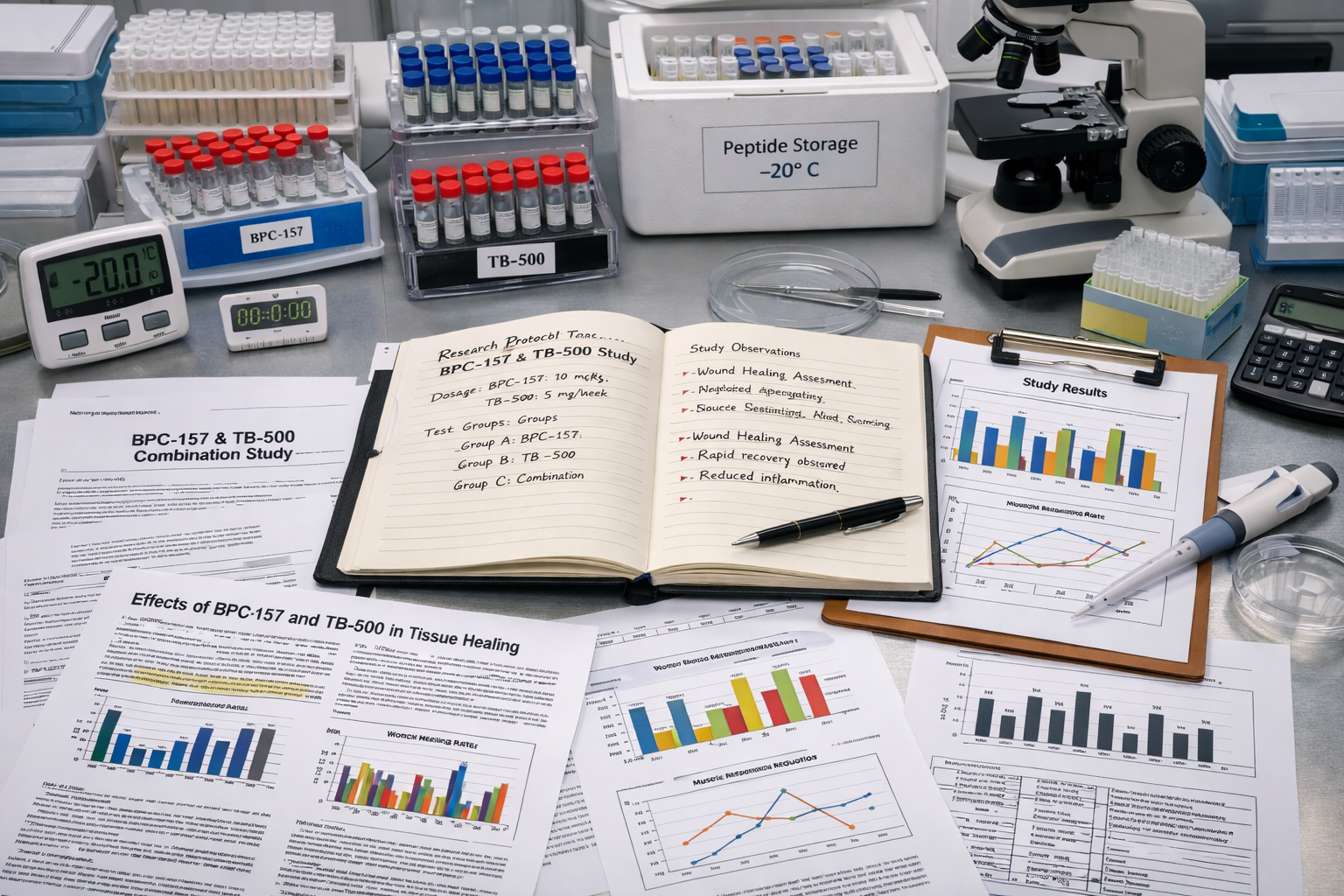
Proper storage and handling of BPC-157 TB 500 research peptides is crucial for maintaining their integrity and ensuring reliable research outcomes. As someone who has worked with numerous research institutions, I've seen how improper storage can compromise entire research projects.
Optimal Storage Conditions
Lyophilized (Powder) Form Storage:
- Temperature: Store at -20°C to -80°C
- Humidity: Keep in low-humidity environment
- Light: Protect from direct light exposure
- Duration: Stable for 2-3 years when properly stored
Reconstituted Peptide Storage:
- Temperature: Store at 2°C to 8°C (refrigerated)
- Duration: Use within 30 days of reconstitution
- Container: Store in sterile glass vials
- Light: Keep in dark environment or amber vials
Handling Best Practices
Laboratory Safety Protocols:
- Use sterile techniques throughout handling process
- Wear appropriate personal protective equipment
- Work in clean, controlled environment
- Document all handling procedures
Temperature Management:
- Avoid repeated freeze-thaw cycles
- Allow gradual temperature equilibration
- Use insulated shipping containers
- Monitor storage temperatures continuously
Contamination Prevention:
- Use sterile bacteriostatic water for reconstitution
- Employ single-use syringes and needles
- Maintain sterile work surfaces
- Follow aseptic technique protocols
Research institutions can reference adaptive capacity and peptide mapping for advanced storage considerations.
Quality Control Monitoring
Regular Assessment Protocols:
- Visual inspection for clarity and color changes
- pH testing of reconstituted solutions
- Concentration verification through analytical testing
- Contamination screening procedures
Documentation Requirements:
- Storage temperature logs
- Handling procedure records
- Quality control test results
- Expiration date tracking
Research Applications and Scientific Studies
The research applications for BPC-157 TB 500 combinations span multiple scientific disciplines, making these peptides valuable tools for diverse research objectives. The growing body of scientific literature demonstrates the versatility and potential of these compounds in laboratory settings.
Current Research Trends
Tissue Engineering Research:
Scientists are investigating how BPC-157 and TB-500 might influence tissue development and organization in controlled laboratory environments. Research focuses on:
- Cellular organization patterns
- Tissue architecture studies
- Scaffold integration research
- Biomaterial compatibility testing
Regenerative Medicine Studies:
Research institutions are exploring the fundamental mechanisms of tissue repair and regeneration:
- Wound healing model development
- Cellular migration pathway studies
- Growth factor interaction research
- Inflammatory response investigations
Pharmacological Research:
Scientists study the pharmacokinetic and pharmacodynamic properties of these peptides:
- Absorption and distribution studies
- Metabolic pathway research
- Bioavailability investigations
- Stability analysis research
Research Model Applications
In Vitro Studies:
- Cell culture experiments
- Molecular mechanism investigations
- Protein interaction studies
- Biochemical pathway research
Ex Vivo Research:
- Tissue sample studies
- Organ culture experiments
- Perfusion system research
- Biomechanical testing
Analytical Research:
- Peptide characterization studies
- Structural analysis research
- Stability testing protocols
- Formulation development
Researchers interested in comprehensive peptide research can explore all peptides for sale to understand the broader research landscape.
Future Research Directions
Emerging Research Areas:
- Combination therapy investigations
- Delivery system optimization
- Biomarker development studies
- Personalized medicine research
Technology Integration:
- Advanced imaging technique applications
- Bioanalytical method development
- High-throughput screening protocols
- Data analysis optimization
The scientific community continues to expand research applications for BPC-157 TB 500, with new studies emerging regularly in peer-reviewed journals.
Safety Considerations and Research Ethics
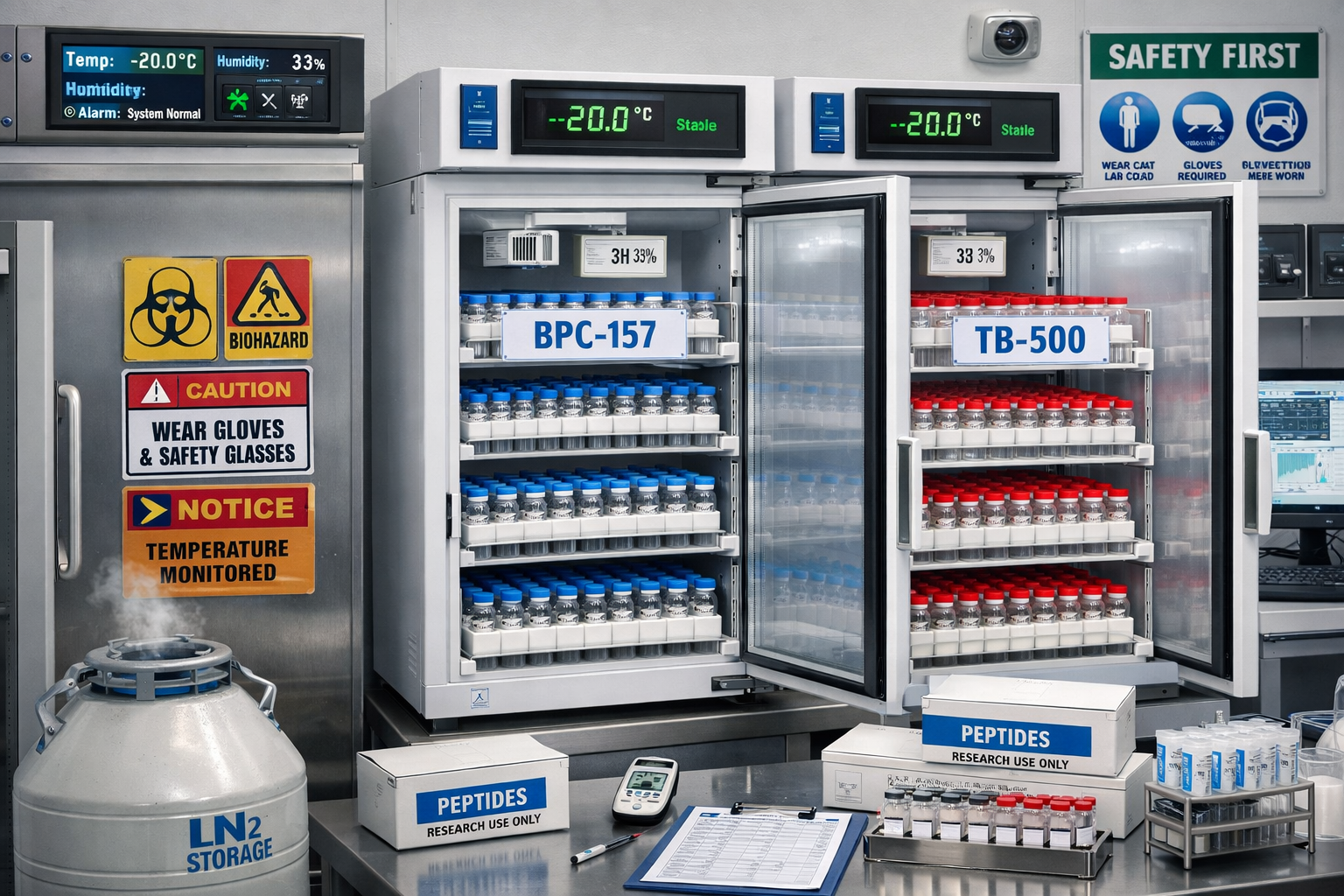
When conducting research with BPC-157 TB 500, maintaining the highest safety standards and ethical practices is paramount. Research institutions must establish comprehensive safety protocols to protect personnel and ensure research integrity.
Laboratory Safety Protocols
Personal Protective Equipment (PPE):
- Safety glasses or goggles
- Laboratory gloves (nitrile recommended)
- Laboratory coats or protective clothing
- Closed-toe shoes with protective features
Environmental Safety Measures:
- Adequate ventilation systems
- Chemical fume hoods when appropriate
- Emergency eyewash stations
- First aid equipment readily available
Waste Disposal Protocols:
- Proper biohazard waste containers
- Chemical waste segregation
- Sharps disposal containers
- Documentation of waste disposal
Research Ethics and Compliance
Institutional Review Requirements:
- Institutional Review Board (IRB) approval when applicable
- Research protocol documentation
- Safety data sheet (SDS) review
- Compliance with institutional guidelines
Documentation Standards:
- Detailed research protocols
- Safety procedure documentation
- Training records for personnel
- Incident reporting procedures
Quality Assurance Measures:
- Regular safety training updates
- Equipment calibration schedules
- Protocol compliance audits
- Continuous improvement processes
Regulatory Considerations
Research Compliance:
- Federal research regulations adherence
- State and local requirement compliance
- International research standard alignment
- Professional organization guideline following
Product Labeling and Documentation:
- Clear "Research Use Only" labeling
- Certificate of analysis maintenance
- Batch tracking documentation
- Storage condition monitoring
Research institutions should establish partnerships with reputable suppliers who prioritize safety and compliance. Building a diverse peptide library provides insights into comprehensive research planning.
Conclusion
The combination of BPC-157 TB 500 represents one of the most promising areas of peptide research in 2026, offering scientists unprecedented opportunities to advance our understanding of tissue repair and regenerative mechanisms. Throughout this comprehensive guide, we've explored the fundamental science behind these remarkable research compounds, their synergistic potential, and the critical factors necessary for successful research outcomes.
The key to successful BPC-157 TB 500 research lies in three fundamental areas: quality sourcing, proper handling, and rigorous research protocols. By partnering with trusted suppliers like Pure Tested Peptides, researchers can ensure they're working with the highest quality materials available. Implementing proper storage and handling procedures protects the integrity of these valuable research tools, while following established research protocols ensures reliable, reproducible results.
Your Next Steps for BPC-157 TB 500 Research
- Establish Research Objectives: Define clear, measurable research goals for your BPC-157 TB 500 studies
- Source Quality Peptides: Partner with reputable suppliers who provide certificates of analysis and quality assurance
- Develop Protocols: Create detailed research protocols that include proper handling, storage, and safety procedures
- Implement Quality Control: Establish monitoring systems for peptide integrity and research compliance
- Document Everything: Maintain comprehensive records of all research activities and outcomes
As the field of peptide research continues to evolve, BPC-157 TB 500 combinations will undoubtedly play an increasingly important role in advancing our understanding of cellular repair and regenerative processes. The investment in proper research infrastructure, quality materials, and rigorous protocols will pay dividends in the form of reliable, meaningful research outcomes that contribute to the broader scientific community.
Remember, all research peptides discussed in this guide are exclusively for laboratory research purposes and are not intended for human consumption. Always ensure compliance with institutional guidelines and regulatory requirements when conducting peptide research.
Important Research Disclaimer: All products mentioned in this article, including BPC-157 and TB-500 peptides, are sold exclusively for research purposes and are not intended for human consumption. These compounds are designed for laboratory research applications only and should be handled by qualified research personnel in appropriate laboratory settings. Researchers must comply with all applicable institutional guidelines, safety protocols, and regulatory requirements when conducting peptide research studies.
SEO Meta Information
Meta Title: BPC-157 TB 500 Research Guide: Complete Scientific Overview 2026
Meta Description: Comprehensive guide to BPC-157 TB 500 research peptides. Learn about applications, protocols, sourcing, and safety for advanced scientific studies.