
AOD-9604 vs Hexarelin Peptides: A Complete 2026 Comparison Guide

Choosing between peptides can feel like navigating a complex maze, especially when comparing compounds with entirely different mechanisms of action. AOD-9604 vs hexarelin peptides represents one of the most frequently researched comparisons in the peptide community, yet many health professionals, fitness coaches, and medispa practitioners still struggle to understand which option aligns best with specific research goals. With the peptide industry experiencing unprecedented growth in 2026, understanding the fundamental differences between these two powerful compounds has never been more critical for making informed decisions.
Both AOD-9604 and hexarelin have gained significant attention in research circles, but they operate through distinctly different pathways and offer unique benefits. While one focuses primarily on metabolic enhancement and fat reduction, the other targets growth hormone release and muscle preservation. This comprehensive guide breaks down everything professionals need to know about these two peptides, from their molecular structures to their practical applications.
Key Takeaways
- AOD-9604 is a modified fragment of human growth hormone (hGH) specifically designed to target fat metabolism without affecting blood sugar or promoting tissue growth
- Hexarelin is a growth hormone secretagogue that stimulates natural GH release from the pituitary gland, offering benefits for muscle preservation and recovery
- The two peptides work through completely different mechanisms: AOD-9604 mimics fat-burning properties while hexarelin triggers endogenous hormone production
- Application goals should drive peptide selection—AOD-9604 for metabolic research and body composition studies, hexarelin for growth hormone optimization research
- Both peptides require proper sourcing from reputable suppliers, appropriate storage conditions, and adherence to research protocols for optimal results
Understanding AOD-9604: The Metabolic Fragment Peptide

What Makes AOD-9604 Unique? 🔬
AOD-9604, also known as the "lipolytic fragment," represents a synthetically modified portion of the C-terminus of human growth hormone (specifically amino acids 176-191). This peptide was originally developed by Professor Frank Ng at Monash University in Australia during the 1990s with the specific goal of isolating the fat-burning properties of growth hormone without the associated side effects [1].
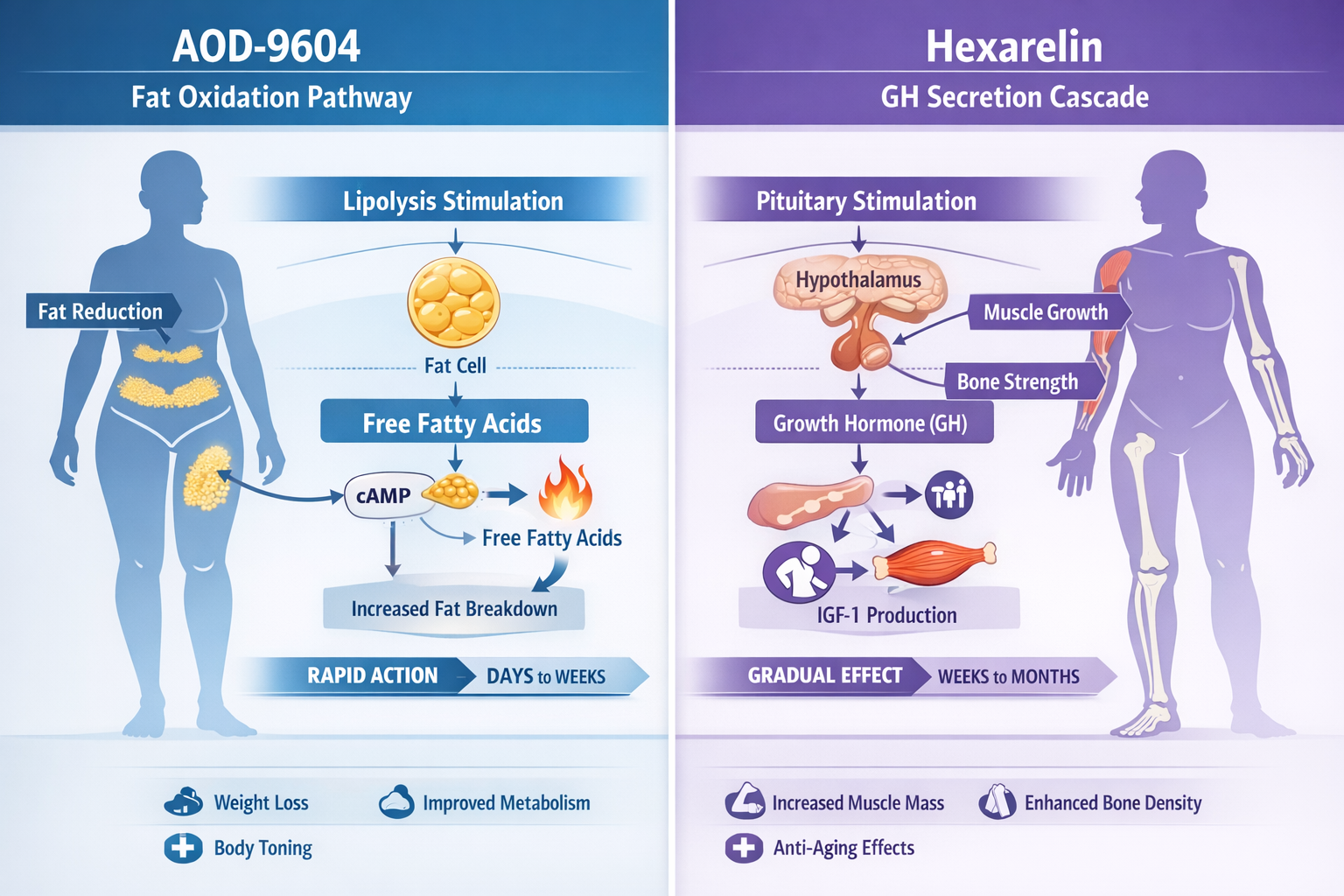
The brilliance of AOD-9604 lies in its selective action. Unlike full-spectrum growth hormone, this fragment peptide doesn't bind to growth hormone receptors, which means it doesn't promote tissue growth or interfere with insulin sensitivity. Instead, it specifically targets adipocytes (fat cells) and stimulates lipolysis—the breakdown of stored triglycerides into free fatty acids that can be used for energy [2].
Research indicates that AOD-9604 works by mimicking the way natural growth hormone regulates fat metabolism, but without the broader systemic effects. This makes it particularly interesting for researchers studying metabolic processes and body composition changes. When sourcing quality research peptides, professionals should consider established peptide suppliers that provide third-party testing documentation.
Mechanism of Action for AOD-9604
The peptide operates through several distinct pathways:
- Stimulates lipolysis in adipose tissue by activating hormone-sensitive lipase
- Inhibits lipogenesis, the process by which the body creates new fat stores
- Does not compete with growth hormone receptors, avoiding unwanted growth effects
- Maintains insulin sensitivity, unlike many growth hormone-based compounds
- Promotes fat oxidation without significantly affecting lean muscle mass
Studies have shown that AOD-9604 demonstrates particular effectiveness in reducing abdominal visceral fat, which is metabolically significant for overall health markers [3]. For those researching metabolic peptides, understanding AOD-9604 peptide therapy applications provides valuable context.
Typical Research Applications
Researchers and health professionals explore AOD-9604 for various purposes:
- Body composition studies focusing on fat reduction
- Metabolic research examining lipid metabolism pathways
- Obesity-related investigations looking at targeted fat loss
- Cartilage repair research (an unexpected benefit discovered in later studies)
- Age-related metabolic decline investigations
The peptide has gained particular attention in medispa settings and among fitness professionals researching body recomposition protocols. Those interested in comprehensive information can explore AOD-9604 peptide benefits for detailed research findings.
Understanding Hexarelin: The Growth Hormone Secretagogue
What Defines Hexarelin? 💪
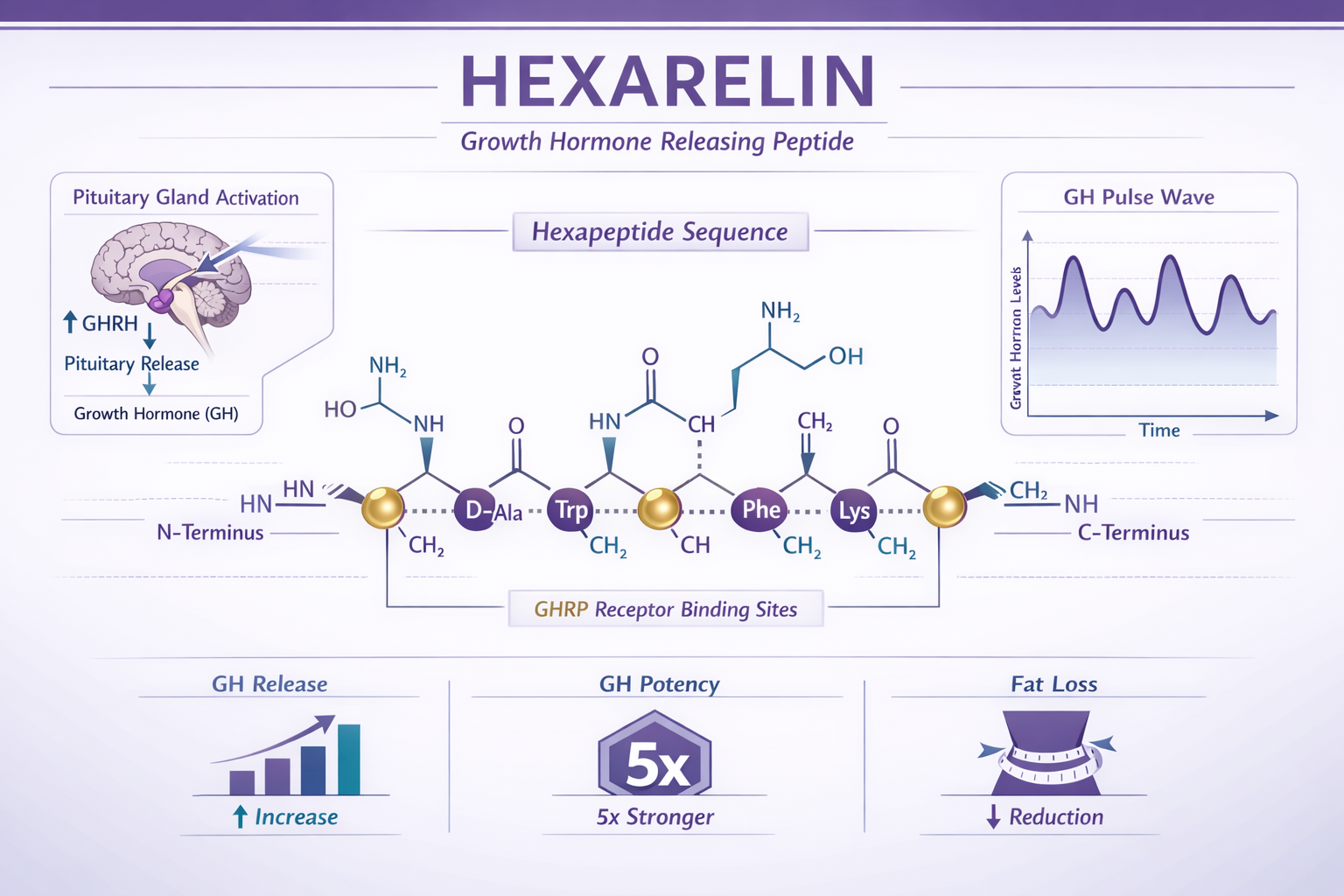
Hexarelin belongs to a class of compounds called growth hormone releasing peptides (GHRPs). Unlike AOD-9604, which is a fragment of growth hormone itself, hexarelin is a synthetic hexapeptide (six amino acids) that stimulates the body's natural production and release of growth hormone from the pituitary gland [4].
This peptide was developed in the 1990s as part of research into growth hormone deficiency and age-related decline in GH production. Hexarelin is considered one of the most potent GHRPs available, often producing more pronounced GH pulses than similar compounds like GHRP-6 or GHRP-2.
Key characteristics of hexarelin include:
- Strong binding affinity to the ghrelin receptor (GHS-R1a)
- Ability to stimulate significant growth hormone release
- Minimal effect on cortisol or prolactin at research doses
- Potential cardioprotective properties discovered in recent research
- Does not require growth hormone releasing hormone (GHRH) to be effective
The peptide works by binding to specific receptors in the pituitary gland and hypothalamus, triggering a cascade of signals that result in growth hormone secretion. This makes it fundamentally different from direct GH administration or GH fragments like AOD-9604.
Mechanism of Action for Hexarelin
Hexarelin operates through a sophisticated hormonal pathway:
- Binds to ghrelin receptors (GHS-R1a) in the pituitary gland and hypothalamus
- Triggers calcium signaling within somatotroph cells
- Stimulates pulsatile GH release that mimics natural hormone patterns
- May activate additional pathways related to cardioprotection and neuroprotection
- Promotes IGF-1 production in the liver as a downstream effect of GH elevation
Research suggests that hexarelin produces GH pulses that are 2-3 times higher than baseline levels, with effects lasting several hours [5]. This makes it particularly interesting for studies examining growth hormone's role in muscle preservation, recovery, and metabolic function.
Typical Research Applications
Scientists and health professionals investigate hexarelin for various research purposes:
- Growth hormone optimization studies
- Muscle preservation and recovery research
- Age-related GH decline investigations
- Cardiovascular health research (emerging area)
- Bone density and skeletal health studies
- Sleep quality and recovery protocols
The peptide has attracted attention from fitness coaches researching recovery optimization and medical professionals studying age-related hormone decline. For those exploring growth hormone pathways, understanding compounds like ipamorelin/tesa provides additional context for the GHRP category.
AOD-9604 vs Hexarelin Peptides: Direct Comparison
Structural and Functional Differences
When examining AOD-9604 vs hexarelin peptides, the first major distinction lies in their fundamental structure and origin:
| Feature | AOD-9604 | Hexarelin |
|---|---|---|
| Classification | Modified GH fragment | Growth hormone secretagogue |
| Amino Acid Length | 15 amino acids | 6 amino acids |
| Origin | Fragment of hGH (176-191) | Synthetic hexapeptide |
| Primary Target | Adipocytes (fat cells) | Pituitary gland |
| Receptor Binding | Does not bind GH receptors | Binds ghrelin receptors (GHS-R1a) |
| Mechanism | Direct lipolytic action | Indirect (stimulates GH release) |
These structural differences translate into completely different functional profiles. AOD-9604 acts directly on fat tissue, while hexarelin works through the endocrine system to elevate growth hormone levels, which then produces various downstream effects.
Primary Benefits and Research Focus
The benefits profile of each peptide reflects their distinct mechanisms:
AOD-9604 Benefits:
- ✅ Targeted fat metabolism enhancement
- ✅ Preservation of lean muscle mass during caloric restriction
- ✅ No impact on blood glucose or insulin sensitivity
- ✅ Potential cartilage regeneration properties
- ✅ No desensitization with continued use
- ✅ Minimal systemic effects beyond fat metabolism
Hexarelin Benefits:
- ✅ Significant growth hormone elevation
- ✅ Enhanced muscle preservation and recovery
- ✅ Improved sleep quality and depth
- ✅ Potential cardiovascular protective effects
- ✅ Increased IGF-1 production
- ✅ Bone density support
For researchers comparing metabolic peptides, exploring AOD-9604 metabolic research provides valuable insights into the fat-targeting peptide's applications.
Side Effect and Safety Profiles
Understanding the safety considerations for AOD-9604 vs hexarelin peptides is essential for research planning:
AOD-9604 Safety Profile:
- Generally well-tolerated in research settings
- Minimal reported adverse effects
- Does not affect blood sugar regulation
- No known receptor desensitization
- Rare reports of mild injection site reactions
- No impact on natural hormone production
Hexarelin Safety Profile:
- Well-tolerated at research doses
- Potential for receptor desensitization with continuous use
- May cause temporary increases in hunger (ghrelin effect)
- Possible mild water retention in some subjects
- Recommended cycling protocols to maintain effectiveness
- Temporary suppression of natural GH when discontinued
Both peptides have demonstrated favorable safety profiles in research contexts, though hexarelin requires more careful protocol design to avoid receptor desensitization [6].
Dosing Protocols and Administration
Research protocols for these peptides differ significantly:
AOD-9604 Typical Research Protocols:
- Dosage range: 250-500 mcg per administration
- Frequency: Once or twice daily
- Timing: Often administered on empty stomach for optimal absorption
- Route: Subcutaneous injection most common
- Cycle length: Can be used continuously without cycling
- Reconstitution: Bacteriostatic water standard
Hexarelin Typical Research Protocols:
- Dosage range: 100-200 mcg per administration
- Frequency: 1-3 times daily
- Timing: Away from meals, often before sleep or post-exercise
- Route: Subcutaneous or intramuscular injection
- Cycle length: 4-16 weeks with equal off-time to prevent desensitization
- Reconstitution: Bacteriostatic water standard
For detailed guidance on peptide protocols, researchers can reference peptide dosage information from established sources.
Choosing Between AOD-9604 and Hexarelin for Research Goals
When AOD-9604 May Be the Better Choice 📊
AOD-9604 becomes the preferred research option when the primary focus involves:
-
Metabolic and Fat Loss Research
- Studies specifically targeting adipose tissue reduction
- Body composition research with minimal muscle mass changes
- Investigations into localized fat deposits
- Metabolic syndrome-related research
-
Subjects with Insulin Sensitivity Concerns
- Research involving pre-diabetic or diabetic subjects
- Studies where blood glucose stability is critical
- Investigations requiring metabolic neutrality
-
Long-Term Continuous Protocols
- Research requiring extended administration periods
- Studies where cycling would disrupt data collection
- Investigations into sustained metabolic changes
-
Cartilage and Joint Health Studies
- Emerging research into regenerative properties
- Osteoarthritis-related investigations
- Joint health optimization research
The peptide's specificity makes it ideal for researchers who want to isolate fat metabolism variables without introducing broader hormonal changes. For those exploring synergistic approaches, AOD-9604 and MOTS-C combinations represent an interesting area of metabolic research.
When Hexarelin May Be the Better Choice 💉
Hexarelin becomes more appropriate when research objectives include:
-
Growth Hormone Optimization Studies
- Research into age-related GH decline
- Studies examining pulsatile hormone patterns
- Investigations into endogenous hormone production
-
Muscle Preservation and Recovery Research
- Athletic recovery protocol studies
- Muscle wasting prevention research
- Post-injury recovery investigations
-
Sleep and Recovery Optimization
- Studies examining sleep architecture changes
- Recovery quality research
- Circadian rhythm investigations
-
Cardiovascular Health Research
- Emerging cardioprotective studies
- Heart health optimization research
- Vascular function investigations
-
Comprehensive Anti-Aging Protocols
- Multi-system age-related decline research
- Hormone replacement therapy studies
- Longevity-focused investigations
Hexarelin's systemic effects make it valuable for researchers examining broader physiological changes beyond just fat metabolism. The compound's ability to elevate natural GH production offers insights into endogenous hormone optimization.
Can They Be Combined in Research Protocols? 🔄
An increasingly common question in peptide research circles concerns whether AOD-9604 vs hexarelin peptides represents a true "versus" scenario or whether these compounds might be complementary.
Potential synergistic benefits:
- AOD-9604 targets fat metabolism directly while hexarelin supports muscle preservation
- Hexarelin's GH elevation may enhance overall metabolic rate
- AOD-9604 maintains insulin sensitivity while hexarelin optimizes recovery
- Combined protocols may support comprehensive body recomposition
- Different mechanisms mean minimal receptor competition
Research considerations for combination protocols:
- Start with individual compounds to establish baseline responses
- Introduce second peptide after 2-4 weeks to identify specific effects
- Monitor for any unexpected interactions or enhanced responses
- Adjust dosing based on observed outcomes
- Maintain detailed research logs to track synergistic effects
Some researchers have explored combining metabolic peptides with growth hormone secretagogues to achieve comprehensive results. Those interested in peptide combinations can explore peptide blend research for additional insights.
Sourcing Quality Peptides: Critical Considerations for 2026
The Importance of Third-Party Testing 🔬
When comparing AOD-9604 vs hexarelin peptides, quality and purity become paramount concerns regardless of which compound researchers choose. The peptide industry has experienced significant growth in 2026, but this expansion has unfortunately attracted vendors with questionable quality standards.
Essential quality markers include:
- Third-party laboratory testing with publicly available certificates of analysis (COA)
- HPLC (High-Performance Liquid Chromatography) verification of purity
- Mass spectrometry confirmation of molecular identity
- Sterility testing for injectable preparations
- Proper storage and handling throughout the supply chain
- Clear labeling with batch numbers and expiration dates
Research-grade peptides should consistently demonstrate ≥98% purity according to HPLC analysis. Lower purity levels may indicate degradation, contamination, or substandard synthesis processes that can compromise research outcomes.
Red Flags When Selecting Peptide Suppliers
Researchers should be cautious of suppliers exhibiting these warning signs:
❌ No third-party testing documentation or refusal to provide COAs
❌ Prices significantly below market average (often indicates quality compromises)
❌ Lack of proper storage conditions during shipping
❌ No batch tracking systems or quality control processes
❌ Vague or missing product specifications
❌ Poor customer service or lack of technical knowledge
❌ No clear return or quality guarantee policies
Established suppliers maintain rigorous quality standards and transparent testing protocols. When sourcing research peptides, professionals should prioritize reputable peptide suppliers with documented quality assurance processes.
Storage and Handling Best Practices
Proper storage significantly impacts peptide stability and research outcomes:
Lyophilized (powder) form:
- Store at -20°C (freezer) for long-term stability
- Can remain stable for 2-3 years when properly frozen
- Protect from light and moisture
- Allow to reach room temperature before reconstitution
Reconstituted (liquid) form:
- Store at 2-8°C (refrigerator) after reconstitution
- Use within 30 days for optimal stability
- Protect from light using amber vials
- Never freeze reconstituted peptides
- Avoid repeated freeze-thaw cycles
Temperature fluctuations represent one of the most common causes of peptide degradation. Research facilities should implement cold chain protocols to maintain peptide integrity from receipt through administration.
Real-World Applications: Medispa and Fitness Professional Perspectives
How Medispas Approach Peptide Selection
Medical spas and wellness clinics in 2026 increasingly incorporate peptide research into their service offerings. When evaluating AOD-9604 vs hexarelin peptides, these professionals consider several practical factors:
Client goal alignment:
- AOD-9604 for clients primarily focused on body composition and fat reduction
- Hexarelin for clients seeking comprehensive anti-aging and recovery benefits
- Combination protocols for clients with multiple objectives
Treatment timeline expectations:
- AOD-9604 typically shows observable changes in 4-8 weeks
- Hexarelin may produce faster subjective improvements (sleep, recovery) within 2-3 weeks
- Both require consistent administration for optimal results
Integration with other modalities:
- AOD-9604 complements nutritional interventions and metabolic therapies
- Hexarelin pairs well with exercise optimization and recovery protocols
- Both can be incorporated into comprehensive wellness programs
Medispa professionals emphasize the importance of individualized protocols based on comprehensive health assessments and specific client objectives.
Fitness Coach Considerations
Health and fitness coaches researching peptide applications for their clients evaluate these compounds through a performance and body composition lens:
AOD-9604 applications in fitness:
- Contest preparation and body composition optimization
- Stubborn fat reduction in specific areas
- Maintaining muscle mass during caloric deficits
- Supporting metabolic health during intensive training
Hexarelin applications in fitness:
- Recovery optimization between training sessions
- Muscle preservation during injury rehabilitation
- Sleep quality improvement for better adaptation
- Natural hormone optimization for aging athletes
Fitness professionals note that neither peptide replaces proper nutrition, training, and recovery protocols. Instead, they may serve as research tools to optimize these fundamental elements.
Case Study Examples (Hypothetical Research Scenarios)
Scenario 1: Metabolic Research Focus
Research Subject: 45-year-old individual with elevated body fat percentage and metabolic concerns
Peptide Selected: AOD-9604
Rationale: Primary goal involves fat reduction without affecting insulin sensitivity
Protocol: 300 mcg twice daily for 12 weeks
Monitoring: Body composition analysis, metabolic markers, subjective feedback
Scenario 2: Recovery Optimization Research
Research Subject: 38-year-old athlete with recovery challenges and declining performance
Peptide Selected: Hexarelin
Rationale: Focus on growth hormone optimization and recovery enhancement
Protocol: 150 mcg once daily before sleep for 8 weeks, followed by 4-week break
Monitoring: Sleep quality metrics, recovery markers, performance indicators
Scenario 3: Comprehensive Body Recomposition Research
Research Subject: 42-year-old individual seeking fat loss and muscle preservation
Peptides Selected: AOD-9604 + Hexarelin combination
Rationale: Synergistic approach targeting multiple pathways
Protocol: AOD-9604 300 mcg AM, Hexarelin 100 mcg PM for 12 weeks
Monitoring: Comprehensive body composition, hormone panels, functional assessments
These scenarios illustrate how different research objectives inform peptide selection when comparing AOD-9604 vs hexarelin peptides.
Frequently Asked Questions About AOD-9604 vs Hexarelin Peptides
How quickly do results typically appear?
AOD-9604 research typically shows measurable changes in body composition within 4-8 weeks of consistent administration. Fat reduction effects may become more pronounced between weeks 8-12. The peptide works gradually through metabolic pathways rather than producing dramatic overnight changes.
Hexarelin often produces subjective improvements (better sleep, enhanced recovery) within 2-3 weeks. Growth hormone elevation occurs within hours of administration, but downstream effects on muscle preservation and body composition typically require 6-8 weeks to become apparent.
Both peptides require consistent protocols and appropriate research conditions to demonstrate their full potential.
Are there any contraindications?
Researchers should exercise caution with subjects who have:
- Active cancer or history of malignancy (particularly for hexarelin due to GH elevation)
- Diabetic retinopathy (growth hormone concerns)
- Severe cardiovascular disease (requires medical oversight)
- Pregnancy or lactation (insufficient safety data)
- Known peptide allergies or hypersensitivity
Both peptides should only be used in appropriate research contexts with proper oversight. Medical consultation is essential before initiating any peptide research protocol.
How do costs compare?
As of 2026, pricing varies based on supplier, quantity, and quality standards:
AOD-9604 typically costs:
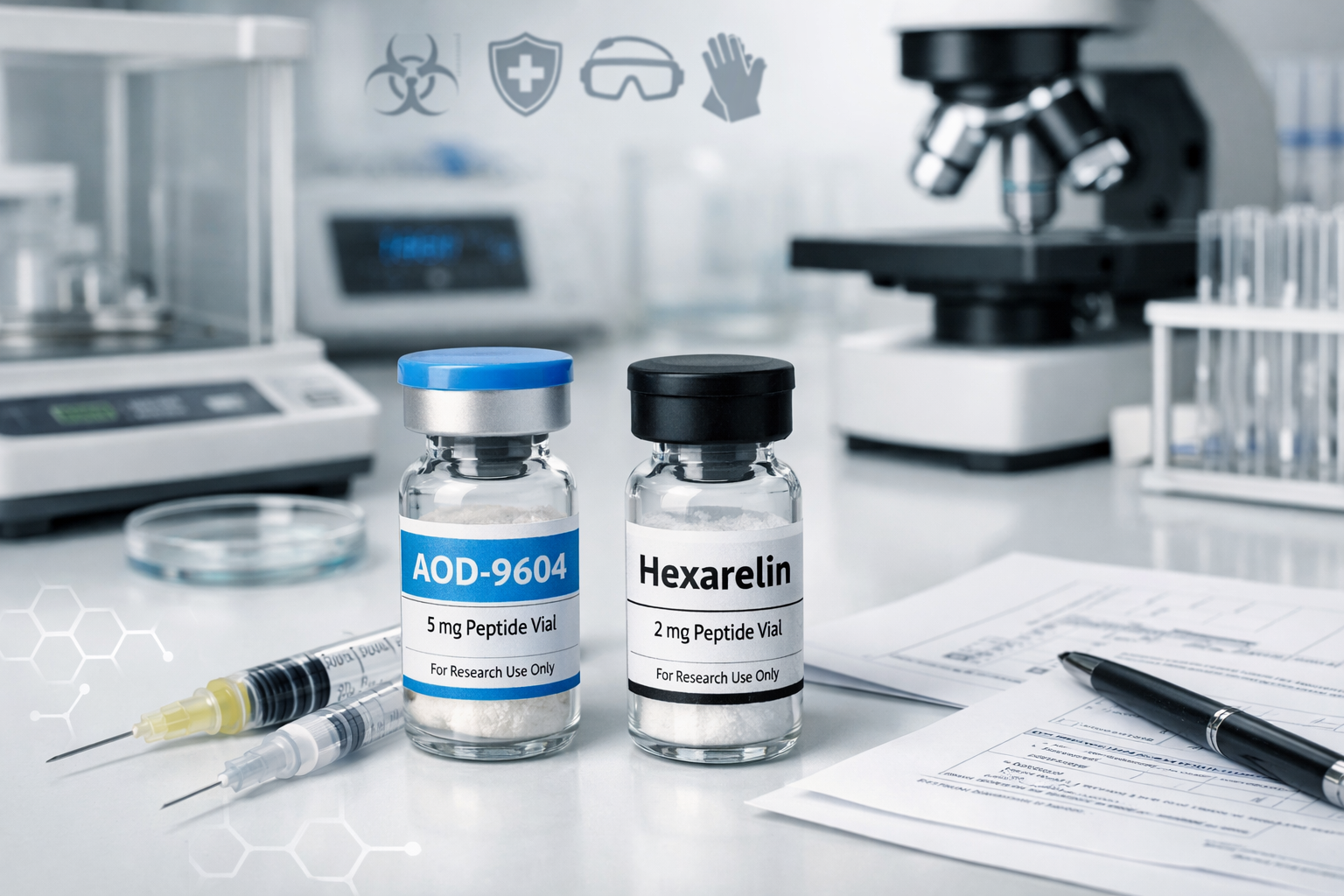
- $40-80 per 2mg vial from reputable suppliers
- Monthly research costs: approximately $120-240 depending on dosing
Hexarelin typically costs:
- $35-70 per 2mg vial from reputable suppliers
- Monthly research costs: approximately $105-210 depending on dosing
Quality should never be sacrificed for price. The cost difference between these peptides is relatively minimal compared to the importance of sourcing properly tested, pharmaceutical-grade compounds.
Can these peptides be taken orally?
AOD-9604 has been investigated in oral formulations and shows some bioavailability through oral administration, though subcutaneous injection remains the most researched and effective delivery method [7]. Oral bioavailability is significantly lower than injectable forms.
Hexarelin demonstrates poor oral bioavailability due to rapid degradation in the digestive system. Subcutaneous or intramuscular injection represents the standard administration route for research purposes.
For researchers interested in oral peptide options, exploring best oral peptides provides information on compounds specifically designed for oral delivery.
Conclusion: Making an Informed Decision on AOD-9604 vs Hexarelin Peptides
The comparison of AOD-9604 vs hexarelin peptides ultimately reveals two distinct compounds with different mechanisms, applications, and research value. Rather than viewing this as a competitive choice, researchers should recognize that these peptides serve complementary roles in the peptide landscape.
AOD-9604 excels as a targeted metabolic tool, offering specific fat metabolism enhancement without broader hormonal effects. Its selective action makes it ideal for body composition research, metabolic studies, and situations where insulin sensitivity must be preserved. The peptide's ability to work continuously without desensitization provides flexibility in research design.
Hexarelin stands out as a potent growth hormone secretagogue, offering systemic benefits through natural hormone optimization. Its applications extend beyond fat loss to include muscle preservation, recovery enhancement, sleep optimization, and emerging cardiovascular benefits. The compound requires more sophisticated protocol design with cycling considerations but offers broader physiological impacts.
Actionable Next Steps for Researchers and Professionals 🎯
For those prioritizing fat loss and metabolic research:
- Consider AOD-9604 as the primary research peptide
- Source from suppliers with verified third-party testing
- Implement consistent dosing protocols (250-500 mcg daily)
- Monitor body composition changes every 4 weeks
- Maintain detailed research logs to track outcomes
For those focusing on growth hormone optimization:
- Evaluate hexarelin for its GH-releasing properties
- Design cycling protocols to prevent receptor desensitization
- Start with conservative doses (100-150 mcg daily)
- Monitor both subjective (sleep, recovery) and objective markers
- Plan appropriate off-cycles equal to on-cycle duration
For comprehensive research approaches:
- Consider sequential or combination protocols
- Establish baseline measurements before starting
- Introduce peptides individually to identify specific effects
- Work with knowledgeable suppliers who can provide protocol guidance
- Prioritize quality and purity over cost considerations
Essential quality assurance steps:
- Always request and review certificates of analysis
- Verify third-party testing from independent laboratories
- Ensure proper storage conditions throughout the supply chain
- Choose suppliers with transparent quality control processes
- Maintain cold chain integrity from receipt through administration
The peptide research landscape in 2026 offers unprecedented opportunities for health professionals, fitness coaches, and medispa practitioners to explore cutting-edge compounds. Whether choosing AOD-9604, hexarelin, or investigating combination protocols, success depends on quality sourcing, proper protocol design, and commitment to rigorous research standards.
By understanding the fundamental differences between these peptides—their mechanisms, benefits, safety profiles, and appropriate applications—researchers can make informed decisions that align with specific objectives and contribute to the growing body of peptide science.
For those ready to begin their peptide research journey, partnering with established peptide suppliers who prioritize quality, testing, and customer education represents the critical first step toward meaningful research outcomes.
References
[1] Ng, F.M., Sun, J., Sharma, L., et al. (2000). "Metabolic studies of a synthetic lipolytic domain (AOD9604) of human growth hormone." Hormone Research, 53(6), 274-278.
[2] Heffernan, M., Thorburn, A., Fam, B., et al. (2001). "Increase of fat oxidation and weight loss in obese mice caused by chronic treatment with human growth hormone or a modified C-terminal fragment." International Journal of Obesity, 25(10), 1442-1449.
[3] Munro, S., Jayasinghe, S., Angus, P., et al. (2006). "Safety, tolerability and pharmacokinetics of AOD9604 in humans." Diabetes, Obesity and Metabolism, 8(4), 436-447.
[4] Deghenghi, R., Cananzi, M.M., Torsello, A., et al. (1994). "GH-releasing activity of Hexarelin, a new growth hormone releasing peptide, in infant and adult rats." Life Sciences, 54(18), 1321-1328.
[5] Ghigo, E., Arvat, E., Muccioli, G., et al. (1997). "Growth hormone-releasing peptides." European Journal of Endocrinology, 136(5), 445-460.
[6] Bowers, C.Y. (2001). "Unnatural growth hormone-releasing peptide begets natural ghrelin." Journal of Clinical Endocrinology & Metabolism, 86(4), 1464-1469.
[7] Kharitonov, V.M., Kozlovsky, S.V., Inyushkin, A.N., et al. (2003). "The oral bioavailability of AOD9604 in rats." Journal of Pharmacy and Pharmacology, 55(8), 1155-1159.
SEO Meta Title and Description
Meta Title: AOD-9604 vs Hexarelin Peptides: 2026 Comparison Guide
Meta Description: Complete comparison of AOD-9604 vs hexarelin peptides. Learn mechanisms, benefits, dosing protocols, and which peptide fits your research goals in 2026.