
How to Use GHK-Cu Peptide Injection: Your Complete 2026 Professional Guide
When I first encountered GHK-Cu peptide in my research journey, I was amazed by its potential for tissue regeneration and cellular repair. But like many professionals in the wellness and fitness industry, I quickly realized that understanding how to use GHK-Cu peptide injection properly is essential for maximizing research outcomes and ensuring safety protocols. Whether you're a peptide buyer, medi spa owner, fitness coach, life coach, or bodybuilder, mastering the proper administration techniques for this copper peptide can make all the difference in your research applications. In this comprehensive guide, I'll walk you through everything you need to know about GHK-Cu peptide injection protocols, from reconstitution to administration, dosing strategies, and critical safety considerations that every professional should understand in 2026.
Key Takeaways
- Proper reconstitution of GHK-Cu peptide requires bacteriostatic water and sterile technique to maintain peptide integrity
- Subcutaneous injection is the most common administration method, with typical research dosages ranging from 1-2mg daily
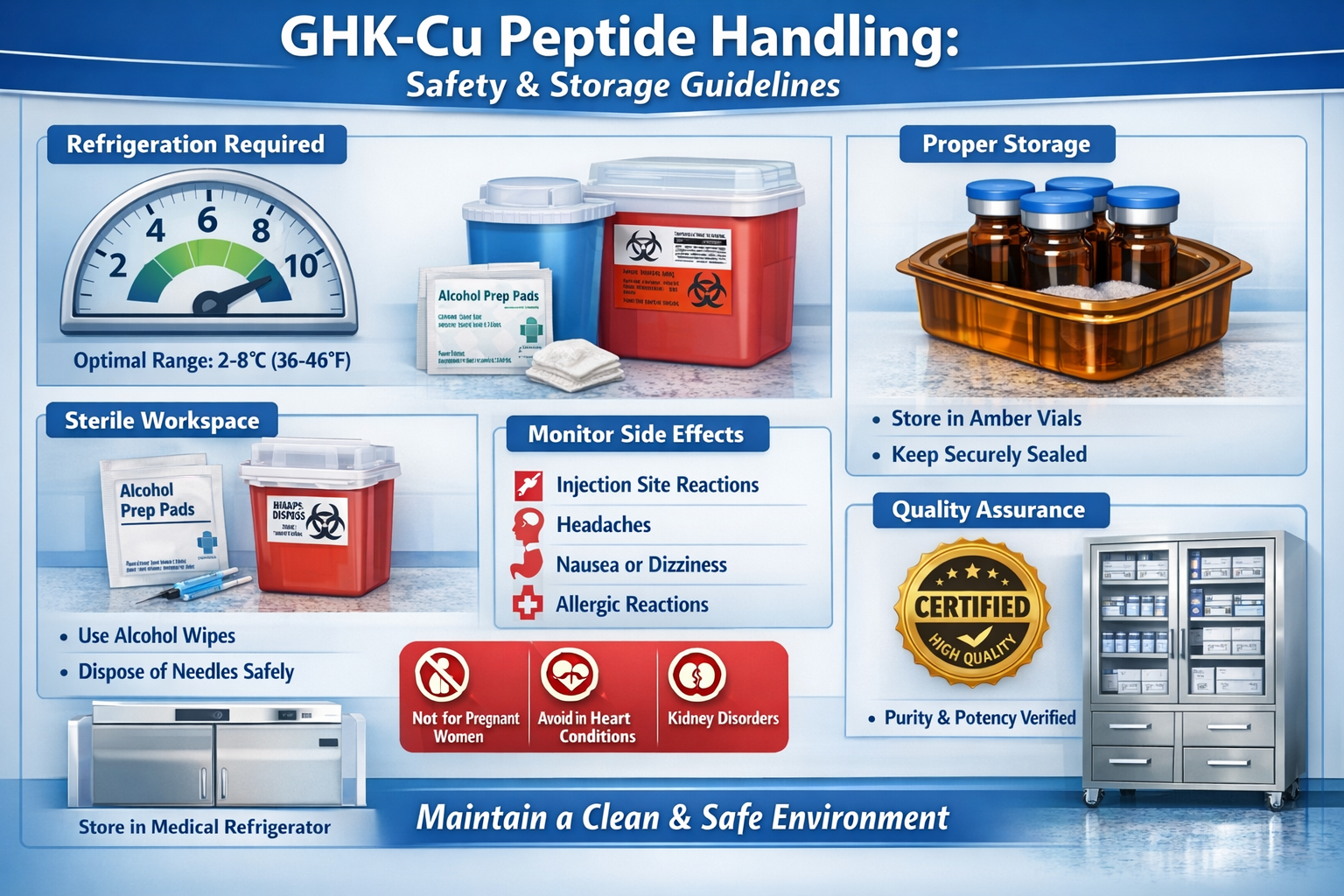
- Storage protocols are critical—reconstituted GHK-Cu must be refrigerated at 2-8°C and used within 30 days
- Injection site rotation prevents tissue irritation and ensures optimal absorption of the peptide
- Quality sourcing from reputable suppliers ensures purity and effectiveness of your research peptides
Understanding GHK-Cu Peptide Before Injection
Before diving into how to use GHK-Cu peptide injection techniques, it's crucial to understand what you're working with. GHK-Cu (Glycyl-L-Histidyl-L-Lysine-Copper) is a naturally occurring copper complex that plays a vital role in tissue remodeling, wound healing, and cellular regeneration. This tripeptide has been extensively studied since the 1970s and continues to gain attention in research communities for its remarkable properties.
What Makes GHK-Cu Unique?
The copper component of GHK-Cu is what sets it apart from other peptides. This mineral binding creates a complex that demonstrates significant biological activity in research models. The peptide's molecular weight of approximately 340 Daltons makes it small enough to penetrate tissues effectively when administered properly.
Key properties of GHK-Cu include:
- Stimulation of collagen and glycosaminoglycan synthesis
- Promotion of angiogenesis (blood vessel formation)
- Antioxidant and anti-inflammatory effects
- Support for tissue remodeling processes
- Potential neuroprotective characteristics
For those interested in exploring various peptide options, Pure Tested Peptides offers comprehensive resources and quality-tested compounds for research purposes.
Research Applications in 2026
In the current landscape of peptide research, GHK-Cu continues to be studied for multiple applications. Fitness coaches and bodybuilders often research its potential for recovery support, while medi spa professionals explore its applications in aesthetic research protocols. Life coaches working in the wellness space frequently encounter clients interested in longevity research, where GHK-Cu plays an interesting role.
How to Prepare GHK-Cu Peptide Injection: Reconstitution Process
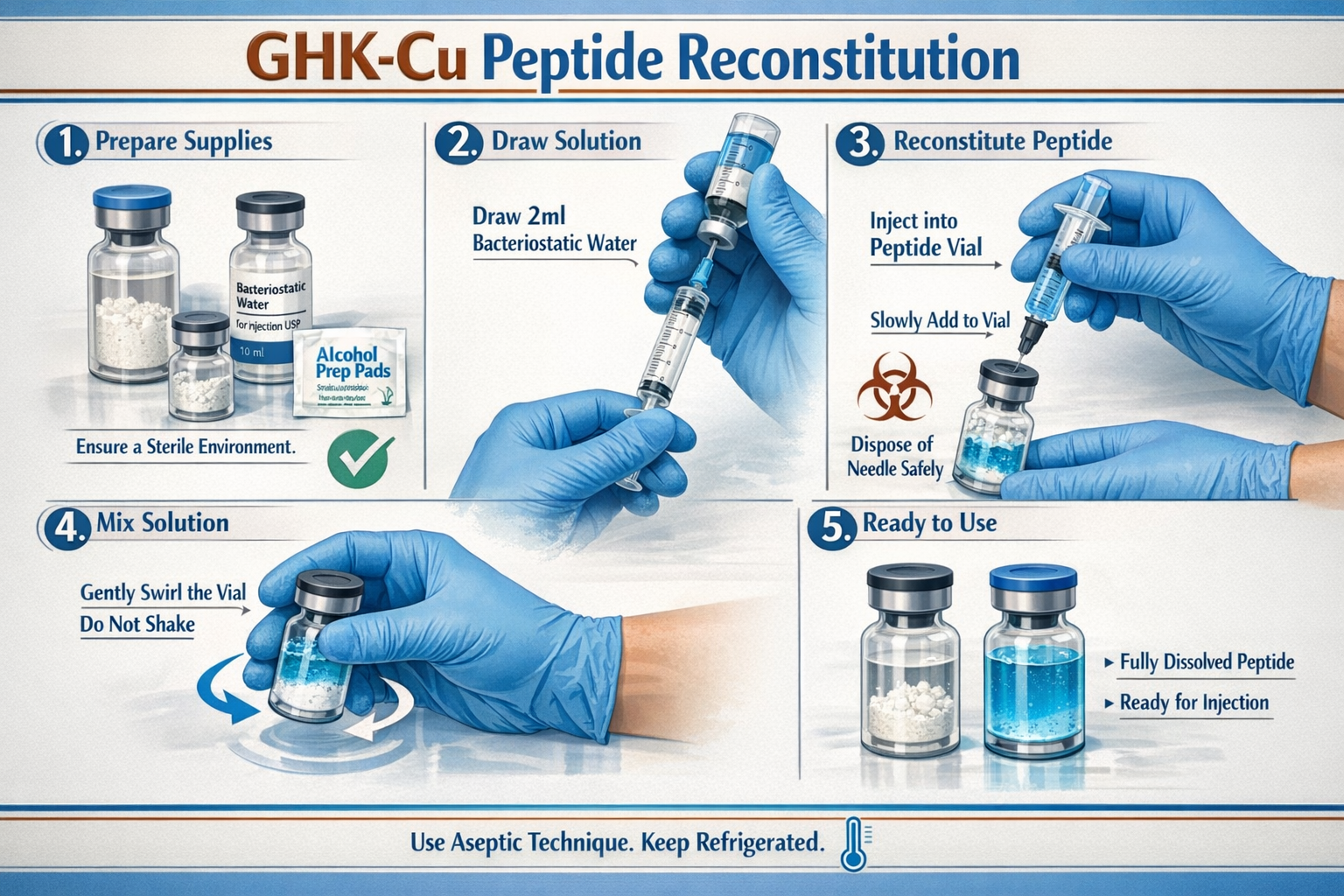
Learning how to use GHK-Cu peptide injection starts with proper reconstitution. Most GHK-Cu peptides arrive as lyophilized (freeze-dried) powder that requires mixing with bacteriostatic water before use. This process demands attention to detail and sterile technique.
Essential Supplies for Reconstitution
Before beginning the reconstitution process, gather these critical supplies:
| Supply Item | Purpose | Specifications |
|---|---|---|
| GHK-Cu peptide vial | Active compound | Typically 50mg |
| Bacteriostatic water | Reconstitution fluid | 0.9% benzyl alcohol |
| Insulin syringes | Mixing and injection | 1mL, 29-31 gauge |
| Alcohol prep pads | Sterilization | 70% isopropyl alcohol |
| Sterile work surface | Clean environment | Non-porous surface |
Step-by-Step Reconstitution Guide
Step 1: Prepare Your Workspace 🧪
Create a clean, well-lit area free from contaminants. Wash your hands thoroughly and wipe down your work surface with alcohol. Allow all supplies to reach room temperature to prevent thermal shock to the peptide.
Step 2: Calculate Your Dosage
Determine how much bacteriostatic water to add based on your desired concentration. For example, adding 5mL of bacteriostatic water to a 50mg vial creates a concentration of 10mg/mL. This makes dosing calculations straightforward.
Step 3: Clean the Vial Tops
Use alcohol prep pads to thoroughly clean the rubber stoppers on both your GHK-Cu peptide vial and bacteriostatic water vial. Allow them to air dry for 30 seconds.
Step 4: Draw Bacteriostatic Water
Using a fresh insulin syringe, draw your calculated amount of bacteriostatic water. Remove any air bubbles by gently tapping the syringe and pushing the plunger slightly.
Step 5: Add Water to Peptide
Insert the needle into the GHK-Cu vial at an angle, directing the stream of water down the side of the glass rather than directly onto the powder. This gentle approach prevents peptide degradation from excessive agitation.
Step 6: Mix Gently
Never shake the vial vigorously. Instead, gently swirl the vial in circular motions until the powder completely dissolves. The solution should be clear with no visible particles. If cloudiness persists, allow the vial to rest in the refrigerator for 10-15 minutes.
Pro Tip: "The gentler your reconstitution technique, the better you preserve peptide integrity. Patience during this step pays dividends in peptide effectiveness." – Research Protocol Best Practices, 2026
Proper Injection Technique: How to Use GHK-Cu Peptide Injection Safely
Now that you understand reconstitution, let's explore the actual administration process. How to use GHK-Cu peptide injection properly involves selecting the right injection sites, using correct technique, and following safety protocols that minimize discomfort and maximize absorption.
Subcutaneous vs. Intramuscular Administration
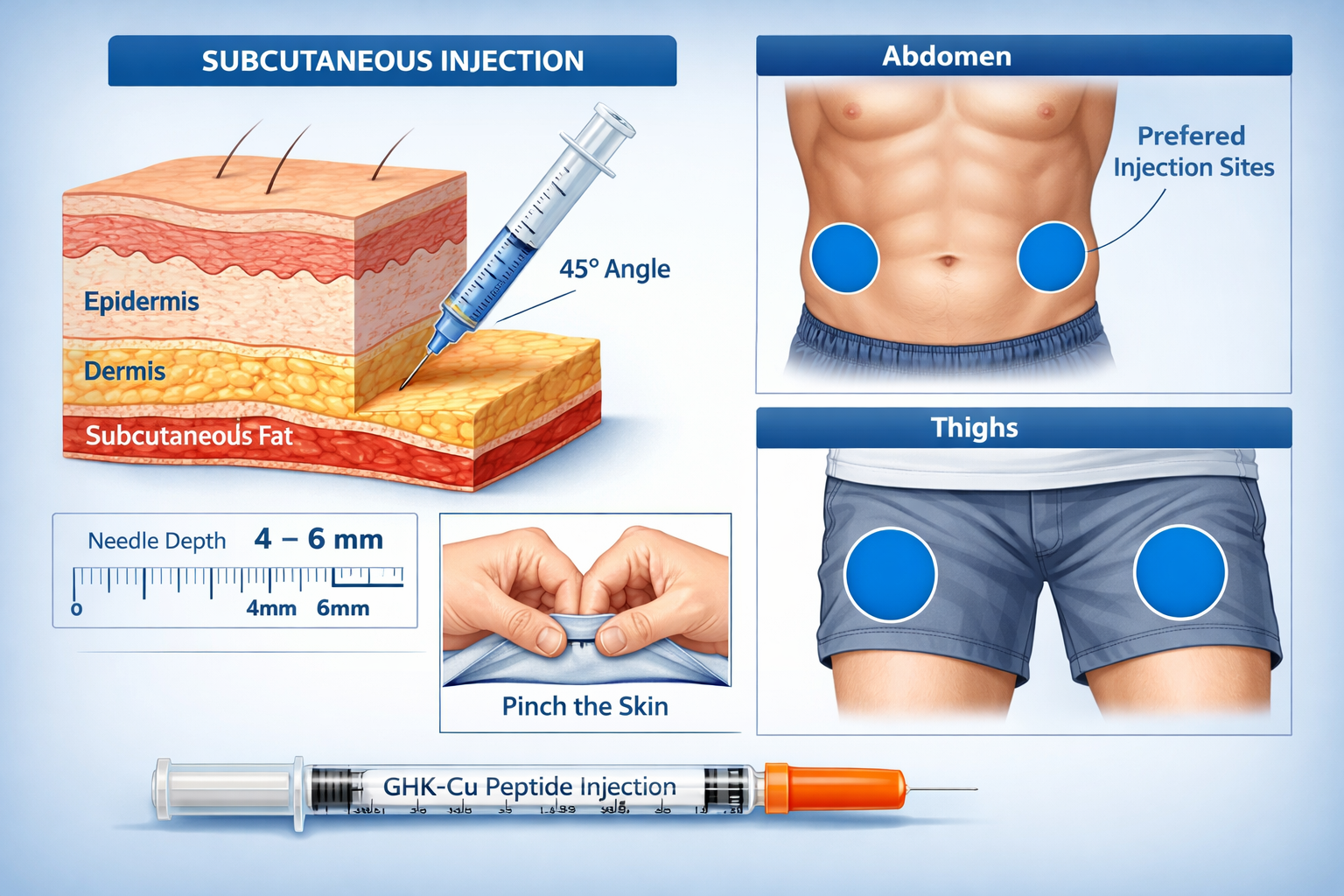
GHK-Cu peptide is typically administered subcutaneously (into the fatty tissue layer beneath the skin) rather than intramuscularly. Subcutaneous injection offers several advantages:
✅ Slower, more sustained absorption
✅ Less discomfort than intramuscular injection
✅ Easier self-administration
✅ Lower risk of nerve or blood vessel damage
✅ Suitable for smaller injection volumes
Optimal Injection Sites
The best subcutaneous injection sites for GHK-Cu include:
- Abdominal area – 2 inches away from the navel in any direction
- Thigh – Front or outer portion of the upper leg
- Upper arm – Back portion of the upper arm (requires assistance)
- Buttocks – Upper outer quadrant
Site rotation is essential. Never inject in the same exact spot repeatedly. Create a rotation pattern to allow tissues adequate recovery time between injections.
Injection Procedure Step-by-Step
Preparation Phase:
- Wash hands thoroughly with antibacterial soap
- Remove reconstituted GHK-Cu from refrigerator and allow to reach room temperature (10-15 minutes)
- Gather fresh insulin syringe, alcohol prep pads, and sharps disposal container
- Select your injection site for the day
Drawing the Dose:
- Clean the rubber stopper of your GHK-Cu vial with an alcohol pad
- Draw slightly more than your target dose into the syringe
- Hold the syringe upright and tap gently to move air bubbles to the top
- Push the plunger slowly to expel air and adjust to your exact dose
- Recap the needle carefully using the one-handed scoop method
Administration:
- Clean the injection site with an alcohol pad using circular motions
- Allow the site to air dry completely (30 seconds)
- Pinch approximately 1-2 inches of skin and fatty tissue between your thumb and forefinger
- Insert the needle at a 45-90 degree angle with a quick, smooth motion
- Release the pinched skin
- Inject the peptide slowly and steadily (over 5-10 seconds)
- Wait 2-3 seconds before withdrawing the needle
- Withdraw the needle at the same angle it entered
- Apply gentle pressure with a clean alcohol pad if needed
- Dispose of the syringe immediately in a sharps container
Many professionals exploring peptide research also investigate complementary compounds. For those interested in metabolic research, resources on peptide dosage protocols can provide valuable insights.
GHK-Cu Peptide Dosage Protocols and Timing
Understanding how to use GHK-Cu peptide injection extends beyond technique to include proper dosing strategies. Research protocols vary based on objectives, but certain guidelines have emerged from the scientific literature and practical application.
Standard Research Dosage Ranges
Research with GHK-Cu typically involves these dosage parameters:
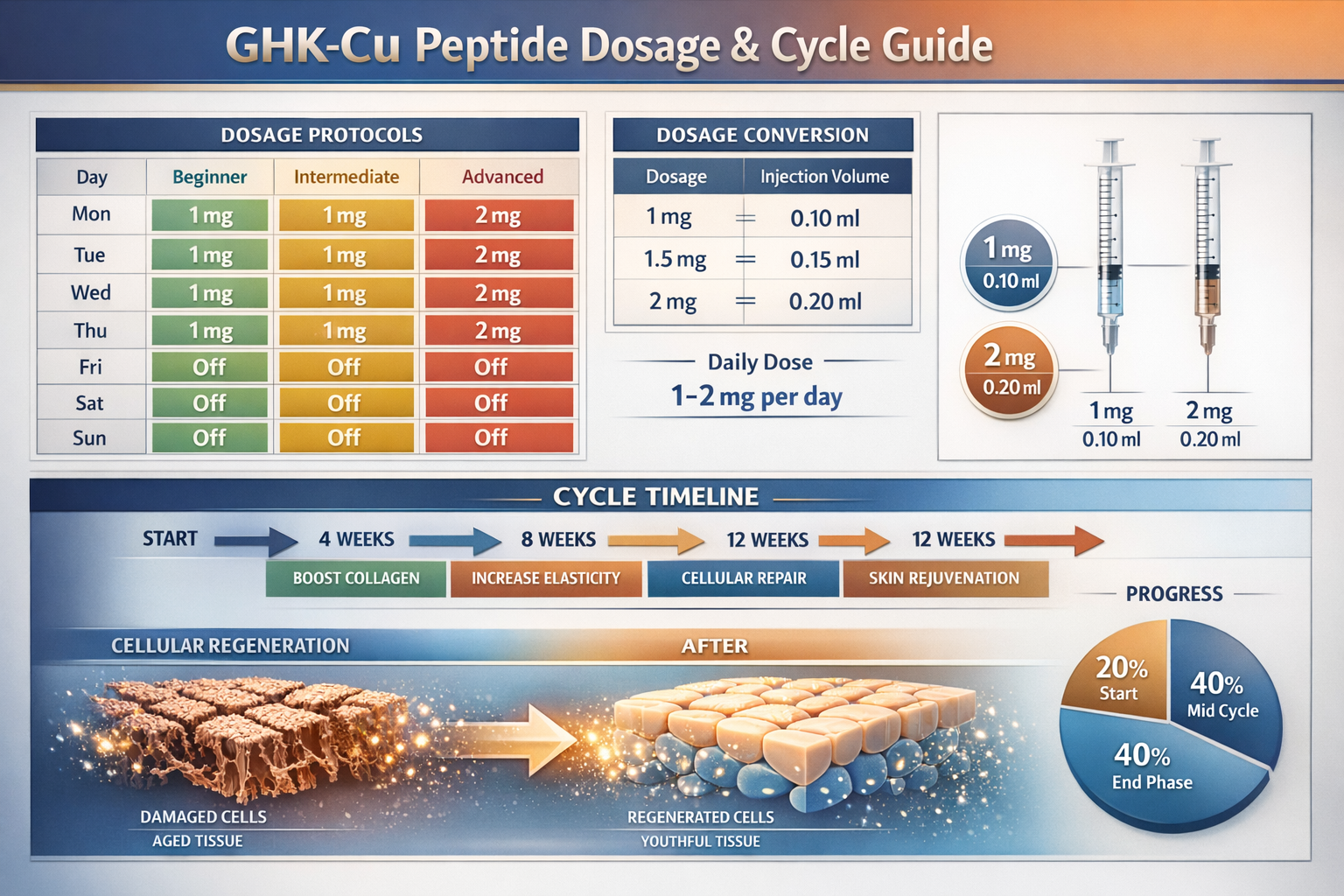
Beginner Protocol:
- Dosage: 1mg per day
- Frequency: 5-7 days per week
- Duration: 8-12 weeks
- Purpose: Initial assessment and tolerance evaluation
Intermediate Protocol:
- Dosage: 1.5-2mg per day
- Frequency: 5-7 days per week
- Duration: 12-16 weeks
- Purpose: Extended research applications
Advanced Protocol:
- Dosage: 2-3mg per day
- Frequency: Daily administration
- Duration: 16-24 weeks with breaks
- Purpose: Comprehensive research studies
Timing Considerations
The timing of your GHK-Cu injection can influence research outcomes:
Morning Administration: Many researchers prefer morning injections to align with natural circadian rhythms and cellular repair processes that occur throughout the day.
Evening Administration: Some protocols suggest evening administration to support overnight recovery and regeneration processes.
Consistency is paramount. Whatever timing you choose, maintain the same schedule daily to establish stable peptide levels and optimize research data quality.
Calculating Your Dose
Let's work through a practical calculation example:
If you've reconstituted 50mg of GHK-Cu with 5mL of bacteriostatic water:
- Concentration = 10mg/mL
- For a 2mg dose: 2mg ÷ 10mg/mL = 0.2mL
- On an insulin syringe, this equals 20 units (since 1mL = 100 units)
Always double-check your calculations before drawing your dose. When in doubt, consult dosage charts or use online peptide calculators designed for research applications.
For researchers interested in exploring various peptide compounds and their applications, comprehensive peptide resources offer valuable comparative information.
Storage, Handling, and Safety Guidelines
Proper storage and handling are critical components of understanding how to use GHK-Cu peptide injection effectively. Peptides are delicate molecules that can degrade rapidly under improper conditions, compromising research quality.
Storage Requirements
Lyophilized (Unreconstituted) Peptide:
- Temperature: -20°C (freezer storage)
- Duration: Up to 2 years when properly sealed
- Protection: Keep away from light and moisture
- Location: Store in original sealed vial
Reconstituted Peptide:
- Temperature: 2-8°C (refrigerator storage)
- Duration: 30 days maximum
- Protection: Keep away from light
- Location: Store upright in designated peptide storage area
Handling Best Practices
🔬 Sterile Technique Always
Every time you access your GHK-Cu vial, use fresh alcohol prep pads and new syringes. Cross-contamination can introduce bacteria that multiply in bacteriostatic water over time.
📋 Label Everything
Mark your reconstituted vials with:
- Peptide name and concentration
- Reconstitution date
- Expiration date (30 days from reconstitution)
- Your research protocol identifier
🧊 Temperature Monitoring
Invest in a refrigerator thermometer to ensure consistent storage temperatures. Temperature fluctuations can degrade peptide quality rapidly.
Safety Considerations and Contraindications
While GHK-Cu demonstrates favorable safety profiles in research, certain precautions apply:
General Safety Guidelines:
- Never share needles or syringes
- Dispose of all sharps in FDA-approved containers
- Monitor injection sites for unusual reactions
- Document all administration details in research logs
- Maintain sterile technique throughout all procedures
Potential Contraindications:
Research suggests avoiding GHK-Cu in certain circumstances:
- Active malignancies (due to growth-promoting properties)
- Pregnancy or lactation (insufficient research data)
- Known copper metabolism disorders
- Severe kidney or liver dysfunction
- Active infections at potential injection sites
Monitoring for Adverse Reactions:
While generally well-tolerated in research settings, monitor for:
- Injection site reactions (redness, swelling, irritation)
- Unusual fatigue or energy changes
- Digestive disturbances
- Headaches or dizziness
- Allergic reactions (rare but possible)
Sharps Disposal and Environmental Safety
Proper disposal of used syringes protects both individuals and communities. Never dispose of needles in regular trash. Instead:
- Use an FDA-approved sharps container
- Fill container only to the marked line
- Seal completely when full
- Follow local regulations for disposal
- Many pharmacies and medical facilities offer disposal services
For professionals managing multiple research protocols, exploring peptide research methodologies can enhance overall research quality and safety compliance.
Maximizing Research Outcomes with GHK-Cu
Understanding how to use GHK-Cu peptide injection technically is only part of the equation. Optimizing research outcomes requires attention to complementary factors that influence peptide effectiveness.
Synergistic Research Approaches
Many researchers combine GHK-Cu with complementary protocols:
Nutritional Support:
- Adequate protein intake (supports tissue synthesis)
- Sufficient vitamin C (collagen cofactor)
- Zinc and copper balance (mineral homeostasis)
- Hydration (cellular function support)
Lifestyle Factors:
- Quality sleep (7-9 hours for optimal recovery)
- Stress management (cortisol can interfere with regeneration)
- Regular physical activity (stimulates adaptive responses)
- Avoidance of excessive alcohol and tobacco
Tracking and Documentation
Professional researchers maintain detailed logs including:
| Data Point | Tracking Frequency | Purpose |
|---|---|---|
| Injection date/time | Every administration | Protocol adherence |
| Dosage amount | Every administration | Consistency verification |
| Injection site | Every administration | Rotation tracking |
| Subjective observations | Daily or weekly | Pattern identification |
| Objective measurements | Weekly or bi-weekly | Progress assessment |
Research Cycle Planning
Strategic cycling can optimize long-term research outcomes:
Standard Cycle:
- 12-16 weeks "on" (active administration)
- 4-8 weeks "off" (rest period)
- Reassessment before next cycle
Extended Cycle:
- 20-24 weeks "on" (for comprehensive studies)
- 8-12 weeks "off" (extended recovery)
- Protocol adjustment based on findings
Combining with Other Peptides
Some research protocols explore GHK-Cu in combination with complementary peptides. For example, researchers interested in comprehensive wellness approaches might investigate topical GHK-Cu applications alongside injectable protocols.
When considering peptide combinations, always:
- Research potential interactions thoroughly
- Start with one peptide before adding others
- Maintain separate injection sites when using multiple peptides
- Document all compounds in your research logs
- Consult relevant scientific literature
Sourcing Quality GHK-Cu for Research
The effectiveness of your research depends heavily on peptide quality. Understanding how to use GHK-Cu peptide injection means nothing if you're working with degraded or contaminated compounds.
Quality Indicators
When sourcing GHK-Cu peptides, look for:
✅ Third-Party Testing
Reputable suppliers provide certificates of analysis (COA) from independent laboratories verifying:
- Peptide purity (typically ≥98%)
- Molecular weight confirmation
- Sterility testing results
- Heavy metal screening
✅ Proper Packaging
Quality peptides arrive in:
- Sealed sterile vials
- Protective outer packaging
- Temperature-controlled shipping
- Clear labeling with batch numbers
✅ Transparent Sourcing
Trustworthy suppliers disclose:
- Manufacturing location and standards
- Quality control processes
- Storage and handling procedures
- Expiration dating methodology
✅ Research-Grade Designation
Peptides should be clearly labeled for research purposes only, complying with applicable regulations.
Red Flags to Avoid
🚩 Suspiciously low prices compared to market rates
🚩 Lack of COA or testing documentation
🚩 Poor customer service or communication
🚩 Vague product descriptions
🚩 No batch tracking or lot numbers
🚩 Unclear return or quality guarantee policies
For researchers seeking reliable sources, Pure Tested Peptides maintains rigorous quality standards and provides comprehensive testing documentation for all compounds, including their GHK-Cu 50mg research peptide.
Understanding Peptide Purity
Peptide purity significantly impacts research outcomes:
≥98% Purity: Research-grade standard, minimal contaminants, optimal for serious research applications
95-97% Purity: Acceptable for some applications but may contain more impurities
<95% Purity: Generally not recommended for quality research protocols
The small price difference between high-purity and lower-purity peptides is negligible compared to the value of reliable research data.
Troubleshooting Common Issues
Even experienced researchers occasionally encounter challenges when learning how to use GHK-Cu peptide injection. Here are solutions to common issues:
Reconstitution Problems
Issue: Peptide won't dissolve completely
Solutions:
- Ensure bacteriostatic water is at room temperature
- Allow more time for dissolution (up to 30 minutes)
- Gently swirl (never shake) the vial
- Check expiration dates on both peptide and water
- Verify you're using bacteriostatic water, not sterile water
Issue: Solution appears cloudy or has particles
Solutions:
- Allow vial to rest in refrigerator for 15-20 minutes
- Examine in good lighting—some cloudiness may be temporary
- If particles persist, the peptide may be degraded—do not use
- Contact your supplier for replacement
Injection Difficulties
Issue: Injection is painful
Solutions:
- Ensure peptide is at room temperature before injection
- Use a fresh, sharp needle for each injection
- Inject more slowly (over 10 seconds instead of 5)
- Try a different injection site
- Consider using a smaller gauge needle (higher number = smaller needle)
Issue: Bleeding at injection site
Solutions:
- This occasionally happens when you hit a small capillary
- Apply gentle pressure with clean gauze for 30-60 seconds
- Avoid that exact spot in future rotations
- If bleeding is excessive or frequent, consult a healthcare professional
Issue: Bruising at injection sites
Solutions:
- Avoid injecting in the same area repeatedly
- Don't massage the injection site immediately after administration
- Apply ice before injection to constrict blood vessels
- Ensure you're not on blood-thinning medications or supplements
- Consider supplementing with vitamin K (after appropriate consultation)
Storage and Stability Concerns
Issue: Forgot to refrigerate reconstituted peptide
Solutions:
- If left out for less than 4 hours: likely still usable
- If left out for 4-8 hours: effectiveness may be reduced
- If left out for more than 8 hours: consider discarding for quality assurance
- When in doubt, prioritize research quality over cost savings
Issue: Peptide changed color
Solutions:
- GHK-Cu may have a slight blue tint due to copper content
- Significant color changes (brown, yellow, dark blue) indicate degradation
- Do not use discolored peptide
- Review storage conditions to prevent future occurrences
For researchers exploring various peptide applications and seeking comprehensive guidance, resources on peptide research methodologies provide valuable context for troubleshooting and optimization.
Advanced Considerations for Professional Researchers
As you master how to use GHK-Cu peptide injection basics, these advanced considerations can elevate your research quality:
Bioavailability Optimization
Several factors influence GHK-Cu bioavailability:
Injection Depth: Proper subcutaneous placement (not too shallow, not too deep) ensures optimal absorption. The needle should penetrate through skin into fatty tissue but not reach muscle.
Injection Volume: Larger volumes (>1mL) may require splitting into multiple injection sites for optimal absorption.
Site Selection: Areas with more subcutaneous fat generally provide better absorption. Abdominal injections often demonstrate superior bioavailability compared to leaner areas.
Administration Speed: Slow injection (5-10 seconds) allows tissue to accommodate the fluid without excessive pressure that could force peptide back out along the needle track.
Individual Response Variation
Research outcomes with GHK-Cu can vary based on:
- Age: Younger subjects may demonstrate different response patterns than older subjects
- Baseline Status: Those with greater deficits may show more pronounced responses
- Genetic Factors: Individual variations in copper metabolism and peptide receptors
- Concurrent Protocols: Other supplements, medications, or lifestyle factors
- Research Duration: Some effects may require extended observation periods
Documentation and Research Ethics
Professional researchers maintain rigorous standards:
Informed Consent: When research involves human subjects, proper consent procedures are essential.
Institutional Review: Many research applications require institutional review board (IRB) approval.
Data Integrity: Accurate, unbiased documentation supports valid conclusions and reproducible findings.
Regulatory Compliance: Adherence to applicable regulations governing peptide research in your jurisdiction.
Transparency: Clear disclosure of methodologies, limitations, and potential conflicts of interest.
Conclusion: Mastering GHK-Cu Peptide Injection for Optimal Research
Understanding how to use GHK-Cu peptide injection properly represents a critical skill for professionals in the peptide research community. From reconstitution through administration, storage, and outcome optimization, each step contributes to research quality and safety.
The key principles we've covered include:
🔬 Sterile technique at every stage prevents contamination and ensures peptide integrity
💉 Proper injection methodology maximizes comfort, absorption, and research outcomes
📊 Accurate dosing and documentation support reproducible findings and protocol refinement
🧊 Appropriate storage and handling preserve peptide potency throughout your research cycle
✅ Quality sourcing from reputable suppliers like Pure Tested Peptides ensures you're working with verified, high-purity compounds
Your Next Steps
If you're ready to begin or optimize your GHK-Cu research:
- Review your current protocols against the guidelines in this article
- Source quality peptides from reputable suppliers with third-party testing
- Prepare your workspace with all necessary supplies and sterile equipment
- Start with conservative dosing and gradually adjust based on research observations
- Maintain detailed logs of all administration details and observations
- Stay current with emerging research on GHK-Cu applications and methodologies
The field of peptide research continues to evolve rapidly in 2026, with new findings emerging regularly about GHK-Cu and related compounds. By mastering the fundamentals of proper injection technique while staying informed about advancing research, you position yourself at the forefront of this exciting field.
Whether you're a medi spa professional exploring aesthetic applications, a fitness coach investigating recovery support, a bodybuilder optimizing training outcomes, or a life coach helping clients explore wellness innovations, proper GHK-Cu administration technique forms the foundation of quality research.
Remember that peptide research requires patience, precision, and commitment to proper methodology. The investment you make in learning how to use GHK-Cu peptide injection correctly pays dividends in research quality, safety, and meaningful outcomes.
For continued learning and access to quality research peptides, explore the comprehensive resources and products available at Pure Tested Peptides, where commitment to quality and research support remains the top priority.
SEO Meta Information
Meta Title: How to Use GHK-Cu Peptide Injection | Complete 2026 Guide
Meta Description: Learn proper GHK-Cu peptide injection techniques, dosing protocols, storage guidelines, and safety practices for professional researchers in 2026.