
Peptide Fragments for Sale: The Complete 2026 Buyer's Guide for Research and Performance
The peptide therapeutics industry has exploded into a $65 billion global market opportunity, with over 800 peptide drugs currently in clinical trials and research applications expanding across fitness, longevity, and performance optimization[1]. For athletes, martial artists, weightlifters, and research enthusiasts seeking peptide fragments for sale in 2026, understanding quality, sourcing, and application has never been more critical. This comprehensive guide breaks down everything needed to make informed decisions when exploring peptide fragment options for research purposes.
Key Takeaways
- Market expansion: The global peptide therapeutics market has reached $65 billion, with 197 peptide-based products commercially available and peptide therapy adoption surging 34% in recent years[1][3]
- Quality matters: Third-party testing, purity verification, and proper storage are non-negotiable when sourcing peptide fragments for research applications
- Fragment diversity: Different peptide fragments serve distinct research purposes, from mitochondrial support (SS-31) to tissue repair studies (BPC-157) and metabolic research (MOTS-C)
- Regulatory awareness: Peptide fragments are sold strictly for research purposes, requiring responsible sourcing from reputable suppliers with proper documentation
- Manufacturing advances: Production capacity is doubling by 2028, with new synthesis technologies improving scalability and quality control[2]
Understanding Peptide Fragments: What Makes Them Different
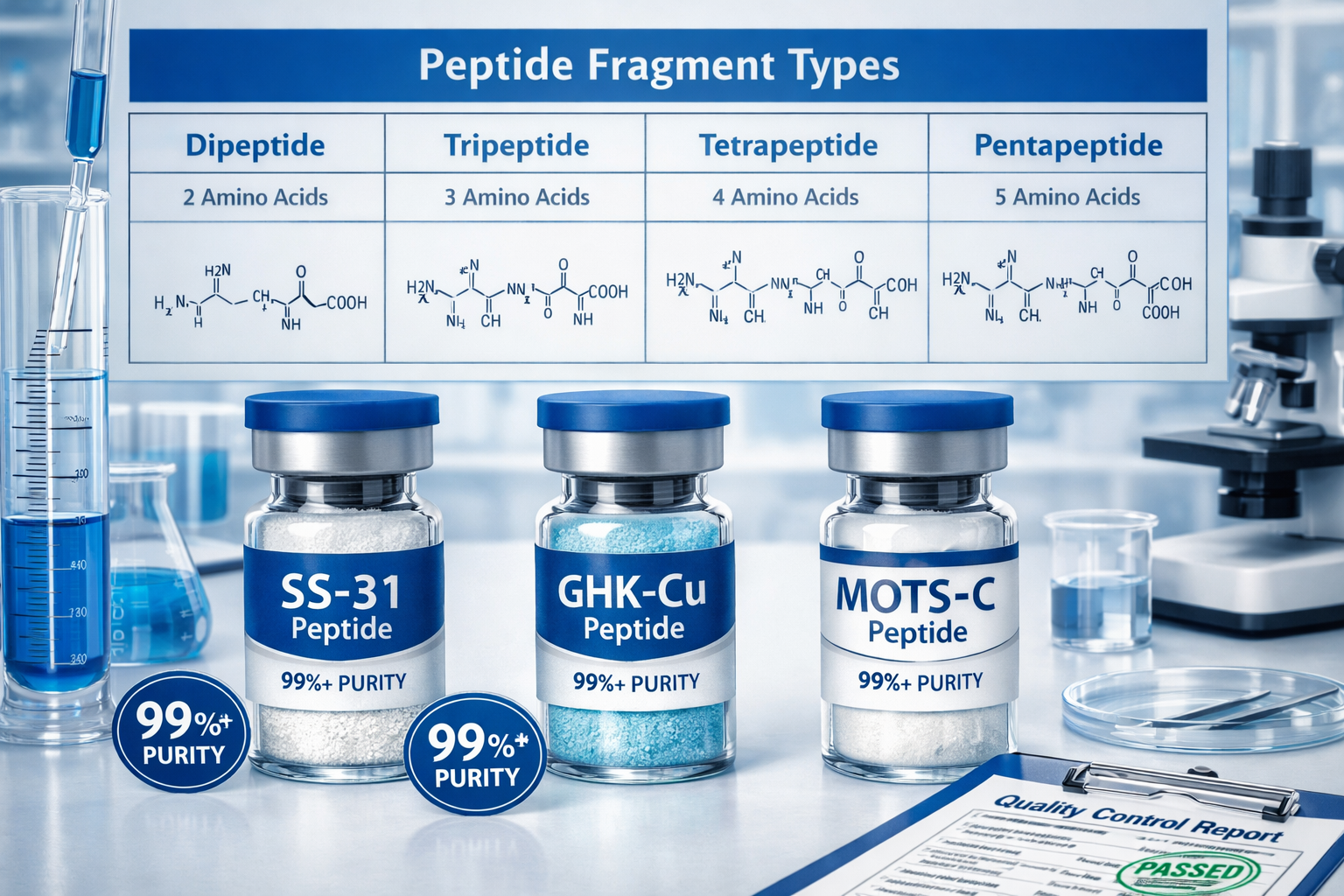
Peptide fragments represent specific sequences of amino acids that form portions of larger protein structures. Unlike complete proteins containing hundreds or thousands of amino acids, fragments typically consist of 2-50 amino acid chains designed for targeted research applications.
The distinction matters significantly when shopping for peptide fragments for sale. These shorter sequences offer several advantages:
- Enhanced stability during storage and handling
- Improved bioavailability in research models
- Targeted specificity for particular biological pathways
- Cost-effective synthesis compared to full-length proteins
- Easier quality control and purity verification
The Science Behind Fragment Functionality
Peptide fragments work by mimicking or blocking specific biological signals. When researchers examine peptide therapy benefits, they're investigating how these molecular sequences interact with cellular receptors, enzymes, or signaling pathways.
The global collagen peptide supplements market alone reached $304 million in 2024, projected to hit $315 million in 2025, demonstrating massive commercial and research interest[4]. This growth reflects expanding applications across multiple domains, from athletic performance studies to longevity research.
Top Categories of Peptide Fragments for Sale in 2026
Mitochondrial Support Peptides
SS-31 (Elamipretide) stands as one of the most researched mitochondrial-targeting peptide fragments available. This tetrapeptide has generated significant interest in cellular energy research and oxidative stress studies.
When exploring SS-31 peptides for sale, researchers should verify:
- ✅ Purity levels exceeding 98%
- ✅ Third-party testing documentation
- ✅ Proper lyophilization (freeze-drying) processes
- ✅ Sterile manufacturing environments
- ✅ Certificate of Analysis (CoA) availability
The SS-31 peptide research applications extend across multiple domains, making it a popular choice among serious researchers examining cellular function and energy metabolism.
Tissue Repair and Recovery Fragments
BPC-157 (Body Protection Compound-157) represents a pentadecapeptide derived from a protective gastric protein. Research interest has focused on its potential applications in tissue repair studies and healing mechanisms.
For those seeking quality peptide fragments for sale in the tissue repair category, BPC-157 documentation provides essential background on proper handling and research protocols.
Metabolic and Longevity Peptides
MOTS-C (Mitochondrial Open Reading Frame of the 12S rRNA-c) has emerged as a fascinating mitochondrial-derived peptide fragment. This 16-amino acid sequence has attracted attention in metabolic research and exercise physiology studies.
The MOTS-C metabolic flexibility research explores how this fragment interacts with cellular energy pathways, making it relevant for fitness professionals and researchers examining performance optimization.
Epithalon (Epitalon) represents another longevity-focused tetrapeptide. Those interested in epithalon peptides for sale should understand its role in telomere research and cellular aging studies.
Cosmetic and Dermatological Research Peptides
GHK-Cu (Glycyl-L-Histidyl-L-Lysine-Copper) combines a tripeptide with a copper ion, creating a complex studied extensively in skin research applications. The GHK-Cu peptide purchase guide offers detailed sourcing information for this popular fragment.
Research into peptides in skincare has revealed fascinating mechanisms by which these fragments may influence collagen synthesis and tissue remodeling processes.
Quality Indicators When Shopping for Peptide Fragments for Sale
Purity and Testing Standards
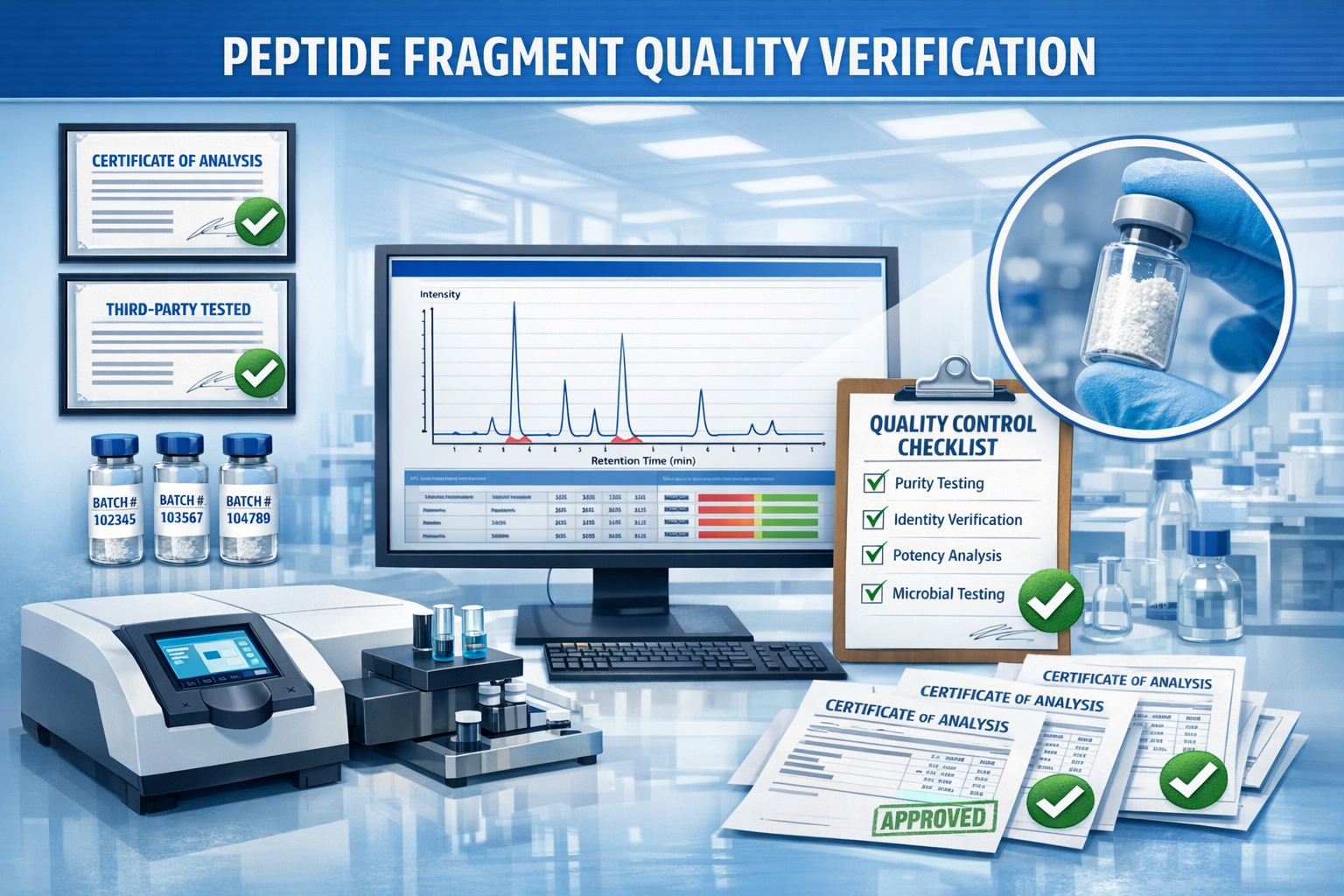
Third-party verification separates legitimate suppliers from questionable sources. When evaluating peptide fragments for sale, demand documentation including:
| Quality Metric | Minimum Standard | Verification Method |
|---|---|---|
| Purity | ≥98% | HPLC (High-Performance Liquid Chromatography) |
| Molecular Weight | Exact match to specification | Mass Spectrometry |
| Sterility | No bacterial/fungal contamination | USP <71> Sterility Testing |
| Endotoxin Levels | <1.0 EU/mg | LAL (Limulus Amebocyte Lysate) Test |
| pH Level | Within specified range | pH Testing |
Reputable suppliers providing lab-tested peptides will readily share Certificates of Analysis showing these verification results.
Manufacturing and Synthesis Methods
Solid Phase Peptide Synthesis (SPPS) remains the gold standard for producing research-grade peptide fragments. CordenPharma's expansion plans to more than double SPPS capacity to over 42,000 L by 2028 reflects growing demand and improving manufacturing capabilities[2].
Emerging technologies like Tag-Assisted Peptide Synthesis (TAPS) promise enhanced scalability and sustainability, potentially improving quality while reducing environmental impact[2].
Storage and Stability Considerations
Proper storage dramatically affects peptide fragment viability. Quality suppliers ship peptide fragments for sale with clear storage instructions:
- 🧊 Lyophilized (powder) form: Store at -20°C to -80°C
- 💧 Reconstituted solutions: Use within 30 days, refrigerate at 2-8°C
- 📦 Shipping conditions: Insulated packaging with ice packs or dry ice
- 🌡️ Temperature monitoring: Indicators showing temperature exposure during transit
- 💊 Light protection: Amber vials or opaque containers preventing photodegradation
Navigating the Legal and Regulatory Landscape
Research-Only Status
All peptide fragments for sale in the United States are sold strictly for research purposes. They are not approved for human consumption and should only be used in controlled research settings by qualified individuals.
This distinction protects both suppliers and purchasers while supporting legitimate scientific inquiry. Responsible vendors clearly label products "For Research Use Only" and require acknowledgment of this status before purchase.
Supplier Compliance and Transparency
Legitimate sources of peptide fragments for sale demonstrate transparency through:
- ✔️ Clear labeling with peptide name, sequence, molecular weight, and purity
- ✔️ Batch numbers enabling traceability
- ✔️ Manufacturing dates and expiration information
- ✔️ Safety Data Sheets (SDS) detailing handling precautions
- ✔️ Research disclaimers stating intended use
When browsing all peptides for sale, verify these compliance markers before making purchasing decisions.
Popular Peptide Fragment Combinations and Blends
Synergistic Research Applications
Many researchers explore combinations of peptide fragments for sale to examine potential synergistic effects. Popular combinations include:
LL-37 and SS-31: The synergy of LL-37 and SS-31 explores antimicrobial peptides alongside mitochondrial support fragments.
LL-37 and MOTS-C: Research examining synergy of LL-37 and MOTS-C investigates immune function combined with metabolic pathways.
Tesamorelin, CJC-1295, and Ipamorelin: The 12mg blend combines growth hormone-related peptides for comprehensive research protocols.
Specialized Research Blends
Curated peptide blends for research offer convenience for established protocols. These pre-mixed formulations maintain individual peptide integrity while simplifying reconstitution and dosing calculations.
The Glow Blend exemplifies specialized combinations targeting specific research areas, in this case dermatological applications.
Pricing Considerations for Peptide Fragments for Sale
Understanding Cost Factors
Peptide fragment pricing varies significantly based on several factors:
Synthesis complexity: Longer sequences or those requiring special modifications cost more to produce. Simple tetrapeptides like SS-31 typically cost less than complex sequences requiring multiple disulfide bonds or cyclization.
Purity level: Research-grade peptides at 98%+ purity command premium pricing compared to lower-purity alternatives. The difference reflects additional purification steps and quality control measures.
Quantity discounts: Wholesale peptides for sale offer substantial savings for bulk purchases, though researchers must consider storage limitations and shelf life.
Manufacturing scale: As production capacity expands industry-wide, economies of scale may reduce costs. The planned doubling of SPPS capacity by 2028 could positively impact pricing[2].
Typical Price Ranges (2026)
| Peptide Fragment | Typical Quantity | Price Range | Cost per mg |
|---|---|---|---|
| SS-31 | 10-50mg | $80-$300 | $8-$6 |
| BPC-157 | 5-20mg | $60-$180 | $12-$9 |
| GHK-Cu | 50-200mg | $70-$220 | $1.40-$1.10 |
| MOTS-C | 10-50mg | $90-$320 | $9-$6.40 |
| Epithalon | 10-50mg | $70-$250 | $7-$5 |
Prices represent research-grade quality with ≥98% purity and third-party testing
When evaluating all peptides for sale, remember that the cheapest option rarely represents the best value. Quality verification, proper storage, and supplier reputation justify premium pricing.
Peptide Fragments for Specific Research Goals
Athletic Performance and Recovery Studies
Fitness professionals, martial artists, and weightlifters often research peptide fragments related to:
Muscle recovery: BPC-157 and TB-500 (Thymosin Beta-4) fragments have attracted significant research interest in tissue repair mechanisms.
Endurance and stamina: MOTS-C research explores metabolic efficiency and exercise adaptation pathways.
Body composition: Growth hormone-related peptides like Tesamorelin and Ipamorelin examine fat metabolism and lean mass preservation.
The healing peptides guide provides comprehensive information on fragments studied for recovery optimization.
Longevity and Anti-Aging Research
The longevity peptide research field has expanded dramatically, with fragments like:
- Epithalon: Studied for telomere length and cellular aging
- GHK-Cu: Examined in tissue remodeling and regeneration contexts
- Thymosin Alpha-1: Researched for immune system support
- MOTS-C: Investigated for metabolic health and aging pathways
These peptide fragments for sale attract researchers examining fundamental aging mechanisms and potential interventions.
Metabolic and Weight Management Studies
Peptides affecting metabolic pathways include:
GLP-1 agonists: The generations of GLP-1 differences explores evolving peptide designs for metabolic research.
5-Amino-1MQ: This methylquinolinium compound has generated interest in NNMT (nicotinamide N-methyltransferase) research and cellular metabolism studies.
Tesofensine: While technically not a peptide, this compound often appears alongside peptide fragments for sale in metabolic research contexts.
How to Evaluate Peptide Fragment Suppliers
Red Flags to Avoid
When shopping for peptide fragments for sale, watch for warning signs indicating questionable suppliers:
- ❌ No third-party testing or refusal to provide CoA
- ❌ Health claims or promises of specific outcomes
- ❌ Extremely low pricing significantly below market rates
- ❌ Poor communication or evasive responses to quality questions
- ❌ No return policy or quality guarantees
- ❌ Unclear labeling or missing batch information
- ❌ Pressure tactics or limited-time offers creating urgency
Green Flags Indicating Quality
Reputable suppliers demonstrate quality through:
- ✅ Comprehensive testing with readily available documentation
- ✅ Transparent sourcing information about manufacturing partners
- ✅ Educational resources helping researchers understand products
- ✅ Responsive customer service addressing technical questions
- ✅ Professional packaging with proper labeling and storage instructions
- ✅ Batch-to-batch consistency verified through testing
- ✅ Industry partnerships with recognized testing laboratories
Sources offering best peptide manufacturer credentials demonstrate commitment to quality standards.
Storage, Handling, and Reconstitution Best Practices
Proper Storage Protocols
Maximizing peptide fragment viability requires attention to storage conditions:
Freezer storage (-20°C to -80°C): Lyophilized peptides remain stable for 2-3 years when properly stored. Use desiccant packets to control moisture and store in airtight containers.
Refrigerator storage (2-8°C): Reconstituted peptides should be used within 30 days. Divide into single-use aliquots to minimize freeze-thaw cycles.
Room temperature: Never recommended for long-term storage. Brief exposure during handling is acceptable, but minimize time outside cold storage.
Reconstitution Guidelines
When preparing peptide fragments for sale for research use:
- Allow to reach room temperature: Remove from freezer and let vial equilibrate for 10-15 minutes
- Use bacteriostatic water: Sterile bacteriostatic water (0.9% benzyl alcohol) extends shelf life of reconstituted solutions
- Add solvent slowly: Inject water down the side of the vial, not directly onto the peptide powder
- Gentle mixing: Swirl gently; never shake vigorously
- Verify dissolution: Ensure complete dissolution before use
- Label clearly: Mark reconstitution date, concentration, and peptide name
Handling Precautions
Research-grade peptides require careful handling:
- 🧤 Wear gloves: Prevent contamination and protect skin from exposure
- 🔬 Use sterile technique: Work in clean environment with sanitized surfaces
- 📏 Accurate measurement: Use calibrated syringes and precise measuring tools
- 🗑️ Proper disposal: Follow institutional guidelines for biohazard waste
- 📝 Document everything: Maintain detailed records of handling and storage
The Future of Peptide Fragment Research and Availability
Manufacturing Innovations
The peptide industry continues evolving rapidly. With over 800 peptide drugs in clinical trials and 197 commercially available products[1], research applications expand constantly.
Manufacturing advances like Tag-Assisted Peptide Synthesis (TAPS) promise improved scalability and sustainability[2]. These innovations should enhance quality while potentially reducing costs for peptide fragments for sale.
Emerging Research Areas
Current nutrition trends show peptide techniques gaining momentum in 2026[3], with research expanding into:
- Personalized peptide protocols: Tailoring fragment selection to individual research parameters
- Novel delivery systems: Innovative peptide delivery systems exploring enhanced bioavailability
- Combination therapies: Synergistic effects of multiple peptide fragments
- Tissue-specific targeting: Fragments designed for particular cell types or organs
Market Accessibility
The 34% surge in peptide therapy adoption over recent years[3] reflects growing mainstream awareness. This increased demand drives:
- Improved quality control across the industry
- More competitive pricing as production scales
- Enhanced testing standards becoming industry norms
- Better educational resources for researchers and practitioners
Making Informed Decisions About Peptide Fragments for Sale
Creating a Research Protocol
Before purchasing peptide fragments for sale, develop a clear research protocol:
Define objectives: What specific questions or mechanisms are being investigated?
Review literature: Examine published research on target peptides and their applications.
Calculate quantities: Determine needed amounts based on protocol duration and frequency.
Establish controls: Plan appropriate control conditions and comparison groups.
Document methodology: Create detailed records of procedures, observations, and results.
Building Supplier Relationships
Long-term research benefits from consistent, reliable sourcing. When identifying suppliers of peptide fragments for sale:
- Start with small orders to verify quality
- Compare multiple suppliers for the same peptide
- Request samples or test batches when available
- Establish communication channels for technical support
- Negotiate bulk pricing for ongoing research needs
Exploring wholesale peptides options makes sense for established protocols requiring regular supplies.
Staying Current with Research
The peptide field evolves rapidly. Stay informed through:
- Scientific literature: PubMed, Google Scholar, and specialized journals
- Industry conferences: Networking with other researchers and suppliers
- Supplier updates: Educational content from reputable vendors
- Professional organizations: Societies focused on peptide research
- Online communities: Forums and discussion groups (with appropriate skepticism)
Conclusion: Navigating the Peptide Fragment Landscape in 2026
The expanding market for peptide fragments for sale offers unprecedented opportunities for research into performance, recovery, longevity, and metabolic health. With the global peptide therapeutics market reaching $65 billion and over 800 peptides in clinical trials[1], the field has never been more dynamic or promising.
Success in peptide research requires more than simply purchasing products—it demands understanding quality indicators, proper handling techniques, regulatory considerations, and research methodology. The distinction between reputable suppliers offering verified, tested products and questionable sources cannot be overstated.
Actionable Next Steps
For those beginning peptide research:
- Start with thoroughly researched, well-documented fragments like SS-31, GHK-Cu, or BPC-157
- Purchase small quantities initially to verify supplier quality and product handling
- Invest in proper storage equipment (freezer, sterile supplies, accurate measuring tools)
- Develop detailed protocols before beginning research
- Document everything meticulously for reproducibility and analysis
For experienced researchers:
- Explore all peptides for sale to identify emerging fragments relevant to your research
- Consider bulk purchasing through wholesale peptide sources for established protocols
- Investigate peptide combinations and synergistic applications
- Stay current with manufacturing innovations and quality improvements
- Share findings (within appropriate contexts) to advance collective knowledge
The peptide fragment landscape in 2026 combines cutting-edge science with practical applications across multiple domains. Whether researching athletic performance, longevity mechanisms, metabolic pathways, or tissue repair, quality sourcing forms the foundation of meaningful results.
By prioritizing verified testing, proper storage, reputable suppliers, and sound methodology, researchers can confidently navigate the expanding world of peptide fragments for sale and contribute to this rapidly evolving field.
References
[1] Global Peptide Therapeutics Market And Clinical – https://www.researchandmarkets.com/reports/4896465/global-peptide-therapeutics-market-and-clinical
[2] Learn About Peptide Drug Substance Manufacturing At Dcat Week 2026 – https://cordenpharma.com/learn-about-peptide-drug-substance-manufacturing-at-dcat-week-2026/
[3] Current Nutrition Trends Peptide Techniques For 2026 – https://biohacknow.net/current-nutrition-trends-peptide-techniques-for-2026/
[4] Global Collagen Peptide Supplements Forecast Market 8063202 – https://www.statsmarketresearch.com/global-collagen-peptide-supplements-forecast-market-8063202
SEO Meta Title and Description
Meta Title: Peptide Fragments for Sale: 2026 Research Buyer's Guide
Meta Description: Discover quality peptide fragments for sale in 2026. Complete guide to sourcing, testing, storage, and research applications for SS-31, BPC-157, MOTS-C & more.