

Fewer than 5% of single-peptide protocols address all three pillars of tissue regeneration simultaneously — which is exactly why the Glow stack peptide has become one of the most discussed multi-compound research formulations of 2026.
Key Takeaways 📌
- The Glow stack peptide combines BPC-157, TB-500, and GHK-Cu into a systems-based regenerative protocol
- Each compound targets a distinct biological pathway: repair signaling, cellular migration, and structural rebuilding
- Synergistic stacking may outperform single-peptide approaches for full-spectrum tissue support
- Delivery methods include injections, topical serums, and oral formulations
- Standard research protocols run 4–8 weeks followed by a 2–4 week break
What Is the Glow Stack Peptide?
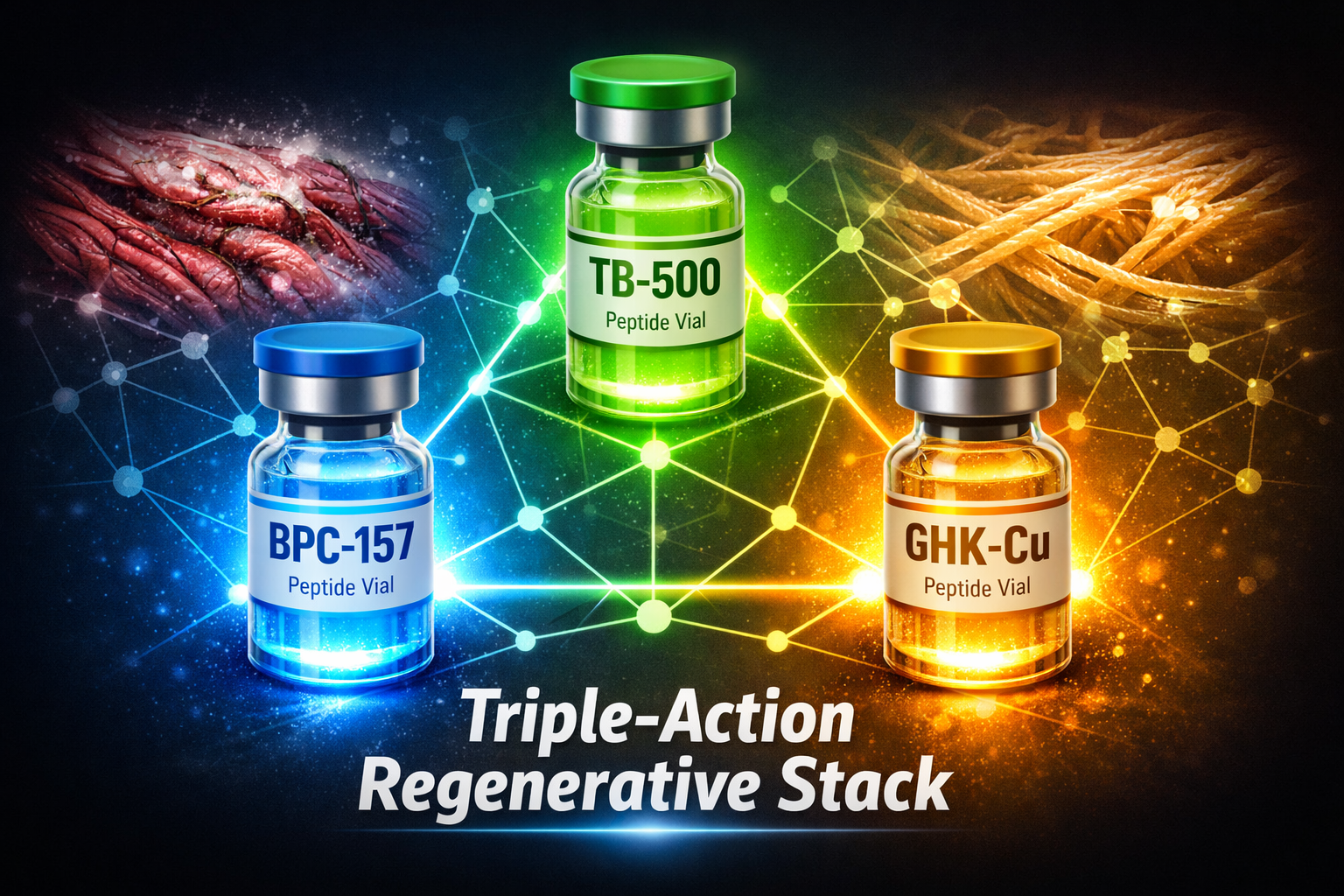
The Glow stack peptide is a three-compound formulation built around a systems-based regenerative model. Rather than targeting one pathway, it works across three simultaneously:
| Peptide | Primary Research Focus |
|---|---|
| BPC-157 | Repair acceleration, angiogenesis |
| TB-500 (Thymosin Beta-4) | Cellular migration, tissue remodeling |
| GHK-Cu | Collagen synthesis, structural regeneration |
New York dermatologist Dr. Jody A. Levine defines peptide stacking as combining two or more peptides to achieve specific aesthetic and health goals — and the Glow peptide blend exemplifies this approach at a research level.
💡 "The stack creates a synergistic effect that no single compound can replicate alone."
7 Key Facts About the Glow Stack Peptide
1. 🔬 Three Pillars, One Protocol
The Glow stack peptide targets muscle, tendon, skin, fascia, and blood vessels in a single coordinated protocol. This multi-tissue reach is what separates it from standalone peptide research.
2. 🩹 BPC-157 Drives Repair Signaling
BPC-157 has been studied for its role in accelerating tissue repair across muscles, tendons, ligaments, joints, and the gastrointestinal tract. It is the angiogenesis driver within the stack.
3. 🏃 TB-500 Supports Cellular Migration
TB-500 (Thymosin Beta-4) has been researched for wound healing and anti-inflammatory pathways through cell migration and tissue regeneration — making it the mobility component of the Glow peptide stack.
4. ✨ GHK-Cu Rebuilds Structural Integrity
GHK-Cu is the collagen synthesis agent in the stack, targeting the skin's collagen network and connective tissue resilience at the cellular level.
5. 💉 Multiple Delivery Formats Available
The Glow stack peptide is available as:
- Subcutaneous or intramuscular injections (under medical guidance)
- Topical serums
- Oral supplement formulations
Injectable delivery bypasses digestion for direct bloodstream access, which research suggests may increase bioavailability compared to oral options.
6. 📅 Structured Research Protocols Matter
Standard usage protocols involve 4–8 weeks of treatment followed by a 2–4 week break to allow biological response while minimizing desensitization.
7. 💰 Market Pricing Starts at $350
Provider-administered Glow blend formulations begin at approximately $350 per treatment session, reflecting the multi-compound complexity of the stack.
[product_slider]
Glow Stack Peptide and Longevity Research
The Glow stack peptide aligns closely with broader longevity peptide research themes emerging in 2026. Peptide stacking is gaining significant traction, with multi-targeted protocols being discussed across wellness communities and clinical research circles alike.
For researchers exploring complementary compounds, the synergy of LL-37 and SS-31 offers another example of how stacking strategies are reshaping regenerative research frameworks.
Conclusion: Is the Glow Stack Peptide Worth Researching?
The Glow stack peptide represents a well-structured, three-pathway approach to regenerative research that single-compound protocols simply cannot replicate. Its combination of BPC-157, TB-500, and GHK-Cu addresses repair, migration, and structural rebuilding in one coordinated system.
Actionable next steps for researchers in 2026:
- Review the full Glow blend research overview before designing a protocol
- Explore GHK-Cu sourcing and research guides for quality benchmarks
- Consider how the Glow stack fits within broader peptide blend research frameworks
- Always source from lab-tested peptide suppliers to ensure compound integrity
Tags: glow stack peptide, peptide stacking, BPC-157 research, TB-500 peptide, GHK-Cu collagen, regenerative peptides, longevity peptide research, peptide blend benefits, tissue repair peptides, anti-aging peptides, peptide protocol 2026, multi-peptide stack