

Both Selank and Semax emerged from the same Soviet-era research program, yet they target entirely different neurological pathways — a distinction that makes the comparison between them far more than a matter of preference. Selank vs Semax: Comparing Anxiolytic and Nootropic Peptides, Mechanisms, and Nasal Delivery is one of the most clinically relevant questions in current peptide research, particularly as interest in stress-response biology and cognitive neuroscience continues to grow in 2026.
Key Takeaways
- Selank and Semax are both synthetic heptapeptides developed at the Institute of Molecular Genetics of the Russian Academy of Sciences.
- Selank primarily modulates GABAergic signaling for anxiolytic effects; Semax upregulates BDNF for cognitive and neuroprotective outcomes.
- Both peptides are delivered intranasally, bypassing the blood-brain barrier via the olfactory pathway.
- Selank is approved in Russia for anxiety disorders; Semax is authorized for stroke and cognitive impairment management.
- Neither peptide has been associated with dependence or significant withdrawal effects in research settings.
Origins and Chemical Structure
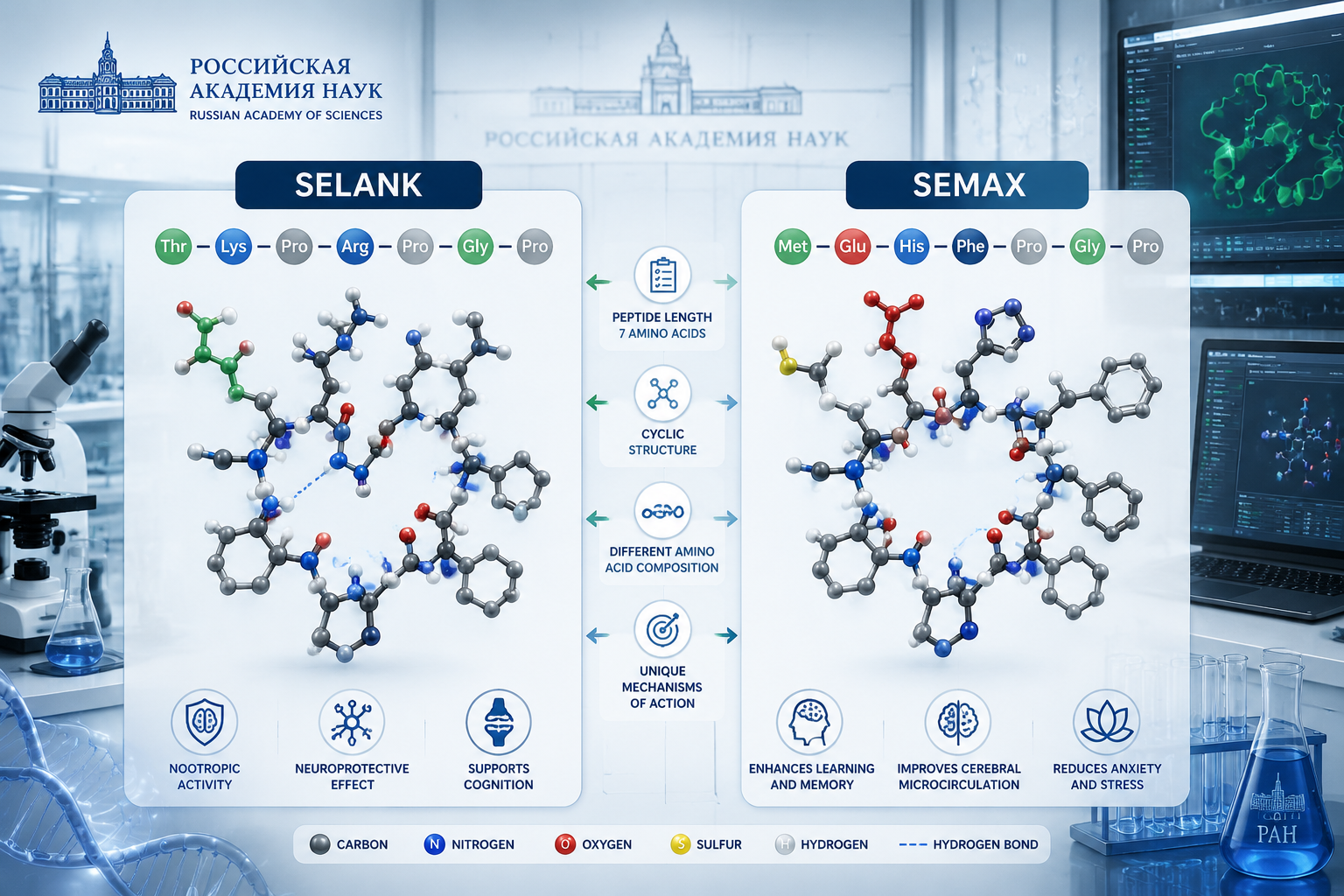
Both peptides are synthetic heptapeptides — chains of seven amino acids — created at the Institute of Molecular Genetics of the Russian Academy of Sciences. Despite sharing a common birthplace, their structural templates are entirely different.
Selank is an analog of tuftsin, a naturally occurring immunomodulatory tetrapeptide. Its sequence is Thr-Lys-Pro-Arg-Pro-Gly-Pro. Researchers extended the tuftsin backbone to improve metabolic stability and CNS penetration.
Semax is derived from the adrenocorticotropic hormone fragment ACTH(4-10), carrying the sequence Met-Glu-His-Phe-Pro-Gly-Pro. The ACTH origin gives Semax a distinct neuroendocrine profile that influences stress-axis biology.
For a broader overview of how these two peptides compare across multiple research dimensions, the Selank and Semax research overview provides useful context.
Mechanisms of Action: Where the Pathways Diverge
This is the core of any meaningful Selank vs Semax: Comparing Anxiolytic and Nootropic Peptides, Mechanisms, and Nasal Delivery analysis.
Selank: GABAergic Modulation and Enkephalin Metabolism
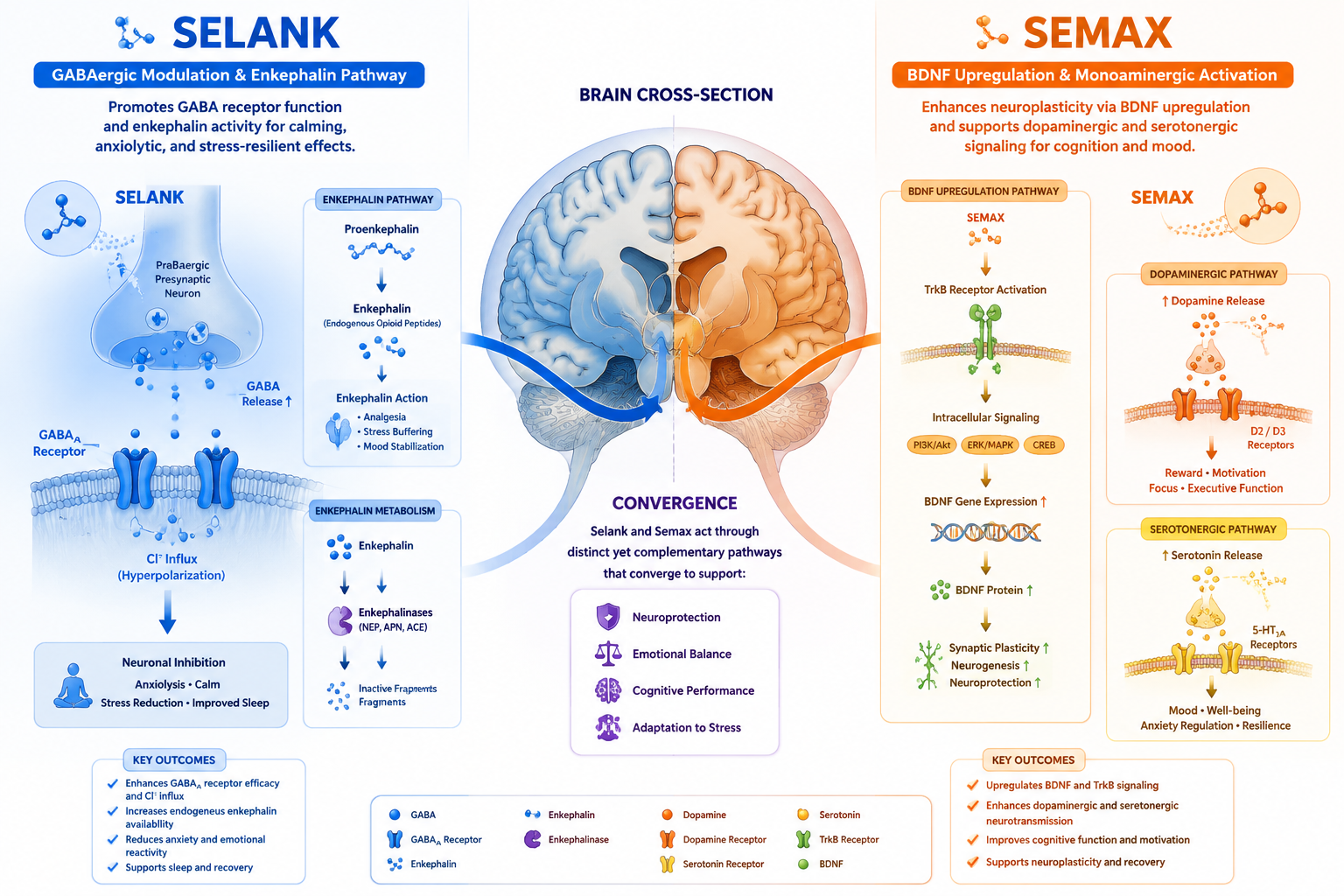
Selank's primary mechanism involves enhancement of GABA signaling — the brain's main inhibitory neurotransmitter system. By modulating GABAergic tone and influencing enkephalin metabolism, Selank produces anxiolytic effects without the sedation or tolerance risk associated with classical benzodiazepines.
Key research-supported effects include:
- Reduced anxiety-like behavior in stress models
- Modulation of interleukin expression, suggesting neuroimmune involvement
- Stable anxiolytic profile without cognitive blunting
Understanding Selank's potential side effects is equally important when evaluating its research profile.
Semax: BDNF Upregulation and Monoamine Modulation
Semax operates through a fundamentally different mechanism. It upregulates brain-derived neurotrophic factor (BDNF), a protein critical for neuronal survival, synaptic plasticity, and learning. Semax also modulates dopaminergic and serotonergic systems, which underpins its cognitive-enhancing and neuroprotective properties.
Key research-supported effects include:
- Enhanced memory consolidation and attention
- Neuroprotection in ischemic models
- Upregulation of BDNF in hippocampal and cortical regions
| Feature | Selank | Semax |
|---|---|---|
| Primary target | GABA system | BDNF / monoamines |
| Main effect | Anxiolytic | Cognitive enhancement |
| Approved use (Russia) | Anxiety, neurasthenia | Stroke, cognitive disorders |
| Onset | Minutes to hours | Minutes to hours |
| Duration | Several hours | 2-4 hours |
The neuroendocrine and innate immunity research context is relevant here, as Selank's immunomodulatory properties reflect a broader neuroimmune model.
Nasal Delivery, Bioavailability, and Research Use Cases
Both peptides are administered intranasally, which is not merely a matter of convenience. The intranasal route allows direct access to the central nervous system via the olfactory pathway, bypassing the blood-brain barrier entirely.
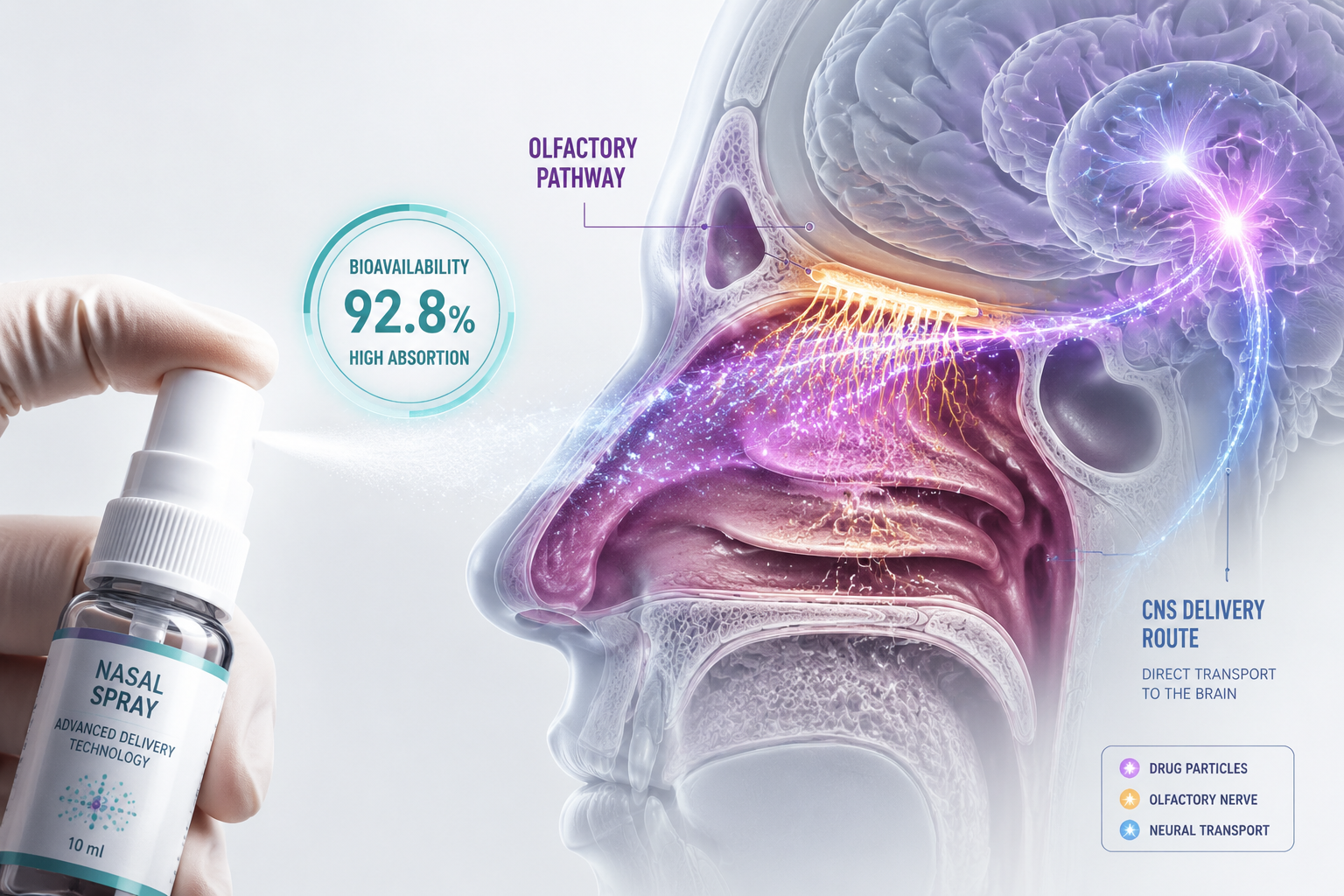
Selank demonstrates a bioavailability of approximately 92.8% via this route — a notably high figure for a peptide compound. Semax also achieves high CNS bioavailability intranasally, though precise figures vary across studies.
"The intranasal route transforms peptide delivery from a systemic challenge into a targeted CNS strategy."
For researchers interested in how delivery systems affect peptide efficacy, innovative peptide delivery systems explores this topic in depth.
Safety profiles for both peptides are favorable in research contexts:
- Mild nasal irritation is the most commonly reported adverse effect
- No dependence or withdrawal symptoms have been documented
- Neither compound shows significant sedative burden
Those researching Selank specifically may also find the detailed Selank side effects analysis and Selank overview useful for building a complete picture.
For researchers sourcing verified compounds, reviewing lab-tested peptides ensures quality and purity standards are met.
Conclusion
Selank vs Semax: Comparing Anxiolytic and Nootropic Peptides, Mechanisms, and Nasal Delivery ultimately comes down to target pathway and research objective. Selank is the stronger candidate for stress-response and neuroimmune models, given its GABAergic and enkephalin-modulating profile. Semax is better suited for cognitive neuroscience and neuroprotection research, driven by BDNF upregulation and monoamine modulation.
Actionable next steps for researchers:
- Define the primary research endpoint — anxiety/stress models favor Selank; cognitive and neuroprotective models favor Semax.
- Confirm intranasal delivery protocols, as both peptides depend on olfactory pathway absorption for CNS efficacy.
- Source only verified, lab-tested compounds to ensure research integrity.
- Review the full side-effect and safety literature before designing protocols.
Both peptides represent a compelling frontier in neuropeptide research, and their distinct mechanisms make them complementary rather than interchangeable tools.
Leave a Reply
Want to join the discussion?Feel free to contribute!