

Only a handful of compounds have generated as much research interest as enclomiphene citrate — yet its regulatory path remains one of the most complicated in modern pharmacology. For laboratory researchers navigating this landscape in 2026, finding where to buy enclomiphene for research through trusted suppliers and quality assurance protocols is not straightforward. This guide breaks down the supplier landscape, quality benchmarks, and critical compliance considerations researchers must understand before making any procurement decision.
Key Takeaways
- Enclomiphene citrate has not received FDA approval and remains in 503A Category 1 (Under Evaluation) as of 2026.
- Research-grade suppliers must provide batch-specific Certificates of Analysis (COA) and third-party purity verification.
- Purity benchmarks from reputable suppliers range from 98.88% to 99.0% or higher, verified by RP-HPLC analysis.
- Global supply chain constraints — particularly stereochemical purification capacity — affect consistent availability.
- Purchasing enclomiphene without a valid prescription for human use is unregulated and carries significant legal and safety risks.
Understanding the Regulatory Landscape Before You Source
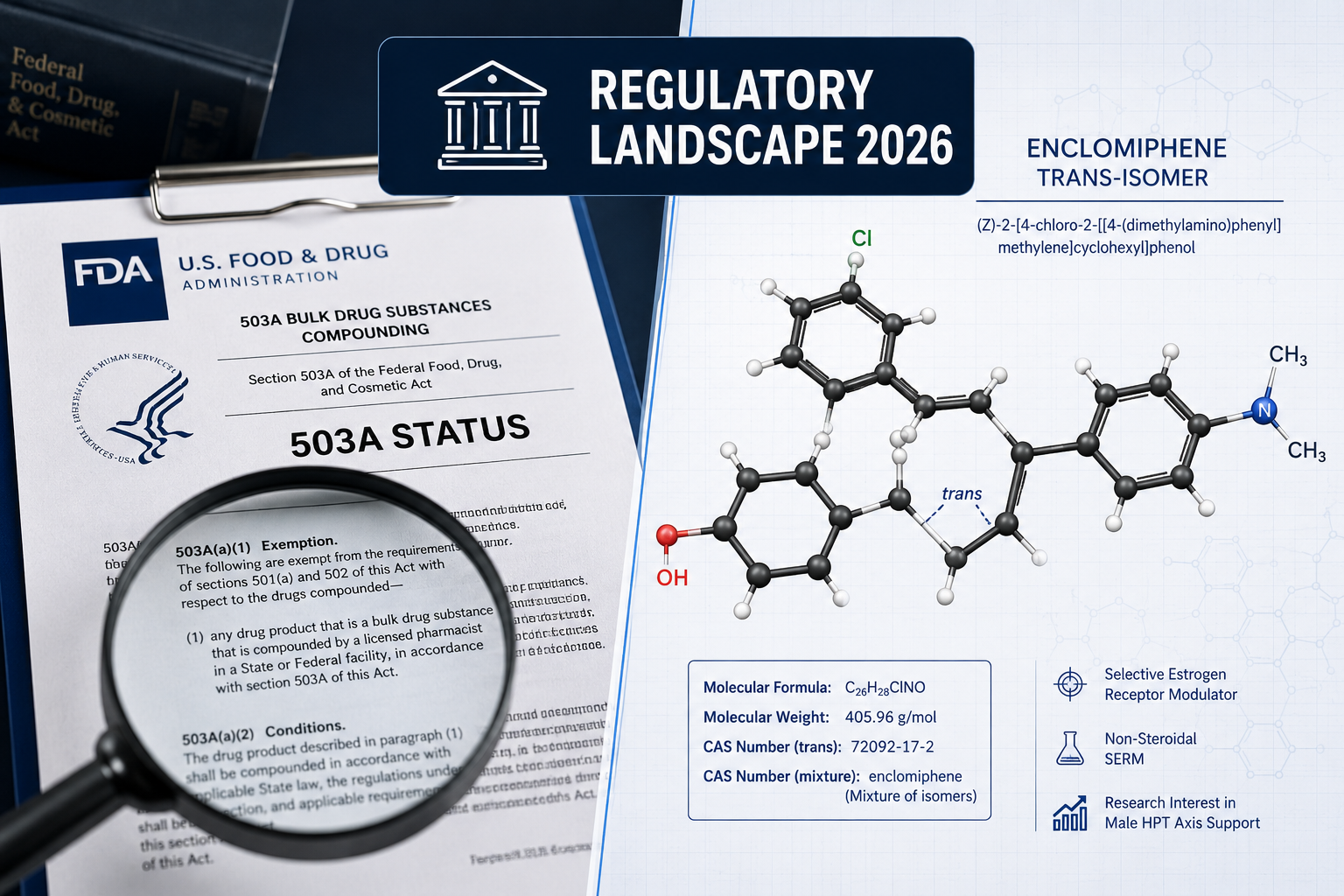
Any serious discussion of where to buy enclomiphene for research must begin with its regulatory status. Enclomiphene citrate has never received FDA approval. Its developer pursued approval under the brand name Androxal for secondary hypogonadism, but received a Complete Response Letter in late 2015. The FDA indicated the Phase 3 study design was no longer adequate to demonstrate clinical benefit, and the required additional trials were never completed.
In June 2022, the FDA Pharmacy Compounding Advisory Committee voted against adding enclomiphene citrate to the final 503A Bulks List. As of the FDA's updated list in May 2026, enclomiphene remains in 503A Category 1 (Under Evaluation) — meaning its compounding status is still unsettled.
Despite this, enclomiphene is widely used in clinical settings through compounding pharmacies. Under Section 503A of the Federal Food, Drug, and Cosmetic Act, licensed pharmacies may compound drugs for individual patients who hold valid prescriptions. Researchers should clearly distinguish between:
- Clinical/compounding use — requires a valid prescription and licensed pharmacy
- Research chemical procurement — governed by supplier-specific quality standards and intended strictly for laboratory use
"Products sold online without a prescription are unregulated, and their contents, purity, and dosing are not verified by any oversight body."
For context on how regulatory frameworks shape the broader peptide and research compound market, the latest developments in peptide research offer useful background on evolving supplier standards.
Evaluating Trusted Suppliers and Quality Assurance Standards
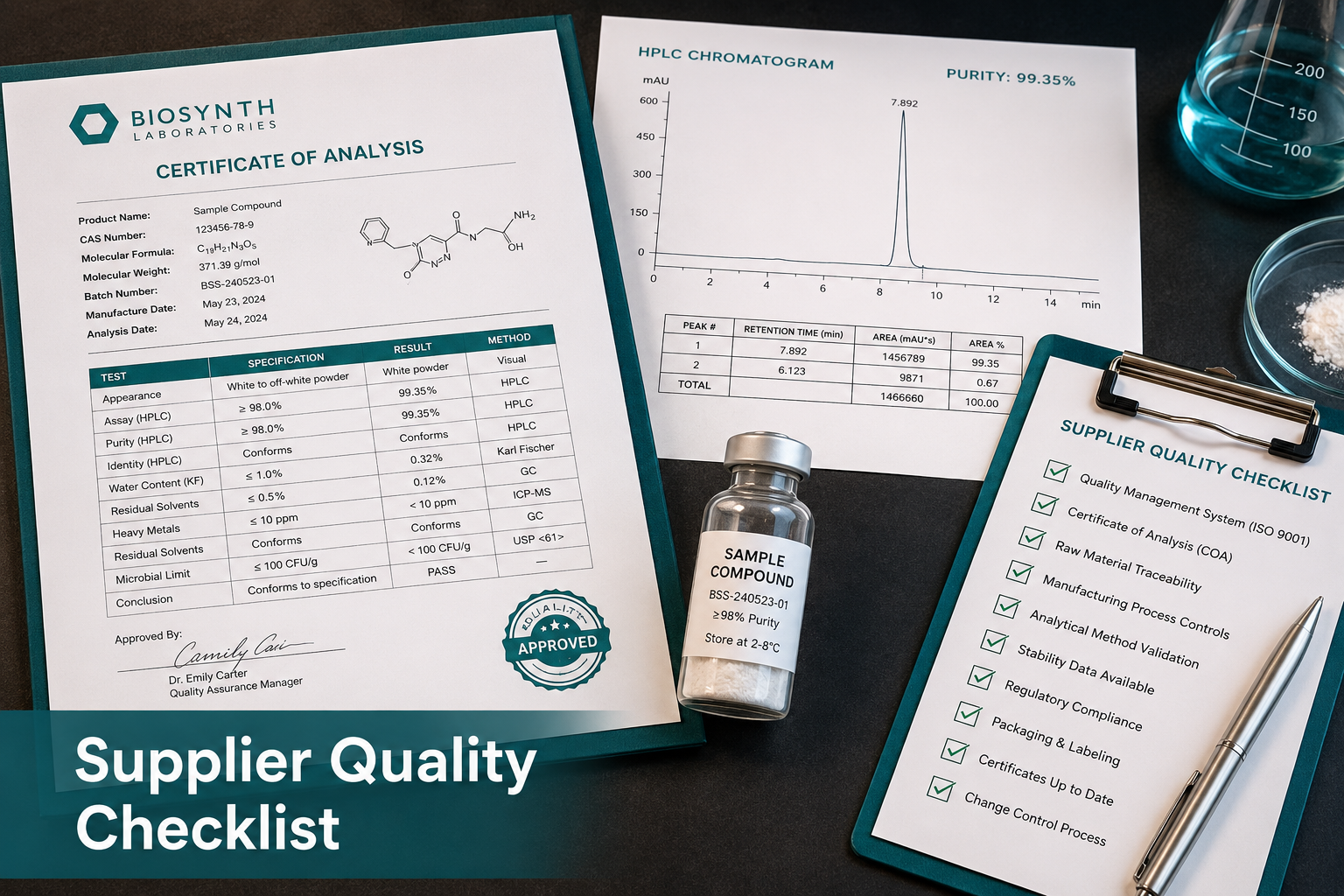
When researching where to buy enclomiphene for research, quality assurance is the single most important criterion. The research chemical market is not uniformly regulated, which means the burden of due diligence falls entirely on the researcher.
What to Look for in a Reputable Supplier
| Quality Indicator | Minimum Standard |
|---|---|
| Purity level | 98.88% or higher (RP-HPLC verified) |
| Documentation | Batch-specific COA + MSDS |
| Testing method | Third-party or in-house RP-HPLC |
| Isomer selectivity | Trans-isomer above 97% |
| Labeling | Accurate concentration and lot number |
Reputable suppliers provide batch-specific Certificates of Analysis that confirm compound identity, purity, and testing methodology. Some suppliers offer enclomiphene at purity levels of 99.0% or higher, accompanied by both COA and Material Safety Data Sheet (MSDS) documentation. Others offer 12.5 mg capsule formats with purity confirmed at 98.88% via RP-HPLC.
Researchers sourcing other compounds from verified suppliers can review lab-tested peptide standards to understand what rigorous quality documentation looks like in practice. Similarly, the COA verification process used by established peptide suppliers sets a useful benchmark for what enclomiphene sourcing documentation should include.
Supply Chain Risks and Practical Procurement Strategies
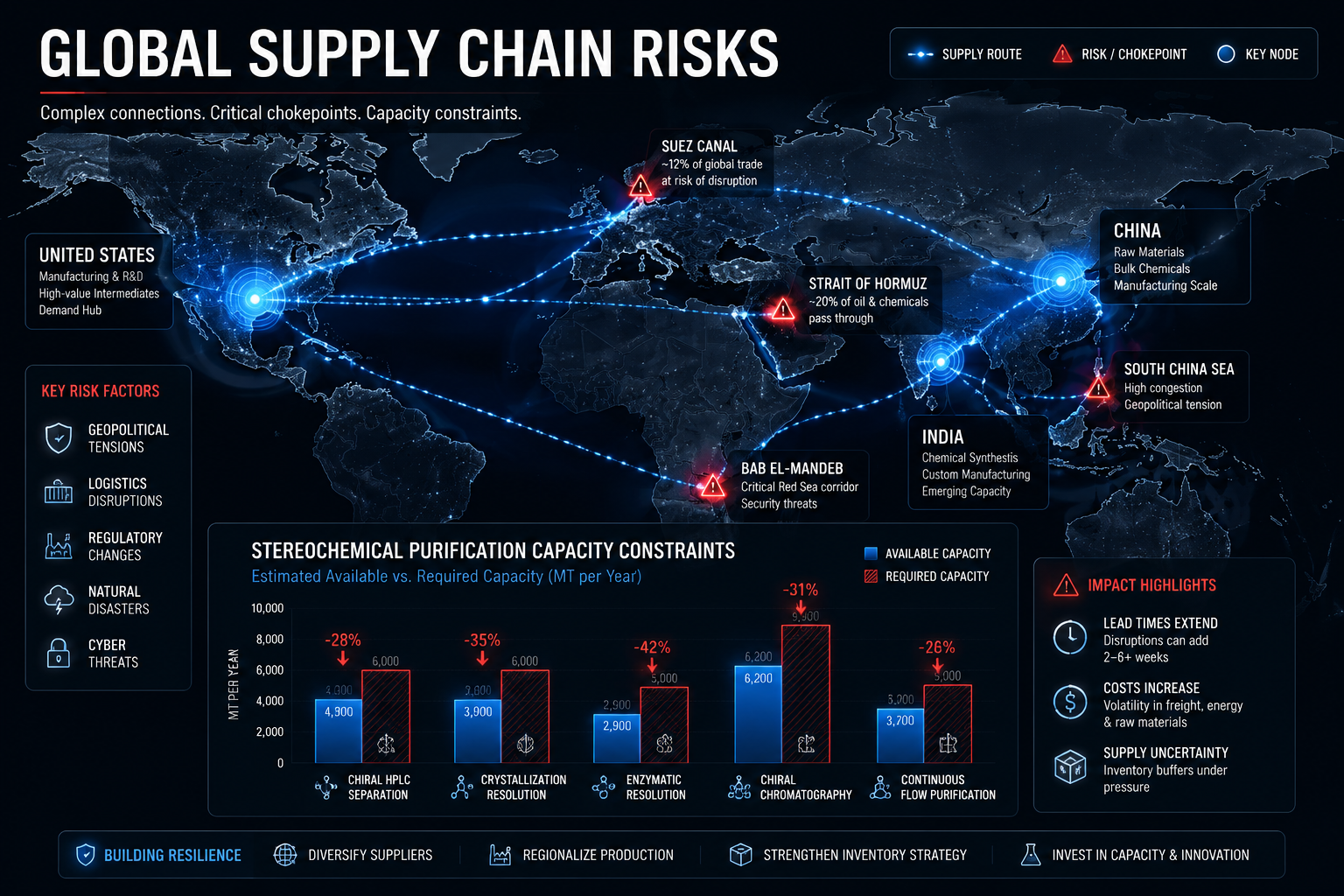
The enclomiphene supply chain faces challenges that go beyond simple availability. A significant portion of active pharmaceutical ingredients (APIs) are sourced from manufacturing hubs in China and India. Geopolitical factors and increased FDA oversight of compounded hormone therapies have created procurement bottlenecks.
Industry experts point to a specific constraint: stereochemical purification capacity. Facilities capable of maintaining consistent trans-isomer selectivity above 97% are limited globally. This makes consistent, high-purity supply difficult to guarantee across all vendors.
Practical steps for research procurement:
- Implement predictive procurement strategies to buffer against supply gaps
- Request lot-specific documentation before finalizing any order
- Verify that the supplier tests each batch independently, not just at product launch
- Cross-reference supplier claims against third-party analytical databases
Researchers working with related compounds — such as those exploring 5-Amino-1MQ for metabolic research or NAD+ scientific evidence — will recognize that these same supply chain diligence principles apply across the research compound category.
For those interested in broader hormonal and body composition research themes, resources on tesa science and sourcing and body composition research themes provide useful comparative context.
Conclusion
Navigating where to buy enclomiphene for research requires a clear-eyed understanding of regulatory status, supplier quality standards, and global supply chain realities. In 2026, the compound remains unapproved by the FDA and sits in an unsettled compounding category — making rigorous supplier vetting non-negotiable.
Actionable next steps for researchers:
- Confirm the intended use is strictly laboratory research, not human administration without medical supervision.
- Request batch-specific COA and MSDS documentation from any prospective supplier before purchasing.
- Verify purity is confirmed via RP-HPLC at 98.88% or above, with trans-isomer selectivity above 97%.
- Build procurement buffers into research timelines to account for supply chain volatility.
- Consult a licensed healthcare professional if the intended application involves any clinical or compounding context.
Quality assurance is not optional in research compound procurement — it is the foundation of reliable, reproducible science.
Leave a Reply
Want to join the discussion?Feel free to contribute!