

Anxiety disorders affect roughly one in three adults globally over their lifetime, yet the dominant pharmacological tools — benzodiazepines — carry well-documented risks of sedation, cognitive blunting, and physical dependence. Against that backdrop, Selank Peptide in Research: Anxiolytic Pathways, Intranasal Use, and Study Endpoints has emerged as a focused area of scientific inquiry, drawing attention from neurochemists and clinical researchers who want a cleaner mechanistic profile. This article unpacks what the current evidence shows about how Selank works, how it is delivered, and how researchers are measuring its effects.
Key Takeaways
- Selank is a synthetic heptapeptide derived from tuftsin that modulates GABAergic signaling and inhibits enkephalin-degrading enzymes.
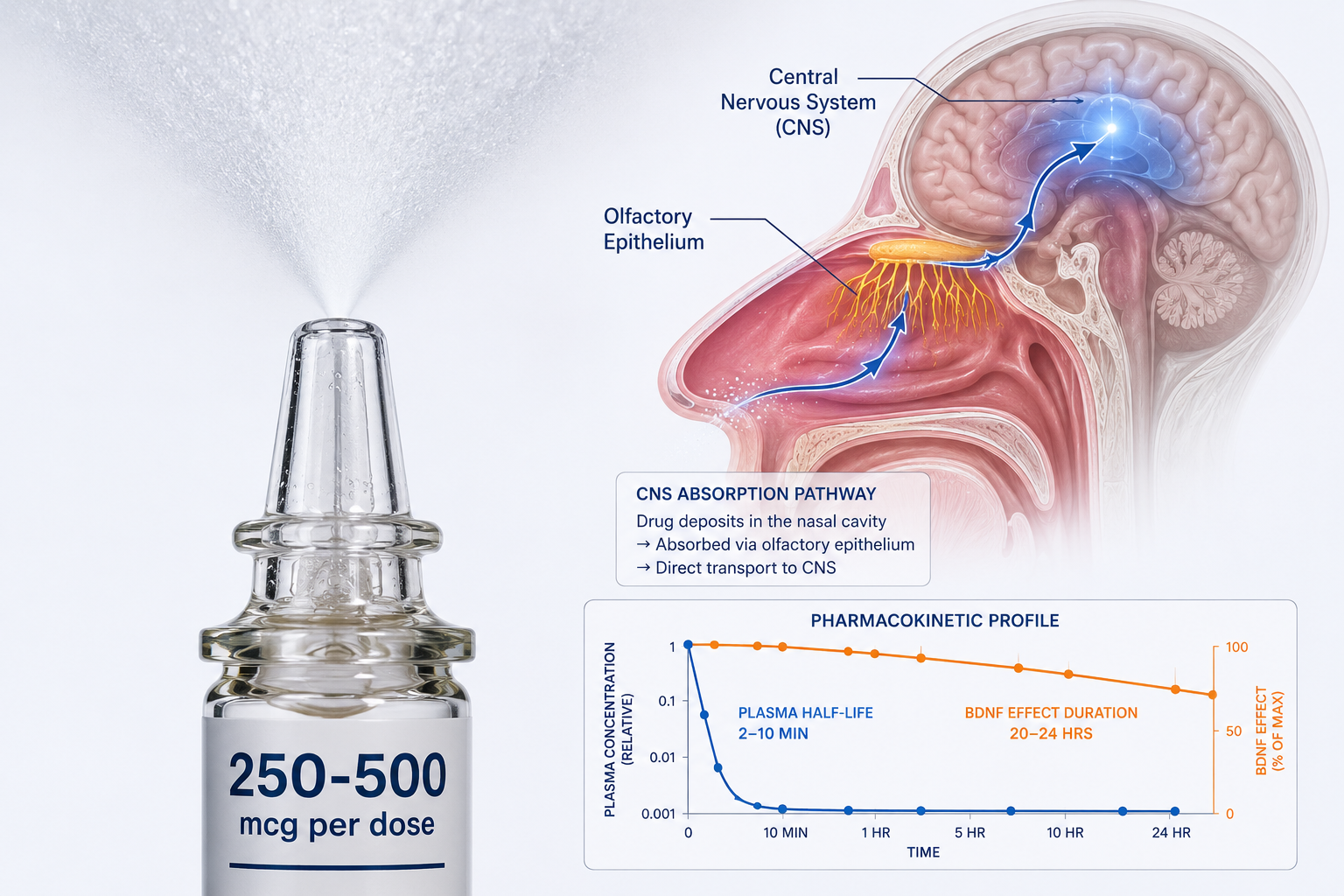
- Intranasal delivery provides rapid CNS access, with a plasma half-life of roughly 2-10 minutes but pharmacodynamic effects lasting up to 24 hours.
- Russian clinical trials comparing Selank to benzodiazepines report comparable anxiolytic efficacy without sedation or dependence.
- The Hamilton Anxiety Rating Scale (HARS) is the primary endpoint used in published trials.
- Selank is not FDA- or EMA-approved; most clinical data originate from Russian research, and independent Western replication remains limited.
Anxiolytic Pathways: How Selank Works at the Molecular Level
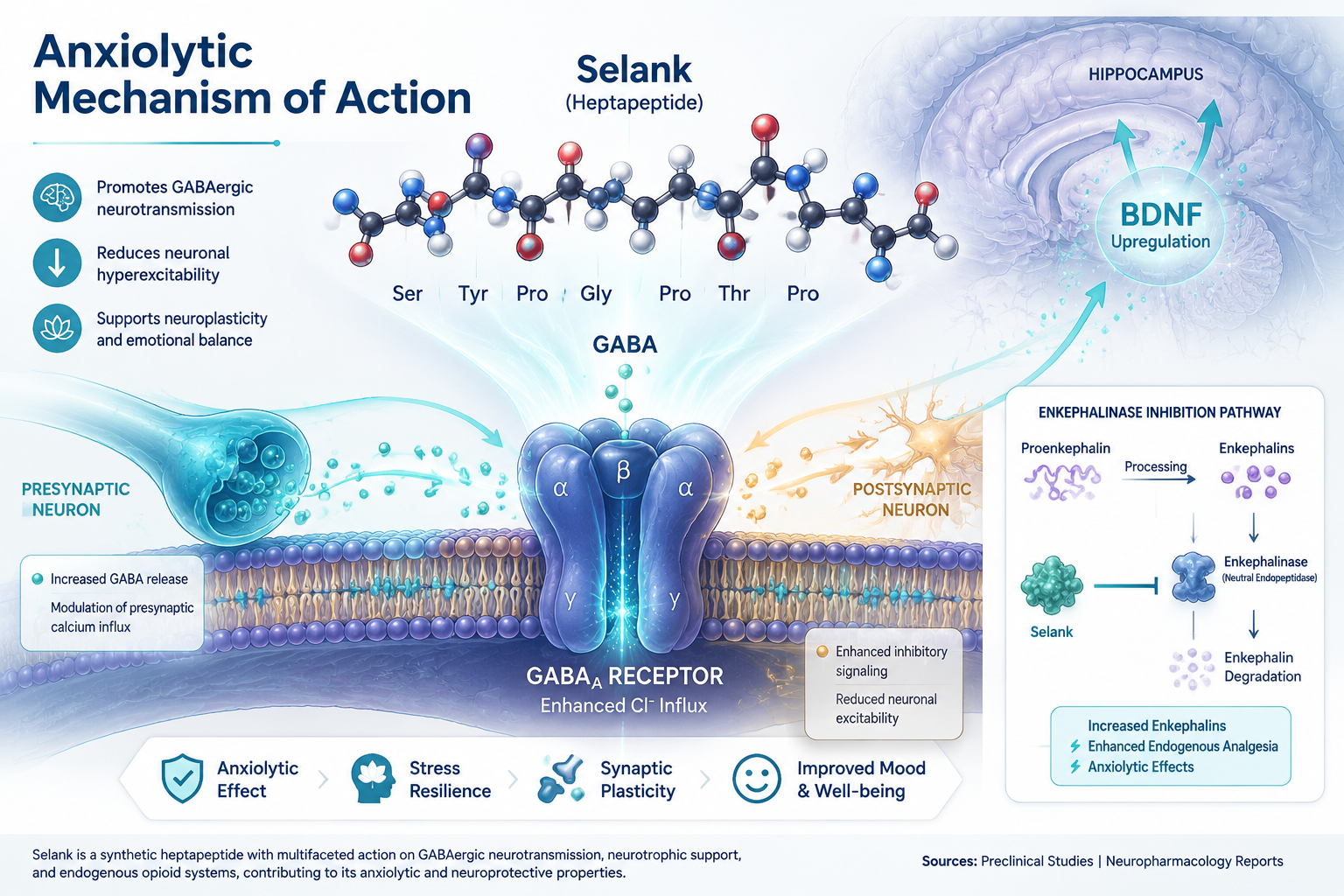
Selank is a seven-amino-acid (heptapeptide) analog of tuftsin, an endogenous tetrapeptide naturally produced in the spleen. Its anxiolytic profile rests on at least three converging mechanisms.
GABAergic modulation is the most studied pathway. Selank appears to enhance the sensitivity of GABA-A receptors, the same receptor class targeted by benzodiazepines. However, unlike benzodiazepines, it does not bind directly to the benzodiazepine allosteric site, which may explain why it avoids the sedation and tolerance seen with classical drugs in that class.
Enkephalin preservation adds a second layer. Selank inhibits enzymes responsible for breaking down enkephalins — endogenous opioid peptides that contribute to stress regulation. By extending enkephalin activity, Selank may reduce the neurochemical "noise" that sustains anxious states.
Monoamine and BDNF effects round out the picture. Research shows upregulation of brain-derived neurotrophic factor (BDNF) in the hippocampus following Selank exposure, a finding relevant to both mood regulation and neuroprotection. Serotonin and dopamine turnover are also modestly influenced, though these effects appear secondary to GABAergic action.
Selank also demonstrates immunomodulatory properties, shifting the balance between T-helper 1 and T-helper 2 cytokines. This neuroimmune dimension connects it to broader research themes explored in areas like neuroendocrine and innate immunity interactions, where peptide signaling bridges the nervous and immune systems.
Intranasal Use: Delivery Rationale and Dosing Parameters
The intranasal route is the defining feature of Selank's research administration protocol, and the choice is mechanistically deliberate.
"Intranasal delivery bypasses hepatic first-pass metabolism and provides near-direct access to the central nervous system via the olfactory epithelium — a critical advantage for a peptide with a plasma half-life of just 2-10 minutes."
Despite that brief systemic half-life, Selank's pharmacodynamic footprint is far longer. BDNF upregulation and anxiolytic behavioral effects have been documented to persist for 20-24 hours after a single dose, suggesting receptor-level or transcriptional changes that outlast the peptide's presence in circulation.
Standard research dosing parameters:
| Parameter | Typical Range |
|---|---|
| Dose per administration | 250-500 micrograms |
| Frequency | 2-3 times daily |
| Cycle length | 14-21 days |
| Route | Intranasal spray |
This delivery model shares conceptual ground with other peptides studied via mucosal or alternative routes. Researchers interested in delivery optimization may also find value in reviewing BPC-157 research themes and oral BPC-157 delivery considerations, where route selection similarly affects bioavailability outcomes.
Study Endpoints in Selank Peptide Research
Understanding Selank Peptide in Research: Anxiolytic Pathways, Intranasal Use, and Study Endpoints requires close attention to how trials are actually designed and measured.
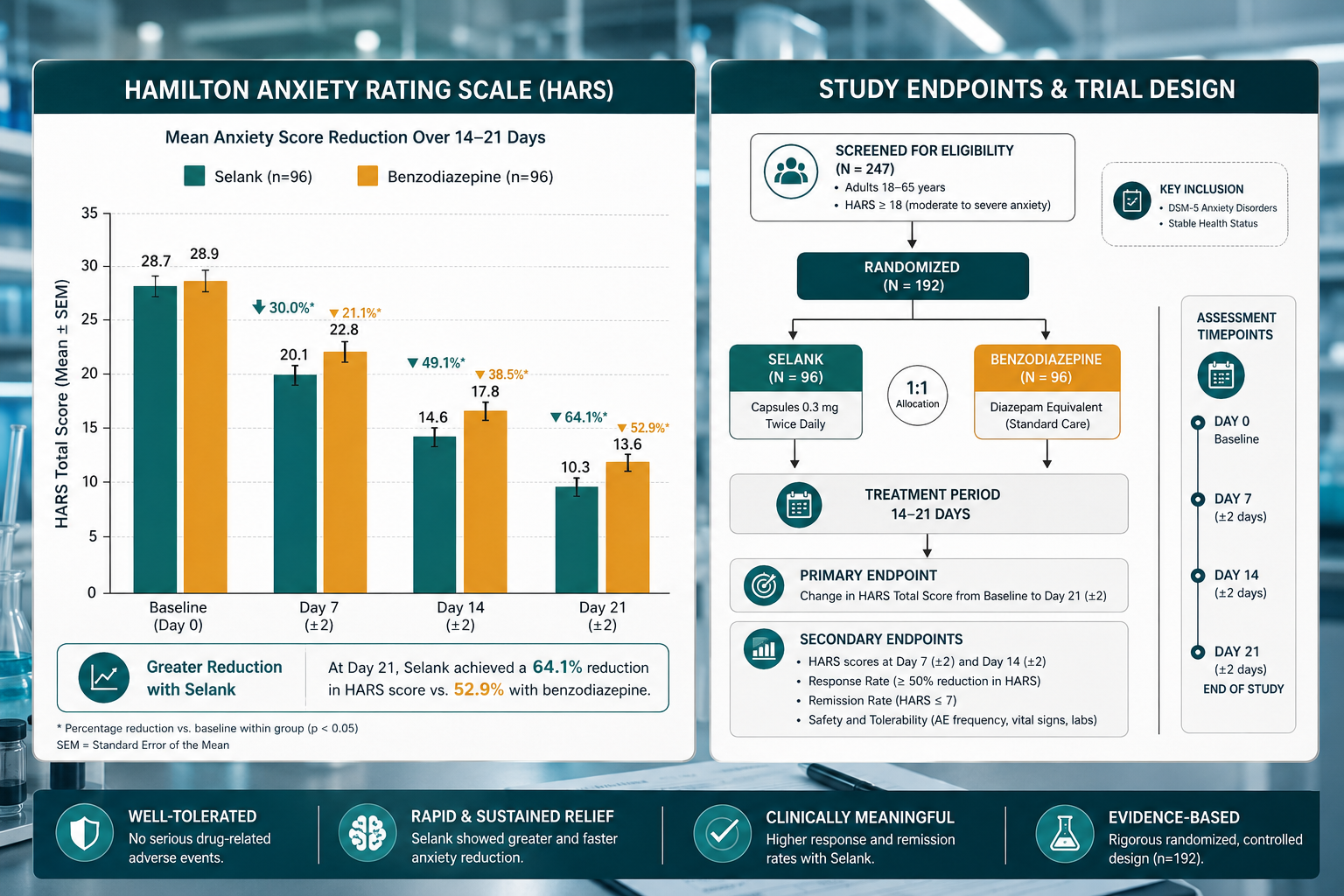
The Hamilton Anxiety Rating Scale (HARS) is the primary psychometric tool used in published Selank trials. HARS scores track somatic and psychological anxiety symptoms across 14 items, giving researchers a validated, quantitative endpoint for comparing treatment arms.
In Russian clinical trials involving approximately 192 patients, Selank produced HARS score reductions comparable to medazepam and phenazepam — two benzodiazepine-class drugs — over 14-21 day treatment periods. Critically, the Selank groups showed no clinically significant sedation, cognitive impairment, or signs of physical dependence, distinguishing it sharply from the comparator drugs.
Key endpoints used in Selank trials:
- HARS total score reduction
- Cognitive function assessments (attention, memory tasks)
- Sedation scales
- Dependence and withdrawal indicators
- Immune marker panels (cytokine profiling)
Selank received regulatory approval in Russia in 2009 for generalized anxiety disorder and neurasthenia. It has not received FDA or EMA approval. A brief listing under FDA Category 2 in September 2023 was withdrawn by September 2024 after the nominator pulled the nomination.
The primary limitation of the existing evidence base is geographic concentration. Nearly all controlled data originate from Russian institutions, and independent replication in Western research settings remains sparse. This gap is a recognized priority for the field.
Researchers building multi-peptide experimental frameworks may find it useful to cross-reference metabolic modulation research lines and NAD+ energetics and longevity research themes for comparative endpoint design strategies, as well as reference standard benchmarking practices when establishing assay reliability.
Conclusion
Selank occupies a genuinely distinct position in peptide neuroscience research. Its multi-pathway anxiolytic mechanism — spanning GABAergic modulation, enkephalin preservation, and BDNF upregulation — gives researchers a compound with a cleaner safety signal than classical benzodiazepines, at least within the existing trial data. The intranasal delivery model is well-matched to its short plasma half-life, and the HARS-based endpoint framework provides a replicable measurement structure for future studies.
Actionable next steps for researchers:
- Prioritize HARS as the primary endpoint alongside cognitive battery tests to capture both efficacy and safety dimensions.
- Design cycle lengths of 14-21 days with intranasal dosing at 250-500 mcg per administration to align with published protocols.
- Plan for cytokine profiling as a secondary endpoint to capture immunomodulatory effects.
- Seek independently verified peptide sourcing with documented purity standards to ensure experimental reproducibility.
The field needs well-designed, independently replicated trials outside Russia to either confirm or refine the current evidence. Until that data exists, Selank remains a compelling but incompletely validated research compound — one that rewards rigorous experimental design.
Leave a Reply
Want to join the discussion?Feel free to contribute!