

Fewer naming errors in peptide research have caused more confusion than the label "GLP-2 Tirz", a shorthand that implies a connection to the GLP-2 receptor when none actually exists. For researchers navigating GLP2-T vs GLP2 Tirz Peptide: Understanding the Naming, Mechanistic Nuances, and Research Implications for Gut Health, getting these definitions right is not a minor detail. It directly shapes experimental design, data interpretation, and the conclusions drawn from gut health studies.
Key Takeaways
- "GLP-2 Tirz" is an informal catalog label for tirzepatide, a dual GLP-1/GIP receptor agonist, it does not act on the GLP-2 receptor.
- GLP2-T is a research-grade analog of GLP-2, the native intestinal peptide that supports mucosal growth and gut barrier integrity.
- These two compounds work through entirely different receptor pathways and serve distinct research purposes.
- Confusing the two can lead to flawed experimental design in gut health and metabolic research.
- Clarity on nomenclature is essential before selecting either compound for preclinical study.
The Naming Problem: Where the Confusion Starts
The label "GLP-2 Tirz" appears in certain research catalogs as shorthand for tirzepatide. Tirzepatide is a dual agonist of the glucagon-like peptide-1 (GLP-1) receptor and the glucose-dependent insulinotropic polypeptide (GIP) receptor. It has no pharmacological interaction with the GLP-2 receptor whatsoever.
The "GLP-2" prefix in this informal label likely arose from the broader GLP family of peptides sharing a naming convention. However, GLP-1 and GLP-2 are distinct hormones with different receptors, different tissue targets, and different biological functions. Grouping tirzepatide under a "GLP-2" label is scientifically inaccurate.
GLP2-T, by contrast, is a research-grade structural analog of native GLP-2, a 33-amino acid peptide secreted by intestinal L-cells in response to nutrient intake. GLP2-T is designed specifically to study GLP-2 receptor-mediated effects in the gut.
"Naming precision in peptide research is not academic pedantry, it determines which receptor gets targeted and what biology gets studied."
Mechanistic Distinctions Between GLP2-T and GLP2 Tirz
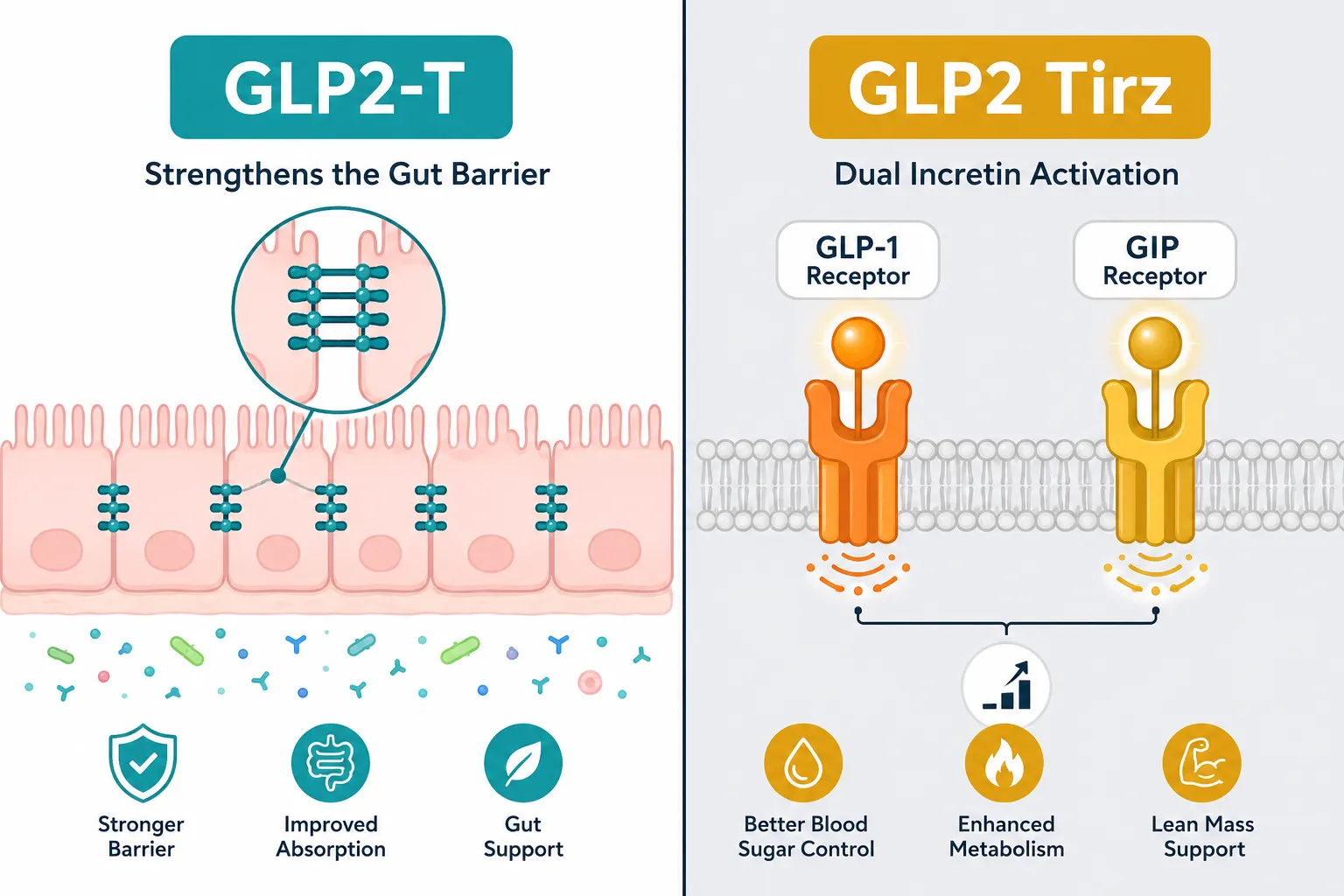
Understanding the mechanistic differences is central to the GLP2-T vs GLP2 Tirz Peptide discussion. The table below summarizes the key contrasts:
| Feature | GLP2-T | GLP2 Tirz (Tirzepatide) |
|---|---|---|
| Receptor Target | GLP-2 receptor | GLP-1 and GIP receptors |
| Primary Research Focus | Intestinal mucosal growth, gut barrier | Insulin secretion, appetite, weight loss |
| Secreted By | Intestinal L-cells (analog of native GLP-2) | Synthetic dual-agonist compound |
| Gut Health Role | Direct, tight junction regulation, villi growth | Indirect, metabolic effects only |
How GLP2-T Works
GLP2-T binds selectively to the GLP-2 receptor expressed on intestinal subepithelial myofibroblasts and enteric neurons. This triggers a cascade that promotes intestinal mucosal growth, strengthens tight junction proteins, and enhances nutrient absorption. A long-acting GLP-2 analog has already received clinical approval for short bowel syndrome, validating the therapeutic relevance of this pathway.
Researchers studying gut barrier biology, inflammatory bowel conditions, or intestinal permeability use GLP2-T to probe these specific mechanisms. For related gut-focused peptide research, BPC-157 research peptides represent another commonly studied compound in barrier integrity models.
How Tirzepatide (GLP2 Tirz) Works
Tirzepatide acts on GLP-1 and GIP receptors, primarily in pancreatic beta cells and the central nervous system. Clinical data show body weight reductions of 15-22% and significant improvements in blood glucose control, results that outperform single-pathway GLP-1 agonists. Its mechanism is metabolic and neuroendocrine, not intestinal-structural.
Researchers interested in the metabolic axis may also find value in reviewing cagrilintide synergy with GLP-1 for a complementary perspective on dual-pathway approaches.
Research Implications for Gut Health Studies
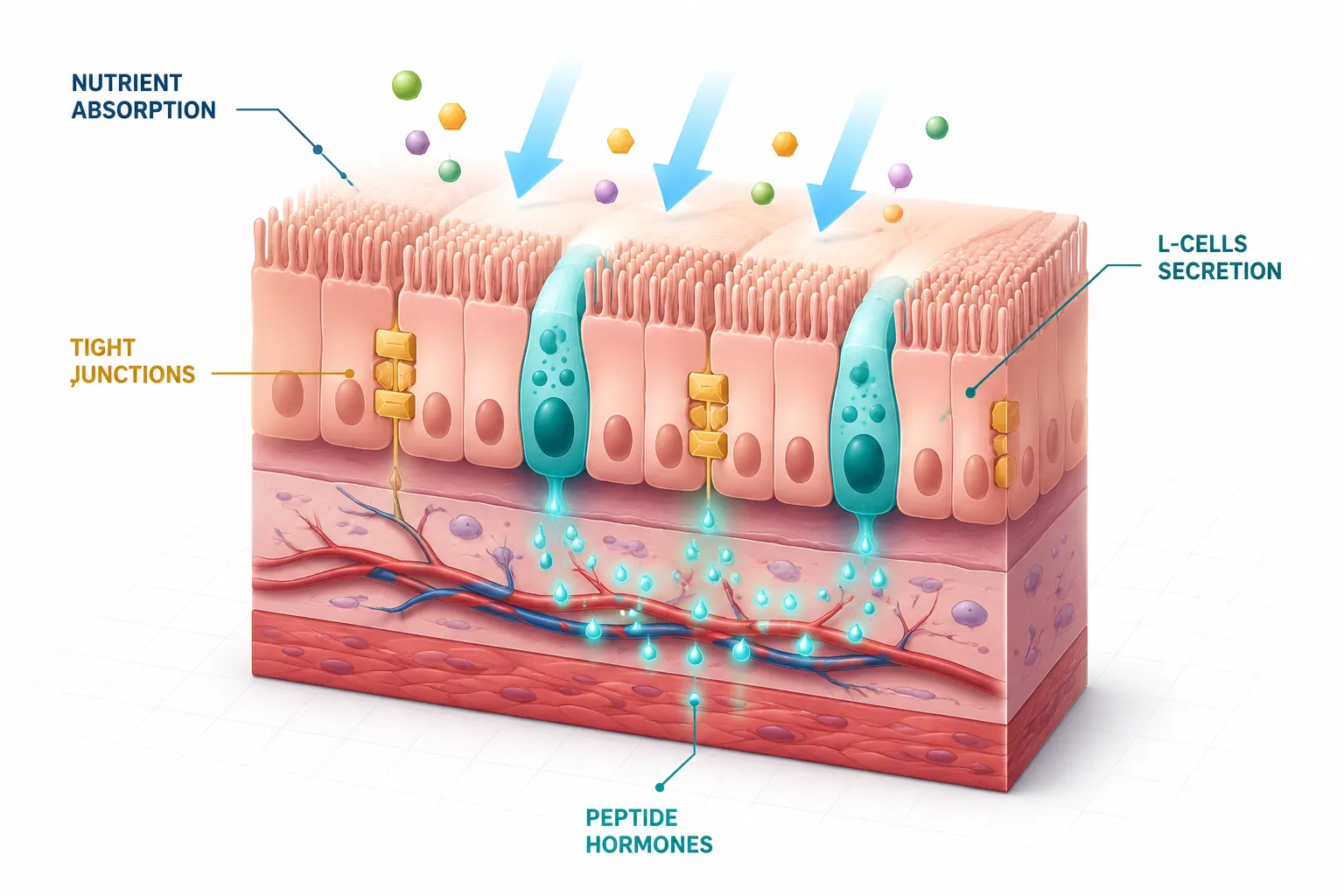

The practical consequences of confusing these two compounds in a research setting are significant. Selecting tirzepatide when the study goal is intestinal barrier function will yield no meaningful data on tight junctions or mucosal growth, because tirzepatide simply does not engage those pathways.
Conversely, using GLP2-T in a metabolic weight-loss model will produce no relevant insulin or appetite data.
Correct compound selection by research goal:
- Gut barrier integrity studies, GLP2-T is the appropriate analog
- Intestinal mucosal growth models, GLP2-T targets the relevant receptor
- Metabolic and glycemic research, Tirzepatide (GLP2 Tirz) is the correct tool
- Appetite and weight regulation models, Tirzepatide (GLP2 Tirz) applies
For researchers working on broader gut and metabolic peptide panels, GLP-3 Reta research offers additional context on the expanding GLP family. Those exploring metabolic peptides more broadly may also find tesa's role in fat metabolism and MOTS-C mitochondrial research relevant to their experimental frameworks.
Purity and Sourcing Matter
Regardless of which compound is selected, research-grade purity is non-negotiable. Contaminated or mislabeled peptides compound the naming confusion problem and invalidate results entirely. Researchers should verify certificates of analysis and source from verified peptide manufacturers with documented quality controls.
Conclusion
The GLP2-T vs GLP2 Tirz Peptide: Understanding the Naming, Mechanistic Nuances, and Research Implications for Gut Health debate ultimately comes down to one principle: receptor specificity drives research validity. GLP2-T is a GLP-2 receptor agonist analog built for intestinal biology studies. Tirzepatide, informally labeled "GLP-2 Tirz" in some catalogs, is a dual GLP-1/GIP agonist with no GLP-2 receptor activity.
Actionable next steps for researchers:
- Audit any existing protocols that reference "GLP-2 Tirz" and confirm whether the intended compound is tirzepatide or a true GLP-2 analog.
- Match compound selection strictly to receptor target and research objective before ordering.
- Request full certificates of analysis from suppliers to confirm compound identity and purity.
- Consult updated literature on GLP-2 receptor biology when designing intestinal barrier studies.
- Explore the broader peptides available for research to identify complementary compounds for multi-pathway gut health models.
Precision in naming is the first step toward precision in science.
Leave a Reply
Want to join the discussion?Feel free to contribute!