

A synthetic heptapeptide derived from the endogenous immunomodulator tuftsin, Selank carries a deceptively simple structure that belies a remarkably complex pharmacological profile. Research into Selank peptide: advanced pharmacological mechanisms underlying its anxiolytic and nootropic effects in research has revealed a compound that simultaneously engages the GABAergic system, opioid pathways, neurotrophic signaling, and neuroimmune axes, a multi-target footprint rarely seen in a single peptide.
Key Takeaways
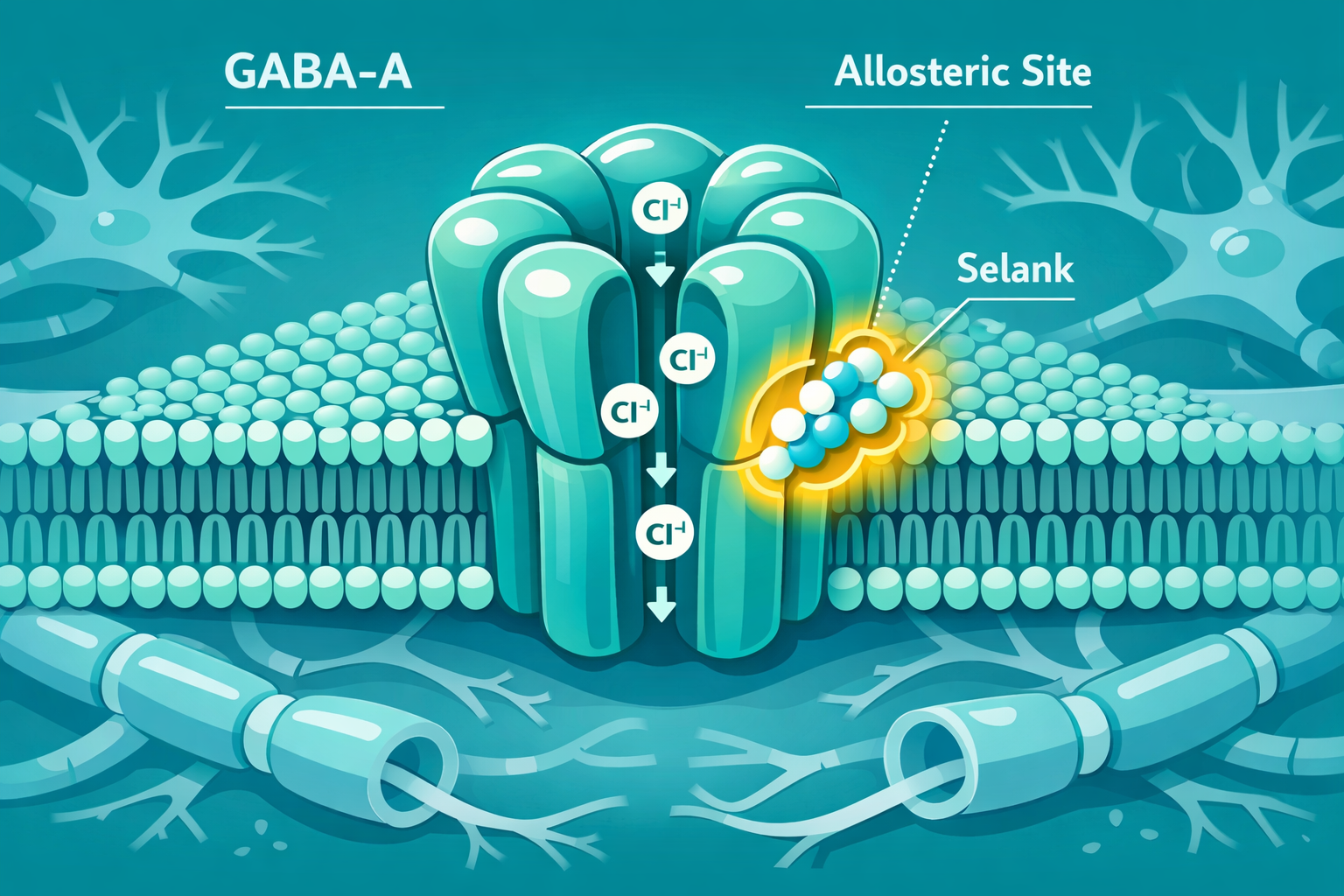
- Selank's primary anxiolytic action is linked to positive allosteric modulation of GABA-A receptors, particularly subunit-selective interactions.
- Enkephalinase inhibition extends endogenous opioid peptide activity, contributing a secondary anxiolytic and mood-stabilizing layer.
- BDNF upregulation underlies the peptide's nootropic and memory-enhancing properties observed in preclinical models.
- Monoaminergic modulation, spanning serotonin, dopamine, and norepinephrine, broadens its cognitive and emotional regulatory effects.
- Transcriptomic studies show Selank alters expression of 36 or more genes involved in neuroimmune regulation and synaptic plasticity.
GABAergic Modulation: The Core Anxiolytic Engine
The most thoroughly documented mechanism in Selank peptide research is its interaction with the gamma-aminobutyric acid type A (GABA-A) receptor complex. Unlike classical benzodiazepines, which bind non-selectively to the benzodiazepine site, Selank appears to act as a positive allosteric modulator through a distinct binding region. This selectivity matters: subunit composition of GABA-A receptors varies across brain regions, and subunit-selective actions may explain why Selank produces anxiolysis with a comparatively low sedation burden in preclinical settings.
Electrophysiological data from neuropharmacology research indicate that Selank enhances chloride ion conductance in a dose-dependent manner, increasing inhibitory tone in limbic structures, particularly the amygdala and hippocampus, that govern fear and stress responses. Emerging evidence also points to potential involvement of the 5-HT2C serotonin receptor, which modulates GABAergic interneuron activity, suggesting the peptide may fine-tune inhibitory circuits through a serotonin-GABA interaction.
"Selank's subunit-selective GABA-A modulation may represent a pharmacological template for anxiolytics that spare motor and sedative side-effect profiles."
For researchers exploring broader neuroimmune connections, the neuroendocrine and innate immunity research overview provides relevant context on how peptide-based compounds intersect with neural signaling.

Opioid System Contributions and Neurotrophic Signaling
Enkephalinase Inhibition
Selank inhibits enkephalinase, the enzyme responsible for degrading endogenous enkephalins, thereby prolonging the activity of these endogenous opioid peptides at mu and delta receptors. This mechanism adds a secondary anxiolytic and analgesic-adjacent layer without introducing exogenous opioid agonism. The result is an extended half-life of endogenous mood-stabilizing peptides, which may partly explain the sustained anxiolytic effect observed across multiple dosing windows in animal models.
BDNF Upregulation and Cognitive Enhancement
One of the most significant nootropic mechanisms identified in Selank research is the upregulation of brain-derived neurotrophic factor (BDNF). BDNF supports synaptic plasticity, long-term potentiation, and neuronal survival, processes central to learning and memory consolidation. Studies in rodent models show that Selank administration increases BDNF mRNA expression in the hippocampus, correlating with measurable improvements in spatial memory and associative learning tasks.
This neurotrophic activity aligns Selank with a broader class of peptides being studied for cognitive support. Researchers interested in longevity-oriented peptide research may find relevant parallels in the longevity peptide research overview.
Monoaminergic, Transcriptomic, and Immune Mechanisms
Monoamine Neurotransmitter Modulation
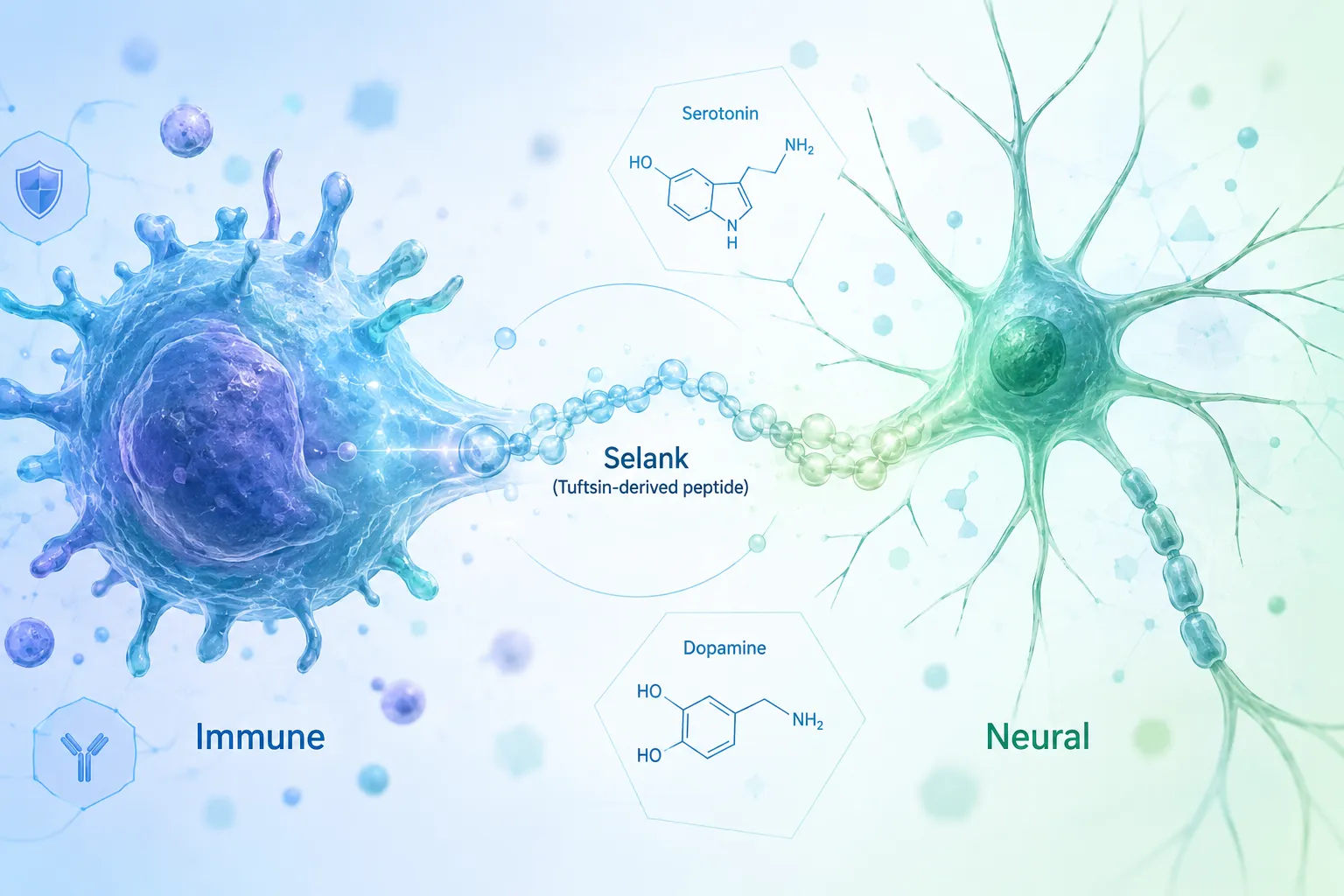
Beyond GABAergic effects, Selank modulates all three major monoamine systems. Research demonstrates measurable changes in serotonin turnover in prefrontal and limbic regions, dopaminergic activity in mesolimbic pathways, and norepinephrine dynamics in stress-response circuits. This broad monoaminergic reach supports its reported nootropic effects on attention, working memory, and emotional regulation, functions dependent on balanced catecholamine and indolamine signaling.
Gene Expression and Neuroimmune Axes
Transcriptomic analyses reveal that Selank alters the expression of 36 or more genes involved in synaptic transmission, inflammatory signaling, and immune cell regulation. Its tuftsin-derived structure confers inherent immunomodulatory properties: tuftsin is a naturally occurring tetrapeptide that activates macrophages and natural killer cells. Selank extends this heritage by modulating cytokine expression, particularly interleukins involved in neuroinflammatory cascades, without the immunosuppressive risks associated with steroid-based interventions.
This immune-neural crosstalk is especially relevant for researchers examining stress-related neuroinflammation. Reviewing Selank side effects in research contexts provides a balanced picture of its tolerability profile alongside these mechanisms.
Researchers building multi-peptide protocols may also find value in reviewing peptide blends for research and quality testing protocols to ensure compound integrity before experimental use. For those examining overlapping cognitive and recovery pathways, the recovery and tissue biology overview offers additional mechanistic context.
Conclusion
The research landscape surrounding Selank peptide: advanced pharmacological mechanisms underlying its anxiolytic and nootropic effects in research continues to expand, with each new study reinforcing its status as a multi-target neuroactive compound. Its simultaneous engagement of GABA-A allosteric sites, enkephalinase inhibition, BDNF upregulation, monoaminergic modulation, and neuroimmune gene regulation positions it as a uniquely versatile subject for anxiety, cognition, and neuroinflammation research.
Actionable next steps for researchers:
- Prioritize sourcing Selank from suppliers with verified certificates of analysis to ensure peptide purity and sequence fidelity.
- Design protocols that account for its multi-system pharmacology, including appropriate controls for GABAergic, opioidergic, and immune endpoints.
- Cross-reference transcriptomic findings with behavioral outcomes to build a more complete mechanistic picture.
- Explore synergistic combinations cautiously, reviewing existing blend research before combining with other neuroactive peptides.
Leave a Reply
Want to join the discussion?Feel free to contribute!