

Most peptide research conversations center on GLP-1 and its metabolic effects, yet GLP-2, a structurally related but functionally distinct peptide, governs a different and equally critical domain: the integrity, growth, and absorptive capacity of the intestinal tract. This GLP-2 Peptide Research Guide: Gut Barrier Function, Nutrient Absorption, and Intestinal Recovery Models is designed to fill that gap, offering researchers a focused overview of GLP-2 biology, its receptor-mediated mechanisms, and the experimental models used to study intestinal recovery.
Key Takeaways
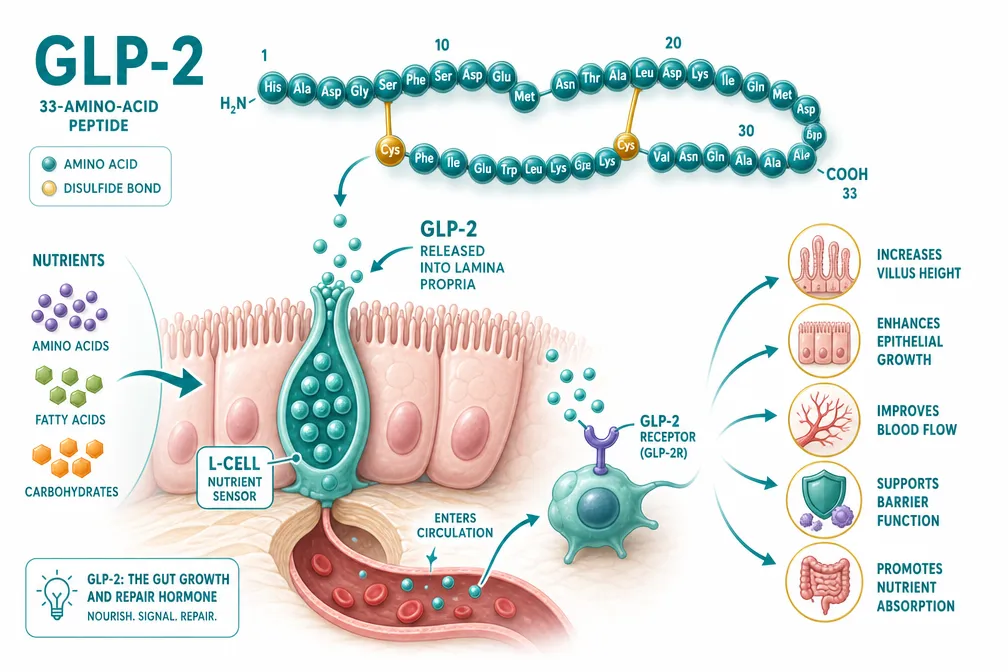
- GLP-2 is a 33-amino acid peptide secreted by intestinal L-cells in direct response to nutrient intake, making it a nutrient-responsive gut growth factor.
- Its primary actions include promoting intestinal epithelial growth, strengthening barrier function, enhancing nutrient absorption, and increasing mucosal blood flow.
- GLP-2 exerts its effects through a dedicated receptor (GLP-2R), which distinguishes its signaling pathway from GLP-1.
- Analogs such as teduglutide and glepaglutide have advanced into clinical research for conditions like short bowel syndrome (SBS).
- Understanding GLP-2 biology is foundational for researchers exploring gut-focused peptide models, particularly those involving mucosal repair and absorptive capacity.
What Is GLP-2 and Why Does It Differ from GLP-1
Both GLP-1 and GLP-2 are derived from the same proglucagon gene, processed in intestinal L-cells and released following food intake. That shared origin is where the similarity largely ends.
GLP-1 is widely recognized for its role in insulin secretion and appetite regulation. GLP-2, by contrast, is a 33-amino acid peptide whose primary targets are the intestinal epithelium and the enteric nervous system. Its receptor, GLP-2R, is expressed predominantly in the gastrointestinal tract rather than the pancreas or brain.
This distinction matters for research design. Investigators studying metabolic signaling may reach for GLP-1-related compounds, while those focused on mucosal healing, barrier restoration, or nutrient transport will find GLP-2 far more relevant. For broader context on incretin-related peptide research, the GLP-1 incretin research themes overview provides useful background on how these related peptides diverge in function.
GLP-2 Secretion and Receptor Binding
GLP-2 is released from L-cells in the distal small intestine and colon in response to luminal nutrients, particularly fats and carbohydrates. Once secreted, it binds GLP-2R on subepithelial myofibroblasts and enteric neurons, triggering downstream signaling that promotes:
- Epithelial cell proliferation (increased crypt depth and villus height)
- Reduced enterocyte apoptosis
- Enhanced tight-junction integrity
- Increased intestinal blood flow
Critically, GLP-2 is rapidly degraded by the enzyme dipeptidyl peptidase IV (DPP-IV), which has driven the development of DPP-IV-resistant analogs for sustained research applications.
Gut Barrier Function and Nutrient Absorption in GLP-2 Research Models
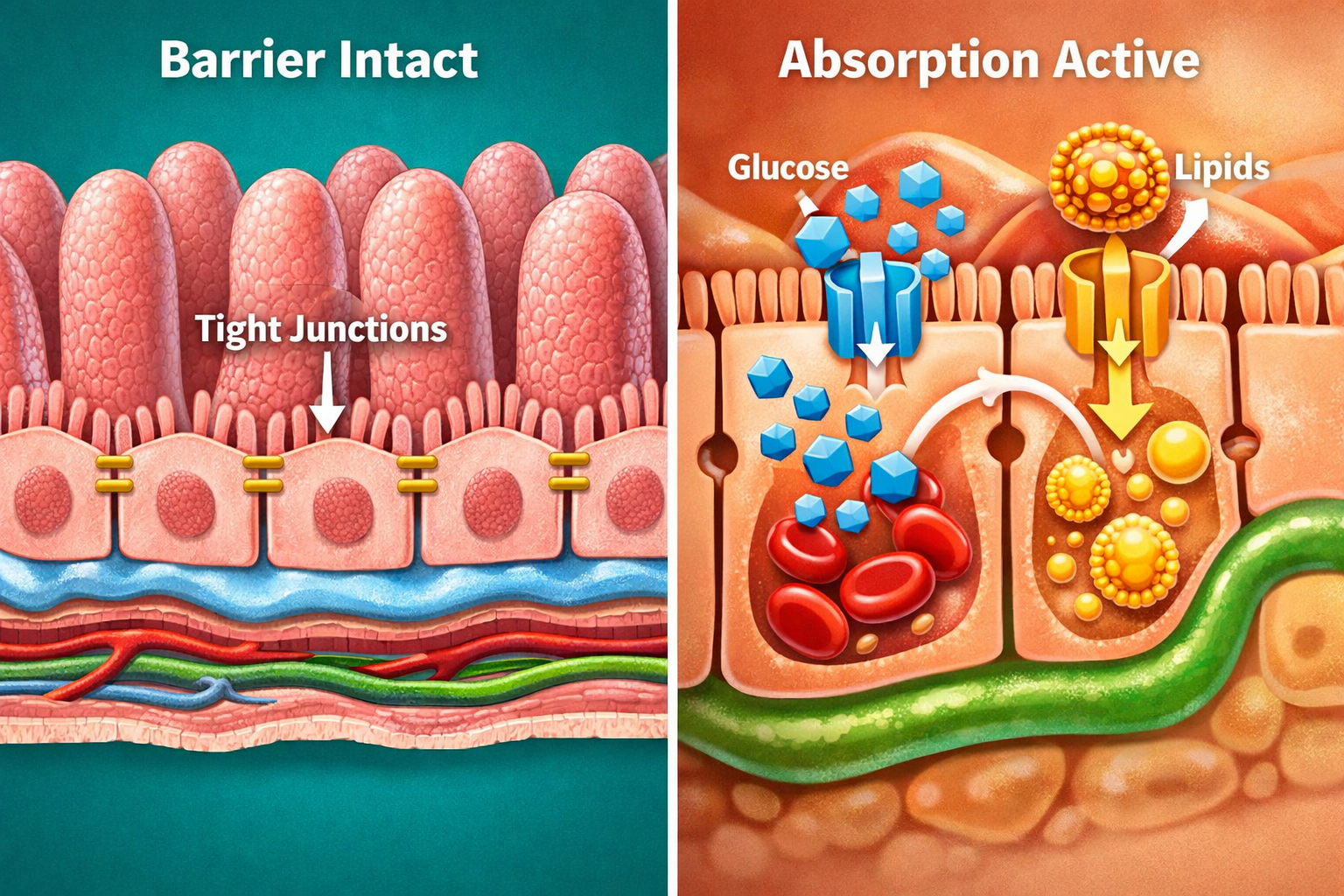
The intestinal barrier is a single-cell-thick layer separating luminal contents from the bloodstream. Its integrity depends on tight-junction proteins, mucus production, and constant epithelial renewal. When this barrier is compromised, through resection, inflammation, or disease, nutrient malabsorption and systemic immune activation follow.
This is the core research territory of the GLP-2 Peptide Research Guide: Gut Barrier Function, Nutrient Absorption, and Intestinal Recovery Models.
Morphological Markers Researchers Track
| Marker | What It Reflects |
|---|---|
| Villus height | Absorptive surface area |
| Crypt depth | Epithelial renewal rate |
| Plasma citrulline | Functional enterocyte mass |
| Tight-junction protein expression | Barrier permeability |
A 2022 phase 2 trial using glepaglutide, a long-acting GLP-2 analog, in short bowel syndrome patients reported a significant increase in plasma citrulline levels of approximately 15.5 µmol/L, a validated biomarker of intestinal absorptive capacity. Trends toward increased villus height and crypt depth were also observed, reinforcing GLP-2's structural role in mucosal maintenance.
Teduglutide: The DPP-IV-Resistant Analog
Teduglutide (ALX-0600) was developed specifically to resist DPP-IV degradation, extending GLP-2's biological half-life. Research from 2005 demonstrated that teduglutide improved intestinal function in SBS patients, establishing it as a key tool in translational gut recovery models. Its development mirrors the research trajectory seen with other structurally optimized peptides, such as those explored in BPC-157 core peptides documentation for mucosal and tissue repair contexts.
"GLP-2's ability to simultaneously promote epithelial growth, reduce apoptosis, and strengthen tight junctions makes it one of the most mechanistically complete gut-trophic signals identified in preclinical research."
Intestinal Recovery Models and Research Applications

This section of the GLP-2 Peptide Research Guide: Gut Barrier Function, Nutrient Absorption, and Intestinal Recovery Models addresses how researchers structure experimental models to evaluate GLP-2 activity.
Common Preclinical and Translational Models
Short Bowel Syndrome (SBS) Models: Surgical resection of the small intestine in rodent models creates a reliable platform for studying intestinal adaptation. GLP-2 administration consistently promotes remnant bowel hypertrophy in these models.
Inflammatory Bowel Models: GLP-2 has shown potential in reducing mucosal damage in colitis models, supporting its relevance in enteritis and inflammatory conditions.
Parenteral Nutrition Models: Animals or patients receiving total parenteral nutrition experience intestinal atrophy due to reduced luminal stimulation. GLP-2 administration counteracts this atrophy, making it a useful probe for studying nutrient-dependent intestinal maintenance.
Key Variables in GLP-2 Research Design
- Analog selection: Native GLP-2 vs. teduglutide vs. glepaglutide affects half-life and receptor occupancy
- Route of administration: Subcutaneous delivery is standard in most models
- Endpoint selection: Histological, biochemical (citrulline, tight-junction proteins), and functional (nutrient absorption rates) endpoints each capture different aspects of GLP-2 activity
Researchers designing multi-pathway gut recovery studies may also find value in reviewing TB-500 muscle recovery research themes for comparative tissue repair methodology, or the metabolic modulation research lines for systemic context. For peptide sourcing considerations relevant to GI-focused protocols, the peptide supplier comparisons guide offers practical sourcing evaluation criteria.
Those interested in adjacent gut-health peptide research may also find the KPV peptide research overview relevant, given KPV's documented involvement in intestinal inflammation models.
Conclusion
GLP-2 occupies a distinct and underexplored position in peptide research, one defined not by metabolic signaling, but by the structural and functional maintenance of the intestinal tract. Its receptor-specific mechanism, nutrient-responsive secretion, and trophic effects on epithelial tissue make it an essential subject for any researcher focused on gut barrier function, absorptive capacity, or intestinal recovery.
Actionable next steps for researchers:
- Identify the specific intestinal endpoint of interest, morphological, functional, or permeability-based, before selecting a GLP-2 analog.
- Use plasma citrulline as a non-invasive biomarker of enterocyte mass alongside histological measures.
- Consider DPP-IV-resistant analogs (teduglutide, glepaglutide) for sustained in vivo models requiring extended receptor engagement.
- Cross-reference GLP-2 findings with complementary gut-repair peptides to build a more complete picture of intestinal recovery signaling.
Exploring the full peptide research catalog can help researchers identify compounds that complement GLP-2 models within broader gastrointestinal and recovery-focused study designs.
Leave a Reply
Want to join the discussion?Feel free to contribute!