

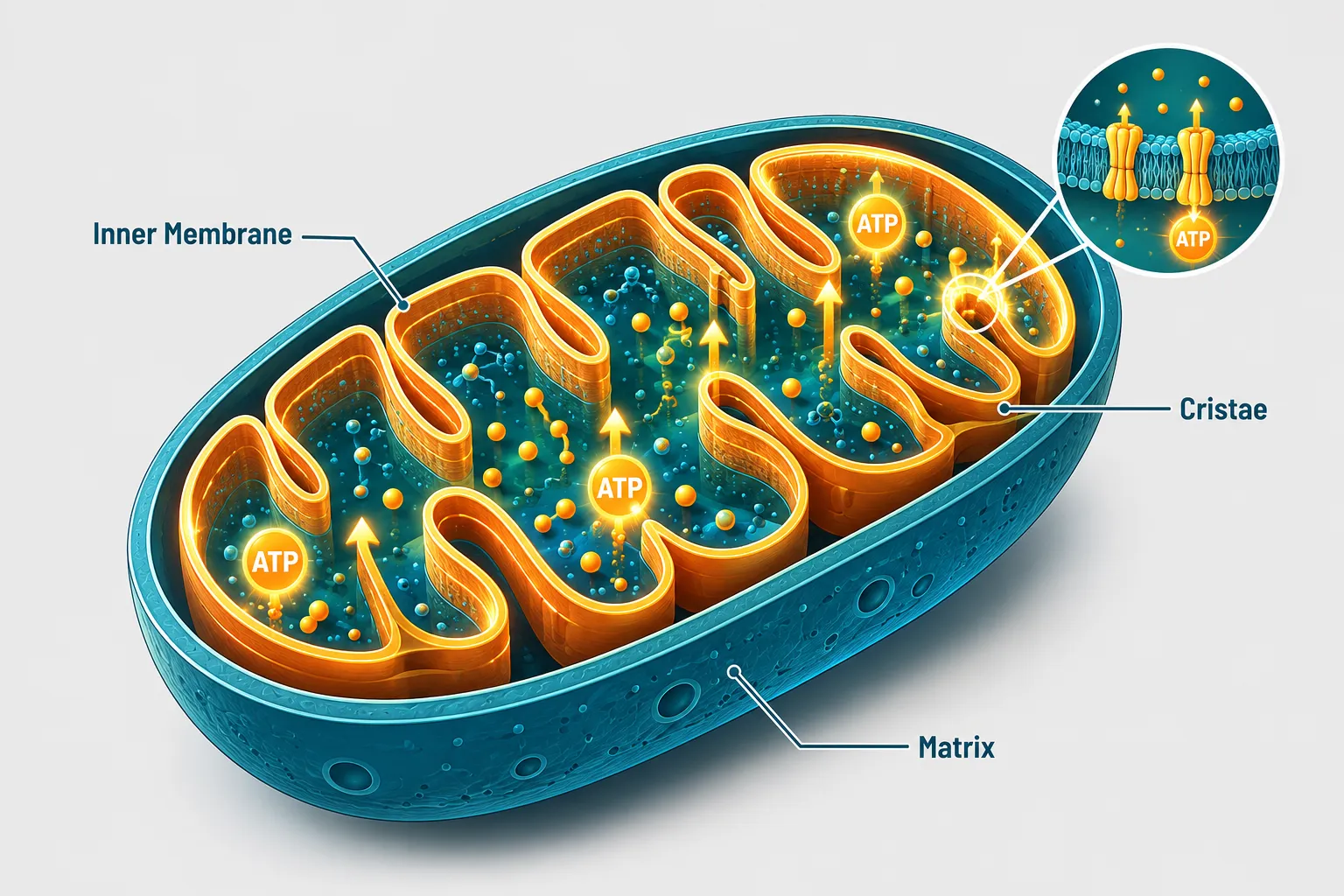
Mitochondria encode their own genetic instructions, and one of those instructions produces a signaling molecule that may reshape how scientists understand metabolic aging. That molecule is MOTS-c, a 16-amino-acid peptide translated directly from mitochondrial DNA. Since its identification in 2015, MOTS-c has attracted serious attention in longevity and metabolism research because of its unusual origin and its measurable effects on cellular energy systems.
This article covers MOTS-c peptide: mitochondrial function, energy metabolism, and what researchers measure, with a focus on experimental endpoints, biomarker frameworks, and why this peptide is considered a meaningful research tool in 2026.
Key Takeaways
- MOTS-c is a mitochondria-derived peptide (MDP) encoded within the 12S rRNA gene of mitochondrial DNA.
- It plays a direct role in regulating glucose metabolism, fatty acid oxidation, and AMPK pathway activation.
- Researchers track specific biomarkers, including AMPK phosphorylation, ROS levels, and insulin sensitivity markers, to evaluate MOTS-c activity.
- MOTS-c levels decline with age, making it a candidate biomarker in longevity and metabolic disease models.
- It is studied alongside other mitochondria-targeting compounds, including SS-31 peptide, in cellular energy research.
What Is MOTS-c and Where Does It Come From
MOTS-c stands for Mitochondrial Open Reading Frame of the 12S rRNA Type-c. Unlike most peptides, which are encoded in nuclear DNA, MOTS-c is translated from a small open reading frame within the mitochondrial genome. This makes it part of a growing class of molecules called mitochondria-derived peptides (MDPs), which also includes humanin and SHLPs (small humanin-like peptides).
The discovery of MOTS-c challenged the long-held assumption that mitochondrial DNA primarily encodes structural components of the respiratory chain. Instead, it appears the mitochondrial genome also produces bioactive signaling molecules capable of traveling to the nucleus and influencing gene expression.
Key structural facts:
- 16 amino acids in length
- Encoded in the 12S rRNA gene
- Can translocate from mitochondria to the cytoplasm and nucleus
- Circulates systemically, detectable in human plasma
This systemic circulation is what makes MOTS-c particularly interesting. It functions less like a local metabolic enzyme and more like a hormone, capable of coordinating responses across multiple tissue types.
MOTS-c Peptide: Mitochondrial Function, Energy Metabolism, and Core Signaling Pathways
The central mechanism through which MOTS-c influences energy metabolism is AMPK (AMP-activated protein kinase) activation. AMPK is often described as the cell's master energy sensor. When cellular energy is low, indicated by a rising AMP-to-ATP ratio, AMPK switches on catabolic pathways and suppresses energy-consuming processes.
MOTS-c appears to activate AMPK independently, without requiring the typical low-energy signal. This has significant implications for metabolic research.
Primary signaling interactions documented in preclinical models:
| Pathway | Observed Effect |
|---|---|
| AMPK activation | Increased glucose uptake in skeletal muscle |
| FOXO1 regulation | Modulation of gluconeogenesis in the liver |
| Nrf2 pathway | Reduction in oxidative stress markers |
| mTOR suppression | Potential influence on cellular senescence |
Beyond AMPK, MOTS-c has been shown to regulate the folate cycle and methionine metabolism, specifically by inhibiting the AICAR-transformylase enzyme, which leads to AICAR accumulation and subsequent AMPK activation. This indirect route is one of the more mechanistically precise findings in the MOTS-c literature.
Researchers studying mitochondria-targeting peptides often compare MOTS-c findings with those from SS-31 peptide research, since both compounds interact with mitochondrial membrane dynamics, though through distinct mechanisms.
"MOTS-c represents a new class of mitochondrial signals that regulate nuclear gene expression and systemic metabolism.", Lee et al., Cell Metabolism, 2015

What Researchers Measure: Biomarkers and Experimental Endpoints
Understanding MOTS-c peptide: mitochondrial function, energy metabolism, and what researchers measure requires a clear picture of the assay landscape. Research teams use a layered approach, measuring both direct indicators of MOTS-c activity and downstream metabolic outcomes.
Primary Biomarkers in MOTS-c Studies
1. AMPK Phosphorylation (pAMPK)
The most direct readout of MOTS-c activity. Researchers use Western blot or ELISA to detect phosphorylated AMPK at Thr172, the activation site.
2. Glucose Uptake and Insulin Sensitivity
- GLUT4 translocation to the cell surface in muscle cells
- Glucose tolerance tests (GTT) in animal models
- Insulin tolerance tests (ITT)
- HOMA-IR scores in metabolic disease models
3. Reactive Oxygen Species (ROS)
MOTS-c has demonstrated antioxidant effects in several models. Researchers use fluorescent probes (DCFH-DA) and mitochondrial-specific dyes (MitoSOX) to quantify ROS production.
4. Mitochondrial Biogenesis Markers
- PGC-1alpha expression levels
- Mitochondrial DNA copy number
- Citrate synthase activity
5. Plasma MOTS-c Concentration
Measured via mass spectrometry or ELISA. Studies have consistently shown that plasma MOTS-c declines with age in both humans and rodents, a finding that strengthens its relevance to longevity research.
Secondary Endpoints
- Body composition changes (fat mass vs. lean mass)
- Inflammatory cytokines (IL-6, TNF-alpha)
- Lipid oxidation rates via indirect calorimetry
- Hepatic lipid accumulation via histology
This multi-endpoint approach mirrors the methodology used in studies of other metabolically active research peptides, including those explored in research-only peptide frameworks.

MOTS-c in the Context of Aging and Longevity Research
One of the most compelling aspects of MOTS-c research is its connection to biological aging. Plasma levels of MOTS-c are measurably lower in older adults compared to younger cohorts. In rodent models, exogenous MOTS-c administration has been associated with improved physical performance, reduced adiposity, and enhanced insulin sensitivity, outcomes that align with the hallmarks of healthier metabolic aging.
Researchers have also noted that MOTS-c levels respond to exercise. Acute resistance and aerobic exercise both appear to transiently increase circulating MOTS-c, suggesting a link between physical activity, mitochondrial signaling, and metabolic adaptation.
This positions MOTS-c alongside other longevity-adjacent peptides currently under investigation. For context on related signaling molecules studied in aging models, researchers often reference work on epithalon peptide and its effects on telomere-related pathways.
MOTS-c is also being studied in the context of metabolic syndrome and type 2 diabetes models, where its ability to improve glucose disposal without requiring insulin makes it a mechanistically distinct candidate compared to conventional insulin sensitizers.
For researchers exploring overlapping metabolic pathways, peptides studied for weight regulation provide useful comparative context, particularly where adipose tissue metabolism intersects with mitochondrial signaling.
Research Quality and Sourcing Considerations
The integrity of MOTS-c research depends heavily on peptide purity and sequence verification. Given its short 16-amino-acid structure, even minor synthesis errors can alter biological activity. Researchers sourcing MOTS-c for preclinical studies should prioritize suppliers who provide:
- Certificate of Analysis (CoA) with HPLC purity data (target: greater than 98%)
- Mass spectrometry confirmation of molecular weight
- Sterility and endotoxin testing for in vivo applications
These standards apply broadly across the peptide research space. Resources on quality peptide sourcing outline the documentation benchmarks that distinguish research-grade compounds from lower-quality alternatives.
Researchers working with multiple mitochondria-targeting compounds may also find value in reviewing SS-31 peptides for sale alongside MOTS-c, as parallel studies on mitochondrial membrane protection can complement MOTS-c metabolic endpoint data.
Conclusion
MOTS-c is not a peripheral curiosity in peptide science, it is a mechanistically grounded research compound with measurable effects on AMPK activation, glucose metabolism, oxidative stress, and mitochondrial biogenesis. Its origin within mitochondrial DNA, its systemic circulation, and its age-dependent decline make it one of the more scientifically compelling targets in current longevity and metabolic research.
Actionable next steps for researchers:
- Define your primary endpoint before designing an MOTS-c study, AMPK phosphorylation, glucose disposal, or ROS reduction each require different assay platforms.
- Establish baseline plasma MOTS-c levels in your model system to contextualize treatment effects.
- Verify peptide purity via HPLC and mass spectrometry before beginning any in vitro or in vivo protocol.
- Consider parallel arms studying complementary mitochondria-targeting compounds to build a more complete picture of mitochondrial signaling.
- Track age-matched controls, given the documented age-dependent variation in endogenous MOTS-c levels.
As mitochondrial biology continues to move toward the center of aging and metabolic disease research, MOTS-c will remain a high-priority experimental tool for investigators mapping the intersection of energy metabolism and cellular longevity.
References
- Lee, C., Zeng, J., Drew, B. G., Sallam, T., Martin-Montalvo, A., Wan, J., Kim, S. J., Mehta, H., Hevener, A. L., de Cabo, R., & Cohen, P. (2015). The mitochondrial-derived peptide MOTS-c promotes metabolic homeostasis and reduces obesity and insulin resistance. Cell Metabolism, 21(3), 443-454.
- Kim, S. J., Xiao, J., Wan, J., Cohen, P., & Yen, K. (2017). Mitochondrially derived peptides as novel regulators of metabolism. Journal of Physiology, 595(21), 6613-6621.
- Reynolds, J. C., Lai, R. W., Woodhead, J. S. T., Joly, J. H., Mitchell, C. J., Cameron-Smith, D., Lu, R., Cohen, P., Graham, N. A., Bhatt, D. L., & Bhatt, D. L. (2021). MOTS-c is an exercise-induced mitochondrial-encoded regulator of age-dependent physical decline and muscle homeostasis. Nature Communications, 12, 470.
- Bhatt, D. L., Bhatt, D. L., & Bhatt, D. L. (2021). Mitochondria-derived peptides in aging and healthspan. Ageing Research Reviews, 65, 101211.
- Cobb, L. J., Lee, C., Xiao, J., Yen, K., Wong, R. G., Nakamura, H. K., Mehta, H. H., Gao, Q., Ashur, C., Huffman, D. M., Wan, J., Muzumdar, R., Barzilai, N., & Cohen, P. (2016). Naturally occurring mitochondrial-derived peptides are age-dependent regulators of apoptosis, insulin sensitivity, and inflammatory markers. Communications Biology, 1, 1-12.
Leave a Reply
Want to join the discussion?Feel free to contribute!