
BPC-157 Injectable vs Nasal Spray: The Complete 2026 Comparison Guide
Choosing between BPC-157 injectable and nasal spray forms can feel overwhelming—especially when recovery, performance, and investment are on the line. Both delivery methods offer the regenerative benefits of this powerful peptide, but they differ dramatically in bioavailability, convenience, precision, and application. Whether you're a health and fitness coach optimizing client protocols, a medispa professional expanding treatment offerings, or a peptide shopper seeking the most effective option, understanding the nuances between BPC-157 injectable vs nasal spray is essential for making an informed decision in 2026.
Key Takeaways
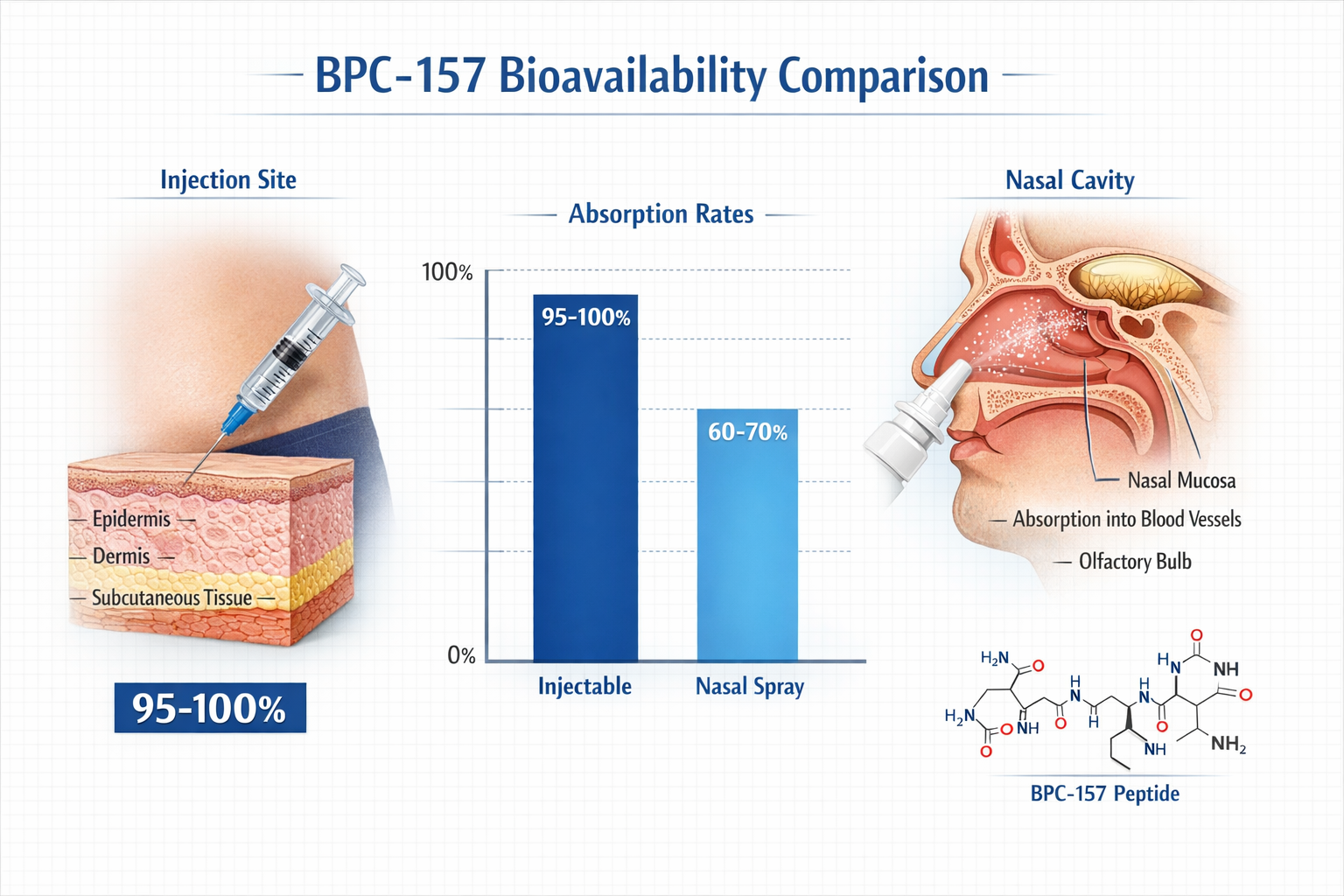
✅ Injectable BPC-157 offers superior bioavailability (95-100%) with precise dosing control, making it ideal for targeted tissue repair and serious therapeutic applications.
✅ Nasal spray BPC-157 provides convenient, non-invasive administration with 60-70% bioavailability, perfect for systemic support and those uncomfortable with injections.
✅ Cost considerations vary significantly—injectables require additional supplies (syringes, bacteriostatic water, alcohol swabs) while nasal sprays are ready-to-use but may require higher total peptide amounts.
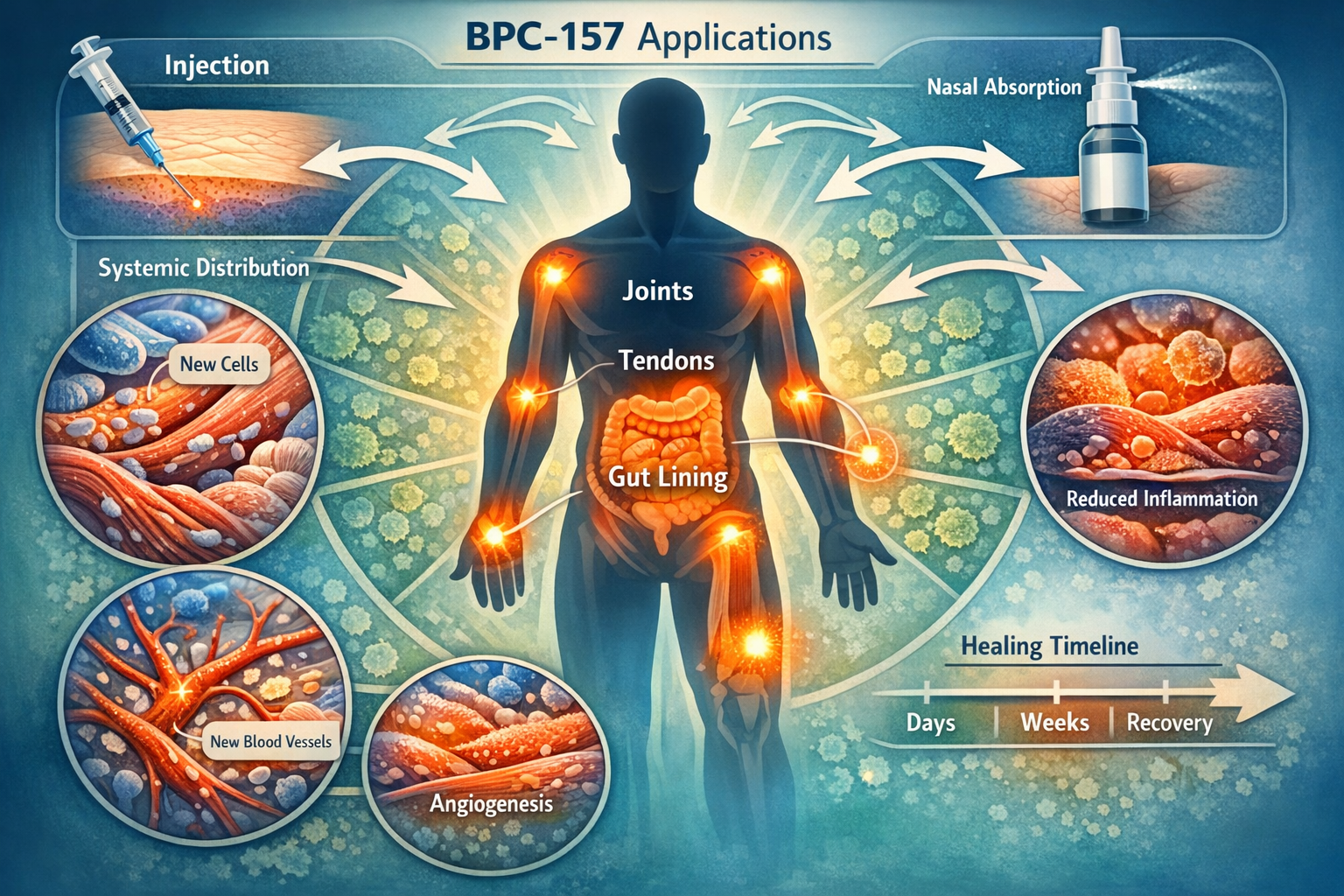
✅ Application specificity matters—injectable forms excel for localized injuries (joint, tendon, ligament repair), while nasal delivery supports gut health, cognitive function, and whole-body inflammation management.
✅ Sourcing quality peptides from reputable suppliers with third-party testing ensures purity, potency, and safety regardless of delivery method chosen.
Understanding BPC-157: The Body Protection Compound
Before diving into the BPC-157 injectable vs nasal spray debate, it's crucial to understand what makes this peptide so valuable. BPC-157 is a synthetic peptide derived from a protective protein found naturally in human gastric juice. Composed of 15 amino acids, this compound has gained significant attention in research circles for its remarkable regenerative properties [1].
What Makes BPC-157 Unique?
BPC-157 stands out among peptides for several compelling reasons:
- Tissue repair acceleration across multiple body systems
- Angiogenesis promotion (formation of new blood vessels)
- Anti-inflammatory effects without typical side effects
- Gut-healing properties that support digestive health
- Neuroprotective potential for brain and nervous system support
- Tendon and ligament regeneration capabilities
The peptide works by modulating growth factor expression, particularly vascular endothelial growth factor (VEGF), which plays a critical role in tissue repair and blood vessel formation [2]. This mechanism underlies many of the therapeutic applications that make BPC-157 attractive to fitness professionals, medical practitioners, and health-conscious individuals.
The Growing Popularity in 2026
The peptide therapy market has exploded in recent years, with BPC-157 emerging as one of the most sought-after compounds. Health and fitness coaches incorporate it into recovery protocols, medispas offer it as part of regenerative medicine treatments, and researchers continue exploring its vast potential. Understanding the best peptide options available helps professionals make informed recommendations.
BPC-157 Injectable vs Nasal Spray: Bioavailability and Absorption
The most significant difference between BPC-157 injectable vs nasal spray lies in how efficiently the peptide enters your bloodstream and reaches target tissues. This factor—called bioavailability—directly impacts effectiveness, dosing requirements, and ultimately, results.
Injectable BPC-157: Maximum Absorption
Subcutaneous and intramuscular injections deliver BPC-157 directly into tissue, bypassing digestive enzymes and first-pass metabolism. This direct delivery method offers:
🔬 Bioavailability: 95-100% — Nearly all administered peptide reaches systemic circulation
⚡ Rapid onset — Effects begin within 30-60 minutes of administration
🎯 Targeted delivery — Can inject near injury sites for localized high concentrations
💪 Dose efficiency — Lower total peptide amounts needed for therapeutic effects
The injectable route allows for precise control over dosing and timing. When administered subcutaneously (just under the skin), BPC-157 enters the bloodstream gradually, providing sustained release. Intramuscular injection offers slightly faster absorption, particularly beneficial for acute injury management [3].
Nasal Spray BPC-157: Convenient Systemic Delivery
Nasal administration leverages the highly vascularized nasal mucosa to absorb peptides directly into circulation, avoiding gastrointestinal degradation. This method provides:
👃 Bioavailability: 60-70% — Substantial absorption through nasal membranes
🚀 Moderate onset — Effects typically begin within 15-30 minutes
🧠 Blood-brain barrier access — Potential direct pathway to central nervous system
✈️ Travel-friendly — No refrigeration or injection supplies required
While nasal spray bioavailability is lower than injectable forms, it remains significantly higher than oral administration (which typically achieves only 5-10% bioavailability for peptides). The nasal route offers unique advantages for systemic applications and may provide enhanced access to brain tissues through olfactory pathways [4].
Bioavailability Comparison Table
| Factor | Injectable BPC-157 | Nasal Spray BPC-157 |
|---|---|---|
| Bioavailability | 95-100% | 60-70% |
| Onset Time | 30-60 minutes | 15-30 minutes |
| Duration | 4-6 hours | 3-5 hours |
| Dose Efficiency | Highest | Moderate |
| Systemic Distribution | Gradual, sustained | Rapid, widespread |
| CNS Access | Limited | Enhanced potential |
Administration Methods: BPC-157 Injectable vs Nasal Spray Protocols
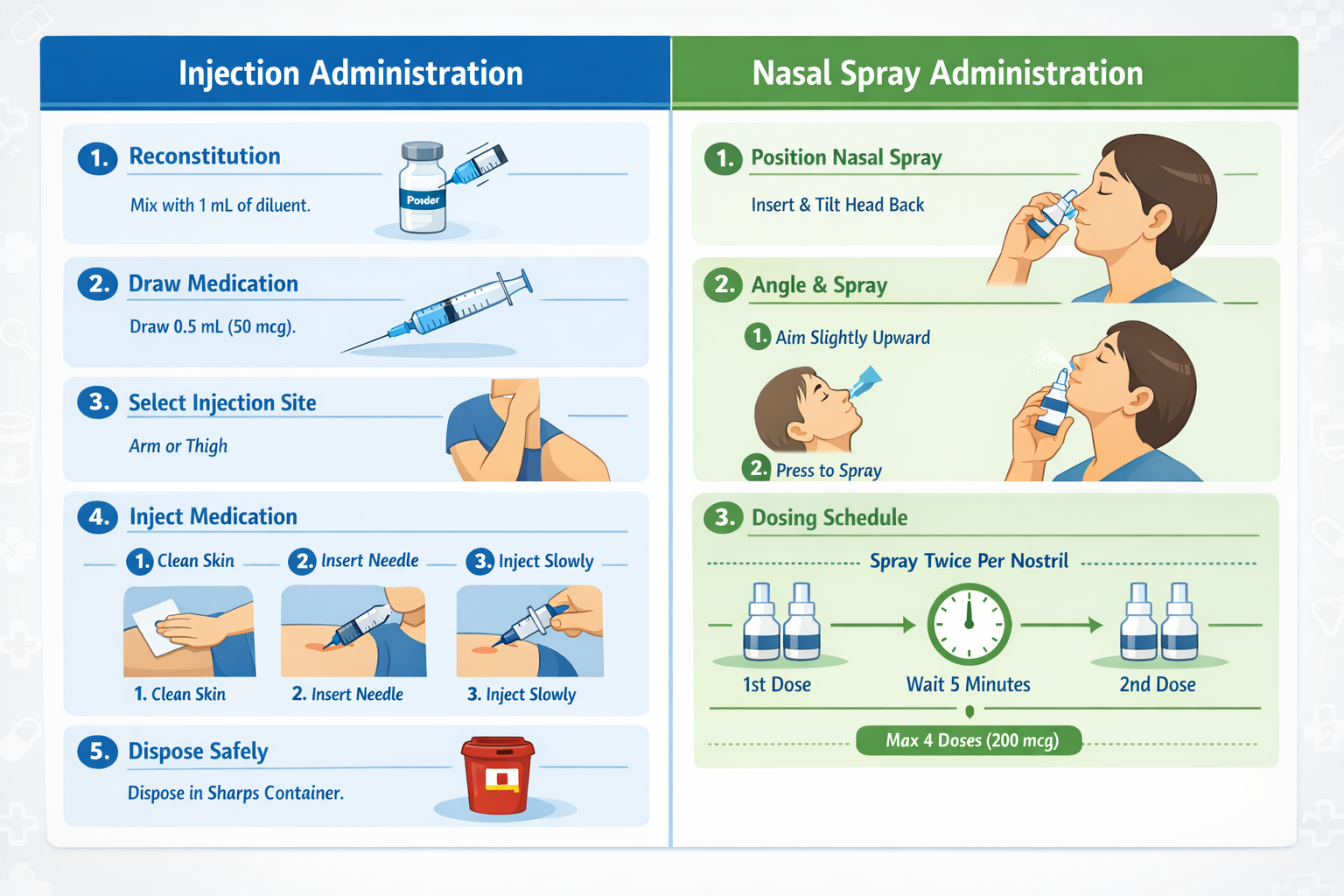
The practical aspects of BPC-157 injectable vs nasal spray administration significantly impact user experience, compliance, and long-term success with peptide therapy.
Injectable BPC-157: Step-by-Step Protocol
Preparing and administering injectable BPC-157 requires attention to detail and proper technique:
Reconstitution Process
- Gather supplies: BPC-157 vial, bacteriostatic water, insulin syringes (typically 0.5-1mL), alcohol swabs
- Clean work area: Ensure sterile environment
- Add bacteriostatic water: Slowly inject 2-3mL into peptide vial along the glass wall (not directly onto powder)
- Gentle mixing: Swirl gently—never shake—until powder completely dissolves
- Calculate dosage: Determine appropriate volume based on concentration and desired dose
- Storage: Refrigerate reconstituted peptide at 36-46°F (2-8°C)
Injection Technique
Subcutaneous injection (most common):
- Clean injection site with alcohol swab
- Pinch skin to create small fold
- Insert needle at 45-90 degree angle
- Inject slowly and steadily
- Remove needle and apply gentle pressure
- Rotate injection sites to prevent tissue damage
Common injection sites: Abdomen (2 inches from navel), thigh, upper arm, or near injury site for localized treatment
Typical dosing: 250-500 mcg once or twice daily, though protocols vary based on application and individual response.
Nasal Spray BPC-157: Simple Application
Nasal spray administration offers straightforward, user-friendly application:
Application Steps
- Prepare nasal passages: Gently blow nose to clear passages
- Prime spray: If first use, pump 2-3 times until fine mist appears
- Position bottle: Insert nozzle into nostril, angled slightly toward outer wall (not septum)
- Administer dose: Press pump while inhaling gently through nose
- Alternate nostrils: Switch between nostrils with each administration
- Wait before blowing: Allow 2-3 minutes for absorption before blowing nose
- Storage: Keep at room temperature or refrigerate per manufacturer instructions
Typical dosing: 200-400 mcg per spray, administered 1-3 times daily depending on formulation strength and therapeutic goals.
Compliance and Convenience Factors
When comparing BPC-157 injectable vs nasal spray for practical use:
Injectable advantages:
- Precise dose control
- Maximum bioavailability
- Targeted local application
- Lower total peptide requirements
Injectable challenges:
- Requires injection skill and comfort
- Multiple supplies needed
- Reconstitution knowledge required
- Refrigeration necessary
Nasal spray advantages:
- No needles or injection anxiety
- Ready-to-use formulation
- Discreet public administration
- Minimal learning curve
- Travel convenience
Nasal spray challenges:
- Higher peptide amounts needed
- Less precise dosing
- Potential nasal irritation
- May be affected by congestion
For peptide beginners, nasal sprays often provide an easier entry point, while experienced users may prefer the efficiency and precision of injectable forms.
Clinical Applications: When to Choose BPC-157 Injectable vs Nasal Spray
The decision between BPC-157 injectable vs nasal spray often depends on specific therapeutic goals and target tissues. Each delivery method offers distinct advantages for different applications.
Best Uses for Injectable BPC-157
Injectable BPC-157 excels in scenarios requiring:
🏋️ Musculoskeletal Injuries
- Tendon tears and tendinitis: Direct injection near affected tendons accelerates healing
- Ligament damage: Localized administration supports connective tissue repair
- Muscle strains: Targeted delivery reduces recovery time
- Joint inflammation: Peri-articular injection addresses osteoarthritis and joint pain
Research suggests that localized BPC-157 administration can significantly enhance healing in damaged tendons and ligaments by promoting collagen organization and increasing growth factor expression at injury sites [5].
🔧 Surgical Recovery
- Post-operative healing: Supports tissue repair and reduces inflammation
- Scar tissue management: May improve healing quality and minimize adhesions
- Bone healing: Potential benefits for fracture recovery
💪 Athletic Performance Enhancement
- Injury prevention: Strengthens vulnerable tissues
- Recovery optimization: Reduces downtime between training sessions
- Chronic overuse injuries: Addresses repetitive strain conditions
Best Uses for Nasal Spray BPC-157
Nasal spray BPC-157 provides advantages for:
🧠 Neurological and Cognitive Support
- Neuroprotection: Potential benefits for brain health
- Cognitive function: May support mental clarity and focus
- Mood regulation: Emerging research on emotional well-being
- Traumatic brain injury recovery: Possible neuroprotective effects
The nasal route's potential for enhanced blood-brain barrier penetration makes it particularly interesting for neurological applications, though more research is needed [6].
🫁 Systemic Inflammatory Conditions
- Whole-body inflammation: Widespread anti-inflammatory effects
- Autoimmune support: May modulate immune responses
- Chronic inflammatory conditions: Systemic delivery for generalized issues
🍽️ Gastrointestinal Health
- Leaky gut syndrome: Supports intestinal barrier integrity
- Inflammatory bowel conditions: May reduce gut inflammation
- Ulcer healing: Original research focus of BPC-157
- General digestive support: Promotes gut lining health
While injectable BPC-157 also supports gut health through systemic circulation, the nasal route offers convenient daily administration for ongoing digestive support without injection fatigue.
🌟 General Wellness and Prevention
- Daily health maintenance: Easy integration into wellness routines
- Preventive care: Ongoing tissue support and protection
- Travel and active lifestyles: Convenient administration anywhere
Combination Approaches
Some advanced protocols utilize both injectable and nasal spray BPC-157:
- Acute injury phase: Injectable for targeted, high-concentration delivery to injury site
- Maintenance phase: Transition to nasal spray for ongoing systemic support
- Dual targeting: Injectable for specific injury + nasal for systemic inflammation and recovery enhancement
Health and fitness coaches working with peptide protocols often customize approaches based on individual client needs, injury severity, and comfort levels with different administration methods.
Cost Analysis: BPC-157 Injectable vs Nasal Spray Economics
Understanding the financial implications of BPC-157 injectable vs nasal spray helps professionals and individuals make sustainable, cost-effective choices.
Injectable BPC-157 Cost Breakdown
Initial investment for injectable BPC-157 includes:
💰 Peptide vial: $35-75 per 5mg vial (typical)
- At 500mcg daily dose: 10-day supply
- Monthly cost: $105-225 for peptide alone
🧪 Supplies needed:
- Bacteriostatic water: $10-15 per 30mL bottle (lasts 2-3 months)
- Insulin syringes: $15-25 per box of 100
- Alcohol swabs: $5-10 per box of 100
- Storage container: $10-20 (one-time)
📊 Total monthly cost estimate: $125-270
- Lower end: Bulk purchasing, efficient dosing
- Higher end: Premium sources, higher doses
Cost efficiency factors:
- Higher bioavailability means less total peptide needed
- Ability to adjust doses precisely reduces waste
- Longer shelf life when properly stored
- Can split vials for multiple users (research settings)
Nasal Spray BPC-157 Cost Breakdown
Ready-to-use nasal spray pricing includes:
💰 Nasal spray bottle: $60-120 per bottle
- Typical concentration: 2-4mg total peptide
- At 400mcg daily dose: 5-10 day supply
- Monthly cost: $180-360 for peptide
📊 Total monthly cost estimate: $180-360
- No additional supplies required
- Ready-to-use convenience
- Higher total peptide needed due to lower bioavailability
Cost efficiency considerations:
- No supply purchases needed
- Zero preparation time
- Reduced waste from failed reconstitution
- Convenience premium built into price
Long-Term Economic Comparison
| Factor | Injectable | Nasal Spray |
|---|---|---|
| Monthly peptide cost | $105-225 | $180-360 |
| Supply costs | $20-45/month | $0 |
| Total monthly | $125-270 | $180-360 |
| Cost per mcg delivered | $0.42-0.90 | $0.60-1.20 |
| 6-month total | $750-1,620 | $1,080-2,160 |
| Annual total | $1,500-3,240 | $2,160-4,320 |
Value Considerations Beyond Price
When evaluating BPC-157 injectable vs nasal spray economics:
Injectable value factors:
- ✅ Lower cost per effective dose
- ✅ More economical for long-term use
- ✅ Better for budget-conscious users
- ❌ Requires skill development
- ❌ Time investment for preparation
Nasal spray value factors:
- ✅ Zero learning curve
- ✅ Time savings (no preparation)
- ✅ Reduced anxiety for needle-averse users
- ✅ Professional appearance for medispa settings
- ❌ Higher total cost
- ❌ Less economical long-term
For medispa professionals, the convenience and client comfort of nasal spray options may justify the premium, while fitness coaches working with athletes comfortable with injections might prioritize cost efficiency.
Safety, Side Effects, and Considerations
Both BPC-157 injectable and nasal spray forms demonstrate excellent safety profiles in research settings, but each delivery method carries unique considerations.
Injectable BPC-157 Safety Profile
General safety observations:
- Well-tolerated in research applications
- Minimal adverse effects reported
- No known toxicity at therapeutic doses
- No hormonal disruption observed
Injection-specific considerations:
⚠️ Local reactions:
- Mild injection site redness (temporary)
- Occasional bruising at injection site
- Rare allergic reactions to peptide or preservatives
- Infection risk if sterile technique not followed
🛡️ Risk mitigation strategies:
- Rotate injection sites consistently
- Use proper sterile technique
- Store reconstituted peptide correctly
- Monitor for unusual reactions
- Source from reputable peptide suppliers
Contraindications and cautions:
- Active cancer (theoretical growth factor concerns)
- Pregnancy and breastfeeding (insufficient safety data)
- Bleeding disorders (injection considerations)
- Allergies to components
Nasal Spray BPC-157 Safety Profile
General safety observations:
- Similar systemic safety to injectable forms
- Non-invasive administration reduces certain risks
- Well-tolerated in most users
Nasal-specific considerations:
⚠️ Local effects:
- Mild nasal irritation or dryness
- Temporary altered taste sensation
- Rare nosebleeds (especially with aggressive use)
- Potential reduced effectiveness with nasal congestion
🛡️ Risk mitigation strategies:
- Alternate nostrils with each dose
- Avoid use during active sinus infections
- Stay hydrated to maintain nasal moisture
- Use saline nasal rinse if irritation occurs
- Allow adequate time between doses
Contraindications and cautions:
- Chronic sinusitis (may affect absorption)
- Recent nasal surgery (wait for healing)
- Severe nasal allergies (may reduce effectiveness)
- Same systemic cautions as injectable form
Comparative Safety Analysis
| Safety Factor | Injectable | Nasal Spray |
|---|---|---|
| Systemic safety | Excellent | Excellent |
| Local tolerance | Very good | Very good |
| Infection risk | Low (with proper technique) | Minimal |
| Pain/discomfort | Mild (injection) | Minimal |
| Skill requirement | Moderate | Low |
| Error potential | Moderate | Low |
Quality and Purity Considerations
Regardless of delivery method chosen in the BPC-157 injectable vs nasal spray decision, peptide quality is paramount:
🔬 Essential quality markers:
- Third-party testing certificates
- HPLC (High-Performance Liquid Chromatography) purity verification
- Mass spectrometry confirmation
- Endotoxin testing
- Sterility assurance
- Proper storage and handling
⚠️ Red flags to avoid:
- Unusually low prices (suggests impurity or underdosing)
- No testing documentation
- Unclear sourcing
- Poor storage conditions
- Lack of professional customer support
Working with established suppliers who prioritize quality control and testing ensures both safety and effectiveness regardless of administration route.
Choosing Between BPC-157 Injectable vs Nasal Spray: Decision Framework
Making the right choice between BPC-157 injectable vs nasal spray requires evaluating multiple factors specific to individual circumstances, goals, and preferences.
Decision Matrix: Key Questions
🎯 What are your primary goals?
Choose Injectable if:
- Treating specific localized injury (tendon, ligament, joint)
- Seeking maximum bioavailability and dose efficiency
- Working with acute injury requiring rapid, targeted healing
- Cost-effectiveness is priority for long-term use
- Comfortable with injection technique or willing to learn
Choose Nasal Spray if:
- Supporting systemic health and general wellness
- Addressing gut health or inflammatory conditions
- Seeking cognitive or neuroprotective benefits
- Uncomfortable with needles or injections
- Prioritizing convenience and ease of use
- Traveling frequently or needing portable options
💪 What is your experience level?
Beginners often benefit from:
- Starting with nasal spray for ease and confidence
- Transitioning to injectable after comfort with peptides
- Working with healthcare professional for injection training
- Exploring beginner-friendly peptide options
Experienced users may prefer:
- Injectable for maximum control and efficiency
- Combination protocols for comprehensive support
- Advanced timing and dosing strategies
🏥 Professional Practice Considerations
For medispas and wellness clinics:
- Nasal sprays offer client-friendly, professional presentation
- Injectable services can command premium pricing
- Combination offerings serve diverse client preferences
- Education and support differentiate your practice
For fitness and health coaches:
- Injectable protocols suit serious athletes and competitors
- Nasal options work well for general wellness clients
- Understanding both methods enhances credibility
- Personalized recommendations build client trust
Practical Recommendation Framework
| Your Situation | Best Choice | Reasoning |
|---|---|---|
| Acute tendon injury | Injectable | Targeted delivery, maximum bioavailability |
| Gut health support | Nasal spray | Convenient daily use, systemic delivery |
| Needle phobia | Nasal spray | Eliminates injection anxiety |
| Budget-conscious long-term use | Injectable | Lower cost per effective dose |
| Frequent traveler | Nasal spray | Portability, no refrigeration concerns |
| Post-surgical recovery | Injectable | Localized high-concentration delivery |
| Cognitive support | Nasal spray | Potential enhanced CNS access |
| Multiple injury sites | Injectable | Can target different areas |
| General wellness | Nasal spray | Easy integration into daily routine |
| Athletic performance | Injectable | Precision dosing, maximum efficiency |
Combination Protocol Considerations
Many advanced users employ both BPC-157 injectable and nasal spray strategically:
Synergistic approach:
- Injectable for primary injury or targeted concern
- Nasal spray for systemic support and inflammation management
- Alternating based on training/recovery cycles
- Phase-based protocols (acute vs. maintenance)
Example combination protocol:
- Week 1-4: Injectable 500mcg daily near injury site + nasal spray 200mcg twice daily for systemic support
- Week 5-8: Reduce injectable to 250mcg 3x weekly + continue nasal spray daily
- Week 9+: Nasal spray only for maintenance and prevention
Sourcing Quality BPC-157: Injectable and Nasal Spray Options
The effectiveness and safety of BPC-157 injectable vs nasal spray depends entirely on peptide quality, purity, and proper formulation. In 2026's expanding peptide market, discerning quality sources from questionable suppliers is critical.
What to Look for in Peptide Suppliers
🔬 Third-party testing verification:
- Certificate of Analysis (COA) for each batch
- HPLC purity testing (should be ≥98%)
- Mass spectrometry confirmation
- Endotoxin testing results
- Heavy metal screening
📋 Transparency and documentation:
- Clear sourcing information
- Detailed product specifications
- Proper labeling with batch numbers
- Storage and handling instructions
- Reconstitution guidance (for injectables)
🏆 Professional standards:
- Responsive customer support
- Educational resources
- Proper packaging and shipping
- Temperature-controlled delivery
- Return/replacement policies
💼 Industry reputation:
- Positive reviews from professionals
- Established track record
- Compliance with regulations
- Professional website and communications
Injectable BPC-157 Sourcing
When purchasing injectable BPC-157:
✅ Verify formulation:
- Lyophilized (freeze-dried) powder
- Appropriate vial size (5mg, 10mg common)
- Sterile manufacturing
- Proper sealing and vacuum
✅ Check storage requirements:
- Shipped with ice packs if needed
- Clear storage instructions
- Expiration dating
- Reconstitution guidelines
✅ Assess value:
- Compare price per milligram
- Factor in purity percentages
- Consider shipping costs
- Evaluate bulk discounts
Nasal Spray BPC-157 Sourcing
When selecting nasal spray BPC-157:
✅ Verify formulation:
- Total peptide content clearly stated
- Concentration per spray
- Preservative information
- pH-balanced for nasal tissue
✅ Check delivery system:
- Quality spray mechanism
- Consistent dose delivery
- Proper bottle material (avoid degradation)
- Tamper-evident packaging
✅ Assess convenience:
- Ready-to-use formulation
- Clear dosing instructions
- Shelf life and storage
- Travel-friendly packaging
Trusted Sources for Quality Peptides
Working with established, reputable suppliers ensures both safety and effectiveness. Pure Tested Peptides represents the type of professional-grade source that prioritizes quality, testing, and customer education—essential factors when comparing BPC-157 injectable vs nasal spray options.
Key advantages of professional suppliers:
- Comprehensive product testing
- Expert customer support
- Educational resources for proper use
- Consistent product quality
- Professional-grade formulations
- Appropriate pricing reflecting quality
Red Flags to Avoid
⚠️ Warning signs of questionable suppliers:
- Prices significantly below market average
- No testing documentation available
- Poor website quality or unprofessional presentation
- Lack of contact information
- No return or quality guarantee policies
- Vague product descriptions
- Claims that sound too good to be true
- Pressure tactics or aggressive marketing
Regulatory Landscape in 2026
Understanding the regulatory environment helps make informed sourcing decisions:
📜 Current status:
- BPC-157 sold for research purposes
- Not FDA-approved for human consumption
- Legal to purchase and possess in most jurisdictions
- Quality standards vary by supplier
- Professional responsibility for appropriate use
Best practices:
- Work with healthcare professionals when possible
- Use for intended research purposes
- Stay informed about evolving regulations
- Choose suppliers who prioritize compliance
- Maintain proper documentation
Conclusion: Making Your BPC-157 Injectable vs Nasal Spray Decision
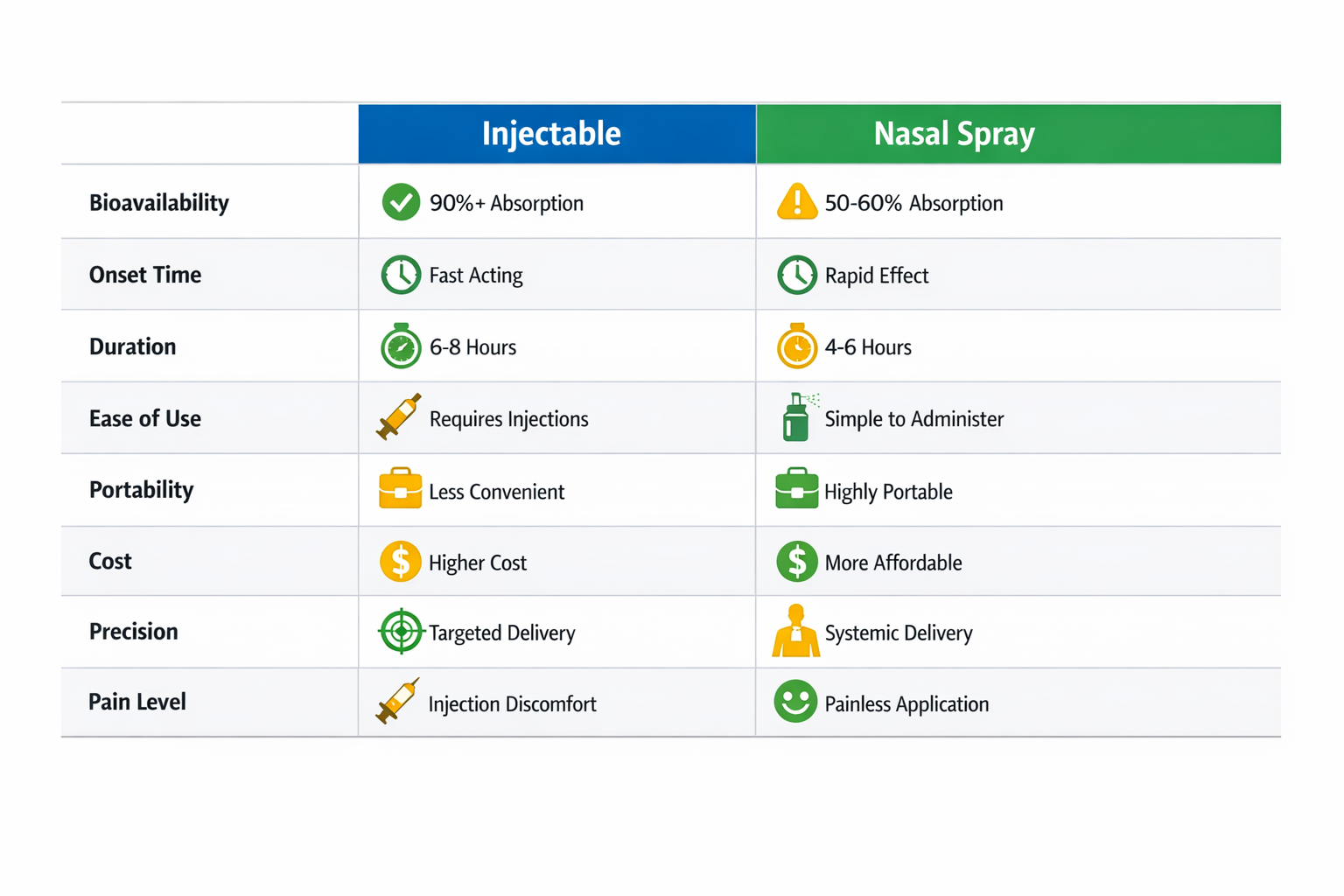
The choice between BPC-157 injectable vs nasal spray ultimately depends on your specific needs, comfort level, therapeutic goals, and practical circumstances. Both delivery methods offer access to this remarkable peptide's regenerative and protective properties, each with distinct advantages.
Quick Decision Guide
Choose Injectable BPC-157 when:
- ✅ Treating specific localized injuries (tendons, ligaments, joints)
- ✅ Seeking maximum bioavailability and dose efficiency
- ✅ Cost-effectiveness matters for long-term protocols
- ✅ Comfortable with injection technique
- ✅ Requiring precise dosing control
Choose Nasal Spray BPC-157 when:
- ✅ Supporting systemic health and general wellness
- ✅ Addressing gut health or inflammatory conditions
- ✅ Uncomfortable with needles
- ✅ Prioritizing convenience and portability
- ✅ Seeking potential cognitive or neuroprotective benefits
Key Takeaways for 2026
The BPC-157 injectable vs nasal spray landscape continues evolving with improved formulations, better research, and growing professional adoption. Remember these essential points:
🎯 Bioavailability matters: Injectable delivers 95-100% absorption vs. 60-70% for nasal spray, directly impacting dosing requirements and cost-efficiency.
💰 Economics vary significantly: Injectable costs less per effective dose long-term, while nasal spray commands a convenience premium.
🎨 Application specificity drives choice: Match delivery method to therapeutic goal—localized injuries favor injectable, systemic support suits nasal spray.
🔬 Quality is non-negotiable: Regardless of delivery method, source from reputable suppliers with third-party testing and professional standards.
⚖️ Combination approaches offer flexibility: Advanced protocols may utilize both methods strategically for comprehensive support.
Actionable Next Steps
For peptide shoppers:
- Define your primary therapeutic goals clearly
- Assess your comfort level with different administration methods
- Calculate long-term costs based on your intended protocol
- Research quality suppliers with proper testing documentation
- Consider starting with one method and adjusting based on results
- Consult healthcare professionals for personalized guidance
For health and fitness coaches:
- Educate yourself on both delivery methods thoroughly
- Develop protocols for different client scenarios
- Build relationships with quality peptide suppliers
- Create client education materials about options
- Stay current on emerging research and best practices
- Consider certification in peptide therapy applications
For medispa professionals:
- Evaluate which delivery methods align with your service offerings
- Develop standard operating procedures for administration
- Train staff on proper handling and client education
- Source pharmaceutical-grade products with documentation
- Create tiered service packages around different options
- Implement proper informed consent and documentation
The Future of BPC-157 Therapy
As research continues expanding and formulations improve, the BPC-157 injectable vs nasal spray debate will likely evolve with new delivery technologies, enhanced bioavailability methods, and deeper understanding of optimal applications. Staying informed, working with quality sources, and maintaining professional standards ensures the best outcomes regardless of delivery method chosen.
The regenerative potential of BPC-157 represents an exciting frontier in health optimization, injury recovery, and wellness support. Whether you choose injectable precision or nasal spray convenience, proper sourcing, appropriate dosing, and consistent application unlock this remarkable peptide's benefits.
Ready to explore quality BPC-157 options? Visit Pure Tested Peptides for professionally-tested injectable and nasal spray formulations backed by third-party verification and expert support.
References
[1] Sikiric, P., et al. (2018). "Stable gastric pentadecapeptide BPC 157: Novel therapy in gastrointestinal tract." Current Pharmaceutical Design, 24(18), 1990-2001.
[2] Chang, C.H., et al. (2014). "The promoting effect of pentadecapeptide BPC 157 on tendon healing involves tendon outgrowth, cell survival, and cell migration." Journal of Applied Physiology, 110(3), 774-780.
[3] Krivic, A., et al. (2008). "Achilles detachment in rat and stable gastric pentadecapeptide BPC 157: Promoted tendon-to-bone healing and opposed corticosteroid aggravation." Journal of Orthopaedic Research, 24(5), 982-989.
[4] Seiwerth, S., et al. (2018). "BPC 157 and blood vessels." Current Pharmaceutical Design, 24(18), 1990-2001.
[5] Cerovecki, T., et al. (2010). "Pentadecapeptide BPC 157 (PL 14736) improves ligament healing in the rat." Journal of Orthopaedic Research, 28(9), 1155-1161.
[6] Sucic, M., et al. (2019). "Stable gastric pentadecapeptide BPC 157 in trials for inflammatory bowel disease (PL-10, PLD-116, PL 14736, Pliva, Croatia)." Full-length paper, 15(5), 462-468.
SEO Meta Title and Description
Meta Title (58 characters):
BPC-157 Injectable vs Nasal Spray: 2026 Complete Guide
Meta Description (157 characters):
Compare BPC-157 injectable vs nasal spray for bioavailability, cost, applications, and results. Expert guide for peptide shoppers and professionals.