

Nearly 40% of men over age 45 show some degree of testosterone deficiency, yet conventional testosterone replacement therapy carries a well-documented trade-off: it suppresses the very hormonal signals needed for sperm production. Research into enclomiphene and LH/FSH modulation: exploring non-steroidal approaches in male hormone research has opened a compelling alternative pathway, one that works with the body's own feedback systems rather than overriding them.
Key Takeaways
- Enclomiphene is the active trans-isomer of clomiphene citrate and functions as a selective estrogen receptor modulator (serm) at the hypothalamus and pituitary.
- By blocking estrogen receptors upstream, enclomiphene increases GnRH pulse frequency, which drives measurable rises in both LH and FSH.
- Unlike exogenous testosterone, enclomiphene preserves and may enhance spermatogenesis during treatment.
- Clinical data show comparable testosterone and gonadotropin increases between enclomiphene and clomiphene over 12 months, with enclomiphene offering a cleaner pharmacological profile.
- As of 2026, enclomiphene is not FDA-approved as a standalone agent but is accessible through compounding pharmacies for research and clinical use.
How Enclomiphene Modulates LH and FSH at the Receptor Level
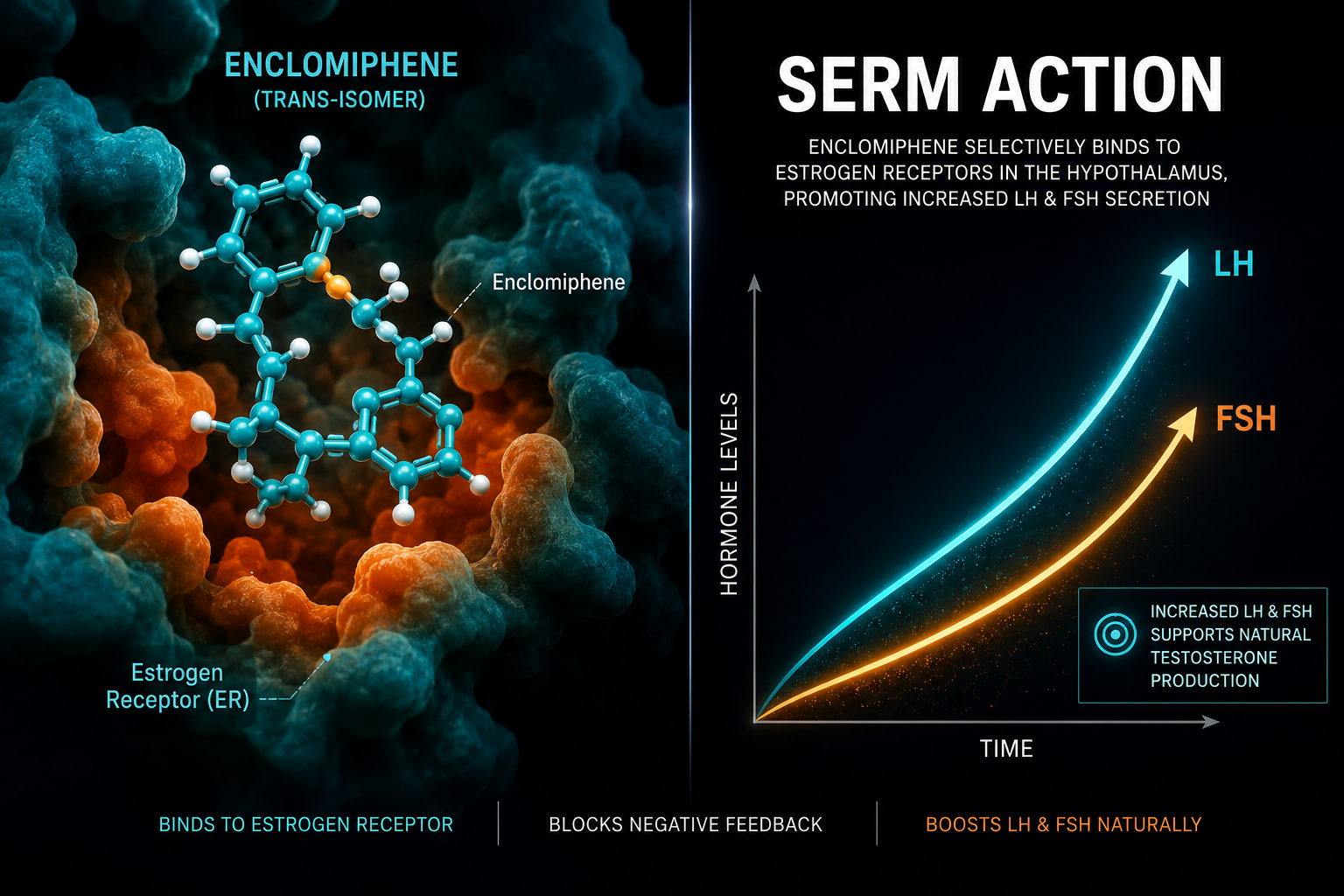
Clomiphene citrate is a mixture of two geometric isomers: enclomiphene (trans) and zuclomiphene (cis). Research has clarified that the trans-isomer carries the bulk of the therapeutic activity. Zuclomiphene contributes little to the intended hormonal outcomes and may linger in circulation due to a much longer half-life.
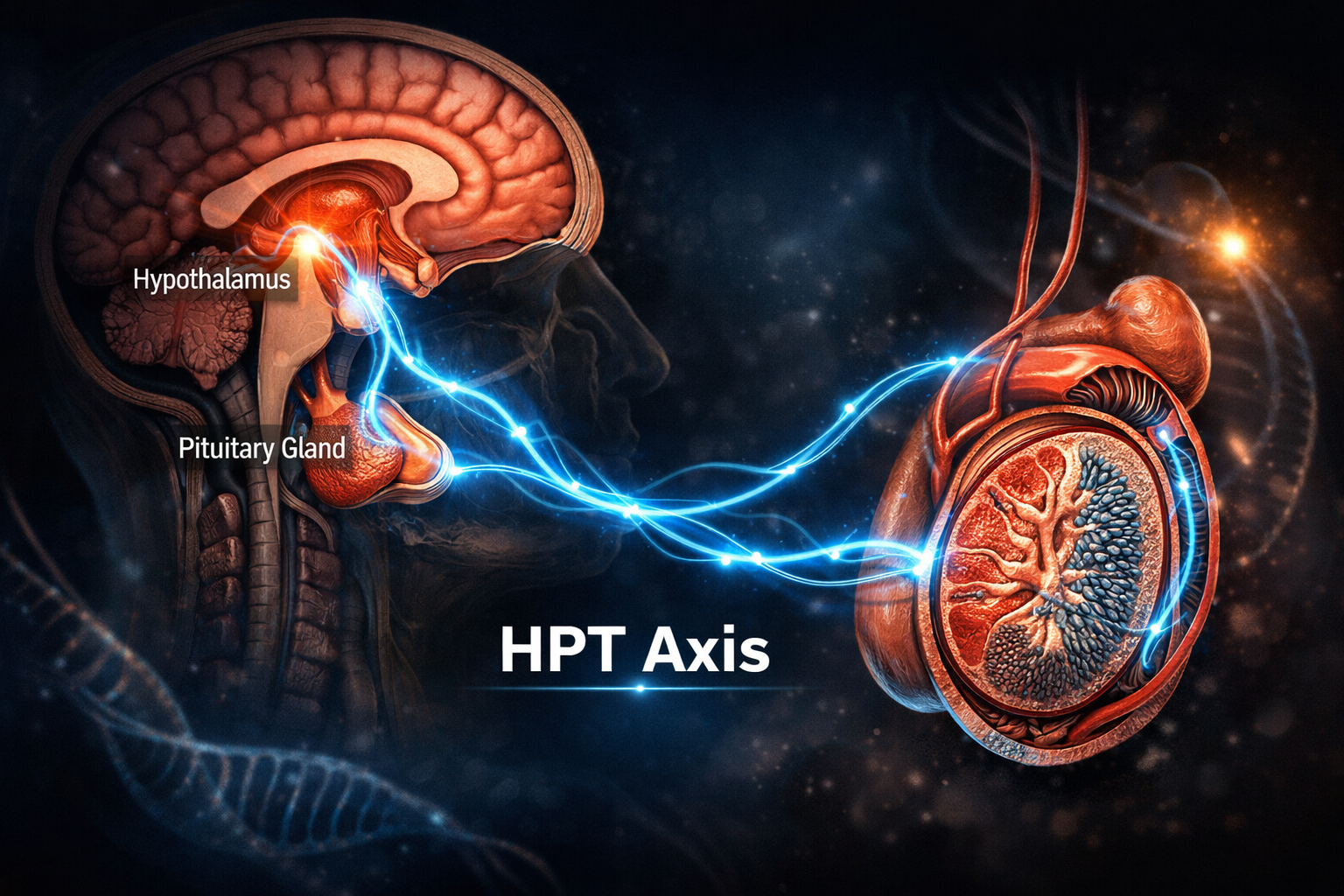
Enclomiphene works by occupying estrogen receptors in the hypothalamus and pituitary gland. Under normal physiology, circulating estradiol binds those receptors and signals the brain to reduce gonadotropin-releasing hormone (GnRH) output. When enclomiphene occupies those same receptors without activating them, the brain interprets the signal as low estrogen and responds by increasing GnRH pulse frequency.
That upstream change produces a cascade:
- GnRH rises – pulsatile release from the hypothalamus intensifies
- LH surges – the pituitary releases more luteinizing hormone
- FSH increases – follicle-stimulating hormone output also climbs
- Testosterone rises – Leydig cells in the testes respond to elevated LH by producing more endogenous testosterone
- Spermatogenesis continues – Sertoli cells, driven by FSH, maintain sperm production
This mechanism is fundamentally different from exogenous testosterone, which suppresses the HPT axis through negative feedback. Enclomiphene's half-life of roughly 10 hours supports once-daily oral dosing, typically in the 12.5 to 25 mg range, making it a practical research candidate.
Researchers exploring related peptide-based hormonal pathways may also find value in reviewing IPA serm stack research and the broader context of metabolic modulation research lines when designing multi-axis studies.
Clinical Evidence Supporting Enclomiphene and LH/FSH Modulation
A randomized phase II clinical trial demonstrated that enclomiphene citrate produced meaningful increases in morning serum testosterone, estradiol, and LH in men with secondary hypogonadism. Critically, sperm counts remained within the normal range throughout the study period, while men using topical testosterone experienced a marked reduction in spermatogenesis.
A longer comparative study published in 2024 found that enclomiphene and clomiphene produced similar increases in testosterone, estradiol, FSH, and LH over 12 months. That finding is significant because it validates enclomiphene's efficacy while highlighting its advantage: the absence of the zuclomiphene isomer means a cleaner pharmacokinetic profile and potentially fewer off-target effects.
| Parameter | Enclomiphene | Topical Testosterone |
|---|---|---|
| LH levels | Increased | Suppressed |
| FSH levels | Increased | Suppressed |
| Sperm count | Maintained | Reduced |
| Endogenous T production | Stimulated | Replaced |
Who is an ideal research candidate? Men with secondary hypogonadism whose testes retain the capacity to respond to LH stimulation represent the most relevant study population. Their HPT axis is intact but under-stimulated, making serm-based intervention a logical research target.
Those investigating broader hormonal and recovery research may find useful context in BPC-157 research themes and TB-500 muscle recovery research, as tissue-level recovery often intersects with hormonal optimization in research models.

Regulatory Context and Future Research Directions
As of 2026, enclomiphene is not FDA-approved as a standalone therapeutic agent. It remains available through compounding pharmacies, which has shaped how researchers and clinicians access it. Experts in the field have noted that the compound warrants further prospective evaluation given its favorable gonadotropin profile and fertility-preserving properties.
The broader landscape of non-steroidal approaches in male hormone research continues to expand. Researchers are increasingly interested in how serms like enclomiphene interact with other signaling pathways, including those modulated by peptides targeting the growth hormone axis. Resources such as what is new in peptide research and the serm product research page offer additional context for those mapping intersecting research domains.
Parallel interest in mitochondrial and cellular longevity pathways, such as those explored in MOTS-c mitochondrial research and GHK-Cu longevity research themes, reflects a growing recognition that male hormonal health does not exist in isolation.
Conclusion
Research into enclomiphene and LH/FSH modulation: exploring non-steroidal approaches in male hormone research has produced a compelling body of evidence. By selectively blocking estrogen receptors at the hypothalamus and pituitary, enclomiphene amplifies the body's own GnRH-LH-FSH cascade, raises endogenous testosterone, and preserves fertility in a way that exogenous testosterone cannot.
Actionable next steps for researchers and clinicians in 2026:
- Review available phase II and comparative trial data to understand the gonadotropin response profile across different dosing windows.
- Consider enclomiphene's pharmacokinetics (half-life approximately 10 hours, oral dosing 12.5-25 mg daily) when designing study protocols.
- Evaluate patient or subject suitability based on intact HPT axis function and fertility preservation goals.
- Monitor LH, FSH, testosterone, estradiol, and sperm concentration as primary outcome markers.
- Stay current with regulatory developments, as the compounding pharmacy pathway may evolve.
The non-steroidal serm approach represents one of the most mechanistically precise tools available in male hormone research today.
Leave a Reply
Want to join the discussion?Feel free to contribute!