

Epithalon for Longevity: The Complete Scientific Guide to Anti-Aging Peptide Research
Imagine a single peptide that could potentially slow down aging at the cellular level, extend healthy lifespan, and protect against age-related decline. This isn't science fiction—it's the promising reality of epithalon for longevity research that's capturing the attention of scientists, researchers, and longevity enthusiasts worldwide in 2026.
Epithalon for longevity represents one of the most fascinating frontiers in anti-aging science. This synthetic tetrapeptide, originally discovered in Russia, has demonstrated remarkable potential in laboratory studies for extending lifespan and improving cellular health markers. As researchers continue to uncover its mechanisms of action, epithalon is emerging as a serious contender in the quest for healthy aging solutions.
Key Takeaways
• Multi-pathway action: Epithalon targets five core aging mechanisms simultaneously, including telomere maintenance and oxidative stress protection
• Telomerase activation: Research shows epithalon can stimulate telomerase activity, potentially slowing cellular aging at the molecular level
• Animal studies promising: Mouse studies demonstrated 13.3% lifespan extension in the longest-lived animals with reduced age-related chromosome damage
• Research gaps exist: While mechanistically sound, large-scale human trials remain limited, requiring more comprehensive safety and efficacy data
• Active investigation: Epithalon remains an area of ongoing research rather than an established pharmaceutical treatment as of 2026
Understanding Epithalon: The Science Behind Longevity Enhancement
What Is Epithalon and How Does It Work?
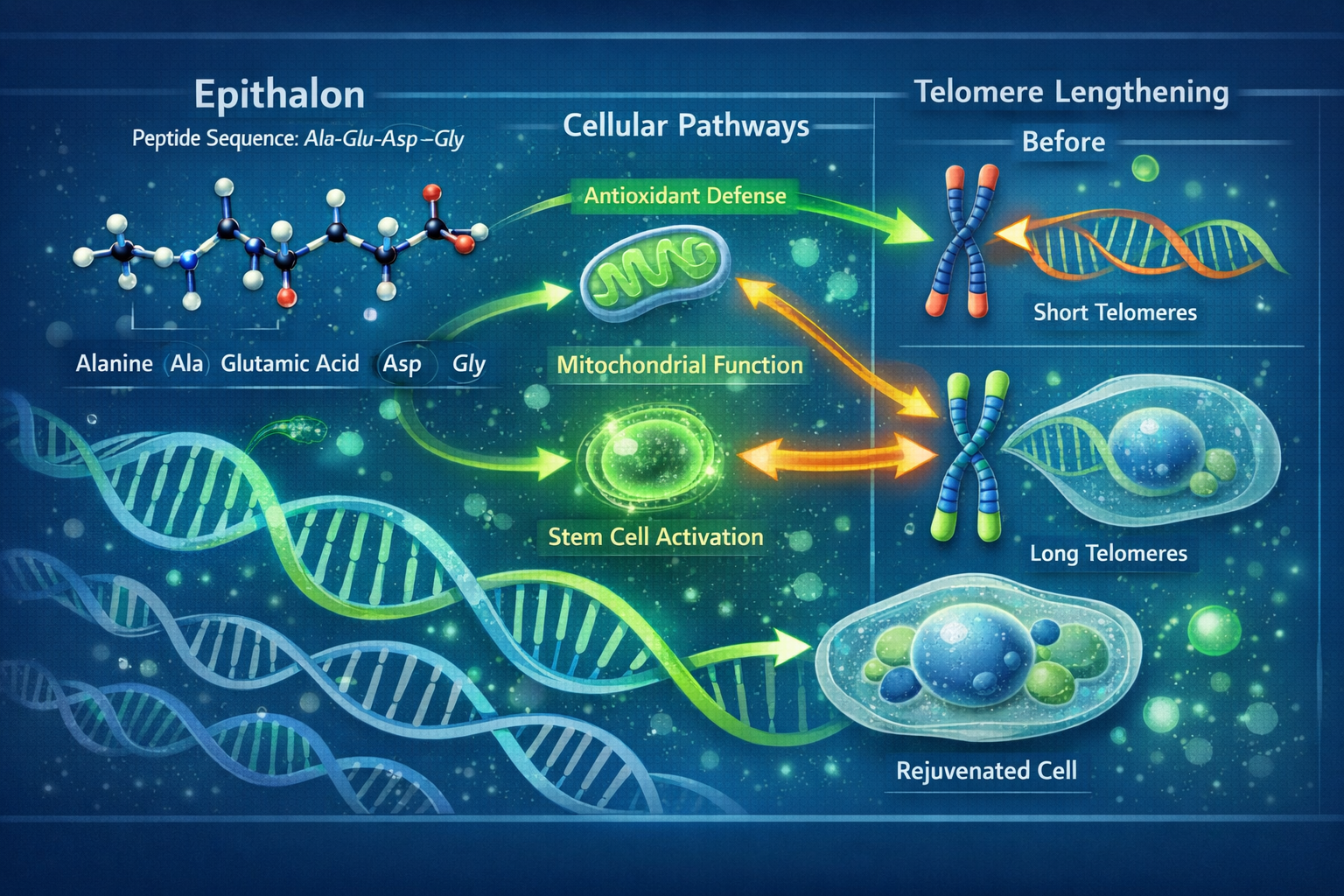
Epithalon for longevity research centers around a synthetic tetrapeptide composed of four amino acids: alanine, glutamic acid, aspartic acid, and glycine. Originally derived from the pineal gland peptide epithalamin, this compound has captured scientific attention for its potential to address multiple aging pathways simultaneously.
The peptide's multi-pathway action sets it apart from other longevity interventions. Research demonstrates that epithalon acts on five core mechanisms of aging: telomere maintenance, epigenetic regulation, oxidative stress resilience, immune recalibration, and circadian rhythm restoration.[3] This comprehensive approach makes it one of the broadest-reaching peptides in current longevity science.
The Cellular Mechanisms of Action
At the cellular level, epithalon for longevity works through several interconnected pathways:
🧬 Telomerase Activation: Studies show that epithalon stimulates telomerase activity, leading to telomere elongation in human cells.[1] Telomeres are protective DNA-protein structures at chromosome ends that naturally shorten with age. By potentially maintaining telomere length, epithalon may help slow cellular aging at the molecular level.
🛡️ Antioxidant Protection: The peptide demonstrates significant antioxidant and neuroprotective effects, potentially protecting brain cells from oxidative stress and supporting cognitive function.[1] This protection extends beyond the nervous system to other organ systems vulnerable to age-related oxidative damage.
🌙 Pineal Gland Support: Perhaps most remarkably, epithalon for longevity not only boosts melatonin production but also appears to directly protect pineal tissue from age-related decline. Studies show it safeguards pinealocytes from degenerative changes observed in aged human tissue.[3]
Research Evidence: What Studies Reveal About Epithalon for Longevity
Animal Study Breakthroughs
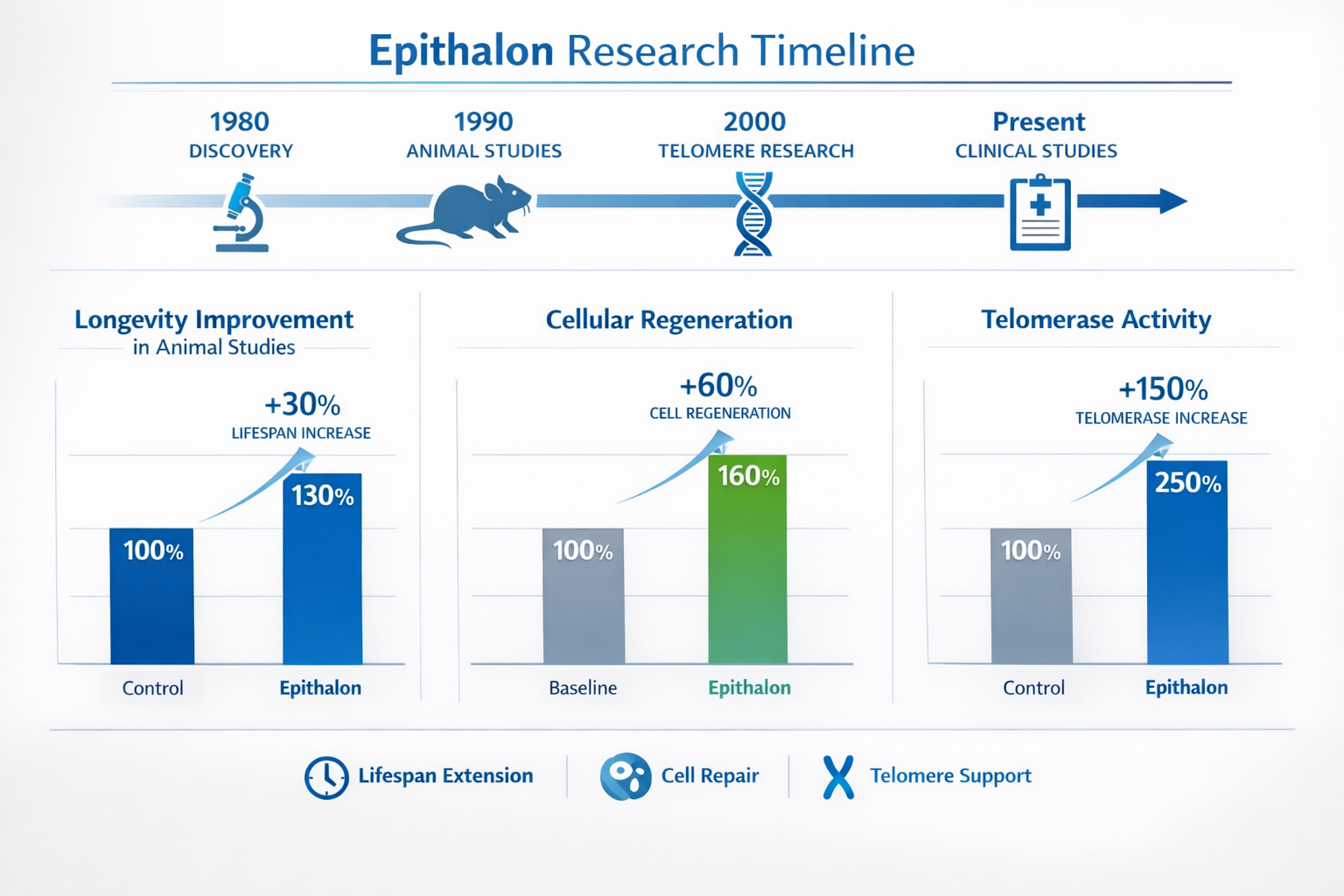
The most compelling evidence for epithalon for longevity comes from controlled animal studies. A landmark 2003 mouse study provided remarkable insights into the peptide's potential. Researchers found that epithalon treatment increased lifespans of the last 10% of survivors by 13.3% and significantly decreased chromosome aberrations associated with age-related diseases.[4]
These findings suggest that epithalon for longevity applications may not only extend lifespan but also improve healthspan—the period of life spent in good health. The reduction in chromosome aberrations indicates potential protection against cancer and other age-related genetic damage.
Human Research: Promising but Limited
While animal studies provide strong mechanistic evidence, human research on epithalon for longevity remains more limited. Russian research teams have published studies on human subjects, but most involved small sample sizes and limited follow-up periods.[2] Reported outcomes include potential improvements in:
- Immune function markers
- Sleep quality and circadian rhythm regulation
- Hormonal parameter optimization
- Cellular regeneration indicators
However, significant research gaps persist. Large-scale randomized controlled trials in human populations remain limited, and the peptide has not undergone the extensive clinical testing required for FDA or European Union pharmaceutical approval.[2]
Timeline for Observable Effects
Research suggests that measurable changes in cellular markers may occur within weeks of treatment initiation, though individual responses vary significantly.[2] Some study participants reported subjective improvements in sleep quality or energy levels within the first treatment cycle, while objective biomarker changes typically require longer observation periods.
For those interested in longevity peptide research, it's important to understand that epithalon represents a long-term approach to healthy aging rather than a quick-fix solution.
Comparing Epithalon to Other Longevity Interventions
Epithalon vs. NAD+ Therapies
When evaluating epithalon for longevity against other popular interventions, NAD+ therapies represent a common comparison. While NAD+ focuses primarily on cellular energy metabolism and DNA repair, epithalon's multi-pathway approach addresses a broader spectrum of aging mechanisms.
The key differences include:
| Intervention | Primary Mechanism | Research Stage | Application Method |
|---|---|---|---|
| Epithalon | Multi-pathway aging intervention | Early clinical | Injectable peptide |
| NAD+ | Cellular energy metabolism | Clinical trials | Various (IV, oral, nasal) |
| Rapamycin | mTOR pathway inhibition | Clinical research | Oral medication |
| Metformin | Metabolic optimization | Established drug | Oral medication |
Synergistic Approaches
Many researchers exploring epithalon for longevity applications investigate its potential in combination with other interventions. The peptide's unique mechanisms may complement:
- Mitochondrial support peptides like SS-31
- Growth hormone optimization protocols
- Cellular regeneration compounds such as BPC-157
- Metabolic enhancement therapies
Safety Considerations and Current Limitations
Understanding the Research Gaps
While epithalon for longevity shows promising mechanistic action, several important limitations must be acknowledged. Current research gaps include comprehensive long-term safety data, optimal dosing protocols for different populations, and extensive efficacy studies across diverse patient groups.[2]
As of 2026, epithalon is described as "mechanistically robust, translationally immature, but positioned as a serious contender in future longevity protocols."[3] This characterization reflects two decades of multimodal geroprotective effects demonstrated across cellular, animal, and early human studies, while acknowledging the need for more extensive clinical validation.
Important Safety Notes
⚠️ Critical Considerations:
- Epithalon remains an area of active investigation rather than an established pharmaceutical treatment
- Requires careful informed consent and ongoing monitoring when used clinically
- Individual responses vary significantly
- Long-term effects in humans require further study
For those considering epithalon for longevity research applications, working with qualified healthcare providers familiar with peptide therapies is essential.
Quality and Sourcing Considerations
The peptide research community emphasizes the importance of high-quality, properly synthesized compounds. When evaluating epithalon sources, researchers should prioritize suppliers that provide:
- Third-party testing and certificates of analysis
- Proper storage and handling protocols
- Research-grade purity standards
- Transparent sourcing information
Future Directions in Epithalon Longevity Research
Emerging Research Areas
The future of epithalon for longevity research looks increasingly promising as scientists explore new applications and mechanisms. Current areas of investigation include:
🔬 Precision Medicine Applications: Researchers are investigating how genetic variations might influence individual responses to epithalon therapy, potentially leading to personalized longevity protocols.
🧠 Neurological Applications: Given epithalon's neuroprotective properties, studies are exploring its potential in age-related cognitive decline and neurodegenerative conditions.
💊 Combination Therapies: Scientists are investigating how epithalon for longevity protocols might work synergistically with other interventions for enhanced anti-aging effects.
Clinical Trial Developments
As interest in longevity medicine grows, more comprehensive clinical trials are being designed to evaluate epithalon's efficacy and safety in larger, more diverse populations. These studies aim to address current research limitations and provide the robust evidence needed for broader clinical applications.
The peptide's unique position as a multi-pathway aging intervention makes it particularly interesting for researchers studying comprehensive longevity approaches that address multiple aspects of the aging process simultaneously.
Practical Considerations for Researchers and Clinicians
Research Protocol Development
For researchers interested in studying epithalon for longevity, developing proper protocols requires careful consideration of:
- Dosing strategies based on current literature
- Monitoring parameters for safety and efficacy
- Biomarker selection for measuring outcomes
- Study duration appropriate for longevity endpoints
Clinical Applications
Healthcare providers exploring epithalon applications should consider the peptide within the broader context of longevity medicine. This includes understanding how it might complement other evidence-based interventions and monitoring strategies.
The most popular products for research in longevity medicine often include epithalon alongside other well-studied compounds, reflecting its growing recognition in the scientific community.
Conclusion: The Future of Epithalon in Longevity Medicine
Epithalon for longevity represents a fascinating intersection of cutting-edge peptide science and practical anti-aging medicine. While current research demonstrates compelling mechanisms of action and promising preliminary results, the field continues to evolve as more comprehensive studies emerge.
The peptide's unique ability to address multiple aging pathways simultaneously—from telomere maintenance to oxidative stress protection—positions it as a potentially valuable tool in the longevity medicine toolkit. However, the current state of research emphasizes the importance of continued investigation, proper clinical oversight, and realistic expectations about outcomes.
Next Steps for Interested Parties
For Researchers: Consider epithalon within comprehensive longevity research protocols, focusing on biomarker validation and long-term safety assessment.
For Clinicians: Stay informed about emerging research while maintaining appropriate caution regarding clinical applications until more extensive human data becomes available.
For Individuals: Work with qualified healthcare providers to understand how epithalon might fit within evidence-based longevity approaches, while maintaining realistic expectations about current research limitations.
As we advance through 2026 and beyond, epithalon for longevity research will likely continue expanding our understanding of healthy aging mechanisms and potential interventions. The peptide's journey from laboratory discovery to potential clinical application exemplifies the exciting but careful progression of longevity science.
References
[1] Epithalon The Secret Antiaging Longevity Treatment – https://drrobberberian.com/blog/epithalon-the-secret-antiaging-longevity-treatment-/
[2] Epithalon The Peptide Linked To Longevity And Cellular Renewal – https://pulseandremedy.com/anti-aging/epithalon-the-peptide-linked-to-longevity-and-cellular-renewal/
[3] Epitalon – https://www.gethealthspan.com/research/article/epitalon
[4] Epitalon – https://www.innerbody.com/epitalon
[5] Epithalon Peptide Research Mechanisms – https://open.substack.com/pub/edparker92/p/epithalon-peptide-research-mechanisms?r=6xjs6j&showWelcomeOnShare=true
SEO Meta Title: Epithalon for Longevity: Complete Research Guide 2026
SEO Meta Description: Discover epithalon for longevity research, mechanisms, and clinical evidence. Comprehensive guide to anti-aging peptide science and applications in 2026.
{“@context”:”https://schema.org”,”@type”:”Article”,”headline”:”epithalon for longevity”,”description”:”!Professional landscape format (1536×1024) hero image featuring bold text overlay ‘Epithalon for Longevity: Science-Backed Anti-Aging Researc(https://zsxkvszxbh”,”image”:”https://zsxkvszxbhpwnvzxdydv.supabase.co/storage/v1/object/public/generated-images/kie/10e2e281-8bb3-4ed1-aa90-3edc57775405/slot-0-1770077490705.png”,”datePublished”:”2026-02-03T00:08:41.801151+00:00″,”dateModified”:”2026-02-03T00:12:09.779Z”,”author”:{“@type”:”Organization”,”name”:”PTP UPDATED 2.1.26″},”publisher”:{“@type”:”Organization”,”name”:”PTP UPDATED 2.1.26″}}