

A synthetic tetrapeptide of just four amino acids — Ala-Glu-Asp-Gly — has generated decades of research interest by appearing to reactivate one of biology's most tightly regulated aging mechanisms. Epithalon peptide and telomere biology intersect in ways that are genuinely compelling, but also frequently overstated. Understanding what the cell and animal data actually demonstrate, and where the evidence falls short, is essential for anyone following aging research in 2026.
Key Takeaways
- Epithalon is a synthetic tetrapeptide derived from a natural pineal gland extract, with molecular formula C14H22N4O9.
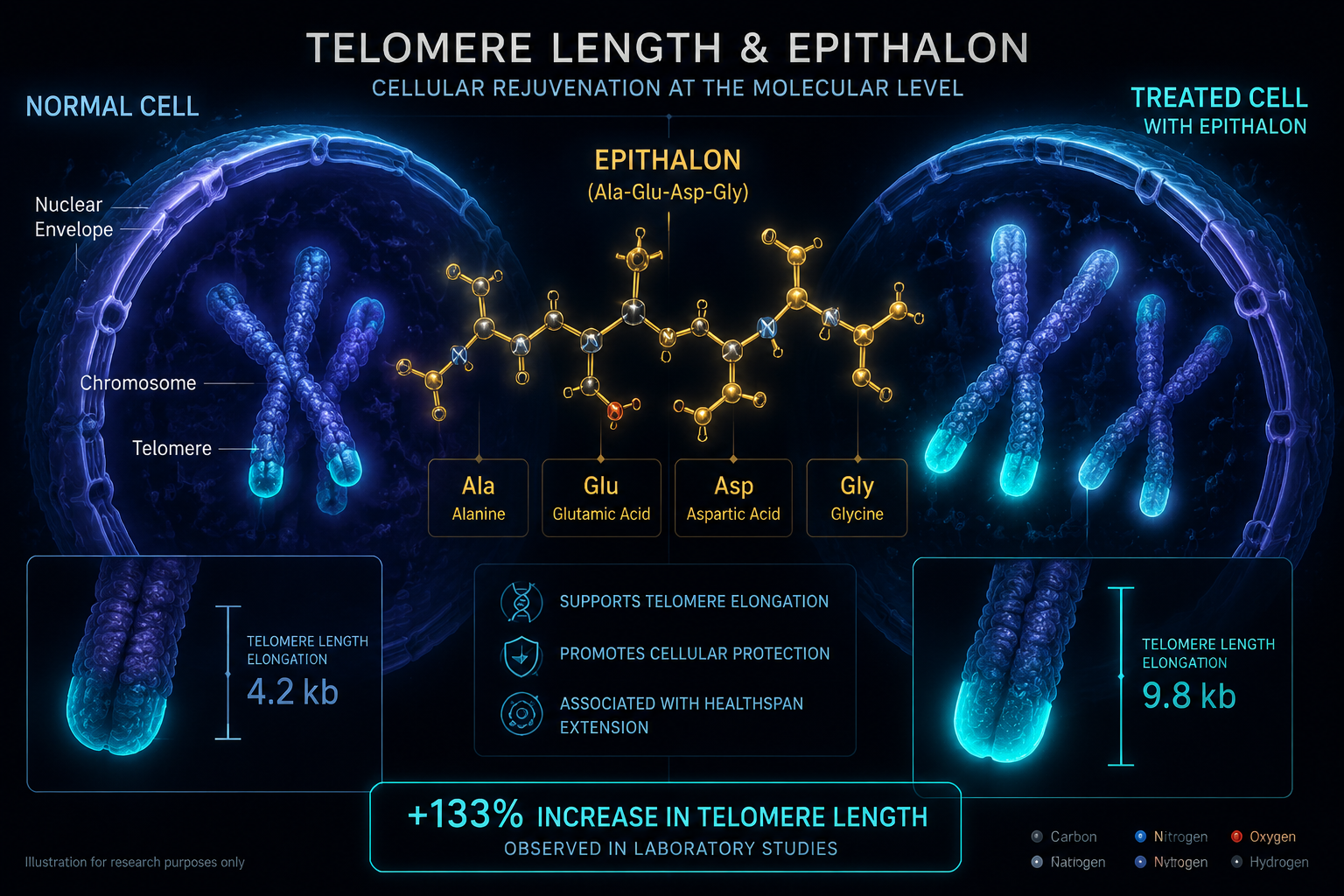
- Cell studies show it can upregulate telomerase activity and extend telomere length in normal human cells, with a distinct mechanism observed in cancer cell lines.
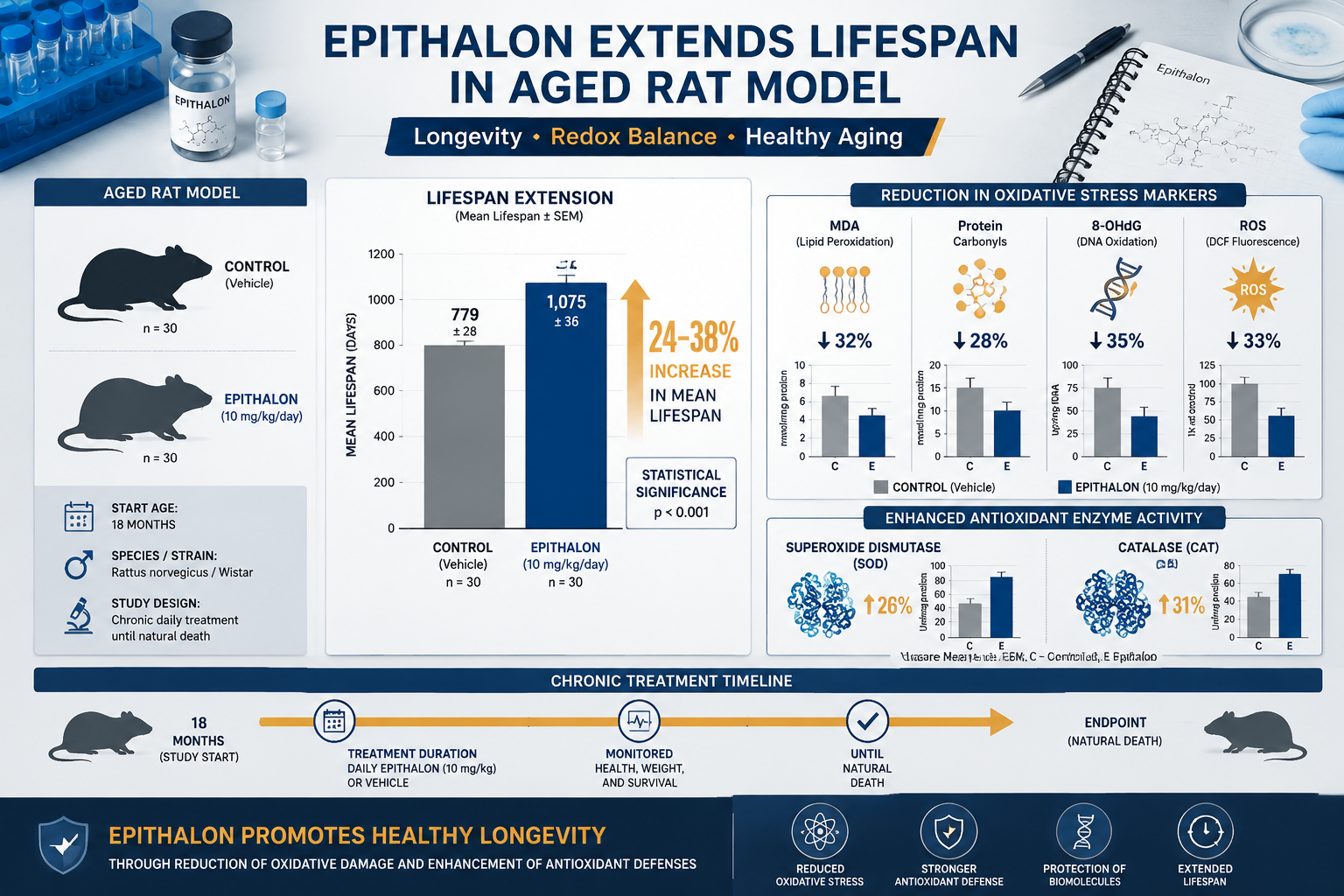
- Animal studies report 24-38% mean lifespan increases and reduced tumor incidence, but most data come from a single research group.
- Antioxidant and anti-inflammatory effects are among the most consistently reported secondary findings.
- Independent replication using modern molecular tools remains limited, which is a critical gap before drawing firm mechanistic conclusions.
What Epithalon Is and Where It Comes From
Epithalon was developed by Russian gerontologist Vladimir Khavinson and is based on epithalamin, a natural polypeptide extract from the pineal gland. The synthetic version condenses this activity into four amino acids, making it chemically stable and reproducible for research purposes.
The pineal gland connection is relevant. Epithalamin was historically associated with melatonin regulation and circadian signaling. Epithalon appears to retain some of this influence, with proposed mechanisms including melatonin upregulation and modulation of the Nrf2/ARE pathway — a transcription system that governs the body's endogenous antioxidant proteins.
Researchers interested in peptides for aging and longevity research will find Epithalon sits at a unique crossroads of telomere biology, oxidative stress reduction, and circadian regulation.
Epithalon Peptide and Telomere Biology: What Cell and Animal Studies Really Show
Telomerase Activation in Normal Human Cells
The foundational 2003 work by Khavinson and colleagues was the first published demonstration that a short synthetic peptide could reactivate telomerase in human somatic cells. This was a notable finding because telomerase is typically silenced in most adult tissues, and its reactivation had previously been associated almost exclusively with cancer biology.
A 2025 study extended this work, showing that Epithalon treatment produced a dose-dependent increase in telomere length in normal human epithelial and fibroblast cells. This effect was linked to upregulation of hTERT mRNA expression — the gene encoding the catalytic subunit of telomerase — and measurable increases in telomerase enzyme activity.
In cancer cell lines, the picture was different. Rather than activating telomerase, Epithalon appeared to extend telomere length through the Alternative Lengthening of Telomeres (ALT) pathway. This distinction matters: the mechanism shifts depending on cell type, which has implications for how researchers interpret safety and applicability data.
Animal Lifespan and Tumor Data
Long-term rodent studies have reported some of the most striking findings in this literature. Chronic Epithalon administration was associated with:
| Outcome | Observed Effect |
|---|---|
| Mean lifespan | 24-38% increase vs. controls |
| Mammary tumor incidence | Reduced in treated groups |
| Hepatic tumor incidence | Reduced in treated groups |
| Oxidative stress markers | Decreased lipid peroxidation |
| Antioxidant enzyme activity | Restored superoxide dismutase and catalase |
These effects were observed in brain, liver, and blood tissue of aged rats following chronic treatment. The antioxidant findings are among the most replicated secondary outcomes in this body of research.
What the Studies Don't Show: Gaps and Limitations
This is where Epithalon peptide and telomere biology research requires careful reading. Several important caveats apply.
First, the replication problem. A significant portion of published Epithalon research originates from a single research group. While the findings are internally consistent, independent replication using modern molecular biology tools has been limited. This is not a reason to dismiss the data, but it is a reason to hold conclusions loosely.
Second, the translation gap. Rodent lifespan data does not translate automatically to human outcomes. The cellular mechanisms may differ, dosing relationships are unclear, and long-term safety in humans has not been systematically studied.
Third, mechanistic complexity. The dual-pathway finding — telomerase in normal cells, ALT in cancer cells — raises questions that have not been fully resolved. Researchers exploring NAD+ and energetics in longevity research will recognize this pattern: promising mechanisms often prove more context-dependent than initial studies suggest.
A 2002 clinical study in patients with retinitis pigmentosa did report electrophysiological improvements, attributed to antioxidant and anti-apoptotic effects on photoreceptors. This represents one of the few human-adjacent data points, though it is limited in scope.
For broader context on how peptide research translates from bench to application, resources on MOTS-c mitochondrial research themes and GHK-Cu peptide research offer useful comparative frameworks.
Epithalon Peptide and Telomere Biology: Putting the Evidence in Context

The honest summary is this: Epithalon has produced genuinely interesting results in cell and animal models. The telomerase activation data is mechanistically plausible, the antioxidant findings are consistent, and the lifespan data — if replicated — would be significant. However, the field needs broader independent validation before any definitive claims can be made.
Researchers comparing peptide mechanisms may also find value in reviewing SS-31 elamipretide mitochondrial research and BPC-157 core peptide documentation for contrast in how different peptide classes approach cellular protection.
Those sourcing research-grade compounds should prioritize verified purity and documentation. Exploring tested peptides available for research with transparent assay data is a practical starting point.
Conclusion
Epithalon occupies a legitimate and interesting position in aging research, particularly within telomere biology. The cell data supporting telomerase upregulation in normal human cells is the strongest signal in the literature. Animal lifespan findings are provocative but require independent confirmation. The antioxidant and circadian-related effects may prove to be the most durable findings over time.
Actionable next steps for researchers:
- Prioritize studies that include independent replication and modern genomic tools when evaluating Epithalon claims.
- Distinguish between normal cell data and cancer cell data, as the mechanisms appear to differ.
- Track emerging 2026 publications for independent validation efforts.
- Source only research-grade, assay-documented compounds for any in vitro or in vivo work.
The science is worth following. The conclusions, for now, should remain provisional.
Leave a Reply
Want to join the discussion?Feel free to contribute!