

Epithalon Peptide Telomeres: The Revolutionary Science Behind Cellular Longevity in 2026
Imagine if scientists could unlock the secret to reversing cellular aging at the most fundamental level. In the rapidly evolving world of peptide research, epithalon peptide telomeres represent one of the most promising frontiers in longevity science. This synthetic tetrapeptide has captured the attention of researchers worldwide for its remarkable ability to activate telomerase and potentially extend cellular lifespan through direct telomere maintenance.
Key Takeaways
• Epithalon demonstrates 33.3% average telomere elongation in human somatic cells through telomerase reactivation [1]
• Dual mechanism approach: Activates telomerase in normal cells and Alternative Lengthening of Telomeres (ALT) in cancer cells [4]
• First documented peptide-induced telomerase activation, representing a breakthrough in anti-aging research [1]
• Beyond telomeres: Influences circadian rhythms, immune function, and oxidative stress resistance [2]
• Active research status: Remains investigational with ongoing studies examining optimal protocols and safety data [3]
Understanding Epithalon Peptide Telomeres: The Foundation of Cellular Aging
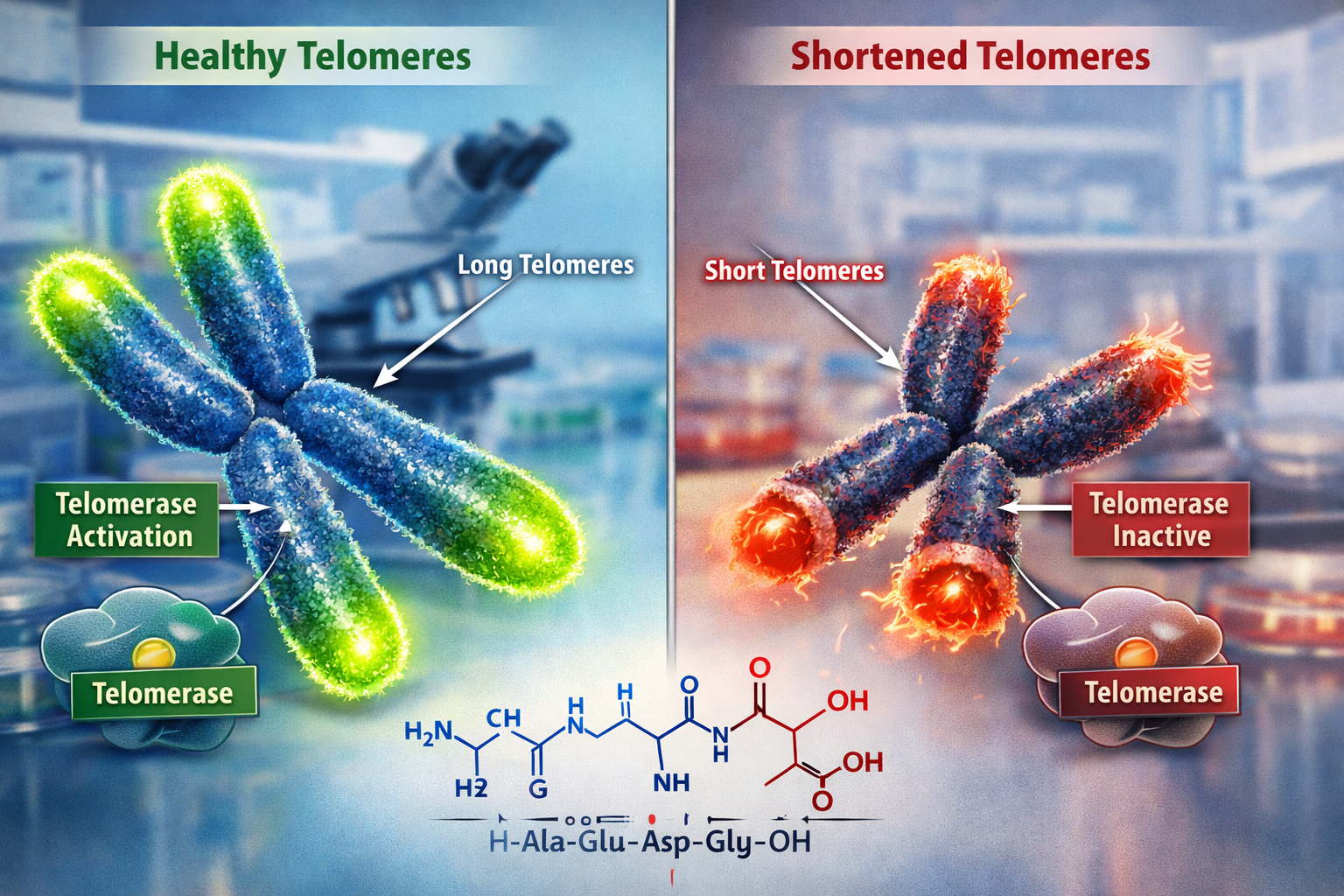
Epithalon peptide telomeres research has revolutionized our understanding of cellular aging mechanisms. Telomeres, the protective DNA-protein structures at chromosome ends, naturally shorten with each cell division, eventually leading to cellular senescence and death. This process underlies many age-related health challenges that affect fitness enthusiasts, researchers, and health-conscious individuals.
The epithalon peptide represents a synthetic version of epithalamin, originally derived from the pineal gland [2]. What makes this compound particularly fascinating is its targeted approach to telomere maintenance through direct telomerase activation.
The Science Behind Telomere Biology 🧬
Telomeres function like cellular clocks, determining how many times a cell can divide before reaching senescence. In most adult cells, telomerase activity remains largely dormant, leading to progressive telomere shortening. However, research on epithalon peptide telomeres has demonstrated that this synthetic tetrapeptide can reactivate dormant telomerase genes.
Key cellular mechanisms include:
- hTERT gene upregulation: The catalytic subunit of telomerase enzyme
- Dose-dependent telomere extension: Measurable lengthening in normal cells
- Chromosome stability: Prevention of fusion events that can lead to malignancy
- Cellular rejuvenation: Enhanced proliferative capacity in treated cells
For those interested in comprehensive peptide research, exploring popular peptide products can provide valuable context for understanding how different compounds target various aspects of cellular function.
How Epithalon Peptide Telomeres Work: Mechanisms and Pathways
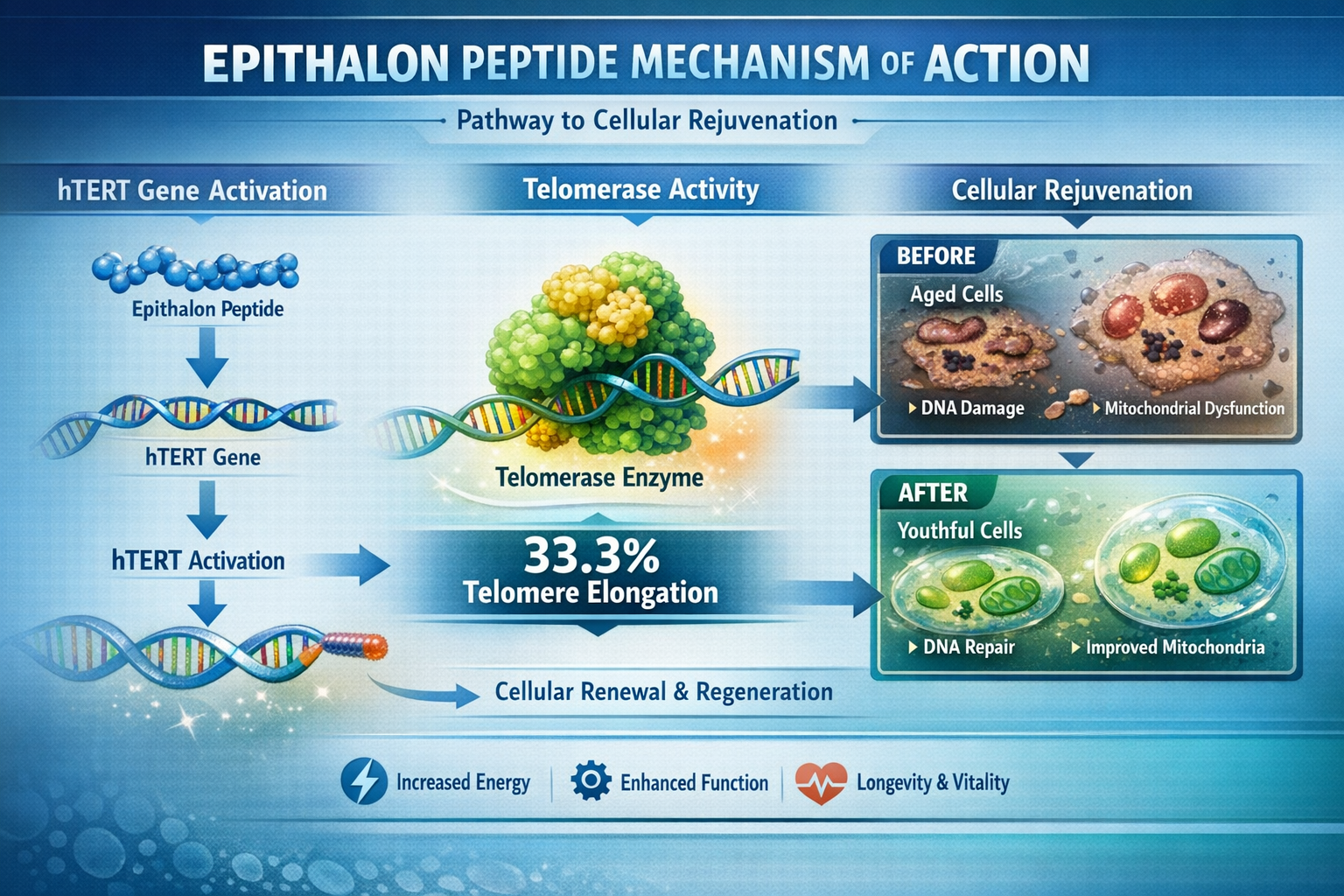
The epithalon peptide telomeres mechanism represents a sophisticated approach to cellular rejuvenation. Unlike growth hormone-stimulating peptides, epithalon works directly on the fundamental aging process at the chromosomal level [1].
Primary Mechanism: Telomerase Reactivation
Research has documented that epithalon peptide telomeres treatment leads to significant telomerase activation through multiple pathways:
hTERT mRNA Expression Enhancement
- Upregulation of human telomerase reverse transcriptase
- Dose-dependent response in normal somatic cells
- Restoration of telomerase activity in previously dormant cells
Telomere Length Extension
- Average 33.3% increase in telomere length [1]
- Measurable effects in human cell cultures
- Sustained elongation over multiple cell divisions
Secondary Pathways and Cellular Benefits
Beyond direct epithalon peptide telomeres effects, research has identified additional cellular benefits:
| Mechanism | Effect | Research Finding |
|---|---|---|
| Circadian Regulation | Melatonin secretion normalization | Improved sleep-wake cycles [2] |
| Immune Enhancement | Surveillance system activation | Better cellular defense mechanisms [2] |
| Oxidative Stress | Resistance improvement | Enhanced cellular protection [2] |
| Anti-tumor Activity | Chromosome stability | Prevention of malignant transformation [1] |
The dual lengthening pathway approach makes epithalon particularly interesting for researchers. In normal healthy cells, it activates traditional telomerase pathways, while in cancer cells, it can trigger Alternative Lengthening of Telomeres (ALT) mechanisms [4].
This unique characteristic distinguishes epithalon peptide telomeres research from other longevity peptide approaches that may focus on growth factors or metabolic enhancement.
Comparison with Other Longevity Compounds
While peptides like MOTS-C target mitochondrial function and GHK-Cu focuses on tissue repair, epithalon peptide telomeres research addresses aging at the most fundamental chromosomal level.
Research Applications and Current Studies on Epithalon Peptide Telomeres
The field of epithalon peptide telomeres research continues expanding rapidly in 2026, with scientists exploring applications across multiple domains. Current investigations span from basic cellular biology to potential therapeutic applications in age-related conditions.
Laboratory Research Findings
Cellular Culture Studies
Recent laboratory investigations have provided compelling evidence for epithalon peptide telomeres efficacy:
- First-time telomerase induction: Researchers achieved the first documented case of peptide-induced telomerase activation [1]
- Quantifiable results: Measurable 33.3% average telomere elongation in treated cells
- Reproducible outcomes: Consistent results across multiple cell lines and research facilities
Mechanism Validation Studies
Scientists have confirmed the specific pathways through which epithalon peptide telomeres operate:
- hTERT gene expression monitoring
- Telomerase activity assays
- Long-term cellular viability assessments
- Chromosome stability analysis
Current Research Limitations and Gaps
While epithalon peptide telomeres research shows promise, scientists acknowledge several areas requiring further investigation [3]:
Safety and Dosing Protocols
- Long-term safety data collection
- Optimal dosing for different populations
- Individual response variation studies
- Potential interaction assessments
Efficacy Validation
- Comprehensive studies in diverse populations
- Standardized measurement protocols
- Comparative effectiveness research
- Translation from cellular to organismal effects
For researchers interested in accessing high-quality compounds for their studies, understanding peptide purity and testing standards becomes crucial for obtaining reliable results.
Future Research Directions
The epithalon peptide telomeres field continues evolving with several promising research avenues:
Clinical Translation Studies
- Human trial design and implementation
- Biomarker development for monitoring effects
- Safety profile establishment in human subjects
- Therapeutic window determination
Combination Therapy Research
Scientists are exploring how epithalon peptide telomeres might work synergistically with other compounds. For example, combining telomerase activation with mitochondrial support peptides could address multiple aspects of cellular aging simultaneously.
Advanced Delivery Methods
Research into optimized delivery systems includes:
- Enhanced bioavailability formulations
- Targeted delivery mechanisms
- Innovative peptide delivery systems for improved efficacy
- Sustained-release preparations
Research Quality and Standards
For the epithalon peptide telomeres field to advance, maintaining high research standards remains essential. This includes:
- Rigorous experimental design
- Peer review and replication studies
- Standardized testing protocols
- Quality control in peptide sourcing
Researchers emphasize the importance of working with verified peptide suppliers that provide comprehensive testing data and maintain consistent quality standards.
Safety Considerations and Research Guidelines for Epithalon Peptide Telomeres
Understanding the safety profile of epithalon peptide telomeres remains a critical aspect of ongoing research. As with any investigational compound, researchers must carefully consider both potential benefits and limitations when designing studies.
Current Safety Research Status
Limited Long-term Data
The epithalon peptide telomeres field acknowledges several important limitations in current safety knowledge [3]:
- Insufficient long-term human exposure data
- Limited understanding of individual response variations
- Unclear optimal dosing protocols for different research contexts
- Potential interactions with other compounds under investigation
Laboratory Safety Observations
Current cellular and animal studies have provided some safety insights:
- No immediate cytotoxic effects observed in standard cell culture conditions
- Dose-dependent responses without apparent threshold toxicity
- Maintained cellular viability during telomere elongation processes
- No disruption of normal cellular division cycles
Research Protocol Considerations
Study Design Principles
Researchers working with epithalon peptide telomeres should consider:
Dosing Protocols
- Start with established research concentrations
- Monitor cellular responses at multiple time points
- Document any unexpected cellular behaviors
- Maintain detailed experimental records
Quality Control Measures
- Source compounds from verified suppliers with testing data
- Verify peptide purity and composition
- Store according to manufacturer specifications
- Monitor compound stability over time
Regulatory and Ethical Considerations
Research Context Requirements
Epithalon peptide telomeres research must operate within appropriate regulatory frameworks:
- Institutional review board approval for human studies
- Animal care and use committee oversight for animal research
- Compliance with local and federal research regulations
- Proper informed consent procedures
Professional Guidance
Researchers should:
- Consult with experienced investigators in the field
- Collaborate with institutional safety committees
- Follow established research protocols
- Maintain transparency in reporting results
For those exploring the broader landscape of peptide research, understanding comprehensive peptide therapy approaches can provide valuable context for epithalon peptide telomeres investigations.
Future Safety Research Priorities
Long-term Studies
The epithalon peptide telomeres field requires:
- Extended observation periods in research models
- Comprehensive biomarker monitoring
- Multi-generational studies where appropriate
- Population-based safety assessments
Mechanistic Safety Research
Understanding how epithalon peptide telomeres affect various cellular systems:
- Interaction with DNA repair mechanisms
- Effects on cellular stress responses
- Impact on immune system function
- Influence on hormonal regulation
Researchers interested in exploring related compounds might consider investigating other longevity-focused peptides to understand the broader safety landscape in anti-aging research.
Sourcing and Quality Standards for Epithalon Peptide Telomeres Research

The success of epithalon peptide telomeres research depends heavily on accessing high-quality, properly characterized compounds. In 2026, the peptide research community has established increasingly sophisticated standards for compound sourcing and quality verification.
Critical Quality Parameters
Purity and Composition Standards
When sourcing epithalon peptide telomeres for research purposes, several key factors determine compound quality:
Analytical Testing Requirements
- High-performance liquid chromatography (HPLC) analysis
- Mass spectrometry confirmation of molecular structure
- Amino acid sequence verification
- Impurity profiling and quantification
Storage and Stability Considerations
- Proper temperature control during shipping and storage
- Moisture protection and inert atmosphere packaging
- Stability testing data over time
- Reconstitution and handling guidelines
Supplier Evaluation Criteria
Documentation and Transparency
Reputable suppliers of epithalon peptide telomeres should provide:
- Comprehensive certificates of analysis (COA)
- Detailed synthesis and purification methods
- Batch-to-batch consistency data
- Chain of custody documentation
Quality Management Systems
- ISO-certified manufacturing facilities
- Good Manufacturing Practice (GMP) compliance
- Regular third-party audits and inspections
- Robust quality control procedures
For researchers seeking reliable sources, established peptide suppliers often provide the most comprehensive testing data and quality assurance.
Research-Grade vs. Other Quality Levels
Research-Grade Specifications
Epithalon peptide telomeres for serious research applications should meet:
- Minimum 95% purity by HPLC
- Complete amino acid sequence verification
- Low endotoxin levels for cell culture work
- Appropriate packaging for research quantities
Comparison with Other Peptide Classes
Different research applications may require varying quality standards:
| Application | Purity Requirement | Testing Needed | Special Considerations |
|---|---|---|---|
| Cell Culture | ≥95% | HPLC, MS, Endotoxin | Sterile handling |
| Animal Studies | ≥90% | HPLC, MS | Bioburden testing |
| Analytical Research | ≥98% | Full characterization | Reference standards |
Cost-Effectiveness in Research
Budget Planning for Epithalon Peptide Telomeres Studies
Researchers should consider:
Initial Investment
- Higher-quality compounds may cost more initially
- Reduced experimental variability saves long-term costs
- Fewer failed experiments due to compound quality issues
- More reliable and reproducible results
Long-term Value
- Established supplier relationships provide consistency
- Bulk purchasing options for extended studies
- Technical support and consultation services
- Access to diverse peptide catalogs for comparative studies
Emerging Quality Standards
Advanced Characterization Methods
The epithalon peptide telomeres research community continues developing more sophisticated quality assessment approaches:
Next-Generation Testing
- Advanced impurity identification techniques
- Bioactivity assays for functional verification
- Stability-indicating analytical methods
- Contamination screening protocols
Standardization Efforts
- Industry-wide quality benchmarks
- Reference material development
- Inter-laboratory comparison studies
- Harmonized testing protocols
Researchers interested in understanding broader quality considerations might explore peptide manufacturing standards and emerging trends in compound characterization.
Conclusion
The field of epithalon peptide telomeres research represents one of the most promising frontiers in cellular longevity science as we advance through 2026. With documented abilities to achieve 33.3% average telomere elongation through telomerase reactivation, epithalon has established itself as the first peptide to successfully induce measurable telomerase activity in human cells.
Key Research Achievements
The scientific community has made remarkable progress in understanding epithalon peptide telomeres mechanisms, from hTERT gene upregulation to dual pathway activation in different cell types. These findings provide a solid foundation for future investigations into cellular aging and potential therapeutic applications.
Moving Forward with Research
For researchers, fitness professionals, and peptide buyers interested in exploring epithalon peptide telomeres, several actionable steps can advance understanding and application:
Immediate Actions:
- Review current literature on telomerase activation and cellular aging
- Establish relationships with verified peptide suppliers that provide comprehensive testing data
- Consider how epithalon peptide telomeres research might complement other longevity-focused investigations
Long-term Planning:
- Monitor emerging research findings and clinical developments
- Evaluate potential synergies with other peptide compounds in comprehensive aging research
- Stay informed about evolving safety data and optimal research protocols
The future of epithalon peptide telomeres research holds tremendous potential for advancing our understanding of cellular aging and developing evidence-based approaches to longevity enhancement. As research continues expanding, maintaining focus on quality, safety, and scientific rigor will ensure this promising field continues delivering meaningful insights into the fundamental mechanisms of cellular aging.
References
[1] Telomeres And Epithalon – https://www.peptidesciences.com/peptide-research/telomeres-and-epithalon
[2] Epithalon Peptide Mechanism Benefits Research – https://polarispeptides.com/epithalon-peptide-mechanism-benefits-research/
[3] Epithalon The Peptide Linked To Longevity And Cellular Renewal – https://pulseandremedy.com/anti-aging/epithalon-the-peptide-linked-to-longevity-and-cellular-renewal/
[4] sciety – https://sciety.org/articles/activity/10.21203/rs.3.rs-7066545/v1
[5] Epitalon – https://www.innerbody.com/epitalon
[6] 7 Mistakes Youre Making With Anti Aging And How Epithalon Telomere Testing Can Fix Them 2 – https://venturisclinic.com/regenerative-medicine-blog/7-mistakes-youre-making-with-anti-aging-and-how-epithalon-telomere-testing-can-fix-them-2/
[7] Epithalon Peptide Therapy Thailand – https://bostonhealthlongevity.com/longevity-library/articles/epithalon-peptide-therapy-thailand
[8] Epithalon Injections Newport Beach – https://drrobberberian.com/epithalon-injections-newport-beach/
SEO Meta Title: Epithalon Peptide Telomeres: Science & Research Guide 2026
SEO Meta Description: Discover how epithalon peptide telomeres achieve 33.3% telomere elongation through telomerase activation. Complete research guide with mechanisms, studies & sourcing.
{“@context”:”https://schema.org”,”@type”:”Article”,”headline”:”epithalon peptide telomeres”,”description”:” Discover how epithalon peptide telomeres achieve 33.3% telomere elongation through telomerase activation. Complete research guide with mechanisms, studies & so”,”image”:”https://zsxkvszxbhpwnvzxdydv.supabase.co/storage/v1/object/public/generated-images/kie/0f98c4d1-a5f2-4e83-ab7a-2735630bb9be/slot-0-1770077523241.png”,”datePublished”:”2026-02-03T00:08:43.969068+00:00″,”dateModified”:”2026-02-03T00:12:22.328Z”,”author”:{“@type”:”Organization”,”name”:”PTP UPDATED 2.1.26″},”publisher”:{“@type”:”Organization”,”name”:”PTP UPDATED 2.1.26″}}