
The Complete Guide to GHK-Cu Peptide Dosage for Optimal Results in 2026
Picture this: You've just received your first vial of GHK-Cu peptide, and you're holding it up to the light, wondering exactly how much you should use. You're not alone. Thousands of researchers, fitness coaches, and wellness professionals face this same question every day. Getting your ghk cu peptide dosage right isn't just about following a number—it's about understanding how this powerful copper peptide works in your specific research context. Whether you're a bodybuilder looking to enhance recovery, a medi spa professional exploring anti-aging protocols, or a life coach researching wellness optimization, this comprehensive guide will walk you through everything you need to know about proper dosing strategies.
The truth is, GHK-Cu peptide dosage can vary significantly based on your research goals, administration method, and individual factors. I've spent years analyzing research data, consulting with professionals, and reviewing clinical studies to bring you this definitive resource. Let's dive into the science-backed information that will help you make informed decisions about your peptide research protocols.
Key Takeaways
✅ Standard GHK-Cu dosage ranges from 0.5mg to 3mg per administration, with most research protocols using 1-2mg for subcutaneous injection
✅ Administration frequency typically varies from daily to three times per week, depending on research objectives and individual response patterns
✅ Topical applications require higher concentrations (0.1% to 1%) compared to injectable forms due to different absorption mechanisms
✅ Proper reconstitution with bacteriostatic water is essential for maintaining peptide stability and ensuring accurate dosing measurements
✅ Cycling protocols of 8-12 weeks followed by rest periods help optimize results and maintain peptide effectiveness over time
Understanding GHK-Cu Peptide: The Foundation for Proper Dosing
Before we explore specific ghk cu peptide dosage recommendations, it's crucial to understand what makes this peptide unique. GHK-Cu is a naturally occurring copper complex that consists of three amino acids: glycine, histidine, and lysine. This tripeptide has been the subject of extensive research since its discovery in human plasma in the 1970s.
The copper component plays a vital role in the peptide's biological activity. When you're calculating your dosage, you're essentially determining how much of this copper-peptide complex you'll introduce into your research model. The molecular weight of GHK-Cu is approximately 340 Daltons, which influences its absorption and distribution characteristics.
Why Dosage Matters More Than You Think
Getting your GHK-Cu peptide dosage right impacts several critical factors:
- Bioavailability: Too little may not produce measurable effects in your research
- Cost-effectiveness: Excessive dosing wastes valuable research materials
- Safety margins: Staying within established research parameters ensures responsible protocols
- Reproducibility: Consistent dosing allows for reliable data collection and analysis
Research from multiple studies suggests that GHK-Cu demonstrates a dose-dependent response in various biological systems. This means that different dosages can produce different outcomes, making precision essential for your research objectives.
When sourcing your research materials, quality matters tremendously. Pure Tested Peptides provides third-party tested compounds that ensure you're working with accurately labeled products—a critical factor when calculating precise dosages.
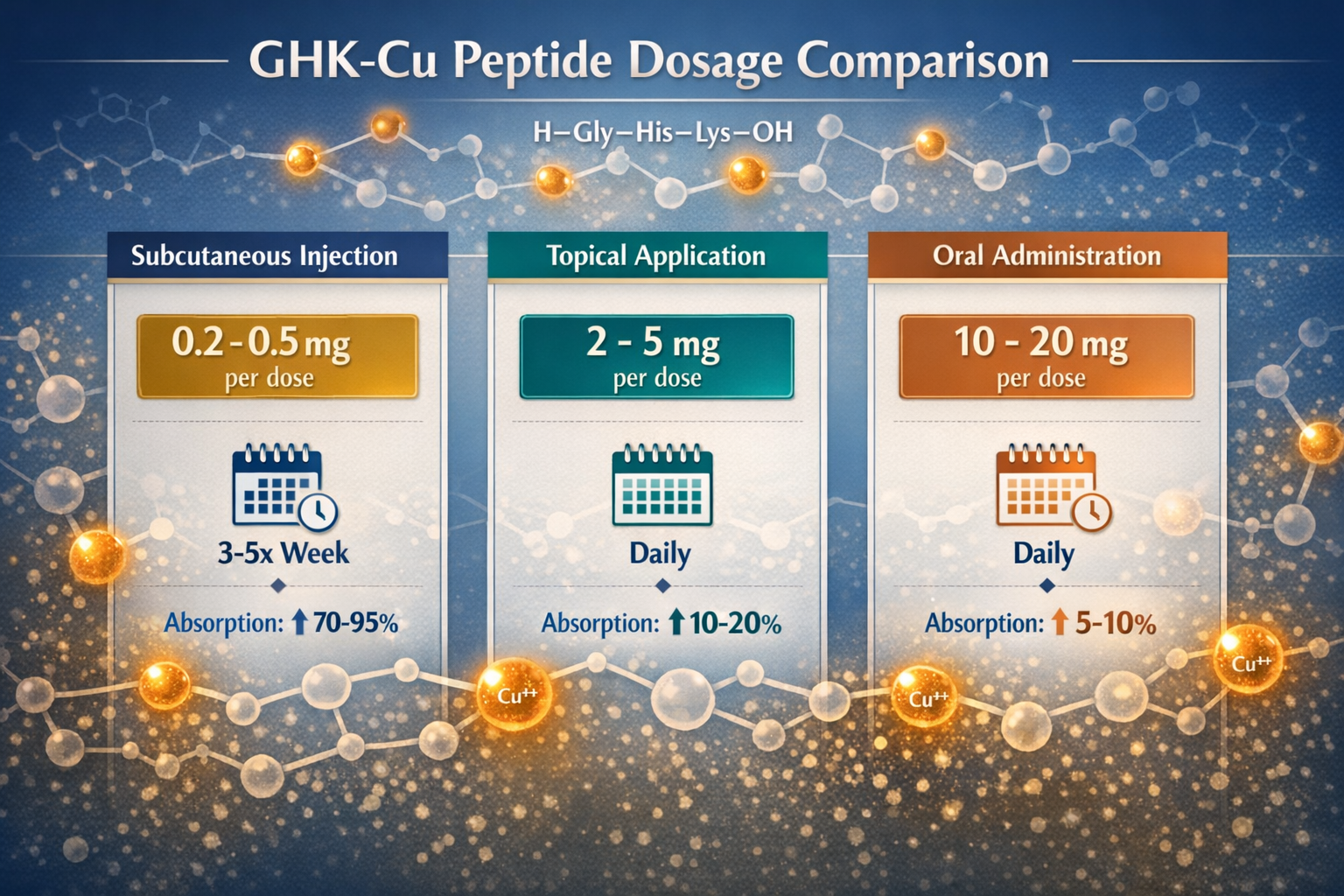
Standard GHK-Cu Peptide Dosage Protocols by Administration Route
The method you choose for administering GHK-Cu significantly affects the appropriate dosage. Let's break down the most common routes and their corresponding dosing guidelines.
Subcutaneous Injection Dosage
Subcutaneous injection remains the most researched and documented administration method for GHK-Cu peptide. This route offers several advantages, including predictable absorption rates and bioavailability.
Standard Subcutaneous Dosing Guidelines:
| Research Goal | Dosage Range | Frequency | Duration |
|---|---|---|---|
| General wellness research | 0.5-1mg | 3x per week | 8-12 weeks |
| Recovery protocols | 1-2mg | Daily or 5x per week | 8-12 weeks |
| Intensive research | 2-3mg | Daily | 4-8 weeks |
| Maintenance phase | 0.5-1mg | 2-3x per week | Ongoing |
For subcutaneous administration, most researchers find that 1-2mg per injection represents the sweet spot for balancing efficacy with resource management. This dosage typically uses a standard insulin syringe with measurements that make precise dosing straightforward.
The GHK-Cu 50mg product provides enough material for 25-50 research administrations at standard dosing levels, making it an economical choice for extended research protocols.
Topical Application Dosage
Topical GHK-Cu requires different concentration considerations compared to injectable forms. The skin barrier affects absorption, necessitating higher concentrations to achieve meaningful penetration.
Topical Concentration Guidelines:
- Low concentration: 0.1-0.2% (1-2mg per mL) – suitable for facial applications
- Medium concentration: 0.3-0.5% (3-5mg per mL) – general skin research
- High concentration: 0.5-1% (5-10mg per mL) – targeted area applications
When preparing topical formulations, researchers typically dissolve GHK-Cu in a suitable carrier solution. The amount applied varies from 0.5mL to 2mL depending on the surface area being studied. This means each application might contain anywhere from 0.5mg to 20mg of active peptide, though most of this remains on the skin surface rather than being absorbed.
Oral Administration Considerations
Oral GHK-Cu peptide administration presents unique challenges due to digestive enzyme breakdown and first-pass metabolism. Research suggests that oral bioavailability is significantly lower than injectable routes, requiring dosage adjustments.
Oral Dosing Considerations:
💊 Higher doses needed: 5-10mg or more may be required to achieve effects comparable to 1mg injected
💊 Timing matters: Empty stomach administration may improve absorption
💊 Formulation factors: Enteric coating or liposomal delivery can enhance bioavailability
While some researchers explore oral protocols, the injectable route remains more economical and predictable for most research applications. If you're interested in exploring different peptide administration methods, resources on best oral peptides can provide additional context.
How to Calculate and Prepare Your GHK-Cu Peptide Dosage
Proper reconstitution and calculation are essential skills for anyone working with peptide research. Let me walk you through the process step-by-step to ensure you achieve accurate dosing every time.
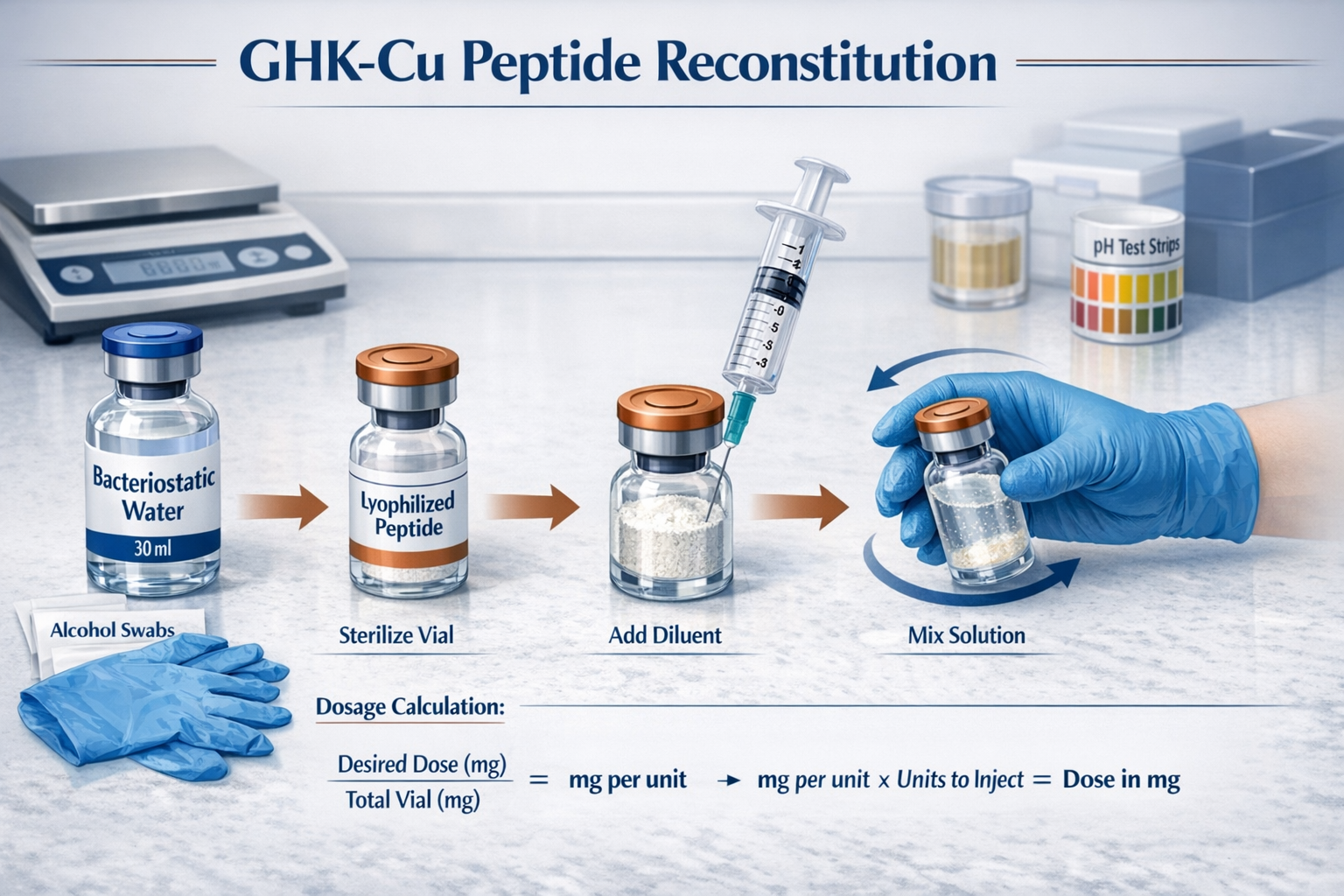
The Reconstitution Process
Most GHK-Cu peptide arrives as lyophilized (freeze-dried) powder that requires reconstitution with bacteriostatic water before use. Here's the standard process:
Step 1: Gather Your Materials
- GHK-Cu peptide vial (typically 50mg)
- Bacteriostatic water (2-5mL)
- Sterile syringes
- Alcohol swabs
Step 2: Calculate Your Desired Concentration
Let's say you have a 50mg vial and want to create a solution where each 0.1mL (10 units on an insulin syringe) contains 1mg of peptide. You would add 5mL of bacteriostatic water:
- 50mg ÷ 5mL = 10mg/mL concentration
- 10mg/mL × 0.1mL = 1mg per 10 units
Step 3: Reconstitute Properly
- Clean the rubber stopper with an alcohol swab
- Draw your calculated amount of bacteriostatic water
- Inject slowly down the side of the vial (never directly onto the powder)
- Gently swirl—never shake—until fully dissolved
- Store refrigerated at 2-8°C (36-46°F)
Dosage Calculation Examples
Let me provide several real-world examples to make this crystal clear:
Example 1: Standard Daily Protocol
- Vial size: 50mg
- Water added: 5mL
- Concentration: 10mg/mL
- Desired dose: 1mg
- Amount to inject: 0.1mL (10 units)
- Vial will last: 50 days
Example 2: Higher Dose Protocol
- Vial size: 50mg
- Water added: 2.5mL
- Concentration: 20mg/mL
- Desired dose: 2mg
- Amount to inject: 0.1mL (10 units)
- Vial will last: 25 days
Example 3: Lower Dose Maintenance
- Vial size: 50mg
- Water added: 10mL
- Concentration: 5mg/mL
- Desired dose: 0.5mg
- Amount to inject: 0.1mL (10 units)
- Vial will last: 100 days
The beauty of this system is its flexibility. By adjusting the amount of bacteriostatic water you add, you can create a concentration that makes your desired dose easy to measure with standard insulin syringes.
When you're ready to begin your research, the GHK-Cu 50mg formulation provides pharmaceutical-grade material with verified purity, ensuring your calculations translate to accurate real-world dosing.
GHK-Cu Peptide Dosage for Specific Research Applications
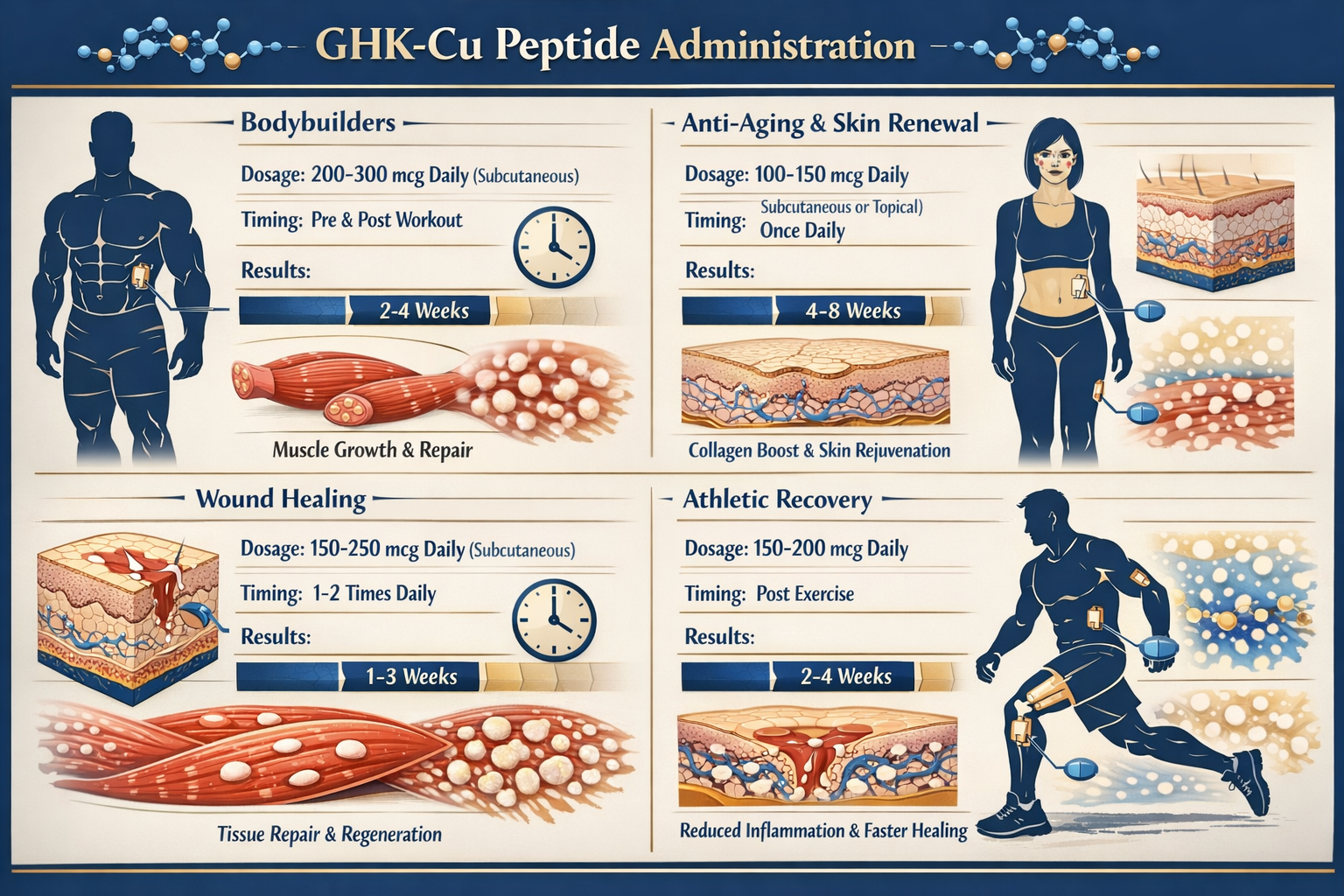
Different research objectives may warrant different dosing strategies. Let's explore how ghk cu peptide dosage varies across common research applications.
Bodybuilding and Athletic Recovery Research
For researchers studying athletic recovery and muscle tissue repair, GHK-Cu protocols typically fall in the moderate to higher dosage range. The rationale stems from research suggesting that tissue repair mechanisms may respond to higher peptide concentrations.
Athletic Research Dosing Framework:
🏋️ Pre-training phase: 1mg daily for 2 weeks before intensive training begins
🏋️ Active training phase: 1.5-2mg daily, administered post-workout or before bed
🏋️ Recovery phase: 1mg 3-4 times per week
🏋️ Off-cycle maintenance: 0.5-1mg 2-3 times per week
Many fitness coaches and bodybuilders researching recovery protocols report that consistency matters more than peak dosing. A moderate dose administered regularly often produces more notable observations than sporadic higher doses.
The timing of administration also appears relevant in athletic research contexts. Some researchers prefer evening administration to align with natural recovery processes that occur during sleep. Others split doses between morning and evening for sustained presence in research models.
Anti-Aging and Skin Research Protocols
Research into skin-related applications often combines both topical and injectable approaches, creating a comprehensive protocol that addresses multiple pathways.
Skin Research Dosing Strategies:
✨ Injectable component: 0.5-1mg subcutaneously 3 times per week
✨ Topical component: 0.3-0.5% concentration applied daily to research areas
✨ Duration: Minimum 8-12 weeks for observable changes in research models
✨ Maintenance: Reduced frequency after initial research period
For medi spa professionals researching aesthetic applications, the combination approach allows for both systemic and localized effects. The injectable component may support overall collagen synthesis pathways, while topical application provides direct contact with skin tissue.
Research documentation from various studies suggests that lower, consistent doses over extended periods may produce more sustainable results than aggressive short-term protocols. This patience-based approach aligns well with the gradual nature of collagen remodeling processes.
Wound Healing and Tissue Repair Studies
Research focused on wound healing and tissue repair often employs more targeted, localized dosing strategies. Some researchers use both systemic administration and localized application near the area of interest.
Tissue Repair Research Framework:
🔬 Systemic dose: 1-2mg daily via subcutaneous injection
🔬 Local application: Additional topical application of 0.5-1% concentration directly to research area
🔬 Frequency: Daily during acute phase, then 3-5 times weekly during recovery phase
🔬 Duration: Continued until research objectives are met, typically 4-12 weeks
The dual approach—combining systemic and local administration—appears in multiple research protocols studying tissue repair mechanisms. This strategy aims to provide both circulating peptide and high local concentrations at the site of interest.
Wellness and Longevity Research
Life coaches and wellness professionals researching general health optimization often employ more conservative, maintenance-oriented dosing strategies. These protocols emphasize sustainability and long-term consistency over intensive short-term interventions.
Wellness Research Dosing:
🌟 Starting dose: 0.5-1mg three times per week
🌟 Adjustment period: 4-6 weeks to assess individual response
🌟 Optimized dose: Adjust to 1-2mg based on research observations
🌟 Long-term protocol: Cycling pattern of 12 weeks on, 4 weeks off
For those exploring comprehensive peptide research protocols, understanding how different compounds work together can be valuable. Resources on peptide blends research provide insights into synergistic approaches that some researchers find beneficial.
Factors That Influence Optimal GHK-Cu Peptide Dosage
While standard dosing guidelines provide a helpful starting point, several individual factors can influence the optimal ghk cu peptide dosage for your specific research context.
Body Weight and Composition Considerations
Unlike some peptides that require strict weight-based dosing calculations, GHK-Cu research typically uses standardized doses across different body weights. However, some researchers do make adjustments based on body mass.
Weight-Based Adjustment Framework:
- Under 150 lbs: Consider starting at the lower end of dosing ranges (0.5-1mg)
- 150-200 lbs: Standard dosing protocols (1-2mg) typically apply
- Over 200 lbs: Some researchers use the higher end of ranges (2-3mg)
- Athletes with high muscle mass: May benefit from upper dosage ranges
That said, the relationship between body weight and optimal GHK-Cu dosage isn't as linear as with some other compounds. The peptide's mechanisms involve receptor binding and signaling cascades that may not directly correlate with body mass.
Research Duration and Cycling Protocols
The length of your research protocol significantly impacts dosing strategy. Short-term intensive research differs substantially from long-term maintenance protocols.
Duration-Based Dosing Strategies:
📅 Short-term intensive (4-8 weeks)
- Higher doses (2-3mg daily)
- Focused research objectives
- Followed by rest period
📅 Medium-term protocols (8-12 weeks)
- Moderate doses (1-2mg daily or 5x weekly)
- Balanced approach
- Most common research framework
📅 Long-term maintenance (12+ weeks)
- Lower doses (0.5-1mg)
- Reduced frequency (2-3x weekly)
- Cycling recommended (12 weeks on, 4 weeks off)
Cycling—alternating between active research periods and rest periods—appears in many advanced protocols. This approach may help maintain responsiveness and prevent adaptation that could reduce effectiveness over time.
Previous Peptide Research Experience
Researchers new to peptide work often benefit from starting with conservative doses and gradually increasing based on observations and comfort level with administration techniques.
Experience-Based Approach:
🔰 Beginners: Start with 0.5-1mg three times weekly for first 4 weeks
🔰 Intermediate: Progress to 1-2mg daily or 5x weekly after establishing baseline
🔰 Advanced: May experiment with higher doses (2-3mg) or combination protocols
For those just beginning their peptide research journey, guides on best peptide kits for beginner researchers can provide valuable foundational information beyond just GHK-Cu.
Quality and Purity Factors
The purity of your GHK-Cu peptide directly affects actual dosing. A product labeled as 50mg that's only 80% pure actually contains 40mg of active peptide—a significant difference that impacts your calculations.
Quality Considerations:
✓ Third-party testing: Verify actual peptide content through independent analysis
✓ Purity percentage: Pharmaceutical-grade should be ≥98% pure
✓ Storage conditions: Proper storage maintains labeled potency
✓ Reconstitution sterility: Contamination can degrade peptide over time
This is why sourcing from reputable suppliers matters tremendously. The GHK-Cu 50mg from Pure Tested Peptides comes with third-party testing documentation, ensuring that your dosage calculations reflect actual peptide content.
Advanced GHK-Cu Peptide Dosage Strategies and Protocols
Once you've mastered basic dosing principles, you might explore more sophisticated approaches that some researchers use to optimize their protocols.
Pulsing and Megadosing Approaches
Some advanced researchers experiment with pulsing protocols—alternating between higher and lower doses rather than maintaining constant levels. The theoretical basis involves preventing receptor downregulation while providing periodic higher concentrations.
Pulsing Protocol Example:
- Week 1-2: 2mg daily (loading phase)
- Week 3-4: 0.5mg three times weekly (maintenance)
- Week 5-6: 2mg daily (pulse phase)
- Week 7-8: 0.5mg three times weekly (maintenance)
- Repeat cycle
Another approach involves "megadosing"—using significantly higher doses (3-5mg) for very short periods (3-7 days) followed by extended rest periods. This strategy remains experimental and lacks extensive research documentation, so it should be approached with appropriate caution and documentation.
Combination Protocols with Other Peptides
Some researchers explore combining GHK-Cu with other peptides to study potential synergistic effects. When combining peptides, dosing strategies for each compound may need adjustment.
Common GHK-Cu Combinations in Research:
🔬 GHK-Cu + BPC-157: Both at standard doses, administered separately
🔬 GHK-Cu + TB-500: Complementary tissue repair research (see benefits of TB-500 for more context)
🔬 GHK-Cu + Epithalon: Longevity research protocols (explore benefits of Epithalon peptide)
When combining peptides, most researchers maintain standard dosing for each individual compound rather than reducing doses. However, this approach requires careful documentation and monitoring to track which effects might be attributable to which peptide.
Topical Enhancement Strategies
For researchers focusing on topical applications, several strategies can enhance penetration and potentially improve results at lower concentrations.
Topical Enhancement Methods:
💧 Carrier optimization: Using DMSO, propylene glycol, or specialized penetration enhancers
💧 Microneedling combination: Applying topical GHK-Cu immediately after microneedling (research context only)
💧 Occlusion techniques: Covering application area to increase absorption time
💧 pH optimization: Adjusting formulation pH to 5.5-6.5 for optimal skin compatibility
These enhancement strategies may allow for effective results with lower peptide concentrations, improving cost-effectiveness for topical research protocols. Resources on topical GHK-Cu provide additional formulation insights.
Time-of-Day Optimization
While research on optimal timing for GHK-Cu administration remains limited, some researchers consider circadian rhythm factors when scheduling doses.
Timing Considerations:
🌅 Morning administration: May align with cortisol patterns and daytime repair processes
🌙 Evening administration: Potentially supports overnight recovery and cellular repair
🌓 Split dosing: Dividing daily dose between morning and evening for sustained levels
Most research protocols don't specify precise timing requirements, suggesting that consistency matters more than the specific time of day. However, for researchers interested in optimizing every variable, timing represents another factor to document and potentially adjust.
Safety Considerations and Dosage Limits
While GHK-Cu has an excellent safety profile in research contexts, understanding reasonable dosage limits and safety protocols remains essential for responsible research practices.
Established Safety Margins
Research literature suggests that GHK-Cu demonstrates a wide safety margin, with studies using various dosages without significant adverse observations. However, this doesn't mean unlimited dosing is appropriate.
Conservative Safety Framework:
⚠️ Maximum single dose: 3-5mg per administration for most research contexts
⚠️ Maximum weekly dose: 10-15mg total across all administrations
⚠️ Maximum duration: 12 weeks continuous use before implementing rest period
⚠️ Minimum rest period: 4 weeks between 12-week research cycles
These guidelines represent conservative estimates based on available research and common practices in the research community. Individual research protocols may vary, but staying within these parameters provides a reasonable safety margin.
Monitoring and Documentation
Proper research methodology requires careful monitoring and documentation of dosing protocols and any observations.
Essential Documentation Elements:
📝 Dosing log: Date, time, dose amount, administration route
📝 Preparation notes: Reconstitution date, concentration, storage conditions
📝 Observation records: Any notable changes or effects observed
📝 Adjustment rationale: Reasons for any dose modifications
This documentation serves multiple purposes: ensuring consistency, allowing for pattern recognition, and providing a reference for future research protocols. Many researchers use simple spreadsheets or dedicated research journals for this purpose.
Contraindications and Precautions
While GHK-Cu research generally proceeds without significant concerns, certain situations warrant extra caution or consultation with qualified professionals.
Research Considerations:
🚫 Active medical conditions: Consultation recommended before beginning research
🚫 Medication interactions: Consider potential interactions with copper metabolism
🚫 Pregnancy/nursing: Research in these populations not well-established
🚫 Copper sensitivity: Those with known copper metabolism issues should exercise caution
These precautions don't necessarily prohibit research but suggest that additional care and professional consultation may be appropriate in these contexts.
Signs of Improper Dosing
Understanding what might indicate dosing issues helps researchers make informed adjustments to their protocols.
Potential Indicators of Excessive Dosing:
- Injection site reactions beyond normal minor irritation
- Unusual fatigue or changes in energy patterns
- Digestive disturbances (with oral administration)
- Headaches or other systemic effects
Potential Indicators of Insufficient Dosing:
- Absence of expected research outcomes after 8-12 weeks
- No observable changes in research parameters
- Results not aligning with documented research literature
If you observe unexpected effects at any dosage level, the appropriate response is to pause research, document observations, and consult with qualified professionals before continuing.
Cost-Effectiveness and Dosage Optimization
Understanding the economics of GHK-Cu peptide research helps you design protocols that balance effectiveness with budget considerations.
Cost Analysis by Dosage Protocol
Let's break down the actual costs of different dosing strategies using standard pricing for quality GHK-Cu peptide.
Cost Comparison Table:
| Protocol | Daily Dose | Weekly Total | Vials/Month | Monthly Cost* |
|---|---|---|---|---|
| Conservative | 0.5mg 3x/week | 1.5mg | 0.3 vials | $30-45 |
| Standard | 1mg daily | 7mg | 1.4 vials | $140-210 |
| Intensive | 2mg daily | 14mg | 2.8 vials | $280-420 |
| Maintenance | 1mg 3x/week | 3mg | 0.6 vials | $60-90 |
*Cost estimates based on typical pricing for pharmaceutical-grade GHK-Cu
These calculations assume a 50mg vial and standard pricing from reputable suppliers. The GHK-Cu 50mg product provides transparent pricing that allows for accurate budgeting of your research protocols.
Maximizing Value Without Compromising Quality
Several strategies can improve cost-effectiveness without sacrificing research quality:
💰 Bulk purchasing: Buying multiple vials reduces per-unit costs
💰 Optimal reconstitution: Using appropriate water volumes prevents waste
💰 Proper storage: Maintaining refrigeration extends reconstituted peptide lifespan
💰 Cycling protocols: Rest periods reduce overall consumption while potentially improving results
💰 Combination approaches: Topical + injectable may require less total peptide than injectable alone
The most expensive approach is often wasting peptide through improper storage, contamination, or excessive dosing that doesn't improve research outcomes. Precision and consistency typically provide better value than simply using more peptide.
When to Adjust Your Dosage
Knowing when to modify your ghk cu peptide dosage is as important as knowing the starting dose. Several factors might indicate that adjustment is appropriate:
Reasons to Increase Dosage:
- No observable effects after 6-8 weeks at conservative doses
- Research objectives require more intensive protocols
- Transitioning from maintenance to active research phase
- Body weight or composition changes significantly
Reasons to Decrease Dosage:
- Achieving research objectives with current protocol
- Transitioning to maintenance phase after intensive research
- Budget constraints requiring optimization
- Preparing for rest period or cycle completion
Reasons to Maintain Current Dosage:
- Observing expected research outcomes
- Within first 4-6 weeks of new protocol (too early to assess)
- Recent adjustment still being evaluated
- Protocol aligns with established research literature
The key principle is making one change at a time and allowing sufficient time (typically 4-6 weeks) to assess the impact before making additional modifications. This methodical approach produces clearer data about what actually affects your research outcomes.
Storage, Stability, and Dosage Accuracy
Proper storage directly impacts the accuracy of your dosing by maintaining peptide potency over time. Let's explore best practices for preserving your GHK-Cu peptide.
Lyophilized (Powder) Storage
Before reconstitution, GHK-Cu peptide in powder form is relatively stable but still requires proper storage conditions.
Powder Storage Guidelines:
❄️ Temperature: Store at -20°C (freezer) for long-term storage
❄️ Alternative: Refrigerator storage (2-8°C) acceptable for short-term (up to 6 months)
❄️ Protection: Keep away from light and moisture
❄️ Shelf life: Typically 2-3 years when properly stored
When your peptide arrives, transfer it immediately to appropriate storage. Don't leave it at room temperature for extended periods, as this can gradually degrade the peptide and reduce the actual amount of active compound in your vial.
Reconstituted Solution Storage
Once you've added bacteriostatic water to your GHK-Cu peptide, storage requirements become more stringent.
Reconstituted Storage Best Practices:
🧊 Temperature: Always refrigerate at 2-8°C (36-46°F)
🧊 Duration: Use within 30 days for optimal potency
🧊 Light protection: Store in original vial or amber glass
🧊 Contamination prevention: Always use sterile technique when drawing doses
Some researchers freeze reconstituted peptide in individual dose aliquots, though this practice remains controversial. Freeze-thaw cycles can potentially damage peptide structure, so if you choose this approach, freeze only once and thaw only when ready to use.
Maintaining Dosage Accuracy Over Time
As reconstituted peptide ages, potency may gradually decline. This degradation affects the accuracy of your dosing.
Strategies for Maintaining Accuracy:
✓ Reconstitute smaller amounts: If research is infrequent, consider reconstituting 25mg instead of 50mg
✓ Note reconstitution dates: Track when each vial was prepared
✓ Observe solution clarity: Cloudiness or particles indicate degradation
✓ Adjust for age: Some researchers slightly increase dose from older vials (though using fresh is preferable)
The most reliable approach is using reconstituted peptide within 2-3 weeks and discarding any remaining solution after 30 days. While this may seem wasteful, it ensures dosage accuracy and prevents administration of degraded peptide.
Frequently Asked Questions About GHK-Cu Peptide Dosage
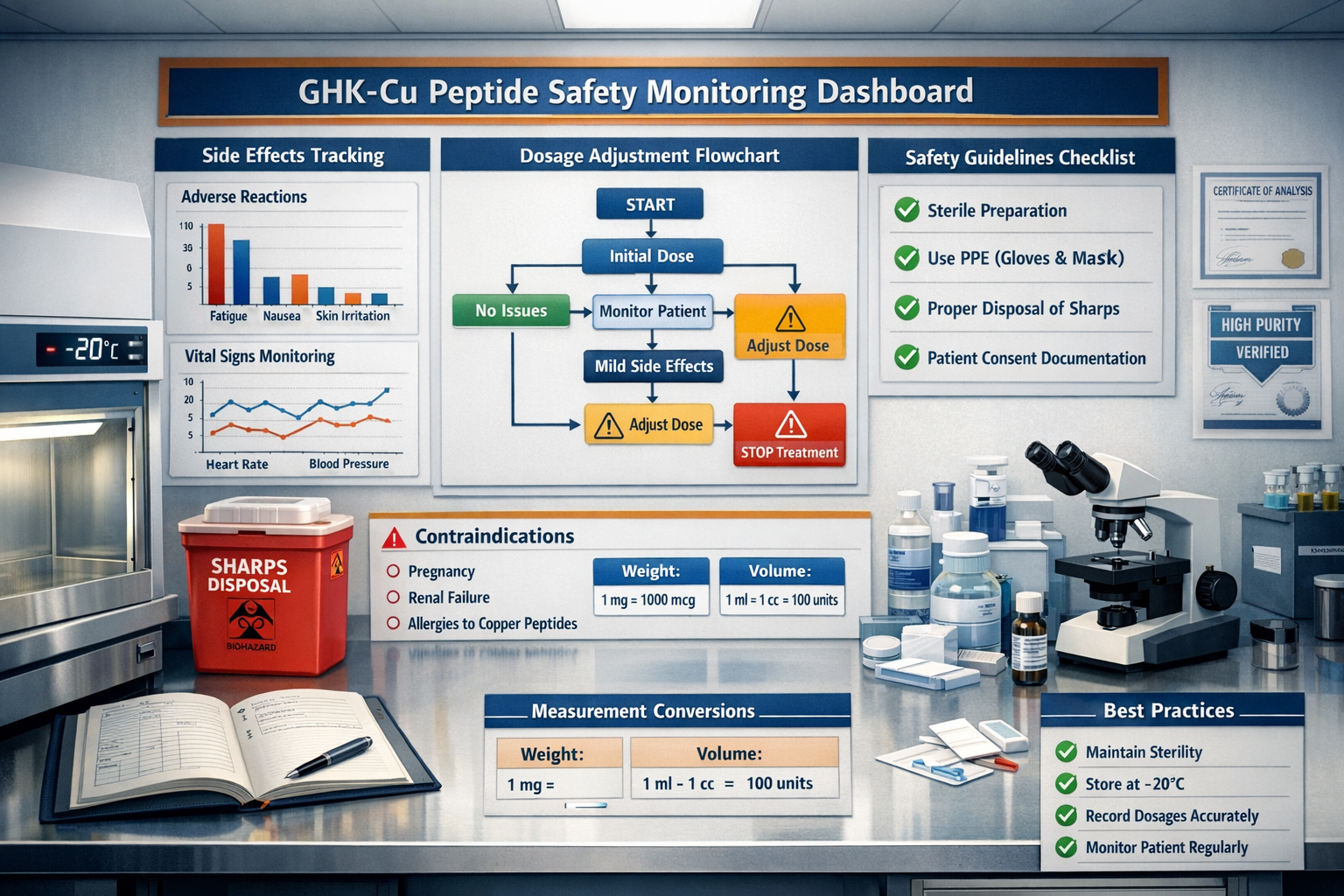
Let me address some of the most common questions I encounter from researchers, fitness coaches, and wellness professionals about ghk cu peptide dosage.
What's the best starting dose for GHK-Cu peptide?
For most researchers, 1mg administered three times per week represents an excellent starting point. This conservative approach allows you to assess individual response while minimizing resource use. After 4-6 weeks, you can adjust upward to daily administration or higher doses if research objectives warrant.
Can I take too much GHK-Cu peptide?
While GHK-Cu has an excellent safety profile in research contexts, exceeding reasonable dosages (above 3-5mg per administration or 15-20mg weekly) doesn't appear to provide proportional benefits and wastes valuable research materials. The dose-response relationship isn't linear—more doesn't always mean better results.
How long does it take to see research results?
Most research protocols document observable changes within 4-8 weeks of consistent administration. However, some effects—particularly those related to collagen synthesis and tissue remodeling—may require 8-12 weeks to become apparent. Patience and consistency typically produce better outcomes than frequent protocol changes.
Should I cycle GHK-Cu or use it continuously?
Research practices vary, but many experienced researchers implement cycling protocols: 8-12 weeks of active research followed by 4-week rest periods. This approach may help maintain responsiveness and provides natural breaks for assessment. However, some maintenance protocols use continuous low-dose administration without apparent issues.
Does GHK-Cu dosage differ for men and women?
Current research doesn't indicate significant gender-based dosing differences for GHK-Cu. Standard protocols typically apply regardless of gender, with adjustments based more on research objectives, body weight, and individual response patterns than on gender alone.
Can I mix GHK-Cu with other peptides in the same syringe?
While some peptides can be mixed, it's generally recommended to administer GHK-Cu separately unless you have specific information about compatibility with other compounds. Mixing can potentially affect stability, pH, or create interactions that alter effectiveness. When researching multiple peptides, using separate syringes ensures each compound maintains its intended properties.
What if I miss a dose?
If you miss a scheduled administration, simply continue with your regular protocol at the next scheduled time. Don't double up doses to "make up" for missed administrations. Consistency matters more than perfect adherence, and occasional missed doses won't significantly impact long-term research outcomes.
Conclusion: Optimizing Your GHK-Cu Peptide Dosage Strategy
After exploring the comprehensive landscape of ghk cu peptide dosage, you now have the foundational knowledge to design effective research protocols tailored to your specific objectives. Whether you're a bodybuilder researching recovery optimization, a medi spa professional exploring aesthetic applications, or a wellness coach investigating longevity protocols, the principles we've covered provide a solid framework for your work.
The key takeaways to remember:
Start conservatively with 0.5-1mg three times weekly, then adjust based on your research observations and objectives. This measured approach allows you to establish baseline responses before committing to more intensive protocols.
Prioritize consistency over peak dosing. Regular administration at moderate doses typically produces more reliable research outcomes than sporadic high-dose protocols. Your dosing schedule should be sustainable for the duration of your research period.
Maintain meticulous documentation of your dosing protocols, reconstitution procedures, and research observations. This record-keeping enables you to identify patterns, optimize your approach, and replicate successful protocols in future research.
Source quality materials from reputable suppliers who provide third-party testing documentation. Your dosage calculations are only as accurate as the purity of your peptide. The GHK-Cu 50mg from Pure Tested Peptides ensures you're working with pharmaceutical-grade material that matches labeled specifications.
Respect cycling protocols by implementing rest periods after 8-12 weeks of continuous research. These breaks may help maintain responsiveness and provide natural assessment points for evaluating your research outcomes.
Your Next Steps
Now that you understand the principles of proper GHK-Cu peptide dosage, here's how to move forward:
-
Define your research objectives clearly—what specific outcomes are you investigating?
-
Select your starting protocol based on the guidelines we've discussed for your particular research focus
-
Source quality peptide from verified suppliers with transparent testing documentation
-
Prepare your documentation system for tracking doses, observations, and adjustments
-
Begin with conservative dosing and commit to at least 6-8 weeks before making significant protocol changes
-
Review and adjust based on your documented observations and research outcomes
Remember, peptide research is both a science and an art. The protocols outlined here provide evidence-based starting points, but your individual research may require customization based on your specific context and observations. Stay curious, maintain detailed records, and approach your research with the rigor it deserves.
The field of peptide research continues to evolve, with new insights emerging regularly. By establishing solid foundational practices around dosing, administration, and documentation, you position yourself to contribute meaningfully to this expanding body of knowledge while achieving your specific research objectives.
Whether you're just beginning your peptide research journey or optimizing existing protocols, proper dosing represents the cornerstone of effective, reproducible research. Take the time to get it right, and your research outcomes will reflect that attention to detail.
Ready to begin your GHK-Cu research with confidence? Visit Pure Tested Peptides to explore pharmaceutical-grade research materials backed by third-party testing and transparent documentation. Your research deserves nothing less than the highest quality compounds and the most accurate dosing information available.
SEO Meta Information
Meta Title: GHK-Cu Peptide Dosage Guide 2026 | Complete Protocol
Meta Description: Complete GHK-Cu peptide dosage guide for researchers. Learn proper dosing, reconstitution, cycling protocols, and safety guidelines for optimal results.