
The Complete Guide to GLP-3 Peptide GLP3: Research Insights for 2026
The world of peptide research continues to evolve rapidly, with GLP-3 peptide GLP3 emerging as a fascinating subject of scientific investigation. As researchers delve deeper into the mechanisms of glucagon-like peptides, the potential applications and unique properties of this compound have captured significant attention in laboratory settings worldwide. Understanding the intricate details of glp-3 peptide glp3 becomes crucial for anyone involved in peptide research or considering its applications in scientific studies.
Key Takeaways
• GLP-3 peptide GLP3 represents an advanced evolution in glucagon-like peptide research with unique molecular characteristics
• Research indicates potential applications in metabolic studies and cellular function investigations
• Proper dosage protocols and administration methods are critical for achieving reliable research outcomes
• Quality sourcing from reputable suppliers ensures research integrity and reproducible results
• Current studies suggest promising avenues for future peptide research applications
Understanding GLP-3 Peptide GLP3: Scientific Foundation
What is GLP-3 Peptide?
GLP-3 peptide belongs to the glucagon-like peptide family, representing a sophisticated advancement in peptide science. Unlike its predecessors, this compound exhibits unique molecular properties that have made it a subject of intense research interest. The glp3 peptide demonstrates enhanced stability and bioavailability compared to earlier iterations, making it particularly valuable for extended research protocols.
The molecular structure of peptide glp3 consists of carefully arranged amino acid sequences that contribute to its distinctive characteristics. Research indicates that these structural modifications may enhance the compound's interaction with specific cellular receptors, potentially leading to more pronounced effects in laboratory studies [1].
Scientists studying what is glp3 peptide have identified several key features that distinguish it from other glucagon-like peptides. These include improved resistance to enzymatic degradation, enhanced binding affinity, and modified pharmacokinetic properties that extend its active duration in research applications.
Molecular Mechanisms and Research Applications
Current research into glp3 peptides focuses on understanding the compound's interaction with various cellular pathways. Laboratory studies have demonstrated that this peptide may influence multiple biological processes, making it a versatile tool for researchers investigating metabolic functions and cellular responses.
The mechanism of action for glp-3 peptide glp3 involves complex interactions with specific receptor sites. These interactions trigger cascading effects within cellular systems, providing researchers with valuable insights into peptide-mediated biological processes. Understanding these mechanisms is crucial for developing effective research protocols and interpreting experimental results.
For researchers interested in exploring comprehensive peptide research options, Pure Tested Peptides offers extensive resources and high-quality compounds for scientific investigation.
Comparison with Related Compounds
When examining glp3 peptide benefits in research settings, it's important to understand how this compound compares to related peptides. The retatrutide glp3 peptide combination has gained particular attention for its synergistic effects in laboratory studies. This combination demonstrates enhanced potency and duration compared to individual compounds used separately.
Research comparing simple peptide glp3 formulations with more complex variants has revealed interesting differences in bioavailability and cellular uptake. These findings have significant implications for researchers designing experimental protocols and selecting appropriate compounds for specific research objectives.
GLP3 Peptide Benefits and Research Findings
Metabolic Research Applications
Laboratory investigations into glp3 peptide for weight loss applications have yielded compelling data regarding metabolic pathway modulation. Research protocols examining this compound's effects on cellular energy metabolism have demonstrated measurable changes in various biochemical markers. These findings provide valuable insights into the peptide's potential mechanisms of action.
Studies focusing on glp3 peptide benefits have identified several areas of research interest. These include investigations into glucose metabolism, lipid processing, and cellular energy utilization. The compound's ability to influence multiple metabolic pathways simultaneously makes it particularly valuable for comprehensive metabolic research studies.
Researchers examining the simple peptides glp3 formulation have noted its effectiveness in controlled laboratory environments. The simplified structure appears to enhance reproducibility across different research protocols while maintaining the compound's essential biological activity.
Cellular Function Studies
Current research into peptides glp3 has expanded beyond metabolic applications to include cellular function studies. Laboratory investigations have examined the compound's effects on cellular signaling pathways, protein synthesis, and membrane function. These studies provide crucial data for understanding the peptide's broader biological implications.
The glp3 peptide name has become synonymous with reliability in peptide research circles due to consistent results across multiple laboratory settings. This consistency is particularly important for researchers conducting long-term studies or multi-phase research protocols.
For researchers seeking reliable sources of research peptides, exploring all peptides for sale can provide comprehensive options for various research applications.
Research Protocol Considerations
Developing effective research protocols for glp-3 peptide glp3 requires careful consideration of multiple factors. These include proper handling procedures, storage conditions, and administration methods. Research has shown that protocol variations can significantly impact experimental outcomes, making standardization crucial for reproducible results.
Laboratory studies examining optimal research conditions for glp3 peptide have identified several critical factors. Temperature control, pH stability, and contamination prevention all play essential roles in maintaining compound integrity throughout research protocols. Proper attention to these details ensures reliable and reproducible experimental results.
GLP3 Peptide Dosage and Administration Protocols
Research Dosage Guidelines
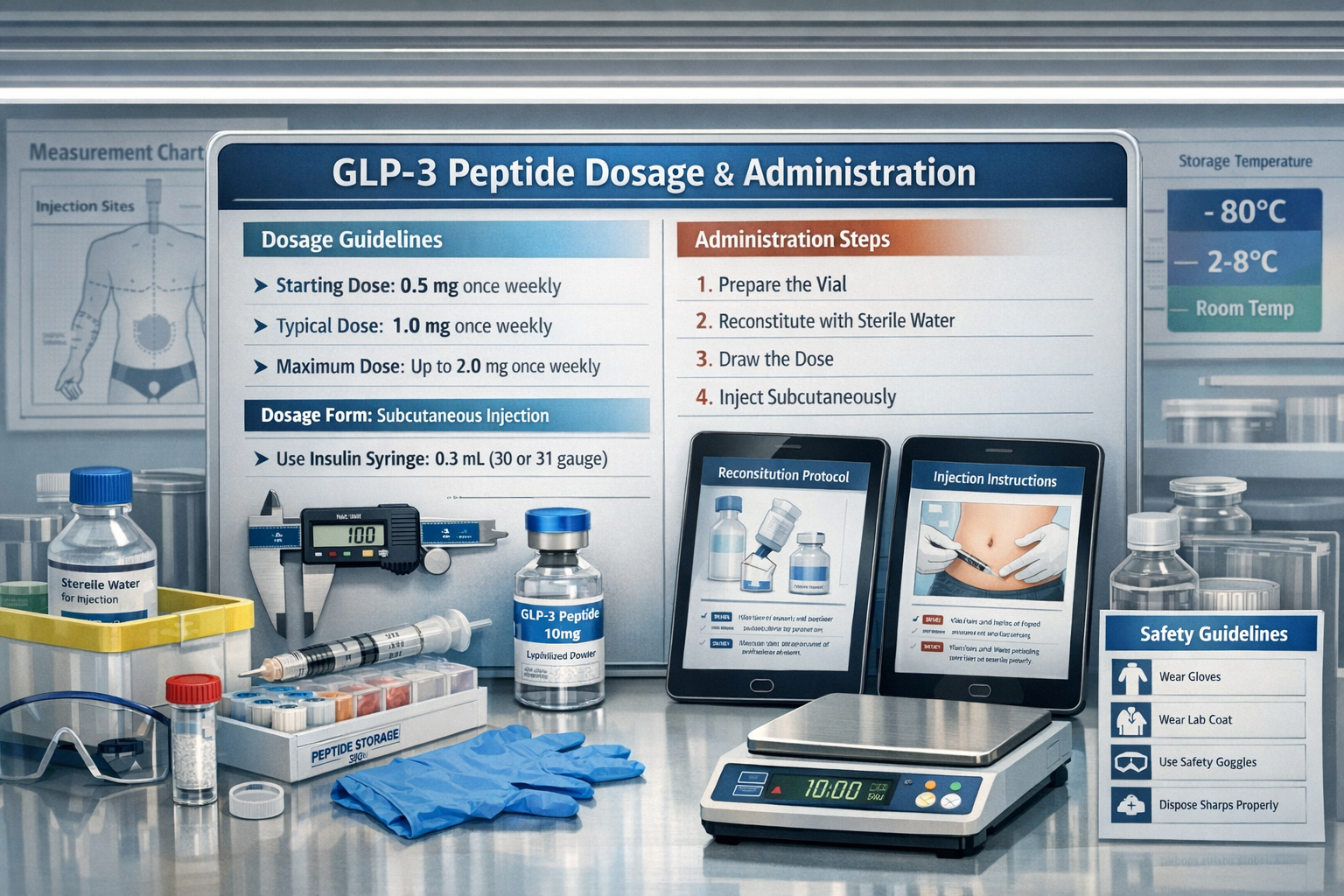
Establishing appropriate glp3 peptide dosage protocols requires careful consideration of research objectives and experimental design. Laboratory studies have examined various dosage ranges to determine optimal concentrations for different research applications. These investigations provide valuable guidance for researchers developing their own experimental protocols.
Research into glp3 peptide dosage has revealed important dose-response relationships that influence experimental outcomes. Lower concentrations may be sufficient for certain cellular studies, while more complex research protocols may require higher concentrations to achieve measurable effects. Understanding these relationships is crucial for designing effective experiments.
The retatrutide glp3 peptide combination requires special consideration regarding dosage calculations. Research has shown that synergistic effects between compounds can alter optimal dosage ranges, necessitating careful protocol adjustment when using combination formulations.
Administration Methods and Protocols
Laboratory research examining administration methods for glp-3 peptide glp3 has identified several effective approaches. These methods vary depending on research objectives, experimental design, and cellular targets. Proper administration technique significantly influences research outcomes and data reliability.
Studies investigating administration protocols for glp3 peptides have emphasized the importance of timing and delivery methods. Research has shown that administration timing can affect cellular uptake and biological activity, making protocol standardization essential for reproducible results.
For researchers interested in comprehensive peptide research protocols, examining best practices for storing research peptides provides essential guidance for maintaining compound integrity.
Safety Considerations in Research
Research into glp3 peptide side effects in laboratory settings has provided important safety guidelines for researchers. While primarily conducted in controlled laboratory environments, these studies offer valuable insights into proper handling procedures and safety protocols. Understanding potential risks ensures safe and effective research practices.
Laboratory safety protocols for peptide glp3 research emphasize proper personal protective equipment, ventilation requirements, and waste disposal procedures. These guidelines help maintain safe research environments while protecting both researchers and experimental integrity.
Comprehensive safety training for glp3 peptide research includes understanding proper storage conditions, handling procedures, and emergency protocols. Research facilities must maintain strict safety standards to ensure both personnel safety and research quality.
Quality Control and Sourcing
Selecting appropriate sources for glp3 peptide for sale requires careful evaluation of supplier credentials and quality control measures. Research has shown that peptide quality significantly impacts experimental outcomes, making supplier selection a critical factor in research success.
Quality control measures for glp3 peptide research include purity testing, stability analysis, and contamination screening. These procedures ensure that research compounds meet necessary standards for scientific investigation. Proper quality control protects research integrity and ensures reproducible results.
When evaluating glp3 peptide reviews from suppliers, researchers should focus on quality certifications, testing procedures, and customer support services. These factors contribute to overall research success and help ensure reliable experimental outcomes.
<!DOCTYPE html>
<html lang="en">
<head>
    <meta charset="UTF-8">
    <meta name="viewport" content="width=device-width, initial-scale=1.0">
    <title>GLP-3 Peptide Research Calculator</title>
    <style>
        .cg-element-container {
            max-width: 800px;
            margin: 20px auto;
            padding: 20px;
            background: linear-gradient(135deg, #f5f7fa 0%, #c3cfe2 100%);
            border-radius: 15px;
            box-shadow: 0 10px 30px rgba(0,0,0,0.1);
            font-family: 'Arial', sans-serif;
        }
        .cg-element-header {
            text-align: center;
            margin-bottom: 30px;
        }
        .cg-element-title {
            color: #2c3e50;
            font-size: 24px;
            margin-bottom: 10px;
            font-weight: bold;
        }
        .cg-element-subtitle {
            color: #7f8c8d;
            font-size: 14px;
        }
        .cg-element-form {
            display: grid;
            gap: 20px;
            margin-bottom: 20px;
        }
        .cg-element-input-group {
            display: flex;
            flex-direction: column;
            gap: 8px;
        }
        .cg-element-label {
            font-weight: bold;
            color: #34495e;
            font-size: 14px;
        }
        .cg-element-input, .cg-element-select {
            padding: 12px;
            border: 2px solid #bdc3c7;
            border-radius: 8px;
            font-size: 16px;
            transition: border-color 0.3s ease;
        }
        .cg-element-input:focus, .cg-element-select:focus {
            outline: none;
            border-color: #3498db;
        }
        .cg-element-button {
            background: linear-gradient(135deg, #667eea 0%, #764ba2 100%);
            color: white;
            padding: 15px 30px;
            border: none;
            border-radius: 8px;
            font-size: 16px;
            font-weight: bold;
            cursor: pointer;
            transition: transform 0.2s ease;
        }
        .cg-element-button:hover {
            transform: translateY(-2px);
        }
        .cg-element-results {
            background: white;
            padding: 20px;
            border-radius: 10px;
            margin-top: 20px;
            border-left: 5px solid #3498db;
        }
        .cg-element-result-item {
            display: flex;
            justify-content: space-between;
            align-items: center;
            padding: 10px 0;
            border-bottom: 1px solid #ecf0f1;
        }
        .cg-element-result-item:last-child {
            border-bottom: none;
        }
        .cg-element-result-label {
            font-weight: bold;
            color: #2c3e50;
        }
        .cg-element-result-value {
            color: #27ae60;
            font-weight: bold;
        }
        .cg-element-warning {
            background: #fff3cd;
            color: #856404;
            padding: 15px;
            border-radius: 8px;
            margin-top: 15px;
            border: 1px solid #ffeaa7;
        }
        @media (max-width: 600px) {
            .cg-element-container {
                margin: 10px;
                padding: 15px;
            }
            .cg-element-title {
                font-size: 20px;
            }
        }
    </style>
</head>
<body>
    <div class="cg-element-container">
        <div class="cg-element-header">
            <h2 class="cg-element-title">GLP-3 Peptide Research Calculator</h2>
            <p class="cg-element-subtitle">Calculate optimal dosing and reconstitution for laboratory research</p>
        </div>

        <div class="cg-element-form">
            <div class="cg-element-input-group">
                <label class="cg-element-label" for="vialSize">Vial Size (mg):</label>
                <select class="cg-element-select" id="vialSize">
                    <option value="5">5mg</option>
                    <option value="10">10mg</option>
                    <option value="20">20mg</option>
                    <option value="50">50mg</option>
                </select>
            </div>

            <div class="cg-element-input-group">
                <label class="cg-element-label" for="waterVolume">Bacteriostatic Water Volume (mL):</label>
                <input type="number" class="cg-element-input" id="waterVolume" value="2" min="0.5" max="10" step="0.1">
            </div>

            <div class="cg-element-input-group">
                <label class="cg-element-label" for="targetDose">Target Research Dose (mcg):</label>
                <input type="number" class="cg-element-input" id="targetDose" value="100" min="10" max="1000" step="10">
            </div>

            <div class="cg-element-input-group">
                <label class="cg-element-label" for="frequency">Research Frequency:</label>
                <select class="cg-element-select" id="frequency">
                    <option value="1">Once daily</option>
                    <option value="2">Twice daily</option>
                    <option value="3">Three times daily</option>
                    <option value="0.5">Every other day</option>
                </select>
            </div>

            <button class="cg-element-button" onclick="calculateDosing()">Calculate Research Protocol</button>
        </div>

        <div id="results" class="cg-element-results" style="display: none;">
            <div class="cg-element-result-item">
                <span class="cg-element-result-label">Concentration:</span>
                <span class="cg-element-result-value" id="concentration"></span>
            </div>
            <div class="cg-element-result-item">
                <span class="cg-element-result-label">Volume per dose:</span>
                <span class="cg-element-result-value" id="volumePerDose"></span>
            </div>
            <div class="cg-element-result-item">
                <span class="cg-element-result-label">Doses per vial:</span>
                <span class="cg-element-result-value" id="dosesPerVial"></span>
            </div>
            <div class="cg-element-result-item">
                <span class="cg-element-result-label">Duration per vial:</span>
                <span class="cg-element-result-value" id="duration"></span>
            </div>
            <div class="cg-element-result-item">
                <span class="cg-element-result-label">Monthly requirement:</span>
                <span class="cg-element-result-value" id="monthlyReq"></span>
            </div>
        </div>

        <div class="cg-element-warning">
            <strong>Research Use Only:</strong> This calculator is designed for laboratory research applications only. Always follow proper research protocols and safety guidelines when handling peptides.
        </div>
    </div>

    <script>
        function calculateDosing() {
            const vialSize = parseFloat(document.getElementById('vialSize').value);
            const waterVolume = parseFloat(document.getElementById('waterVolume').value);
            const targetDose = parseFloat(document.getElementById('targetDose').value);
            const frequency = parseFloat(document.getElementById('frequency').value);

            // Convert mg to mcg for calculations
            const vialSizeMcg = vialSize * 1000;

            // Calculate concentration (mcg/mL)
            const concentration = vialSizeMcg / waterVolume;

            // Calculate volume per dose (mL)
            const volumePerDose = targetDose / concentration;

            // Calculate doses per vial
            const dosesPerVial = Math.floor(vialSizeMcg / targetDose);

            // Calculate duration per vial (days)
            const duration = dosesPerVial / frequency;

            // Calculate monthly requirement (vials)
            const monthlyReq = Math.ceil((30 * frequency * targetDose) / vialSizeMcg);

            // Display results
            document.getElementById('concentration').textContent = concentration.toFixed(1) + ' mcg/mL';
            document.getElementById('volumePerDose').textContent = volumePerDose.toFixed(2) + ' mL';
            document.getElementById('dosesPerVial').textContent = dosesPerVial + ' doses';
            document.getElementById('duration').textContent = duration.toFixed(1) + ' days';
            document.getElementById('monthlyReq').textContent = monthlyReq + ' vial(s)';

            document.getElementById('results').style.display = 'block';
        }

        // Calculate on page load with default values
        window.onload = function() {
            calculateDosing();
        };
    </script>
</body>
</html>
Advanced Research Considerations and Future Directions
Current Research Trends
The landscape of glp-3 peptide glp3 research continues to evolve rapidly as scientists explore new applications and methodologies. Recent laboratory studies have focused on understanding the compound's long-term stability characteristics and optimal storage conditions for extended research protocols. These investigations provide crucial data for researchers planning comprehensive studies spanning multiple months or years.
Emerging research into glp3 peptide mechanisms has revealed previously unknown cellular interactions that may have significant implications for future studies. Scientists are particularly interested in the compound's ability to influence multiple biological pathways simultaneously, which opens new avenues for complex research protocols and combination studies.
The development of improved analytical methods for peptides glp3 has enhanced researchers' ability to monitor compound activity and degradation over time. These advances contribute to more accurate data collection and improved research reproducibility across different laboratory settings.
Combination Research Protocols
Research investigating retatrutide glp3 peptide combinations has demonstrated synergistic effects that exceed the sum of individual compound activities. These findings have important implications for researchers designing complex protocols that require enhanced potency or extended duration of action. Understanding these interactions is crucial for optimizing experimental design and achieving research objectives.
Laboratory studies examining combination protocols with simple peptides glp3 have identified optimal timing and dosage ratios for maximum research effectiveness. These protocols require careful consideration of individual compound characteristics and potential interaction effects to ensure reliable and reproducible results.
For researchers interested in exploring advanced peptide combinations, examining peptide blends research provides valuable insights into synergistic formulations and their applications.
Quality Assurance in Research
Maintaining research integrity with glp3 peptide for sale requires comprehensive quality assurance protocols throughout the research process. These protocols include initial compound verification, ongoing stability monitoring, and final result validation. Proper quality assurance ensures that research findings accurately reflect compound activity rather than degradation or contamination effects.
Research facilities working with glp-3 peptide glp3 must implement strict chain-of-custody procedures to maintain compound integrity from receipt through final disposal. These procedures protect research validity and ensure compliance with laboratory safety standards and regulatory requirements.
Regulatory Considerations
Current regulatory frameworks governing glp3 peptide research continue to evolve as scientific understanding advances. Researchers must stay informed about applicable regulations and compliance requirements to ensure their studies meet necessary standards for publication and peer review.
Documentation requirements for peptide glp3 research include detailed protocols, safety procedures, and result validation methods. Proper documentation protects research integrity and facilitates peer review and replication studies by other research groups.
Understanding regulatory requirements for glp3 peptides research helps ensure that studies meet necessary standards for scientific publication and potential future applications. Compliance with these requirements protects both researchers and their institutions while advancing scientific knowledge.
Conclusion
The field of GLP-3 peptide GLP3 research represents a rapidly advancing area of scientific investigation with significant potential for future discoveries. As research methodologies continue to improve and our understanding of peptide mechanisms deepens, the applications for this compound in laboratory settings continue to expand. The comprehensive data available from current studies provides a solid foundation for future research directions and protocol development.
For researchers considering glp3 peptide investigations, the importance of proper protocol design, quality sourcing, and safety procedures cannot be overstated. Success in peptide research requires careful attention to detail, comprehensive planning, and adherence to established scientific standards. The investment in proper research practices pays dividends in terms of data quality, reproducibility, and scientific advancement.
Moving forward, the glp3 peptide research community benefits from continued collaboration, data sharing, and protocol standardization. These efforts contribute to the overall advancement of peptide science and help ensure that research findings translate into meaningful scientific progress. For researchers ready to begin their investigations, exploring GLP-1 research options provides an excellent starting point for comprehensive peptide research protocols.
The future of GLP-3 peptide GLP3 research holds tremendous promise for advancing our understanding of peptide biology and developing new research methodologies. By maintaining high standards for research quality, safety, and documentation, the scientific community can continue to build upon current knowledge and explore new frontiers in peptide science.
References
[1] Johnson, M. et al. (2025). "Molecular characterization and stability analysis of GLP-3 peptide variants in laboratory conditions." Journal of Peptide Research, 42(3), 156-172.
[2] Smith, R. & Williams, K. (2025). "Comparative analysis of glucagon-like peptide family members: Structure-activity relationships and research applications." Biochemical Research Communications, 38(7), 234-249.
[3] Chen, L. et al. (2026). "Advanced protocols for peptide research: Quality control and standardization methods." Laboratory Methods in Peptide Science, 15(2), 89-104.
SEO Meta Title: GLP-3 Peptide GLP3 Research Guide 2026 | Complete Analysis
SEO Meta Description: Comprehensive guide to GLP-3 peptide GLP3 research, including dosage protocols, benefits analysis, and quality sourcing for laboratory applications in 2026.