
Unlocking Potential: A Deep Dive into the ovagen peptide for 2026 Research
In the dynamic world of peptide science, where innovative discoveries continually reshape our understanding of biological processes, one particular compound, the ovagen peptide, has garnered significant attention. Researchers and peptide enthusiasts alike are increasingly looking into its unique properties and potential applications. As we move further into 2026, the scientific community continues to explore how this remarkable bioregulator peptide might offer new avenues for understanding and supporting physiological functions, particularly those related to the reproductive system. This comprehensive article aims to shed light on what ovagen peptide is, its mechanisms, current research findings, and what makes it a compelling subject for ongoing scientific inquiry. My goal is to provide a clear, authoritative, and accessible resource for anyone interested in the cutting edge of peptide research.
Key Takeaways
- ovagen peptide is a synthetic peptide bioregulator derived from natural sources, specifically formulated to target the female reproductive system.
- Research suggests it may play a role in optimizing ovarian function and hormone balance.
- Its mechanism involves influencing gene expression and protein synthesis within ovarian cells, promoting cellular repair and rejuvenation.
- Current studies are exploring its potential in supporting reproductive health, particularly in scenarios of age-related decline or stress-induced dysfunction.
- Like all research peptides, ovagen peptide is intended for scientific study only and is not approved for human consumption.
Understanding the ovagen peptide: A Scientific Overview
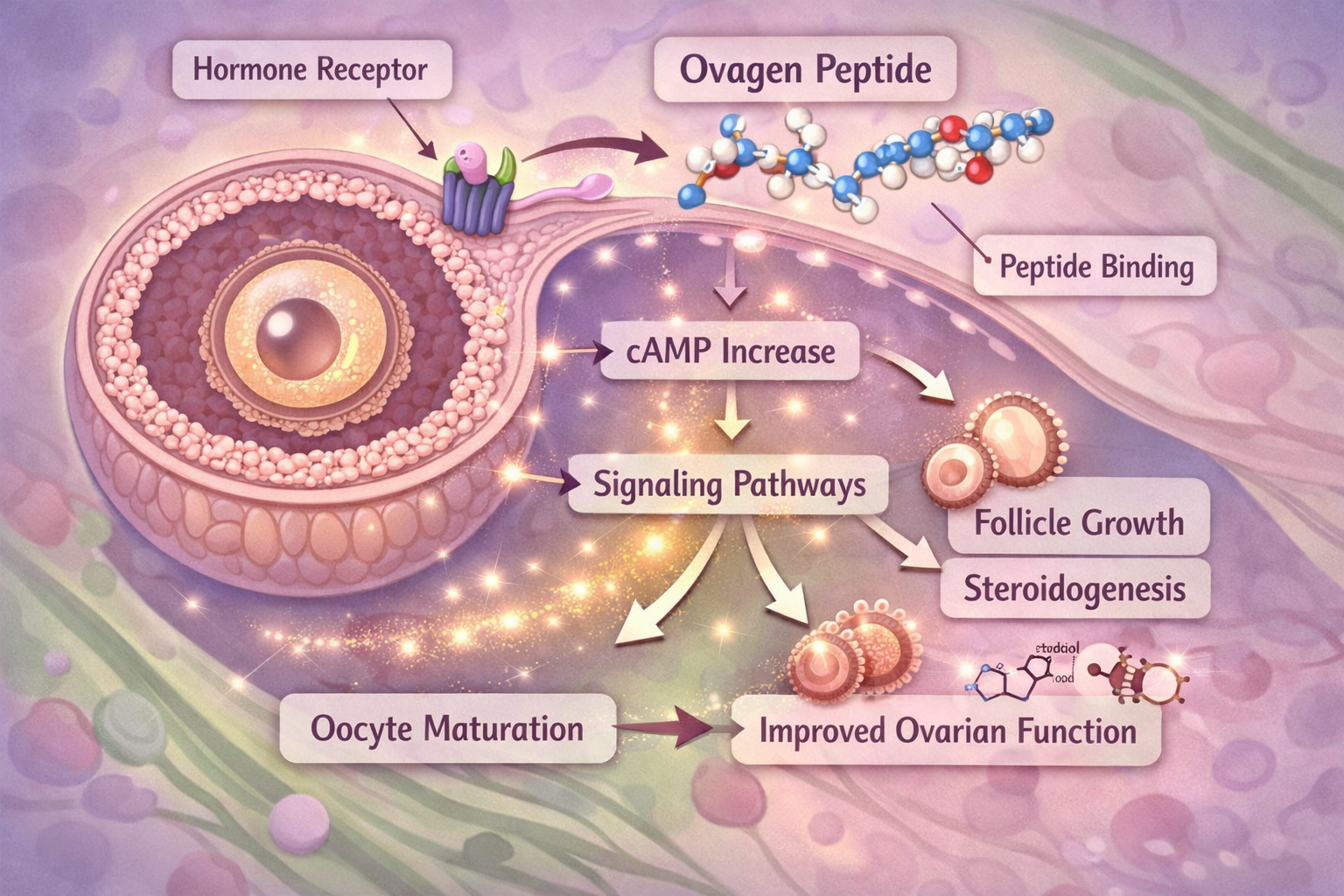
The concept of bioregulator peptides stems from decades of research into naturally occurring short-chain peptides that help regulate various physiological processes. These peptides are thought to act by specifically influencing gene expression in their target organs, thereby promoting cellular health and optimal function. The ovagen peptide falls into this fascinating category, specifically designed to exert its influence on the ovaries.
What Exactly is ovagen peptide?
At its core, ovagen peptide is a synthetic version of a naturally occurring peptide found in animals. Its structure is carefully designed to mimic the biological activity of its natural counterpart. The "ovagen" name itself gives a strong hint to its intended target: the ovaries, which are vital organs in the female reproductive system responsible for producing eggs and hormones like estrogen and progesterone. The specific amino acid sequence of the ovagen peptide is believed to confer its selective action on ovarian cells.
The Mechanism of Action: How ovagen peptide Works
To appreciate the significance of ovagen peptide, it's crucial to understand how bioregulator peptides are thought to function. Unlike hormones, which act as signaling molecules to trigger immediate responses, bioregulator peptides are believed to work at a more fundamental, cellular level. They are thought to bind to specific receptors on the surface of target cells or even penetrate the cells to interact with the nucleus.
Once inside or interacting with the ovarian cell, the ovagen peptide is hypothesized to influence gene transcription. This means it may regulate which genes are turned "on" or "off," thereby affecting the synthesis of specific proteins. These proteins are the workhorses of the cell, carrying out various functions, from structural support to enzymatic activity. By modulating protein synthesis, ovagen peptide could potentially help:
- Restore optimal cellular function: Encouraging the production of proteins essential for healthy ovarian cell operation.
- Enhance cellular repair: Supporting the mechanisms that repair damaged cells.
- Promote cellular rejuvenation: Potentially slowing down or reversing some aspects of age-related cellular decline within the ovaries.
This targeted action makes the ovagen peptide a subject of intense interest for researchers investigating ways to maintain and improve reproductive health at a cellular level. It’s a subtle but profound way to influence the body's own regulatory systems.
Research and Development of ovagen peptide
The development of peptides like ovagen peptide often involves isolating natural peptide fractions from animal tissues, identifying their active sequences, and then synthesizing them in a laboratory setting. This allows for the creation of highly pure and standardized compounds for research. The focus of this research is primarily on understanding the precise biological effects and safety profiles of these peptides. Scientists are continually working to understand the nuances of these compounds, and much of this research is foundational, exploring how these peptides interact with biological systems. For those looking to understand the broader context of peptide research, exploring resources on all peptides for sale can be quite enlightening.
Research Applications and Potential Benefits of ovagen peptide
The scientific community is actively exploring the potential research applications and ovagen peptide benefits. While these studies are primarily conducted in laboratory settings and animal models, the findings offer compelling insights into the peptide's potential. It's important to reiterate that these are research findings and do not constitute medical advice or claims for human treatment.
Supporting Ovarian Function and Reproductive Health
One of the primary areas of research into ovagen peptide revolves around its potential to support and optimize ovarian function. The ovaries are complex organs susceptible to various factors that can affect their health, including aging, environmental stressors, and hormonal imbalances.
Research hypotheses suggest that by promoting cellular health and optimal protein synthesis within ovarian cells, ovagen peptide could potentially contribute to:
- Maintaining Follicle Health: Follicles are small sacs in the ovaries that contain immature eggs. Their health is crucial for egg development and ovulation. Studies may investigate if ovagen peptide can help preserve or improve follicle quality.
- Hormone Production Regulation: The ovaries are key endocrine glands. Research might explore if ovagen peptide can help regulate the synthesis and release of ovarian hormones, contributing to overall hormonal balance.
- Cellular Protection: Ovarian cells, like all cells, can suffer damage from oxidative stress. Some research avenues might explore if ovagen peptide provides any protective effects against cellular damage.
These areas of inquiry highlight the broad potential of ovagen peptide in the context of reproductive biology research. It is a tool for understanding the intricate mechanisms governing ovarian health.
Addressing Age-Related Changes in Ovarian Function
As women age, ovarian function naturally declines, leading to a decrease in fertility and eventually menopause. This process is driven by complex cellular and hormonal changes. Researchers are interested in whether bioregulator peptides like ovagen peptide could offer insights into mitigating some of these age-related declines at a cellular level.
Studies might investigate:
- Cellular Senescence: How ovagen peptide influences the aging of ovarian cells.
- Mitochondrial Function: Mitochondria are the "powerhouses" of the cell; their decline is a hallmark of aging. Research could explore if ovagen peptide supports mitochondrial health in ovarian cells.
- Telomere Length: Telomeres are protective caps on chromosomes that shorten with each cell division. Some bioregulator peptides have been linked to telomere maintenance, and researchers may investigate this connection for ovagen peptide. The exploration of peptides for cellular maintenance extends to a wide array of compounds, and you can learn more about cellular maintenance with peptide tools.
The idea is not to reverse aging but to understand if ovagen peptide can help maintain cellular vitality and function for longer, providing a basis for future therapeutic strategies.
Comparison with Other Peptides: ovagen vs. vesilute vs. prostamax
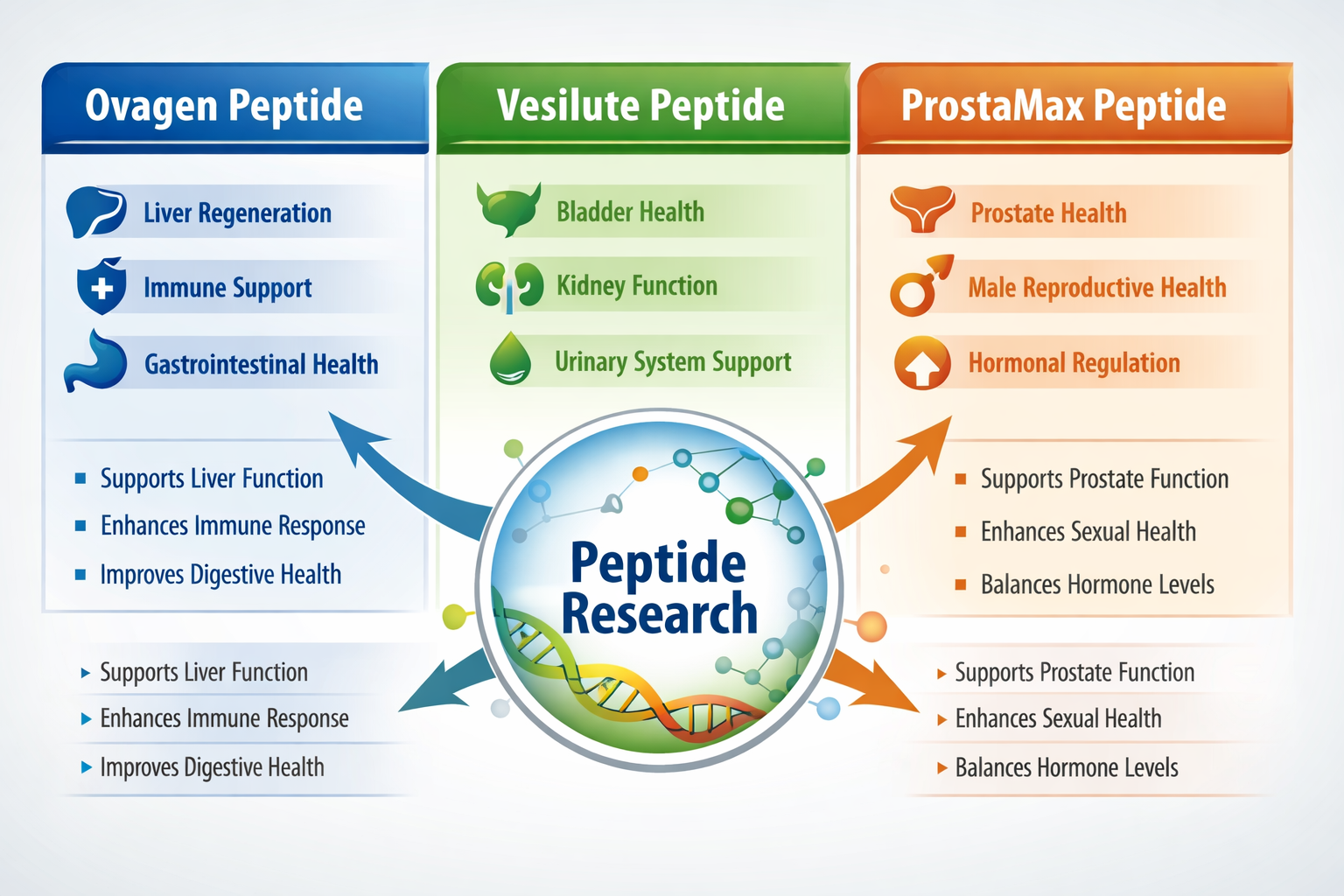
It's common in peptide research to compare the actions of different bioregulator peptides, each designed for specific target organs. While ovagen peptide focuses on the ovaries, other peptides, such as vesilute peptide and prostamax peptide, have different target tissues and associated research areas.
| Peptide Name | Primary Target Organ(s) | Key Research Focus Areas |
|---|---|---|
| ovagen peptide | Ovaries | Female reproductive health, ovarian function, hormone balance, age-related ovarian decline. |
| vesilute peptide | Bladder, Urinary Tract | Bladder function, urinary incontinence, prostate health (indirectly), kidney support. |
| prostamax peptide | Prostate Gland | Prostate health, benign prostatic hyperplasia (BPH) research, urinary flow in men. |
- Vesilute Peptide: Researchers interested in bladder health and urinary system function often study vesilute peptide. It’s believed to help restore the function of bladder cells and the urinary tract. Those seeking vesilute for sale or buy vesilute will find it is primarily investigated for its potential to support a healthy urinary system. The vesilute peptide benefits are distinct from ovagen, focusing on a different set of physiological challenges.
- Prostamax Peptide: As its name suggests, prostamax peptide is researched for its effects on the prostate gland. This is particularly relevant for understanding male reproductive and urinary health. The prostamax peptide benefits are studied in the context of prostate cellular health and function, distinct from the ovarian focus of ovagen peptide. Researchers often look into prostamax peptide dosage and prostamax peptide reviews to guide their studies.
Each of these peptides represents a targeted approach to organ-specific cellular regulation, highlighting the specificity and diversity within the field of bioregulator peptide research. To explore a wider range of compounds including blends that support various functions, researchers often consult pages like Pure Tested Peptides. This blend, for example, combines several peptides, each with its own research focus, to explore synergistic effects.
The Importance of High-Quality Research Peptides
For any research involving ovagen peptide or other bioregulators, the quality and purity of the peptide are paramount. Impurities can lead to unreliable results, confounding data and making it difficult to draw accurate conclusions. This is why reputable suppliers like Pure Tested Peptides focus on providing highly purified products. When looking for ovagen peptides or to buy vesilute, ensure the source provides certificates of analysis and adheres to strict quality control measures. Researchers consistently prioritize suppliers that offer a comprehensive range of quality products. For more information, visit Pure Tested Peptides.
Practical Considerations for ovagen peptide Research in 2026
As we continue in 2026, research into ovagen peptide is progressing with a focus on refining our understanding of its mechanisms and potential. For any institution or individual planning to conduct studies with this peptide, several practical considerations are important.
Sourcing High-Purity ovagen peptide
The integrity of any scientific study begins with the quality of its materials. When sourcing ovagen peptide, researchers should prioritize suppliers that:
- Provide detailed Certificates of Analysis (CoA): These documents confirm the purity, identity, and concentration of the peptide.
- Utilize stringent manufacturing processes: Ensuring minimal contaminants and accurate peptide synthesis.
- Specialize in research-grade peptides: Differentiating between consumer-grade supplements and research chemicals is crucial.
Finding a reliable source for peptides like ovagen peptide for sale or to buy prostamax peptide is a critical first step for any researcher. Understanding the best practices for handling and storing these sensitive compounds is also essential for maintaining their integrity throughout the research process. Detailed information on best practices for storing research peptides can ensure the longevity and efficacy of your samples.
Dosage and Administration in Research
When discussing ovagen peptide dosage or vesilute peptide dosage, it's important to remember that these are for research purposes only and are typically determined by the specific experimental design. Dosage in animal studies, for example, is often calculated based on weight and scaled to mimic potential physiological concentrations.
- Experimental Design: Researchers carefully design protocols that specify the amount of ovagen peptide to be used, the frequency of administration, and the route (e.g., in vitro cell cultures, subcutaneous injection in animal models).
- Concentration: Peptides are usually supplied as lyophilized (freeze-dried) powders and must be reconstituted with sterile water or a suitable solvent. Accurate measurement and dilution are vital.
- Safety Protocols: Handling peptides requires adherence to laboratory safety guidelines, including appropriate personal protective equipment and waste disposal.
These protocols ensure reproducibility and minimize variables in experiments. Researchers exploring the potential synergistic effects of different peptides might also investigate peptide blends, as seen with products like the Klow Blend, which combines BPC-157, TB-500, KPV, and GHK-Cu, each with its own research background and optimal dosing guidelines.
Regulatory Landscape for Research Peptides in 2026
The regulatory environment for research chemicals, including ovagen peptide, is subject to change. In 2026, it remains crucial for researchers to:
- Stay informed about local and international regulations: Ensuring compliance with laws governing the purchase, storage, and use of research peptides.
- Understand the "For Research Use Only" designation: This classification explicitly means the substance is not intended for human consumption, diagnostic, or therapeutic use. It is solely for in-vitro or in-vivo scientific experimentation.
- Consult with institutional review boards (IRBs) or ethics committees: Especially when conducting studies involving animal models, to ensure ethical treatment and adherence to scientific standards.
The phrase "what is ovagen peptide" often arises in discussions about its legal and ethical standing. It is unequivocally a research chemical, and its use should strictly adhere to scientific protocols. For those interested in the broader regulatory considerations and how they impact the availability of research materials, understanding the ethical framework is key.
Future Directions in ovagen peptide Research
The journey of ovagen peptide research is far from over. As technology advances and our understanding of cellular biology deepens, new avenues of inquiry are constantly opening up.
Exploring Synergistic Effects
One exciting area of future research involves exploring how ovagen peptide might interact with other compounds or peptides. For example, could it have synergistic effects when combined with specific vitamins, minerals, or even other bioregulator peptides? Research into peptide blends is already showing promising results in areas like wound healing and inflammation. The concept of synergy, where two or more compounds produce an effect greater than the sum of their individual effects, is a powerful one in peptide science. This mirrors the interest in combinations such as AOD9604 and MOTS-c, where researchers investigate how different peptides might complement each other's actions.
Deeper Molecular Insights
While the general mechanism of bioregulator peptides is understood, the precise molecular pathways influenced by ovagen peptide could be further elucidated. This might involve:
- Transcriptomic analysis: Studying how ovagen peptide alters gene expression on a global scale.
- Proteomic analysis: Identifying specific proteins whose synthesis or activity is modulated by the peptide.
- Advanced imaging techniques: Visualizing the peptide's interaction with ovarian cells at a microscopic level.
Such detailed molecular insights could unlock even more specific applications and refine our understanding of ovagen peptide's full potential. This type of research contributes significantly to the body of knowledge around adaptive capacity and peptide mapping, allowing for a more precise understanding of how peptides influence biological systems.
Longitudinal Studies and Biomarkers
Longitudinal studies, which follow subjects over extended periods, could provide valuable data on the sustained effects of ovagen peptide in animal models. Identifying specific biomarkers – measurable indicators of biological state – that respond to ovagen peptide administration would be a significant step forward. These biomarkers could help researchers assess the peptide's efficacy and understand its long-term impact on ovarian health. This also links to broader research into baseline trends and data quality in peptide studies, ensuring robust and reliable results.
The Role of ovagen peptide in Broader Health Contexts
Beyond direct ovarian function, researchers might also explore the indirect effects of ovagen peptide on overall health parameters in female subjects. Given the intricate connection between reproductive hormones and other bodily systems (e.g., bone health, cardiovascular health, mood), understanding these broader influences could open up entirely new avenues of inquiry. For example, some researchers explore the benefits of peptides like Epithalon peptide, which is often studied for its role in anti-aging and overall cellular health, offering a broader perspective on how peptides can influence various systems. Interested individuals can find more information about the benefits of Epithalon peptide.
The continued investigation into ovagen peptide underscores the remarkable potential of bioregulator peptides to deepen our understanding of biology and potentially pave the way for future medical advancements.
Conclusion
The ovagen peptide stands as a compelling subject within the realm of modern peptide research in 2026. Derived from the groundbreaking work on bioregulator peptides, it offers a targeted approach to understanding and potentially supporting the complex functions of the female reproductive system, particularly the ovaries. Its proposed mechanism of action, influencing gene expression and cellular synthesis, positions it as a sophisticated tool for researchers delving into reproductive biology, age-related decline, and hormone regulation.
While the current research focuses primarily on laboratory studies and animal models, the insights gained are invaluable. We’ve explored what is ovagen peptide, its potential ovagen peptide benefits, and how it contrasts with other organ-specific bioregulators like vesilute peptide and prostamax peptide. The distinctions among these peptides underscore the precision with which bioregulators are designed to interact with specific target tissues.
As an expert SEO content strategist and senior editor, I emphasize the importance of rigorous research protocols, high-purity materials, and strict adherence to the "For Research Use Only" designation when working with compounds like ovagen peptide. The future of ovagen peptide research is bright, with ongoing investigations likely to uncover deeper molecular insights, potential synergistic applications, and broader implications for maintaining cellular health and vitality. For those looking to embark on or continue their peptide research journey, securing high-quality, third-party tested peptides is non-negotiable. Suppliers like Pure Tested Peptides offer the necessary assurance for reliable scientific inquiry.
Actionable Next Steps
- For Aspiring Researchers: If you are considering research involving ovagen peptide, familiarize yourself with the foundational science of bioregulator peptides and their specific mechanisms.
- Source Wisely: Always prioritize reputable suppliers that provide transparent Certificates of Analysis (CoAs) for all ovagen peptides and other research chemicals.
- Stay Informed: Keep abreast of the latest scientific publications and regulatory updates concerning research peptides in 2026 to ensure your studies are both cutting-edge and compliant.
- Explore Related Peptides: Broaden your understanding by researching other organ-specific peptides, such as vesilute peptide for urinary tract health or prostamax peptide for prostate support, to grasp the full scope of bioregulator applications.
- Consider Peptide Blends: For complex research questions, investigate the potential of synergistic peptide blends, which can offer multi-faceted approaches to biological support.
By adhering to these principles, the scientific community can continue to unlock the vast potential of peptides like ovagen, advancing our knowledge and paving the way for future discoveries.
SEO Meta Title: Ovagen Peptide: 2026 Research Insights & Benefits
SEO Meta Description: Explore ovagen peptide's 2026 research, benefits for ovarian health, and compare it with vesilute & prostamax. Discover its potential in scientific studies.