
The Complete Guide to Peptide Raw Materials Distributors in 2026
The peptide industry has exploded into a $50+ billion global market in 2026, yet finding reliable peptide raw materials distributors remains one of the biggest challenges for researchers, athletes, and fitness enthusiasts[1]. Whether you're a martial artist seeking recovery support, a weightlifter optimizing performance, or a researcher exploring cutting-edge compounds, the quality of your peptide source can make or break your results. With new FDA regulations reshaping the landscape and market consolidation accelerating, understanding how to identify trustworthy peptide raw materials distributors has never been more critical.
Key Takeaways
- Global peptide raw materials market is projected to reach $282 million by 2034, with Europe commanding 38.12% of consumption and Asia-Pacific growing rapidly at 34.02% market share[1]
- FDA regulations implemented in January 2025 have eliminated non-compliant suppliers, making quality certifications and third-party testing essential verification criteria[2]
- Top-tier peptide raw materials distributors differentiate through GMP compliance, transparent supply chains, comprehensive testing protocols, and specialized customer support
- Chinese manufacturers like Kelong Chemical and GL Biochem control 24.30% of global revenue, while Western suppliers like BACHEM compete through high-purity technological differentiation[1]
- Smart sourcing strategies include verifying certificates of analysis, requesting batch testing documentation, and prioritizing distributors with established quality control systems
Understanding Peptide Raw Materials Distributors
What Are Peptide Raw Materials Distributors?
Peptide raw materials distributors serve as the critical bridge between peptide manufacturers and end users, including research facilities, compounding pharmacies, and individual researchers. These specialized suppliers source, quality-test, and distribute peptide compounds in various forms—from lyophilized powders to reconstituted solutions. Unlike general chemical suppliers, peptide raw materials distributors focus specifically on bioactive peptide sequences used in research applications.
The distribution network encompasses several key components:
- Primary manufacturers who synthesize peptides using SPPS (Solid-Phase Peptide Synthesis) technology
- Quality control laboratories that verify purity, composition, and stability
- Logistics specialists managing temperature-controlled storage and shipping
- Regulatory compliance teams ensuring adherence to evolving FDA standards
In 2026, the distinction between compliant and non-compliant peptide raw materials distributors has become sharper than ever. The FDA's enforcement of tighter restrictions on bulk substances in compounded therapies, which began in January 2025, has fundamentally reshaped the competitive landscape[2].
The Growing Demand for Quality Peptide Sources
The surge in peptide demand stems from multiple converging factors. The global peptide therapeutics market's projection to exceed $50 billion by 2026 directly benefits raw materials suppliers, creating unprecedented opportunities for established distributors[1]. This growth is particularly pronounced in several key areas:
Fitness and Athletic Performance: Athletes in weightlifting, martial arts, and bodybuilding increasingly seek peptides for research into recovery, muscle development, and performance optimization. Compounds like SS-31 peptides and MOTS-C have gained significant attention in research communities.
Anti-Aging Research: The longevity and wellness sectors have embraced peptides as potential tools for studying cellular health, with GHK-Cu peptides and other compounds becoming focal points of investigation.
Metabolic Studies: Researchers exploring metabolic pathways have shown particular interest in compounds like SLU-PP-332, driving demand for specialized peptide raw materials distributors who can provide consistent, verified supplies.
The market's expansion has attracted both legitimate suppliers and questionable operators. Distinguishing between them requires understanding the regulatory framework and quality standards that separate professional distributors from unreliable sources.
Global Market Landscape for Peptide Raw Materials Distributors
Regional Market Distribution and Key Players
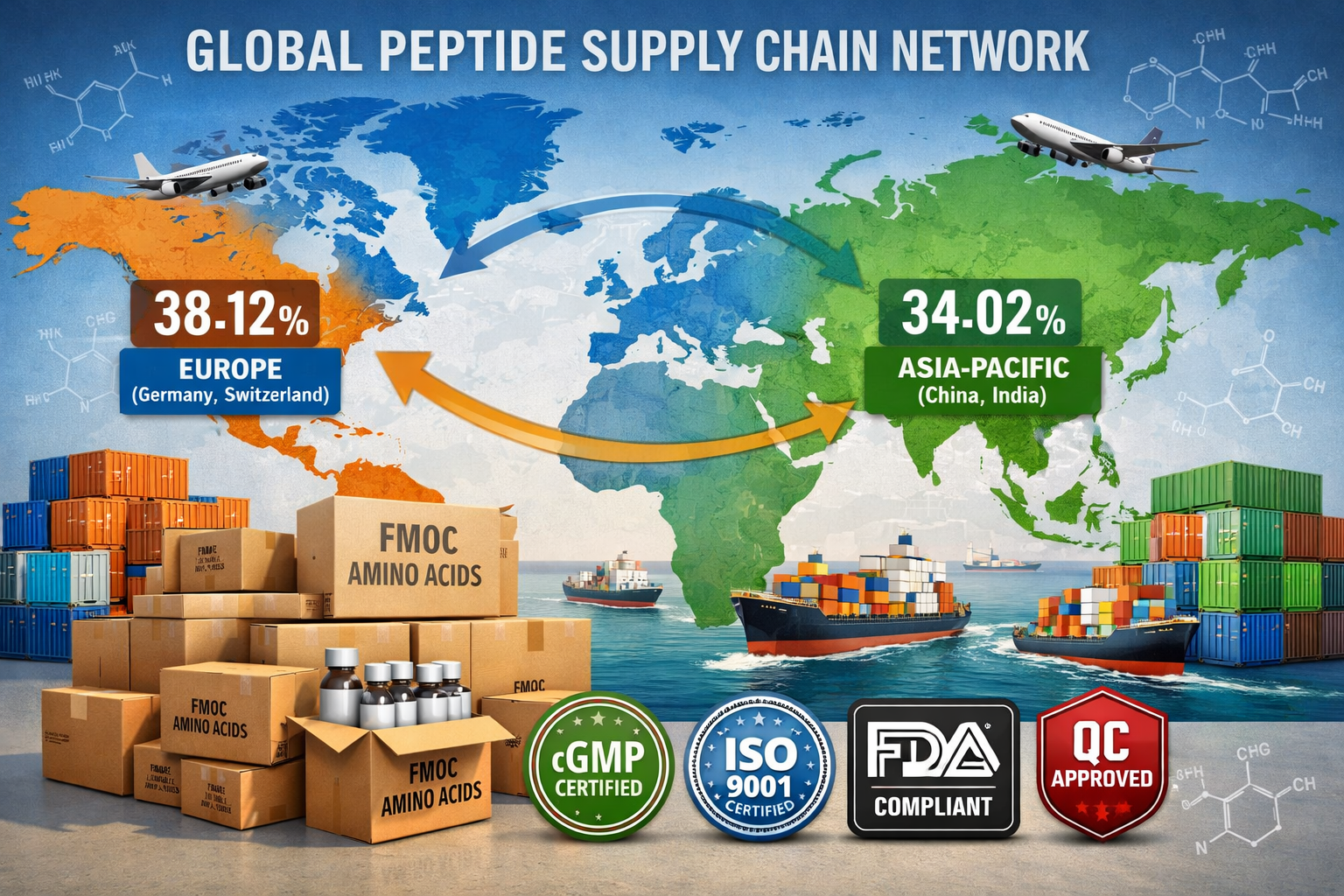
The geographic distribution of peptide raw materials distributors reveals fascinating market dynamics. Europe leads global consumption with 38.12% market share, driven by pharmaceutical manufacturing hubs in Germany and Switzerland[1]. These regions benefit from established regulatory frameworks, advanced manufacturing infrastructure, and proximity to major pharmaceutical companies.
| Region | Market Share | Key Characteristics | Growth Trajectory |
|---|---|---|---|
| Europe | 38.12% | High-purity standards, BACHEM and Merck KGaA dominance | Steady growth |
| Asia-Pacific | 34.02% | Cost-competitive manufacturing, rapid expansion | Fastest regional growth |
| North America | ~27.86% | Strict regulatory environment, premium positioning | Highest growth rate |
Asia-Pacific's 34.02% market share reflects the region's role as a manufacturing powerhouse[1]. Chinese suppliers—particularly Kelong Chemical and GL Biochem (Shanghai) Ltd, which jointly control 24.30% of global revenue—have established themselves as dominant players through economies of scale and technological investment[1].
Second-tier suppliers expanding capacity include TACHEM, ZY BIOCHEM, and Sichuan Jisheng, particularly targeting GLP-1 drug synthesis markets[1]. These peptide raw materials distributors have invested heavily in SPPS technology improvements that enhance FMOC protection chemistry efficiency.
North America, despite a smaller current market share, demonstrates the fastest growth trajectory[1]. This acceleration reflects several factors: increasing domestic manufacturing initiatives, stricter quality requirements favoring local suppliers, and growing research demand from the fitness and wellness sectors.
The Impact of FDA Regulations on Distribution Networks
The regulatory earthquake that began in January 2025 fundamentally altered the peptide distribution landscape. The FDA's enforcement of tighter restrictions on bulk substances in compounded peptide therapies ended years of regulatory tolerance, creating a clear divide between compliant and non-compliant operators[2].
This policy shift is phasing out smaller, non-compliant compounders while elevating firms capable of navigating full FDA review processes[2]. For peptide shoppers in fitness, martial arts, and weightlifting communities, this means:
✅ Enhanced safety profiles from remaining suppliers
✅ More transparent supply chains with documented quality controls
✅ Reduced risk of contaminated or mislabeled products
✅ Higher baseline quality standards across the industry
The regulatory transition favors manufacturers with established quality controls and robust supply chains over service providers operating outside conventional frameworks[2]. This consolidation benefits serious researchers and athletes who prioritize product integrity over price alone.
Peptide raw materials distributors who have invested in GMP-compliant facilities, comprehensive testing protocols, and regulatory expertise now enjoy competitive advantages. Those unable to meet the new standards have exited the market, reducing options but improving overall quality.
Market Projections and Growth Drivers
The global FMOC-protected amino acids market—a critical component of peptide synthesis—was valued at $130 million in 2025 and is projected to reach $282 million by 2034[1]. This 117% growth over nine years reflects several powerful drivers:
Technological Advancement: SPPS technological improvements have enhanced efficiency and reduced production costs, making high-quality peptides more accessible to peptide raw materials distributors and end users alike[1].
Pharmaceutical Outsourcing: The trend toward outsourcing peptide synthesis to specialized manufacturers in India and China continues accelerating, particularly in Asia-Pacific markets[1].
Therapeutic Pipeline Expansion: As more peptide-based therapeutics enter clinical trials and receive approval, demand for raw materials grows proportionally.
Research Community Growth: The expanding community of researchers studying peptides for various applications—from healing peptides to metabolic modulators—creates sustained demand.
For fitness enthusiasts and athletes, this growth translates to greater product availability, improved quality standards, and more competitive pricing from established peptide raw materials distributors.
Top Criteria for Evaluating Peptide Raw Materials Distributors
Quality Certifications and Testing Standards
When evaluating peptide raw materials distributors, quality certifications serve as the first line of defense against substandard products. In 2026's regulated environment, legitimate suppliers maintain multiple verification layers:
GMP Certification (Good Manufacturing Practice): This fundamental certification ensures distributors follow standardized production processes, maintain proper documentation, and implement quality control at every stage. GMP-certified facilities undergo regular audits and must demonstrate consistent compliance.
Third-Party Testing: The gold standard for verification involves independent laboratory analysis. Reputable peptide raw materials distributors provide:
- 📊 HPLC (High-Performance Liquid Chromatography) results showing purity percentages
- 🔬 Mass spectrometry confirming molecular weight and composition
- 🧪 Endotoxin testing ensuring bacterial contamination absence
- 📋 Certificate of Analysis (CoA) for each batch with specific test results
ISO Certifications: ISO 9001 (quality management) and ISO 13485 (medical devices) demonstrate systematic quality approaches. While not universally required for research peptides, these certifications indicate serious commitment to quality.
The importance of peptide purity testing cannot be overstated. Athletes and researchers relying on consistent results need verified purity levels—typically 98% or higher for research-grade compounds.
Supply Chain Transparency and Traceability
Supply chain transparency separates professional peptide raw materials distributors from questionable operators. In 2026, sophisticated tracking systems allow legitimate suppliers to trace each peptide batch from synthesis through delivery:
🔍 Batch Number Tracking: Every product should carry a unique batch identifier linking to specific manufacturing dates, source materials, and quality test results.
🌡️ Temperature Monitoring: Peptides degrade when exposed to improper temperatures. Professional distributors maintain cold-chain logistics with documented temperature logs throughout shipping.
📦 Packaging Standards: Proper packaging includes desiccants, light protection, and tamper-evident seals. Damaged or improperly packaged peptides may have compromised integrity.
📍 Source Verification: Knowing where raw materials originate matters. Distributors sourcing from established manufacturers in regions with strong regulatory oversight (Germany, Switzerland, reputable Chinese facilities) generally provide more reliable products than those using unknown sources.
For peptide raw materials distributors serving the fitness and martial arts communities, transparency builds trust. Athletes making informed decisions about their research protocols need complete information about product origins and handling.
Customer Support and Technical Expertise
The complexity of peptide research demands more than just product delivery. Elite peptide raw materials distributors provide comprehensive support infrastructure:
Knowledgeable Staff: Representatives should understand peptide chemistry, storage requirements, reconstitution protocols, and research applications. The ability to answer technical questions distinguishes professional suppliers from mere order-takers.
Educational Resources: Quality distributors invest in customer education through:
- 📚 Detailed product information sheets
- 🎥 Reconstitution and storage guides
- 📖 Research summaries and mechanism explanations
- 💬 Responsive communication channels
Research Context: Understanding what's new in peptide research helps distributors guide customers toward appropriate compounds for specific research goals.
Responsive Communication: Quick response times to inquiries, clear shipping updates, and proactive problem resolution indicate customer-focused operations.
For weightlifters researching compounds like Tesamorelin or martial artists exploring recovery peptides, having access to knowledgeable support can significantly impact research success.
Pricing Structure and Value Proposition
While price shouldn't be the sole determining factor, understanding pricing dynamics helps identify fair value among peptide raw materials distributors:
Market-Appropriate Pricing: Extremely low prices often indicate compromised quality, inadequate testing, or questionable sourcing. Conversely, excessive pricing doesn't guarantee superior products. Research market averages for specific compounds.
Bulk Pricing Options: Legitimate distributors often offer wholesale peptides pricing for larger orders, providing cost savings without quality compromise.
Transparent Cost Breakdown: Professional suppliers clearly itemize:
- Base product cost
- Shipping and handling fees
- Any testing or certification surcharges
- Applicable taxes
Value-Added Services: Consider the complete package beyond raw price:
- ✅ Free third-party testing documentation
- ✅ Satisfaction guarantees or replacement policies
- ✅ Loyalty programs or research credits
- ✅ Educational resources and support
The peptide raw materials distributors offering the best value balance competitive pricing with verified quality, comprehensive testing, and excellent customer support.
Leading Peptide Raw Materials Distributors in 2026
Established Western Suppliers
BACHEM stands as one of the most respected names among peptide raw materials distributors, particularly in European and North American markets. This Swiss company competes through technological differentiation and high-purity offerings, maintaining premium positioning through rigorous quality standards[1]. BACHEM's strength lies in custom synthesis capabilities and pharmaceutical-grade products that meet the strictest regulatory requirements.
Merck KGaA (known as MilliporeSigma in North America) represents another Western powerhouse in peptide distribution. Their extensive catalog includes FMOC-protected amino acids, pre-made peptides, and synthesis reagents. Merck's competitive advantage stems from:
- 🏆 Decades of pharmaceutical industry experience
- 🔬 Advanced analytical capabilities
- 📚 Comprehensive technical documentation
- 🌍 Global distribution network
These established peptide raw materials distributors typically command higher prices but deliver exceptional consistency, documentation, and regulatory compliance. For researchers requiring pharmaceutical-grade materials or working within strictly regulated environments, Western suppliers often represent the safest choice.
The integration of reference standards and robust benchmarks from suppliers like BACHEM ensures research reproducibility—a critical factor for serious investigations.
Emerging Asian-Pacific Manufacturers
The Asia-Pacific region has transformed from a low-cost manufacturing alternative to a sophisticated peptide production hub. Kelong Chemical and GL Biochem (Shanghai) Ltd jointly control 24.30% of global revenue, demonstrating the region's competitive strength[1].
GL Biochem (Shanghai) Ltd has earned recognition for:
- 💰 Competitive pricing without quality compromise
- ⚡ Rapid production and delivery timelines
- 🔄 Flexible custom synthesis options
- 📈 Continuous capacity expansion
TACHEM, ZY BIOCHEM, and Sichuan Jisheng represent the expanding second tier of peptide raw materials distributors, particularly targeting GLP-1 drug synthesis markets[1]. These suppliers have invested heavily in SPPS technology improvements, enhancing efficiency and product quality.
The growth trajectory in Asia-Pacific reflects several advantages:
- 🏭 Lower manufacturing costs enabling competitive pricing
- 🎓 Growing technical expertise and PhD-level workforce
- 💵 Significant capital investment in modern facilities
- 🌏 Strategic positioning for global distribution
For fitness enthusiasts and athletes researching peptides, Asian manufacturers often provide excellent value when proper due diligence confirms quality standards and testing protocols.
Specialized Research Peptide Suppliers
Beyond large-scale manufacturers, specialized peptide raw materials distributors focus exclusively on research-grade compounds for specific communities. These suppliers understand the unique needs of athletes, fitness enthusiasts, and individual researchers.
Pure Tested Peptides exemplifies this specialized approach, offering:
- ✅ Comprehensive third-party testing for every batch
- ✅ Transparent quality documentation
- ✅ Specialized compounds like LL-37 and MOTS-C
- ✅ Educational resources tailored to research applications
- ✅ Customer support from knowledgeable specialists
Specialized distributors often provide advantages that large manufacturers cannot:
Curated Product Selection: Rather than overwhelming catalogs, focused offerings of proven research compounds.
Community Understanding: Deep familiarity with fitness, martial arts, and athletic research applications.
Flexible Ordering: Smaller minimum orders suitable for individual researchers rather than bulk pharmaceutical quantities.
Application Guidance: Specific insights into innovative peptide delivery systems and optimal research protocols.
For weightlifters exploring Tesamorelin dosage for bodybuilding research or martial artists investigating recovery compounds, specialized peptide raw materials distributors provide targeted expertise and appropriate product formats.
Sourcing Strategies for Different Peptide Applications
Peptides for Fitness and Performance Research
Athletes and fitness enthusiasts represent a significant segment of the peptide research community. When sourcing from peptide raw materials distributors for performance-related investigations, several considerations become paramount:
Recovery and Repair Research: Compounds like BPC-157 have attracted attention in recovery research. When sourcing these peptides:
- Verify purity levels of 98% or higher
- Confirm proper storage conditions (typically -20°C for long-term stability)
- Request batch-specific testing documentation
- Ensure proper reconstitution guidance is available
Metabolic Studies: Peptides like SLU-PP-332 and MOTS-C interest researchers exploring metabolic pathways. These compounds require:
- 🧊 Strict temperature control during shipping
- 📋 Detailed certificates of analysis
- 🔬 Mass spectrometry confirmation
- 📦 Appropriate packaging to prevent degradation
Growth Hormone Research: Compounds including Tesamorelin, Sermorelin, and CJC-1295 with Ipamorelin blends require particularly careful sourcing due to their complexity and sensitivity.
For peptide raw materials distributors serving the fitness community, understanding these specific applications enables better product recommendations and support.
Peptides for Longevity and Anti-Aging Research
The longevity research sector has embraced peptides as tools for investigating cellular health and aging processes. Sourcing for these applications involves distinct considerations:
Mitochondrial Function Research: Compounds like SS-31 (Elamipretide) focus on mitochondrial health. Researchers should prioritize:
- Distributors with expertise in mitochondrial research themes
- Verified purity through HPLC analysis
- Proper lyophilization and storage protocols
- Clear reconstitution instructions
Cellular Regeneration Studies: Peptides like GHK-Cu and specialized blends interest researchers exploring cellular repair mechanisms. Quality peptide raw materials distributors provide:
- 📊 Detailed stability data
- 🔍 Contamination screening results
- 📖 Research literature references
- 💡 Application-specific guidance
Combination Research: Many longevity researchers explore peptide blend benefits and synergistic effects. Sourcing multiple compounds requires:
- Consistent quality across different peptides
- Compatible reconstitution protocols
- Comprehensive documentation for each component
- Understanding of potential interactions
Peptides for Martial Arts and Athletic Recovery
Martial artists face unique physical demands—combining strength, endurance, flexibility, and recovery needs. Sourcing peptides for martial arts research requires understanding these multifaceted requirements:
Injury Recovery Research: The physical nature of martial arts creates interest in compounds supporting tissue repair. Relevant peptides include:
- Thymosin Alpha-1 for immune function research
- BPC-157 for tissue repair investigations
- TB-500 for flexibility and recovery studies
Performance Optimization: Martial artists researching performance enhancement explore:
- 💪 Growth hormone secretagogues for body composition studies
- ⚡ Metabolic peptides for energy pathway research
- 🧠 Cognitive peptides like Selank and Semax for focus investigations
Inflammation Modulation: The repetitive stress of martial arts training creates interest in anti-inflammatory research. LL-37 peptides and similar compounds attract attention for their immunomodulatory properties.
When selecting peptide raw materials distributors for martial arts applications, prioritize suppliers who understand these specific research contexts and can provide appropriate compound recommendations.
Quality Verification and Due Diligence
Reading and Interpreting Certificates of Analysis
Certificates of Analysis (CoA) represent the most critical documentation when evaluating peptide raw materials distributors. Understanding how to read these documents protects against substandard products:
Essential CoA Components:
- Batch/Lot Number: Unique identifier linking the certificate to specific product units
- Purity Percentage: Typically determined by HPLC, should be ≥98% for research-grade peptides
- Molecular Weight: Confirmed through mass spectrometry, must match theoretical values
- Appearance: Physical description (typically white to off-white lyophilized powder)
- Solubility: Confirmation that the peptide dissolves properly in specified solvents
- Endotoxin Levels: Bacterial contamination testing (particularly important for injectable research)
- Testing Date: Recent testing (within 6-12 months) indicates fresh inventory
Red Flags in CoA Documentation:
🚩 Generic or template certificates lacking specific batch information
🚩 Missing testing dates or outdated results
🚩 Purity claims without methodology (no HPLC chromatogram)
🚩 Suspiciously perfect results (exactly 100% purity is unrealistic)
🚩 Incomplete contact information for the testing laboratory
Professional peptide raw materials distributors provide detailed CoAs without prompting and willingly answer questions about testing methodologies. The availability of comprehensive peptide purity testing documentation distinguishes legitimate suppliers from questionable operators.
Third-Party Testing Verification
Beyond reviewing provided CoAs, sophisticated researchers implement additional verification layers:
Independent Laboratory Testing: For high-value or critical research, sending samples to independent laboratories confirms distributor claims. While adding cost, this verification provides ultimate peace of mind.
Testing Laboratory Credentials: Verify that testing facilities hold appropriate accreditations:
- 🏅 ISO/IEC 17025 accreditation for testing laboratories
- 🔬 Specialized equipment (HPLC, mass spectrometry, NMR)
- 📋 Traceable calibration standards
- 👨🔬 Qualified personnel with relevant expertise
Batch-to-Batch Consistency: Reputable peptide raw materials distributors maintain consistent quality across batches. Reviewing multiple CoAs for the same compound reveals consistency patterns—or concerning variations.
Reference Standard Comparison: Some researchers compare received peptides against reference standards from established suppliers like BACHEM to verify identity and purity.
Storage and Handling Verification
Peptide quality depends not just on synthesis but on proper handling throughout the supply chain. Evaluating peptide raw materials distributors requires assessing their storage and shipping protocols:
Storage Requirements:
- ❄️ Lyophilized peptides: Typically -20°C for long-term storage
- 🧊 Reconstituted peptides: 2-8°C (refrigerated), limited stability
- 🌡️ Temperature monitoring: Documented temperature logs in storage facilities
- 💧 Humidity control: Desiccants and moisture-barrier packaging
Shipping Standards:
Quality distributors employ:
- 📦 Insulated packaging with ice packs or dry ice
- 📊 Temperature data loggers documenting transit conditions
- ⚡ Expedited shipping options to minimize transit time
- 🔒 Tamper-evident seals and secure packaging
Handling Documentation: Professional peptide raw materials distributors provide clear instructions for:
- Proper storage upon receipt
- Reconstitution protocols specific to each compound
- Stability timelines for both lyophilized and reconstituted forms
- Appropriate solvents and diluents
For researchers in fitness, martial arts, and weightlifting, understanding these handling requirements ensures peptide integrity from distributor to research application.
Navigating Regulatory Compliance in 2026
Understanding Current FDA Guidelines
The regulatory landscape for peptides shifted dramatically with FDA enforcement actions beginning in January 2025[2]. Understanding these regulations helps researchers select compliant peptide raw materials distributors and avoid legal complications:
Key Regulatory Changes:
The FDA began enforcing tighter restrictions on bulk substances in compounded peptide therapies, ending years of regulatory tolerance[2]. This policy shift specifically targets:
- 🚫 Non-FDA-approved bulk substances in compounding
- 📋 Inadequate quality control documentation
- ⚠️ Unsubstantiated therapeutic claims
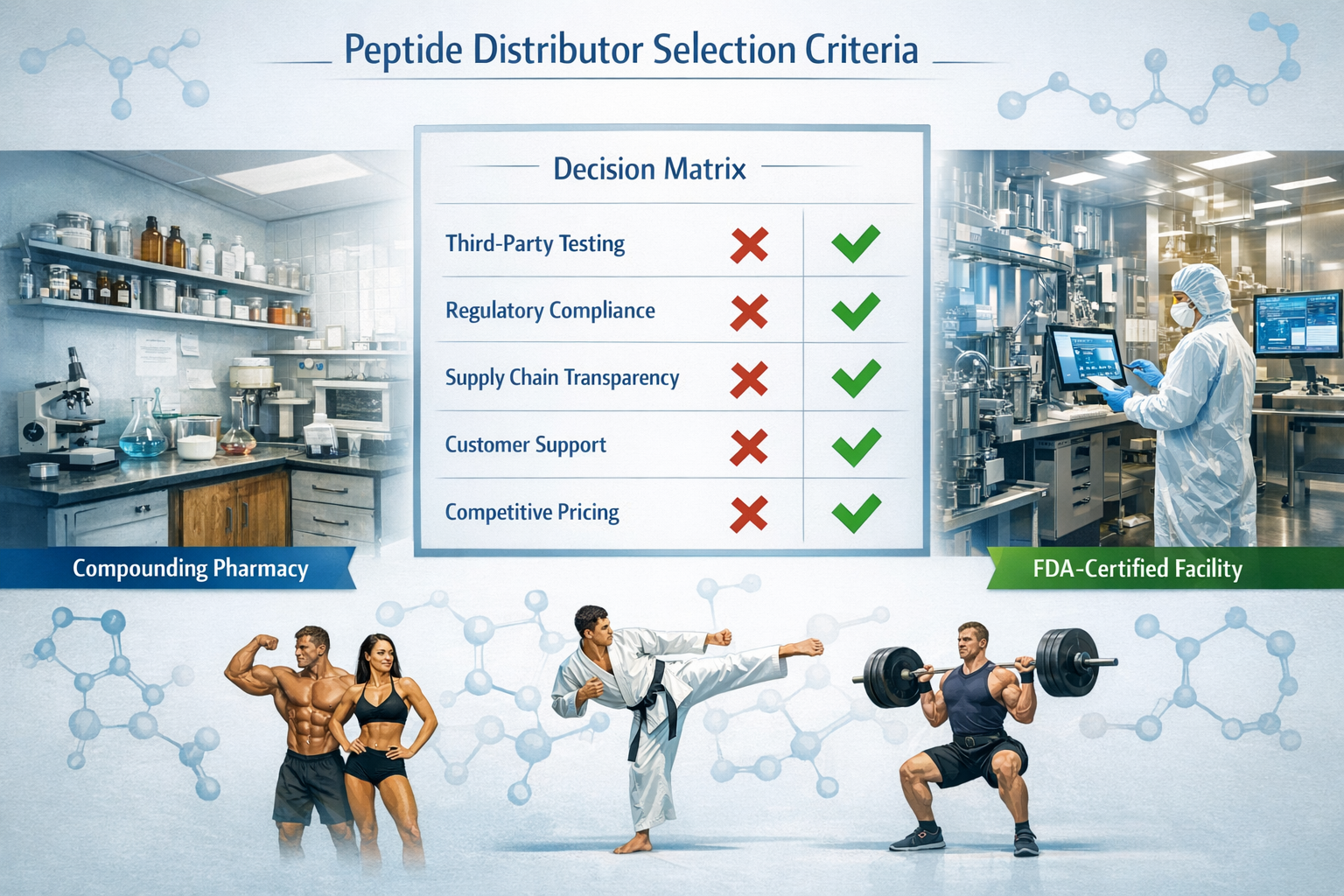
- 🏥 Compounding pharmacies operating outside regulatory frameworks
Implications for Peptide Shoppers:
The regulatory transition is phasing out smaller, non-compliant compounders while elevating firms capable of navigating full FDA review processes[2]. For individual researchers, this means:
✅ Improved safety through enhanced quality standards
✅ Better documentation from remaining suppliers
✅ Reduced market confusion as non-compliant operators exit
✅ Clearer sourcing options from established distributors
Research vs. Therapeutic Use:
Critical distinction: peptides sold for research purposes fall under different regulations than those marketed for human therapeutic use. Legitimate peptide raw materials distributors clearly label products "For Research Purposes Only" and avoid therapeutic claims.
International Sourcing Considerations
Global sourcing from peptide raw materials distributors introduces additional regulatory complexity:
Import Regulations:
Different countries maintain varying peptide import requirements:
- 📄 Documentation: Import permits, customs declarations, end-use certificates
- 🔍 Inspections: Customs scrutiny of peptide shipments
- 💰 Duties and Taxes: Import fees varying by jurisdiction
- ⏱️ Delays: Potential customs hold-ups requiring proper paperwork
Regional Regulatory Differences:
- European Union: Strict pharmaceutical regulations, comprehensive quality standards
- United States: FDA oversight, increasing enforcement
- Asia-Pacific: Variable standards depending on specific country
- Canada: Health Canada regulations for peptide imports
Quality Standard Variations:
European distributors often adhere to stricter standards than required in some Asian markets. Understanding these differences helps assess peptide raw materials distributors operating in different regions.
Shipping Restrictions:
Some peptides face shipping restrictions to certain countries. Reputable distributors clearly communicate any limitations and ensure compliance with destination regulations.
Compliance Documentation and Record-Keeping
Sophisticated researchers maintain comprehensive records when sourcing from peptide raw materials distributors:
Essential Documentation:
- 📋 Purchase orders and invoices with detailed product descriptions
- 🔬 Certificates of Analysis for each batch received
- 📦 Shipping documentation including temperature logs
- 📅 Receipt dates and storage condition records
- 🧪 Any independent testing results
Research Protocols:
Maintaining detailed research protocols serves multiple purposes:
- 🎯 Ensures reproducible results
- 📊 Documents proper peptide handling
- 🛡️ Demonstrates legitimate research intent
- 📚 Creates valuable reference for future work
Supplier Evaluation Records:
Tracking distributor performance over time helps identify reliable sources:
- ✅ Product quality consistency
- ⏰ Delivery timeframes and reliability
- 💬 Customer service responsiveness
- 🔄 Problem resolution effectiveness
The regulatory environment favors manufacturers with established quality controls and robust supply chains over service providers operating outside conventional frameworks[2]. Researchers who prioritize compliant peptide raw materials distributors position themselves for long-term success.
Cost Optimization and Bulk Purchasing
Understanding Peptide Pricing Structures
Peptide raw materials distributors employ various pricing models reflecting production costs, quality standards, and market positioning:
Factors Affecting Peptide Prices:
- Sequence Complexity: Longer peptide chains require more synthesis steps, increasing costs
- Purity Requirements: Higher purity levels (99%+ vs. 95%) demand additional purification
- Quantity: Bulk orders typically receive per-unit discounts
- Modifications: Special modifications (acetylation, amidation) add complexity and cost
- Testing Depth: Comprehensive third-party testing increases final price
Typical Price Ranges (research-grade peptides, 2026):
- 💰 Simple peptides (5-10 amino acids): $50-150 per 5mg
- 💰 Medium complexity (10-20 amino acids): $100-300 per 5mg
- 💰 Complex peptides (20+ amino acids): $200-500+ per 5mg
- 💰 Specialty compounds: Variable, often premium pricing
Price vs. Quality Correlation:
While higher prices don't guarantee superior quality, extremely low prices often indicate:
🚩 Inadequate testing or quality control
🚩 Questionable sourcing or synthesis methods
🚩 Lower actual purity than claimed
🚩 Improper storage or handling
Bulk Ordering Strategies
For researchers conducting extended investigations, bulk purchasing from peptide raw materials distributors offers significant advantages:
Volume Discount Structures:
Many distributors offer tiered pricing:
- 📦 5-10mg: Standard pricing
- 📦 25-50mg: 10-15% discount
- 📦 100mg+: 20-30% discount
- 📦 1g+: Custom wholesale peptides pricing
Bulk Purchasing Considerations:
✅ Stability Duration: Ensure you'll use the quantity before degradation
✅ Storage Capacity: Adequate -20°C freezer space for long-term storage
✅ Research Timeline: Confirmed long-term research plans justify bulk investment
✅ Financial Resources: Upfront capital for larger purchases
Group Purchasing:
Research groups or training facilities can leverage collective purchasing power:
- 👥 Multiple researchers combining orders
- 🏋️ Gym or martial arts academy group purchases
- 🤝 Online community cooperative buying
- 💡 Shared storage and distribution among trusted colleagues
Subscription Models:
Some peptide raw materials distributors offer subscription or recurring order programs providing:
- 💰 Automatic discounts on regular purchases
- 📅 Scheduled deliveries ensuring consistent supply
- 🎁 Loyalty rewards or research credits
- 📞 Priority customer service access
Balancing Cost and Quality
The most successful peptide researchers recognize that lowest price rarely equals best value. Optimizing costs while maintaining quality requires strategic thinking:
Value Assessment Framework:
| Factor | Weight | Evaluation Criteria |
|---|---|---|
| Purity | High | ≥98% verified by third-party HPLC |
| Testing | High | Comprehensive CoA with multiple analyses |
| Reliability | High | Consistent delivery, quality, service |
| Price | Medium | Competitive within quality tier |
| Support | Medium | Knowledgeable assistance available |
| Convenience | Low | Ordering process, payment options |
Strategic Sourcing Approaches:
🎯 Tiered Sourcing: Use premium suppliers for critical research, cost-effective options for preliminary work
🎯 Relationship Building: Develop relationships with 2-3 reliable peptide raw materials distributors for competitive options
🎯 Timing Optimization: Watch for promotional periods or new product launches with introductory pricing
🎯 Quality Verification: Periodically verify quality through independent testing, especially with new suppliers
For fitness enthusiasts researching compounds like Tesamorelin or martial artists exploring recovery peptides, balancing cost and quality ensures sustainable, effective research programs.
Future Trends in Peptide Distribution
Technological Innovations in Peptide Synthesis
The peptide industry continues evolving rapidly, with technological advances reshaping how peptide raw materials distributors operate:
SPPS Technology Improvements:
Solid-Phase Peptide Synthesis technological improvements have enhanced FMOC protection chemistry efficiency, accelerating adoption worldwide[1]. Recent innovations include:
- ⚡ Automated synthesis platforms reducing human error and increasing throughput
- 🔬 Microwave-assisted synthesis shortening reaction times
- 🧪 Green chemistry approaches reducing solvent waste
- 💻 AI-optimized synthesis protocols improving yields
Novel Delivery Systems:
Research into innovative peptide delivery systems explores:
- 💊 Oral bioavailability enhancement
- 👃 Nasal spray peptides for improved absorption
- 🩹 Transdermal patches for sustained release
- 💉 Long-acting injectable formulations
These delivery innovations will likely influence how peptide raw materials distributors package and formulate products, potentially offering ready-to-use formats beyond traditional lyophilized powders.
Quality Control Automation:
Advanced analytical technologies enable:
- 🤖 Automated HPLC analysis with real-time results
- 📊 Blockchain-based quality tracking and verification
- 🔍 Enhanced contamination detection methods
- 📱 Digital CoA access via smartphone apps
Market Consolidation and Competitive Dynamics
The regulatory changes of 2025 accelerated market consolidation among peptide raw materials distributors[2]. This trend will likely continue:
Consolidation Drivers:
- 💰 Capital Requirements: Investment needed for GMP facilities and testing infrastructure
- 📋 Regulatory Compliance: Costs of maintaining FDA-compliant operations
- 🌍 Global Competition: Pressure from established Asian and European manufacturers
- 🔬 Technology Investment: R&D spending for synthesis improvements
Implications for Peptide Shoppers:
- ✅ Improved Quality: Surviving distributors maintain higher standards
- ✅ Better Service: Consolidated firms invest in customer support
- ⚠️ Reduced Options: Fewer suppliers in the marketplace
- ⚠️ Potential Price Pressure: Less competition may affect pricing
Emerging Opportunities:
Despite consolidation, niches exist for specialized peptide raw materials distributors focusing on:
- 🎯 Specific research communities (fitness, longevity, athletic performance)
- 🧬 Novel or rare peptide compounds
- 📚 Educational content and research support
- 🤝 Personalized customer service
Sustainability and Ethical Sourcing
Environmental and ethical considerations increasingly influence peptide distribution:
Green Chemistry Initiatives:
Progressive peptide raw materials distributors adopt:
- ♻️ Solvent recycling programs
- 🌱 Biodegradable packaging materials
- ⚡ Renewable energy in manufacturing
- 💧 Water conservation in synthesis processes
Ethical Manufacturing:
Researchers increasingly value:
- 👷 Fair labor practices in manufacturing facilities
- 🏭 Environmental responsibility in production
- 🔍 Transparent supply chain ethics
- 🌍 Social responsibility commitments
Regulatory Pressure:
Environmental regulations will likely tighten, favoring distributors who proactively adopt sustainable practices. The global peptide market's growth to $282 million by 2034[1] will attract increased regulatory scrutiny regarding environmental impact.
For conscious researchers in the fitness and martial arts communities, selecting peptide raw materials distributors aligned with sustainability values adds another dimension to sourcing decisions.
Conclusion: Making Informed Decisions About Peptide Raw Materials Distributors
Navigating the complex landscape of peptide raw materials distributors in 2026 requires balancing multiple factors: quality assurance, regulatory compliance, pricing considerations, and supplier reliability. The market transformation triggered by FDA enforcement actions beginning in January 2025 has fundamentally improved the quality baseline while eliminating non-compliant operators[2].
For peptide shoppers in fitness, martial arts, and weightlifting communities, this consolidation ultimately benefits serious researchers committed to quality and safety. The global peptide therapeutics market's trajectory toward $50+ billion[1] ensures continued innovation, improved accessibility, and competitive pricing from established distributors.
Actionable Next Steps
For New Peptide Researchers:
- 📚 Educate Yourself: Understand basic peptide chemistry, storage requirements, and research applications through resources like the comprehensive catalog tour
- 🔍 Research Suppliers: Evaluate 3-5 potential peptide raw materials distributors using the criteria outlined in this guide
- 📋 Verify Documentation: Request and review Certificates of Analysis before purchasing
- 💬 Ask Questions: Engage with customer support to assess knowledge and responsiveness
- 🧪 Start Small: Begin with smaller orders to verify quality before bulk purchasing
For Experienced Researchers:
- 🔄 Re-evaluate Current Sources: Ensure your existing peptide raw materials distributors maintain post-2025 regulatory compliance
- 📊 Implement Testing Verification: Consider periodic independent testing to confirm supplier claims
- 💰 Optimize Purchasing: Explore bulk ordering or subscription models for frequently used compounds
- 📚 Stay Informed: Monitor peptide research developments and regulatory changes
- 🤝 Build Relationships: Develop strong connections with 2-3 reliable suppliers for redundancy
For Fitness and Athletic Communities:
- 🏋️ Identify Research Goals: Clarify specific research objectives (recovery, performance, body composition)
- 🎯 Select Appropriate Compounds: Match peptides to research goals with guidance from knowledgeable distributors
- 📖 Document Protocols: Maintain detailed research records for reproducibility and safety
- 👥 Consider Group Purchasing: Leverage collective buying power with training partners or gym communities
- ⚖️ Prioritize Quality: Remember that peptide integrity directly impacts research outcomes
The Path Forward
The evolution of peptide raw materials distributors reflects the broader maturation of the peptide industry. As the global FMOC-protected amino acids market grows from $130 million in 2025 toward $282 million by 2034[1], researchers can expect continued improvements in product quality, testing standards, and customer support.
The regulatory framework established in 2025[2] creates a more stable, predictable environment favoring serious researchers over casual experimenters. While this transition eliminated some low-cost options, the resulting quality improvements and safety enhancements benefit the entire research community.
For martial artists seeking recovery support, weightlifters researching performance optimization, and fitness enthusiasts exploring longevity compounds, the current landscape offers unprecedented access to verified, high-quality peptides from reputable distributors. Success requires diligence in supplier selection, commitment to quality verification, and ongoing education about peptide research developments.
The future of peptide distribution promises continued innovation in synthesis technology, delivery systems, and quality assurance. Researchers who establish relationships with reliable peptide raw materials distributors today position themselves to benefit from these advances while maintaining the quality standards essential for meaningful research outcomes.
By applying the evaluation criteria, verification methods, and sourcing strategies outlined in this guide, peptide shoppers can confidently navigate the distribution landscape, selecting suppliers that align with their research goals, quality standards, and budget parameters. The investment in finding the right peptide raw materials distributors pays dividends through consistent results, reliable supply, and peace of mind that comes from working with professional, compliant suppliers in an increasingly regulated industry.
References
[1] Global Fmoc Protected Amino Acids Forecast Market 27006 – https://www.intelmarketresearch.com/global-fmoc-protected-amino-acids-forecast-market-27006
[2] New Fda Rules Are Reshaping The Peptide Industry – https://www.peptide-drug-summit.com/news/new-fda-rules-are-reshaping-the-peptide-industry
SEO Meta Title and Description
Meta Title: Peptide Raw Materials Distributors Guide 2026 | Quality Sources
Meta Description: Discover top peptide raw materials distributors in 2026. Compare quality standards, pricing, and compliance for fitness, martial arts, and research applications.