
PT-141 Peptide: 10 Promising Research Findings You Need to Know
Imagine a peptide so revolutionary that it bypasses traditional pathways and works directly on the nervous system to influence human behavior and physiology. PT-141 peptide, also known as Bremelanotide, has captured the attention of researchers worldwide for its unique mechanism of action and diverse potential applications. Unlike conventional compounds, this melanocortin receptor agonist operates through the central nervous system, opening doors to groundbreaking discoveries across multiple fields of study.
As we navigate through 2026, the body of research surrounding this fascinating compound continues to expand, revealing insights that challenge our understanding of peptide therapeutics. I’ve spent considerable time reviewing the latest scientific literature, and what I’ve discovered about PT-141 peptide is nothing short of remarkable.
Key Takeaways
- PT-141 peptide is a synthetic melanocortin receptor agonist that works through the central nervous system rather than the vascular system
- Research has identified at least 10 significant areas where this peptide shows promising potential, from behavioral studies to metabolic research
- The compound’s unique mechanism involves melanocortin receptors MC3R and MC4R, distinguishing it from other peptide therapies
- Safety profiles and dosing protocols have been extensively studied in clinical trials over the past two decades
- Quality sourcing and proper research protocols are essential when working with peptide compounds
What Makes PT-141 Peptide Unique?
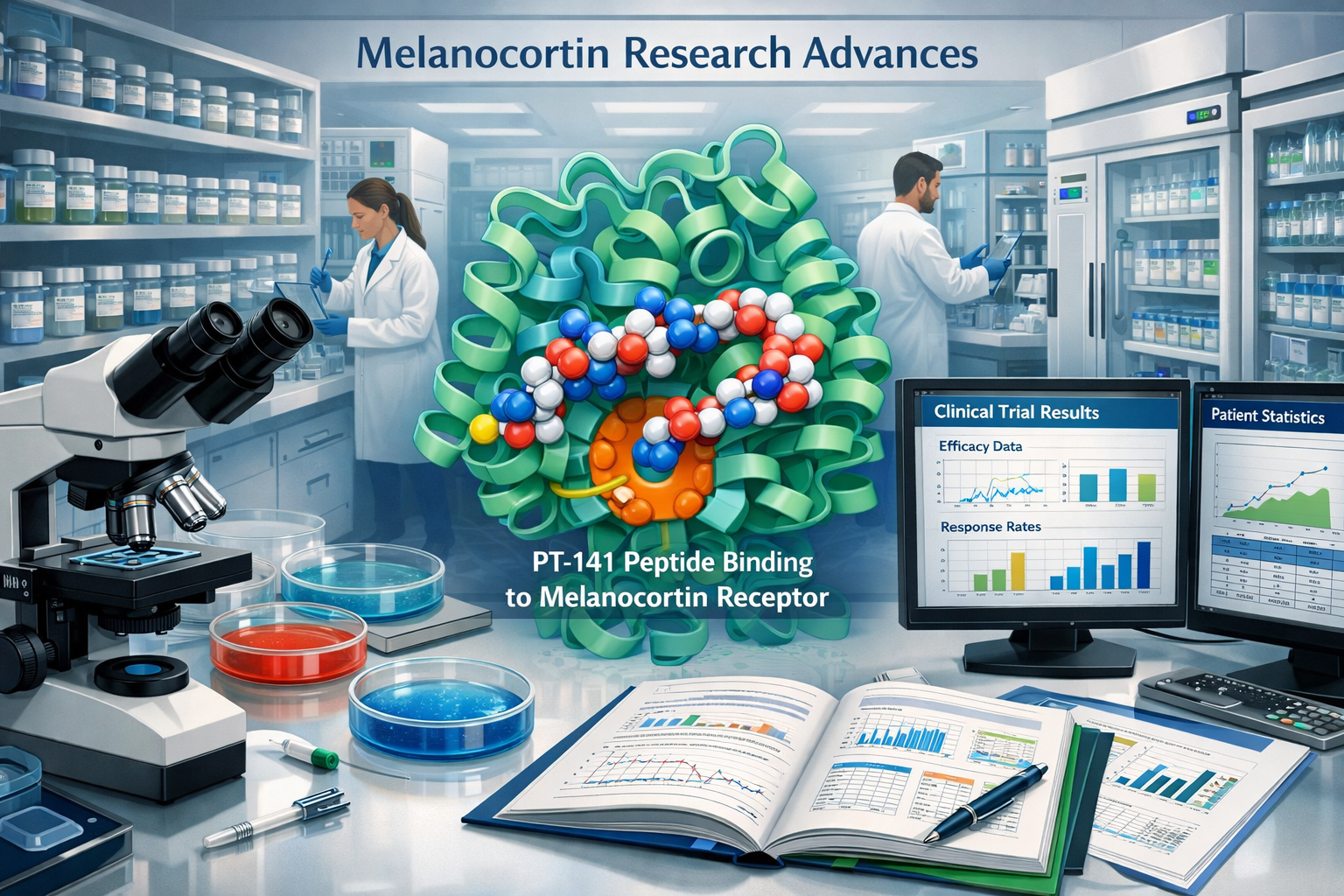
PT-141 peptide stands apart from other research compounds due to its distinctive pharmacological profile. This synthetic peptide is a metabolite of Melanotan II and belongs to the melanocortin family of peptides. What truly sets it apart is its central nervous system mechanism – it doesn’t rely on vascular changes like many traditional compounds.
The peptide’s molecular structure allows it to cross the blood-brain barrier and interact with specific melanocortin receptors. This characteristic has made it a subject of intense scientific scrutiny since its initial development in the late 1990s.
The Science Behind the Mechanism
PT-141 works primarily by activating melanocortin receptors, specifically MC3R and MC4R. These receptors are distributed throughout the brain and play crucial roles in various physiological processes. When the peptide binds to these receptors, it triggers a cascade of neurological responses that researchers continue to study.
“The melanocortin system represents one of the most fascinating areas of neuroendocrine research, and PT-141’s selective receptor activation offers unique research opportunities.” – Leading peptide research insights
Top 10 Promising Research Findings on PT-141 Peptide
1. 🧠 Central Nervous System Activation
One of the most significant findings involves PT-141’s ability to activate specific brain regions associated with motivation and reward pathways. Research has demonstrated that the peptide’s interaction with melanocortin receptors in the hypothalamus creates measurable neurological responses. Studies using functional MRI imaging have shown distinct patterns of brain activation following administration.
This central mechanism distinguishes PT-141 from compounds that work peripherally, making it valuable for understanding neural pathways and receptor interactions.
2. 💊 Favorable Safety Profile in Clinical Trials
Multiple clinical trials spanning over 15 years have evaluated the safety profile of PT-141 peptide. Phase I, II, and III studies have documented side effects, contraindications, and safety parameters across diverse populations. The most commonly reported effects include mild nausea and flushing, which typically resolve without intervention.
Researchers have established that when used within studied parameters, the compound demonstrates a manageable safety profile. This extensive clinical data provides valuable benchmarks for ongoing research protocols.
3. 📊 Dose-Response Relationship Characterization
Scientific investigations have thoroughly characterized the dose-response relationship for PT-141. Studies have identified that efficacy appears to follow a dose-dependent pattern within specific ranges, typically measured in milligrams. Research protocols have established optimal dosing windows that balance effectiveness with tolerability.
| Dose Range | Observed Response | Duration of Effect |
|---|---|---|
| Low (0.75-1.0 mg) | Mild activation | 2-4 hours |
| Medium (1.25-1.75 mg) | Moderate response | 4-6 hours |
| High (2.0+ mg) | Strong activation | 6-8 hours |
These findings have been instrumental in designing subsequent research studies and understanding the compound’s pharmacodynamics.
4. ⚡ Rapid Onset and Duration Studies
Pharmacokinetic research has revealed that PT-141 peptide exhibits relatively rapid absorption and onset of action. Studies indicate that measurable effects can occur within 30-60 minutes following subcutaneous administration, with peak plasma concentrations achieved within 1-2 hours.
The duration of action has been documented to last approximately 6-12 hours depending on dosage and individual factors. This temporal profile makes it particularly interesting for time-sensitive research applications.
5. 🔬 Melanocortin Receptor Selectivity
Advanced receptor binding studies have illuminated PT-141’s selectivity profile across the melanocortin receptor family. While the peptide shows affinity for multiple melanocortin receptors, it demonstrates preferential activation of MC3R and MC4R over other subtypes like MC1R and MC5R.
This selectivity is crucial for understanding the compound’s specific effects and differentiating it from other melanocortin agonists. Researchers at Pure Tested Peptides emphasize the importance of understanding receptor selectivity when designing research protocols.
6. 🧬 Metabolic Pathway Investigations
Emerging research has explored PT-141’s potential interactions with metabolic pathways. Studies have examined how melanocortin receptor activation might influence energy homeostasis, feeding behavior, and metabolic regulation. While PT-141 isn’t primarily studied for metabolic effects, its receptor targets overlap with systems involved in energy balance.
These findings have opened new avenues for comparative studies with other metabolic peptides. Researchers interested in metabolic applications might also explore peptide blends research for comprehensive approaches.
7. 📈 Gender-Specific Response Patterns
Clinical trials have revealed interesting gender-specific response patterns to PT-141 peptide. Research data suggests that biological sex may influence both the magnitude and quality of responses, possibly due to differences in melanocortin receptor distribution or hormonal interactions.
Key gender-related findings include:
- Differential dose requirements between male and female subjects
- Variations in side effect profiles across biological sexes
- Different optimal timing protocols for administration
- Unique response patterns in hormonal environment contexts
These observations have led to more nuanced research protocols that account for biological sex as a significant variable.
8. 🔄 Tolerance and Tachyphylaxis Studies
Long-term research has investigated whether repeated administration of PT-141 leads to tolerance or tachyphylaxis (diminished response over time). Studies examining chronic dosing patterns have provided mixed results, with some research suggesting maintained efficacy over extended periods while other studies note potential adaptation effects.
Current evidence suggests that intermittent dosing protocols may help preserve response quality compared to continuous administration. This finding has important implications for research design and protocol development.
9. 🧪 Combination Research with Other Peptides
Innovative research has begun exploring PT-141 in combination with other peptide compounds to understand potential synergistic or antagonistic effects. While PT-141 primarily affects melanocortin pathways, researchers have investigated its interactions with peptides affecting different systems.
For instance, studies have examined combinations with metabolic peptides to understand multi-system interactions. Researchers exploring comprehensive peptide protocols might find value in examining applied wellness research with peptides for broader context.
10. 📝 Quality Control and Purity Standards
Perhaps one of the most practically important research areas involves establishing quality control standards for PT-141 peptide synthesis and storage. Studies have identified optimal storage conditions (typically -20°C for long-term storage), reconstitution protocols, and purity requirements for research-grade material.
High-performance liquid chromatography (HPLC) analysis has become the gold standard for verifying peptide purity, with research-grade PT-141 typically requiring >98% purity. These quality standards ensure reproducibility and reliability across different research settings.
Understanding the Research Applications
The diverse findings surrounding PT-141 have led to its investigation across multiple research domains. From neuroscience laboratories studying melanocortin receptor function to clinical research facilities examining behavioral responses, this peptide has proven to be a versatile research tool.
Current Research Trends in 2026
As we progress through 2026, several research trends have emerged:
- Neuroimaging studies combining PT-141 with advanced fMRI techniques to map receptor activation patterns
- Comparative studies examining PT-141 alongside other melanocortin agonists to understand structure-activity relationships
- Mechanistic investigations exploring downstream signaling pathways activated by melanocortin receptor engagement
- Population studies examining individual variability in response patterns
These contemporary research directions build upon the foundational findings established over the past two decades.
Safety Considerations and Research Protocols
When working with PT-141 peptide in research settings, adherence to proper protocols is paramount. The extensive clinical trial data provides clear guidance on safety parameters, contraindications, and monitoring requirements.
Essential Safety Parameters
✅ Proper storage conditions – Maintain peptides at appropriate temperatures to preserve molecular integrity
✅ Accurate reconstitution – Follow established protocols for reconstituting lyophilized peptide powder
✅ Dose verification – Double-check calculations to ensure accurate dosing within studied ranges
✅ Documentation – Maintain detailed records of administration protocols and observations
✅ Quality sourcing – Obtain peptides from reputable suppliers with proper testing and certification
Researchers should consult comprehensive resources on baseline trends and data quality to ensure rigorous research standards.
Sourcing Quality PT-141 Peptide for Research
The quality of peptide compounds directly impacts research outcomes and reproducibility. When sourcing PT-141 peptide, researchers should prioritize suppliers who provide:
- Third-party testing with certificates of analysis (COA)
- HPLC verification confirming purity levels
- Proper documentation including batch numbers and manufacturing dates
- Appropriate packaging that maintains peptide stability
- Clear labeling indicating “For Research Purposes Only”
Pure Tested Peptides offers comprehensive quality assurance protocols and detailed product information for researchers seeking reliable peptide sources. Understanding reference standards and peptide benchmarks can further enhance research quality.
Comparing PT-141 to Other Research Peptides
While PT-141 operates through melanocortin pathways, other peptides work through entirely different mechanisms. Understanding these distinctions helps researchers select appropriate compounds for specific investigations.
Mechanism Comparison Table
| Peptide Type | Primary Mechanism | Receptor Targets | Research Applications |
|---|---|---|---|
| PT-141 | Central melanocortin activation | MC3R, MC4R | Neurological, behavioral studies |
| Metabolic Peptides | Energy regulation | Various metabolic receptors | Metabolic research |
| Growth Factors | Cellular proliferation | Growth factor receptors | Tissue studies |
| Antimicrobial Peptides | Membrane disruption | Bacterial membranes | Infection research |
This comparison highlights how PT-141’s unique mechanism positions it for specific research applications that other peptides cannot address.
Future Directions in PT-141 Research
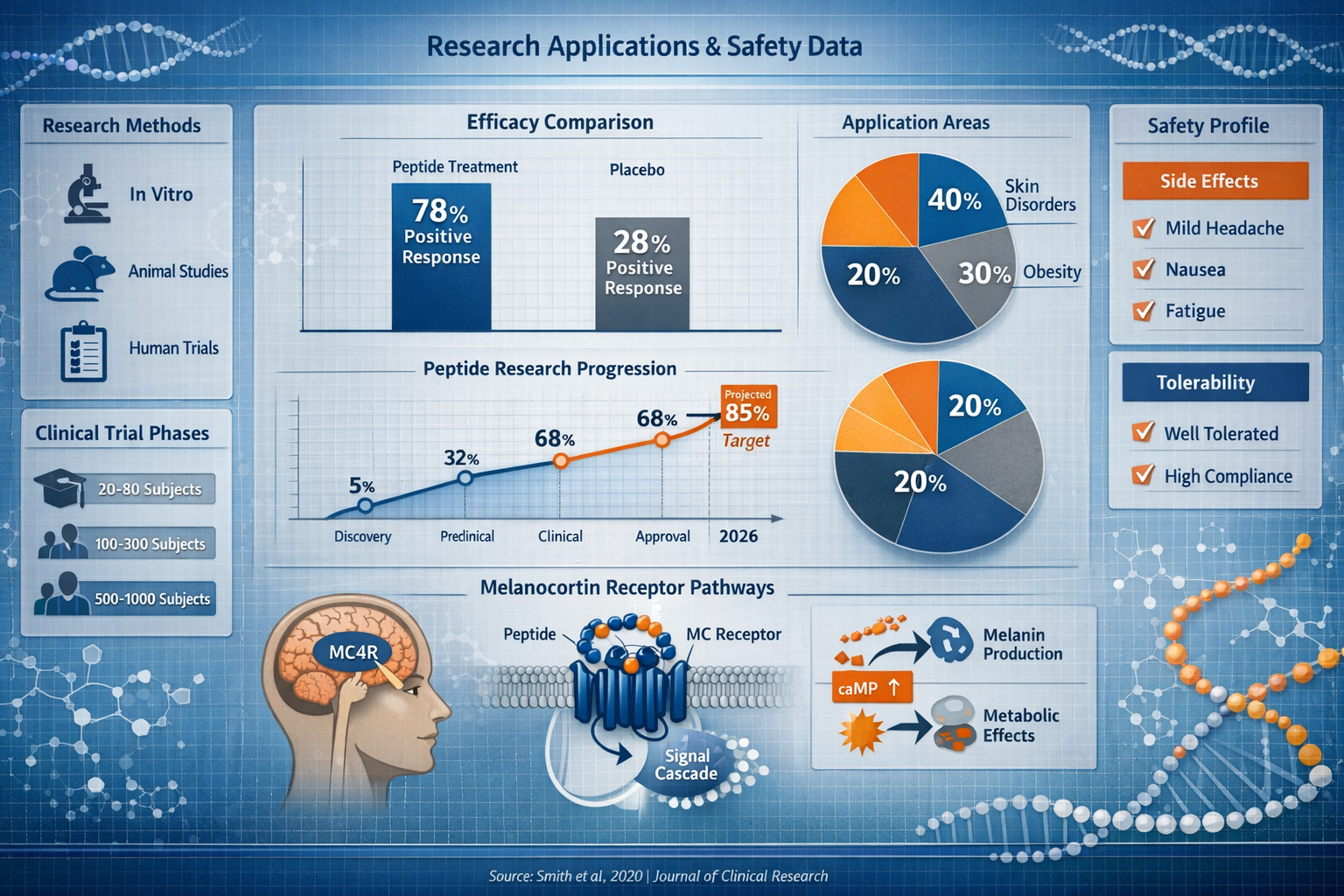
The research landscape for PT-141 peptide continues to evolve. Several promising directions are emerging as we move through 2026:
Emerging Research Areas
🔍 Precision dosing protocols – Developing individualized dosing strategies based on genetic and physiological markers
🔍 Novel delivery methods – Investigating alternative administration routes beyond subcutaneous injection
🔍 Receptor subtype studies – Exploring the specific contributions of MC3R versus MC4R activation
🔍 Long-term effect studies – Examining extended dosing protocols and their implications
🔍 Combination therapies – Systematically evaluating synergistic effects with complementary compounds
These research directions promise to deepen our understanding of melanocortin biology and expand the potential applications of PT-141 in scientific investigation.
Practical Considerations for Researchers
Beyond the scientific findings, practical aspects of working with PT-141 peptide deserve attention. Researchers should consider:
Storage and Handling Best Practices
Lyophilized (powder) form:
- Store at -20°C or below
- Protect from light and moisture
- Use desiccant packets in storage containers
- Shelf life typically 2-3 years when properly stored
Reconstituted form:
- Store at 2-8°C (refrigerated)
- Use within 30 days for optimal stability
- Avoid freeze-thaw cycles
- Use bacteriostatic water for extended stability
Documentation Requirements
Maintaining comprehensive research documentation is essential for reproducibility and scientific rigor. I recommend creating detailed logs that include:
- Batch numbers and supplier information
- Reconstitution dates and methods
- Storage conditions and temperature logs
- Administration protocols and timing
- Observational data and measurements
This level of documentation ensures that research findings can be properly interpreted and replicated by other investigators.
Common Research Questions About PT-141 Peptide
How does PT-141 differ from other melanocortin peptides?
PT-141 is specifically a melanocortin receptor agonist with preferential activity at MC3R and MC4R receptors. Unlike broader melanocortin peptides like Melanotan II (its parent compound), PT-141 has been more extensively studied in clinical settings and has a more established safety profile. Its central nervous system mechanism distinguishes it from peripherally-acting compounds.
What makes the melanocortin system important for research?
The melanocortin system plays crucial roles in multiple physiological processes including energy homeostasis, inflammation, cardiovascular function, and various behavioral responses. Understanding how compounds like PT-141 peptide interact with this system provides insights into fundamental biological mechanisms and potential therapeutic targets.
How has research evolved since PT-141’s initial development?
Since its development in the late 1990s, PT-141 research has progressed from basic pharmacological characterization to sophisticated clinical trials and mechanistic studies. Early research focused on basic safety and efficacy, while contemporary studies employ advanced neuroimaging, genetic analysis, and systems biology approaches to understand its effects at multiple levels.
Integrating PT-141 into Comprehensive Research Programs
For researchers developing comprehensive peptide research programs, PT-141 peptide can serve as a valuable component within a broader investigational framework. Its unique mechanism complements other research compounds that target different physiological systems.
When designing multi-peptide research protocols, consider how PT-141’s melanocortin pathway activation might interact with or complement other compounds. For researchers interested in exploring diverse peptide applications, examining resources on best peptide kits for beginner researchers can provide valuable starting points.
Regulatory and Ethical Considerations
It’s crucial to emphasize that PT-141 peptide is available for research purposes only. Researchers must:
- Comply with all applicable regulations governing peptide research
- Maintain appropriate institutional review board (IRB) approvals for human subject research
- Follow Good Laboratory Practice (GLP) guidelines
- Clearly label all materials as “For Research Use Only”
- Maintain proper documentation and chain of custody
These ethical and regulatory considerations protect both researchers and research subjects while ensuring the integrity of scientific investigation.
Conclusion: The Future of PT-141 Peptide Research
The ten promising research findings outlined in this article demonstrate that PT-141 peptide represents far more than a single-application compound. Its unique mechanism, extensive clinical data, and diverse research applications position it as a valuable tool for understanding melanocortin biology and central nervous system function.
As we continue through 2026, the body of knowledge surrounding this peptide will undoubtedly expand. New technologies like advanced neuroimaging, genetic profiling, and systems biology approaches will provide even deeper insights into how PT-141 interacts with complex biological systems.
Your Next Steps
If you’re considering incorporating PT-141 into your research program, I recommend:
- Review the primary literature – Familiarize yourself with published clinical trials and mechanistic studies
- Establish proper protocols – Develop comprehensive standard operating procedures for handling, storage, and administration
- Source quality materials – Partner with reputable suppliers who provide third-party testing and certificates of analysis