

By age 30, human growth hormone secretion declines by roughly 14% per decade — a biological shift that researchers increasingly link to reduced muscle mass, slower recovery, disrupted sleep, and accelerating metabolic dysfunction. This steady decline has made sermorelin for anti-aging and hormone optimization one of the most studied peptide compounds in longevity and endocrine research today.
Key Takeaways
- Sermorelin is a synthetic analog of growth hormone-releasing hormone (GHRH) that stimulates the pituitary gland to produce growth hormone naturally.
- Research suggests it may support body composition, sleep quality, and metabolic function as part of hormone optimization protocols.
- Unlike direct GH administration, sermorelin works through the body's own feedback mechanisms, which researchers consider a key safety advantage.
- It is frequently studied in combination with other peptides such as ipamorelin and CJC-1295 to amplify GH pulse frequency.
- Sermorelin is for research purposes only and is not approved for general anti-aging use in humans.
What Is Sermorelin and How Does It Work
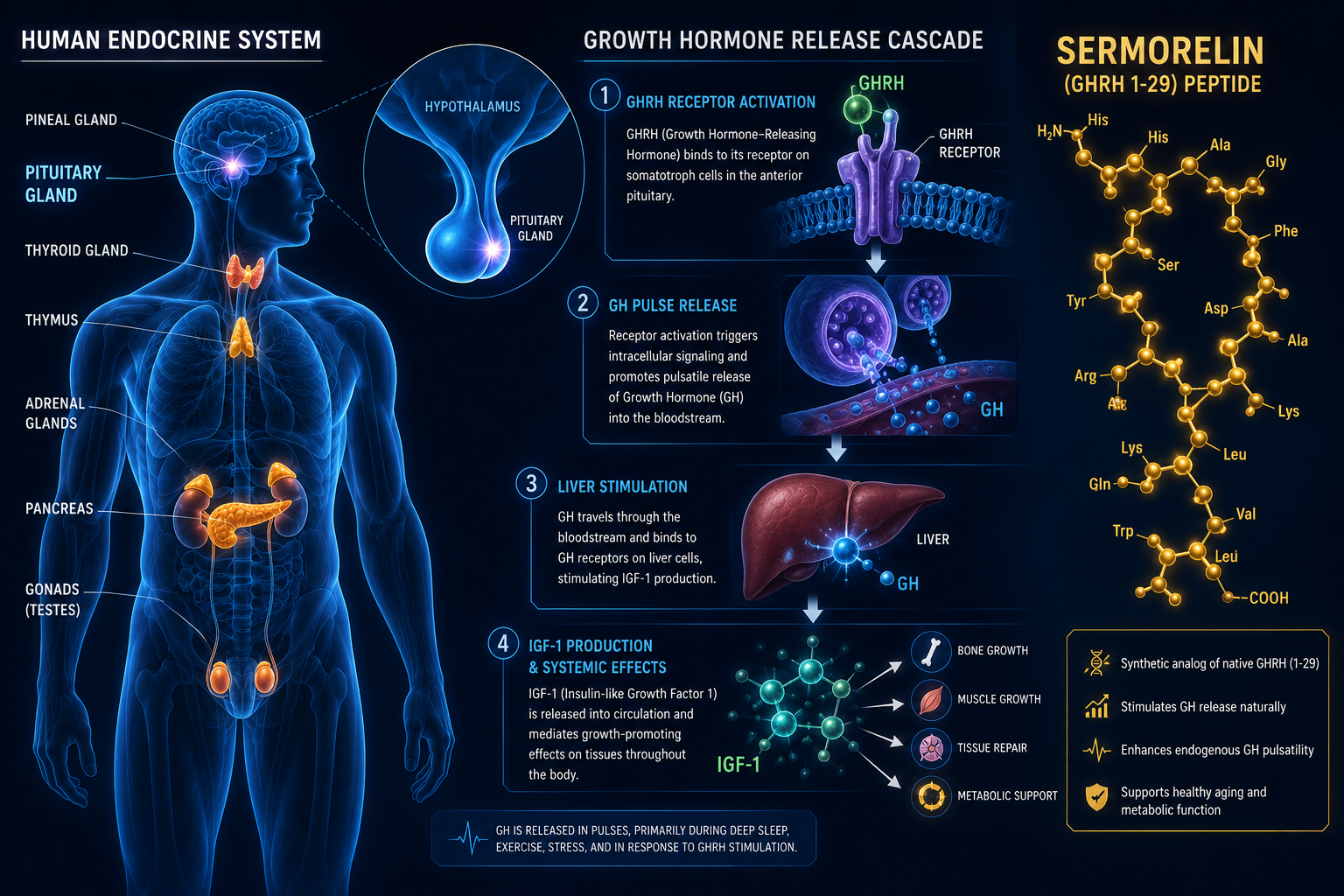
Sermorelin is a 29-amino-acid peptide that mirrors the first 29 residues of endogenous GHRH. When introduced into a biological system, it binds to GHRH receptors on the anterior pituitary, prompting a natural pulse of growth hormone (GH) release. This mechanism is fundamentally different from synthetic GH administration.
To understand the broader somatotropic axis, the what is somatotropin overview provides useful foundational context. Because sermorelin preserves the body's natural feedback loop, excessive GH accumulation is self-limiting — a property that makes it a preferred subject in aging support peptide research.
Key physiological actions under study:
| Mechanism | Observed Research Focus |
|---|---|
| Pituitary GHRH receptor binding | Stimulates endogenous GH pulse |
| IGF-1 upregulation | Downstream anabolic signaling |
| Sleep architecture support | Slow-wave sleep enhancement |
| Metabolic modulation | Fat oxidation and lean mass retention |
Sermorelin for Anti-Aging and Hormone Optimization: Research Themes
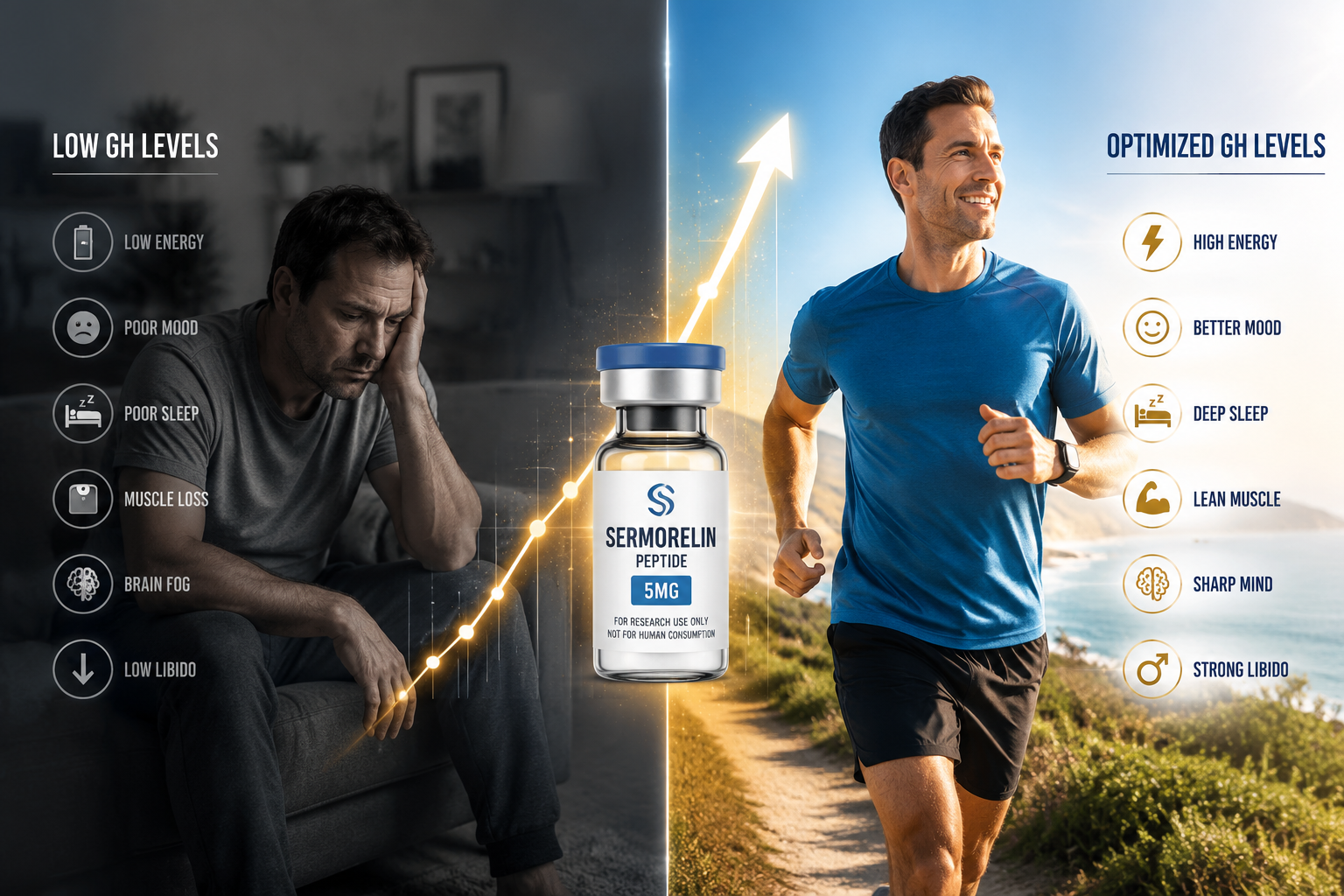
The most compelling research on sermorelin for anti-aging and hormone optimization centers on three areas: body composition, cognitive function, and metabolic health.
Body composition: Preclinical and early clinical models suggest sermorelin may support lean mass preservation and reduce adipose accumulation, particularly visceral fat — a key biomarker in metabolic aging.
Sleep and recovery: GH is predominantly secreted during slow-wave sleep. Sermorelin's ability to amplify these nocturnal pulses has made it a subject of interest in recovery and cellular repair research.
Metabolic function: Researchers exploring metabolic modulation research frequently include sermorelin alongside other compounds due to its upstream influence on the GH-IGF-1 axis.
"Restoring youthful GH pulsatility — rather than flooding the system with exogenous hormone — represents a more physiologically coherent approach to endocrine aging research."
Sermorelin Combinations in Research Protocols
Sermorelin is rarely studied in isolation. Researchers frequently pair it with ipamorelin (a selective GH secretagogue) and CJC-1295 (a long-acting GHRH analog) to amplify pulse amplitude and frequency. For detailed dosing frameworks used in research settings, the sermorelin, ipamorelin, and CJC-1295 dosage guide is a practical reference.
Those evaluating compound selection may also find value in comparing tesa vs. sermorelin to understand structural and functional differences between GHRH analogs. For stack-specific data, the ipamorelin and sermorelin stack research overview outlines current findings in detail.
Conclusion
Sermorelin for anti-aging and hormone optimization remains one of the most scientifically grounded peptide subjects in longevity research as of 2026. Its mechanism — stimulating natural GH release rather than bypassing endogenous regulation — positions it as a compelling research tool for studying age-related hormonal decline.
Actionable next steps for researchers:
- Review the sermorelin, ipamorelin, and CJC-1295 research blend for combination protocol data.
- Explore the broader longevity peptide research catalog to contextualize sermorelin within a wider anti-aging framework.
- Consult qualified professionals before designing any peptide research protocol.
All compounds referenced are intended for laboratory research purposes only.
Tags: sermorelin, anti-aging peptides, hormone optimization, growth hormone secretagogue, GHRH analog, sermorelin ipamorelin stack, peptide research, CJC-1295, IGF-1, longevity research, GH pulsatility, endocrine aging