

Finasteride and Enclomiphene Co-Administration: Evaluating DHT, LH Pulsatility, and Spermatogenesis in Rodent Models
Blocking 5-alpha reductase while simultaneously stimulating gonadotropin release creates a biochemical tension that preclinical researchers have not yet formally mapped. As of 2026, no published rodent study has directly examined finasteride and enclomiphene co-administration with concurrent measurement of DHT, LH pulsatility, and spermatogenesis, yet the mechanistic logic for doing so is compelling. Understanding how 5-alpha reductase inhibitors modify endocrine feedback loops when evaluating enclomiphene citrate gonadal restoration protocols is the central challenge this research gap presents.
Key Takeaways
- No published rodent model to date has simultaneously tested finasteride and enclomiphene co-administration while tracking DHT, LH pulse dynamics, and spermatogenesis.
- Finasteride suppresses conversion of testosterone to DHT, which preclinical data links to impaired spermatogenic recovery even when serum testosterone is preserved or elevated.
- Enclomiphene's effect on LH is age- and species-dependent: it elevates LH in adult humans but suppresses it in immature rodents at certain doses.
- Co-administration could produce elevated systemic testosterone alongside reduced intratesticular DHT, a combination with unpredictable net effects on sperm production.
- Rigorous future studies require adult rodent models, frequent LH pulse sampling, intratesticular hormone measurements, and histologic evaluation of seminiferous tubules.
How 5-Alpha Reductase Inhibition Disrupts Endocrine Feedback Loops
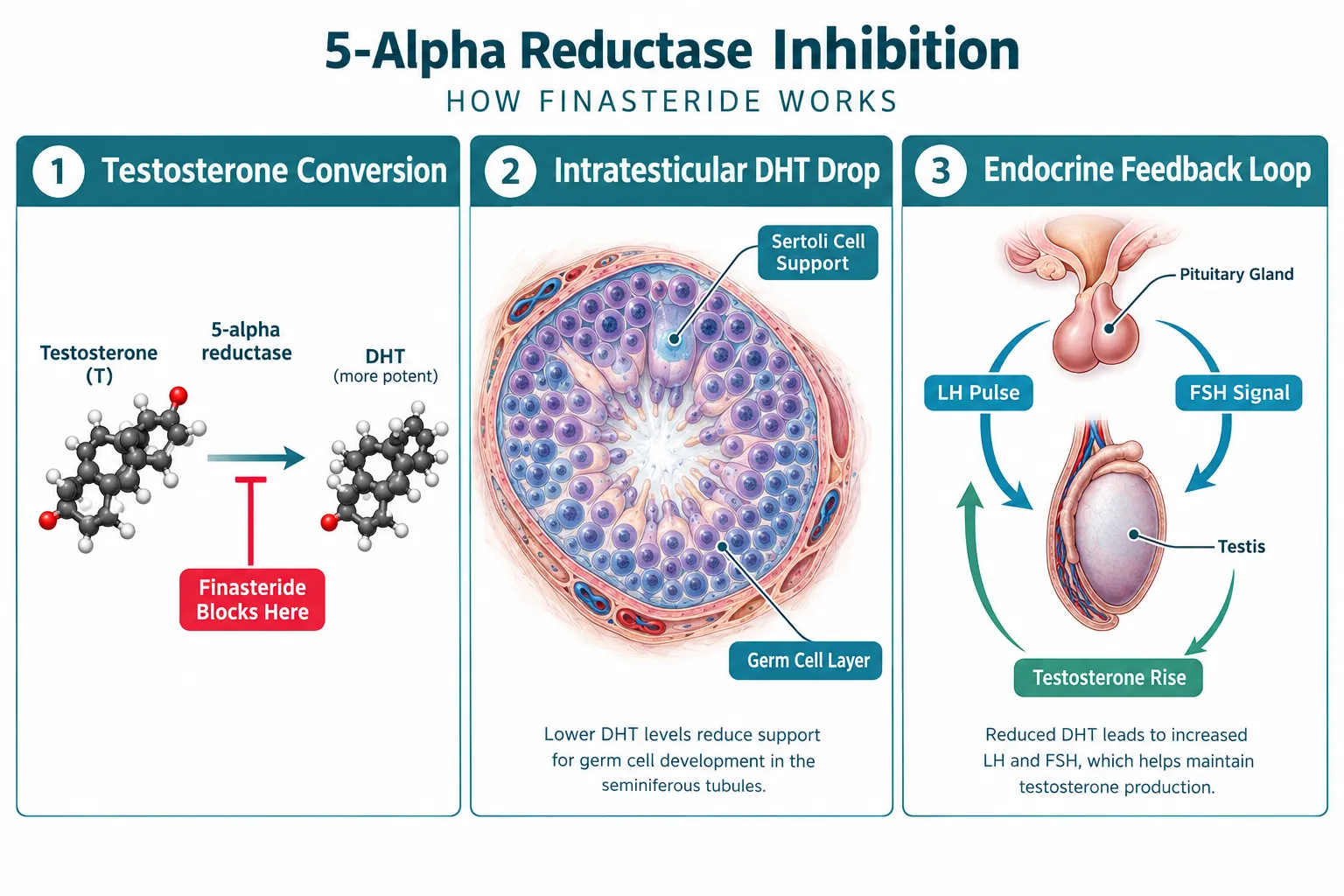
Finasteride works by blocking the enzyme 5-alpha reductase, which converts testosterone into dihydrotestosterone (DHT). In prostate and testicular tissue, DHT is a more potent androgen than testosterone. When finasteride reduces intratesticular DHT, it does not simply lower one hormone in isolation, it modifies the entire androgenic signaling environment that supports spermatogenesis.
In rat studies where 5-alpha reductase is inhibited, recovery of spermatogenesis after testosterone suppression is notably impaired. This implicates intratesticular DHT as a critical driver of normal germ cell development and tubular function, not merely a byproduct of testosterone metabolism. Rodent data also show that finasteride reduces the diameter of seminiferous and epididymal tubules in vitro, though in vivo effects are less consistent, an important distinction for study design.
At the clinical level, the dose matters. Studies using 1 mg finasteride daily found no significant changes in sperm concentration or motility in healthy adult men. Higher doses, 5 mg finasteride or combined with dutasteride, produced measurable reductions in sperm concentration and motility, with partial recovery at 12 months and full parameter restoration within six months of stopping treatment. These findings reinforce that DHT suppression along the HPG (hypothalamic-pituitary-gonadal) axis is dose-dependent and reversible, but still consequential for fertility planning.
Key point: Finasteride does not suppress LH or FSH directly. It acts downstream of gonadotropin signaling. This is why combining it with an agent that directly modulates gonadotropin output, like enclomiphene, creates a pharmacologically distinct scenario.
Enclomiphene, LH Pulsatility, and Spermatogenesis: What Rodent and Human Data Show
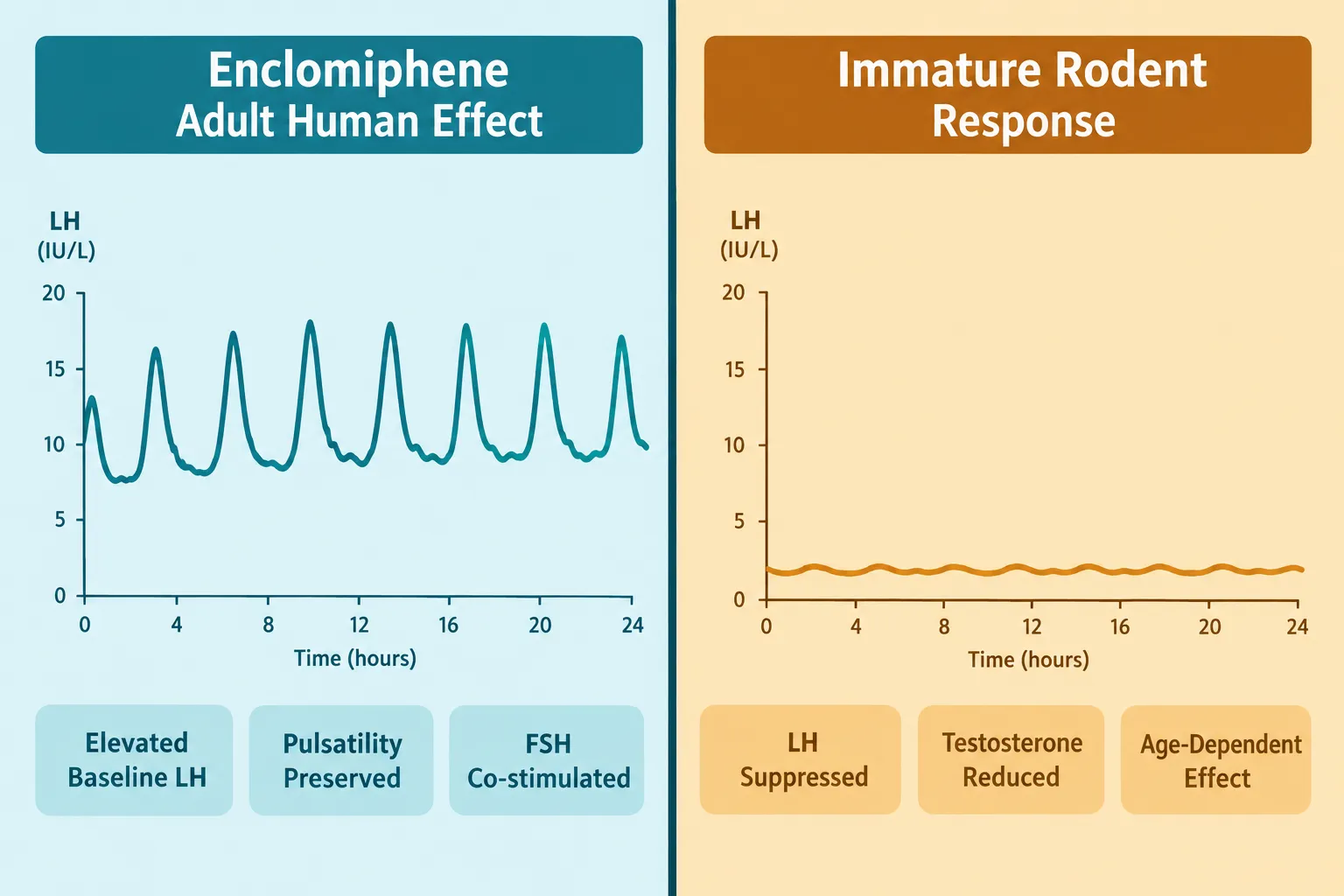
Enclomiphene is the trans-isomer of clomiphene citrate. Its primary mechanism involves antagonizing estrogen receptors at the pituitary, thereby reducing negative feedback and allowing LH and FSH secretion to rise. In adult men with secondary hypogonadism, clinical data confirm that enclomiphene increases LH, FSH, and total testosterone while preserving spermatogenesis, an advantage over exogenous testosterone replacement, which consistently suppresses sperm production.
A 2026 position statement from an andrology and urology society describes enclomiphene as capable of increasing total testosterone comparably to testosterone gels while maintaining or improving sperm counts. The statement calls for further mechanistic studies, specifically including detailed LH pulsatility assessment. Clinical pharmacokinetic data also show that serum enclomiphene peaks do not align precisely with LH pulses; instead, LH remains pulsatile but elevated overall. This suggests enclomiphene raises the tonic LH baseline without abolishing physiological pulse architecture.
However, immature rodent data tell a different story. In 21-day-old male rats given subcutaneous enclomiphene at 0.25-0.5 mg per animal daily for 24 days, the compound inhibited spermatogenesis and decreased serum LH and testosterone, in both intact and castrated animals. This means enclomiphene functioned as a functional anti-gonadotropic agent in immature rodents rather than a fertility-preserving serm. This species-, age-, and dose-dependent inversion is critical for any preclinical study design.
"Enclomiphene's effect on gonadotropins is not universal, adult and immature rodent models can produce opposite hormonal outcomes at comparable doses."
Researchers exploring serm-based protocols alongside other research compounds should treat this age-dependency as a primary variable in any study design. Those working with serm, ipamorelin, and CJC-1295 dosage protocols may also find that gonadotropin modulation interacts with growth hormone axis signaling in ways that complicate spermatogenic endpoints.
Evaluating Finasteride and Enclomiphene Co-Administration in Rodent Models: Research Gaps and Design Priorities
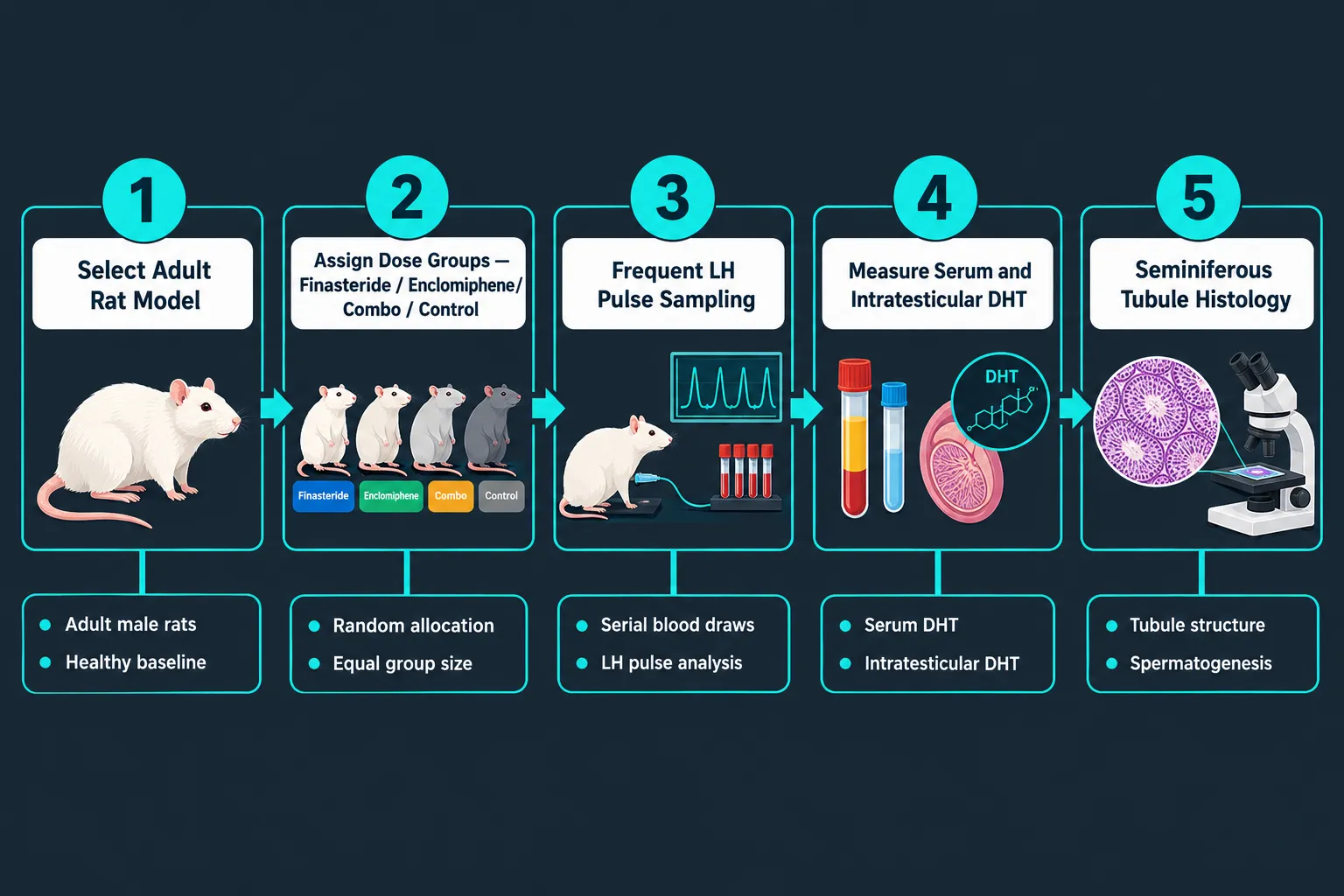
No existing study has placed finasteride and enclomiphene co-administration within a single controlled rodent experiment measuring DHT, LH pulsatility, and spermatogenesis together. Evaluating finasteride and enclomiphene co-administration in rodent models requires a framework that addresses each gap systematically.
Projected mechanistic interaction:
| Variable | Finasteride Effect | Enclomiphene Effect (Adult) | Combined, Predicted |
|---|---|---|---|
| Serum testosterone | Slight increase (reduced DHT feedback) | Significant increase | High |
| Intratesticular DHT | Decreased | Indirect increase via LH | Uncertain |
| LH pulsatility | No direct change | Elevated, pulsatility preserved | Elevated baseline |
| Spermatogenesis | May impair recovery | Preserved or improved | Unknown |
The table above highlights that co-administration could produce elevated systemic testosterone alongside reduced intratesticular DHT, two outcomes working in opposite directions on sperm production. Net spermatogenic outcomes cannot be confidently predicted without direct experimental data.
Recommended study design elements:
- Use adult (not immature) rat or mouse models to avoid the anti-gonadotropic paradox seen in juvenile rodents
- Assign four groups: finasteride only, enclomiphene only, combination, and vehicle control
- Collect blood samples at high frequency (every 10-15 minutes for 6 hours) to characterize LH pulse amplitude and frequency
- Measure both serum and intratesticular testosterone and DHT separately
- Perform histologic analysis of seminiferous tubules to distinguish germ cell stage arrest from global spermatogenic suppression
Researchers interested in how peptide compounds interact with endocrine recovery may also find it useful to review SS-31 mitochondrial dynamics research, given that mitochondrial function in Leydig and Sertoli cells can influence steroidogenesis independently of gonadotropin signaling. Similarly, cellular energy demands in spermatogenic tissue have been explored in SS-31 kidney health research, which offers methodological parallels for assessing oxidative stress in endocrine tissues.
For those comparing growth hormone secretagogue protocols and their potential crossover with reproductive endocrinology research, resources on CJC-1295 and ipamorelin cycle protocols provide relevant background on pulsatile hormone release methodology. Understanding growth hormone pulse architecture can inform LH pulse measurement design, particularly around sampling frequency and assay sensitivity.
Finally, researchers sourcing research-grade compounds for preclinical use should consult peptide supplier comparison resources to ensure compound purity and lot-to-lot consistency, both of which are critical when measuring subtle hormonal endpoints like LH pulse amplitude.
Conclusion
The intersection of 5-alpha reductase inhibition and selective estrogen receptor modulation via enclomiphene represents one of the more underexplored areas in male reproductive endocrinology research. Finasteride and enclomiphene co-administration, when evaluated for effects on DHT, LH pulsatility, and spermatogenesis in rodent models, presents a mechanistic puzzle with real translational relevance for men using finasteride who also need fertility-preserving androgen support.
Actionable next steps for researchers:
- Design studies exclusively with adult rodent models to avoid confounding age-dependent enclomiphene anti-gonadotropic effects.
- Incorporate high-frequency LH sampling protocols to capture both pulse amplitude and frequency, not just mean LH levels.
- Measure intratesticular DHT separately from serum DHT, these can diverge significantly under dual drug exposure.
- Pre-register study designs in a public registry to reduce publication bias around negative or null spermatogenic findings.
- Plan for a recovery arm (post-drug washout) to assess reversibility, since both finasteride and enclomiphene effects on spermatogenesis appear dose- and duration-dependent.
Until controlled rodent data exist, any clinical extrapolation of combined finasteride and enclomiphene use in fertility contexts remains speculative. The field needs well-powered, mechanistically rigorous preclinical studies before co-administration protocols can be rationally evaluated or recommended.