

Tizanidine vs. BPC-157 in Spasticity Models: Differentiating Muscle Tone Inhibition From Tissue Repair Signaling
Fewer than 40% of people living with spasticity from neurological conditions achieve adequate symptom control on a single agent, a persistent gap that has pushed researchers to explore peptide compounds alongside established antispasmodics. Understanding Tizanidine vs. BPC-157 in spasticity models: differentiating muscle tone inhibition from tissue repair signaling is not simply an academic exercise; it reflects two fundamentally different biological strategies that operate at separate points in the neuromuscular system.
Key Takeaways
- Tizanidine is an FDA-approved alpha-2 adrenergic agonist that reduces spasticity by suppressing excitatory motor neuron signaling in the spinal cord.
- BPC-157 is a synthetic pentadecapeptide studied in preclinical models primarily for connective tissue repair, angiogenesis, and growth factor modulation, not spinal tone regulation.
- No published head-to-head spasticity trial comparing tizanidine and BPC-157 exists as of late 2026.
- The two compounds address different biological targets: central neural inhibition versus peripheral tissue remodeling.
- Conflating antispasmodic action with tissue-repair peptide effects risks misapplication in both clinical and research contexts.
How Tizanidine Inhibits Muscle Tone
Tizanidine's pharmacological story begins in the dorsal horn of the spinal cord. As a centrally acting alpha-2 adrenergic agonist, it binds presynaptic receptors on spinal interneurons, suppressing the release of excitatory neurotransmitters, most notably glutamate and aspartate. The downstream result is a measurable reduction in polysynaptic reflex activity, which translates clinically to lower muscle tone and fewer involuntary spasms.
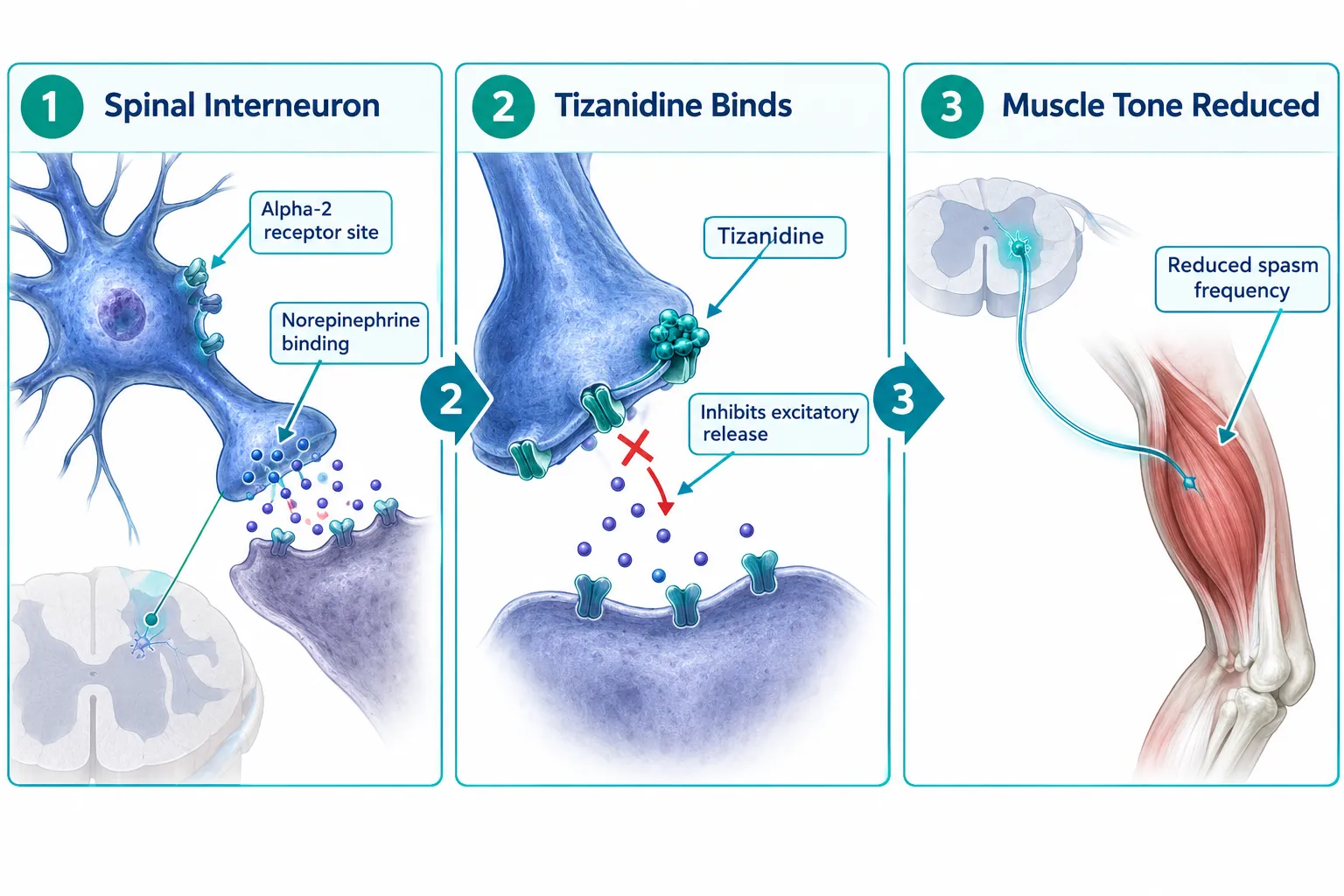
In controlled spasticity models, peak plasma concentrations occur within one to two hours of oral dosing, with antispasmodic effects detectable at doses as low as 2 mg. Clinical benchmarks show statistically significant reductions in Ashworth Scale scores at daily doses between 12 mg and 36 mg. Importantly, tizanidine's effect is duration-limited, it does not modify the underlying neurological lesion. When dosing stops, baseline tone typically returns within hours. This time-limited, reversible profile is characteristic of central muscle tone inhibition rather than any structural repair of muscle or connective tissue.
Key pharmacokinetic facts about tizanidine:
| Parameter | Value |
|---|---|
| Time to peak plasma level | 1-2 hours |
| Half-life | Approximately 2.5 hours |
| Primary mechanism | Alpha-2 adrenergic agonism |
| Metabolism | Hepatic (CYP1A2) |
| Approved indication | Spasticity (MS, spinal cord injury) |
Liver enzyme elevation is a clinically relevant concern with higher doses, making hepatic monitoring a standard practice in long-term users.
BPC-157 and Tissue Repair Signaling: A Different Biological Language
BPC-157, Body Protection Compound 157, is a synthetic 15-amino-acid peptide derived from a protein found in gastric juice. Its research profile sits firmly in the domain of tissue repair signaling rather than neurological tone modulation. Preclinical studies using rodent models of tendon laceration, ligament damage, and muscle contusion have documented upregulation of vascular endothelial growth factor (VEGF), enhanced collagen synthesis, accelerated fibroblast migration, and promotion of angiogenesis at injury sites.
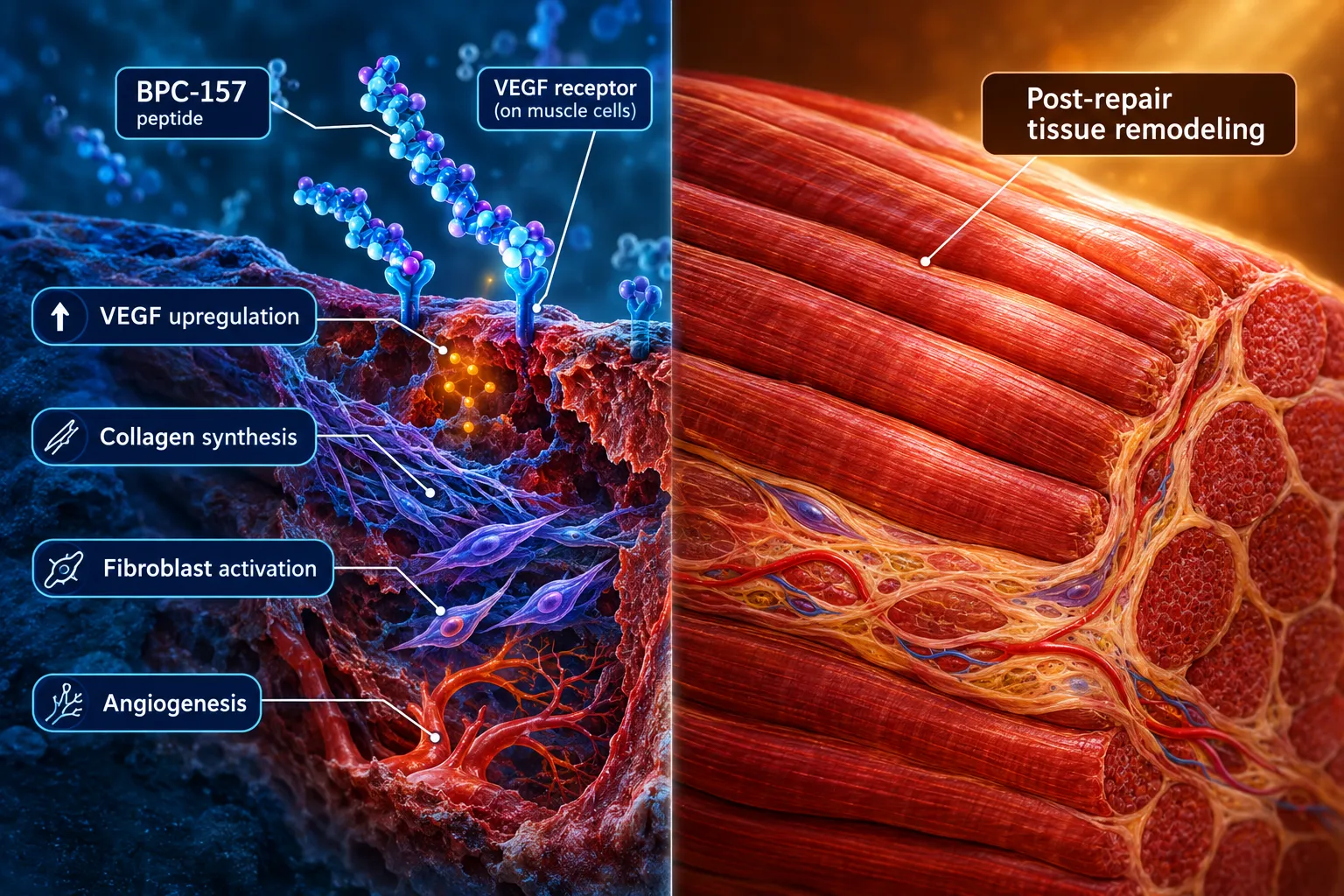
These findings are mechanistically compelling. BPC-157 appears to interact with the nitric oxide system, modulate growth hormone receptor expression in locally damaged tissue, and influence the FAK-paxillin pathway involved in cell migration. For musculoskeletal injury assays, these effects translate to faster gross healing scores and improved tensile strength in repaired tendons.
However, none of these pathways directly reduce spinal cord-mediated motor neuron hyperexcitability. BPC-157 does not bind alpha-2 adrenergic receptors. It does not suppress glutamate release at spinal interneurons. Its peptide structure does not confer meaningful CNS penetration under standard dosing assumptions used in preclinical work.
Researchers studying peptide bioactivity can find a detailed breakdown of BPC-157's documented mechanisms in this BPC-157 core peptides documentation and first research guide. Those comparing peptide purity and supplier reliability for research applications should also consult peptide supplier comparisons interpreting PeptideTech and PeptidesC.
"BPC-157 speaks the language of wound repair. Tizanidine speaks the language of neural inhibition. Conflating the two is like comparing a structural engineer with an electrical engineer, both work on the same building, but through entirely separate systems."
Differentiating the Two in Spasticity Models: What the Evidence Actually Shows
When evaluating Tizanidine vs. BPC-157 in spasticity models: differentiating muscle tone inhibition from tissue repair signaling, the most striking finding in the current literature is the near-complete absence of direct comparison data. As of late 2026, no peer-reviewed human trial has tested BPC-157 against a spasticity endpoint. Animal studies using BPC-157 have focused on muscle, tendon, and ligament injury, not upper motor neuron lesion models designed to replicate MS- or SCI-associated spasticity.
This creates an evidence asymmetry:
- Tizanidine: Multiple randomized controlled trials, established dosing guidelines, inclusion in international spasticity management guidelines.
- BPC-157: Robust preclinical musculoskeletal data, no regulatory approval for any indication in any major jurisdiction, no validated spasticity endpoint data in humans.
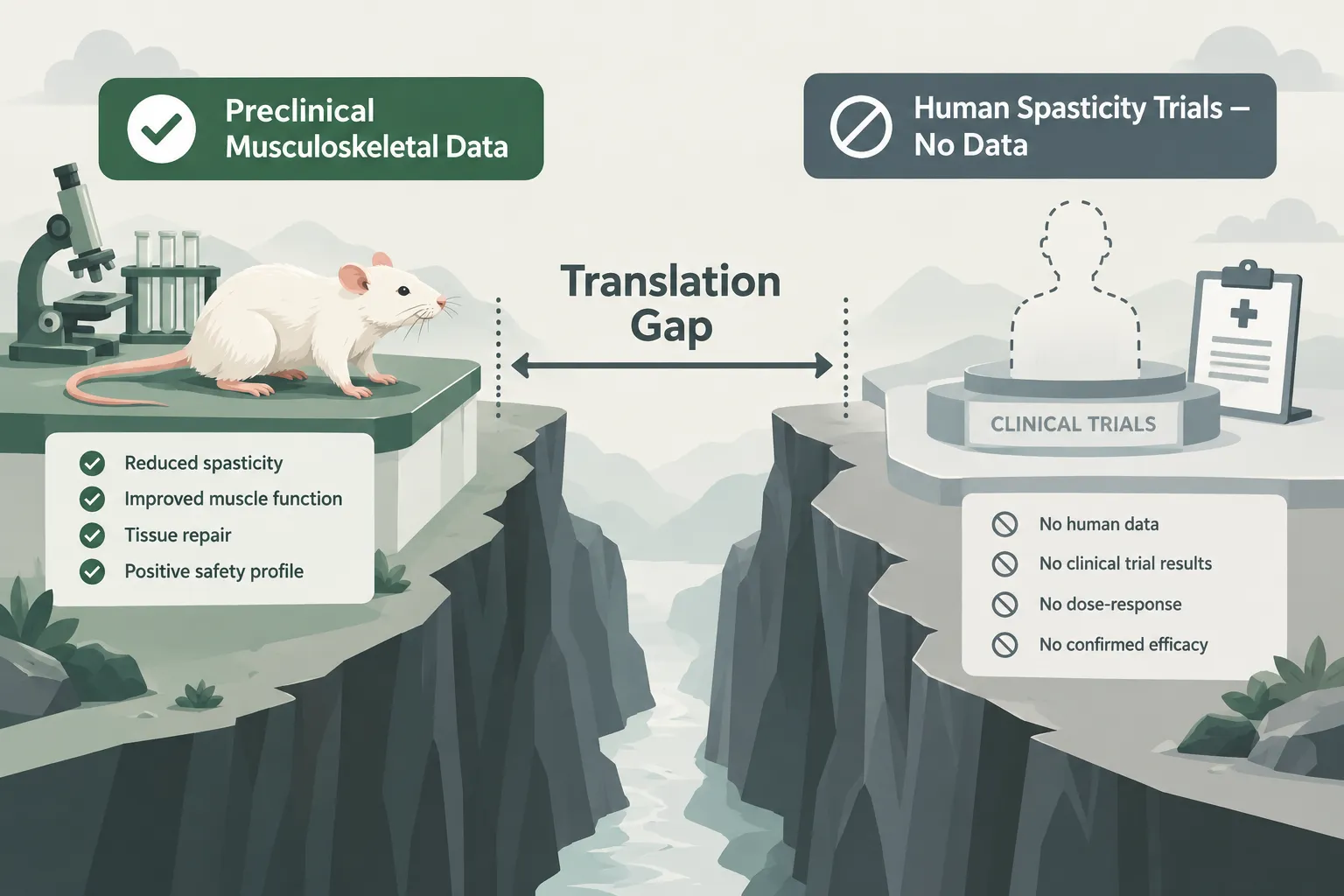
This does not mean BPC-157 has no role in musculoskeletal research. Investigators exploring peptide-assisted recovery after muscle damage, particularly secondary muscle changes that can accompany chronic spasticity, may find the compound's tissue-repair profile worth studying. Secondary muscle fibrosis and tendon dysfunction are real consequences of long-term spastic states, and repair signaling could theoretically address them. But that is a different research question from reducing neural tone.
Researchers interested in how peptide signaling intersects with systemic repair pathways can also review work on mitochondrial-targeted peptides such as SS-31, detailed in SS-31 mitochondrial research themes, or explore dosing considerations for peptides like SS-31 ideal dosage and timing. For those studying adjacent neuroendocrine pathways, MOTS-C and elamipretide offers insight into peptide-mediated cellular energy signaling. Labs sourcing compounds for controlled studies should review lab tested peptides to ensure research-grade purity standards are met.
Summary of mechanistic differences:
- Target tissue: Tizanidine, spinal cord interneurons. BPC-157, peripheral connective tissue and vasculature.
- Biological outcome: Tizanidine, reduced excitatory neurotransmission. BPC-157, enhanced angiogenesis and collagen remodeling.
- Reversibility: Tizanidine, fully reversible on discontinuation. BPC-157, structural tissue changes may be durable.
- Human evidence in spasticity: Tizanidine, strong. BPC-157, none currently available.
Expert commentary entering 2026 has flagged the regulatory uncertainty surrounding BPC-157, with several advisory bodies noting the need for formal phase I/II trial data before clinical integration can be responsibly recommended.
Conclusion
Tizanidine vs. BPC-157 in spasticity models: differentiating muscle tone inhibition from tissue repair signaling is ultimately a story about mechanistic clarity. Tizanidine has a well-defined, centrally mediated antispasmodic action backed by decades of controlled clinical data. BPC-157 operates through growth factor modulation and connective tissue remodeling pathways that are genuinely promising in injury-repair contexts but remain unvalidated for spasticity as a primary endpoint.
Actionable next steps for researchers and clinicians:
- Apply tizanidine within its validated indication, central spasticity management, using established dosing protocols and hepatic monitoring.
- Treat BPC-157 as a preclinical tissue-repair compound, not an antispasmodic substitute, until human spasticity trial data emerge.
- When designing research protocols comparing neuromodulatory agents with peptide-based compounds, ensure model selection reflects the distinct biological targets of each agent.
- Monitor emerging literature for phase I human data on BPC-157, particularly in populations with secondary musculoskeletal complications of long-term spasticity.
- Confirm peptide research quality through verified, lab-tested sources before conducting any controlled study.
The two compounds are not competitors within the same mechanism, they are representatives of two distinct scientific traditions. Recognizing that distinction is the first step toward deploying each responsibly.