Best Research Applications for PT-141: What Makes It Different From Other Melanocortin Peptides?
Only one melanocortin peptide has received FDA approval specifically for a centrally mediated indication, and it is not alpha-MSH, Melanotan II, or any broad-spectrum analog. PT-141 (bremelanotide) earned that distinction by targeting a narrower receptor profile, which is precisely what makes exploring the best research applications for PT-141 and what makes it different from other melanocortin peptides such a productive focus for experimental design in 2026.
Key Takeaways
- PT-141 selectively activates MC3R and MC4R receptors rather than the full melanocortin receptor family, separating its research profile from broader analogs like Melanotan II.
- Its central nervous system mechanism distinguishes it from peripherally acting melanocortin peptides and from non-peptide approaches.
- The best research applications for PT-141 center on CNS-mediated pathways, appetite regulation, and receptor selectivity studies.
- Purity and structural integrity are critical variables when designing PT-141 experiments; sourcing from verified suppliers affects data reliability.
- Understanding PT-141's receptor biology helps researchers avoid conflating its findings with those from structurally similar but functionally distinct peptides.
The Melanocortin System: A Quick Receptor Map
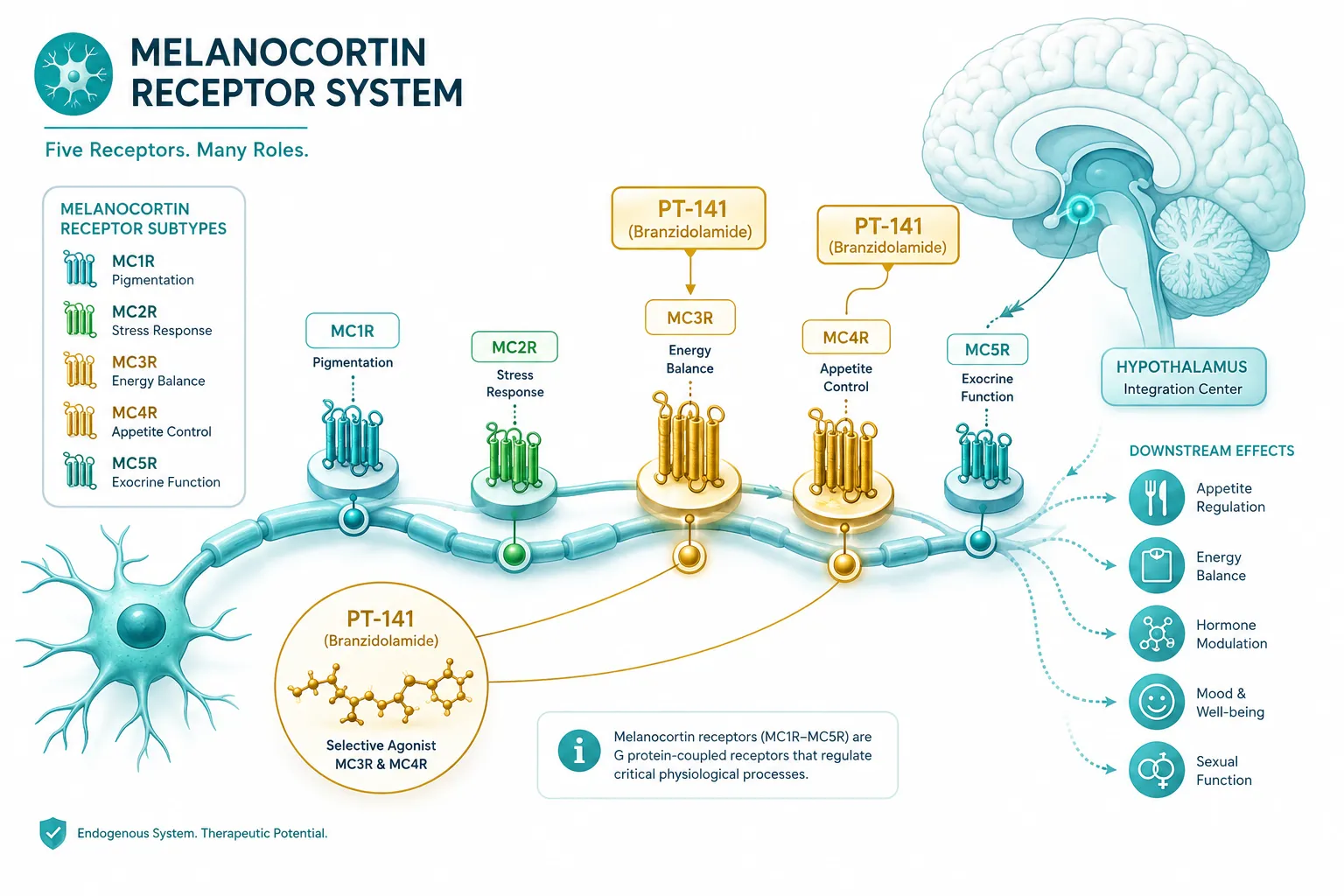
The melanocortin system comprises five G-protein-coupled receptors (MC1R through MC5R), each with distinct tissue distribution and downstream signaling roles.
| Receptor | Primary Location | Key Research Associations |
|---|---|---|
| MC1R | Melanocytes, skin | Pigmentation, UV response |
| MC2R | Adrenal cortex | ACTH signaling, cortisol |
| MC3R | Hypothalamus, limbic | Energy balance, reward |
| MC4R | Hypothalamus, CNS | Appetite, sexual function |
| MC5R | Exocrine glands | Secretion, immune modulation |
Alpha-melanocyte-stimulating hormone (alpha-MSH), the endogenous ligand for this system, binds all five receptor subtypes with varying affinity. That broad binding profile makes alpha-MSH a useful reference compound but a poor model for targeted mechanistic research.
To understand how peptide structure shapes receptor selectivity at a foundational level, the resource on polypeptide peptides and drug mechanisms provides useful pharmacological context.
Best Research Applications for PT-141: Receptor Selectivity as the Core Differentiator
PT-141 is a cyclic heptapeptide derived from Melanotan II, but with one critical structural modification: removal of the C-terminal amide and addition of a hydroxyl group. That change shifts its receptor binding preference toward MC3R and MC4R while reducing affinity for MC1R.
Why does this matter for experimental design?
- Melanotan II activates MC1R strongly, producing pigmentation effects that complicate interpretation in CNS-focused studies.
- PT-141's reduced MC1R activity means researchers studying hypothalamic or limbic pathways encounter fewer confounding peripheral signals.
- MC4R in particular is densely expressed in hypothalamic nuclei involved in energy homeostasis and reward circuitry, making PT-141 a more precise tool for those research questions.
"Receptor selectivity is not just a pharmacological footnote, it is the variable that determines whether an experimental result is attributable to a specific pathway or to systemic noise."
For researchers building models around MC4R specifically, the MC4R research tag aggregates relevant studies and product information in one place.
How PT-141 Compares to Other Melanocortin Peptides in Research Models
Melanotan II
Melanotan II is a non-selective melanocortin agonist. Its strong MC1R activity produces robust tanning responses, which is useful in dermatology-adjacent research but introduces variables when the target is central receptor function. Blood pressure effects linked to MC3R/MC4R co-activation also complicate cardiovascular safety profiling.
Alpha-MSH
Alpha-MSH is the endogenous standard. It is valuable for baseline receptor characterization but lacks the stability needed for sustained in vitro or in vivo protocols. Its short half-life requires frequent dosing adjustments that add experimental noise.
ACTH (1-24)
ACTH fragments bind MC2R preferentially. They are used in adrenal axis research but are largely irrelevant to CNS pathway studies where PT-141 excels.
PT-141's position: Its cyclic structure confers greater metabolic stability than linear peptides like alpha-MSH, and its MC3R/MC4R preference makes it the most targeted tool currently available for hypothalamic receptor research among the melanocortin class.
For a broader look at how peptide structure affects research utility across categories, the Peptides 101 for research-use only buyers guide covers foundational mechanisms clearly.
Best Research Applications for PT-141: Where Experimental Value Is Highest
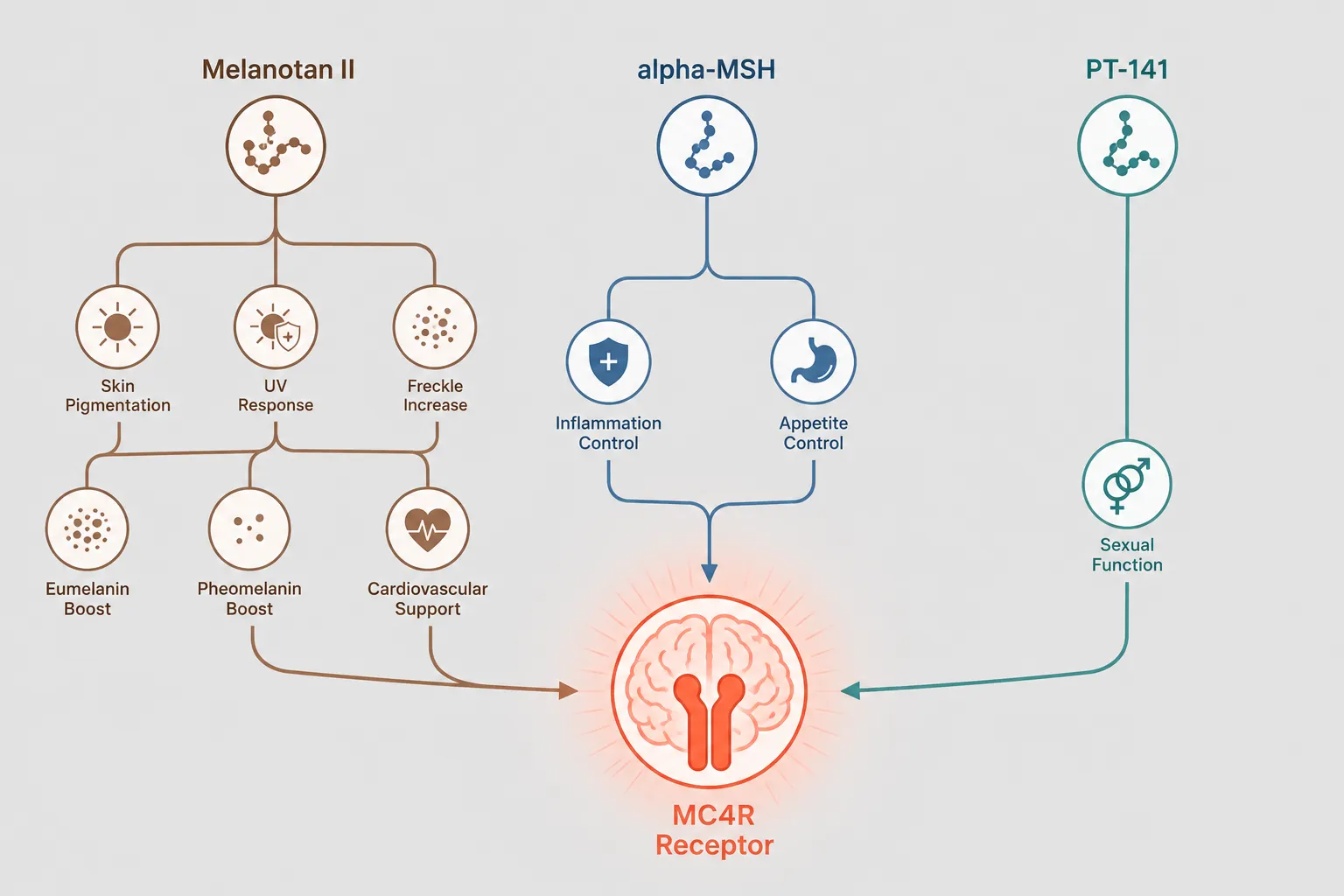
The best research applications for PT-141 cluster around three areas where its receptor profile provides a genuine advantage over other melanocortin peptides:
1. Hypothalamic Energy Regulation Studies
MC4R knockout models have established this receptor's role in obesity and feeding behavior. PT-141 serves as a pharmacological probe to activate MC4R selectively without triggering the full receptor cascade that Melanotan II would produce.
2. CNS Reward and Motivation Pathway Research
MC3R expression in limbic structures positions PT-141 as a useful compound for studying dopaminergic interactions. Researchers investigating motivation circuits benefit from a compound that reaches central receptors efficiently.
3. Receptor Binding Kinetics and Selectivity Profiling
PT-141's defined binding preference makes it a reference compound for competitive binding assays. When researchers need to establish MC3R/MC4R occupancy baselines, PT-141 provides cleaner data than non-selective analogs.
For labs also working with delivery optimization, the article on nasal spray peptides, delivery methods, and bioavailability is directly relevant, as bremelanotide's approved clinical form uses subcutaneous delivery and bioavailability modeling informs dosing protocols in research settings.
Sourcing and Purity Considerations for PT-141 Research
Structural integrity is non-negotiable for melanocortin research. A degraded or impure PT-141 sample will produce off-target receptor activation that mimics a broader binding profile, effectively turning a selective tool into a noisy one.
Key sourcing criteria:
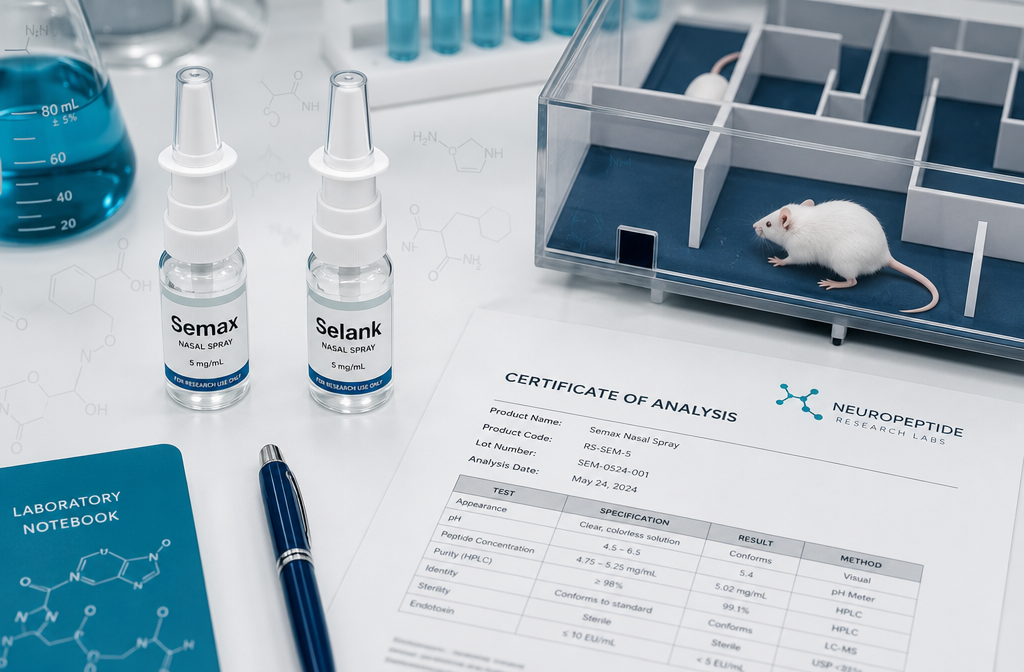
- Certificate of Analysis (CoA) confirming peptide purity above 98%
- HPLC and mass spectrometry data verifying molecular weight and sequence integrity
- Endotoxin testing for any in vivo application
- Proper lyophilization and cold-chain storage
Researchers evaluating suppliers should consult resources like the peptide supplier comparisons guide and review where to buy peptides for verified sourcing options.
For labs working across multiple peptide categories simultaneously, the top 5 research peptides for metabolic health guide provides useful cross-category context for experimental planning.
Conclusion
The best research applications for PT-141 and what makes it different from other melanocortin peptides come down to one core principle: receptor selectivity translates directly into experimental precision. Where Melanotan II and alpha-MSH cast a wide net across the melanocortin receptor family, PT-141's preference for MC3R and MC4R gives researchers a more controlled instrument for CNS-focused, hypothalamic, and receptor kinetics work.
Actionable next steps for researchers in 2026:
- Map your research question to the specific receptor subtype involved before selecting a melanocortin compound.
- Obtain CoA documentation and HPLC data before committing PT-141 to any protocol.
- Use PT-141 as a selectivity benchmark in competitive binding assays when characterizing novel melanocortin analogs.
- Review delivery method literature to ensure reconstitution and administration protocols match the receptor expression profile you are targeting.
Choosing the right melanocortin peptide is not a minor sourcing decision, it is a foundational experimental design choice that shapes every result downstream.