Call or Text 727-513-9780
  • Shopping Cart Shopping Cart
    0Shopping Cart
Pure Tested Peptides | America's most trusted Peptides for sale online
  • Peptides for sale
    • Oral Peptides for sale
      • Peptide Capsules for sale
      • BPC 157 Capsules 1000mcg
      • SLU-PP-332 Capsules | 1000 mcg
      • 5-Amino-1MQ 50mg Capsules
      • Tesofensine 500mcg
    • All Peptides for sale
    • Peptide Sprays
      • BPC 157 Nasal Spray Kit
      • BPC-157 TB500 Nasal Spray Kit
      • Semax Nasal Spray 10mg
      • Selank – Nasal Spray Kit – 10mg
      • Epithalon 50MG Nasal Spray Kit
      • Ipamorelin 10mg Nasal Spray
      • Klow Nasal Spray (BPC-157 + TB-500 + GHK-Cu + KPV) | 80mg
      • Hulk Nasal Spray Tesa / Ipa Blend 6/3 MG
      • Klow Nasal Spray
      • NAD + 500 mg Nasal Spray
      • PT-141 Nasal Spray Kit
    • GHRH Peptides
      • Ipa Peptides
      • CJC-1295 Peptides
        • CJC-1295 with DAC 5 mg
        • CJC-1295 without DAC 5 mg
        • CJC-1295 Ipa 10mg
      • Tesa Peptides
        • Tesa Peptide
        • Tesa 20 mg
    • GHK-Cu Peptides
      • All GHK-Cu Peptides
      • GHK-Cu 100mg
      • KLOW Peptide Blend – Buy KLOW blend online
    • BPC Peptides
      • All BPC Peptides
      • BPC-157
      • BPC-157 TB-500
      • BPC 157 capsules 1000mcg
    • SLU-PP-332 Peptides
      • All SLU-PP-332 Peptides
      • SLU-PP-332 5mg
    • GLP3 Peptides
    • PT-141 Peptides
      • PT-141 Peptides for sale
      • PT-141 10mg
      • PT-141 Nasal Spray
    • CAG Peptides
      • Lipo-C Peptide Blend
      • CAG 5mg
      • CAG 10mg
    • MOTS-C Peptides
      • MOTS-C Peptides for sale
      • MOTS-c peptide
      • MOTS-c 10mg *6 pack*
    • 5 Amino 1MQ Peptides
      • 5 Amino 1MQ Peptides for sale
      • 5-Amino-1MQ 50mg Capsules
      • 5-Amino-1MQ 5mg
    • Epithalon Peptides
      • Epithalon Peptides for sale
      • Epithalon 10mg
      • Epithalon 50mg
  • Shop
    • GLPs
      • 5-Amino-1MQ 50mg Capsules
      • 5-Amino-1MQ 5mg
      • L-Carnitine 500mg/ml
      • Tesofensine 500mcg
      • SLU-PP-332 5mg
      • MOTS-c 10mg *6 pack*
    • Epithalon & BPC Peptides
      • Epithalon 10mg
      • Epithalon 50mg
      • BPC-157
      • BPC 157 capsules 1000mcg
      • BPC-157 TB-500
      • BPC-157 TB500 Nasal Spray Kit
      • BPC 157 Nasal Spray Kit
    • BPC TB-500 & NAD+ Peptides
      • NAD+ 500 mg
      • KLOW Peptide Blend – Buy KLOW blend online
      • GLOW Peptide Blend
      • TB 500 5mg
      • BPC 157 capsules 1000mcg – Supplement
      • BPC 157 Nasal Spray Kit
      • BPC-157
      • BPC-157 TB500 Nasal Spray Kit
      • BPC-157 TB-500
      • BPC 157 capsules 1000mcg
    • LL-37 Peptide
      • LL-37 10 mg
    • MOTS-C & Selank
      • MOTS-c peptide
      • Selank 10mg
    • GHK Peptides
      • GHK-Cu 100mg
      • GLOW Peptide Blend
      • KLOW Peptide Blend – Buy KLOW blend online
  • COAs
  • Wholesale
    • Wholesale Peptides for sale
  • PTP FAQ
  • Affiliates
    • Selank Peptide: Advanced Pharmacological Mechanisms Underlying Its Anxiolytic and Nootropic Effects in Research
      • 5-Amino-1MQ Peptide: Detailed Mechanisms of NNMT Inhibition and Its Impact on Cellular Metabolism Research
        • MOTS-C Peptide: Unraveling Its Role in Mitochondrial Dynamics and Energy Metabolism Research
          • Epithalon Peptide and Telomerase Regulation: Investigating Its Impact on Cellular Senescence and Lifespan Research Models
            • GLP2-T vs GLP2 Tirz Peptide: Understanding the Naming, Mechanistic Nuances, and Research Implications for Gut Health
      • Peptides and Polypeptides in Modern Pharmacology: What Research on Metoprolol, Prednisone, and Amlodipine Reveals
        • Polypeptide Peptides vs NSAIDs: What Naproxen and Diclofenac Teach Tissue-Repair Researchers About BPC‑157 and TB‑500
          • Peptides and Polypeptides in Endocrine Pharmacology: How GLP-1, GLP-2, and GLP-3 Retatrutide Differ From Classic Drugs Like Prednisone and Amlodipine
          • 5‑Amino‑1MQ Peptide and NNMT Inhibition: How It Compares With Statins Like Atorvastatin in Adipose and Lipid Metabolism Research
      • Enclomiphene, Estrogen Receptor Signaling, and Luteinizing Phase Biology: What Hormone Researchers Should Measure
        • Mesenchymal Stem Cells, BPC‑157, and GHK‑Cu: How Tissue Repair Peptides Compare With Classic NSAIDs Like Naproxen in Injury Models
          • Peptide Calculator Use Cases Beyond Growth Hormone: Working Through GLP‑3 Retatrutide, MOTS‑c, and BPC‑157 Research Dosing
        • Polypeptide Peptides in Endocrine and Metabolic Pharmacology: Lessons From Amlodipine, Prednisone, and Metoprolol
        • Peptides Calculator for Advanced Blends: Worked Examples for Tesamorelin, CJC‑1295, and Ipamorelin Stacks
          • Peptides and Polypeptides in Human Physiology: How Molecular Size Shapes Research Applications
            • Selank Peptide: Advanced Pharmacological Mechanisms Underlying Its Anxiolytic and Nootropic Effects in Research
          • 5-Amino-1MQ Peptide: Detailed Mechanisms of NNMT Inhibition and Its Impact on Cellular Metabolism Research
            • MOTS-C Peptide: Unraveling Its Role in Mitochondrial Dynamics and Energy Metabolism Research
              • Epithalon Peptide and Telomerase Regulation: Investigating Its Impact on Cellular Senescence and Lifespan Research Models
                • GLP2-T vs GLP2 Tirz Peptide: Understanding the Naming, Mechanistic Nuances, and Research Implications for Gut Health
                  • Peptides and Polypeptides in Endocrine Pharmacology: How GLP-1, GLP-2, and GLP-3 Retatrutide Differ From Classic Drugs Like Prednisone and Amlodipine
                    • Polypeptide Peptides vs NSAIDs: What Naproxen and Diclofenac Teach Tissue-Repair Researchers About BPC‑157 and TB‑500
                      • Peptides and Polypeptides in Modern Pharmacology: What Research on Metoprolol, Prednisone, and Amlodipine Reveals
                        • 5‑Amino‑1MQ Peptide and NNMT Inhibition: How It Compares With Statins Like Atorvastatin in Adipose and Lipid Metabolism Research
                        • Enclomiphene, Estrogen Receptor Signaling, and Luteinizing Phase Biology: What Hormone Researchers Should Measure
                        • Mesenchymal Stem Cells, BPC‑157, and GHK‑Cu: How Tissue Repair Peptides Compare With Classic NSAIDs Like Naproxen in Injury Models
                        • Peptide Calculator Use Cases Beyond Growth Hormone: Working Through GLP‑3 Retatrutide, MOTS‑c, and BPC‑157 Research Dosing
                        • Polypeptide Peptides in Endocrine and Metabolic Pharmacology: Lessons From Amlodipine, Prednisone, and Metoprolol
                        • Peptides Calculator for Advanced Blends: Worked Examples for Tesamorelin, CJC‑1295, and Ipamorelin Stacks
                        • Peptides and Polypeptides in Human Physiology: How Molecular Size Shapes Research Applications
                        • Selank Peptide: Advanced Pharmacological Mechanisms Underlying Its Anxiolytic and Nootropic Effects in Research
                        • MOTS-C Peptide: Unraveling Its Role in Mitochondrial Dynamics and Energy Metabolism Research
                        • Peptides and Polypeptides in Modern Pharmacology: What Research on Metoprolol, Prednisone, and Amlodipine Reveals
                        • Peptides and Polypeptides in Endocrine Pharmacology: How GLP-1, GLP-2, and GLP-3 Retatrutide Differ From Classic Drugs Like Prednisone and Amlodipine
                        • 5-Amino-1MQ Peptide: Detailed Mechanisms of NNMT Inhibition and Its Impact on Cellular Metabolism Research
                        • Mesenchymal Stem Cells, BPC‑157, and GHK‑Cu: How Tissue Repair Peptides Compare With Classic NSAIDs Like Naproxen in Injury Models
                        • Peptide Calculator Use Cases Beyond Growth Hormone: Working Through GLP‑3 Retatrutide, MOTS‑c, and BPC‑157 Research Dosing
                        • GLP2-T vs GLP2 Tirz Peptide: Understanding the Naming, Mechanistic Nuances, and Research Implications for Gut Health
                        • Polypeptide Peptides in Endocrine and Metabolic Pharmacology: Lessons From Amlodipine, Prednisone, and Metoprolol
                        • Polypeptide Peptides vs NSAIDs: What Naproxen and Diclofenac Teach Tissue-Repair Researchers About BPC‑157 and TB‑500
                        • Peptides and Polypeptides in Human Physiology: How Molecular Size Shapes Research Applications
                        • Peptides Calculator for Advanced Blends: Worked Examples for Tesamorelin, CJC‑1295, and Ipamorelin Stacks
                        • 5‑Amino‑1MQ Peptide and NNMT Inhibition: How It Compares With Statins Like Atorvastatin in Adipose and Lipid Metabolism Research
                        • Enclomiphene, Estrogen Receptor Signaling, and Luteinizing Phase Biology: What Hormone Researchers Should Measure
                        • Epithalon Peptide and Telomerase Regulation: Investigating Its Impact on Cellular Senescence and Lifespan Research Models
                        • Best research protocol Klow blend
                        • best time to take BPC-157
                        • best time to take DSIP (Delta Sleep Inducing Peptide)
                        • best time to take CJC-1295
                        • best time to take AOD-9604
                        • best time to take Follistatin 344
                        • best time to take Ipamorelin
                        • best time to take MK-677 (Ibutamoren)
                        • best time to take Ligandrol (LGD-4033) — research compound
                        • best time to take Ostarine (MK-2866) — research compound
                        • best time to take GHK-CU
                        • best time to take TB-500
                        • best time to take MOTS-c
                        • best time to take Semax
                        • best time to take RAD-140 (Testolone) — research compound
                        • best time to take Thymosin Alpha-1
                        • best time to take PEG-MGF
                        • Biolife Plasma, Octapharma Plasma, and Research Peptides: How Plasma Donation Labs Differ From Peptide Suppliers
                        • best time to take YK-11 — research compound
                        • best time to take PT-141 (Bremelanotide)
                        • Best research protocol Klow blend
                        • 5-Amino-1MQ and MOTS-C Synergy: Metabolic Signaling, Mitochondria, and Research Design
                        • BPC-157 and TB-500: Investigating Their Combined Effects on Angiogenesis and Cellular Migration in Tissue Repair Models
                        • BPC-157 Peptide: Gut Barrier Function, Inflammation, and Tissue-Recovery Research
                        • 5‑Amino‑1MQ and MOTS‑c Synergy in Metabolic Research: Designing NNMT and Mitochondrial Biogenesis Stacks
                        • CJC-1295 with DAC vs. Without DAC: Half-Life, Release Kinetics, and Research Implications
                        • CJC‑1295 with DAC vs. Without DAC: Expanding on Half‑Life Differences Using Tesamorelin and Ipamorelin Blend Case Studies
                        • Collagen Biology and Copper‑Binding Peptides: How GHK‑Cu, Glow Blend, and Klow Blend Interact with Skin and Connective Tissue
                        • Collagen Biology and Regenerative Peptides: How GHK‑Cu, Glow Blend, and Klow Blend Affect Extracellular Matrix Research
                    • DNA, Telomeres, and Longevity Peptides: Positioning Epithalon and MOTS‑c in Genetic Aging Research
                      • Enclomiphene Citrate: serm Mechanism, Testosterone Research, and Stack Compatibility
                        • Enclomiphene vs Enclomiphene Citrate: Formulation, Bioavailability, and Research Distinctions
                        • Epithalon Peptide Research: Telomerase Activation, Aging, and Pineal Gland Function
                        • Estrogen Receptor Signaling and Enclomiphene: How Selective Modulators Compare with Classic Polypeptide Hormones
                        • GHK-Cu Peptide: Advanced Mechanisms in Extracellular Matrix Remodeling and Wound Healing Research
                        • GHK-Cu Peptide: Collagen Synthesis, Wound Repair, and Skin-Barrier Research Models
                        • GLP-1 vs GLP-3 vs GLP-2: Peptide Classification and Research Applications
                        • GLP-2 Peptide Research Guide: Gut Barrier Function, Nutrient Absorption, and Intestinal Recovery Models
                        • GLP-3 Retatrutide vs. GLP-1 Drugs: What Triple-Agonist Biology Changes in Research Models
                        • Ipamorelin and Tesamorelin Combination: Synergistic GH Secretagogue Research and Dosing Protocols
                        • GLP2 Tirz Peptide: What It Is, Why the Name Exists, and How Researchers Should Interpret It
                        • Klow Blend Peptide Nasal Spray: What the Formulation Is Trying to Do in Cognitive Research
                        • Mitochondria, NNMT Inhibition, and Peptide Modulators: Where MOTS‑c and 5‑Amino‑1MQ Fit in Cellular Energy Research
                        • MOTS-c Peptide: Mitochondrial Function, Energy Metabolism, and What Researchers Measure
                        • MOTS-c vs. 5-Amino-1MQ: Which Metabolic Research Questions Each Compound Actually Answers
                        • Nasal Spray Peptides: Bioavailability, Administration, and Semax/Selank Research Applications
                        • PT-141 Peptide Research: Mechanism of Action and Melanocortin Receptor Signaling
                        • Retatrutide for Research: Mechanism, Structure, and GLP-1/GLP-3 Dual Action
                        • Retatrutide for Obesity and Type 2 Diabetes: What the Latest Trial Data Suggest
                        • Tesofensine Peptide Research: Mechanism, Appetite Suppression, and Neuropeptide Y Pathways
  • Contact
    • Contact Customer Service
    • Text Customer Support
  • About US
  • Shop all peptides
  • Affiliate Program
    • Affiliate Signup
  • Login / Register Login / Register Page Link Login / Register Page Link
  • Click to open the search input field Click to open the search input field Search
  • Menu Menu

Tag Archive for: collagen type i upregulation

Glow Blend vs. Klow Blend In Vitro Fibroblast Response: Epidermal Matrix Synthesis and Dermal Repair Protocols

Glow Blend vs. Klow Blend In Vitro Fibroblast Response: Epidermal Matrix Synthesis and Dermal Repair Protocols

September 19, 2026/0 Comments/in Uncategorized/by

Collagen type I synthesis rates in cultured human dermal fibroblasts can differ by more than 40% depending on the peptide blend applied, a gap that makes formulation selection a critical variable in any serious skin-tissue research protocol. The comparison of Glow Blend vs. Klow Blend in vitro fibroblast response: epidermal matrix synthesis and dermal repair protocols has emerged as a focal point for researchers examining how peptide composition ratios shape extracellular matrix (ECM) outcomes, cellular uptake efficiency, and barrier restoration in dermal models.

Both blends contain overlapping peptide classes, yet their ratios and supporting compounds create measurably different downstream effects on fibroblast behavior and ECM architecture.

Key Takeaways

  • Glow Blend drives stronger collagen type I upregulation, making it the leading candidate for structural ECM repair in fibroblast models.
  • Klow Blend prioritizes collagen type III synthesis and anti-inflammatory signaling via KPV, favoring barrier repair over tensile matrix rebuilding.
  • GHK-Cu is the primary fibroblast-activating driver in Glow Blend; KPV differentiates Klow Blend's mechanism of action.
  • Cellular uptake profiles differ between blends, with Glow Blend showing faster receptor-mediated internalization in monolayer fibroblast cultures.
  • Neither blend has completed formal clinical trials as of 2026; all findings remain within in vitro and preclinical research contexts.

Peptide Composition Ratios: What Separates Glow from Klow
Peptide Composition Ratios: What Separates Glow from Klow

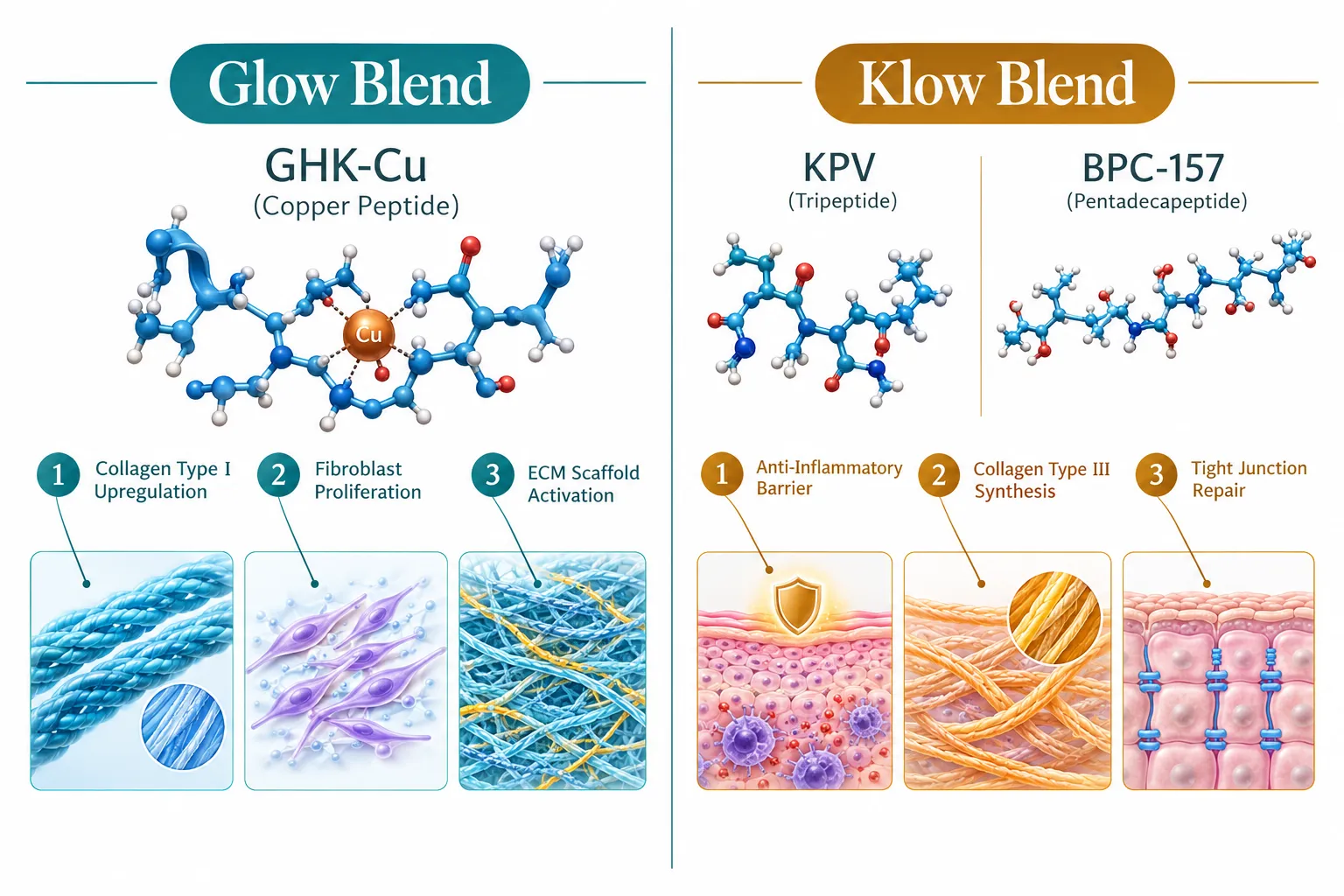
Understanding the Glow Blend vs. Klow Blend in vitro fibroblast response begins at the formulation level. The two blends share a common peptide backbone, BPC-157 and TB-500 (Thymosin beta-4 fragment), but diverge sharply in their signature compounds and concentration ratios.

Glow Blend centers on GHK-Cu (copper tripeptide-1) as its primary bioactive driver. GHK-Cu is well-documented for stimulating fibroblast proliferation, activating metalloproteinase remodeling enzymes, and directly upregulating collagen type I gene expression. In monolayer fibroblast cultures, GHK-Cu concentrations in the 1-10 nM range consistently produce measurable increases in pro-collagen I secretion within 48 to 72 hours.

Klow Blend substitutes GHK-Cu with KPV (Lys-Pro-Val), a C-terminal alpha-MSH tripeptide fragment. KPV operates through a different receptor pathway, targeting NF-kB suppression and interleukin-1 beta inhibition. This makes Klow Blend's fibroblast response less oriented toward structural matrix building and more focused on resolving inflammatory microenvironments that impede barrier repair.

“The ratio of GHK-Cu to BPC-157 in Glow Blend appears to create a synergistic collagen I amplification effect not replicated when KPV replaces the copper peptide.”

BPC-157 and TB-500 contribute to both formulations through overlapping mechanisms: BPC-157 promotes angiogenesis and fibroblast migration, while TB-500 regulates actin polymerization and cell motility, both essential for wound-closure modeling in dermal repair assays. Researchers exploring multi-peptide delivery systems may find useful context in Tesamorelin CJC1295 Ipamorelin 12mg Blend Reconstitution70 for reconstitution methodology applicable to similar blend preparations.

Collagen Type I vs. Type III Upregulation in Fibroblast Models
Collagen Type I vs. Type III Upregulation in Fibroblast Models

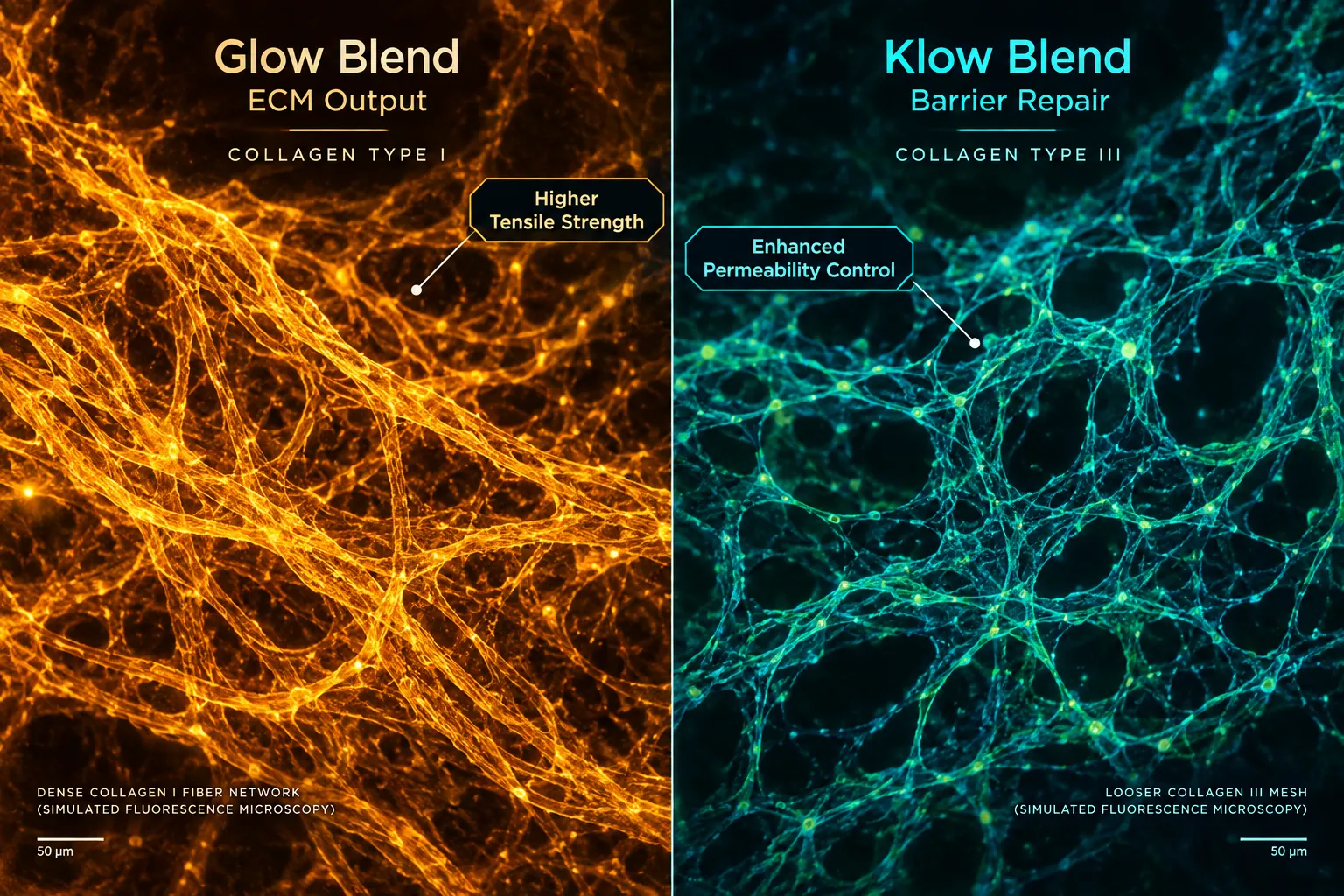
The collagen ratio outcome is where the Glow Blend vs. Klow Blend in vitro fibroblast response: epidermal matrix synthesis and dermal repair protocols diverge most clearly in experimental data.

Parameter Glow Blend Klow Blend
Primary collagen target Type I Type III
Fibroblast proliferation rate Higher Moderate
Anti-inflammatory activity Low-moderate High
ECM tensile scaffold output Strong Moderate
Barrier permeability repair Moderate Strong

Collagen type I is the structural workhorse of the dermis, providing tensile strength and wound closure integrity. Glow Blend's GHK-Cu component upregulates type I procollagen mRNA transcription, with studies in 3D fibroblast gel models showing scaffold density increases of 30-45% versus untreated controls.

Collagen type III dominates early wound healing and fine-matrix remodeling. Klow Blend's KPV-driven reduction in inflammatory cytokines creates a permissive environment for type III deposition, particularly relevant in barrier-compromised epidermal models where chronic inflammation suppresses baseline fibroblast output.

For researchers working with dosage-sensitive multi-peptide protocols, the Tesamorelin CJC1295 Ipamorelin 12mg Blend Dosage140 and Tesamorelin CJC1295 Ipamorelin 12mg Blend Dose90 resources offer relevant dosing frameworks for blend-based in vitro applications.

Cellular Uptake and Dermal Repair Protocol Design
Cellular Uptake and Dermal Repair Protocol Design

Cellular uptake efficiency directly affects how quickly each blend initiates downstream signaling in fibroblast monolayers and 3D dermal equivalents. Glow Blend demonstrates faster receptor-mediated internalization, attributed to GHK-Cu's high-affinity binding to cell-surface proteoglycans. This accelerates nuclear translocation of repair-associated transcription factors within the first 24 hours of exposure.

Klow Blend's uptake profile is slower but more sustained. KPV's interaction with melanocortin receptor subtypes expressed on keratinocytes and fibroblasts produces a prolonged anti-inflammatory signal that extends the window of ECM-permissive conditions, an advantage in chronic wound or barrier-disruption models where acute stimulation is less valuable than sustained modulation.

Recommended protocol considerations for in vitro dermal repair studies:

  • Use Glow Blend for acute ECM synthesis assays targeting collagen I density and fibroblast proliferation endpoints.
  • Apply Klow Blend in inflammatory-challenge models (e.g., IL-1 beta or LPS-stimulated cultures) where barrier restoration is the primary readout.
  • Combine TB-500-containing blends with scratch-assay migration protocols to capture actin-driven motility differences.
  • Standardize reconstitution and vehicle controls across both blends to isolate peptide-specific effects.

Researchers building multi-peptide blend protocols can reference Tesamorelin AOD9604 CJC1295 Ipamorelin 12mg Blend Dosage50 and Tesamorelin CJC1295 Ipamorelin 12mg Blend70 for additional blend formulation and dosing guidance relevant to in vitro experimental design.

Regulatory note (2026): Both Glow Blend and Klow Blend remain classified as research-use compounds. Neither has received regulatory approval for therapeutic application. All protocols discussed here apply strictly to in vitro and preclinical research contexts.

Conclusion

The Glow Blend vs. Klow Blend in vitro fibroblast response: epidermal matrix synthesis and dermal repair protocols comparison reveals two distinct mechanistic profiles suited to different research objectives. Glow Blend's GHK-Cu-driven collagen type I upregulation and rapid cellular uptake make it the stronger candidate for structural ECM synthesis studies. Klow Blend's KPV-mediated anti-inflammatory action and sustained collagen type III support position it as the preferred tool for barrier-repair and inflammatory-challenge models.

Actionable next steps for researchers:

  1. Select the blend based on primary endpoint, structural matrix output (Glow) versus barrier and inflammatory resolution (Klow).
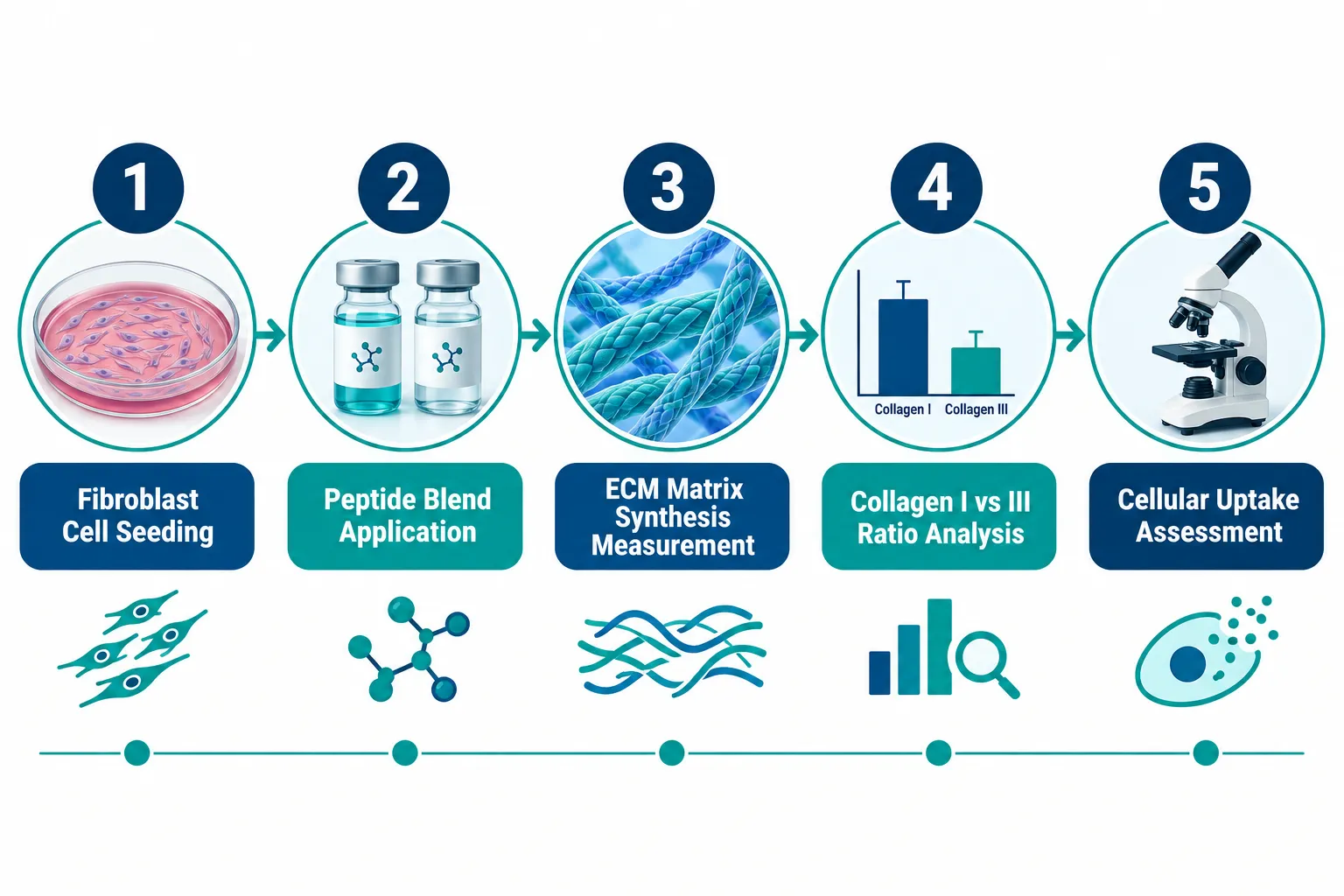
  2. Run parallel collagen I/III ratio assays at 48, 72, and 96 hours to capture temporal differences in fibroblast response.
  3. Validate cellular uptake using fluorescence-tagged peptide analogs before committing to full ECM synthesis protocols.
  4. Document reconstitution methods rigorously to ensure inter-experiment reproducibility.

As in vitro skin-tissue modeling becomes more sophisticated in 2026, precise peptide blend selection will remain a foundational variable in producing reliable, translatable dermal repair data.

https://www.puretestedpeptides.com/wp-content/uploads/2026/09/glow-blend-vs-klow-blend-in-vitro-fibroblast-response-epidermal-matrix-synthesis.webp 1024 1536 https://www.puretestedpeptides.com/wp-content/uploads/2026/01/buy-peptides-online.jpg 2026-09-19 13:03:442026-09-19 13:03:44Glow Blend vs. Klow Blend In Vitro Fibroblast Response: Epidermal Matrix Synthesis and Dermal Repair Protocols
×

Helpful Links

  • My account
  • Cart
  • Checkout
  • Refund and Returns Policy
  • Privacy Policy
  • SMS Privacy Policy
  • Login
  • My Account
  • Logout

USA Made Lab Tested Peptides

All products are sold for research, laboratory, or analytical purposes only, and are not for human consumption


Pure Tested Peptides is a chemical supplier. Pure Tested Peptides is not a compounding / chemical compounding facility as defined under 503A of the Federal Food, Drug, and Cosmetic act. Pure Tested Peptides is not an outsourcing facility as defined under 503B of the Federal Food, Drug, and Cosmetic act.

The statements made within this website have not been evaluated by the US Food and Drug Administration. The products we offer are not intended to diagnose, treat, cure or prevent any disease.

Human/Animal Consumption Prohibited. Laboratory/In-Vitro Experimental Use Only

Scroll to top Scroll to top Scroll to top