Call or Text 727-513-9780
  • Shopping Cart Shopping Cart
    0Shopping Cart
Pure Tested Peptides | America's most trusted Peptides for sale online
  • Peptides for sale
    • Oral Peptides for sale
      • Peptide Capsules for sale
      • BPC 157 Capsules 1000mcg
      • SLU-PP-332 Capsules | 1000 mcg
      • 5-Amino-1MQ 50mg Capsules
      • Tesofensine 500mcg
    • All Peptides for sale
    • Peptide Sprays
      • BPC 157 Nasal Spray Kit
      • BPC-157 TB500 Nasal Spray Kit
      • Semax Nasal Spray 10mg
      • Selank – Nasal Spray Kit – 10mg
      • Epithalon 50MG Nasal Spray Kit
      • Ipamorelin 10mg Nasal Spray
      • Klow Nasal Spray (BPC-157 + TB-500 + GHK-Cu + KPV) | 80mg
      • Hulk Nasal Spray Tesa / Ipa Blend 6/3 MG
      • Klow Nasal Spray
      • NAD + 500 mg Nasal Spray
      • PT-141 Nasal Spray Kit
    • GHRH Peptides
      • Ipa Peptides
      • CJC-1295 Peptides
        • CJC-1295 with DAC 5 mg
        • CJC-1295 without DAC 5 mg
        • CJC-1295 Ipa 10mg
      • Tesa Peptides
        • Tesa Peptide
        • Tesa 20 mg
    • GHK-Cu Peptides
      • All GHK-Cu Peptides
      • GHK-Cu 100mg
      • KLOW Peptide Blend – Buy KLOW blend online
    • BPC Peptides
      • All BPC Peptides
      • BPC-157
      • BPC-157 TB-500
      • BPC 157 capsules 1000mcg
    • SLU-PP-332 Peptides
      • All SLU-PP-332 Peptides
      • SLU-PP-332 5mg
    • GLP3 Peptides
      • GLP3-R
      • GLP3-R CAG 10mg
      • GLP3-R 20mg
    • PT-141 Peptides
      • PT-141 Peptides for sale
      • PT-141 10mg
      • PT-141 Nasal Spray
    • CAG Peptides
      • Lipo-C Peptide Blend
      • CAG 5mg
      • CAG 10mg
    • MOTS-C Peptides
      • MOTS-C Peptides for sale
      • MOTS-c peptide
      • MOTS-c 10mg *6 pack*
    • 5 Amino 1MQ Peptides
      • 5 Amino 1MQ Peptides for sale
      • 5-Amino-1MQ 50mg Capsules
      • 5-Amino-1MQ 5mg
    • Epithalon Peptides
      • Epithalon Peptides for sale
      • Epithalon 10mg
      • Epithalon 50mg
  • Shop
    • GLPs
      • 5-Amino-1MQ 50mg Capsules
      • 5-Amino-1MQ 5mg
      • GLP3-Reta
      • L-Carnitine 500mg/ml
      • Tesofensine 500mcg
      • SLU-PP-332 5mg
      • MOTS-c 10mg *6 pack*
    • Epithalon & BPC Peptides
      • Epithalon 10mg
      • Epithalon 50mg
      • BPC-157
      • BPC 157 capsules 1000mcg
      • BPC-157 TB-500
      • BPC-157 TB500 Nasal Spray Kit
      • BPC 157 Nasal Spray Kit
    • BPC TB-500 & NAD+ Peptides
      • NAD+ 500 mg
      • KLOW Peptide Blend – Buy KLOW blend online
      • GLOW Peptide Blend
      • TB 500 5mg
      • BPC 157 capsules 1000mcg – Supplement
      • BPC 157 Nasal Spray Kit
      • BPC-157
      • BPC-157 TB500 Nasal Spray Kit
      • BPC-157 TB-500
      • BPC 157 capsules 1000mcg
    • LL-37 Peptide
      • LL-37 10 mg
    • MOTS-C & Selank
      • MOTS-c peptide
      • Selank 10mg
    • GHK Peptides
      • GHK-Cu 100mg
      • GLOW Peptide Blend
      • KLOW Peptide Blend – Buy KLOW blend online
  • COAs
  • Wholesale
    • Wholesale Peptides for sale
  • PTP FAQ
  • Affiliates
    • Affiliate Program
    • Affiliate Signup
  • Contact
    • Contact Customer Service
    • Text Customer Support
  • About US
  • Shop all peptides
  • Login / Register Login / Register Page Link Login / Register Page Link
  • Click to open the search input field Click to open the search input field Search
  • Menu Menu

Tag Archive for: compounding pharmacy

Where to Buy High-Purity Enclomiphene for Hormone Research: A Supplier Evaluation Guide

Where to Buy High-Purity Enclomiphene for Hormone Research: A Supplier Evaluation Guide

July 11, 2026/0 Comments/in Uncategorized/by

Fewer than 5% of researchers sourcing selective estrogen receptor modulators (serms) ever verify a supplier's third-party purity data before placing an order, a gap that can compromise an entire study. This guide to Where to Buy High-Purity Enclomiphene for Hormone Research: A Supplier Evaluation Guide addresses that gap directly, helping researchers navigate licensing requirements, purity benchmarks, and red flags that separate credible suppliers from risky ones.
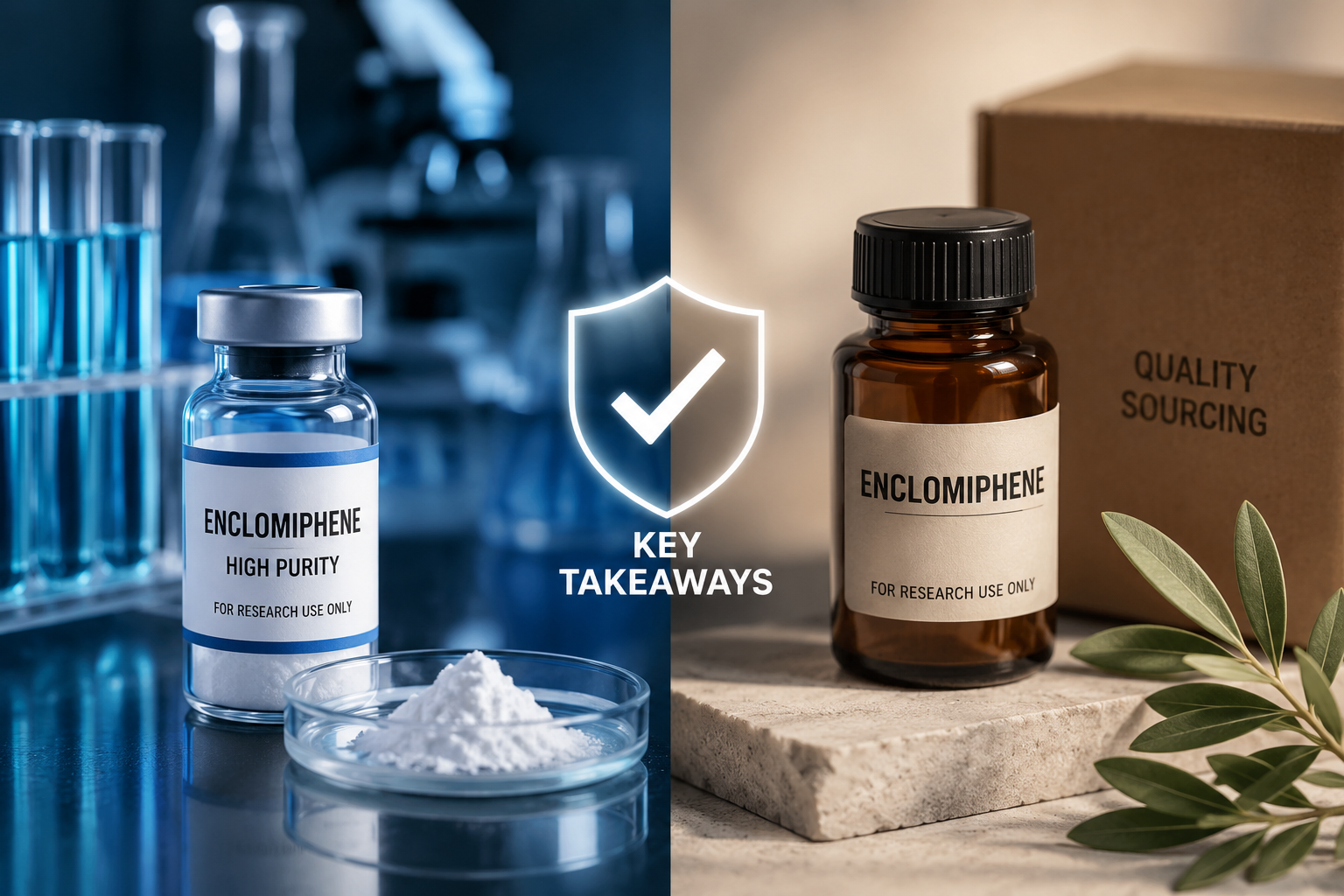
Editorial landscape image () for the article section "Key Takeaways" about Where to Buy High-Purity Enclomiphene for Hormone

Key Takeaways

  • Enclomiphene is not FDA-approved and is legally available in the U.S. only through licensed compounding pharmacies with a valid prescription.
  • Any supplier offering enclomiphene without requiring a prescription is operating outside regulatory boundaries.
  • A Certificate of Analysis (COA) from an independent laboratory confirming purity above 98% is the minimum acceptable quality standard.
  • Pricing significantly below $100 per month is a reliable warning sign of substandard or mislabeled product.
  • Researchers sourcing other investigational compounds should apply the same rigorous supplier evaluation criteria used here.

Understanding Enclomiphene's Regulatory Status Before You Source

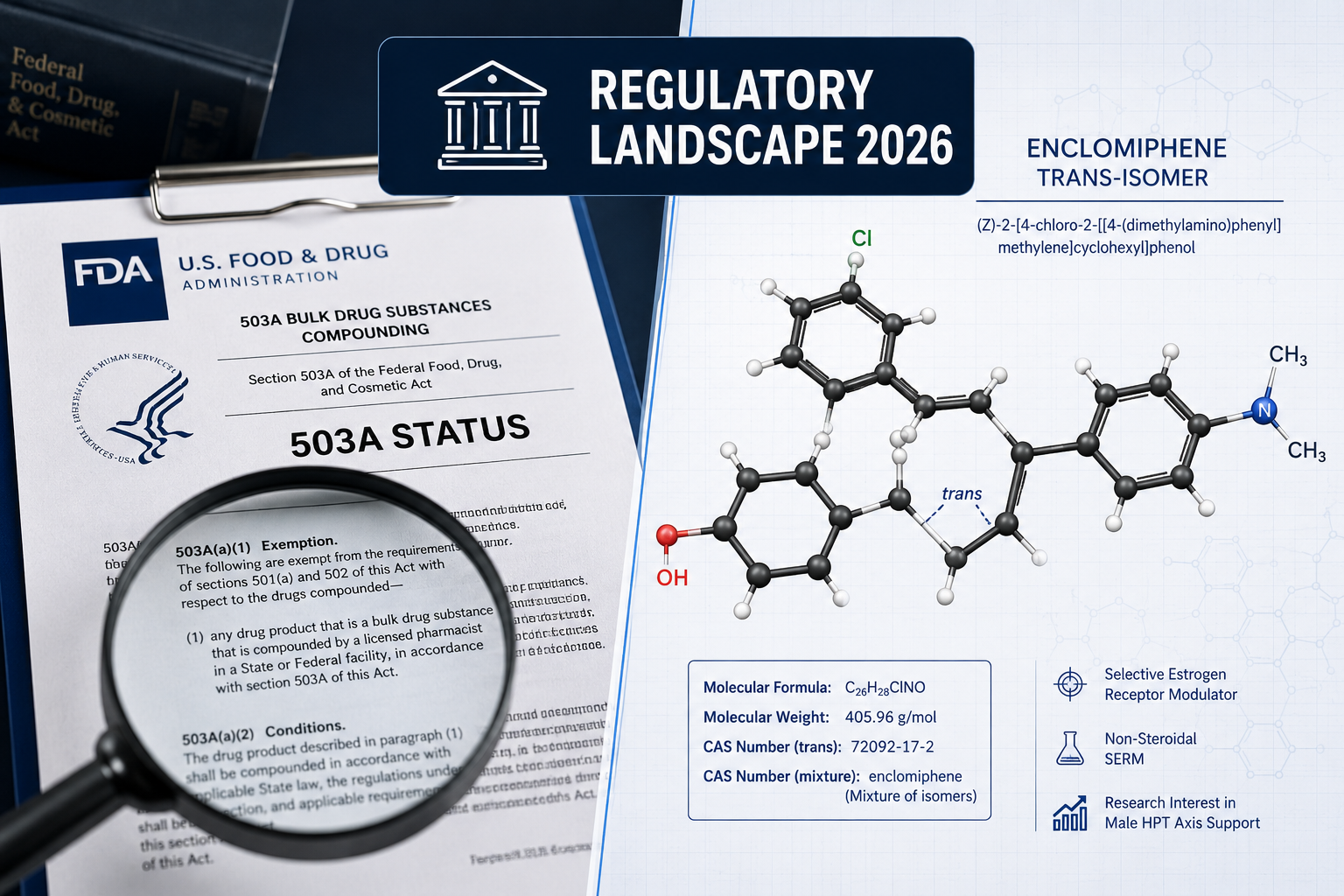
Enclomiphene is the trans-isomer of clomiphene citrate and acts as a selective estrogen receptor modulator with particular relevance to hypothalamic-pituitary-gonadal axis research. As of 2026, it remains unapproved by the FDA, meaning no commercially manufactured product exists on the U.S. market.

The only legal pathway for obtaining enclomiphene in the United States runs through licensed compounding pharmacies, and only when a licensed healthcare provider has issued a valid prescription. Compounding pharmacies prepare the compound to individual prescription specifications, operating under state pharmacy board oversight and, in many cases, federal USP standards.

Purchasing enclomiphene without a prescription, or from unregulated online vendors, may violate federal and state law. Researchers operating within institutional frameworks should confirm compliance with their IRB or legal counsel before procurement.

This regulatory context is the foundation of any honest supplier evaluation guide for high-purity enclomiphene hormone research.


Critical Supplier Evaluation Criteria for High-Purity Enclomiphene

Licensing and Accreditation

The first filter is simple: does the supplier hold verifiable credentials? For compounding pharmacies, look for:

  • State pharmacy board licensure (verifiable through the NABP database)
  • PCAB (Pharmacy Compounding Accreditation Board) accreditation
  • Compliance with USP 795 and 797 guidelines for non-sterile and sterile preparations

Suppliers lacking these credentials should be disqualified immediately, regardless of pricing or marketing claims.

Certificate of Analysis Requirements

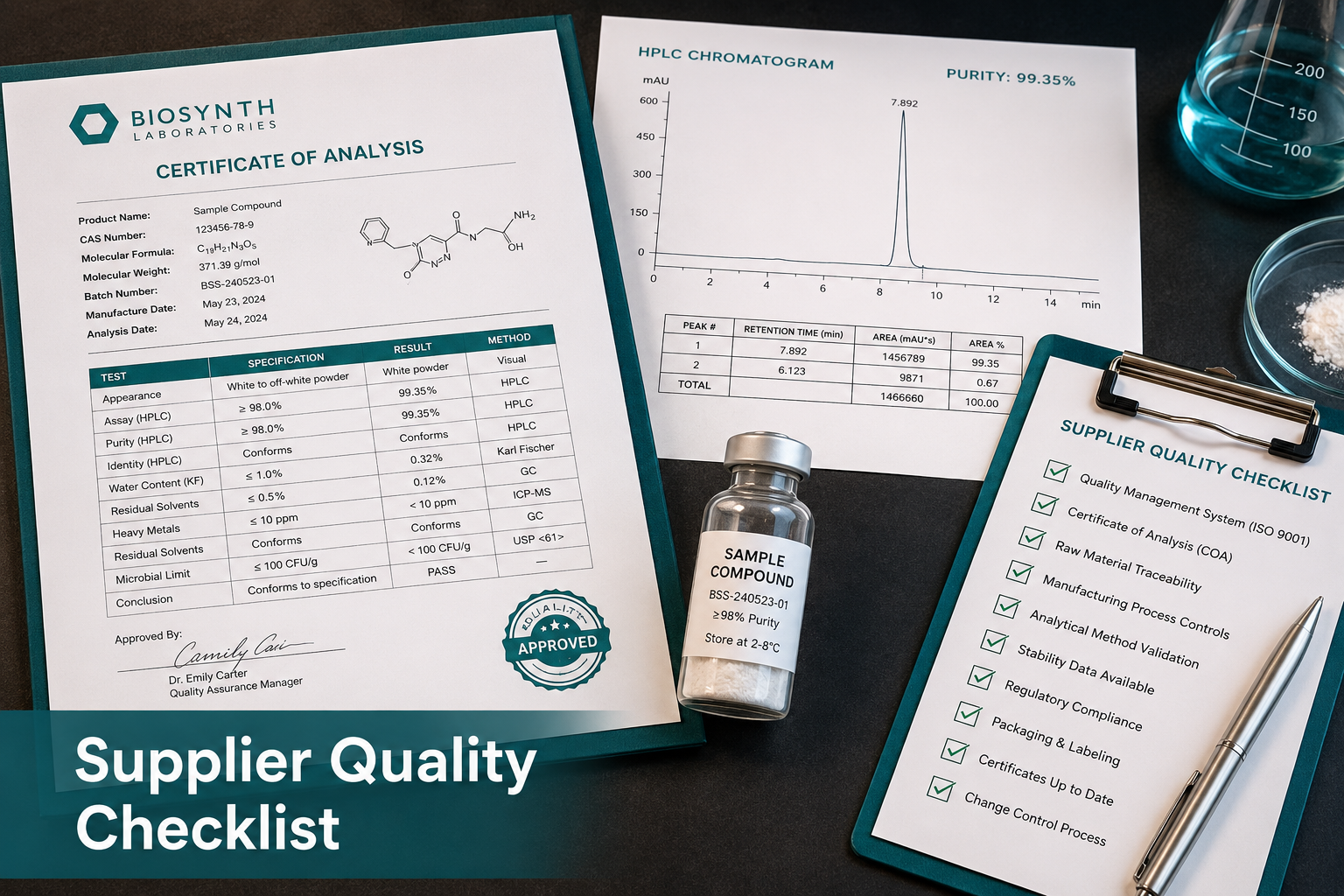
A COA is non-negotiable. When evaluating any supplier, request documentation that confirms:

Parameter Minimum Standard
Compound identity Confirmed via HPLC or NMR
Purity Greater than 98%
Residual solvents Below ICH Q3C limits
Microbial contamination Absent or within USP limits
Issuing laboratory Independent, third-party accredited lab

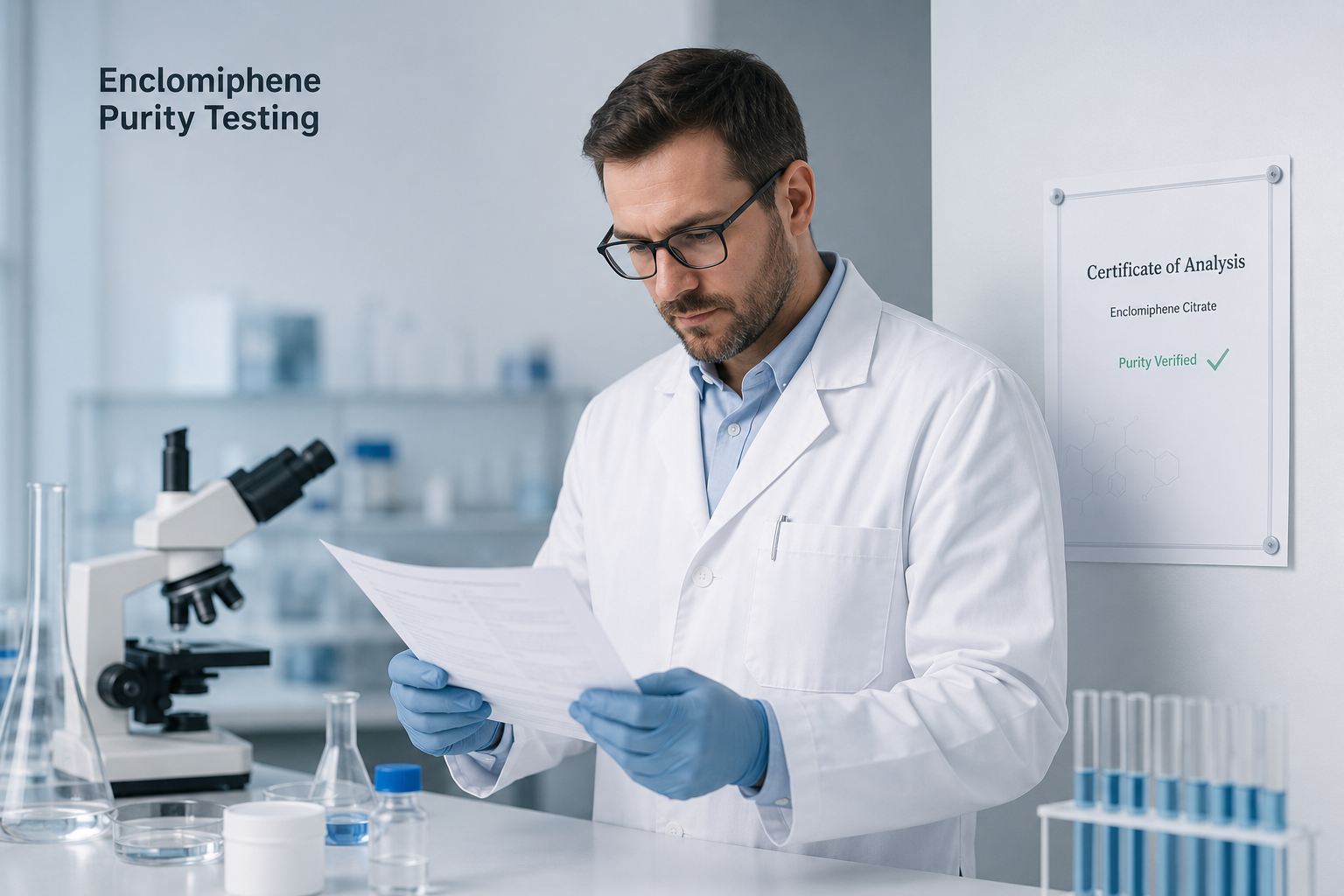
Suppliers who cannot produce a COA from an independent laboratory, not an in-house document, should be avoided. Reviewing quality testing protocols used by reputable peptide suppliers provides a useful benchmark for what rigorous third-party documentation looks like.

Similarly, reviewing COA documentation standards from established research compound suppliers illustrates the level of transparency that serious researchers should demand.

Pricing as a Quality Signal

Legitimate pharmaceutical-grade compounding involves costly raw material sourcing, quality control testing, and regulatory compliance. Typical monthly pricing for compounded enclomiphene falls between $100 and $300. Products priced significantly below this range are a strong indicator of compromised raw materials, inadequate testing, or both.

"If the price seems too good to be true in pharmaceutical compounding, the quality almost certainly reflects it."


Evaluating Research Chemical Suppliers: Risks and Red Flags

Some online vendors sell enclomiphene labeled "for research use only," positioning themselves outside prescription requirements. This category warrants serious caution.

Key risks include:

  • No regulatory oversight of raw material sourcing
  • Purity claims unsupported by independent testing
  • Potential for contamination with related isomers (zuclomiphene) or process impurities
  • Legal exposure for the purchasing researcher or institution

Medical professionals and research compliance officers consistently advise against using research chemical-grade enclomiphene for any study intended to generate publishable or clinically relevant data.

Researchers familiar with the rigorous standards applied to compounds like gonadorelin and GnRH pulsatility research will recognize that hormonal axis research demands equivalent sourcing discipline for enclomiphene.

Evaluating Research Chemical Suppliers: Risks and Red Flags

Red Flags Checklist

  • No prescription verification required
  • COA unavailable or issued by the same company selling the product
  • No physical address or verifiable business registration
  • Vague or absent information about raw material sourcing
  • Prices below $80 per month for a 25-50mg daily dose formulation

Applying the Same Standards Across Hormone Research Compounds

The supplier evaluation framework developed here extends naturally to related investigational compounds. Researchers studying the broader endocrine system often work with growth hormone secretagogues, metabolic peptides, and longevity-related compounds alongside serms like enclomiphene.

For context, the same purity and documentation standards apply when sourcing compounds covered in resources like this overview of the GH axis product line or when reviewing MOTS-c metabolic flexibility research. The principles of independent COA verification, licensed sourcing, and transparent quality control are universal.

Researchers exploring Bachem reference standards and peptide benchmarks will find additional guidance on how pharmaceutical-grade benchmarking works in practice, directly applicable to evaluating any enclomiphene supplier's documentation.
Applying the Same Standards Across Hormone Research Compounds


Conclusion

The question of where to buy high-purity enclomiphene for hormone research has a clear, defensible answer in 2026: through licensed compounding pharmacies operating under verified accreditation, with a valid prescription, and with independent COA documentation confirming purity above 98%. Any sourcing pathway that bypasses these requirements introduces unacceptable scientific and legal risk.

Actionable next steps for researchers:

  1. Confirm institutional compliance requirements with your IRB or legal team before procurement.
  2. Identify PCAB-accredited compounding pharmacies through the NABP verification database.
  3. Request a full COA from an independent third-party laboratory before accepting any shipment.
  4. Apply the same evaluation criteria to all investigational compounds in your research protocol.
  5. Treat pricing significantly below market norms as an automatic disqualification criterion.

Rigorous sourcing is not a bureaucratic formality, it is the foundation of reproducible, credible hormone research.

https://www.puretestedpeptides.com/wp-content/uploads/2026/07/where-to-buy-high-purity-enclomiphene-for-hormone-research-a-supplier-evaluation.png 1024 1536 https://www.puretestedpeptides.com/wp-content/uploads/2026/01/buy-peptides-online.jpg 2026-07-11 13:05:292026-07-11 13:05:29Where to Buy High-Purity Enclomiphene for Hormone Research: A Supplier Evaluation Guide
Regulatory Scrutiny in the GLP‑1/GLP‑3 Era: How BPC‑157, PT‑141, and Enclomiphene Are Being Re‑Evaluated

Regulatory Scrutiny in the GLP‑1/GLP‑3 Era: How BPC‑157, PT‑141, and Enclomiphene Are Being Re‑Evaluated

July 8, 2026/0 Comments/in Uncategorized/by

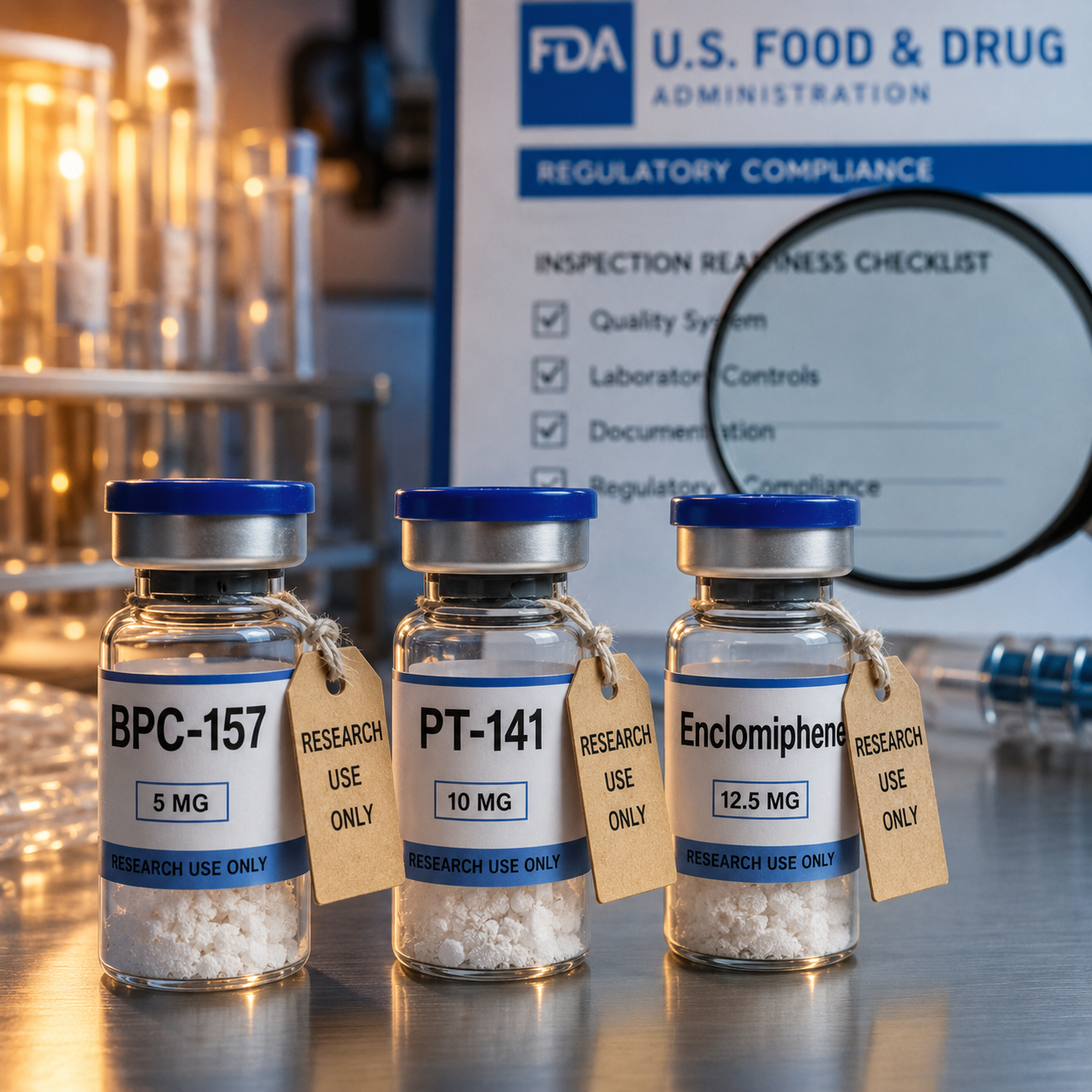
The FDA issued 30 warning letters to telehealth companies in a single month in early 2026, a signal that the era of loosely regulated peptide compounding is ending fast. Regulatory scrutiny in the GLP-1/GLP-3 era is reshaping how compounds like BPC-157, PT-141, and enclomiphene are evaluated, sourced, and labeled across the research and clinical landscape.

Key Takeaways

  • The FDA is aggressively tightening oversight of compounded GLP-1 drugs and related peptides in 2026.
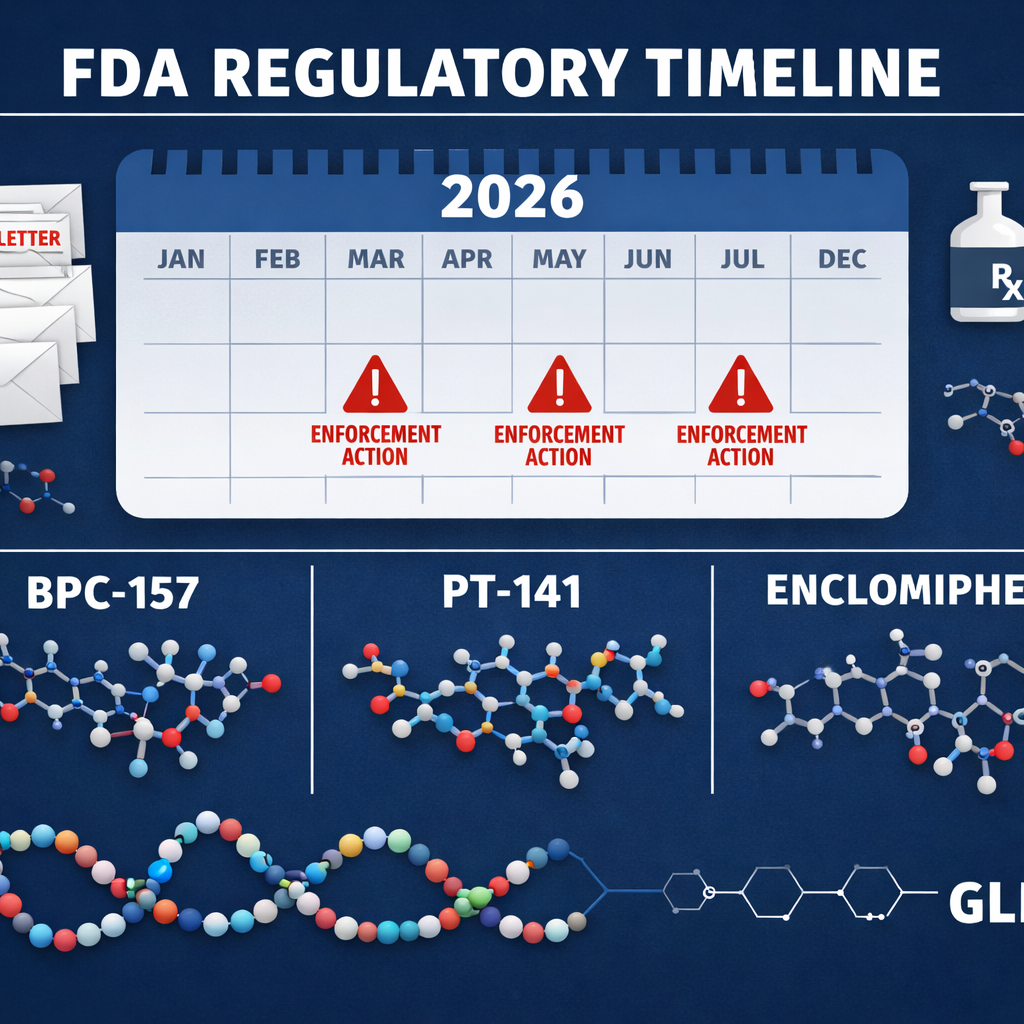
  • BPC-157 faces a pivotal PCAC review scheduled for July 23, 2026, that will determine its compounding status.
  • PT-141 and enclomiphene remain under existing regulatory frameworks with no new official policy changes as of mid-2026.
  • Sourcing compounds from suppliers who provide verified Certificates of Analysis is a critical compliance step.
  • Researchers and clinicians must treat BPC-157, PT-141, and enclomiphene strictly as research-only compounds until regulatory clarity is established.

Key Takeaways


The GLP-1 Crackdown That Changed Everything

The regulatory environment for peptides did not shift in isolation. It accelerated because of GLP-1 drugs.

On April 30, 2026, the FDA proposed removing semaglutide, tirzepatide, and liraglutide from the 503B Bulk Drug Substances List, a move that would effectively end large-scale compounding of these blockbuster weight-loss medications. Public comments closed on June 29, 2026. The proposal followed the FDA's March 2026 enforcement wave, in which 30 warning letters targeted telehealth companies for misleading branding and unsubstantiated claims about compounded GLP-1 products.

These actions set a precedent. When regulators draw a hard line around GLP-1 receptor agonists, the scrutiny does not stop there. It flows downstream to adjacent peptides, including those popular in longevity and performance research circles.

For context on how the broader GLP-3 landscape is evolving, the GLP-3 Retatrutide research overview provides useful background on where next-generation metabolic peptides stand scientifically.

"Regulatory clarity around GLP-1 compounds is now the lens through which all compounded peptides are being measured."


Regulatory Scrutiny in the GLP-1/GLP-3 Era: BPC-157 Under the Microscope

BPC-157 is the compound facing the most direct regulatory action in 2026.

Timeline of key events:

Date Event
April 15, 2026 FDA removes BPC-157 from Category 2 list under Section 503A
July 23, 2026 PCAC scheduled to review BPC-157 for 503A Bulks List inclusion

The removal from Category 2 occurred after the original nominators withdrew their nominations, not because the FDA cleared BPC-157 for compounding. The upcoming Pharmacy Compounding Advisory Committee (PCAC) review will assess clinical utility and safety to determine whether BPC-157 can be legally compounded by pharmacies under Section 503A.

Until that review concludes, BPC-157 must be treated strictly as a research compound. Suppliers and researchers should ensure all materials are clearly labeled for research use only and accompanied by third-party purity documentation. For those tracking the regenerative research angle, the BPC-157 and TB-500 combination research page outlines the scientific basis for studying these compounds together.

Purity verification is non-negotiable in this environment. Understanding how peptide purity testing works is an essential step for any researcher handling these compounds responsibly.

Regulatory Scrutiny in the GLP-1/GLP-3 Era: BPC-157 Under the Microscope


Regulatory Scrutiny in the GLP-1/GLP-3 Era: PT-141 and Enclomiphene's Current Status

PT-141 (bremelanotide) and enclomiphene occupy a different regulatory position than BPC-157 as of mid-2026. No new official policy announcements have been issued for either compound. Both continue to be evaluated under existing frameworks.

PT-141 is a melanocortin receptor agonist studied for its role in central arousal pathways. The PT-141 central arousal research overview details the mechanistic research behind this compound. Because it operates through a distinct receptor pathway from GLP-1 drugs, it has not been swept into the same immediate enforcement wave, but increased FDA vigilance means labeling and sourcing standards must remain strict.

Enclomiphene, a selective estrogen receptor modulator studied in the context of hormonal optimization, similarly faces no new rulings. However, the broader enforcement climate means any compounded or research-grade enclomiphene must be sourced with full documentation. Researchers interested in related hormonal axis compounds may also find the Gonadorelin GnRH pulsatility research relevant to understanding endocrine feedback loops.

Best practices for all three compounds:

  • Label all materials clearly as "For Research Use Only, Not for Human Use"
  • Obtain Certificates of Analysis from independent, accredited laboratories
  • Avoid any promotional language that implies clinical or therapeutic use
  • Monitor FDA PCAC announcements, especially post-July 23, 2026

For researchers exploring the broader peptide landscape, the comprehensive peptide catalog offers a structured overview of compounds with available research documentation.

Regulatory Scrutiny in the GLP-1/GLP-3 Era: PT-141 and Enclomiphene's Current Status


Conclusion

Regulatory scrutiny in the GLP-1/GLP-3 era is not a temporary disruption, it is a structural shift in how peptide compounds are governed, sourced, and communicated. BPC-157 faces its most consequential review yet on July 23, 2026. PT-141 and enclomiphene remain under existing frameworks but are not immune to the enforcement momentum building around all compounded bioactive compounds.

Actionable next steps for researchers and suppliers:

  1. Monitor the FDA PCAC BPC-157 decision closely and adjust sourcing protocols immediately after the ruling.
  2. Audit all current labeling to confirm "Research Use Only" language is prominent and unambiguous.
  3. Require third-party Certificates of Analysis for every batch of BPC-157, PT-141, and enclomiphene.
  4. Avoid any marketing or communication that implies therapeutic or clinical application.
  5. Stay current with FDA 503A and 503B list updates, which are changing rapidly in 2026.

Researchers who build compliance into their sourcing and documentation practices now will be far better positioned regardless of how the regulatory landscape continues to evolve.

https://www.puretestedpeptides.com/wp-content/uploads/2026/07/Regulatory-Scrutiny-in-the-GLP‑1GLP‑3-Era-How-BPC‑157-PT‑141-and-Enclomiphene-Are-Being-Re‑Evaluated.png 1254 1254 https://www.puretestedpeptides.com/wp-content/uploads/2026/01/buy-peptides-online.jpg 2026-07-08 13:06:092026-07-08 13:06:09Regulatory Scrutiny in the GLP‑1/GLP‑3 Era: How BPC‑157, PT‑141, and Enclomiphene Are Being Re‑Evaluated
Where to Buy Enclomiphene for Research: A Guide to Trusted Suppliers and Quality Assurance

Where to Buy Enclomiphene for Research: A Guide to Trusted Suppliers and Quality Assurance

June 20, 2026/0 Comments/in Uncategorized/by

Only a handful of compounds have generated as much research interest as enclomiphene citrate — yet its regulatory path remains one of the most complicated in modern pharmacology. For laboratory researchers navigating this landscape in 2026, finding where to buy enclomiphene for research through trusted suppliers and quality assurance protocols is not straightforward. This guide breaks down the supplier landscape, quality benchmarks, and critical compliance considerations researchers must understand before making any procurement decision.

Key Takeaways

  • Enclomiphene citrate has not received FDA approval and remains in 503A Category 1 (Under Evaluation) as of 2026.
  • Research-grade suppliers must provide batch-specific Certificates of Analysis (COA) and third-party purity verification.
  • Purity benchmarks from reputable suppliers range from 98.88% to 99.0% or higher, verified by RP-HPLC analysis.
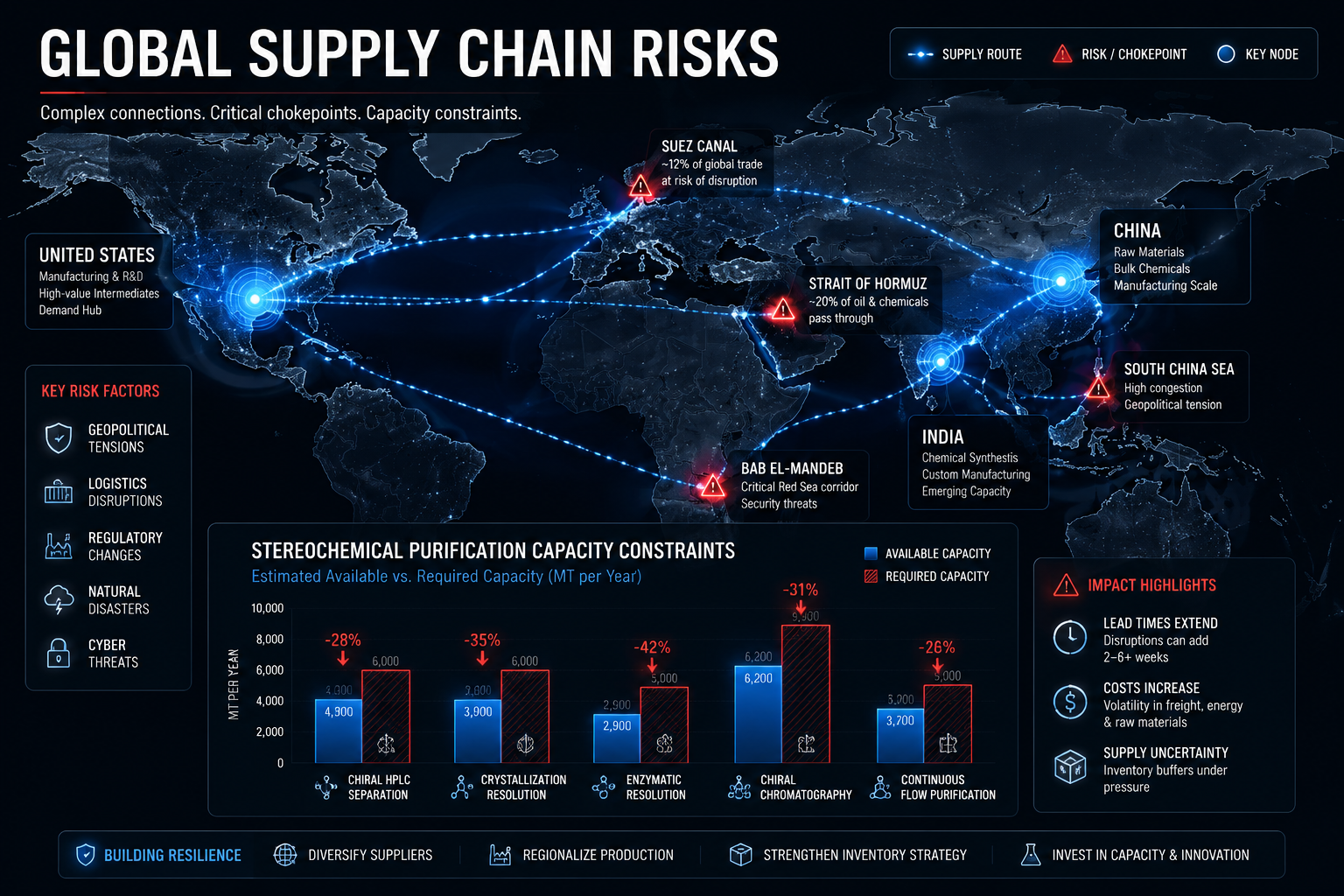
  • Global supply chain constraints — particularly stereochemical purification capacity — affect consistent availability.
  • Purchasing enclomiphene without a valid prescription for human use is unregulated and carries significant legal and safety risks.

Key Takeaways

Understanding the Regulatory Landscape Before You Source

Any serious discussion of where to buy enclomiphene for research must begin with its regulatory status. Enclomiphene citrate has never received FDA approval. Its developer pursued approval under the brand name Androxal for secondary hypogonadism, but received a Complete Response Letter in late 2015. The FDA indicated the Phase 3 study design was no longer adequate to demonstrate clinical benefit, and the required additional trials were never completed.

In June 2022, the FDA Pharmacy Compounding Advisory Committee voted against adding enclomiphene citrate to the final 503A Bulks List. As of the FDA's updated list in May 2026, enclomiphene remains in 503A Category 1 (Under Evaluation) — meaning its compounding status is still unsettled.

Despite this, enclomiphene is widely used in clinical settings through compounding pharmacies. Under Section 503A of the Federal Food, Drug, and Cosmetic Act, licensed pharmacies may compound drugs for individual patients who hold valid prescriptions. Researchers should clearly distinguish between:

  • Clinical/compounding use — requires a valid prescription and licensed pharmacy
  • Research chemical procurement — governed by supplier-specific quality standards and intended strictly for laboratory use

"Products sold online without a prescription are unregulated, and their contents, purity, and dosing are not verified by any oversight body."

For context on how regulatory frameworks shape the broader peptide and research compound market, the latest developments in peptide research offer useful background on evolving supplier standards.


Understanding the Regulatory Landscape Before You Source

Evaluating Trusted Suppliers and Quality Assurance Standards

When researching where to buy enclomiphene for research, quality assurance is the single most important criterion. The research chemical market is not uniformly regulated, which means the burden of due diligence falls entirely on the researcher.

What to Look for in a Reputable Supplier

Quality Indicator Minimum Standard
Purity level 98.88% or higher (RP-HPLC verified)
Documentation Batch-specific COA + MSDS
Testing method Third-party or in-house RP-HPLC
Isomer selectivity Trans-isomer above 97%
Labeling Accurate concentration and lot number

Reputable suppliers provide batch-specific Certificates of Analysis that confirm compound identity, purity, and testing methodology. Some suppliers offer enclomiphene at purity levels of 99.0% or higher, accompanied by both COA and Material Safety Data Sheet (MSDS) documentation. Others offer 12.5 mg capsule formats with purity confirmed at 98.88% via RP-HPLC.

Researchers sourcing other compounds from verified suppliers can review lab-tested peptide standards to understand what rigorous quality documentation looks like in practice. Similarly, the COA verification process used by established peptide suppliers sets a useful benchmark for what enclomiphene sourcing documentation should include.


What to Look for in a Reputable Supplier

Supply Chain Risks and Practical Procurement Strategies

The enclomiphene supply chain faces challenges that go beyond simple availability. A significant portion of active pharmaceutical ingredients (APIs) are sourced from manufacturing hubs in China and India. Geopolitical factors and increased FDA oversight of compounded hormone therapies have created procurement bottlenecks.

Industry experts point to a specific constraint: stereochemical purification capacity. Facilities capable of maintaining consistent trans-isomer selectivity above 97% are limited globally. This makes consistent, high-purity supply difficult to guarantee across all vendors.

Practical steps for research procurement:

  • Implement predictive procurement strategies to buffer against supply gaps
  • Request lot-specific documentation before finalizing any order
  • Verify that the supplier tests each batch independently, not just at product launch
  • Cross-reference supplier claims against third-party analytical databases

Researchers working with related compounds — such as those exploring 5-Amino-1MQ for metabolic research or NAD+ scientific evidence — will recognize that these same supply chain diligence principles apply across the research compound category.

For those interested in broader hormonal and body composition research themes, resources on tesa science and sourcing and body composition research themes provide useful comparative context.


Conclusion

Navigating where to buy enclomiphene for research requires a clear-eyed understanding of regulatory status, supplier quality standards, and global supply chain realities. In 2026, the compound remains unapproved by the FDA and sits in an unsettled compounding category — making rigorous supplier vetting non-negotiable.

Actionable next steps for researchers:

  1. Confirm the intended use is strictly laboratory research, not human administration without medical supervision.
  2. Request batch-specific COA and MSDS documentation from any prospective supplier before purchasing.
  3. Verify purity is confirmed via RP-HPLC at 98.88% or above, with trans-isomer selectivity above 97%.
  4. Build procurement buffers into research timelines to account for supply chain volatility.
  5. Consult a licensed healthcare professional if the intended application involves any clinical or compounding context.

Quality assurance is not optional in research compound procurement — it is the foundation of reliable, reproducible science.

https://www.puretestedpeptides.com/wp-content/uploads/2026/06/Where-to-Buy-Enclomiphene-for-Research-A-Guide-to-Trusted-Suppliers-and-Quality-Assurance.png 1024 1536 https://www.puretestedpeptides.com/wp-content/uploads/2026/01/buy-peptides-online.jpg 2026-06-20 13:03:322026-06-20 13:03:32Where to Buy Enclomiphene for Research: A Guide to Trusted Suppliers and Quality Assurance
How Safe Are Mail‑Order Research Peptides? Evidence Gaps, Regulatory Gray Zones, and Risk‑Mitigation for Labs

How Safe Are Mail‑Order Research Peptides? Evidence Gaps, Regulatory Gray Zones, and Risk‑Mitigation for Labs

June 11, 2026/0 Comments/in Uncategorized/by

A February 2025 FDA warning letter to a major online peptide vendor confirmed what regulators had long suspected: "For Research Use Only" labels do not shield sellers — or buyers — from enforcement when products are clearly marketed for human use. That single enforcement action crystallized a debate that has grown louder as the peptide market expands rapidly in 2026.

Understanding how safe are mail-order research peptides, evidence gaps, regulatory gray zones, and risk-mitigation for labs is no longer optional for serious researchers. The stakes — legal, scientific, and physiological — demand a clear-eyed look at what the evidence actually shows.

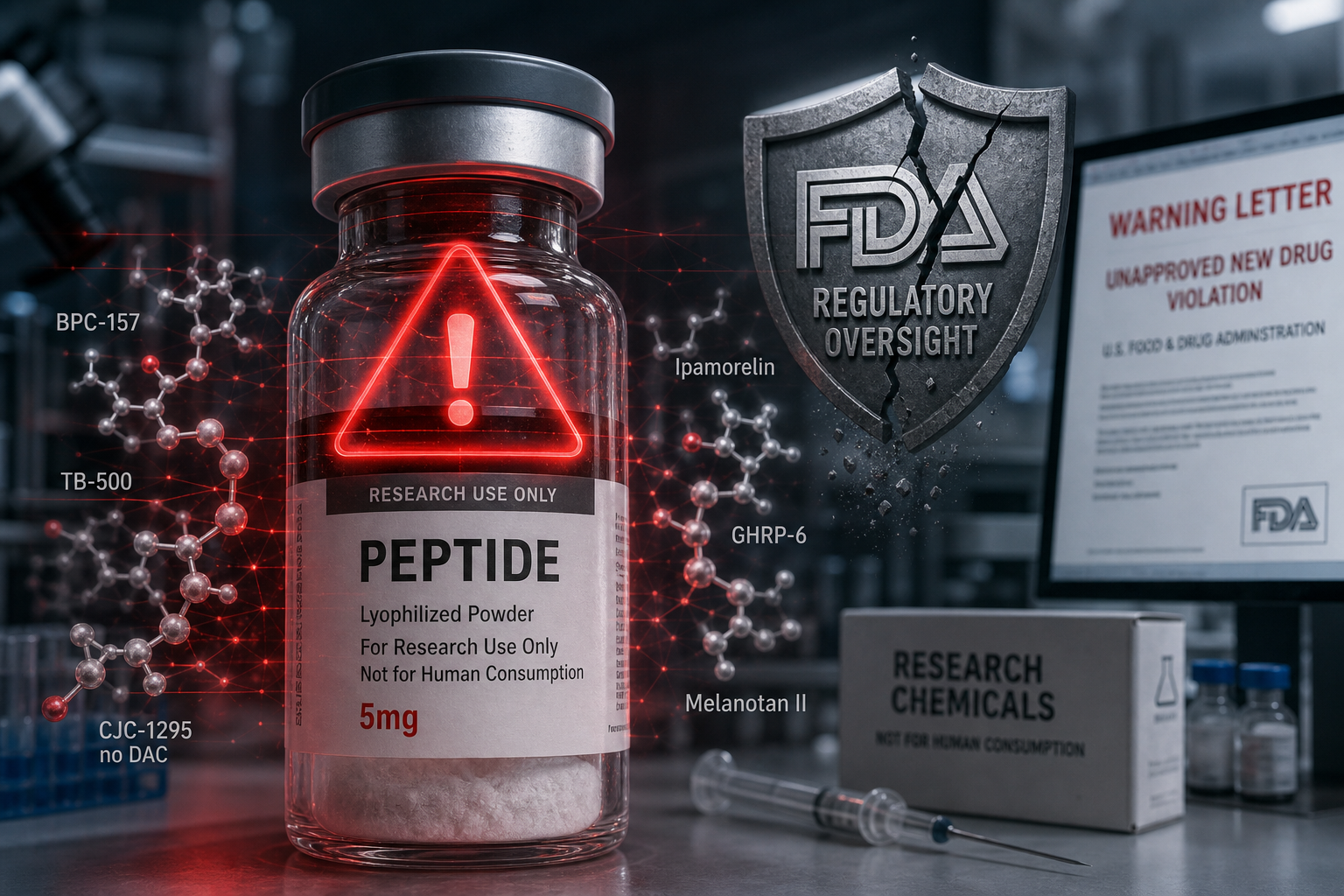
Detailed () editorial illustration showing a magnified view of a peptide vial with a glowing red warning symbol overlaid,

Key Takeaways

  • The FDA classifies peptides with biological activity as drugs; "research use only" labeling does not create a legal exemption for human consumption.
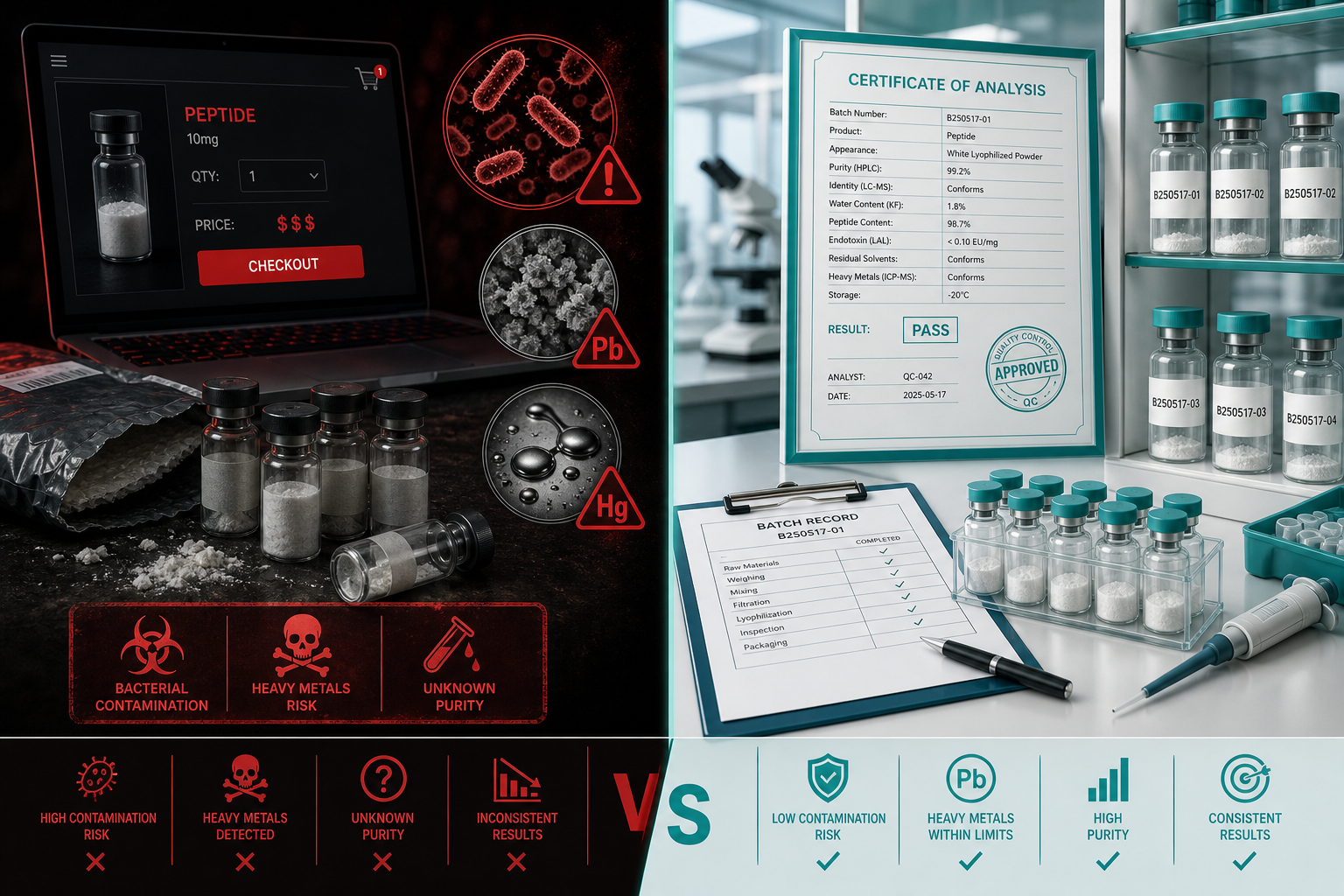
  • Unverified peptide suppliers carry documented risks including bacterial contamination, heavy metal presence, and incorrect potency.
  • The American Peptide Research Alliance reported two adverse events linked to unlicensed vendors in early 2026, with investigations ongoing.
  • Certificates of Analysis (COAs), batch traceability, and cold-chain compliance are the minimum quality benchmarks for legitimate lab sourcing.
  • Legal, prescription-based compounding pathways exist for clinical contexts and represent the gold standard for human-use peptides.

The Regulatory Gray Zone: What "Research Use Only" Actually Means

The phrase "For Research Use Only" (RUO) appears on thousands of peptide product pages, but its legal weight is far weaker than most buyers assume. Under U.S. law, any compound with biological activity intended for human use qualifies as a drug — regardless of how it is labeled. The FDA evaluates actual intent and use, not packaging language.

When a vendor's website includes testimonials, dosing guides, or health benefit claims alongside an RUO disclaimer, regulators treat the disclaimer as void. Marketing language that implies human health outcomes can trigger enforcement actions and has done so repeatedly. Vendors who operate in this space are not protected by a "research chemical" carve-out because no such exemption exists in federal statute.

For buyers, individual possession for genuine laboratory research has not historically been a primary enforcement target. However, that tolerance is not a legal right — it is an unenforced gray area that can shift with regulatory priorities. Labs that source peptides for in-vitro or animal studies should document their research purpose clearly and maintain records accordingly.

Researchers exploring compounds like GLP-1 peptides or AOD-9604 will find that sourcing documentation matters as much as the science itself.


Evidence Gaps and Safety Concerns With Unregulated Suppliers

Evidence Gaps and Safety Concerns With Unregulated Suppliers

Asking how safe are mail-order research peptides requires confronting uncomfortable data gaps. Because unregulated peptide vendors operate outside pharmaceutical manufacturing standards, independent quality data is scarce. What exists is not reassuring.

Documented risks from unverified sources include:

  • Bacterial and fungal contamination from non-sterile synthesis environments
  • Heavy metal residues from uncontrolled reagents
  • Incorrect peptide sequences or truncated chains
  • Mislabeled concentrations leading to unknown potency
  • Degraded product from improper cold-chain handling during shipping

The American Peptide Research Alliance issued a safety alert in March 2026 reporting two adverse events tied to products from unlicensed vendors. Investigations remain ongoing, but the alert underscores that the risk is not theoretical.

"Absence of a Certificate of Analysis is not a minor oversight — it is a fundamental indicator that manufacturing standards were not followed."

For labs researching mitochondrial compounds such as SS-31 peptides or MOTS-c, purity is a scientific necessity, not just a compliance checkbox. Contaminated or mislabeled compounds corrupt experimental results and make data unreproducible.

Red flags when evaluating a peptide supplier:

Warning Sign What It Suggests
No COA or outdated COA No independent purity verification
Price significantly below market Cost-cutting in synthesis or testing
No batch or lot number No traceability if contamination occurs
Health benefit claims on product pages Likely FDA enforcement risk
No cold-chain shipping options Degradation during transit

Risk-Mitigation for Labs: Practical Sourcing Standards

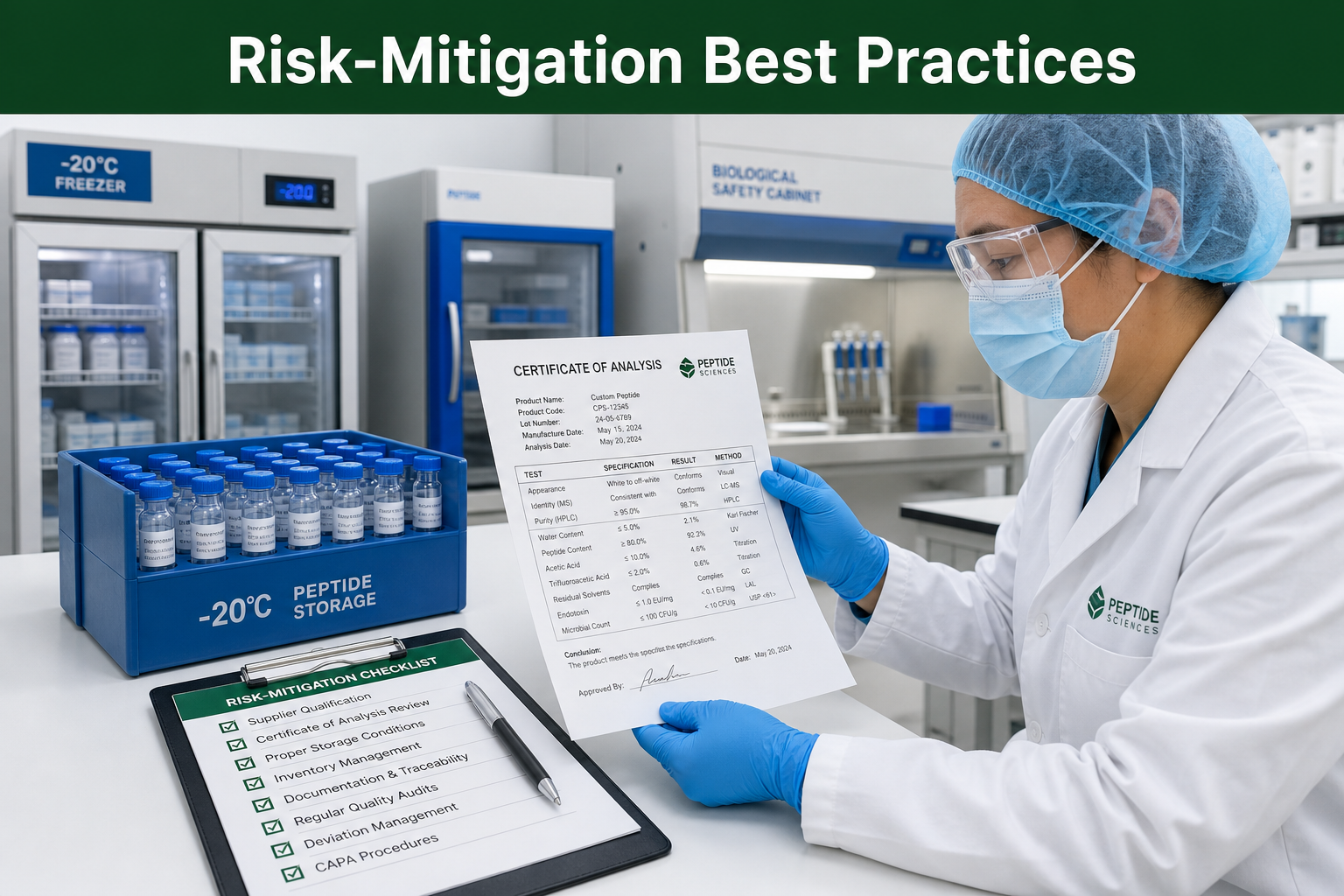
Addressing how safe are mail-order research peptides, evidence gaps, regulatory gray zones, and risk-mitigation for labs ultimately comes down to sourcing discipline. The following standards represent current best practice for legitimate research environments.

Minimum sourcing requirements:

  1. Third-party COA — Verify purity, sequence confirmation, and residual solvent levels from an independent laboratory, not just the vendor's internal testing.
  2. Batch traceability — Every vial should carry a lot number traceable to a specific synthesis run and test report.
  3. Cold-chain compliance — Lyophilized peptides require refrigerated or frozen shipping. Avoid vendors who ship at ambient temperature without insulation.
  4. No human-use marketing — Vendors making health claims are operating outside regulatory boundaries, which signals broader quality control problems.
  5. Transparent manufacturing disclosures — Reputable suppliers disclose synthesis method, facility standards, and sterility testing.

For labs working with compounds like BPC-157, GHK-Cu, or LL-37, these standards are non-negotiable for data integrity.

When human use is the clinical goal, the legally sound pathway is a patient-specific prescription filled by a 503A-licensed compounding pharmacy. This route ensures regulatory compliance, pharmaceutical-grade quality, and prescriber accountability — none of which exist in the unregulated market.

Researchers can also review innovative peptide delivery systems to understand how formulation choices affect both stability and research validity.

Risk-Mitigation for Labs: Practical Sourcing Standards


Conclusion

The peptide research market in 2026 is expanding faster than the regulatory infrastructure designed to govern it. That gap creates real risk — for lab data quality, for legal compliance, and for public safety when products migrate from "research" to human use without oversight.

Actionable next steps for labs and researchers:

  • Audit current suppliers against the COA, batch traceability, and cold-chain checklist above before the next order.
  • Document the research purpose for every peptide purchase and retain records.
  • Reject any vendor whose product pages include dosing guidance, testimonials, or health outcome claims.
  • For any human-use application, engage a licensed prescriber and 503A compounding pharmacy — not an online vendor.
  • Stay current with FDA enforcement actions, which signal which compounds and vendor practices are under active scrutiny.

The science behind peptide research is genuinely compelling. Protecting that science — and the people conducting it — requires sourcing standards that match the seriousness of the work.

https://www.puretestedpeptides.com/wp-content/uploads/2026/06/How-Safe-Are-Mail‑Order-Research-Peptides-Evidence-Gaps-Regulatory-Gray-Zones-and-Risk‑Mitigation-for-Labs.png 1024 1536 https://www.puretestedpeptides.com/wp-content/uploads/2026/01/buy-peptides-online.jpg 2026-06-11 13:06:492026-06-11 13:06:49How Safe Are Mail‑Order Research Peptides? Evidence Gaps, Regulatory Gray Zones, and Risk‑Mitigation for Labs
×

Helpful Links

  • My account
  • Cart
  • Checkout
  • Refund and Returns Policy
  • Privacy Policy
  • SMS Privacy Policy
  • Login
  • My Account
  • Logout

USA Made Lab Tested Peptides

All products are sold for research, laboratory, or analytical purposes only, and are not for human consumption


Pure Tested Peptides is a chemical supplier. Pure Tested Peptides is not a compounding / chemical compounding facility as defined under 503A of the Federal Food, Drug, and Cosmetic act. Pure Tested Peptides is not an outsourcing facility as defined under 503B of the Federal Food, Drug, and Cosmetic act.

The statements made within this website have not been evaluated by the US Food and Drug Administration. The products we offer are not intended to diagnose, treat, cure or prevent any disease.

Human/Animal Consumption Prohibited. Laboratory/In-Vitro Experimental Use Only

Scroll to top Scroll to top Scroll to top