

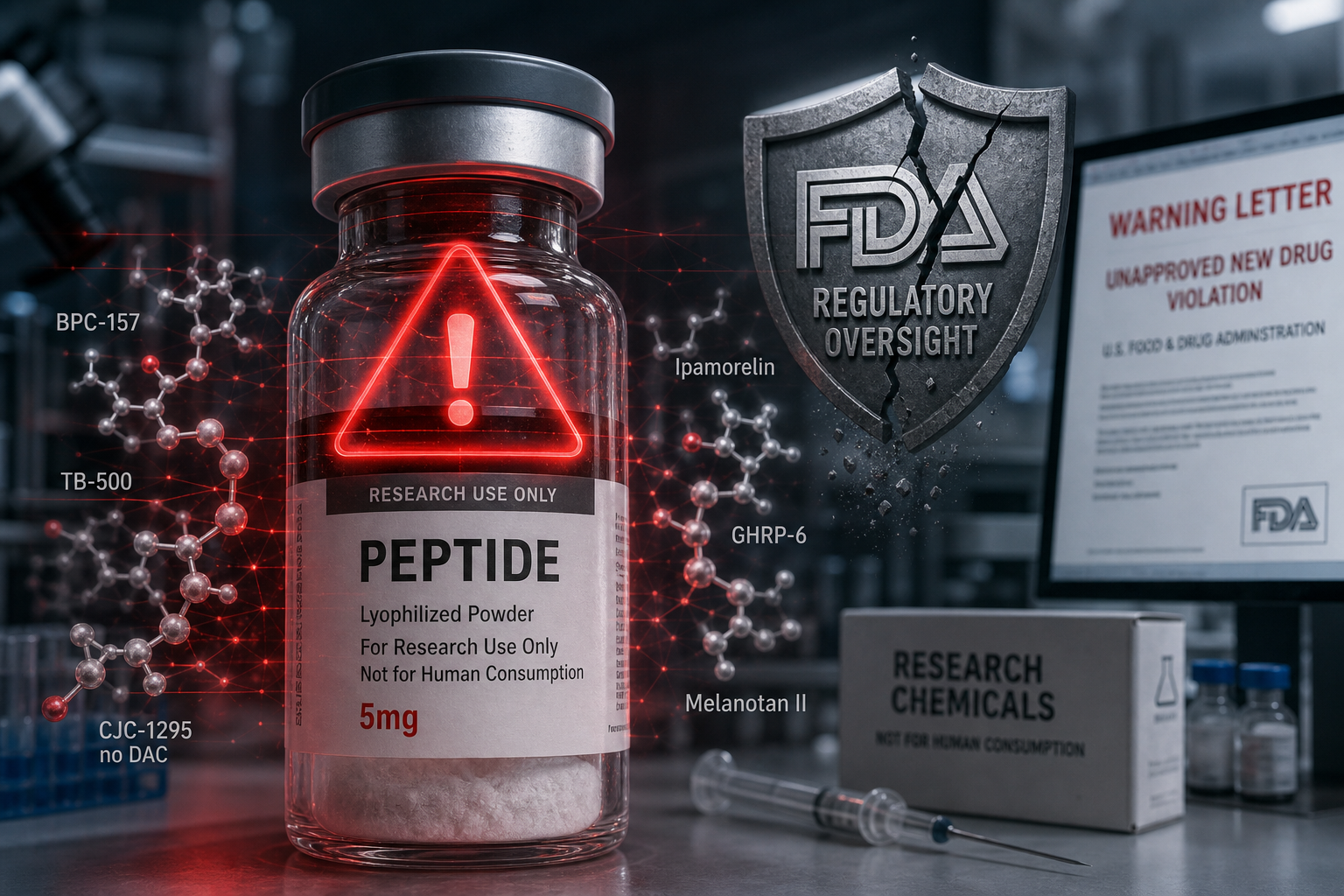
A February 2025 FDA warning letter to a major online peptide vendor confirmed what regulators had long suspected: "For Research Use Only" labels do not shield sellers — or buyers — from enforcement when products are clearly marketed for human use. That single enforcement action crystallized a debate that has grown louder as the peptide market expands rapidly in 2026.
Understanding how safe are mail-order research peptides, evidence gaps, regulatory gray zones, and risk-mitigation for labs is no longer optional for serious researchers. The stakes — legal, scientific, and physiological — demand a clear-eyed look at what the evidence actually shows.
Key Takeaways
- The FDA classifies peptides with biological activity as drugs; "research use only" labeling does not create a legal exemption for human consumption.
- Unverified peptide suppliers carry documented risks including bacterial contamination, heavy metal presence, and incorrect potency.
- The American Peptide Research Alliance reported two adverse events linked to unlicensed vendors in early 2026, with investigations ongoing.
- Certificates of Analysis (COAs), batch traceability, and cold-chain compliance are the minimum quality benchmarks for legitimate lab sourcing.
- Legal, prescription-based compounding pathways exist for clinical contexts and represent the gold standard for human-use peptides.
The Regulatory Gray Zone: What "Research Use Only" Actually Means
The phrase "For Research Use Only" (RUO) appears on thousands of peptide product pages, but its legal weight is far weaker than most buyers assume. Under U.S. law, any compound with biological activity intended for human use qualifies as a drug — regardless of how it is labeled. The FDA evaluates actual intent and use, not packaging language.
When a vendor's website includes testimonials, dosing guides, or health benefit claims alongside an RUO disclaimer, regulators treat the disclaimer as void. Marketing language that implies human health outcomes can trigger enforcement actions and has done so repeatedly. Vendors who operate in this space are not protected by a "research chemical" carve-out because no such exemption exists in federal statute.
For buyers, individual possession for genuine laboratory research has not historically been a primary enforcement target. However, that tolerance is not a legal right — it is an unenforced gray area that can shift with regulatory priorities. Labs that source peptides for in-vitro or animal studies should document their research purpose clearly and maintain records accordingly.
Researchers exploring compounds like GLP-1 peptides or AOD-9604 will find that sourcing documentation matters as much as the science itself.
Evidence Gaps and Safety Concerns With Unregulated Suppliers
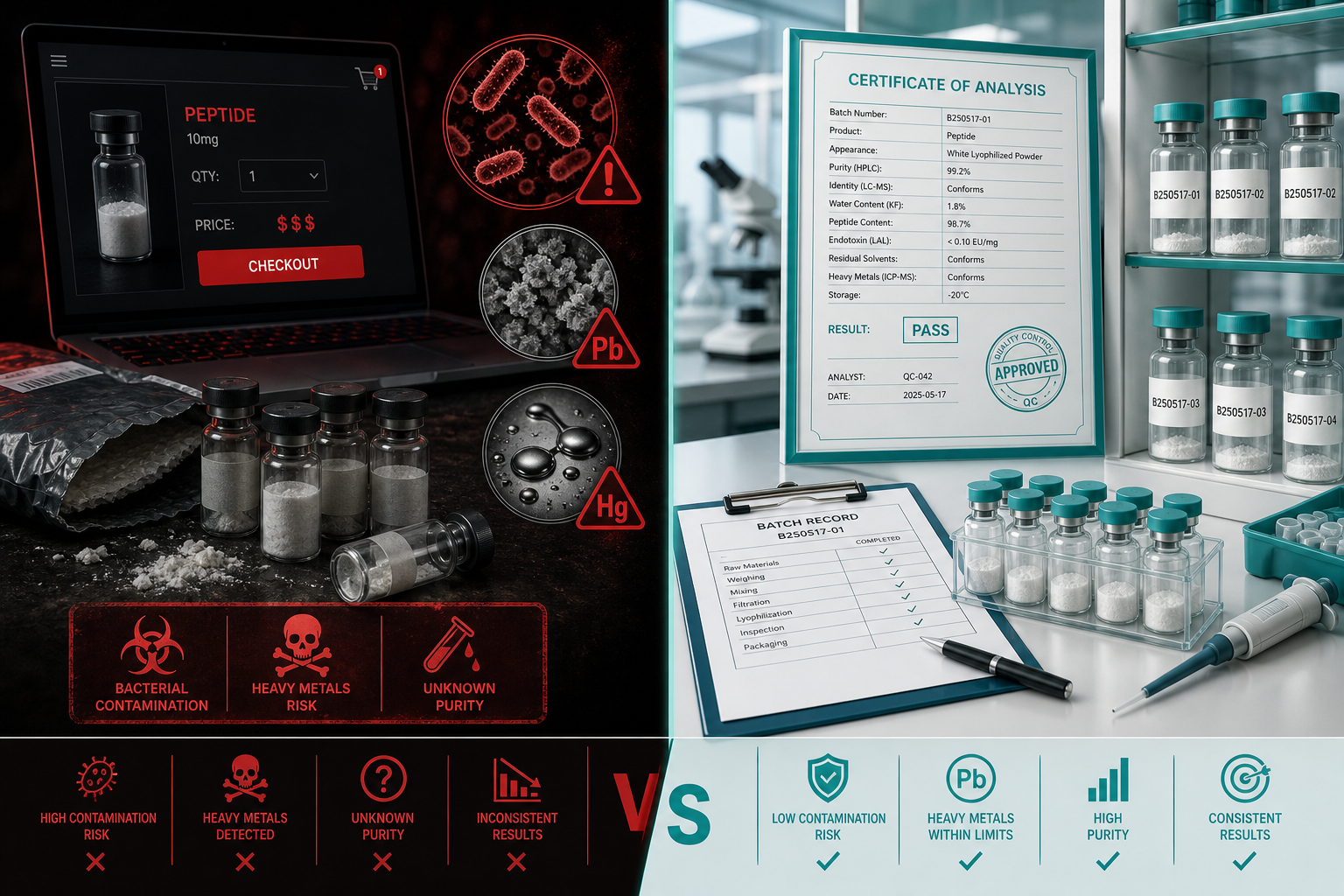
Asking how safe are mail-order research peptides requires confronting uncomfortable data gaps. Because unregulated peptide vendors operate outside pharmaceutical manufacturing standards, independent quality data is scarce. What exists is not reassuring.
Documented risks from unverified sources include:
- Bacterial and fungal contamination from non-sterile synthesis environments
- Heavy metal residues from uncontrolled reagents
- Incorrect peptide sequences or truncated chains
- Mislabeled concentrations leading to unknown potency
- Degraded product from improper cold-chain handling during shipping
The American Peptide Research Alliance issued a safety alert in March 2026 reporting two adverse events tied to products from unlicensed vendors. Investigations remain ongoing, but the alert underscores that the risk is not theoretical.
"Absence of a Certificate of Analysis is not a minor oversight — it is a fundamental indicator that manufacturing standards were not followed."
For labs researching mitochondrial compounds such as SS-31 peptides or MOTS-c, purity is a scientific necessity, not just a compliance checkbox. Contaminated or mislabeled compounds corrupt experimental results and make data unreproducible.
Red flags when evaluating a peptide supplier:
| Warning Sign | What It Suggests |
|---|---|
| No COA or outdated COA | No independent purity verification |
| Price significantly below market | Cost-cutting in synthesis or testing |
| No batch or lot number | No traceability if contamination occurs |
| Health benefit claims on product pages | Likely FDA enforcement risk |
| No cold-chain shipping options | Degradation during transit |
Risk-Mitigation for Labs: Practical Sourcing Standards
Addressing how safe are mail-order research peptides, evidence gaps, regulatory gray zones, and risk-mitigation for labs ultimately comes down to sourcing discipline. The following standards represent current best practice for legitimate research environments.
Minimum sourcing requirements:
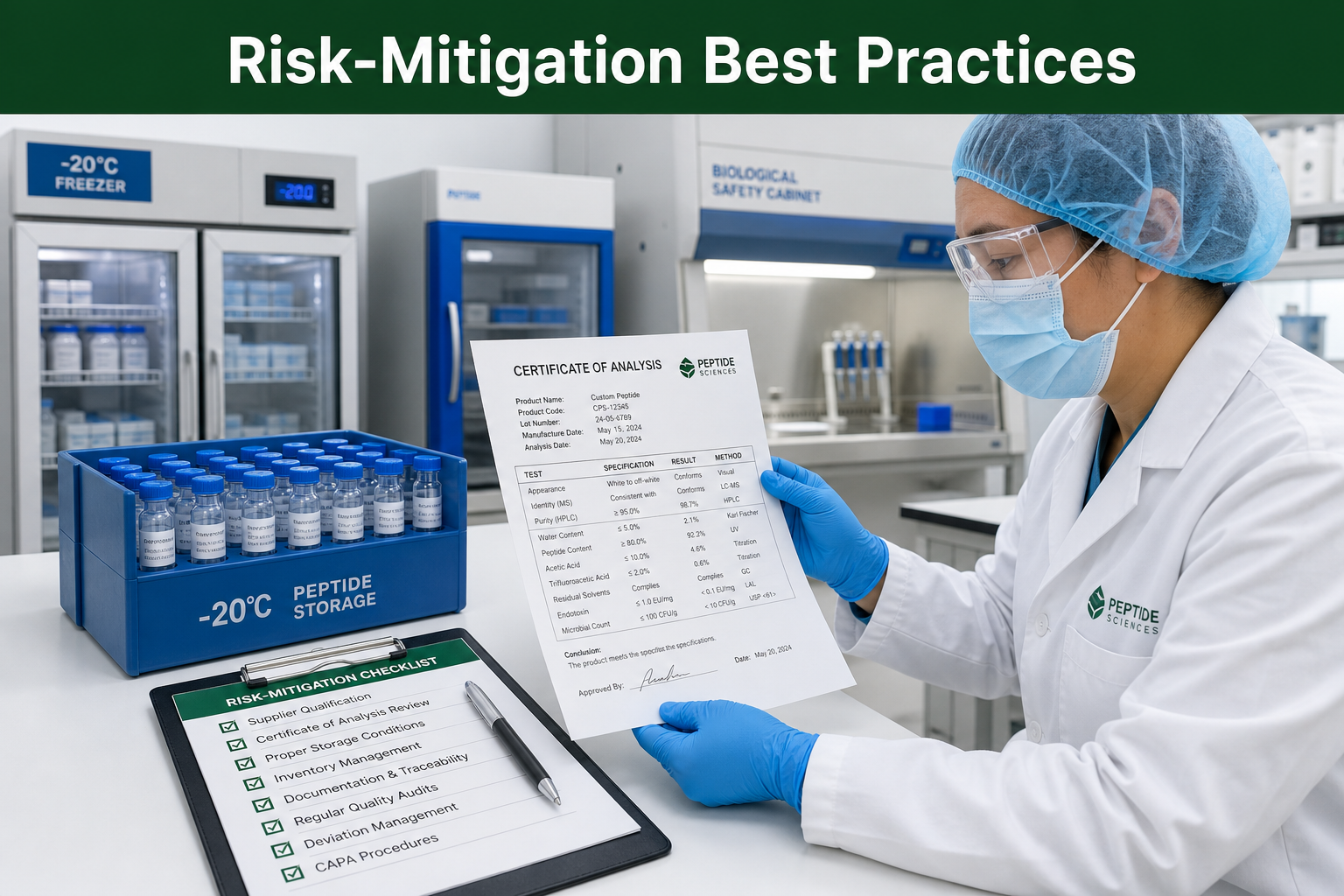
- Third-party COA — Verify purity, sequence confirmation, and residual solvent levels from an independent laboratory, not just the vendor's internal testing.
- Batch traceability — Every vial should carry a lot number traceable to a specific synthesis run and test report.
- Cold-chain compliance — Lyophilized peptides require refrigerated or frozen shipping. Avoid vendors who ship at ambient temperature without insulation.
- No human-use marketing — Vendors making health claims are operating outside regulatory boundaries, which signals broader quality control problems.
- Transparent manufacturing disclosures — Reputable suppliers disclose synthesis method, facility standards, and sterility testing.
For labs working with compounds like BPC-157, GHK-Cu, or LL-37, these standards are non-negotiable for data integrity.
When human use is the clinical goal, the legally sound pathway is a patient-specific prescription filled by a 503A-licensed compounding pharmacy. This route ensures regulatory compliance, pharmaceutical-grade quality, and prescriber accountability — none of which exist in the unregulated market.
Researchers can also review innovative peptide delivery systems to understand how formulation choices affect both stability and research validity.
Conclusion
The peptide research market in 2026 is expanding faster than the regulatory infrastructure designed to govern it. That gap creates real risk — for lab data quality, for legal compliance, and for public safety when products migrate from "research" to human use without oversight.
Actionable next steps for labs and researchers:
- Audit current suppliers against the COA, batch traceability, and cold-chain checklist above before the next order.
- Document the research purpose for every peptide purchase and retain records.
- Reject any vendor whose product pages include dosing guidance, testimonials, or health outcome claims.
- For any human-use application, engage a licensed prescriber and 503A compounding pharmacy — not an online vendor.
- Stay current with FDA enforcement actions, which signal which compounds and vendor practices are under active scrutiny.
The science behind peptide research is genuinely compelling. Protecting that science — and the people conducting it — requires sourcing standards that match the seriousness of the work.
Leave a Reply
Want to join the discussion?Feel free to contribute!