Call or Text 727-513-9780
  • Shopping Cart Shopping Cart
    0Shopping Cart
Pure Tested Peptides | America's most trusted Peptides for sale online
  • Peptides for sale
    • Oral Peptides for sale
      • Peptide Capsules for sale
      • BPC 157 Capsules 1000mcg
      • SLU-PP-332 Capsules | 1000 mcg
      • 5-Amino-1MQ 50mg Capsules
      • Tesofensine 500mcg
    • All Peptides for sale
    • Peptide Sprays
      • BPC 157 Nasal Spray Kit
      • BPC-157 TB500 Nasal Spray Kit
      • Semax Nasal Spray 10mg
      • Selank – Nasal Spray Kit – 10mg
      • Epithalon 50MG Nasal Spray Kit
      • Ipamorelin 10mg Nasal Spray
      • Klow Nasal Spray (BPC-157 + TB-500 + GHK-Cu + KPV) | 80mg
      • Hulk Nasal Spray Tesa / Ipa Blend 6/3 MG
      • Klow Nasal Spray
      • NAD + 500 mg Nasal Spray
      • PT-141 Nasal Spray Kit
    • GHRH Peptides
      • Ipa Peptides
      • CJC-1295 Peptides
        • CJC-1295 with DAC 5 mg
        • CJC-1295 without DAC 5 mg
        • CJC-1295 Ipa 10mg
      • Tesa Peptides
        • Tesa Peptide
        • Tesa 20 mg
    • GHK-Cu Peptides
      • All GHK-Cu Peptides
      • GHK-Cu 100mg
      • KLOW Peptide Blend – Buy KLOW blend online
    • BPC Peptides
      • All BPC Peptides
      • BPC-157
      • BPC-157 TB-500
      • BPC 157 capsules 1000mcg
    • SLU-PP-332 Peptides
      • All SLU-PP-332 Peptides
      • SLU-PP-332 5mg
    • GLP3 Peptides
      • GLP3-R
      • GLP3-R CAG 10mg
      • GLP3-R 20mg
    • PT-141 Peptides
      • PT-141 Peptides for sale
      • PT-141 10mg
      • PT-141 Nasal Spray
    • CAG Peptides
      • Lipo-C Peptide Blend
      • CAG 5mg
      • CAG 10mg
    • MOTS-C Peptides
      • MOTS-C Peptides for sale
      • MOTS-c peptide
      • MOTS-c 10mg *6 pack*
    • 5 Amino 1MQ Peptides
      • 5 Amino 1MQ Peptides for sale
      • 5-Amino-1MQ 50mg Capsules
      • 5-Amino-1MQ 5mg
    • Epithalon Peptides
      • Epithalon Peptides for sale
      • Epithalon 10mg
      • Epithalon 50mg
  • Shop
    • GLPs
      • 5-Amino-1MQ 50mg Capsules
      • 5-Amino-1MQ 5mg
      • GLP3-Reta
      • L-Carnitine 500mg/ml
      • Tesofensine 500mcg
      • SLU-PP-332 5mg
      • MOTS-c 10mg *6 pack*
    • Epithalon & BPC Peptides
      • Epithalon 10mg
      • Epithalon 50mg
      • BPC-157
      • BPC 157 capsules 1000mcg
      • BPC-157 TB-500
      • BPC-157 TB500 Nasal Spray Kit
      • BPC 157 Nasal Spray Kit
    • BPC TB-500 & NAD+ Peptides
      • NAD+ 500 mg
      • KLOW Peptide Blend – Buy KLOW blend online
      • GLOW Peptide Blend
      • TB 500 5mg
      • BPC 157 capsules 1000mcg – Supplement
      • BPC 157 Nasal Spray Kit
      • BPC-157
      • BPC-157 TB500 Nasal Spray Kit
      • BPC-157 TB-500
      • BPC 157 capsules 1000mcg
    • LL-37 Peptide
      • LL-37 10 mg
    • MOTS-C & Selank
      • MOTS-c peptide
      • Selank 10mg
    • GHK Peptides
      • GHK-Cu 100mg
      • GLOW Peptide Blend
      • KLOW Peptide Blend – Buy KLOW blend online
  • COAs
  • Wholesale
    • Wholesale Peptides for sale
  • PTP FAQ
  • Affiliates
    • Selank Peptide: Advanced Pharmacological Mechanisms Underlying Its Anxiolytic and Nootropic Effects in Research
      • 5-Amino-1MQ Peptide: Detailed Mechanisms of NNMT Inhibition and Its Impact on Cellular Metabolism Research
        • MOTS-C Peptide: Unraveling Its Role in Mitochondrial Dynamics and Energy Metabolism Research
          • Epithalon Peptide and Telomerase Regulation: Investigating Its Impact on Cellular Senescence and Lifespan Research Models
            • GLP2-T vs GLP2 Tirz Peptide: Understanding the Naming, Mechanistic Nuances, and Research Implications for Gut Health
      • Peptides and Polypeptides in Modern Pharmacology: What Research on Metoprolol, Prednisone, and Amlodipine Reveals
        • Polypeptide Peptides vs NSAIDs: What Naproxen and Diclofenac Teach Tissue-Repair Researchers About BPC‑157 and TB‑500
          • Peptides and Polypeptides in Endocrine Pharmacology: How GLP-1, GLP-2, and GLP-3 Retatrutide Differ From Classic Drugs Like Prednisone and Amlodipine
          • 5‑Amino‑1MQ Peptide and NNMT Inhibition: How It Compares With Statins Like Atorvastatin in Adipose and Lipid Metabolism Research
      • Enclomiphene, Estrogen Receptor Signaling, and Luteinizing Phase Biology: What Hormone Researchers Should Measure
        • Mesenchymal Stem Cells, BPC‑157, and GHK‑Cu: How Tissue Repair Peptides Compare With Classic NSAIDs Like Naproxen in Injury Models
          • Peptide Calculator Use Cases Beyond Growth Hormone: Working Through GLP‑3 Retatrutide, MOTS‑c, and BPC‑157 Research Dosing
        • Polypeptide Peptides in Endocrine and Metabolic Pharmacology: Lessons From Amlodipine, Prednisone, and Metoprolol
        • Peptides Calculator for Advanced Blends: Worked Examples for Tesamorelin, CJC‑1295, and Ipamorelin Stacks
          • Peptides and Polypeptides in Human Physiology: How Molecular Size Shapes Research Applications
            • Selank Peptide: Advanced Pharmacological Mechanisms Underlying Its Anxiolytic and Nootropic Effects in Research
          • 5-Amino-1MQ Peptide: Detailed Mechanisms of NNMT Inhibition and Its Impact on Cellular Metabolism Research
            • MOTS-C Peptide: Unraveling Its Role in Mitochondrial Dynamics and Energy Metabolism Research
              • Epithalon Peptide and Telomerase Regulation: Investigating Its Impact on Cellular Senescence and Lifespan Research Models
                • GLP2-T vs GLP2 Tirz Peptide: Understanding the Naming, Mechanistic Nuances, and Research Implications for Gut Health
                  • Peptides and Polypeptides in Endocrine Pharmacology: How GLP-1, GLP-2, and GLP-3 Retatrutide Differ From Classic Drugs Like Prednisone and Amlodipine
                    • Polypeptide Peptides vs NSAIDs: What Naproxen and Diclofenac Teach Tissue-Repair Researchers About BPC‑157 and TB‑500
                      • Peptides and Polypeptides in Modern Pharmacology: What Research on Metoprolol, Prednisone, and Amlodipine Reveals
                        • 5‑Amino‑1MQ Peptide and NNMT Inhibition: How It Compares With Statins Like Atorvastatin in Adipose and Lipid Metabolism Research
                        • Enclomiphene, Estrogen Receptor Signaling, and Luteinizing Phase Biology: What Hormone Researchers Should Measure
                        • Mesenchymal Stem Cells, BPC‑157, and GHK‑Cu: How Tissue Repair Peptides Compare With Classic NSAIDs Like Naproxen in Injury Models
                        • Peptide Calculator Use Cases Beyond Growth Hormone: Working Through GLP‑3 Retatrutide, MOTS‑c, and BPC‑157 Research Dosing
                        • Polypeptide Peptides in Endocrine and Metabolic Pharmacology: Lessons From Amlodipine, Prednisone, and Metoprolol
                        • Peptides Calculator for Advanced Blends: Worked Examples for Tesamorelin, CJC‑1295, and Ipamorelin Stacks
                        • Peptides and Polypeptides in Human Physiology: How Molecular Size Shapes Research Applications
                        • Selank Peptide: Advanced Pharmacological Mechanisms Underlying Its Anxiolytic and Nootropic Effects in Research
                        • MOTS-C Peptide: Unraveling Its Role in Mitochondrial Dynamics and Energy Metabolism Research
                        • Peptides and Polypeptides in Modern Pharmacology: What Research on Metoprolol, Prednisone, and Amlodipine Reveals
                        • Peptides and Polypeptides in Endocrine Pharmacology: How GLP-1, GLP-2, and GLP-3 Retatrutide Differ From Classic Drugs Like Prednisone and Amlodipine
                        • 5-Amino-1MQ Peptide: Detailed Mechanisms of NNMT Inhibition and Its Impact on Cellular Metabolism Research
                        • Mesenchymal Stem Cells, BPC‑157, and GHK‑Cu: How Tissue Repair Peptides Compare With Classic NSAIDs Like Naproxen in Injury Models
                        • Peptide Calculator Use Cases Beyond Growth Hormone: Working Through GLP‑3 Retatrutide, MOTS‑c, and BPC‑157 Research Dosing
                        • GLP2-T vs GLP2 Tirz Peptide: Understanding the Naming, Mechanistic Nuances, and Research Implications for Gut Health
                        • Polypeptide Peptides in Endocrine and Metabolic Pharmacology: Lessons From Amlodipine, Prednisone, and Metoprolol
                        • Polypeptide Peptides vs NSAIDs: What Naproxen and Diclofenac Teach Tissue-Repair Researchers About BPC‑157 and TB‑500
                        • Peptides and Polypeptides in Human Physiology: How Molecular Size Shapes Research Applications
                        • Peptides Calculator for Advanced Blends: Worked Examples for Tesamorelin, CJC‑1295, and Ipamorelin Stacks
                        • 5‑Amino‑1MQ Peptide and NNMT Inhibition: How It Compares With Statins Like Atorvastatin in Adipose and Lipid Metabolism Research
                        • Enclomiphene, Estrogen Receptor Signaling, and Luteinizing Phase Biology: What Hormone Researchers Should Measure
                        • Epithalon Peptide and Telomerase Regulation: Investigating Its Impact on Cellular Senescence and Lifespan Research Models
                        • Best research protocol Klow blend
                        • best time to take BPC-157
                        • best time to take DSIP (Delta Sleep Inducing Peptide)
                        • best time to take CJC-1295
                        • best time to take AOD-9604
                        • best time to take Follistatin 344
                        • best time to take Ipamorelin
                        • best time to take MK-677 (Ibutamoren)
                        • best time to take Ligandrol (LGD-4033) — research compound
                        • best time to take Ostarine (MK-2866) — research compound
                        • best time to take GHK-CU
                        • best time to take TB-500
                        • best time to take MOTS-c
                        • best time to take Semax
                        • best time to take RAD-140 (Testolone) — research compound
                        • best time to take Thymosin Alpha-1
                        • best time to take PEG-MGF
                        • Biolife Plasma, Octapharma Plasma, and Research Peptides: How Plasma Donation Labs Differ From Peptide Suppliers
                        • best time to take YK-11 — research compound
                        • best time to take PT-141 (Bremelanotide)
                        • Best research protocol Klow blend
                        • 5-Amino-1MQ and MOTS-C Synergy: Metabolic Signaling, Mitochondria, and Research Design
                        • BPC-157 and TB-500: Investigating Their Combined Effects on Angiogenesis and Cellular Migration in Tissue Repair Models
                        • BPC-157 Peptide: Gut Barrier Function, Inflammation, and Tissue-Recovery Research
                        • 5‑Amino‑1MQ and MOTS‑c Synergy in Metabolic Research: Designing NNMT and Mitochondrial Biogenesis Stacks
                        • CJC-1295 with DAC vs. Without DAC: Half-Life, Release Kinetics, and Research Implications
                        • CJC‑1295 with DAC vs. Without DAC: Expanding on Half‑Life Differences Using Tesamorelin and Ipamorelin Blend Case Studies
                        • Collagen Biology and Copper‑Binding Peptides: How GHK‑Cu, Glow Blend, and Klow Blend Interact with Skin and Connective Tissue
                        • Collagen Biology and Regenerative Peptides: How GHK‑Cu, Glow Blend, and Klow Blend Affect Extracellular Matrix Research
                    • DNA, Telomeres, and Longevity Peptides: Positioning Epithalon and MOTS‑c in Genetic Aging Research
                      • Enclomiphene Citrate: serm Mechanism, Testosterone Research, and Stack Compatibility
                        • Enclomiphene vs Enclomiphene Citrate: Formulation, Bioavailability, and Research Distinctions
                        • Epithalon Peptide Research: Telomerase Activation, Aging, and Pineal Gland Function
                        • Estrogen Receptor Signaling and Enclomiphene: How Selective Modulators Compare with Classic Polypeptide Hormones
                        • GHK-Cu Peptide: Advanced Mechanisms in Extracellular Matrix Remodeling and Wound Healing Research
                        • GHK-Cu Peptide: Collagen Synthesis, Wound Repair, and Skin-Barrier Research Models
                        • GLP-1 vs GLP-3 vs GLP-2: Peptide Classification and Research Applications
                        • GLP-2 Peptide Research Guide: Gut Barrier Function, Nutrient Absorption, and Intestinal Recovery Models
                        • GLP-3 Retatrutide vs. GLP-1 Drugs: What Triple-Agonist Biology Changes in Research Models
                        • Ipamorelin and Tesamorelin Combination: Synergistic GH Secretagogue Research and Dosing Protocols
                        • GLP2 Tirz Peptide: What It Is, Why the Name Exists, and How Researchers Should Interpret It
                        • Klow Blend Peptide Nasal Spray: What the Formulation Is Trying to Do in Cognitive Research
                        • Mitochondria, NNMT Inhibition, and Peptide Modulators: Where MOTS‑c and 5‑Amino‑1MQ Fit in Cellular Energy Research
                        • MOTS-c Peptide: Mitochondrial Function, Energy Metabolism, and What Researchers Measure
                        • MOTS-c vs. 5-Amino-1MQ: Which Metabolic Research Questions Each Compound Actually Answers
                        • Nasal Spray Peptides: Bioavailability, Administration, and Semax/Selank Research Applications
                        • PT-141 Peptide Research: Mechanism of Action and Melanocortin Receptor Signaling
                        • Retatrutide for Research: Mechanism, Structure, and GLP-1/GLP-3 Dual Action
                        • Retatrutide for Obesity and Type 2 Diabetes: What the Latest Trial Data Suggest
                        • Tesofensine Peptide Research: Mechanism, Appetite Suppression, and Neuropeptide Y Pathways
  • Contact
    • Contact Customer Service
    • Text Customer Support
  • About US
  • Shop all peptides
  • Affiliate Program
    • Affiliate Signup
  • Login / Register Login / Register Page Link Login / Register Page Link
  • Click to open the search input field Click to open the search input field Search
  • Menu Menu

Tag Archive for: de novo sequencing

Decoding Polypeptide Peptides: Advanced Structural Analysis and Research Applications

Decoding Polypeptide Peptides: Advanced Structural Analysis and Research Applications

July 11, 2026/0 Comments/by Pure Tested

More than half of all approved therapeutic drugs today either are peptides or directly target peptide-mediated pathways, a figure that underscores just how central polypeptide science has become to modern biomedicine. The field of decoding polypeptide peptides: advanced structural analysis and research applications has expanded rapidly in 2026, driven by breakthroughs in sequencing technology, machine learning, and proteomics. Understanding how a peptide's unique three-dimensional configuration shapes its biological activity is no longer an academic exercise; it is the foundation of drug discovery, disease diagnostics, and longevity research.

Key Takeaways

  • Polypeptide structure at every level, primary through quaternary, directly determines biological function and research utility.
  • Transformer-based AI models and nanopore sequencing have transformed how researchers decode peptide sequences with speed and precision.
  • Post-translational modifications add a critical layer of complexity that structural analysis must account for.
  • Advances in data-independent acquisition and proteogenomics are deepening proteome coverage in research workflows.
  • Peptide research in 2026 spans therapeutic development, neuropeptide characterization, mitochondrial biology, and skin science.

The Architecture of Polypeptides: Structure Shapes Function

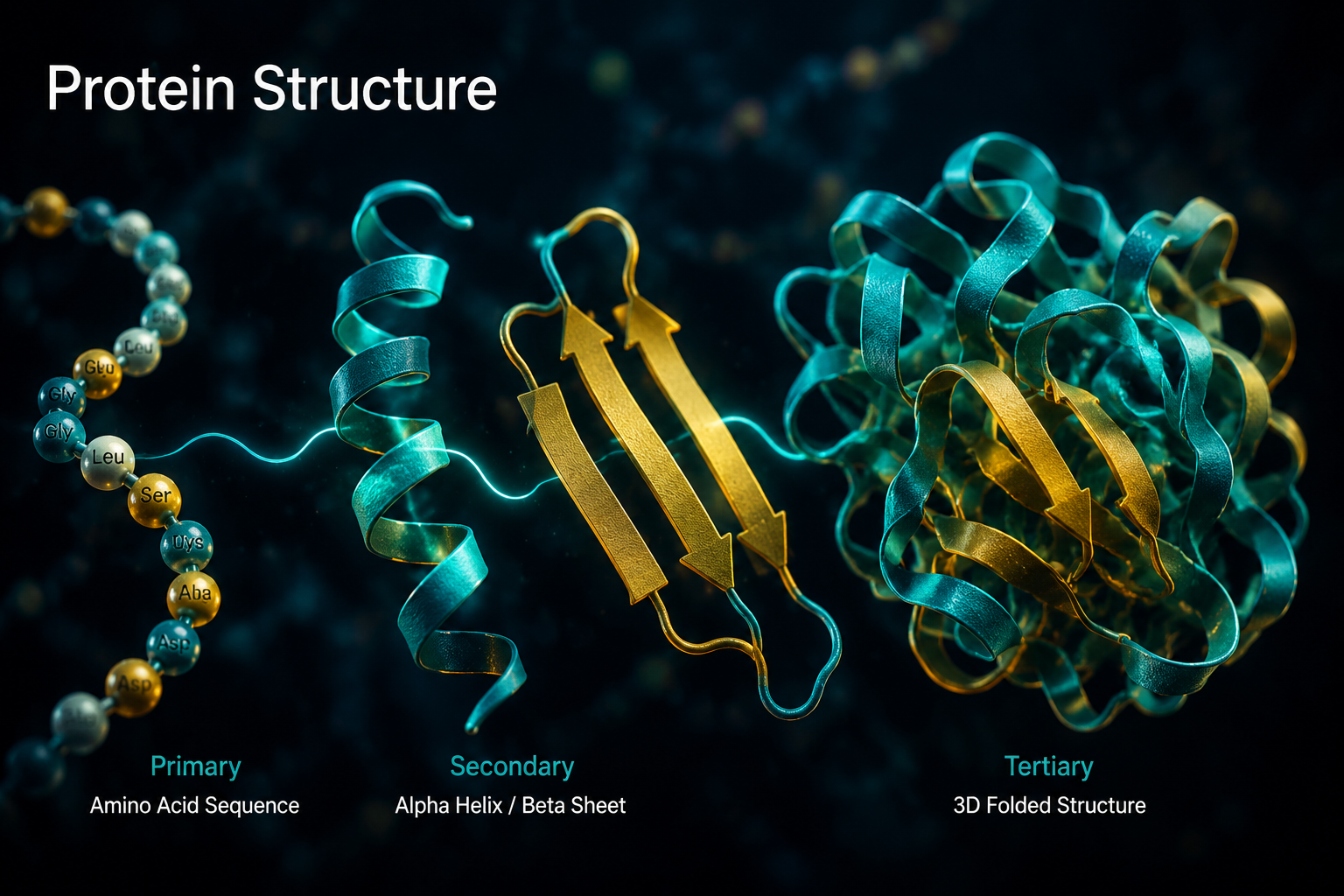
Polypeptides are chains of amino acids linked by peptide bonds. Their structural organization is described across four levels:

Structural Level Description
Primary Linear sequence of amino acids
Secondary Local folding patterns (alpha-helices, beta-sheets)
Tertiary Full three-dimensional shape of a single chain
Quaternary Assembly of multiple polypeptide subunits

Each level profoundly influences how a peptide interacts with receptors, enzymes, and cellular membranes. A single amino acid substitution at the primary level can cascade into altered folding, changed receptor affinity, and entirely different biological outcomes.

Intrinsically disordered proteins (IDPs) complicate this picture further. Unlike globular proteins, IDPs lack a fixed tertiary structure yet remain biologically active. Mass spectrometry-based approaches, including hydrogen-deuterium exchange MS and crosslinking MS, have become essential tools for mapping the conformations and dynamics of these flexible molecules. IDPs are implicated in conditions ranging from neurodegeneration to cancer, making their structural characterization a high-priority research goal.

Post-translational modifications (PTMs) such as phosphorylation, glycosylation, and isomerization add another layer of complexity. A recent analytical workflow combining collision-induced dissociation-trapped ion mobility spectrometry with protein isoaspartyl methyltransferase activity enabled untargeted discovery and precise localization of isomerized residues in neuropeptides, a capability that was simply unavailable a few years ago.

For researchers exploring peptides with mitochondrial relevance, understanding structural precision is especially important. Resources covering SS-31 mechanism and research illustrate how a tetrapeptide's specific charge distribution governs its cardiolipin-binding activity inside mitochondrial membranes.


Advanced Sequencing and Identification Technologies
Advanced Sequencing and Identification Technologies

Decoding polypeptide peptides: advanced structural analysis and research applications now relies on a powerful toolkit of next-generation sequencing and identification methods.

Transformer-Based De Novo Sequencing

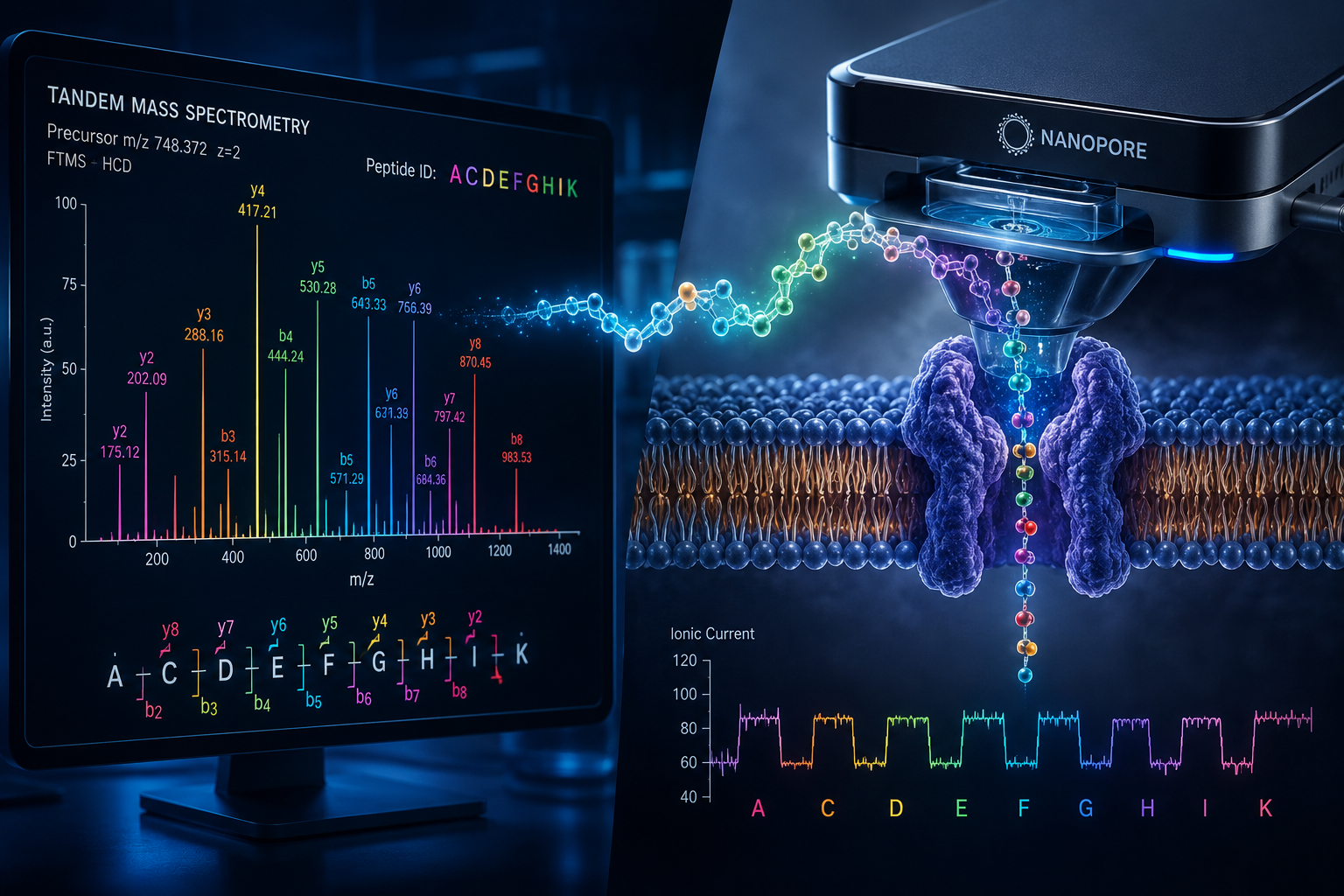
One of the most significant recent advances is the application of deep learning to peptide sequencing. Casanovo, a transformer neural network trained on 30 million labeled tandem mass spectra, translates spectral data directly into peptide sequences without requiring a reference database. This de novo approach outperforms earlier methods in cross-species benchmarks and has proven especially valuable in immunopeptidomics and metaproteomics, where reference databases are incomplete or absent.

Complementing this, rescoring peptide spectrum matches through integrated peptide property predictors, comparing observed versus predicted fragment ion intensities and retention times, has meaningfully improved identification rates and reduced false positives in complex proteomics datasets.

Nanopore Single-Molecule Sequencing

Biological nanopores capable of distinguishing all 20 standard amino acids now enable single-molecule protein sequencing. This technology can detect single-amino acid substitutions and PTMs at sub-attomole concentrations, opening doors to clinical proteomic studies that were previously impractical. High-throughput protein sequencing methods built on this platform are facilitating analysis of biological processes and disease mechanisms at unprecedented resolution.

DIA-LiPA for Conformational Mapping

A pipeline introduced in early 2026, DIA-LiPA, integrates Data-Independent Acquisition with limited proteolysis workflows. The result is improved reproducibility and deeper proteome coverage, enabling detection of conformational changes at the peptide level. This is particularly relevant for researchers studying how peptide structure shifts under different physiological conditions.

Those following what is new in peptide research will recognize these sequencing advances as part of a broader acceleration in the field throughout 2025 and 2026.


Research Applications Across Biology and Medicine

Research Applications Across Biology and Medicine
Research Applications Across Biology and Medicine

Decoding polypeptide peptides: advanced structural analysis and research applications extends across a remarkable range of scientific domains in 2026.

Therapeutic Peptide Development

Structural analysis directly informs the design of therapeutic peptides. Growth hormone-releasing peptides like those explored in tesa research depend on precise receptor binding geometries. Similarly, GLP-1 incretin research themes highlight how subtle structural differences between peptide generations produce meaningfully different receptor activation profiles and downstream metabolic effects.

Skin Biology and Structural Peptides

In dermatological research, peptide structure governs interactions with collagen, elastin, and growth factor receptors. The science of peptides in skincare demonstrates how signal peptides, carrier peptides, and neurotransmitter-inhibiting peptides each rely on distinct structural configurations to achieve their effects on the extracellular matrix.

Neuropeptide and Longevity Research

Neuropeptide characterization has benefited enormously from improved isomerization detection workflows. Structural variants of the same peptide sequence can produce entirely different neuromodulatory effects. Research into Selank peptide benefits reflects this principle, a heptapeptide whose anxiolytic and nootropic properties are tied directly to its specific amino acid arrangement and stability.

Longevity-focused research, including work on epithalon and thymic peptides, also depends on structural precision to understand telomerase activation and immune modulation mechanisms.

Proteogenomics Integration

Proteogenomics, the integration of proteomics with genomic and transcriptomic data, uses customized protein sequence databases to identify novel peptides from mass spectrometry data. This approach refines gene models and provides protein-level evidence of gene expression, bridging the gap between genome sequence and functional biology.

Key insight: The most impactful peptide research in 2026 combines structural resolution at the molecular level with systems-level biological context, neither alone is sufficient.


Conclusion

The science of decoding polypeptide peptides: advanced structural analysis and research applications is advancing faster than at any previous point in history. Researchers and institutions working in this space should prioritize three actionable steps:

  1. Adopt AI-assisted sequencing tools such as transformer-based models to accelerate de novo peptide identification, especially in non-model organisms or complex biological matrices.
  2. Integrate DIA-based conformational workflows to capture dynamic structural changes that static sequencing cannot reveal.
  3. Map PTMs systematically using ion mobility spectrometry to ensure that isomerized or modified residues are not misidentified or overlooked in structural datasets.

Structural analysis is not merely a technical step, it is the interpretive lens through which all downstream biological meaning is derived. As sequencing resolution, AI integration, and proteogenomic databases continue to mature, the capacity to decode polypeptide structure and connect it to function will define the next generation of therapeutic and scientific breakthroughs.

https://www.puretestedpeptides.com/wp-content/uploads/2026/07/decoding-polypeptide-peptides-advanced-structural-analysis-and-research-applicat.png 1024 1536 Pure Tested https://www.puretestedpeptides.com/wp-content/uploads/2026/01/buy-peptides-online.jpg Pure Tested2026-07-11 13:05:172026-07-20 15:00:27Decoding Polypeptide Peptides: Advanced Structural Analysis and Research Applications
×

Helpful Links

  • My account
  • Cart
  • Checkout
  • Refund and Returns Policy
  • Privacy Policy
  • SMS Privacy Policy
  • Login
  • My Account
  • Logout

USA Made Lab Tested Peptides

All products are sold for research, laboratory, or analytical purposes only, and are not for human consumption


Pure Tested Peptides is a chemical supplier. Pure Tested Peptides is not a compounding / chemical compounding facility as defined under 503A of the Federal Food, Drug, and Cosmetic act. Pure Tested Peptides is not an outsourcing facility as defined under 503B of the Federal Food, Drug, and Cosmetic act.

The statements made within this website have not been evaluated by the US Food and Drug Administration. The products we offer are not intended to diagnose, treat, cure or prevent any disease.

Human/Animal Consumption Prohibited. Laboratory/In-Vitro Experimental Use Only

Scroll to top Scroll to top Scroll to top