Call or Text 727-513-9780
  • Shopping Cart Shopping Cart
    0Shopping Cart
Pure Tested Peptides | America's most trusted Peptides for sale online
  • Peptides for sale
    • Oral Peptides for sale
      • Peptide Capsules for sale
      • BPC 157 Capsules 1000mcg
      • SLU-PP-332 Capsules | 1000 mcg
      • 5-Amino-1MQ 50mg Capsules
      • Tesofensine 500mcg
    • All Peptides for sale
    • Peptide Sprays
      • BPC 157 Nasal Spray Kit
      • BPC-157 TB500 Nasal Spray Kit
      • Semax Nasal Spray 10mg
      • Selank – Nasal Spray Kit – 10mg
      • Epithalon 50MG Nasal Spray Kit
      • Ipamorelin 10mg Nasal Spray
      • Klow Nasal Spray (BPC-157 + TB-500 + GHK-Cu + KPV) | 80mg
      • Hulk Nasal Spray Tesa / Ipa Blend 6/3 MG
      • Klow Nasal Spray
      • NAD + 500 mg Nasal Spray
      • PT-141 Nasal Spray Kit
    • GHRH Peptides
      • Ipa Peptides
      • CJC-1295 Peptides
        • CJC-1295 with DAC 5 mg
        • CJC-1295 without DAC 5 mg
        • CJC-1295 Ipa 10mg
      • Tesa Peptides
        • Tesa Peptide
        • Tesa 20 mg
    • GHK-Cu Peptides
      • All GHK-Cu Peptides
      • GHK-Cu 100mg
      • KLOW Peptide Blend – Buy KLOW blend online
    • BPC Peptides
      • All BPC Peptides
      • BPC-157
      • BPC-157 TB-500
      • BPC 157 capsules 1000mcg
    • SLU-PP-332 Peptides
      • All SLU-PP-332 Peptides
      • SLU-PP-332 5mg
    • GLP3 Peptides
    • PT-141 Peptides
      • PT-141 Peptides for sale
      • PT-141 10mg
      • PT-141 Nasal Spray
    • CAG Peptides
      • Lipo-C Peptide Blend
      • CAG 5mg
      • CAG 10mg
    • MOTS-C Peptides
      • MOTS-C Peptides for sale
      • MOTS-c peptide
      • MOTS-c 10mg *6 pack*
    • 5 Amino 1MQ Peptides
      • 5 Amino 1MQ Peptides for sale
      • 5-Amino-1MQ 50mg Capsules
      • 5-Amino-1MQ 5mg
    • Epithalon Peptides
      • Epithalon Peptides for sale
      • Epithalon 10mg
      • Epithalon 50mg
  • Shop
    • GLPs
      • 5-Amino-1MQ 50mg Capsules
      • 5-Amino-1MQ 5mg
      • L-Carnitine 500mg/ml
      • Tesofensine 500mcg
      • SLU-PP-332 5mg
      • MOTS-c 10mg *6 pack*
    • Epithalon & BPC Peptides
      • Epithalon 10mg
      • Epithalon 50mg
      • BPC-157
      • BPC 157 capsules 1000mcg
      • BPC-157 TB-500
      • BPC-157 TB500 Nasal Spray Kit
      • BPC 157 Nasal Spray Kit
    • BPC TB-500 & NAD+ Peptides
      • NAD+ 500 mg
      • KLOW Peptide Blend – Buy KLOW blend online
      • GLOW Peptide Blend
      • TB 500 5mg
      • BPC 157 capsules 1000mcg – Supplement
      • BPC 157 Nasal Spray Kit
      • BPC-157
      • BPC-157 TB500 Nasal Spray Kit
      • BPC-157 TB-500
      • BPC 157 capsules 1000mcg
    • LL-37 Peptide
      • LL-37 10 mg
    • MOTS-C & Selank
      • MOTS-c peptide
      • Selank 10mg
    • GHK Peptides
      • GHK-Cu 100mg
      • GLOW Peptide Blend
      • KLOW Peptide Blend – Buy KLOW blend online
  • COAs
  • Wholesale
    • Wholesale Peptides for sale
  • PTP FAQ
  • Affiliates
    • Selank Peptide: Advanced Pharmacological Mechanisms Underlying Its Anxiolytic and Nootropic Effects in Research
      • 5-Amino-1MQ Peptide: Detailed Mechanisms of NNMT Inhibition and Its Impact on Cellular Metabolism Research
        • MOTS-C Peptide: Unraveling Its Role in Mitochondrial Dynamics and Energy Metabolism Research
          • Epithalon Peptide and Telomerase Regulation: Investigating Its Impact on Cellular Senescence and Lifespan Research Models
            • GLP2-T vs GLP2 Tirz Peptide: Understanding the Naming, Mechanistic Nuances, and Research Implications for Gut Health
      • Peptides and Polypeptides in Modern Pharmacology: What Research on Metoprolol, Prednisone, and Amlodipine Reveals
        • Polypeptide Peptides vs NSAIDs: What Naproxen and Diclofenac Teach Tissue-Repair Researchers About BPC‑157 and TB‑500
          • Peptides and Polypeptides in Endocrine Pharmacology: How GLP-1, GLP-2, and GLP-3 Retatrutide Differ From Classic Drugs Like Prednisone and Amlodipine
          • 5‑Amino‑1MQ Peptide and NNMT Inhibition: How It Compares With Statins Like Atorvastatin in Adipose and Lipid Metabolism Research
      • Enclomiphene, Estrogen Receptor Signaling, and Luteinizing Phase Biology: What Hormone Researchers Should Measure
        • Mesenchymal Stem Cells, BPC‑157, and GHK‑Cu: How Tissue Repair Peptides Compare With Classic NSAIDs Like Naproxen in Injury Models
          • Peptide Calculator Use Cases Beyond Growth Hormone: Working Through GLP‑3 Retatrutide, MOTS‑c, and BPC‑157 Research Dosing
        • Polypeptide Peptides in Endocrine and Metabolic Pharmacology: Lessons From Amlodipine, Prednisone, and Metoprolol
        • Peptides Calculator for Advanced Blends: Worked Examples for Tesamorelin, CJC‑1295, and Ipamorelin Stacks
          • Peptides and Polypeptides in Human Physiology: How Molecular Size Shapes Research Applications
            • Selank Peptide: Advanced Pharmacological Mechanisms Underlying Its Anxiolytic and Nootropic Effects in Research
          • 5-Amino-1MQ Peptide: Detailed Mechanisms of NNMT Inhibition and Its Impact on Cellular Metabolism Research
            • MOTS-C Peptide: Unraveling Its Role in Mitochondrial Dynamics and Energy Metabolism Research
              • Epithalon Peptide and Telomerase Regulation: Investigating Its Impact on Cellular Senescence and Lifespan Research Models
                • GLP2-T vs GLP2 Tirz Peptide: Understanding the Naming, Mechanistic Nuances, and Research Implications for Gut Health
                  • Peptides and Polypeptides in Endocrine Pharmacology: How GLP-1, GLP-2, and GLP-3 Retatrutide Differ From Classic Drugs Like Prednisone and Amlodipine
                    • Polypeptide Peptides vs NSAIDs: What Naproxen and Diclofenac Teach Tissue-Repair Researchers About BPC‑157 and TB‑500
                      • Peptides and Polypeptides in Modern Pharmacology: What Research on Metoprolol, Prednisone, and Amlodipine Reveals
                        • 5‑Amino‑1MQ Peptide and NNMT Inhibition: How It Compares With Statins Like Atorvastatin in Adipose and Lipid Metabolism Research
                        • Enclomiphene, Estrogen Receptor Signaling, and Luteinizing Phase Biology: What Hormone Researchers Should Measure
                        • Mesenchymal Stem Cells, BPC‑157, and GHK‑Cu: How Tissue Repair Peptides Compare With Classic NSAIDs Like Naproxen in Injury Models
                        • Peptide Calculator Use Cases Beyond Growth Hormone: Working Through GLP‑3 Retatrutide, MOTS‑c, and BPC‑157 Research Dosing
                        • Polypeptide Peptides in Endocrine and Metabolic Pharmacology: Lessons From Amlodipine, Prednisone, and Metoprolol
                        • Peptides Calculator for Advanced Blends: Worked Examples for Tesamorelin, CJC‑1295, and Ipamorelin Stacks
                        • Peptides and Polypeptides in Human Physiology: How Molecular Size Shapes Research Applications
                        • Selank Peptide: Advanced Pharmacological Mechanisms Underlying Its Anxiolytic and Nootropic Effects in Research
                        • MOTS-C Peptide: Unraveling Its Role in Mitochondrial Dynamics and Energy Metabolism Research
                        • Peptides and Polypeptides in Modern Pharmacology: What Research on Metoprolol, Prednisone, and Amlodipine Reveals
                        • Peptides and Polypeptides in Endocrine Pharmacology: How GLP-1, GLP-2, and GLP-3 Retatrutide Differ From Classic Drugs Like Prednisone and Amlodipine
                        • 5-Amino-1MQ Peptide: Detailed Mechanisms of NNMT Inhibition and Its Impact on Cellular Metabolism Research
                        • Mesenchymal Stem Cells, BPC‑157, and GHK‑Cu: How Tissue Repair Peptides Compare With Classic NSAIDs Like Naproxen in Injury Models
                        • Peptide Calculator Use Cases Beyond Growth Hormone: Working Through GLP‑3 Retatrutide, MOTS‑c, and BPC‑157 Research Dosing
                        • GLP2-T vs GLP2 Tirz Peptide: Understanding the Naming, Mechanistic Nuances, and Research Implications for Gut Health
                        • Polypeptide Peptides in Endocrine and Metabolic Pharmacology: Lessons From Amlodipine, Prednisone, and Metoprolol
                        • Polypeptide Peptides vs NSAIDs: What Naproxen and Diclofenac Teach Tissue-Repair Researchers About BPC‑157 and TB‑500
                        • Peptides and Polypeptides in Human Physiology: How Molecular Size Shapes Research Applications
                        • Peptides Calculator for Advanced Blends: Worked Examples for Tesamorelin, CJC‑1295, and Ipamorelin Stacks
                        • 5‑Amino‑1MQ Peptide and NNMT Inhibition: How It Compares With Statins Like Atorvastatin in Adipose and Lipid Metabolism Research
                        • Enclomiphene, Estrogen Receptor Signaling, and Luteinizing Phase Biology: What Hormone Researchers Should Measure
                        • Epithalon Peptide and Telomerase Regulation: Investigating Its Impact on Cellular Senescence and Lifespan Research Models
                        • Best research protocol Klow blend
                        • best time to take BPC-157
                        • best time to take DSIP (Delta Sleep Inducing Peptide)
                        • best time to take CJC-1295
                        • best time to take AOD-9604
                        • best time to take Follistatin 344
                        • best time to take Ipamorelin
                        • best time to take MK-677 (Ibutamoren)
                        • best time to take Ligandrol (LGD-4033) — research compound
                        • best time to take Ostarine (MK-2866) — research compound
                        • best time to take GHK-CU
                        • best time to take TB-500
                        • best time to take MOTS-c
                        • best time to take Semax
                        • best time to take RAD-140 (Testolone) — research compound
                        • best time to take Thymosin Alpha-1
                        • best time to take PEG-MGF
                        • Biolife Plasma, Octapharma Plasma, and Research Peptides: How Plasma Donation Labs Differ From Peptide Suppliers
                        • best time to take YK-11 — research compound
                        • best time to take PT-141 (Bremelanotide)
                        • Best research protocol Klow blend
                        • 5-Amino-1MQ and MOTS-C Synergy: Metabolic Signaling, Mitochondria, and Research Design
                        • BPC-157 and TB-500: Investigating Their Combined Effects on Angiogenesis and Cellular Migration in Tissue Repair Models
                        • BPC-157 Peptide: Gut Barrier Function, Inflammation, and Tissue-Recovery Research
                        • 5‑Amino‑1MQ and MOTS‑c Synergy in Metabolic Research: Designing NNMT and Mitochondrial Biogenesis Stacks
                        • CJC-1295 with DAC vs. Without DAC: Half-Life, Release Kinetics, and Research Implications
                        • CJC‑1295 with DAC vs. Without DAC: Expanding on Half‑Life Differences Using Tesamorelin and Ipamorelin Blend Case Studies
                        • Collagen Biology and Copper‑Binding Peptides: How GHK‑Cu, Glow Blend, and Klow Blend Interact with Skin and Connective Tissue
                        • Collagen Biology and Regenerative Peptides: How GHK‑Cu, Glow Blend, and Klow Blend Affect Extracellular Matrix Research
                    • DNA, Telomeres, and Longevity Peptides: Positioning Epithalon and MOTS‑c in Genetic Aging Research
                      • Enclomiphene Citrate: serm Mechanism, Testosterone Research, and Stack Compatibility
                        • Enclomiphene vs Enclomiphene Citrate: Formulation, Bioavailability, and Research Distinctions
                        • Epithalon Peptide Research: Telomerase Activation, Aging, and Pineal Gland Function
                        • Estrogen Receptor Signaling and Enclomiphene: How Selective Modulators Compare with Classic Polypeptide Hormones
                        • GHK-Cu Peptide: Advanced Mechanisms in Extracellular Matrix Remodeling and Wound Healing Research
                        • GHK-Cu Peptide: Collagen Synthesis, Wound Repair, and Skin-Barrier Research Models
                        • GLP-1 vs GLP-3 vs GLP-2: Peptide Classification and Research Applications
                        • GLP-2 Peptide Research Guide: Gut Barrier Function, Nutrient Absorption, and Intestinal Recovery Models
                        • GLP-3 Retatrutide vs. GLP-1 Drugs: What Triple-Agonist Biology Changes in Research Models
                        • Ipamorelin and Tesamorelin Combination: Synergistic GH Secretagogue Research and Dosing Protocols
                        • GLP2 Tirz Peptide: What It Is, Why the Name Exists, and How Researchers Should Interpret It
                        • Klow Blend Peptide Nasal Spray: What the Formulation Is Trying to Do in Cognitive Research
                        • Mitochondria, NNMT Inhibition, and Peptide Modulators: Where MOTS‑c and 5‑Amino‑1MQ Fit in Cellular Energy Research
                        • MOTS-c Peptide: Mitochondrial Function, Energy Metabolism, and What Researchers Measure
                        • MOTS-c vs. 5-Amino-1MQ: Which Metabolic Research Questions Each Compound Actually Answers
                        • Nasal Spray Peptides: Bioavailability, Administration, and Semax/Selank Research Applications
                        • PT-141 Peptide Research: Mechanism of Action and Melanocortin Receptor Signaling
                        • Retatrutide for Research: Mechanism, Structure, and GLP-1/GLP-3 Dual Action
                        • Retatrutide for Obesity and Type 2 Diabetes: What the Latest Trial Data Suggest
                        • Tesofensine Peptide Research: Mechanism, Appetite Suppression, and Neuropeptide Y Pathways
  • Contact
    • Contact Customer Service
    • Text Customer Support
  • About US
  • Shop all peptides
  • Affiliate Program
    • Affiliate Signup
  • Login / Register Login / Register Page Link Login / Register Page Link
  • Click to open the search input field Click to open the search input field Search
  • Menu Menu

Tag Archive for: diuretics

What Is a Diuretic? HCTZ, Furosemide, and Fluid-Balance Controls in GLP and Growth-Hormone Peptide Research

What Is a Diuretic? HCTZ, Furosemide, and Fluid-Balance Controls in GLP and Growth-Hormone Peptide Research

October 12, 2026/0 Comments/in Uncategorized/by

Fluid retention of just two liters can add more than four pounds to a subject's recorded body weight overnight, a shift large enough to mask or mimic a meaningful peptide-study endpoint. Understanding what a diuretic is, how agents like HCTZ and furosemide operate at the nephron level, and how GLP and growth-hormone peptides alter renal sodium handling is not a pharmacology footnote. It is a prerequisite for interpreting fluid-sensitive research data accurately.

Key Takeaways

  • Diuretics increase urinary output by blocking sodium reabsorption at specific nephron sites; HCTZ acts on the distal tubule, furosemide on the loop of Henle.
  • GLP-1 receptor agonists carry intrinsic natriuretic properties that can reduce or offset diuretic requirements in research models.
  • Growth-hormone-related peptides reliably promote sodium and water retention, which can inflate body-weight readings and confound lean-mass endpoints.
  • Renal tubular sodium handling is the central "control knob" linking peptide pharmacology to plasma-volume and body-weight outcomes.
  • Researchers must account for diuretic use, hydration status, and peptide-driven fluid shifts when designing protocols and interpreting results.

Diuretics Defined: Mechanism, Classes, and the HCTZ vs. Furosemide Distinction

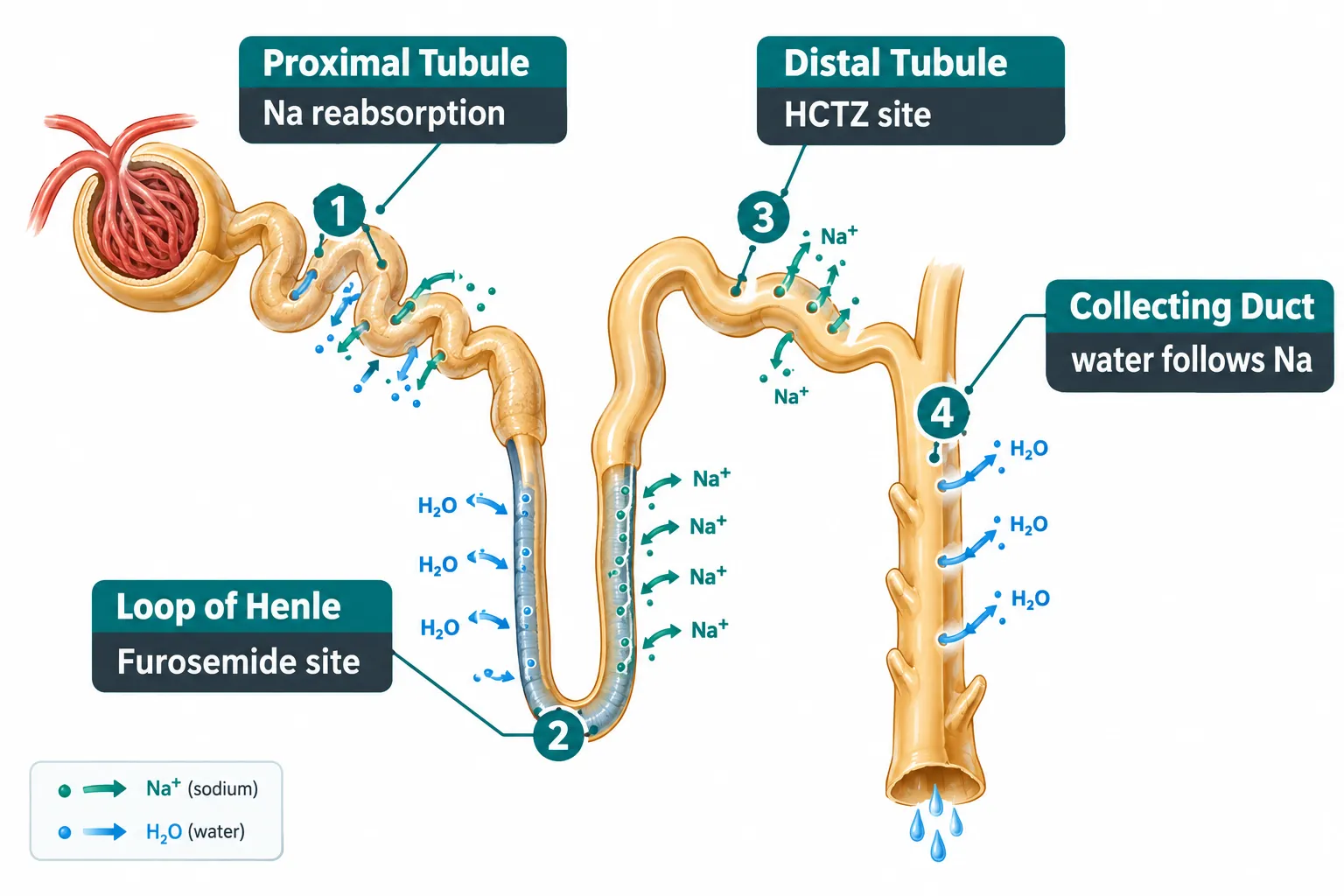
A diuretic is any agent that increases the rate of urine production by reducing renal tubular reabsorption of sodium and, consequently, water. Because water follows sodium osmotically, blocking sodium transport at any nephron segment pulls fluid into the tubular lumen and out of the body.
Diuretics Defined: Mechanism, Classes, and the HCTZ vs. Furosemide Distinction

The two agents most relevant to peptide research contexts are hydrochlorothiazide (HCTZ) and furosemide.

Feature HCTZ (Thiazide) Furosemide (Loop)
Site of action Distal convoluted tubule Thick ascending loop of Henle
Relative potency Moderate High ("high-ceiling")
Onset 1-2 hours 30-60 minutes (oral)
Primary use Hypertension, mild edema Acute heart failure, resistant edema
Electrolyte concern Hypokalemia, hyponatremia Hypokalemia, hypomagnesemia

HCTZ inhibits the Na-Cl cotransporter (NCC), producing a moderate, sustained diuresis well-suited to chronic fluid management. Furosemide inhibits the Na-K-2Cl cotransporter (NKCC2), delivering a rapid, powerful diuresis used when fluid overload is urgent or HCTZ-resistant.

A third class, potassium-sparing diuretics such as spironolactone, blocks aldosterone receptors in the collecting duct. These are less potent but preserve potassium, making them relevant when peptide protocols already stress electrolyte balance.


GLP-1 Peptides and Fluid Balance: Built-In Natriuretic Activity

GLP-1 receptor agonists (GLP-1 RAs) are among the most studied peptide classes in 2026 metabolic research. What is a diuretic effect in this context? Interestingly, GLP-1 RAs appear to generate one intrinsically.

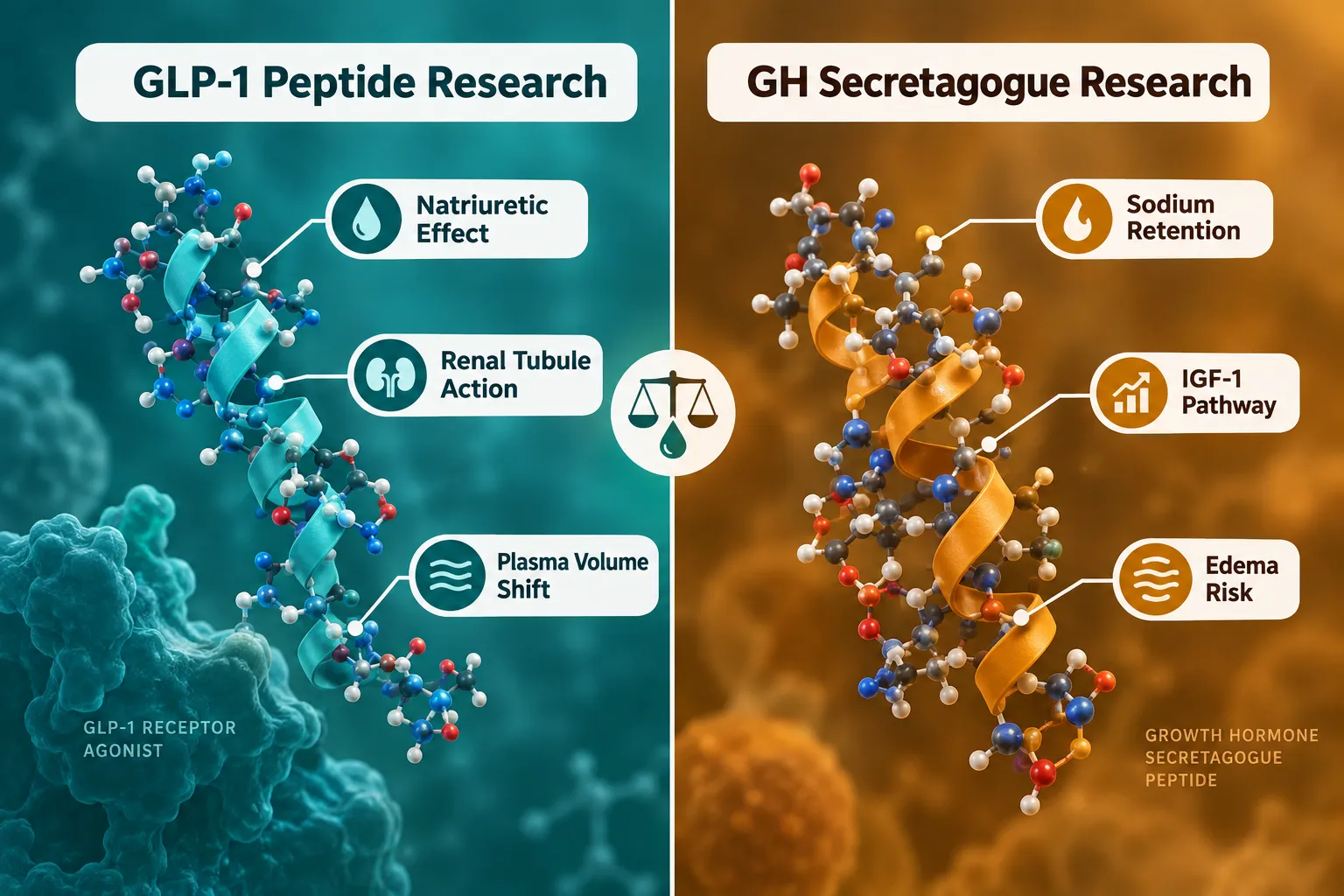
Activation of GLP-1 receptors on renal proximal tubule cells inhibits the sodium-hydrogen exchanger (NHE3), reducing sodium reabsorption and promoting a mild but measurable natriuresis. This mechanism is distinct from classic diuretic pharmacology yet produces overlapping outcomes: lower plasma volume, reduced interstitial fluid, and modest decreases in body weight that are independent of fat loss.

"In some clinical observations, GLP-1 RA therapy has resolved diuretic-resistant fluid retention, a finding that underscores the direct renal activity of this peptide class."

For researchers studying GLP-1 peptides or the GLP-3R peptide, this intrinsic fluid-lowering activity creates a significant confound. A recorded drop in body weight during a GLP-1 RA protocol may reflect:

  • Reduced caloric intake (the intended endpoint)
  • Natriuresis-driven plasma-volume contraction
  • A combination of both

Separating these contributions requires baseline fluid-status assessment and, ideally, bioelectrical impedance or DEXA to distinguish fat mass from lean and water compartments.

Long-term data also suggest that GLP-1 RAs reduce heart-failure hospitalization rates, an outcome partly attributable to sustained natriuretic activity reducing cardiac preload. This means concurrent standard diuretic doses may need downward adjustment in research subjects already on GLP-1 RA protocols.


Growth-Hormone Peptides, Sodium Retention, and the Diuretic Counterbalance
Growth-Hormone Peptides, Sodium Retention, and the Diuretic Counterbalance

Where GLP-1 peptides tend to reduce fluid load, growth-hormone-related peptides reliably do the opposite. GH stimulates IGF-1 production, which in turn activates renal sodium reabsorption through multiple tubular pathways. The result is a well-documented pattern of sodium retention, plasma-volume expansion, and peripheral edema, particularly prominent in the first weeks of GH or GH-secretagogue administration.

Research involving sermorelin peptide or GHRP-2 vs. sermorelin comparisons must account for this fluid-retention phase. Early body-weight increases in GH-secretagogue protocols are frequently misread as lean-mass accrual when they largely represent water and sodium accumulation.

Updated 2026 analyses frame this fluid retention as a physiological "normalization" of extracellular volume in subjects who were previously GH-deficient, but the effect remains clinically significant and endpoint-distorting regardless of its origin.

Key fluid-related variables to track in GH-peptide protocols:

  • Morning body weight (fasted, post-void) at consistent intervals
  • Ankle circumference or pitting-edema assessment
  • Serum sodium and potassium at baseline and follow-up
  • Urine specific gravity as a hydration proxy

MK-677 (ibutamoren), an oral GH secretagogue, produces particularly notable fluid retention due to sustained GH and IGF-1 elevation. Researchers using this compound alongside AOD-9604, a GH fragment with a different receptor profile, should note that AOD-9604's fluid impact appears considerably lower, offering a useful within-protocol comparison point.

When edema is significant enough to require intervention, furosemide is typically preferred over HCTZ because of its faster onset and higher ceiling. However, aggressive loop diuresis in a GH-peptide protocol risks hypokalemia, which can itself alter cellular hydration and confound intracellular water measurements.


Fluid-Balance Controls as a Research Design Requirement
Fluid-Balance Controls as a Research Design Requirement

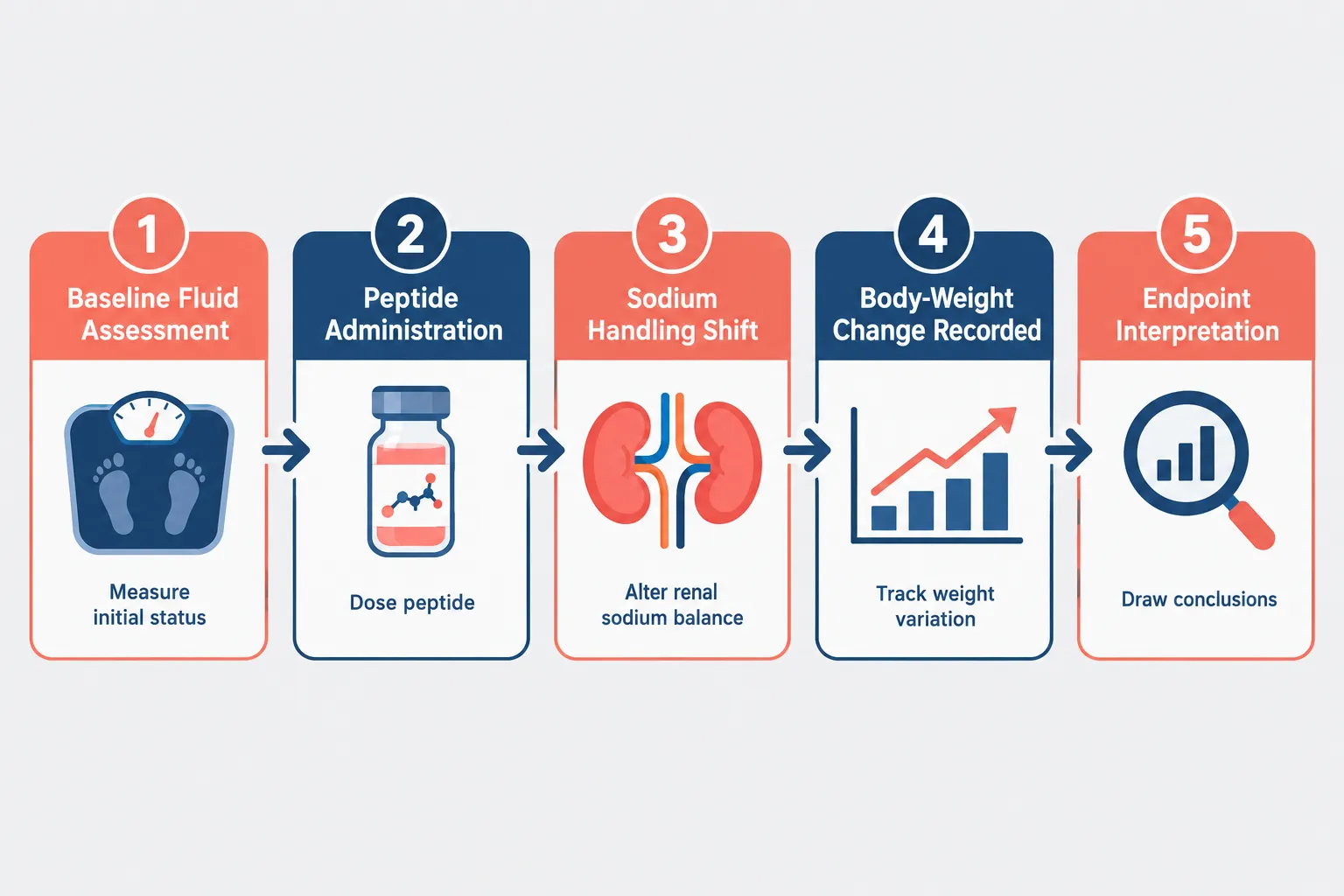
Treating diuresis as a passive background variable rather than an active experimental control is a common source of irreproducible peptide data. The convergence of GLP-1 natriuresis, GH-driven sodium retention, and standard diuretic pharmacology at the same renal tubular sites means that small differences in hydration protocol, diuretic timing, or sodium intake can shift body-weight readings by two to five pounds without any change in the variable of interest.

Practical controls for fluid-sensitive peptide research:

  1. Standardize sodium intake across the protocol period.
  2. Record diuretic use (type, dose, timing) as a tracked covariate, not an exclusion criterion.
  3. Use morning fasted body weight as the primary weight endpoint, not ad-hoc measurements.
  4. Separate body-composition assessment (lean mass, fat mass, total body water) from scale weight.
  5. Monitor serum electrolytes when combining GH-related peptides with any diuretic class.

For researchers exploring compounds such as cagrilinitide peptide, which combines GLP-1 and amylin receptor activity, the fluid picture becomes even more layered. Dual-agonist peptides may amplify natriuretic effects beyond those seen with single-receptor agents, making pre-protocol fluid-status documentation essential.

Similarly, mitochondria-targeted peptides like SS-31 are being studied in contexts involving oxidative stress and cellular energy, where systemic fluid shifts could alter tissue perfusion and confound outcome markers unrelated to the peptide's primary mechanism.

Looking forward, the expectation, speculative but plausible, is that researchers will increasingly co-administer low-dose potassium-sparing diuretics as a standardized fluid-control arm in GH-peptide trials, and that GLP-1 RA protocols will move toward explicit natriuresis measurement as a secondary endpoint rather than an uncontrolled variable.


Conclusion

Understanding what a diuretic is, and how HCTZ, furosemide, and renal sodium handling interact with GLP and growth-hormone peptide pharmacology, is foundational to producing reliable research data in 2026. The actionable steps are clear: document fluid status at baseline, track diuretic use as a covariate, separate scale weight from body composition, and select diuretic class based on the specific fluid-retention mechanism in play. Researchers who treat fluid balance as a controlled variable rather than background noise will produce endpoints that hold up to scrutiny and replication.

https://www.puretestedpeptides.com/wp-content/uploads/2026/10/what-is-a-diuretic-hctz-furosemide-and-fluid-balance-controls-in-glp-and-growth.webp 1024 1536 https://www.puretestedpeptides.com/wp-content/uploads/2026/01/buy-peptides-online.jpg 2026-10-12 13:06:342026-10-12 13:06:34What Is a Diuretic? HCTZ, Furosemide, and Fluid-Balance Controls in GLP and Growth-Hormone Peptide Research
×

Helpful Links

  • My account
  • Cart
  • Checkout
  • Refund and Returns Policy
  • Privacy Policy
  • SMS Privacy Policy
  • Login
  • My Account
  • Logout

USA Made Lab Tested Peptides

All products are sold for research, laboratory, or analytical purposes only, and are not for human consumption


Pure Tested Peptides is a chemical supplier. Pure Tested Peptides is not a compounding / chemical compounding facility as defined under 503A of the Federal Food, Drug, and Cosmetic act. Pure Tested Peptides is not an outsourcing facility as defined under 503B of the Federal Food, Drug, and Cosmetic act.

The statements made within this website have not been evaluated by the US Food and Drug Administration. The products we offer are not intended to diagnose, treat, cure or prevent any disease.

Human/Animal Consumption Prohibited. Laboratory/In-Vitro Experimental Use Only

Scroll to top Scroll to top Scroll to top