

Peptides and Polypeptides Explained: Connecting DNA, Mitochondria, and Modern Research-Use Compounds Like MOTS-c and 5-Amino-1MQ
Every protein in the human body, from the enzymes digesting food to the antibodies fighting infection, begins as a short chain of amino acids called a peptide. That single biological fact connects classical genetics, cellular energy production, and an entirely new generation of research compounds now drawing serious scientific attention in 2026.
This guide on Peptides and Polypeptides Explained: Connecting DNA, Mitochondria, and Modern Research-Use Compounds Like MOTS-c and 5-Amino-1MQ bridges foundational biology with cutting-edge investigational molecules, giving researchers and curious readers a clear, connected picture.
Key Takeaways
- Peptides are short amino acid chains; polypeptides are longer chains that fold into functional proteins.
- DNA encodes the instructions that ribosomes use to assemble every peptide and polypeptide in the body.
- Mitochondria produce their own small peptides, including MOTS-c, that regulate metabolism and stress responses.
- 5-Amino-1MQ is a small-molecule research compound studied for its role in metabolic enzyme inhibition, often discussed alongside mitochondria-targeting peptides.
- Both MOTS-c and 5-Amino-1MQ remain strictly research-use compounds; neither is approved for human therapeutic use.
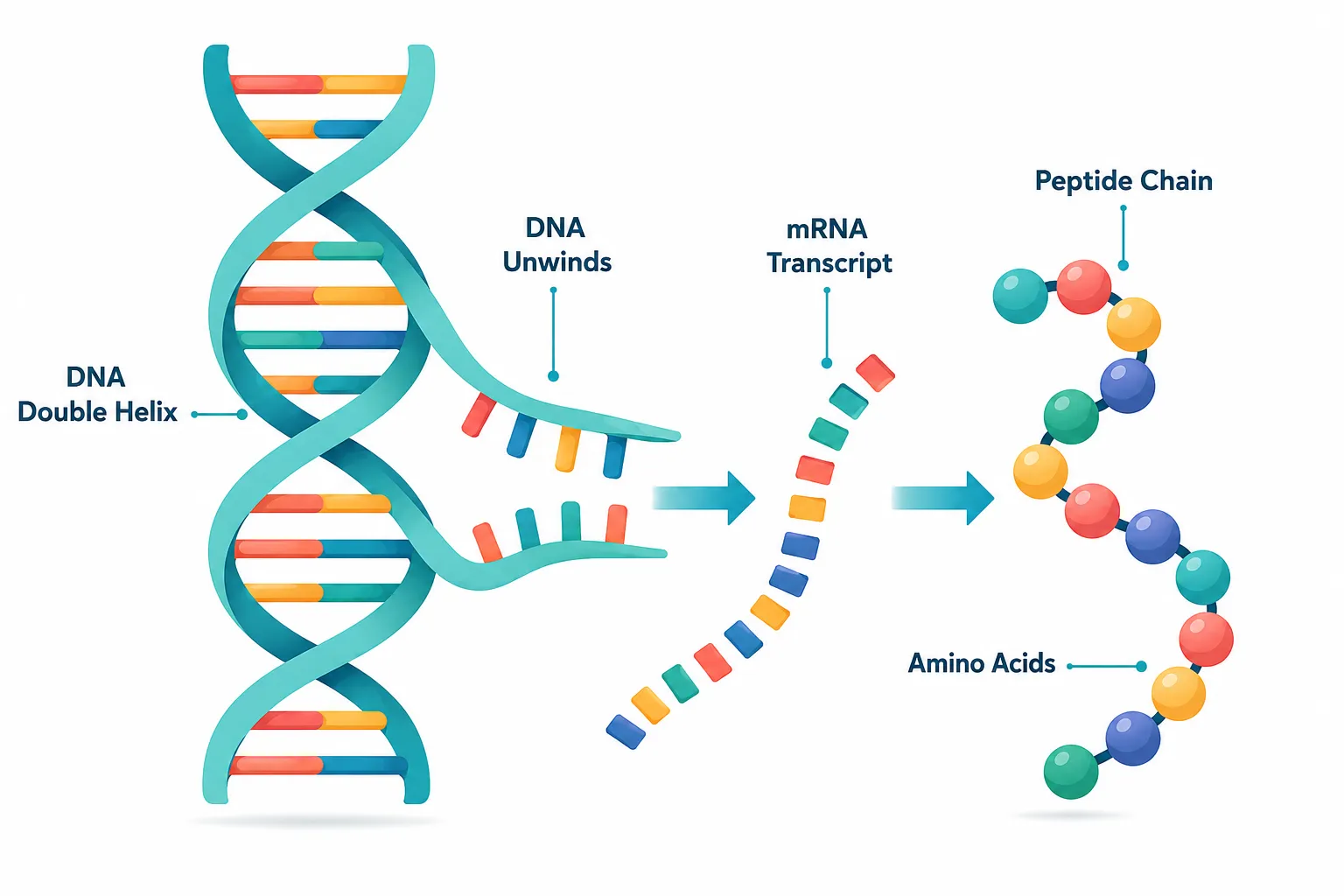
From DNA to Peptides: The Biological Blueprint
What Are Peptides and Polypeptides?
A peptide is a molecule made of two or more amino acids linked by peptide bonds. The naming follows a simple size rule:
| Term | Amino Acid Count | Example |
|---|---|---|
| Dipeptide | 2 | Carnosine |
| Oligopeptide | 3-20 | GLP-1 (7 residues) |
| Polypeptide | 20-50+ | Growth hormone fragments |
| Protein | 50+ (folded) | Insulin, collagen |
The line between "polypeptide" and "protein" is functional rather than strict, proteins are polypeptides that have folded into a defined three-dimensional shape.
How DNA Encodes Peptide Sequences
DNA stores genetic information as sequences of nucleotide bases (A, T, G, C). When a gene is expressed:
- Transcription converts the DNA sequence into messenger RNA (mRNA).
- Translation uses ribosomes to read mRNA codons and assemble the corresponding amino acids.
- The resulting chain is a polypeptide, which may be cleaved, modified, or folded into its final form.
This process is the origin of every peptide the body produces naturally, including the mitochondria-derived peptides now attracting intense research interest.
"The ribosome is essentially a molecular factory reading a blueprint written in DNA and outputting a peptide product."
Researchers studying BDNF peptides and neuroprotective compounds rely on this same transcription-translation logic to understand how target sequences are designed and synthesized.
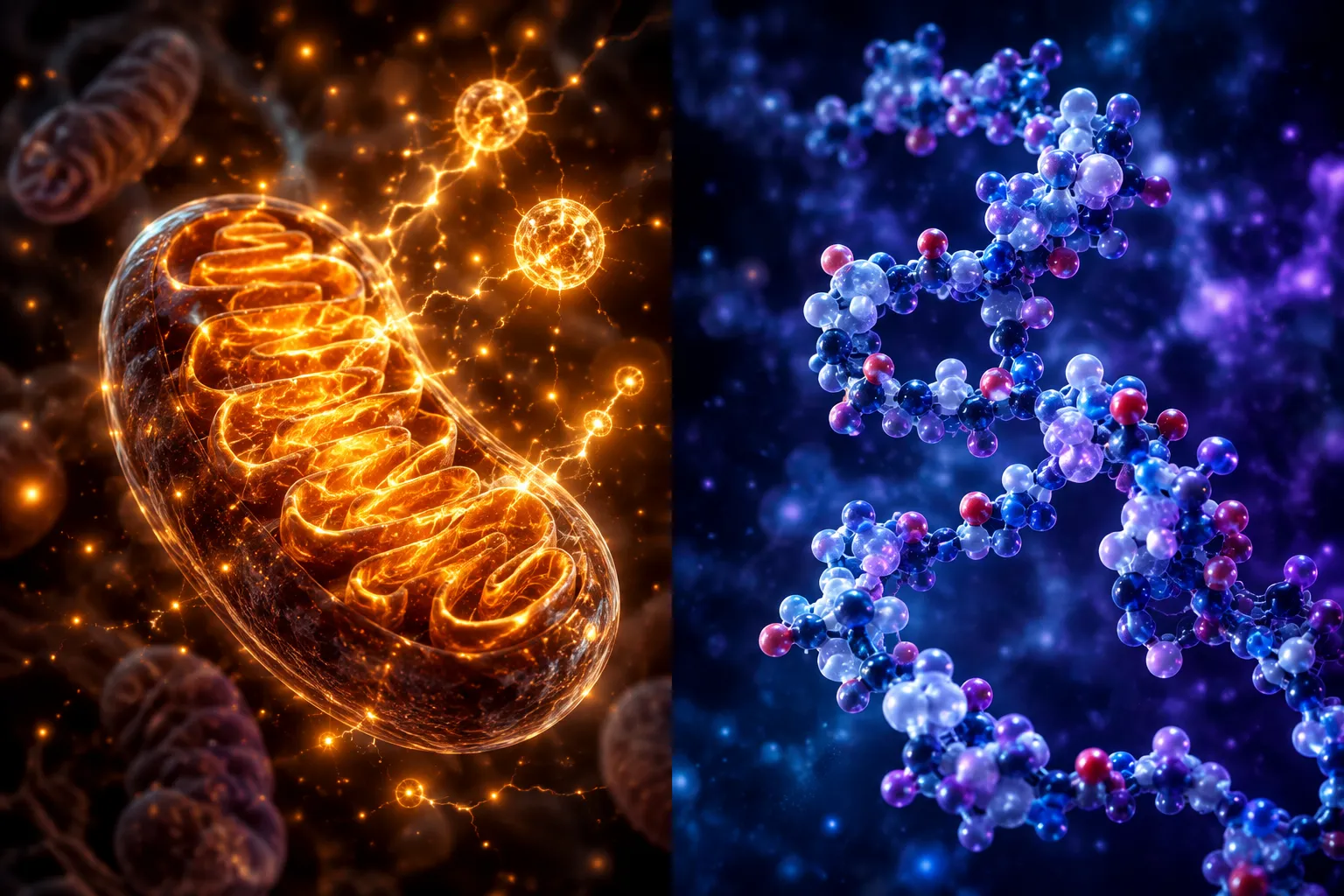
Mitochondria as Peptide Factories: MOTS-c and the Energy Connection
Why Mitochondria Matter Beyond ATP
Most biology courses teach mitochondria as the cell's power plants, organelles that convert nutrients into adenosine triphosphate (ATP) through oxidative phosphorylation. What is less commonly taught is that mitochondria carry their own DNA (mtDNA), separate from nuclear DNA, and that this mtDNA encodes a small family of bioactive peptides called mitochondria-derived peptides (MDPs).
MOTS-c (Mitochondrial Open Reading Frame of the 12S rRNA-c) is the most studied MDP. It is a 16-amino-acid peptide encoded within the 12S ribosomal RNA gene of mtDNA. Preclinical research has examined MOTS-c in the context of:
- Metabolic regulation and insulin sensitivity
- Exercise-induced signaling pathways
- Cellular stress responses and longevity-associated pathways
Another well-studied MDP, Humanin, has been investigated for neuroprotective properties, illustrating how the mitochondrial genome produces peptides with diverse systemic roles.
For researchers interested in mitochondria-targeted molecules, the SS-31 mitochondrial research overview provides a useful parallel, SS-31 is a synthetic tetrapeptide designed to concentrate in the inner mitochondrial membrane and is among the most cited mitochondria-targeting research peptides available today.
5-Amino-1MQ: A Small Molecule in the Metabolic Research Space
5-Amino-1MQ (5-amino-1-methylquinolinium) is not a peptide, it is a small organic molecule. It is included in this discussion because it targets NNMT (nicotinamide N-methyltransferase), an enzyme involved in NAD+ metabolism and fat cell differentiation. By inhibiting NNMT, 5-Amino-1MQ is hypothesized in preclinical models to:
- Raise intracellular NAD+ precursor availability
- Reduce lipid accumulation in adipocytes
- Interact with metabolic pathways that overlap with those regulated by MOTS-c
This mechanistic overlap, both compounds influencing mitochondrial energy metabolism through different entry points, explains why they are frequently discussed together in metabolic research literature.
Researchers exploring this space also review SS-31 peptide research considerations for comparative context on how mitochondria-targeting compounds are evaluated.

Modern Research-Use Compounds: Context, Sourcing, and Responsible Use
The Research Compound Landscape in 2026
The category of research-use peptides and polypeptides has expanded considerably. Compounds once confined to academic laboratory settings are now more accessible to qualified researchers, creating both opportunity and responsibility. Key categories include:
- Growth hormone secretagogues, such as those explored in GHRP-2 versus Sermorelin comparisons
- Metabolic peptides, including GLP-1 analogs studied in generational research sourcing contexts
- Mitochondria-targeted peptides, SS-31 and related compounds available through dedicated SS-31 research peptide resources
- Repair and recovery peptides, such as the TB-500 and BPC-157 combination studied in tissue-repair research
Sourcing and Purity Standards
For any research application, purity and third-party verification are non-negotiable. Researchers should prioritize suppliers that provide:
- Certificate of Analysis (CoA) from independent laboratories
- High-performance liquid chromatography (HPLC) purity data
- Mass spectrometry verification of molecular identity
Those evaluating suppliers can consult peptide supplier comparison resources to understand how to interpret third-party testing documentation.
Important disclaimer: MOTS-c, 5-Amino-1MQ, SS-31, and all compounds discussed in this article are research-use only. They are not approved by the FDA or equivalent regulatory bodies for human therapeutic use. All research must comply with applicable institutional and legal guidelines.
Conclusion
Understanding Peptides and Polypeptides Explained: Connecting DNA, Mitochondria, and Modern Research-Use Compounds Like MOTS-c and 5-Amino-1MQ requires holding two ideas at once: the elegant simplicity of how DNA encodes amino acid sequences, and the remarkable complexity of what those sequences do once assembled. Mitochondria are no longer just power plants, they are peptide-producing organelles whose outputs like MOTS-c may influence metabolism, aging, and stress resilience. Small molecules like 5-Amino-1MQ extend that conversation into enzyme inhibition and NAD+ biology.
Actionable next steps for researchers:
- Review primary literature on MOTS-c (Lee et al., Cell Metabolism) and NNMT inhibition before designing protocols.
- Verify supplier purity credentials before sourcing any research compound, consult where to buy peptides guidance for evaluation criteria.
- Cross-reference mitochondria-targeting peptides such as SS-31 through SS-31 mitochondrial dynamics research to build comparative context.
- Stay current with regulatory updates in 2026, as the research peptide landscape continues to evolve rapidly.
The biology connecting DNA, mitochondria, and modern research compounds is not abstract, it is the foundation every serious investigator needs before working with these molecules.